Raw and unfettered, Crude Studs gets it all out
Sometimes, a story is just simple.
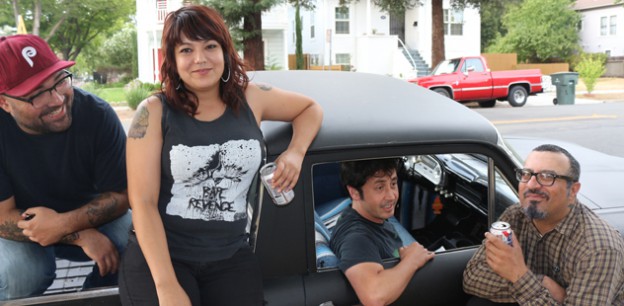
As far as Crude Studs are concerned, the four-piece punk band formed organically, inspired by a local music scene that thrives on a do-it-yourself mentality. They gravitate more toward basement or house shows that provide a subcultural safe haven stitched together by one common thread: music as therapy.
Guitarist Bobby Khan met vocalist Sophia Flores through this very happenstance. The two regularly attended similar musical events that danced along the lines of punk, thrash and fast-paced rock ‘n’ roll. Khan eventually introduced her to his band the Sex Killers, a two-piece group that also included drummer JB Thomas.
“I thought he was a creep when I first met him,” laughs Flores, as she recalls how Crude Studs first came together. “I thought here’s this guy with, ‘Hey, wanna be in my band?’ He and JB were an automatic, really comfortable fit for me and still are. We all get along really easily and have fun. It’s like family. We’ve only got mad at each other like once and it was, surprise-surprise, 110-degree weather in the attic we practice in.”
The three started collaborating in early 2012 and by summer, Nich Lujan joined in on bass guitar and the band became Crude Studs. The group’s first performance was at Casa de Chaos, a volunteer-run word-of-mouth venue located in the Midtown area, and a place where all four members feel at home.
“I’ve always wanted to be in a band with a female vocalist. Most of the bands I like have female singers, like I have a Siouxsie Sioux tattoo,” says Khan as he points to his forearm. “I just thought it would be cool to have a different outlet. We weren’t necessarily looking for that, but I’m glad that it happened.”
Crude Studs’ music is twitchy, angry, quick-and-dirty punk rock. Sure, there’s thrash and other influences present, but to keep descriptions simple, Khan says he enjoys the hit-and-run aspect and raw honesty their lyrics provide audiences.
“It’s not macho. You don’t have to have specifically really good equipment to play it,” describes Khan. “You get together and write this raw music. It’s very quick. A lot of the early songs I was writing were basically about being broke, on drugs and an alcoholic. Honestly, that’s what it was about. But, she got in the band and started writing things from her perspective.”
Flores says her lyrics directly reflect her experiences in the workforce. Whether it was a heavy hand in construction, cleaning dirty houses or even the air-conditioned environment of an office, many of these situations inspired the words captured in the song, “Padded Walls,” featured on their self-titled 7-inch.
“It’s about feeling trapped inside of an office with florescent lights and feeling like you’re going to die there. A lot of my anxieties personally revolve around work and the value of labor and how it’s highly undervalued in our society,” says Flores. “In that song, I feel like I’m a caged animal inside of that type of office building and also, I feel like a traitor to my roots as a cleaning lady as a Mexican woman, [and] knowing there’s still plenty of people out there doing really hard jobs that don’t get paid nearly as much as somebody who just sits around and does lunch all fucking day.”

Crude Studs also draw influence from a variety of musicians that includes everyone from anarcho-punk Nick Blinko of Rudimentary Peni to Queen’s Freddie Mercury. The band also lists groups like Zero Boys, Thin Lizzy and Judas Priest as favorites, and even what Flores calls the more embarrassing, childhood memories of Sammy Hagar, which she credits to her mother.
“Nick Blinko is probably the biggest punk singer that really made me want to even help a band come out with that kind of catharsis and that kind of additional sound,” she says. “I don’t really think of it as being a front person. I think of it as another instrument that plays off of what everybody else is doing sound-wise. A lot of times the words don’t come through anyway in this type of music. So, I think it’s more important to have a distinctive style and cadence.”
Flores admittedly uses her time in Crude Studs to “exorcize some demons” and to express herself through song. She takes full advantage of her space, filling the room at live performances with her boisterous stage personality and bending and manipulating her vocals to fit the loud and sludgy moments provided by Khan, Thomas and Lujan.
“I use it as cheap therapy. It’s really rare as adults that we get to scream our heads off whenever we want to, especially in public spaces and especially as a woman.You’re expected to be quiet or you’re crazy. That’s kind of the only options that you have if you do express yourself in a forceful way,” says Flores.
Crude Studs openly credit longtime bands in the Sacramento punk community like RAD and Rat Damage with helping them first gain access to shows. In a scene predominantly male-fronted, Flores says she truly enjoys when young women approach her after shows and express interest in Crude Studs’ music.
“It’s really cool to talk to young women, especially after playing and being able to tell them that I’m not doing anything special. You need to go start a band. Right now, go home, start writing stuff, get your friends together and just do it.”
Khan agrees.
I love punk rock, but I look at it as a style of doing things and like a D.I.Y-culture,” he says. “If punk is all those macho bands with the right tattoos, I have nothing in common with that. I don’t even know what that is. If that’s punk, then I don’t care about punk. But as far as the mentality of doing things yourself, that’s what I love about punk.”
See Crude Studs rock the Blue Lamp (1400 Alhambra Boulevard) on Friday, Aug. 29, 2014, with Decry, MDSO and S.W.I.M.; 8 p.m., $10, 21 and over. Facebook.com/crudestuds.
For the past 20 years, he has been known as Crazy Ballhead, a well-respected hip-hop artist, writer, producer and proud member of the SAMMIES Hall of Fame. Today, he has evolved into Mr. Hooper and will soon be releasing his birth-cry. The Poet Go will be hosting a dual-celebration party at Blue Lamp (1400 Alhambra Boulevard, Sacramento) on May 24, 2014 heralding to the release of Mr. Hooper’s new album, The Highs and Lows of a Hero for Hire, and celebrating his upcoming birthday. The event is studded with a lineup including Retrograde Revolution, Mr.P Chill (with DJ Mike Colossal), NSAA, Left Rose and Lauren Wakefield. The doors will open at 8 p.m. for all those 21-and-over, with only an $8 cover fee. For more information, check out Mrhoopersmusic.com
Horseneck: Born out of Booze and Ready to Rock Your Face
Most of us would agree that bars are wonderful places. They’re great places to go with your friends or significant others, or to meet new friends or significant others (at least significant for a night or so). And, hey, if you go alone, your bestest buddies Jack Daniels and John Jameson are already there waiting for you. Besides sources of booze, bars can also be houses of inspiration. Artists, writers and musicians have flocked to bars for as long as they’ve existed hoping to find their muse—either at the bottom of a glass, or hidden in the cacophony of overheard conversation. As Sacramento heavy music purveyor Anthony Paganelli tells us, his newest band Horseneck owes a lot to local bars.
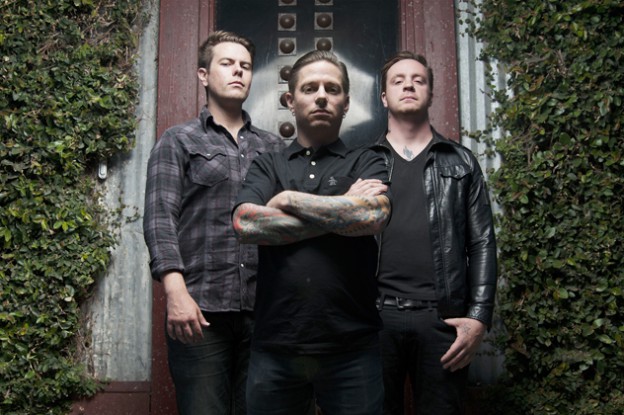
He had known bandmate Lennon Hudson through their mutual manager, Eric Rushing. Paganelli and Hudson were both entrenched in the music scene as members of other bands (Paganelli as part of Tenfold, Shortie and Will Haven, and Hudson as part of Still Life Projector). The two got together one night at Golden Bear with Hudson’s longtime friend Matthew Ison, and the conversation eventually turned toward the three playing music together.
“We weren’t doing anything else but drinking and having fun,” Paganelli says. “We were like, ‘Might as well start jamming, kill time that way.’ We started a band. It wasn’t this band. Then we changed it to Horseneck and it just felt right.
“Will Haven wasn’t really doing much. They’d put out a record and did a little bit of touring in Europe, and that was it,” he goes on to say. “I was getting really bored and I wanted to start something new. I had all these riffs and ideas, so I called Matt and Lennon and said let’s do this.”
Paganelli says that he formed Horseneck because “there weren’t very many heavy bands out in Sacramento that I could relate to.” A counterpoint to the many scream-o and metalcore bands on the scene, Paganelli wanted Horseneck to hearken back to a different, blues-based era of metal.
“I was drawing influences from all the classic rock like Led Zeppelin and stuff like that…blues-driven rock stuff,” says Paganelli, who says he first started playing blues when he picked up the guitar, inspired by the music his father would listen to, before he got into punk and metal later in life.
The music got heavier, though, when the band decided to put Paganelli behind the mic. He says Horseneck felt right as a power trio, and they really didn’t want to go out and find a vocalist that would possibly stir the pot.
“None of us could really sing, so I just grabbed a mic and started yelling and it just worked,” Paganelli explains. “We became this heavy band, but that was what we wanted anyway. We wanted to do what everyone else wasn’t doing.”
Their vibe must have been right as the band released two EPs in 2013. The first, Belly Full of Blood, is the heavier of the two—a low, throbbing, grungy, Melvins-esque five-song EP with similarly gruesome song titles like “Dirt Turkey” and “Hooker Toilet.” The second, The Worst People Ever, is still heavy but is less pure brute force and has more of a calculating attack.
“The first EP, we had just started playing. That was the first five songs we wrote. I was trying to figure everything out,” Paganelli says of the difference between the two EPs. “I feel like it was a little bit harder of a record, too—more metal influence. With The Worst… EP, we were a little bit more organic about writing. We were jamming more, and I felt a little more confident with my vocals. With the new stuff we’re writing, it’s getting more organic, and I’m even more comfortable with my voice.”
The differences between the two was one of the reasons why Horseneck ended up having two separate releases as opposed to one full-length album.
“We never planned on releasing anything,” Paganelli says. “I gave it to Eric Rushing, because he’s a longtime friend of mine, and I thought he could help me get on shows or just network and stuff, and he told me to hold on to it and not release it. He said, why don’t we go back and record more songs, and we’ll talk to the label, Artery Records, and maybe release it through Artery.”
Horseneck has a distinctly different sound than many of the bands in Artery’s stable; however, both Rushing and Paganelli thought Horseneck could help the label diversify.
Both EPs were recorded at Pus Cavern with the help of Matt Pedri, who’s worked with Armed for Apocalypse and Will Haven in the past. The Worst People Ever was mixed by Dance Gavin Dance’s Josh Benton.
“We went back and recorded seven tracks, which became The Worst People Ever EP, but they sounded totally different,” Paganelli says. “We recorded them in a different process and spent more time… We weren’t going to put them both together as a weird sandwich, like, we don’t care if they sound weird. So I said, why don’t we release them as they were recorded? That sounds better. It makes more sense. We felt comfortable with that approach, and Eric thought it was a better idea as well.”
Paganelli says the band is currently writing new material for a possible full-length, hopefully to be released early next year. He says that the confidence in his songwriting that he built coming into The Worst People Ever is continuing to grow on the new material.
“I feel like I’ve thought it out a little more than I did in the past,” Paganelli says of the new material he’s working on. “Having more confidence in my ideas helps.”
Paganelli also has a new songwriting partner, his 1-and-a-half-year-old son.
“I play guitar for my son, and when he likes it, he dances around. So sometimes I actually bounce riff ideas off of [him],” he says. “We play guitar all the time at home and sing songs and stuff. It definitely changed a bit of my songwriting.
“It’s more difficult being in a band as a parent, because, obviously, you have a lot more responsibility,” Paganelli says of being a rock ‘n’ roll dad. “Touring is a little harder, practicing is a little harder, but it’s still doable, and it’s still fun. We still do it. I don’t think I could not do it. He enjoys it. He watches me do it, and maybe when he’s a bit older, I could play with him, or he could play with me. It would be rad.”
It’s funny to think that the good chemistry and momentum Horseneck has going probably started with a simple conversation between colleagues over drinks at a bar. The opening track on The Worst People Ever, “The Birth of the Neck,” is actually an homage to the band’s booze-y beginnings. It’s a short track featuring ambient bar noises—conversation, people fiddling about. In fact, the whole EP is based on the bar that Paganelli, Hudson and Ison usually hang out at, Cheaters.
“Most of the songs on that EP are reflections or stories or things that we went through hanging out there all the time,” Paganelli says. “It’s a bunch of inside jokes, well, not just inside jokes, but things that happened to us there. That whole EP is a little story about that bar…a little Cheaters storyline, I guess.”
So what is it that makes bars so inspiring?
“I love bars,” Paganelli enthuses. “I was a bartender for like four years. We collectively love to drink. Love beers and whiskey. I live on 32nd and Matt and Lennon live on 35th so Cheaters is smack dab in the middle and that is our home base. I love bars! I love bar noise. I love meeting people and the social interaction you get at a bar. It is different than any other place.”
So get out there and go to a bar. You never know. You might even become inspired. As if you needed another reason to go out drinking…
Check out Horseneck as they blow the doors of the place at Blue Lamp in Sacramento alongside Armed for Apocalypse and Death Valley High on July 12, 2013. Horseneck’s EPs are available via iTunes. For more on the band, go check ‘em out at Facebook.com/horseneckmusic.
A notice to all hip-hop heads, B-boys and B-girls, battle rappers and DJs: you will not want to miss Skratchpad Sacramento’s upcoming Head-to-Head Skratch Massacre at the Blue Lamp on Thursday, Oct. 25. In this head-to-head scratch battle, each competitor will alternate between eight bars in two-round heats where only the best shredder will move toward the coveted winner’s circle.
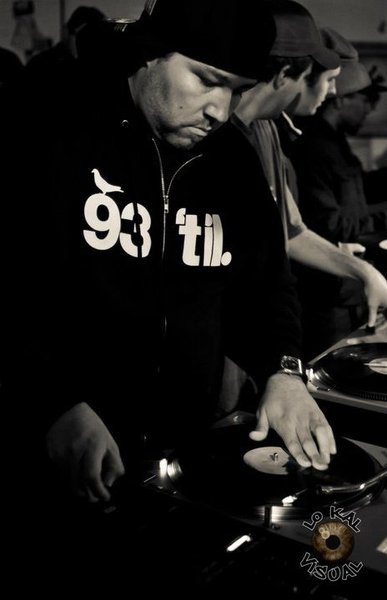
“I came up with the idea for the battle pretty much when I decided to bring back Skratchpad Sacramento,” DJ Nocturnal (pictured), the event’s organizer, recently told Submerge. “I just wanted to wait until we had some successful shows under our belt and had built back up our fanbase before introducing a battle to our community of shred heads.”
For the event, each competitor will have downloaded and will use the “Official Skratchpad Sacramento massacre battle looper,” made by world famous DJ and loop master Doc Jeezy. This, in a way, levels the playing field. As of press time, Nocturnal had 14 confirmed DJs and turntablists (16 will be the maximum amount), and he says they are “all pretty amazing and skilled scratch artists.” He should know. Having toured and traveled all around the country, Nocturnal says that the West Coast knows what’s up when it comes to scratching.
“I met a lot of talented DJs/Turntablists that all share the same passion for the decks as the rest of us,” he said. “But I gotta say in many situations it seems like hardcore scratching is a West Coast style. Now don’t get me wrong, there are tons of dope and amazing scratch DJs from all over, but something about the West Coast and Cali in general tends to breed some of the dopest around.”
See Chuck Flava, Luke Scratchrocker, Mike Colossal, KidTwist, Dose, Iso Skratch and many more do things and create sounds with turntables you never thought possible. Event starts at 9 p.m., is for those 21-and-over only and there is no cover.
Sol Peligro’s Sam Peligroso puts forth a solo EP
The frontman of Sacramento’s most renowned Latin bands wasn’t planning on making a solo rap album, but it just sort of happened.
Age 40 seemed like as good of a time as ever to do it, says Sam Peligroso, the frontman of local bands Sol Peligro and Blazing Hangovers. One day in the recording studio, he just started flowing in Spanish, and everything spiraled from there, he explains to Submerge over the phone.
Blazing Hangovers is like a Tex-Mex tribute band, Peligroso says, while Sol Peligro blends the sounds of reggaeton, cumbia, salsa and alternative rock. In the same vein, Latin beats are the backbone of Peligroso’s seven-track album, the Sam Peligroso EP, engineered, mixed and produced by Reckless Reaction. The accordion dominates one track, another is woven into an intricate guitar solo. Peligroso makes it clear, however, that the raps and the choruses are all him.
The way he sees it, this album is a fusion of everything he has learned about music up to this point. For him, the EP is a celebration of his 20-plus years in the local music scene, he says.
“This is me,” he says. “This is the best representation of who I’ve become and who I am.”
The album may not feel like a celebration per se, though it most certainly sheds light on understanding what Peligroso is about. True, in person and over the phone he is charismatic. He’s got a slew of jokes up his sleeve, and he’ll laugh at each one of them. In exchange for getting this story on the cover of Submerge, he offered to give donkey rides and park a taco truck in front of the office. But the Sam Peligroso EP exposes not the jokester but someone angered by what is taking place around him, like people being wrongfully accused of crimes, the unsettling treatment of immigrants and the “system” in general.
“I’m not a political person, I’m not trying to say I am a revolutionary,” Peligroso says. Yet immigration and border laws are enough to get his blood boiling, particularly considering his roots. His father migrated to California from Jalisco before he was born, where he met Peligroso’s mother. Later the family moved to Woodland, Calif., where Peligroso grew up.
Mexican American pride has always played a major role in Peligroso’s life.
“I’m not hate whitey at all,” he says with a laugh. “[But] I’m proud of my culture and I feel that I represent it really well.”
His mother had a lot to do with fueling his musical tastes, starting with when she took him to see Saturday Night Fever when he was 8.
“When I saw John Travolta on the damn screen, I thought, ‘That guy’s fucking cool, I want to be that guy right there,’” he remembers. “He’s not a musician, but all eyes are on him.”
Throughout Peligroso’s childhood, his mother would play anything from The Beatles to mariachi music around the house.
“When I was growing up, it was me and radio,” Peligroso says. “That played in the kitchen every time [my family] was cooking breakfast and stuff.”
His first recording was on a 45 record when he was 8 or 9 years old. His mom bought him the 45 with the song “Pacman Fever” on one side and the instrumental recording the other.
“My first recording was my own version of ‘Pacman-fucking-Fever,’” he says.
“I wish I still had it,” he adds with a laugh.
In seriousness, his music career began in 1992. Influenced by the likes of Run DMC and Easy Boys, around age 21 he formed a rap trio called BRC. After his stint with BRC he decided to revisit his Mexican roots, and formed the Latin-based band Raigambre. After that project folded, he then formed Sol Peligro and Blazing Hangovers, both of which he still performs with.
Staying true to his Mexican roots, Peligroso’s solo album release is set for Cinco de Mayo. As someone who considers himself an ambassador of Sacramento’s local Latin music scene, this would only make sense.
“I’m going to be honest with you, my show at Blue Lamp that night is going to be the only show where you’re not going to hear one single cover tune,” he says.
“I’m not trying to talk down to these restaurants like Vallejo’s, where they’re hiring people to play Santana the whole night,” he adds. “[But] that’s not how I want to be described, that’s not how we want to be described. We have originality.”
For his live performance, expect old school simplicity, Peligroso says–an accordion player, a hype man, a DJ, a conga player and Peligroso himself.
In an interview with SN&R back in 2009, Peligroso griped about what a shoddy job Sacramento media has done giving local Latin music any exposure. In his eyes, little has changed three years later, and he is still fighting to change that.
“Sacramento media sucks when it comes to giving the Latin music scene its due,” he says. “You can print that. I don’t give a shit.”
For instance, both Sol Peligro and Blazing Hangovers have been nominated simultaneously for Sammie awards.
“Why is it that both my bands [get nominated] all the time when we play like, once a fucking year?” he laughs. “I’m in both bands, what are you doing?”
“Basically what I’m trying to say is that they’re so out of tune with the music scene as far as Latin music [goes],” he adds.
Peligroso views local radio stations with equal distaste. As pivotal as radio was in his upbringing, he no longer listens to it, namely because the radio doesn’t promote local acts, he explains.
“The media is a big influence man, that’s it, [and] I don’t want to have to start a revolution here,” he says.
If there is any positive outcome of all this, it is that this lack of exposure has intensified Peligroso’s drive to put his music in the spotlight, and he has seen a lot of success. He is grateful that Sol Peligro has won three Sammie awards and will be inducted in the hall of fame, he says.
When asked why he chooses to stay here given the media’s skewed taste, he answers simply, “Well, I don’t run away from things.”
“Trust me, I can easily go to L.A. [or] I can go to New York and probably be more prosperous in doing what I do,” he adds. “But my thing is, this is my home. So if I do that, it’s almost like I’m being run out of my own home. I would never just pack up and leave because I’m not getting my way.”
Thus, Sacramento continues to serve as Peligroso’s home base. Meanwhile, his message to Sacramento remains: listen up! Now is as good of a time as ever.

Still listening? You should be. Sam Peligroso’s EP release will take place at Blue Lamp on May 5, 2012. Also playing will be Olmeca Desperados, La Noche Oskura, O Street Dub, Mahtie Bush and DJ Los. Doors open at 8 and tickets are just $7 in advance. For more info go to http://bluelamp.com/.
The Inversions Forge Their Own Path
If you were the last person on Earth, would you kill yourself? It’s not something you probably mull over too much on an average day, but that’s the big question behind local band the Inversions’ song “Aloha.”
Usually, the word “aloha” makes me cringe. I immediately think American commercialization of Hawaiian culture, i.e., tacky Hawaiian shirts, someone adjusting a plastic lei around my neck and watching the worst adaptations of hula dancing imaginable.
This is why The Inversions’ song “Aloha” is genius. It plays on the meaning of the word in a very unpredictable way. There is not a single reference to sunsets or cheesy faux Hawaiian intonations to be heard. It’s just a rock ‘n’ roll song, pure and simple, using the word “aloha” for its double meaning of “hello” and “goodbye.”
The Inversions lead singer/guitarist Will Comstock is fond of lacing the band’s songs with double meanings, he says during a conversation with Submerge over beers at Pangaea Café. And “Aloha” is a prime example of just that.
Bassist/vocalist Ryan Offield is also in on this conversation. He explains that “Aloha” is also the title track of the band’s upcoming album because it’s the “most ridiculous” of the songs.
Like the rest of their work, including their full-lengths All Is Well and What’s the Cannon For?, Aloha will be released on their label Penwin Songs in April.
“Aloha is not much of a leap from our other stuff,” says Offield. Like their past albums, they have continued to maintain a groove-oriented melody, Comstock adds.
Though Offield and Comstock have been working together for many years (they met in their former band The Drowners), they have only been working on this project since 2006, starting with Frank French of Cake as their prior drummer.
The Inversions have only existed as The Inversions “proper” since 2008. Previously there were four members–Adam Varona was also on guitar. Now they are just three. Over time, they’ve managed to develop a sound that Offield has been told by fans “feels familiar, but in a new way.”
And since they discovered drummer Scott McConaha at Fox & Goose a while back, the trio seems to have found the right synergy.
For instance, “No Matter,” another song that will be featured on Aloha, is a song that the band has been wanting to record since it was written five to six years ago.
“I have no idea what ‘No Matter’ is about,” Comstock says. “But there is this unspoken understanding that it would be good for the band.”
Still, it’s only now that that the song will be included on an album, because, as Offield puts it, “Scottie got it right.”
Give “No Matter” a listen, and you’ll understand why it feels right. The song carries a steadfast beat under a simple guitar progression, straddling a rollicking, gypsy sound with a Western touch.
That said, it is curious that the band has earned a Brit-pop, indie rock rap.
Perhaps “LMAO,” the third song from Aloha that the Inversions shared with Submerge, bears the closest resemblance to anything of the sort. It’s catchy; it has that fleeting tempo and raucous strum pattern that is trademark of an indie pop song. And, as one might guess from the title, it’s about the Facebook craze, of all things.
Still, Brit-pop is not exactly the sound the Inversions are aiming for, Comstock says.
“It’s more a sound that’s been tagged onto us,” he says. “And any time you play minor chords with reverb, someone says you’re just trying to be Radiohead or something.”
“To me [our music] is rock ‘n’ roll,” he adds.
Certainly, Comstock and Offield are fond of British rock and pop, particularly of the ‘60s era. The band lists The Kinks as one of their top influences.
“I only have five [Kinks] CDs in my car,” Comstock says.
Otherwise, he’s been “geeking out” on the Coasters, jazz and Buddy Holly, he confesses, his black glasses tilted slightly down his nose.
Influences aside, the band doesn’t really look to other bands for their sound.
“We’re not aiming for anything,” Comstock says, “[Other than] does the song sound good, do we like it?”
Different rhythms, weird chords, good chord progressions and a good melody–these are things Comstock says he looks for when he writes a song. And apparently, he’s “prolific as hell” about his songwriting, Offield says.
“He’ll write more songs in a year than I’ll hear,” Offield laughs.
Writing, practicing and performing the songs are arguably the easy parts. They practice anywhere from one to five days a week downstairs in the Victorian where Offield resides. If they just keep up on their sound, the optimistic view is that everything else will fall into place. Yet the rest, producing albums and aggressively marketing, has been the “bugaboo,” Offield admits.
“When you’re on your own, things take a bit longer,” Offield says. “Our intentions are good…the road to hell is paved with good intentions.”
After Aloha, the Inversions intend to dive into producing their next album, a full-length.
As they produce material, Sacramento has continued to play a formative role in the band’s progress. The band has played countless times in venues across town, like Fox & Goose, The Blue Lamp, The Press Club, Marilyn’s on K and Naked Lounge. There was a time when they practiced at Sac Rehearsal studios. And in 2009 and 2010, the Inversions were nominated for a Sammie in the outstanding rock band category.
They’ve seen other successes, too. Their music was featured throughout the independent film Jake’s Corner, which played at the Sedona International Film festival in 2008.
After touring throughout the West, including the Bay Area, Portland, Phoenix, Seattle, San Diego and Tucson, Ariz., the guys have embraced an appreciation for Sacramento, the city where “you walk a little slower.”
“As you get older, you get a little more content and a little more satisfied with where you are,” Comstock says.
After all, Comstock only managed to get his hollow body Epiphone, which he uses for recording and shows, for a ridiculously generous price from a local in town.
It’s a city that is uniquely cool, Comstock concludes, and doesn’t deserve to be pissed on.
Now, Sacramento’s surroundings will serve as the background in a music video they are filming for “Aloha.” Director Jeff Weigt, who also filmed the music video for the band’s 2008 hit “Brain Dead Heart,” is currently working with the band members to capture a sense of apocalypse on camera, shooting around the nearby levy and wetlands.
Expect a lot of CGI and sweeping shots, Offield forewarns.
The video will likely be released around the same time as the album. And once the video is out, you can ask yourself what you would do if you were the last person on Earth.
The Inversions will celebrate the release of Aloha on April 14, 2012 at Blue Lamp. The show will get underway at 8:30 p.m. Aloha will be available via iTunes, but you’ll also be able to get yourself a torrent of it, if you’re so inclined, at http://torrentscan.com/, http://www.demonoid.me/, http://thepiratebay.se/ and other torrent sites.

If there has ever been a show I’ve written about in the past that I thought was important and that I urged you to attend, it more than likely paled in comparison to this one. On Friday, Oct. 7 at Blue Lamp, there will be a benefit show for a young woman named Alicea Peet (Mikey Hood from the band HOODS’ lady), who recently suffered from a kidney failure and had to have a transplant. As you can imagine, the medical bills are insane, so the benefit show (which features some of Alicea’s favorite bands in Kill the Precedent, Black Mackerel, City of Vain and Muderlicious) is aimed to help take a chunk out of those bills, as well as to raise awareness of how important organ donors are. Doors open at 8 p.m., 21-and-over only and it’s $10 at the door.
 There are also cool T-shirts available for $20 donations that say Peet’s name and the words “Love Life.” You can send donations via Paypal to Hoods916@hotmail.com. Include size, mailing address and mark the payment as a “gift,” but most of all, come to the show at Blue Lamp and support! You can also make a donation securely at Alicealoveslife.bbnow.org.
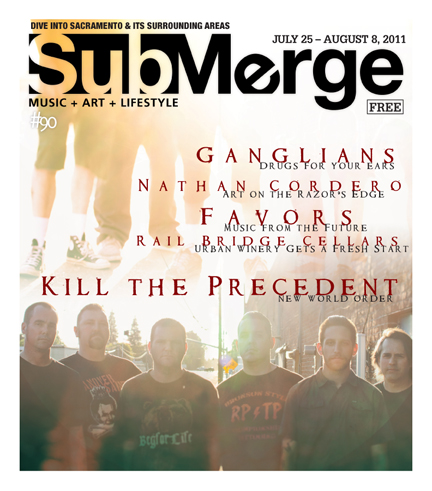
Kill the Precedent load up with a new EP
Industrial metal might conjure images of military-like precision with perhaps a totalitarian-style frontman at its controls. Kill the Precedent certainly evokes those images with their music. Thundering beats–both live and electronic–blast behind thrashing riffs and the two-pronged vocal attack of Twig the Exfoliator and The Ugly American. However, speaking with the two vocalists in a recent interview, the guys seemed jovial, bordering on jolly. For instance, if you were to call The Ugly American’s cell phone, you might hear The Dead Kennedys’ classic “California Uber Alles” playing while you waited for him to answer your phone. He said that since Jerry Brown was re-elected as governor, it seemed appropriate. “It’s such a fucking mess out here,” he quipped. “I thought it was pretty damn funny. At least it’s not an actor.” If KTP was indeed an army, in demeanor, they’d be more akin to the cool jokesters from Stripes than the cold-blooded killers of Full Metal Jacket.
Make no mistake, though; the band’s music is a no-holds-barred aural assault. KTP is ready to release a new EP, Stories of Science and Fantasy, which will consist of six original songs and two covers (The Smiths’ “Death of a Disco Dancer” and Jessica Lea Mayfield’s “We’ve Never Lied,” which Twig says was recorded in a hotel room in Oakland). Evoking the days when bands like Ministry and KMFDM crashed mainstream rock’s party, songs such as “Questions for Weapons” wield an imposing arsenal or metal riffs and huge beats, courtesy of electronic beatsmith/guitarist Hamburger, guitarist Killsbury and drummer Sgt. Pepper, while “Free Reign” is a throbbing, almost dance-y track highlighted by Jon the Jew’s pummeling bass line and an underlying, monolithic electronic groove.
Members of the band are no strangers to the Sacramento rock scene. They have played in bands such as Red Tape, Diseptikons and Rivithead in the past, but Kill the Precedent started as a side project of The Ugly American and Hamburger.
“Hamburger and I got together in 2006 and started screwing around with the drum machine,” The Ugly American explained. “We were kind of doing a little Big Black kind of deal, just having some fun. We recorded some music and got a hold of Twig, and I said, ‘I got to record some vocals, can you come down and help me out?’ We recorded vocals. Twig and I had been friends for many years, and he was giving me this blank stare, so I was like, ‘OK, you didn’t like it, but thanks for coming down and recording.’ And he said, ‘No, I want in. I’m fucking in.’ He took over from there.”
Twig’s introduction to the band was through the song “Cop Out,” which will appear on Stories of Science and Fantasy. More songs were started, but Twig said they were left unfinished. As each new member of the band became a permanent fixture, the songs began to flesh out.
“I wanted Killsbury to put a guitar riff over that–just that one song [“Cop Out”],” Twig said. “I’ve been in bands with all these other people in Red Tape and Diseptikons, and I was like just do this one song, but then it became do this song and that song…and eventually that’s how each member has come to be in the band.”
For The Ugly American, Kill the Precedent became a way of rediscovering the music he loved to make in the late ‘80s and early ‘90s with bands such as Rivithead and Battalion 53 after years of playing in punk bands.
“It dawned on me that I really missed that shit,” he said. “It was powerful, it was fun, it was endless. You could do whatever you want and get away with a hell of a lot more.”
In the following interview, KTP’s two vocalists fill us in on the making of the forthcoming EP and what draws them to making this kind of music. We find out that the reason why the harsh-sounding vocalists are so jovial is because they’re playing music they actually love.

It seems like industrial is a genre of music that’s gone back underground. Is that part of the excitement of revisiting it?
The Ugly American: Kind of, but not really. There’s no denying that those bands have had an influence. It’s obvious–and it should. It’s fucking awesome music… I can just say I missed the power of it.
Twig the Exfoliator: I liked the freedom of it. When we first started jamming around, with Jeremy from the Snobs, the bass player, was doing a bunch of electronic beats and me and [Ugly] would sing over it. It wasn’t hip-hop singing, but it was like a Fugazi overlay over dance music. I definitely wanted to not do just Ministry type stuff, but I wanted some melody in there to make it a bit different.
Listening to the music, you can definitely hear that sort of punk-type melodies.
Twig: Whatever [Hamburger] makes up beatwise and gives to us, half of them could be more on the dance side, some of them are more hard and fast, or slow and driving. If we hear something that we like, we’ll get working on that. Part of the reason why I wanted to do this was because I didn’t want to work with drummers anymore [laughs]. I was mad at all the drummers I’ve ever played with, and they take too long to set up. I was sick of loading all their shit into my van. That was the original idea, “Oh, we do whatever. We don’t need a drummer. Be like a hip-hop band, just plug in an iPod and do it like that.” That’s the way I wanted to do it. I wanted to put on a big production of a show, but within our budget.
Ugly: When Twig was on tour with Hoods–I think they were in Europe. He was adamant about it. He was like, “No drummers. I don’t want any fucking drummers.” Before we even put a drummer in there, I wanted one, because I wanted to add to the power and the beats and make it sound as large as we could. But he was all, “Hell no, we’re not doing it.” So, he goes to Europe and we grabbed our old buddy [Sgt.] Pepper. We brought him in to practice while Twig was gone. When he got back, he showed up for practice, and we were like, “Oh look, it’s…Pepper.” He was like, “You dick.” [Laughs.]
Twig: [Laughs] But it worked out.
Twig, you said you came in and did the middle section of “Cop Out,” but after doing that you wanted in. What drew you to this project?
Twig: I wanted to do something different. I wanted to do drum machines and just sample stuff by myself, but I’m completely computer illiterate. I don’t know how to do any of that stuff, and I couldn’t get anyone to do it. I talked to [Ugly], and they were already doing it for a couple of months, so I went in to record with them. The beats were big and huge, and it was something different. Since he let me even try something, and I could overlay a couple different vocal layers, and me and Sean could go back and forth instead of having to write a song’s lyrics all by ourselves–and you know, run out of breath–it made it better that we could share the vocal part. I liked that. I liked who he was working with, because I had known [Hamburger] from Rivithead and Battalion 53. We were also working with Evan at that point, Tha Fruitbat.
It seems like everyone who has come into the project has left their own stamp on it. Is that how the songwriting goes or do you start with the beats and go on from there?
Twig: Hamburger does all the beats and stuff. He’ll do two different parts with maybe some guitar, because he plays guitar too. He’ll just send us two-minute loops so we can get an idea about it. Then usually we will come up with singing structures, and then we’ll leave it alone. We won’t finish anything, and then we’ll bring it to practice and everyone else will listen to it and have their input. We start arranging the songs from there, cutting out parts, changing the drum beats, adding different parts, then we actually start writing the songs, the lyrics and stuff.
Ugly: It goes in reverse. It’s not the typical way you write a song, but it’s totally working for us.
Twig: Everyone’s really busy, so it’s all sent over the computer. Hamburger will send the beats to us, and we’ll pick the ones we like–the whole band will. And we’ll just work on it from there.
A lot of the bands we were talking about as influences before are largely associated with one guy, like Al Jourgensen for example, but it sounds like you guys actually play the songs to write them, which I think is kind of interesting for industrial music.
Twig: It’s like any other band. We’ll start arguing…but it all works out in the end as long as no one’s picky and tries to be the highlight of the song. Everyone knows their place.
Ugly: There are no egos, arrogance or bullshit. I know this sounds hokey, but it’s a completely collective effort. Everyone has their say. Like Twig says, we’ll argue to friggin’ death over it, but everybody’s got their two cents, and it just keeps piling things on without making it too much. It’s one cool idea after the other. It’s fun. I think the biggest thing is just that it’s a hell of a lot of fun.
I’ve seen that you guys have had girls in costume dancing at the shows, people covered in blood, synching up videos to your songs. Is that something you get together and collaborate on?
Twig: [Killsbury] handles most of the video stuff. He takes a while to get it with the beats and intros to every song. Except for [Hamburger], none of us are that great with computers. To do all that is a bit of a learning experience. And we don’t do it the way we should. We’re rolling into shows with DVD players and stuff, and a projector from like 1992.
Ugly: We try to change it up every time if we can. We did a good run, if you don’t mind me saying, at Blue Lamp. We called it “Cocaine Drug Dealers” or “Colombian Drug Dealers.” Everyone in the band was dressed up in cammo and we were dressed up in white suits. I filled up a bunch of baggies with flour. It was a great show, but it was the stupidest thing I ever did. Twig and I started throwing these bags of flour out into the audience and hit a fan. It went everywhere. Everyone was covered. I got off stage, and the guy was like, “It’s going to be $450 to clean up the place.”
Twig: It’s kind of like having sheet rock down or something. You can’t get rid of it… All the bottles were covered. We were like, “$450? No, we’ll come in tomorrow.” So we were hung-over as shit, and we had to be there at noon the next day. He was waiting for us with the mops, and he’s like, “Here you go.” Of course he opened the bar, and we got drunk and cleaned that place for four or five hours, and I can say it’s the cleanest it’s ever been [laughs]. It’s the cleanest club in Sacramento.
Kill the Precedent will play an EP release show at Harlow’s on Aug. 6, 2011 with Will Haven, The Snobs and City of Vain. Tickets are just $10 and can be purchased through Harlows.com. For more information on KTP, like them why don’t you at Facebook.com/killtheprecedent.
Cake’s Showroom of Compassion feels for you
Words by Adam Saake | Photo by Robert Knight
Longevity in the music industry has long been an admirable quality when we discuss a band and their merits. Not every musician can be Bob Dylan and few bands can be The Rolling Stones, who just won’t seem to go away. Flashes in the pan are the vast majority and that’s if you’re lucky. At least you have some good stories of what it was like, and maybe, if you had a catchy single, an immortal slot on the alternative radio rotation. The rock star talent that Sacramento has produced (yes, I’m listing them again)–Deftones, Tesla, Jackie Greene and even Far who managed a comeback–have all had pretty steady careers throughout the years. They all continue to put out records, tour on a regular basis and find support in a market that perpetually seems on the verge of collapse. Nobody buys music anymore, right? Cake’s John McCrea has his fingers crossed that that’s not the case.
“Hopefully there’s a few people left that think it’s OK to buy an album at this point,” quips McCrea.
With the upcoming release of their sixth studio album, Showroom of Compassion, slated to hit stores in mid-January, Cake has found a place that the band can find comfort in. Not because after 20 years of being a band they’re set for life, but because they’ve continued to push forward and do what’s right for them; major label support or not.
“Because of the instability of the music business, we had to reinvent what we wanted to do,” says McCrea. “We were able to extricate ourselves from the record label and start our own label.”
Part of this new venture was taking their time recording and engineering the new record, which they did entirely themselves in their Midtown studio.
“We took an old house and hollowed it out and put in microphones and solar panels on the roof,” says McCrea.
Showroom of Compassion, which was a “100-percent solar-powered recording process,” is Cake sounding as good as they ever have. They’ve always been a no-bullshit kind of band that hardly entertains with bells and whistles. Well, unless it’s actual bells and whistles or rattles or keyboards or whatever else the band deems lo-fi enough to make the cut. Songs on the new record are typical of their sound: minimal yet sonically engrossing with lyrics that leave you pondering their meaning. The grit is there, as always, but knowing how much time and personal attention went in to the songs makes the album seem so much more special.
McCrea joined Submerge via telephone from his home in Oakland, where he lives while the band isn’t recording in Sacramento.
Your press release says that you and the band had much more to do with the recording and engineering of the new record. What was the best thing that came out of that experience, besides a great new record?
I think it took forever doing it that way. We’ve always produced our own albums ourselves, which takes a long time. But also, we’ve increasingly been turning the knobs ourselves. I think we might be getting better at producing, which is hopefully the case. The best thing to come out of it is a sense of ownership and a sense of responsibility for what we’ve done. We don’t feel like anyone’s handed us anything. We never have. Even when we went to studios we were very hands-on. I guess early on we didn’t find people who really understood what we wanted to do, because what we wanted to do was very antithetical to what was going on at the time in the mid-‘90s when there was a lot of grunge. The production values were
very bombastic.
It seems like not a lot of people would want to take a chance with that because if they felt it wasn’t going to be successful then they wouldn’t touch it.
Certainly that was the case with record companies but also with producers. We didn’t know of a producer that was doing anything similar to what we wanted to do. In other words, no one was crazy enough to make stuff sound dinky. You know, during a period when everything was sounding very grandiose. We really thought that in a country like the United States, how rebellious is it to sound “big?” How subversive is creating the aural equivalent of deforestation? In a lot of ways it seemed like business as usual. So we thought, in the United States, to turn the volume down would probably be more scary and more subversive than turning it up. Not to say that all music that’s loud is bad; it’s just that we were tired of it at that point. It seemed like people were getting louder and louder. We freaked people out by turning the volume down. People used to yell at us to turn it up.
I see that you, Vincent [DiFiore] and Xan [McCurdy] all played keyboard or synthesizer on Showroom of Compassion. Was it very intentional to incorporate more of that sound into the songs?
Um…well I did allow something on this album that I hadn’t allowed ever before, which was acoustic piano. I always avoided it, because I thought it sounded too classy for us. There’s something really classy about acoustic piano, and I thought that’s not what we’re really about. But with this album, I found this old junker up in Portland [Ore.] and shipped it down here. I think it sounds crappy enough to be on our album, and it doesn’t sound like the good life or anything. As far as the other keyboards, the Nord and other stuff, we used quite a bit of keyboard on Pressure Chief–actually more, maybe, than this album. But certainly we used more keyboard on this album than we did on, say, our first album or our second album.
Over the past two-and-a-half years of writing the record, really taking your time, have you discovered that you like a slower pace of writing?
It wasn’t the writing that took a long time, it was the recording process that took a long time. We reconfigured our studio and put solar panels on the roof. We also did the same thing with reinventing our business from the ground up. We had to set up channels of distribution. We had to ask ourselves, what’s going to work now? Certainly we realized that the major-label music business structure wasn’t right for us. For one thing, it’s too expensive. If a really good percentage of people have decided that recorded music should be free, it’s no longer sustainable to have a bunch of record company suits eating out every night on our dime. We wanted to get ourselves away from that. I think we had to re-evaluate and take some time off to think and decide how we wanted to do it and whether there were still enough people to support us. The sales for recorded music have declined precipitously in the last 10 years. We wanted to economize and make sure that we could still pay our bills. By having our own record label, it helped quite a bit. Five or 10 years from now, who knows? There might be a whole different system. It would be nice if there was a different system–a way for musicians to have health insurance.
You’re an outspoken guy when it comes to issues that are important to you, yet your lyrics don’t seem too over the top. Is there a method to your madness when you sit down to write lyrics?
I don’t really sit down to write lyrics. I’m sort of writing lyrics all the time. I’ve had this notebook in my back pocket since I was a kid. I just sort of take notes about things that I find interesting or disturbing or upsetting. Then eventually I sit down and put all these little pieces of paper into songs and that’s my process. I wouldn’t say there’s that much singular intentionality to it. I think it’s a lot of different agendas I have. I do try not to be overly obvious with the songwriting. I describe the way things feel or smell or look rather than telling people exactly what I think. I think also there’s something to be said for a song being somewhat multi-purpose. For instance the song “Sick of You” I think can be looked at more specifically to be about a relationship between two people and it can also, I think, in a broader way be about general societal mood nowadays.

Photo by Teppei
You guys have been known to play secret shows here and there. I know there’s been a few at the Blue Lamp, Old Ironsides and I remember some at the old Capitol Garage too. Is that something that you do for the Sacramento fans? Is it to warm up a new live set before you hit bigger venues? Both?
Yeah, it serves both purposes. It’s hard to figure out what you want to do live without actually playing live. It’s also a thank you to Sacramento for supporting us all these years. And it’s also for our listeners who have signed our mailing list, because without a record company we really depend on the direct connection to our listeners. If it’s the only way for people to find out about those shows by signing the mailing list, then I think it’s a good incentive. It’s a good way for us to stay in touch with people and a good reason for people to want us to stay in touch with them.
When did the whole idea of giving away trees at your shows, the Cake Forest, begin and what prompted that?
I planted a tree in Sacramento in front of one of my apartments where I lived a long time ago. I put it in the median between the sidewalk and the street. It was about as tall as my chest, I imagine. Things happened in my life, I moved away and the band started doing well, and I started being away from home all the time. I forgot about the tree.
Years passed and I went back to it and, oh my god, it was way up there. It’s a profound physical reiteration of the passage of time. That’s really what trees are all about. And I just thought; wow this was a great experience that I had. Being able to plant a tree and come back years later to see what was going on with it. I thought, everybody should have that experience. Everybody should try to plant at least one tree in their whole life. As the tree gets bigger and stronger, you get older and die. I thought, wow we could make a deal with people that if we give them the tree they have to send photographs of themselves standing next to the trees and keep us posted on how the tree’s doing. Even if it dies, people are supposed to send us a photograph and we put it up on our site.
Have you gotten a lot flack for using Cake’s website as a place to educate and discuss the global and local issues that are important to you and the band?
Oh yeah. It’s almost not even worth it to say anything on our website anymore. People just freak out! I feel like some people must be paid operatives from the Heritage Foundation or something. Just freaking out. I think they want to shut us down. I don’t find websites of bands very interesting. I think it’s kind of unhealthy just to focus only on the people and the band. I think it’s better to talk about subjects. Our music is about subjects, and I feel like we shouldn’t be barred from discussing subjects on our website.
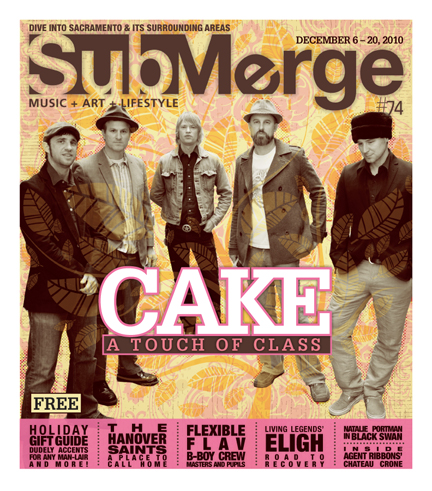
Cake’s Showroom of Compassion will be in stores Jan. 11, 2011. If you do still buy albums, this will be a good one for you to get. If you’d like to sign up for Cake’s e-mail newsletter, go to www.cakemusic.com/news and click the link on the top left of the page.
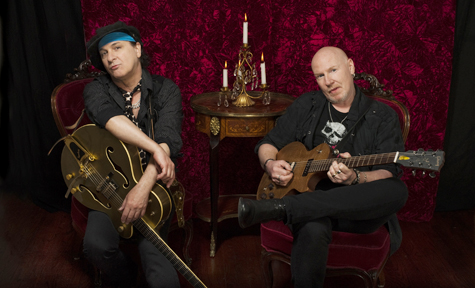
Calling The Batusis a “punk rock supergroup” seems cliché, but it’s accurate. Sylvain Sylvain is the wildly charismatic New York Dolls guitarist and Cheetah Chrome has wielded the axe for Cleveland icons Rocket From the Tombs and Dead Boys. Both of these guys have heavily influenced the direction of punk rock throughout their lengthy careers, but this is the first-ever collaboration between the two longtime friends. In Batusis, the two share guitar duties and take turns on lead vocals. Their self-titled EP, released by Smog Veil Records, is four tracks of loud, brash and fun punk rock, just the way they like it. On the EP Chrome and Sylvain are backed by the rhythm section of Joan Jett’s band, The Blackhearts, but when they hit Sacramento on Oct. 23, 2010 at the Blue Lamp the two will have Lez Warner of The Cult on drums and Sean Koos (who also lends his abilities to The Blackhearts) on bass. Opening this epic night as local punk heroes The Secretions, further solidifying that this is a must-see show. Tickets are $10 in advance and $12 at the door.