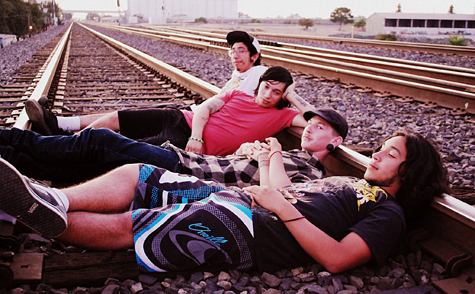
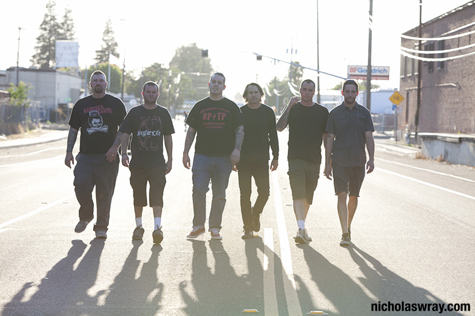
Nightmare in the Twilight to celebrate their debut LP at Hella Metal Fest
One fateful day, Michael Alvarez went to McDonald’s and came home with more than a value meal. He ended up with a band.
“My friend was too lazy to get McDonald’s, so he sent me out to get McDonald’s,” Alvarez explains. “On my way there, I ran into an old friend from high school, and he wanted me to join a band with him, and that’s how I ended up meeting Shorty [Ruben Trejo].”
Trejo and Alvarez started jamming together around late 2008, by Alvarez’s account, but it wasn’t until the summer of 2009 that their current project, Nightmare in the Twilight, came to be.
“My guitarist at the time was a little more into partying and doing other shit, so it turned into me and Mike jamming out and working on some songs,” Trejo tells Submerge over the phone. “Playing whatever came to mind.”
Just two years later, the band, which features Alvarez on guitar, Trejo on drums, Zaryn Mankins on bass and Trejo’s little brother Santana Estrada on vocals, is ready to release their eponymous debut LP on Oct. 1, the same day they will take the stage as part of the Hella Metal Fest at the Crest Theatre. Though it hasn’t taken a long time for the Sacramento-based death metal band to get to this point, Nightmare in the Twilight’s road toward maturity certainly hasn’t been traveled without some growing pains along the way.
One such pitfall along the band’s path was finding a vocalist. Alvarez says that Nightmare in the Twilight’s original vocalist “wasn’t too into the band.”
“He’d wander off on his own,” Alvarez elaborates during our phone interview. “He’d have random guys hop up with him while he was performing, and they weren’t really any good at all. We realized we needed somebody serious.”
As it turns out, family ties would create the strong bond the band needed from its vocalist. Enter Estrada, who needed some convincing from his big brother before he decided to give it a go.
“He’d always been into vocals,” Trejo says. “It was the main thing he’d heard in metal, the first thing he’d notice in any band were the highs, lows and the mids. One day I heard him in his room practicing, and I was like, ‘He’s getting pretty good.’ We did a show without a vocalist and had a couple of guys come up and do vocals, which really didn’t turn out the way we thought it was going to. We had another show coming up, and we wanted to be more legit about it. I hit him [Estrada] up and said, ‘You’ve got to try it. You’ve got to come do these vocals.’”
With their frontman situation taken care of, the band didn’t waste much time getting into the studio. Nightmare in the Twilight released their first EP in August 2009, The Big Sexy EP, which was engineered by Martyrdom’s Phil Waters.
“He wasn’t the coolest guy, but he recorded us and did a decent job,” Alvarez says. While the situation may not have been ideal, both he and Trejo agree that it was a good learning experience for the band.
“We did learn about recording,” Alvarez says. “We started learning about how to fix our tone better, how to keep timing, what we should and shouldn’t do in the recording studio, not waste time. It was a good attempt at a demo for a band that started that year.”
“The main thing that it taught me to never try to do a split demo with a band that’s not really sure what they’re going to be doing,” Trejo adds. “We tried to do a split demo with one of our friend’s bands, and it just totally fell through, took too long in recording. So that definitely taught me to be well-rehearsed before you come into the studio, because time is money.”
Nightmare in the Twilight took this past experience into the studio this time around to create what is a more polished product. The band’s self-titled LP was recorded with Bob Swanson at Mayhemeness Recording Studios in Sacramento. Trejo says that focused preparation was a big part of their approach heading into the studio this time around.
“The main thing was we went in there well-rehearsed,” he explains. “We knew what we wanted and when we wanted it. Some songs had little changes, but it was never ‘how are we going to pull this off?’
“Last time in the studio was more jamming, and this time, we found an exact tempo of what we were going by,” Trejo, who was really looking to push the tempo of each song on the LP, continues. “We were very well structured about how fast we were going to be and where everything was going to be placed.”
Alvarez believes that the more structured approach also arose from multi-tracking the guitars this time around.
“Our demo was just two guitars, and it didn’t sound that great in certain parts when one guitar would cut out and wait for the other one to do the riff,” he says. “We did more layering of the guitar work so it sounds more full. It’s entirely together instead of parts coming off and on.”
The album contains songs that also appear on The Big Sexy EP, but have undergone major overhauls. For example, “The Young and the Restless” (which is a tad sluggish on the EP with an ill-fated jazzy breakdown toward the end of the track) explodes on Nightmare in the Twilight; even the jazzy bit pops with the crisp snap of Trejo’s drums behind palpitating guitars before erupting into the death metal fury that is the band’s signature.
“Our old EP was pretty decent, but we were still new at the time,” Alvarez says. “A lot of off-timing on the guitars, a lot of errors. We’ve changed up so much since we recorded those back in 2009. When we came into the studio this year, it was more like, let’s finalize these and make a perfect version.” Alvarez also adds that the songs on the LP that have been salvaged from the eight-track EP feature rewritten lyrics.
The band’s lyrics, though they may be difficult to discern to the casual listener, stem from a variety of places and are a true collaboration between the band members. Nightmares–hence the band’s name–play into many of the lyrics Alvarez wrote, along with those by the band’s old guitar player Joey Garnica. Alavarez says that he also examines death and dying in the words that he writes, as well as tackling existential questions like what comes after death. Songs such as these could probably be considered consistent with the band’s genre; however, then there are songs like “Chicken Sauce,” which tells the tale of a man who’s driven crazy after eating sauce from McDonald’s.
“We don’t try to come off as a comedy band, but we have a little comedic side to us,” Alvarez says. “We’re not like this uptight, big badass metal band or something like that. We like to show people that we’re not crazy.”
Nightmare in the Twilight is still in the dawn of its young career, and for the moment, though they take their music seriously, it would seem from our conversation that the band is first and foremost looking to have fun and make music they enjoy. And unlike the menu items available at the fast food chain that inadvertently sparked their formation, Nightmare in the Twilight is hoping to make music that isn’t so plastic in its sameness.
“There are a lot of bands in the Sacramento area, I’m not naming names, but they don’t try to write music for themselves,” Alvarez says. “They try to write music for a crowd, and usually the songs sound the same every time. We usually try to write music we really enjoy. I believe all of us are influenced by a lot of different styles, so the way it comes out not every song is the same.”
Hella Metal Fest will hit the Crest Theatre, 12 bands strong, on Oct. 1. Tickets are $12 in advance, $15 at the door, and can be purchased through Tickets.com. Go to Hellametalfest.com for full lineup information and to find links to buy tickets. Nightmare in the Twilight’s self-titled full-length debut will be available starting Oct. 1. The band’s The Big Sexy EP is available for free download at Nightmareinthetwilight.bandcamp.com.
30 Minutes or Less
Red Hour/Columbia Pictures
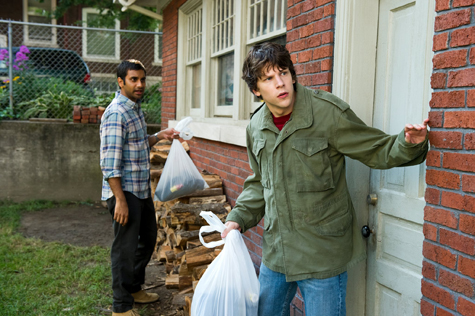
Real friends will do anything for you. They’ll always have your back, be your shoulder to cry on or kick you in the ass if you need it and buy you a beer afterward. They may even help you rob a bank if you were kidnapped and your abductors strapped a bomb to you and promised to blow you to bits if you didn’t come up with $100,000. The last example may sound far-fetched, but hey, stranger things have happened. In any case, it’s the scenario explored in 30 Minutes or Less, the latest collaboration between The Social Network’s Jesse Eisenberg and his Zombieland director Ruben Fleischer.
Eisenberg stars as Nick, a pizza boy and serial underachiever. He’s stuck in a job he hates, but doesn’t seem to be lamenting in the sort of malaise you’d expect to find in a twenty-something and going nowhere protagonist. Nick is content in his adolescence–at least enough that he doesn’t feel the need to go out and find a real job like his best friend Chet (Aziz Ansari), who has just “sold out” and become a teacher.
As friends go, Nick and Chet aren’t really that cool to each other. Chet is partially responsible for ruining Nick’s parents’ marriage, thus ruining his life; Nick on the other hand pines for Chet’s sister Kate (Dilshad Vadsaria) and even slept with her once, a serious infraction of the bro code. Meanwhile, in the swanky part of town, another bromance has villainy in its heart. Dwayne and Travis (Danny McBride and Nick Swardson respectively) are probably even bigger losers than Nick, though Dwayne gets to live in the lap of luxury. His ex-marine dad (Fred Ward) won $10 million in the lottery. He lets Dwayne and Travis dick around the house at their leisure, but he’s not all that happy about it. Eventually Dwayne tires of his father’s constant jibes and cooks up a hair-brained scheme to cash in on the old man’s dwindling fortune–they’ll kill him of course. They contract a hitman through a local stripper named Juicy, kidnap Nick and strap a bomb to him and wait for their plan to unfold. And it does. Sort of.
30 Minutes or Less harks back to another high-profile comedy of the summer of 2011, Horrible Bosses, which was also a laughfest that used murder as its central motif. Surprisingly enough, 30 Minutes…, though it has a younger cast and is aimed at a slightly younger audience, is the darker of the two. It’s not black humor by a long stretch, but the film’s consequences seem dire. Nick does have a bomb strapped to his chest, after all. After Nick and Chet miraculously pull off their bank heist, a battle of wills ensues between Nick and Dwayne that actually layers some level of suspense on top of the laughs.

Overall, though, this is a silly, quirky caper and we’re all the better for it. It’s also a great vehicle to see three sharp comedians and one wunderkind actor light up the screen. Those familiar with McBride’s shtick will get plenty of what they expect from HBO’s Kenny Powers. Good news is he throws in enough curveballs as Dwayne that it doesn’t seem stale. Ansari, wielding the least amount of star power, doesn’t get lost in the shuffle as the ex-slacker doing his best to shed the mantle of man-boy and make something of himself. Ansari’s lone classroom scene, in which he embarrasses one of his students in front of the rest of the class, is one of the film’s highlights. Eisenberg seems less the Michael Cera clone here and portrays a more masculine front that suits him well as the leading man. Swardson, though, really sets himself apart as Travis, Dwayne’s soft-spoken but ultimately moronic sidekick. There’s a lovability to the affable yet devious Travis that even makes his more ignorant/racist comments seem almost charming.
The moral of the story here is that friends have to stick together–no matter what. 30 Minutes or Less will remind you just how important your best brochacho really is. This is perfect viewing for your next man-date, though you’ll probably want to sit at least one chair apart (because you’ll need to put that six-pack you snuck in somewhere).
Brooke White and Jack Matranga Write Free as Jack and White
On paper, it would seem that indie rocker Jack Matranga and American Idol alum Brooke White have very little in common musically. But good music isn’t made on paper. It’s made by people who share an undeniable connection. Though the two songwriters may have had different paths that brought them to this point, it’s apparent from listening to their debut EP as Jack and White, Gemini, that the duo may very well be meant to be.
While both describe their partnership as remarkably easy, getting together was a bit difficult. Matranga, a Sacramento native, was guitarist for Self Against City, which released Telling Secrets to Strangers in 2007 on the Rushmore imprint of Drive-Thru Records. Since then, he has worked as frontman for Tin Can Notes. White released an album in 2005 with co-writer/producer Tim Simms titled Songs from the Attic, but it wasn’t until she became a finalist on the seventh season of American Idol that she received national attention. While she didn’t win the competition (though showed well by landing in the top 5), her time on the program was spent wisely. She ended up starting a record label with Randy Jackson (June Baby) and released a second solo album in 2009, the aptly titled High Hopes and Heartbreak. She was set to work on a third solo album when she met Matranga and both their courses were altered.
White and Matranga were set up to write together by Brooke’s manager. But it took some effort to actually get the two songwriters in a room together. Matranga says they tried for “four or five months before we actually did it.” White remembers that the two had actually met prior to that at one of her gigs at the Hotel Café in Los Angeles, but Matranga may not have made the best of first impressions.
“Technically, we did meet at the Hotel Café, and Jack came to meet up with Brad [Fuhrman], who’s our manager, to go to a Paul McCartney concert,” White says. “So they came and left my show to go see Paul McCartney.”
Perhaps getting stood up for a Beatle is understandable. A year later, in February of this year, the two got together to write for White’s third solo album. However, by April, they’d decided to start writing as a band instead; thus Jack and White was born.
“We would set up these writing sessions, and I was writing to exhaust,” White explains. “I just was not in the mood to do any more co-writes. I was like, ‘I just can’t write any more today.’ I would call Brad and be like, ‘Can we reschedule with Jack? I’m really sorry.’ When we finally wrote, it was like, just… There you go. Here we are.”
“Yeah, that wasn’t so bad,” Matranga adds, laughing.
Though the two were set up on a sort of musical blind date, the sparks starting flying almost immediately. It took both of them by surprise.
“It’s not forced at all, and it’s kind of weird… I’ve never written with anyone before like that, like a writing session style, where you’re writing for someone else’s record,” says Matranga, who was comfortable working in the band dynamic prior to Jack and White. “This was a lot more focused, and I guess a lot more free-flowing, because we just naturally let lyrics, melodies and chord progressions come out. It was all a jumble of natural expression.”
“Free” and “natural” are words that could be used to describe Gemini, a six-song EP that was released on June Baby Aug. 23, 2011 and produced with indie film composer Danny Cocke. Each track has a smooth-as-silk, instantly hook-y sound. It’s not music you have to think about, just pop on and enjoy. In the following interview, White and Matranga talk about what it’s like finding musical serendipity and why they’ve decided not to overthink anything in regards to Jack and White. We spoke to the duo over the phone from Los Angeles on the day of Gemini’s release.
I think this is the first time I’ve ever spoke with a band on the day of their record release. How has your day been?
Brooke White: We’re writing a new song.
Jack Matranga: Yeah, we’re writing a new song right now.
BW: We don’t quit, James, we just keep rolling here. No rest for the weary.
Can you talk about what you’re working on right now?
JM: Yeah, it’s a new thing that we wrote while we were recording a little acoustic session. We just started working on it out of nowhere and got a few bars of it and decided that we needed to write it in the next couple of weeks. It just turned out that we were getting together today. Got together last week to work on it a little bit and decided to finish it up today, which is kind of random. We didn’t really plan on finishing it up the day we released the EP.
It seems like that’s how a lot of the band has come together. You didn’t really plan on it, but it ended up working out.
BW: No plan is the perfect plan.
Brooke, had you heard any of Jack’s music prior to this?
BW: No, nothing, never heard a darn thing. I knew that he was in Tin Can Notes, but that was all I knew. Brad had hardly given me any introduction. I’d remembered meeting him briefly at the Hotel Café, like vaguely. I totally remembered meeting him, but I couldn’t remember what he looked like…
Have you since gone back and listened to it at all?
JM: We’ve listened to so much of each other’s music that we’ve done in the past now after knowing each other, more than we ever would have had we never had met.
BW: I don’t think Jack would have ever naturally listened to my music, and I don’t think I would have ever found out about his music. It’s so funny, because I think that was one of the things for me when I was thinking about us writing, part of me in the back of my mind was thinking, “Really? Are we really going to be good to write together?” He’s this indie, pop rock kind of guy. I thought he was that hip, rock…not that I don’t think he’s like that anymore! I don’t know if I thought we were going to be a great musical match. Whatever it is that we are together, works very nicely. I was saying to Jack that a lot of my previous writing sessions, I write with songwriters–quote, unquote–people who are doing this every day for a living.
JM: Clock in, clock out kind of guys.
BW: Not that I’m saying Jack doesn’t do the same thing, but older, established writers. I hadn’t written with someone so close to my age with such a youthful, fresh energy… Now that makes some of my other writers sound like…I’m not trying to hack on anyone! I just think we’re on the same wavelength of energy.
I would imagine, and correct me if I’m wrong, a lot of the people you’re used to working with don’t just work with you, but they also work with…
BW: Yeah, a lot of writers. It was just completely different, and maybe because Jack hadn’t worked in this kind of environment is what made it so fresh.
Did that take a bit of adapting on both of your parts? Since Jack was used to working in the band dynamic, and Brooke was used to working with more established songwriters?
JM: It was very easy.
BW: No adapting. If anything, it was adapting to something that was easier than anything I’d ever done before.
JM: It was just not overthinking and allowing it to be such.
Listening to the EP, it sounds like you’ve been working together for a long time, but you really haven’t.
JM: That is one of the most magical parts of the entire thing.
BW: That’s something you can’t make happen. You can’t force it. It’s just lucky. You luck out when you find something. That being said, it’s not like Jack and I just started this. On our own, we’ve been developing, growing, trying, beating our heads up against the wall in a variety of ways to finally get to a place where it’s like, “Woah, there you go.”
JM: This is how it’s supposed to be…
Brooke, you were supposed to be working on a third solo album. Are you still working on that solo album?
BW: No. Not right now. I’m not saying that I won’t in the future, but my whole focus has shifted because, like I said, I’m taking it as it comes. This is a gift to me. It’s a gift, it’s rare, and I want to continue with the thing that feels the most natural and has the most inspiration and energy around it. That’s when I feel you really create art. There’s the craft part of it, the work part that we all have to do, and I definitely do that. I’ve worked at it. But when you hit inspiration, it’s definitely better than something that you could have worked a million hours on. Just because you’ve worked super hard on it, doesn’t make it the best. I think the inspired stuff, at the end of the day, usually takes the cake. I’m not saying that I’m not going to do that [a new solo album], but I’m just so intrigued by [Jack and White], I’m very fulfilled by it, so that’s where I’m going with it.
I saw the acoustic video for “Telephone Games.” I think Brooke says right before you start playing, “I’m thinking about it too much,” and then you recount and start all over. Has that become a mantra for you guys, or is there a certain head space you have to get into where you just kind of clear your mind?
BW: It’s weird. You have to get there without trying to get there.
JM: The performing of it is a completely different ball game than getting in the mindset of writing. Everyone has their own thing for getting in the mindset to perform, and I think that’s what was being referred to in that video. Mostly with the project and the writing, we’ve fully embraced the freeform spirit, don’t worry too hard, don’t over think. That has probably been said at every one of our writing sessions.
BW: And not just in the writing. We didn’t have an A&R guy standing over our shoulders… We had a plan. It’s amazing we’ve been able to come out of this in a timely manner with a such a great finished product and also enjoyed it and went at a pace where it wasn’t stressful. We pulled a few late-nighters, but the whole thing never felt pressured. There was no pressure. It was just an experiment that worked out really well.
You didn’t go into this with any expectations, but now that the EP is released, do you have any expectations for the project?
JM: I have one. It includes playing the music live in front of people. As a fan of music, when one of my favorite artists puts out a record, I expect to see them live playing those songs somewhere near me. For all the people who have now heard the record, I’d imagine that if they enjoyed it, they’d want the same thing, and we should deliver. As far as anything beyond that, I don’t think it’s good to have expectations.
BW: I have a hope that we get to make more music. I want us to make a record. That’s the only other thing that I can see that happening.
Do you see anything standing in the way of that?
JM: You can’t tell what can come up. You can’t tell the future… We’ll definitely not put anything in the way of that happening if that’s the question.
BW: The strategy of taking it as it comes is working so well right now, we really don’t want to mess with that.

See Jack and White live at Luigi’s Fungarden on Sept. 17. The show starts at 8 p.m. and has a $7 cover. Also performing will be Shannon Curtis and Sherman Baker. The Gemini EP is now available through iTunes, and the band was even featured as the online music retailer’s Single of the Week.
Cowboys and Aliens
Universal Pictures
There is some truth in advertising. Cowboys and Aliens offers exactly what its title suggests. There are plenty of cowboys and aliens (more of the former than the latter–cowboy hats are cheaper than elaborate CGI sequences). Even cowboys’ more traditional foils, the Indians, are thrown into the mix. If Cowboys and Aliens were to follow in the footsteps of other matter-of-factly titled films, such as Snakes on a Plane perhaps, at the very least, there would be campy good times to be had. Instead, Jon Favreau’s latest action epic seems completely unaware of how ridiculous its premise is, and in this case ignorance is not bliss.
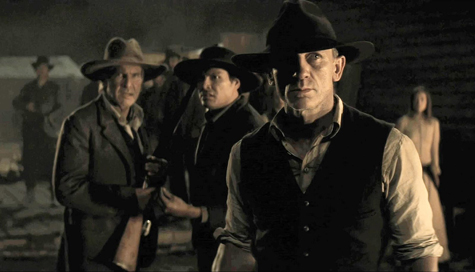
The film opens with Daniel Craig doing what he does best: kicking ass and taking names as a mysterious dark horse-type character. He wakes up in the middle of the desert with a strange metal bracelet fixed to his left wrist. He doesn’t know who he is or how he got there. A group of stock ne’er-do-wells surround him, and he swiftly dispatches them, even knocking one dude off his horse with a flying tackle. It was pretty sweet. We all eventually find out that Craig plays Jake Lonergan, a sort of Robin Hood-type bandit… well, maybe not as altruistic as the rogue of Sherwood Forest, but definitely not a jerk-type bandit either. He’s wanted for stealing some gold from Woodrow Dolarhyde (Harrison Ford). Lonergan is incarcerated after an altercation with Dolarhyde’s worthless son Percy (Paul Dano) and is about to be shipped off to the federal marshal, but he avoids earthly prosecution–and Woodrow’s thirst for good ol’ fashioned lynch mob-style retribution–when aliens swoop in and raze the tiny Old West town and royally fuck up everyone’s shit. Because this is Cowboys and Aliens, not Cops and Robbers.
From there, Lonergan, Dolarhyde and an assortment of cardboard supporting characters tromp across miles of dusty, desert terrain on horseback so they may rescue their friends and loved ones and combat the superior technology of the alien horde. Sam Rockwell plays a barkeep named Doc, a man who saw his wife wrangled by an alien space ship and has never even fired a gun before; and Olivia Wilde plays Ella Swenson, a mysterious and beautiful woman who seems to know a lot more about all this alien business than she lets on.
It would seem like the perfect formula for a brainless but enjoyable romp, but Cowboys and Aliens is sorely lacking in the romp department. Mostly, it’s a bunch of panoramic shots of horseback riding (so much horseback riding) and people who’ve seen crazy shit in their lifetimes imparting gruff, no-nonsense words of advice to those who have yet to experience things like war or alien invasions–words of wisdom about keeping your gun close and what it means to be a man.
Unfortunately, this isn’t True Grit, not by a long shot. As far as explosions go, there are plenty, but other than a sequence where a still amnesiac Lonergan and company encounter the bandit’s old crew, there is never much in the way of fun. Cowboys and Aliens feels too heavy and dour. It never gives much of a wink or a nod to the audience to tell us we should just lighten up and enjoy the ride (via horseback, of course). This is quite a surprise with Favreau at the helm, though it may not be entirely his fault. Five people are given screenwriting credits (including Lost’s Damon Lindelof). Perhaps it’s a case of too many cooks. In any case, as director of the first two films of the Iron Man franchise, Favreau took a slightly less well-known comic book character (at least compared to your Spider-Mans or Batmans) and turned him into a household name. Whereas those films melded action and humor to appeal to even those who don’t proclaim to be comic book fans, Cowboys and Indians presents a stone face as if its mere insistence that this bullshit must be taken seriously will make it so. Word of advice: It didn’t.
The Naked and Famous’ formula for international fame
Parents often discourage their children from getting involved in creative fields. Rightfully so. Success in music, art or filmmaking is difficult to obtain. Not only is talent necessary, but you need to be thick-skinned and not get caught up in the hedonistic trappings that often surround such pursuits. Parents have no shortage of cautionary tales they can pull from to dissuade their offspring from trying to be an artist. The Naked and Famous, however, is not one of them. In less than a handful of years, the band has already become renowned not only in their home country of New Zealand, but internationally. They almost make it look too easy. Maybe they’re just that good.
New Zealand is a small island nation in the Southern Hemisphere that most Americans probably confuse as Australia. According to Google, New Zealand’s population was just 4.3 million in 2009–roughly half of that of the United States’ largest city, New York, which is where Submerge caught up with David Beadle, bass player for The Naked and Famous, and one of the band’s newest members. The Naked and Famous was set to play a sold-out show at the Music Hall of Williamsburg in Brooklyn later that night. It was one of the last dates in a small tour of the eastern United States, which revolved around this year’s Lollapalooza in Chicago. A short video taken from The Naked and Famous’ performance at the mammoth alternative music (if that’s what it’s still called) festival was posted to the band’s blog on Tumblr (Tnaf.tumblr.com). The video–a quick panorama of the band’s eye view from the stage–was taken mid-set of the band’s performance on that brutally hot and humid Midwestern summer day in early August. It’s a sweeping shot of the crowd and back to the stage, ending on electronics wizard Aaron Short, one of The Naked and Famous’ three main songwriters. It shows a sea of people in Grant Park glued to the stage, arms raised and howling despite the sweltering temperatures and downpours. It was a transcendent moment not entirely lost on Beadle, who, when we spoke, was still trying to process the magnitude of it.
“Honestly, my knowledge of Lollapalooza was the episode of The Simpsons, where Homer gets shot in the stomach,” Beadle joked. “I know Lollapalooza is a massive festival, and big bands have played there. Alice in Chains played it in 1993 when it was a traveling festival. For us to be able to play there had been an amazing opportunity–and very surreal.”
Surreal is an accurate adjective for Beadle’s life since joining The Naked and Famous. In February 2011, the band left their hometown of Auckland, New Zealand, and have relocated to London, though Beadle said that he and his mates “haven’t really lived in any one place at all since then.”
“We’ve spent enough time there to get a feel of the place,” Beadle clarified. “Where we come from is pretty quiet–comparatively. It’s a quiet beachside town. London’s a huge, massive, bustling city.”
Though they may not have spent much time there so far, The Naked and Famous have already become accepted in their new home. The United Kindgom’s NME awarded the band its coveted Philip Hall Radar Award, which is given to promising up-and-coming bands. So surprised by the award, co-lead vocalist and songwriter Thom Powers remarked in his acceptance speech, “Thank you very much. I’m not even sure anybody even knew who we were here. We’re not from around here, but cheers!”
“It’s really interesting, because there’s no comparison in New Zealand,” Beadle said. There’s no NME, there’s no BBC. When we found out about that, like, none of us really knew what to do, what the consequence of it was or anything. We had to sit down and Google it and find out who the other artists were that we were nominated alongside. If anything else like that ever happens again, we’re probably going to have to Google it.”
Beadle echoed Powers’ sentiments regarding the award.
“We never had dreams of grandeur in that respect,” he said. “We all wanted to be musicians, and we all wanted to have that as a career, but to expect that was amazing.”
While the Philip Hall Radar Award may not have been familiar or expected, The Naked and Famous have become no strangers to accolades in their short existence. The band’s debut full-length album, Passive Me, Aggressive You, available through Universal Republic in the United States, has consistently charted in the top 100 globally, but in their home country, The Naked and Famous received a rare distinction by topping the pop singles chart with the utterly infectious “Young Blood,” which propelled Passive Me, Aggressive You (released Sept. 10, 2010) to No. 1 on the New Zealand albums chart. They were the first homegrown band to do so in 16 years. Beadle said that New Zealand’s Top 40 is usually dominated by American and British artists. But The Naked and Famous’ heady electropop, infused with the snarl and explosiveness of ‘90s era alternative rock, helped the band buck that trend.
“To be amongst the Katy Perrys was really strange, but it was especially strange for us because we’ve been around since 2008, and all we wanted to do was get in the Top 10 of college radio/alternative, to be No. 1 on that would have been a big deal,” Beadle explained. “When ‘Young Blood’ was released, that’s what we were expecting. We were like, ‘Hopefully we will get to the top of the college/alternative chart.’ But then we had our managers calling us and saying, ‘You’ve got to come down here and have a beer. You’re on the top of the pop chart.’ We were like, ‘What does that mean?’ It took a long time to sink in for us. They were really excited, but we were like, ‘OK, but can you just wait until work’s over? I still got another three chapters to read.’ It wasn’t registering for us.”
What it all ended up meaning for the band was their songs in popular U.S. TV shows such as Degrassi and Gossip Girl and numerous trips around the world. Not bad for Beadle, who before his time in The Naked and Famous, played in metal bands around Auckland, as did Powers and drummer Jesse Wood. The latter two, Beadle said, have been known to bust out Deftones songs during sound checks (Powers named White Pony as his favorite Deftones album).
“We all grew up listening to ‘90s alternative rock–Tool and Deftones,” Beadle said. “That kind of stuff. When you grow older, you grow into new things.”
Beadle said that The Naked and Famous have already started working on new material. The band recently had time at a studio in Wales. He joined the group along with Wood just around the time when Short, Powers and co-lead vocalist and songwriter Alisa Xayalith were beginning to work on Passive Me, Aggressive You. Beadle admitted he didn’t have much to do in the writing of the album, but things may be different when the band comes to compile a new one.
“For this next record, because we’ve been with each other now for about two years, we’re able to have demos set and work in a room together, and come together that way as well,” he said.
Beadle called the songwriting trio of Powers, Short and Xayalith inspiring and prolific. Considering that they have already produced two EPs and a full-length album in just a few years, those adjectives may not be hyperbole. Though the new material Beadle and company had worked on in Wales is most likely still in its formative stages, he said that the band wasn’t making any radical tweaks to its sound just yet.
“Passive Me, Aggressive You is different from the first two EPs, but we’re coming now to formulate a very solid sound that we’re all happy with, so that will continue,” Beadle said.
It would be difficult to argue with those sentiments, considering The Naked and Famous’ success thus far. Parents, if you want to scare your kids away from wanting to be rock stars, you may just have to find examples elsewhere.
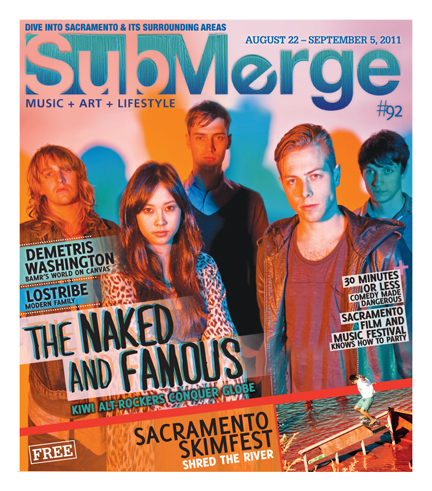
The Naked and Famous will play Harlow’s in Sacramento on Aug. 31, 2011 with White Arrows. Tickets are $15 and can be purchased through Harlows.com.
Harry Potter and the Deathly Hallows: Part 2
Warner Bros.
The end has come. It’s a bittersweet day for Harry Potter fans across the world as the young wizard has raised his wand against his foe Voldemort for the final time. Truth be told, the most loyal fans, the ones who have read the successful series of books, have already known the fate of Potter and his close friends Hermione Granger and Ron Weasley for years. The final novel of J.K. Rowling’s epic teenage fantasy series was released in summer 2007. However, now that the film adaptations have come to a close, it seems like the world now must move on from the trials and tribulations of their favorite wizard and find a new hero. It’s always sad to say goodbye, but at least Deathly Hallows: Part 2 is a fond farewell.
It’s hard to believe that the first Harry Potter film came out 10 years ago, just two months after 9/11. Maybe it was because the country was eager to escape reality that America–even the many of us who hadn’t read the books–so eagerly grasped on to the adventures of three kids attending magic school; but whatever the reason, it’s hard to deny these characters’ impact on pop culture.
As film franchises go, not only was the Harry Potter series wildly profitable, but it also set a high water mark in scope. There are franchises that have spawned more films–the 007 series comes to mind–but for the most part they’re episodic. Here, we see a character grow practically from birth to manhood. Trilogies are hard enough to pull off (just ask the Wachowski Brothers and Francis Ford Coppola), but with the Harry Potter series, filmmakers asked audiences to bear with them for eight installments, and had them eating out of their hands every time. Even though the people behind the Harry Potter series were working from source material with a built-in fan base, it’s still a remarkable feat.
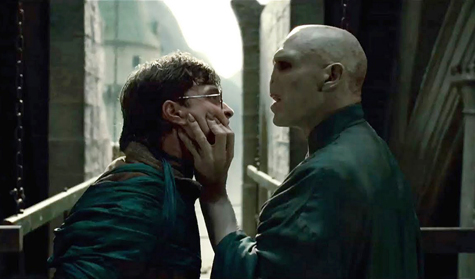
But is Deathly Hallows: Part 2 any good? It is, and perhaps one of the best films in the series (I’d rank Half-Blood Prince as my No. 1). The story picks up exactly where Deathly Hallows: Part 1 left off. Voldemort (Ralph Fiennes) has gained possession of the most powerful magic wand in the world (the Elder Wand) and Dementors have Hogwarts School of Witchcraft and Wizardry, now with the treacherous Severus Snape (Alan Rickman) at the helm, circled. Harry Potter (Daniel Radcliffe) is public enemy No. 1, and he and his closest friends Ron Weasley and Hermione Granger (Rupert Grint and Emma Watson respectively) must regroup in a last-ditch effort to end Voldemort’s reign of terror once and for all.

Whereas Deathly Hallows: Part 1 was more psychological and rife with dark tension, Deathly Hallows: Part 2 is all crescendo–an explosion of supernatural action, epic set pieces and dramatic showdowns. Cinematically speaking, it’s a breathtaking film full of beautifully fantastic and frightening imagery. Its storytelling is as magical as its subject matter. David Yates, who directed the previous three installments of the series, is once again back at the helm. As the series has turned darker, his style seems to play up the gravity of the situation. Sweeping panoramas are intercut with quick close-ups, which takes the action from macrocosm to microcosm. Even as Hogwarts is severely damaged in a battle between the good wizards and the forces of Voldemort, the conflict is shown mainly through more of a personal lens as we see the looks on the faces of those affected by the violence. Later, as Harry ventures into a dark wood to face down his most feared foe, we’re presented with a stark and moody image, free from any pomp.
High fantasy at its best: dragons and witches, wizards and goblins. You were either on board way before this film came out or you weren’t. But for those who were caught up in this series, these films will be surely missed. Without the Harry Potter series to look forward to, cinemas worldwide will just have to wait with fingers crossed until the next generation-defining franchise comes along. Don’t hold your breath…
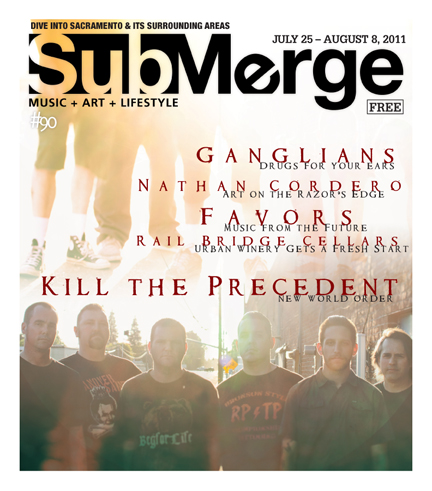
Kill the Precedent load up with a new EP
Industrial metal might conjure images of military-like precision with perhaps a totalitarian-style frontman at its controls. Kill the Precedent certainly evokes those images with their music. Thundering beats–both live and electronic–blast behind thrashing riffs and the two-pronged vocal attack of Twig the Exfoliator and The Ugly American. However, speaking with the two vocalists in a recent interview, the guys seemed jovial, bordering on jolly. For instance, if you were to call The Ugly American’s cell phone, you might hear The Dead Kennedys’ classic “California Uber Alles” playing while you waited for him to answer your phone. He said that since Jerry Brown was re-elected as governor, it seemed appropriate. “It’s such a fucking mess out here,” he quipped. “I thought it was pretty damn funny. At least it’s not an actor.” If KTP was indeed an army, in demeanor, they’d be more akin to the cool jokesters from Stripes than the cold-blooded killers of Full Metal Jacket.
Make no mistake, though; the band’s music is a no-holds-barred aural assault. KTP is ready to release a new EP, Stories of Science and Fantasy, which will consist of six original songs and two covers (The Smiths’ “Death of a Disco Dancer” and Jessica Lea Mayfield’s “We’ve Never Lied,” which Twig says was recorded in a hotel room in Oakland). Evoking the days when bands like Ministry and KMFDM crashed mainstream rock’s party, songs such as “Questions for Weapons” wield an imposing arsenal or metal riffs and huge beats, courtesy of electronic beatsmith/guitarist Hamburger, guitarist Killsbury and drummer Sgt. Pepper, while “Free Reign” is a throbbing, almost dance-y track highlighted by Jon the Jew’s pummeling bass line and an underlying, monolithic electronic groove.
Members of the band are no strangers to the Sacramento rock scene. They have played in bands such as Red Tape, Diseptikons and Rivithead in the past, but Kill the Precedent started as a side project of The Ugly American and Hamburger.
“Hamburger and I got together in 2006 and started screwing around with the drum machine,” The Ugly American explained. “We were kind of doing a little Big Black kind of deal, just having some fun. We recorded some music and got a hold of Twig, and I said, ‘I got to record some vocals, can you come down and help me out?’ We recorded vocals. Twig and I had been friends for many years, and he was giving me this blank stare, so I was like, ‘OK, you didn’t like it, but thanks for coming down and recording.’ And he said, ‘No, I want in. I’m fucking in.’ He took over from there.”
Twig’s introduction to the band was through the song “Cop Out,” which will appear on Stories of Science and Fantasy. More songs were started, but Twig said they were left unfinished. As each new member of the band became a permanent fixture, the songs began to flesh out.
“I wanted Killsbury to put a guitar riff over that–just that one song [“Cop Out”],” Twig said. “I’ve been in bands with all these other people in Red Tape and Diseptikons, and I was like just do this one song, but then it became do this song and that song…and eventually that’s how each member has come to be in the band.”
For The Ugly American, Kill the Precedent became a way of rediscovering the music he loved to make in the late ‘80s and early ‘90s with bands such as Rivithead and Battalion 53 after years of playing in punk bands.
“It dawned on me that I really missed that shit,” he said. “It was powerful, it was fun, it was endless. You could do whatever you want and get away with a hell of a lot more.”
In the following interview, KTP’s two vocalists fill us in on the making of the forthcoming EP and what draws them to making this kind of music. We find out that the reason why the harsh-sounding vocalists are so jovial is because they’re playing music they actually love.

It seems like industrial is a genre of music that’s gone back underground. Is that part of the excitement of revisiting it?
The Ugly American: Kind of, but not really. There’s no denying that those bands have had an influence. It’s obvious–and it should. It’s fucking awesome music… I can just say I missed the power of it.
Twig the Exfoliator: I liked the freedom of it. When we first started jamming around, with Jeremy from the Snobs, the bass player, was doing a bunch of electronic beats and me and [Ugly] would sing over it. It wasn’t hip-hop singing, but it was like a Fugazi overlay over dance music. I definitely wanted to not do just Ministry type stuff, but I wanted some melody in there to make it a bit different.
Listening to the music, you can definitely hear that sort of punk-type melodies.
Twig: Whatever [Hamburger] makes up beatwise and gives to us, half of them could be more on the dance side, some of them are more hard and fast, or slow and driving. If we hear something that we like, we’ll get working on that. Part of the reason why I wanted to do this was because I didn’t want to work with drummers anymore [laughs]. I was mad at all the drummers I’ve ever played with, and they take too long to set up. I was sick of loading all their shit into my van. That was the original idea, “Oh, we do whatever. We don’t need a drummer. Be like a hip-hop band, just plug in an iPod and do it like that.” That’s the way I wanted to do it. I wanted to put on a big production of a show, but within our budget.
Ugly: When Twig was on tour with Hoods–I think they were in Europe. He was adamant about it. He was like, “No drummers. I don’t want any fucking drummers.” Before we even put a drummer in there, I wanted one, because I wanted to add to the power and the beats and make it sound as large as we could. But he was all, “Hell no, we’re not doing it.” So, he goes to Europe and we grabbed our old buddy [Sgt.] Pepper. We brought him in to practice while Twig was gone. When he got back, he showed up for practice, and we were like, “Oh look, it’s…Pepper.” He was like, “You dick.” [Laughs.]
Twig: [Laughs] But it worked out.
Twig, you said you came in and did the middle section of “Cop Out,” but after doing that you wanted in. What drew you to this project?
Twig: I wanted to do something different. I wanted to do drum machines and just sample stuff by myself, but I’m completely computer illiterate. I don’t know how to do any of that stuff, and I couldn’t get anyone to do it. I talked to [Ugly], and they were already doing it for a couple of months, so I went in to record with them. The beats were big and huge, and it was something different. Since he let me even try something, and I could overlay a couple different vocal layers, and me and Sean could go back and forth instead of having to write a song’s lyrics all by ourselves–and you know, run out of breath–it made it better that we could share the vocal part. I liked that. I liked who he was working with, because I had known [Hamburger] from Rivithead and Battalion 53. We were also working with Evan at that point, Tha Fruitbat.
It seems like everyone who has come into the project has left their own stamp on it. Is that how the songwriting goes or do you start with the beats and go on from there?
Twig: Hamburger does all the beats and stuff. He’ll do two different parts with maybe some guitar, because he plays guitar too. He’ll just send us two-minute loops so we can get an idea about it. Then usually we will come up with singing structures, and then we’ll leave it alone. We won’t finish anything, and then we’ll bring it to practice and everyone else will listen to it and have their input. We start arranging the songs from there, cutting out parts, changing the drum beats, adding different parts, then we actually start writing the songs, the lyrics and stuff.
Ugly: It goes in reverse. It’s not the typical way you write a song, but it’s totally working for us.
Twig: Everyone’s really busy, so it’s all sent over the computer. Hamburger will send the beats to us, and we’ll pick the ones we like–the whole band will. And we’ll just work on it from there.
A lot of the bands we were talking about as influences before are largely associated with one guy, like Al Jourgensen for example, but it sounds like you guys actually play the songs to write them, which I think is kind of interesting for industrial music.
Twig: It’s like any other band. We’ll start arguing…but it all works out in the end as long as no one’s picky and tries to be the highlight of the song. Everyone knows their place.
Ugly: There are no egos, arrogance or bullshit. I know this sounds hokey, but it’s a completely collective effort. Everyone has their say. Like Twig says, we’ll argue to friggin’ death over it, but everybody’s got their two cents, and it just keeps piling things on without making it too much. It’s one cool idea after the other. It’s fun. I think the biggest thing is just that it’s a hell of a lot of fun.
I’ve seen that you guys have had girls in costume dancing at the shows, people covered in blood, synching up videos to your songs. Is that something you get together and collaborate on?
Twig: [Killsbury] handles most of the video stuff. He takes a while to get it with the beats and intros to every song. Except for [Hamburger], none of us are that great with computers. To do all that is a bit of a learning experience. And we don’t do it the way we should. We’re rolling into shows with DVD players and stuff, and a projector from like 1992.
Ugly: We try to change it up every time if we can. We did a good run, if you don’t mind me saying, at Blue Lamp. We called it “Cocaine Drug Dealers” or “Colombian Drug Dealers.” Everyone in the band was dressed up in cammo and we were dressed up in white suits. I filled up a bunch of baggies with flour. It was a great show, but it was the stupidest thing I ever did. Twig and I started throwing these bags of flour out into the audience and hit a fan. It went everywhere. Everyone was covered. I got off stage, and the guy was like, “It’s going to be $450 to clean up the place.”
Twig: It’s kind of like having sheet rock down or something. You can’t get rid of it… All the bottles were covered. We were like, “$450? No, we’ll come in tomorrow.” So we were hung-over as shit, and we had to be there at noon the next day. He was waiting for us with the mops, and he’s like, “Here you go.” Of course he opened the bar, and we got drunk and cleaned that place for four or five hours, and I can say it’s the cleanest it’s ever been [laughs]. It’s the cleanest club in Sacramento.
Kill the Precedent will play an EP release show at Harlow’s on Aug. 6, 2011 with Will Haven, The Snobs and City of Vain. Tickets are just $10 and can be purchased through Harlows.com. For more information on KTP, like them why don’t you at Facebook.com/killtheprecedent.
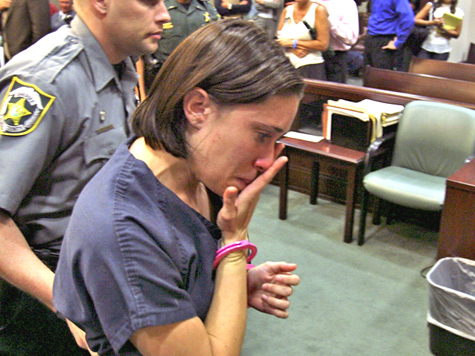
If I hadn’t been trolling Facebook at the time of the verdict, I never would have heard of Casey Anthony. Ignorance is not something I’m particularly proud of. Apparently it was big news–or at least people perceived it as big news. The 25-year-old Floridian was indicted on seven charges in the death of her 2-year-old daughter Caylee: first-degree murder, aggravated child abuse, aggravated manslaughter of a child and four counts of giving false information to a law enforcement officer in reference to a missing person. On July 5, 2011 a jury of her peers concluded, given the evidence that was presented to them (because that’s how our justice system works), that she was innocent of the first three charges (you know, the big ones) and guilty of the last four. She was sentenced to four years and up to $4,000 in fines, but since she was already in jail for the past three years (Anthony was indicted in October 2008), the judge credited her for time served and knocked a little bit off for good behavior. She’ll be free to go July 17, 2011. The Public was not stoked.
I won’t go into the tragic details of the case. I wasn’t following it, so I don’t know them. I’m more fascinated by the reaction. You’re probably way more familiar with them than I am, anyway, considering the Casey Anthony case was a pretty hot ticket. In Orlando, Fla., the Orange County Courthouse was the place to be this past Memorial Day weekend. People arrived at 5:30 a.m. in the hopes that they’d land one of the coveted 50 seats to see the public trial firsthand. Outside of Florida, Anthony was the toast of the talk show circuit as misery profiteers couldn’t talk about it enough. According to a June 20 article in the New York Post, on-air personalities such as Nancy Grace and Dr. Drew Pinsky left their competitors in the dust by dedicating their shows to the trial. Grace saw her ratings spike a mammoth 150 percent! While a Dateline special two-hour recap of the trial (for those of us who missed out) was the most watched program of the night it aired.
Murder-shmurder… For the networks it’s a shame a trial like this only comes once a century. Why, we haven’t seen anything like this since… you know who. I have to admit, I was all over that one. I used to rush home from high school just to see what Cochran and the boys were up to. I understand why people are so into trial drama. There’s a reason that Law & Order has been on for a billion seasons and, thanks to syndication, can be watched pretty much 24 hours per day if you navigate basic cable correctly. It’s riveting, and when it’s real life, it’s even more so. Death, betrayal, shocking revelations, comic relief (if you have the right team of lawyers)–they’re all there. Unfortunately in the real world, there are no Sam McCoys. Sometimes the outcome isn’t wrapped up with a tidy bow (in roughly 60 minutes with commercials).
Maybe that’s why everyone is so upset. There’s a beautiful 2-year-old girl dead and no one to take the blame for it. Her mother, clearly the culprit, will walk. But, the public needs to point its finger at something, so the jury might get the brunt of it. But how about the justice system? First O.J., now this? The parallels between the two trials became meme fodder as soon as the verdict hit. I see the correlation: they’re both guilty but proven innocent, right? I thought it was supposed to be the other way around.
Regardless of the outcome of this case, the justice system is just fine. It’s not infallible, but it’s the best system out there. Maybe after another era or two of social evolution, we’ll come up with something better. Maybe Apple will develop the infallible iJury. Until then, be thankful for what we got. Look at it this way, if we didn’t have the presumption of innocence, and it was on the defense to prove their client was not guilty, as opposed to the other way around, there’d be a whole lot of innocent people in prison. That would be a real crime.
But if you’re looking for a replacement, might I suggest Trial by Ordeal? This medieval form of justice was a real hoot, and most likely extremely effective. The accused would have to perform some dangerous task, believed to be under the supervision of God. “Passing” the test and proving your innocence might result in death, but that’s a small price to pay if you think about it. We could require those on trial to fetch a stone out of boiling water and check to see if they’re wounded, or how fast it heals; or, toss them in water to see if they float. The ones who do are guilty, and though the innocent may be drowned, at least they’ll have a finer reward in the hereafter. To modernize this wonderful tradition, we could hand the accused a revolver loaded with a single bullet and give the chamber a spin. God wouldn’t let an innocent man blow his brains out, but however it shakes out, think of Dr. Drew’s ratings boost.
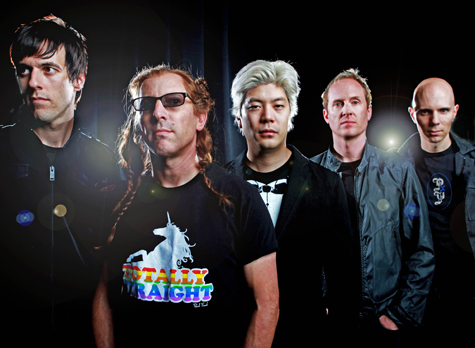
Billy Howerdel reunites A Perfect Circle for their first full North American tour in years
It may be a bit melodramatic to call Billy Howerdel a rags to riches story, but the guitarist and primary songwriter for A Perfect Circle, and more recently frontman for Ashes Divide, has certainly led a charmed musical life. Back in the ‘90s, Howerdel was working as a guitar tech for some of your favorite bands, including Nine Inch Nails, Smashing Pumpkins and Tool. His work with the latter was life-changing. After getting to know Tool’s enigmatic frontman Maynard James Keenan, the two eventually struck up a more meaningful musical partnership. Songs Howerdel had been working on spawned a sort of post-alternative supergroup–A Perfect Circle, of course–which has included members from the aforementioned bands as well as Primus’s Tim Alexander, Zwan’s Paz Lenchantin and Marilyn Manson’s Jeordie White (aka Twiggy Ramirez). Certainly, not bad company for your first serious band.
As A Perfect Circle, Howerdel and company gained nearly as many accolades as the bands its prominent members came from. The group burst on to the scene with Mer de Noms in 2000, which debuted at No. 4 on the Billboard charts. Three years later, APC released another highly successful album, Thirteenth Step, which upped Mer de Noms’ ante and reached No. 2 on the Billboard charts, selling over 230,000 copies in its first week. Though it’s often used in hyperbole, the term “supergroup” seemed to be almost muted in describing APC.
After 2003, though, the well seemed to have run dry. APC released eMOTIVE, a lukewarmly received collection of anti-war song covers (including “Imagine” by John Lennon) and one new-ish song, “Passive,” which was a reworking of a song Keenan and NIN’s Trent Reznor had created for their Tapeworm side project. APC has been officially on hiatus since 2005, freeing Howerdel to release his first “solo” album under the guise of Ashes Divide in 2008 (Keep Telling Myself It’s Alright). This brief break also allowed Keenan to delve into the dark, psychosexual weirdness of his first Puscifer release, 2007’s V is for Vagina.
APC may have been on hold, but it wasn’t forgotten. Soon after Howerdel wrapped up work on Keep Telling Myself It’s Alright, his attention turned back to the group with whom he started out. After a small five-city (Seattle, Los Angeles, Los Vegas, San Francisco and Tempe, Ariz.), 14-date tour in November 2010, the band now stands ready to embark upon its first full North American tour since 2004. Beyond that, though, as Howerdel tells Submerge, APC’s future plans are still being written.
Howerdel says that the dates the band played late last year were always meant as a precursor to a larger tour, but they were also a sort of testing ground to see if the interest was still there after such an extended layoff.
“When we put the shows on sale, and they sold out immediately, we thought, ‘Hey, people haven’t forgotten who we were,’” Howerdel explains. “We needed to see how the shows went and what it felt like getting to know each other again musically, but other than that, yeah, we had the intentions of doing this.”
As the current 29 string of dates (which officially kicked off in Portland, Ore., on June 29 after they played Rock on the Range in Columbus, Ohio on May 22) would probably indicate, APC passed the test with flying colors. Not only were audiences receptive, but perhaps more importantly, the band members–drummer Jeff Friedl, ex-Smashing Pumpkins guitarist James Iha and Puscifer/Ashes Divide’s bassist Matt McJunkins join Howerdel and Keenan in rounding out the current lineup–were energized by playing as APC once more.
“It was received well, but it felt great playing I think for everybody, barring having a cold the whole time,” Howerdel says. “Maynard and I were sick the whole tour. It was harder on him than me, because he had to sing, which is awful having to sing when you’re sick, but I think he did admirably.”
Still, despite the positive response, Howerdel says the band took a cautious approach when planning the current tour.
“We have to trust our booking agent and him saying touring is really grim. There are bands out there that are tried and true that are struggling to sell tickets,” he says. “We proceeded along the way accordingly. We’re doing good-sized places and not trying to get too aggressive on it. It seemed like we picked the right-sized places for the appetite that’s out there.”
Fans eager to hear their favorite APC songs will certainly be rewarded on the tour, but those hungry for more will get a small taste of what may be to come. Howerdel reports that the band plans to play at least one new song on the current string of dates.
It may not sound like much, but it’s a start. Over the past three years, Howerdel says that he also took a hiatus from writing. He explains that becoming a parent played a big part in taking a break.
“It’s a silly obstacle, but it’s the honest truth that I haven’t had a place to work that I didn’t want to run from every time I got in there,” Howerdel says. “I really need to find a spot to work, so maybe we’ll make some money this summer and I’ll get myself a studio–get myself a rehearsal studio that doesn’t have fiberglass falling from the walls.”
However, now that he’s accustomed to the routine of waking up and going to bed earlier than he’s used to, he does find he’s becoming more productive.
“I believe I get more done by getting up at the same time every morning,” Howerdel explains. “I mean, there’s something great and bohemian about, ‘Oh, it goes off when you will.’ It’s great, but there is something you fight in the beginning about having a schedule and having domestication entering your reality. You definitely can have more focus.”
Becoming a frontman for his own band also played a hand in the new material Howerdel has been working on. He says it has given him more of an appreciation for what his partner in APC Keenan has on his plate as primary vocalist. He says it made his songwriting more purpose-driven as opposed to leaving it to “the ether just thrown out and whatever happens, happens.
“In regards to singing, it gave me a newfound appreciation for what it meant to really do it,” Howerdel says. “I always sang with APC, but I always sang backup and to a lesser extent. To have that be the focus–I went from 90 percent guitar and 10 percent vocal to really 99 percent vocal and 1 percent guitar in Ashes, sort of, at least as far as how many calories I burnt worrying about each position… It’s tough work singing.”
However, increased productivity may not translate to a new APC album any time soon. Howerdel says that while he’s writing more now, most of the songs he’s working on are marked for Ashes Divide. While there’s material out there for another APC project, he’s not looking to rush it.
“Last summer, I started writing again, wrote about seven songs and gave Maynard a few to chew on,” Howerdel says. “He’s working at them at his pace. I don’t badger him on the issue. I just wait for him to present something.”
With Keenan currently in the studio working on the new Puscifer record (Conditions of My Parole, due out October 2011), APC may have to wait. This tour, however, will be sure to whet appetites for the band’s U.S. and Canadian fans. At the close of our interview, Howerdel does promise more recorded music from APC, but there’s no firm date on when it can be expected or what form it will take. As he says of the band’s hiatus and the process of recording his first album for Ashes Divide, “It always takes longer then you think it’s going to take… It’s something you can’t really plan. It’s one thing that drives people around me crazy. I don’t plan so much, because my world is about being inspired and doing things spontaneously.”
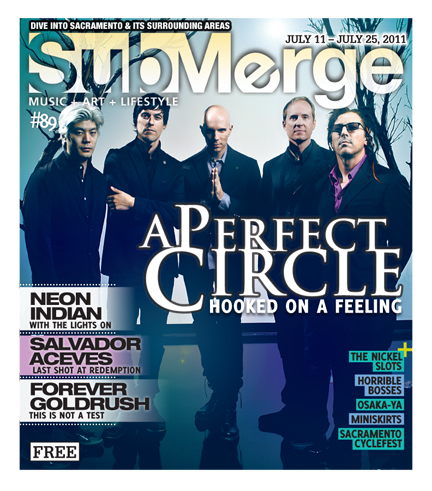
A Perfect Circle will play Sacramento’s Memorial Auditorium on July 29, 2011. For more information on what APC is up to and to order tickets for the show (price of admission is $49.50), go to Aperfectcircle.com.
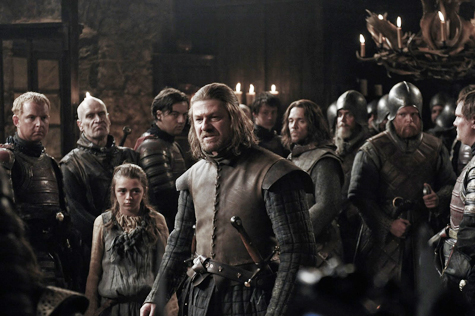
A cursory look at the temperatures will tell you that we’re a long way from winter. But make no mistake about it: Winter IS coming. If you don’t know what I’m referencing, I’m sorry. You really should live life less and watch TV more. That’s what I do. I don’t watch a lot of TV, but the TV I do watch occupies much of my life. LOST was a prime example. I like to snicker at all the vampire drama blah blah blah on True Blood, but right now, I’m completely preoccupied with HBO’s latest time sucker, Game of Thrones, which is based on a series of novels I haven’t read. But after seeing the TV adaptation, I may not have the stomach to.
More accurately, I was hooked on Game of Thrones. It just had its first season finale, and it was quite a cliffhanger. I was going to try to break down the show in simple terms for our readers who haven’t seen it, but that’s a fool’s errand. There are so many names, nicknames and family/realm history thrown at you in each episode that it’s pointless to try to keep up with it all. For those of you out there who have heard about the show and are going to try to watch it en masse on demand or on your fancy portable device at a later date, my best advice to you is just squint really hard, concentrate all you can, then find some nerd on Twitter who can answer all your questions–just don’t get them too worked up because then they’ll never leave you alone.
Here’s the best I can do to summarize and still leave enough word count for my pithy commentary: There are these families who rule a fictional land called Westeros, which is broken up into seven kingdoms (I think), and there was this old king called “The Mad King,” but he also has another name. He was MAD, so this one dude, Jaime Lannister, who fucks his sister, killed him, which got this other guy Robert installed as king. Oh yeah, Robert is also married to Jaime’s Sister (the one he’s fucking). Robert has a buddy Ned who lives in the north. Ned’s cool as shit and ends up working for the king, but there are a whole lot of growing threats amassing outside the realm, like the Dothraki, a race of people who are really into horses (but not in that way). The Son of the Mad King sold his sister to the Dothraki Leader in exchange for an army of savage killers who could march into Westeros and reclaim the Iron Throne, which is where the king sits. The sister, Daenerys, is a total babe and doesn’t like being bossed around by her brother. She becomes queen of the Dothraki and doesn’t take his bullshit any more. But she’s such a babe that the Dothraki Leader decides he’ll charge into Westeros and rape and kill everyone in her name so she can have her Iron Throne back anyway.
Even worse than the horse dudes is that there’s this wall in the far north, and on the other side of the wall is all this crazy shit, like people who don’t bathe ever and White Walkers, who are on some Advanced Dungeons & Dragons type shit. People guard the wall and can never leave, including Jon Snow, Ned’s bastard son (we don’t know Jon’s momma because Maury hasn’t been born yet). There is also a lot of dragon talk–which gets me fucking stoked–and instead of using e-mail, people communicate via ravens. And there are wolves too, but not like the ones on True Blood.
It’s a really intricate story chock full of twists and turns, backstabbing and betrayal, beheadings and nudity and sex and incest and rape and pre-teens talking about getting each other pregnant.
But really it’s a quality program. I’m amped up for season two, which will air spring 2012 (luckily before the Mayan long count calendar ends). The thing that bothers me about the show, and this is the case with a lot of the shows I’ve seen on the premium cable networks I’ve been watching lately (True Blood, Boardwalk Empire, Spartacus, etc.), is that the sex and violence are so extreme. I’m not sure if that makes me a prude or not, but if I want to watch porn (and I’m not a stranger to it), then I will, but if I want to sit down and watch a show because I like a story’s rich intrigue, I don’t really need to watch two prostitutes finger pop one another while a creepy dude rattles off a few paragraphs of expository monologue.
I get that these shows are “adult,” and that’s why I like them. At times, these shows have clever, nuanced plots and wonderful scripts. But it seems like they can’t go four minutes without someone getting their soft-core on or someone graphically getting their head lopped off (or in Game of Thrones’ case, both simultaneously). I’m just wondering if “mature content” necessarily means careless gratuity. Or maybe I should just shut the fuck up and go see Cars 2.