Renaissance Woman
By Nicole Martinez | Photos by Michael McKinnis & Eve Soul
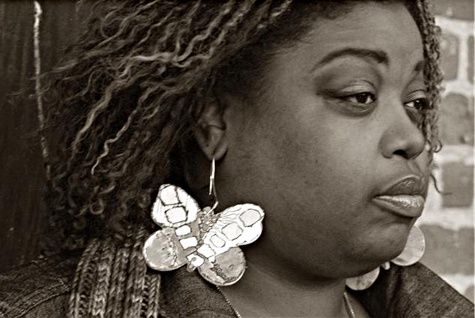
Clever, inventive and undeniably expressive, Cleo Cartel is a vocal, visual and creative artist with passion and conviction. It is an ordinary Sunday, full of sunshine, and Cartel is casually sitting in her salon where she joyfully braids culture and conversation into people’s hair. All around are vivid impressions that she recently designed. There are samples of hand-crafted, one-of-a-kind jewelry, a unique mixture of carefully made, brightly colored, poetically inscribed, wooden and stone earrings, bracelets and necklaces. Paintings with vibrant hues, full of people, scenes and meaningful images from Cartel’s mind enlighten the atmosphere. In a laid-back and relaxed demeanor, her voice warm and welcoming, she begins smiling and freely shares her joy of creating and tells the story of family, community and culture that inspired her confidence to choose art.
“I’ve never been scared to follow my first mind,” she says, “Art is what makes me feel good.” Born and raised in Oakland, Calif., amid an entirety of rich cultures, Cartel recalls, “We were immersed in art as kids.” Growing up part of an African-American, Latino and Asian community, Cartel felt, “There were no barriers to where you could go, what you could see, do and learn.” Her mom would take her around shopping and running errands, Cartel would observe all the different people, notice their different styles and absorb their art and cultural. Cartel specifically remembers one woman who owned her own business and was an innovative dresser. She stood out because of the clothes and culturally unique jewelry she wore. Cartel also thinks back to the Festival at the Lake, a local event where she observed people selling their own arts, goods and crafts. These were meaningful experiences because they served as early examples of “people like me, from where I’m from, being financially stable,” she says. Seeing creative and successful black-owned businesses especially, made her realize as a young girl, “Man, I can do anything. I can be in control.”
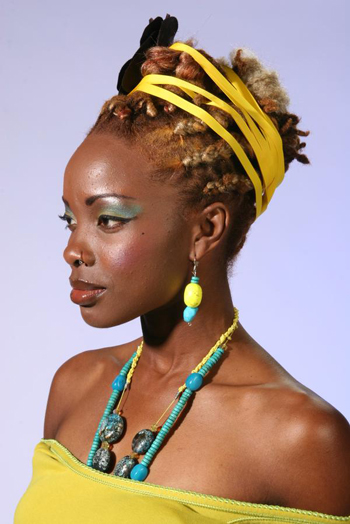
Cartel also had strong models and mentors at home. She credits a lot of her creativity, passion and drive to her father and mother. Her father was a gospel and jazz singer and memories of his jazz records playing when she was young nurtured her first love for art.
“He loved art but, he couldn’t pursue an arts degree; he had no choice as far as education.” She smiles, “He let us do what ever we wanted because he never could, but he always made sure you followed through and finished.” He’d say, “When choosing something extra-curricular,” because academics came first, “you have to think, is that something I can do as a career? And as an artist you need to be a businessman, because you need to feed yourself.” This proved to be a most valuable lesson.
Cartel’s mom, an activist and lawyer, passed on her own share of wisdom. She instilled in Cartel the importance of always having a voice, of being able to express one’s self, and having the ability to state her mind. “I think that’s where I got my poetry side, from my mom,” she reflects. An important contributor in Sacramento’s spoken word and urban poetry setting, Cartel has definitely been using her voice. Always a singer because of her father’s musical influence, she has also been involved with the Sacramento Poetry Slam Team and was an originating collaborator at the fondly remembered Blue Room, a weekly poetry series that was featured at Jazzman’s Art of Pasta many years ago.
It is King Jr. High School, however, where Cartel believes all these positive influences from her community and home first had the opportunity to manifest into the tangible art forms she creates now. It provided the perfect environment that allowed her good business sense, appreciation of art, value in education and the necessity to have a voice come alive. At King she had the experience of taking a wood shop class. Working with wood and using her hands is something she truly relished and soon she began working on her own.
“I was coming in after school and anytime I could,” Cartel says. “I had so many ideas, I never wanted to leave.”
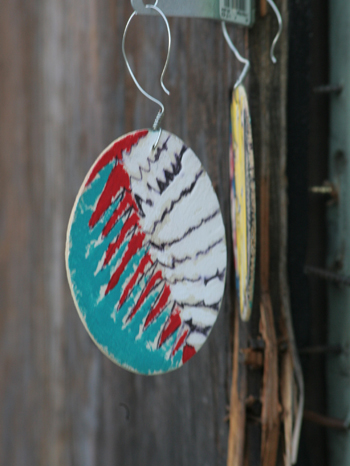
Eventually, Cartel moved from the Bay Area with her family to Sacramento. She felt an immediate sense that something valuable was missing. The abundance of art and the community in which she grew up were no longer present. She thought, “There isn’t anything here that I’m used to so let’s create some.” Throughout finishing at Kennedy High School, Cartel continued to create using the skills first practiced at King. She began making earrings from wood she would shape by hand. She painted and colored the wood transforming each earring into a wearable piece of art. Always full of ideas, she added colorful stones and fabrics to her designs making them truly original in style and form. One very important aspect of Cartel’s pieces includes her own meaningful poetry inscribed on key pieces. Originally, she just designed for herself, but soon people would see her designs, and ask, “Can you do mine like that?” Inspired and encouraged, she continued to follow her passion and has created an entire assortment of accessories, not just jewelry.

Since then, she has worked hard to create freely, share her voice through art and support herself doing what she loves. “I know something about being clear and focused,” she says reflecting on her efforts. “Success that is lasting always takes hard work and perseverance.” Still at it, she admits, “There are times when I want to quit.” Cartel acknowledges that support from her husband helps to keep her on track and encouraged when she gets down. People who invest in her work are also definitely appreciated. She makes an important point saying, “If we can buy stuff that is mass produced and manufactured for stores then we can invest in art.”
She explains, “What is better than getting something made from someone’s own hands? There is nothing better than that!” Cartel is not only an artist, but an avid collector as well.
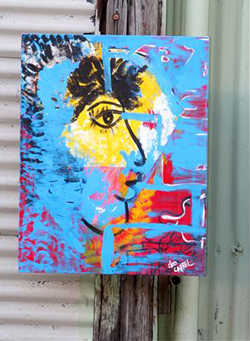
When asked about what she wants her work to convey, she says, “I want my style to represent freedom.” She says she likes to use a lot of vivid colors because, “colors represent a piece of heaven; they’re just something beautiful.” She hopes that in following her passions, maybe her work will continue to motivate that same feeling that she got as a young girl from observing the people in her community. She wants to inspire others to pursue their passion too. “Don’t be afraid to try something new,” she encourages. “You never know what comes with trying something new. You might create something beautiful that the world may need to see.”
Getting to Know a Familiar Face
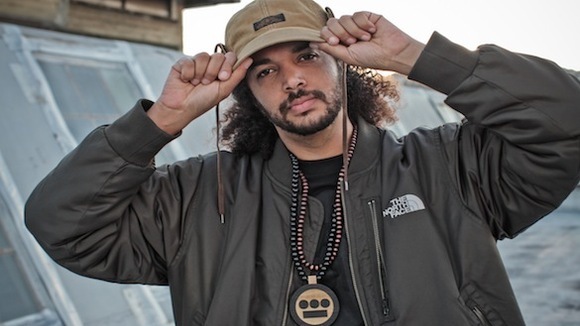
If you like hip-hop, you probably know this underground rapper/producer and probably don’t even realize it. As a result of 15 years of “forward-thinking” and hip-hoptimism with Souls of Mischief and Hieroglyphics, Oakland native Opio’s ’90s-esque collaborations have been emulated by the likes of Kanye West and Lupe Fiasco. Opio offered up some “vulture’s wisdom” and spoke to Submerge about his most recent solo project, hip-hop philosophy and his current tour that maked a stop in Sacramento.
There is something I wanted to clear up with you, Opio. You are a solo artist, but you’re also part of Souls of Mischief and Hieroglyphics?
Yeah, you know. Souls of Mischief been doing it professionally since signing a record deal in ’93. I was with them; that’s where I started. And then, Hieroglyphics has been out for 10 years”¦ It’s not like I’m a solo artist. I’m in Hieroglyphics. I’m just putting out these projects, solo projects. I’m more well known for being in Hiero and Souls of Mischief and I’ve been down with them groups since their inception.
There were some incredible things said about your talents from other magazines. A lot of people listen to your music; a lot of people know who you are.
At this stage, when I’ve been doing it for a while, it’s just a blessing to be able to do what you love. Like the press, it’s different for me, because people who are going to listen to me, I don’t think they are swayed really to hard by what’s hot and what’s not. There’s a connection that I have with people that I’ve learned over the years. Just being consistent with the music. Some people fall off the map and don’t stay consistent.
Your new album [Vulture’s Wisdom, Volume 1] came out July 15. It’s volume one of a trilogy and you’re going to try to get all three volumes out within a year. Are they already recorded? What’s the deal?
Volumes one and two are already done. Volume three, we don’t want to overstep our boundaries and make sure that we have something that we can feel we can manipulate and want to work on it. It takes a while. Volume one was done last October, so it’s been done for a while. Volume two was done at the same time. You don’t really want the music to get old and stale. With volume three, we’re still trying to tweak it out a little bit, just off of what people say. Volume one and two we did quickly. We just had a really good creative energy and the space that we were in was really cool. I’ve worked with Architect [producer] before. Our mentality is that we want to start more of a movement than just getting people into one or two songs.
You want to try and get them to like the whole trilogy?
We’re trying to change people’s ideas about how they listen to music. Like, instead of listening to songs or a single, or trying to listen to an album and skip through every single song on your first listen. Everybody is going to skip around once you had a CD for a while, because you’ve got your favorite songs. If you’re going to pop a CD in from an artist that you like, you should want to be able to sit down and listen to it. The artist has to give you what you need as well. You don’t want to have fast-forward material. But our mentality is we’re making albums, we’re not making hot songs or a hot single that everybody can jump on and be like, “Yo, this is the joint right here.” It’s more about the whole album—more so than the trilogy. We want people to get into the album as a whole. Listen to the record, sit with it. A whole solid listening experience”¦change people’s mentality in terms of how they’re listening, at least to us.
You said you want to change people’s perspectives. What does that have to do with the album title?
The title is just coming out of conversations that me and Architect had in terms of what we were seeing in hip-hop. If you ever hear people just really disgruntled, “Back in the days, it used to be so tight, and now it’s all commercialized. It doesn’t have the same energy it once had.” That’s what people say. To me, hip-hop is just powerful. It’s more powerful than it’s ever been. Even though maybe some people are just quick to have this real apathy toward hip-hop”¦ Me and Architect still have the vision and the wisdom to see where other people see nothing, we see sustenance. They done picked away at it and left this like skeleton. But, we can still swoop in with the “Vulture’s Wisdom.” We can eat and see food where others just see nothing.
This tour that you’re currently on, The Freshly Dipped tour, it’s the 10th anniversary tour of Hiero Imperium. You’re playing with Hieroglyphics as the headliner, but are you doing any of your solo project songs?
Yeah, definitely. My album is the album that’s out right now. It’s a good opportunity for me to promote myself. People know Souls of Mischief and Hieroglyphics, but they don’t necessarily know me. It’s an opportunity to raise these peoples’ awareness of what I’m doing. Because, a lot of the people that been listening to Hieroglyphics and Souls of Mischief over the years, they know me and they’re in touch with me and they like my style, but it’s just kind of hard if you’ve been doing it 15-something years, all they know is Souls of Mischief and Hieroglyphics, they don’t really know to say Opio.
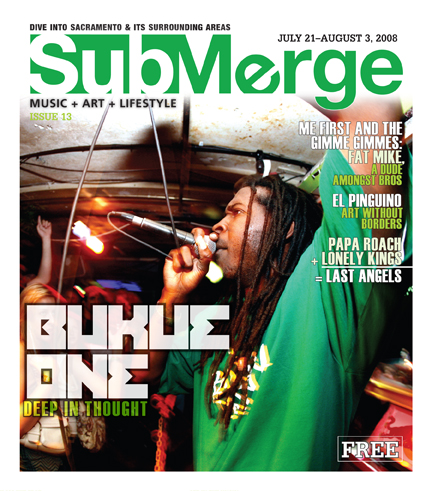
Bukue One is a man of tremendous talent, blessed with the ill-technique both vocally on the mic and visually on a wall or canvas. It goes without question though that his most invaluable gift was and still is his motivation to get out and pursue his talents, to educate himself and take life into his own hands and motivate others to do the same. The man who for over a decade has toured the world, doubling as artist and manager, has combined his passion and abilities and parlayed them into a career. As any MC should be, he is quick witted and able to convey his thoughts in a way that makes sense. The following is excerpts from a Saturday morning conversation with Bukue. Not an interview, but a conversation with a seasoned vet full of sincere and encouraging points of view to share.
On Tour Managing: “Originally when I was booking and tour managing I was just going to do it just enough to get my name steady and then focus on my own stuff, but the more I did it the more I saw that there is a need for that. Artists don’t want to be carrying in merch, going to collect money and staying sober or keeping the keys to the car. And a lot of times promoters don’t want to deal directly with artists because artists are artists. I realized I could keep doing this, and it’d be a service that can be provided to both sides which is a value, and at the same time it frees up my music to where I don’t have to live just off that. There is no pressure on me to sell units. So I thought I would keep building the business. Music is a passive career, but I’m running two lines now. Fans know me as an artist, they don’t know me as a manger. I don’t think I could just be an artist, I’m too into responsibility, so I’d rather do both. I like being on stage performing, but I also like the Jermaine Dupri side of things as far as running the show and orchestrating things and advancing the momentum of music that is dope. It’s business but it’s philanthropy as well because it’s my job to make sure these artists get their exposure and get heard.”
On Capitalism: “Capitalism is not bad, it’s just run by humans. Humans were stealing hording, stealing, beating, killing and envying long before the currency of dollars. We were clubbing each other like, ‘I want your wife,’ BOW! It’s in our nature.”
On Revolution: “I’m an optimistic revolutionary. I believe that things need to be changed and that things are out of balance society-wise, political-wise, spiritually and musically, all that. It’s leaning pretty far to the darker side, but not only do we need people to identify it and to get people motivated but most importantly they need to be aware and motivated by the power of positivity, optimism and love. We have enough angry revolutionaries. I respect it, but it’s not what I do.”
On His Music: “My thing”¦through my music, and art, my personality, my teachings, is to help provide that feeling that you once felt at some point in life that reminded you of how exciting and dope things can be. The type of music I make, people consider it nostalgic of the older era of hip-hop, but that’s when it was fun! You could smile and have a good time. My graffiti is the same way. I don’t really do that dark and aggressive stuff; it’s just that old-school essence of when it was fun. If you’re looking for food for thought, there is plenty of that in all my music. There is a common theme, it’s just not on the forefront.”
On Politics: “One change that we need to make is us using the terms like ‘them’; it’s us. Political stuff I’m really like, yo, we got to move ourselves from the ‘they’ and ‘them’ factor and go back to the ‘us’ factor. Going back, like during the Civil War, the government was the ‘us,’ and it was created so that we collectively oversaw our country and states and cities. Over the years, the ‘us’ changed over to ‘them,’ because they had an agenda, but also, not to solely blame government, we fell asleep. We know catch phrases, “Bush sucks,” “They’re all crooked.” It’s like, OK, then what? People use those as justifications to completely abandon the process. When that happens, we stop paying attention, and as the saying goes, ‘When the cat’s away the mice will play.’ I’m not mad at people for not voting and say, ‘Well, you’re stupid,’ because I was that person, but now I’m like OK, cool, but now what? Are we leaving the country? If it’s really that bad, what are we doing to change things? If you’re not planning on leaving this country, your city or whatever, yo, do something. Don’t just be mad at ‘them.’ People are saying, ‘Fuck it. They’re all bad. Obama is the same as McCain,’ and I’m like really? I’m not saying Obama is the Messiah, but there is a bit of a difference”¦a little bit [laughs]. If our numbers of ‘us’ were higher, and we were more engaged, they would have to listen to us because we would be their constituency.”
On Patriotism: “People don’t want to admit to being patriotic, because now it’s like a bad thing to be patriotic. But yo, you’re patriotic if you love Oakland and the Bay. Where’s the Bay? In California, which is in the United States. Don’t front, let’s be real, we love this country. We don’t love the direction it’s going, but we love this country. The minute someone else disses our country, we’re patriotic. Let’s just be real, and go, ‘OK, it’s fucked up, but what are we going to do? I’m really into inspiring people to get involved in the process early and get enthusiastic and believe that things can change.”
On Money: “I used to be like money is the root of all evil, but my uncle was like, ‘No, lack of money is the root of all evil.’ Money is just a tool. People built great things and destroyed things with money. It’s not the money that makes you. The money just makes you more of who you are. If you’re a dick before you get money, you’re going to be more of a dick when you get it.”