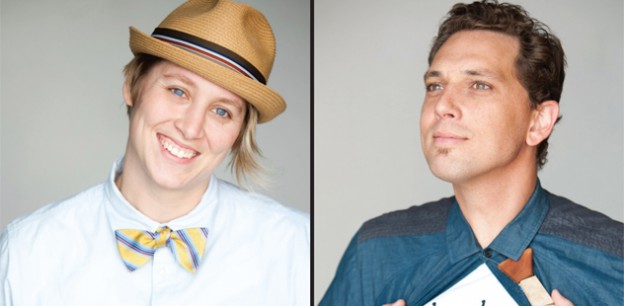
For the past six years, Beatnik Studios has played a vital role in Sacramento’s art and music scenes, hosting creative events, throwing rad parties and gallery openings and acting as a crucial link in the arts chain. In August 2013, Beatnik partners Lindsay Calmettes and Wes Davis (both amazing artists/photographers in their own rights and, in full disclosure, Davis has taken many photos for Submerge over the years) took things to the next level by purchasing their own building. The early 1900s “brick and steel battleship” is, according to Beatnik’s press release, “Over 12,000 square-feet of limitless potential.” The building is located at 723 S Street in the Southside neighborhood of downtown Sacramento and was originally built by PG&E. Purchasing and renovating the building was truly a family affair with members of both Lindsay and Wes’ families coming together to assist with the massive amount of work. The Beatniks also found “grease for their wheels” thanks to the PACE (Property Assessed Clean Energy) funding program called YGreen.
“Sacramento YGreen has made it possible for our small business to take on a large-scale commercial renovation project,” they wrote.
The new space allows Beatnik Studios to remain a multi-faceted creative business just like it’s always been: Event space, music venue, art gallery, photography studio, wedding venue—you name it, Beatnik can probably host it. Flexibility is the name of their game. To celebrate their big move and b-day, Beatnik will host a free six-year anniversary and grand re-opening party on Saturday, Aug. 2, 2014, at the new location. The party runs 6 p.m. to midnight and will feature live music by Guero, Jazz Gitan, The Foxtails, Proxy Moon and IdeaTeam as well as a dance performance by Aerial Evolution. There will also be food, drinks, art and all sorts of other rad creative things to enjoy. Learn more at Beatnik-studios.com
World Hood ready new EP and prep SxSW showcase
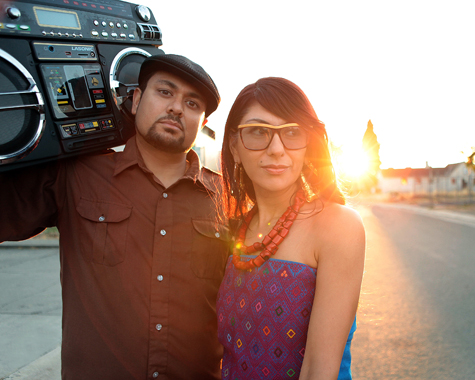
It feels as though it was only a matter of time before Sol Collective made an impact beyond its community activism and support for the local arts and music scene. Collective founders Estella Sanchez and Anand Parmar added recording artists to their resume last year with their debut as World Hood, a project that developed in the wee hours of the night in the gallery.
A nonprofit organization and art gallery located on 2574 21st Street, Sol Collective hosts beat battles and touring psych-rock bands and runs a world music series titled Global Hood, which brings artists that operate in the meshing of tropicalia bass, break-beat, electronica and Cumbia genres to Sacramento. There are B-boy workshops and practices in the back rooms and music production classes for high school students. It is a meeting hall for activist groups to discuss community empowerment and youth development. The gallery is a hub of creativity bound to rub off on its founders.
Nights at the collective rarely ended with a band’s last song for Sanchez and Parmar. After the venue cleared, the couple would hole up in the gallery’s recording studio and work off the excitement from watching the performers. “It was definitely convenient to record at Sol after a show,” Parmar said. “We already had things set up and could put in a few extra hours to get a song in. All of the acts we have brought to Sol, specifically through the Global Hood series, were inspiring in one way or another. They have been groups whose music we believe in and were committed to promote either because of their message or because of the cultural influence in their music.”
Anand Parmar was born in Africa and is of Indian descent, while his partner Sanchez is of Mexican descent. Anand said when he started to shape the World Hood sound, he always tried mixing different cultural elements into the production, but collaborating with Sanchez and incorporating her culture and language was a natural progression. “It’s a mix of what we heard on the radio growing up in Northern Cali in the ‘80s and a mix of what we’d hear at home, be it what our uncles or cousins were playing,” Sanchez said. “Even in the studio I go back and forth in elements I want to add that are familiar to us.”
A DJ and producer for roughly eight years, Parmar would play beats for his partner, mostly culled from blending Latin dub and tropicalia with West Coast bass and hip-hop. Sanchez would sing over his tracks alternating between Spanish and English, sprinkling in slang and spiritual incantation. Sanchez sang mostly for the release, not considering the possibility of the songs going further than the studio walls.
In April of last year, Parmar collected 12 of the recordings and uploaded them to Soundcloud, an online audio distribution platform, and then moved them to a similar site called Bandcamp. He designed an album cover and called their group World Hood, a name that speaks to their globalized sound and grassroots activism. By May the duo was being interviewed by the MTV’s Iggy blog and later appeared on NPR’s Alt.Latino station. The coverage swelled further with Hype Machine, Mad Decent Blog, Dutty Artz and National Geographic’s music blog (yes, they have one) taking notice. “It was a little bit of a surprise for us,” Sanchez said. “We had been working on music for a while. Anand wanted to just put it out there and let people hear it. We didn’t expect the coverage.”
The hype moved at a pace bigger than the band as the phone rang and the inbox received requests to tour and perform. It was an invitation the group had yet to consider. “We definitely got invited to play and tour before we even put our live set together,” Sanchez said between laughs. It’s almost a year since they posted the album and she is still in disbelief that she’s juggling a time-consuming nonprofit–a master’s thesis that became her life’s passion–a family, and a burgeoning band. “It’s not stress, but we’re trying to find a way to balance it and do it well,” she said. “I love what I do at Sol Collective and Anand is a big part of it as the music director there. We’ve been finding ways to complement it.”
Being true to their moniker, Parmar and Sanchez use the band as an opportunity to travel and promote Sol Collective. It began with their first show. The duo was invited to the Aborigine Music Festival in Winnipeg, Manitoba, Canada. The high tide in the local scene has sent artists like Sister Crayon and Death Grips to the festival circuit, but a debut performance at a festival is unheard of. “It went really well,” Sanchez said. “It’s a lot easier to perform when you’re in another country. I figured if it all goes bad, I’m on a plane tomorrow and that’s that.”
It did not go bad, though. Radio stations played their music prior to the festival, which meant the duo were welcomed to the festival with excitement and familiarity. World Hood performed as part of the Pow Wow party at the Pyramid Cabaret in Winnipeg. The group played alongside A Tribe Called Red, a collective of native Canadian DJs, which Sanchez and Parmar were fans of. “We got some feedback from them,” she said. “They really loved what we were doing in creating beats and native thinking and mixing up the languages. It encouraged us to keep on that path.”
Sanchez said she hopes to bring A Tribe Called Red to perform and participate in workshops at the center. Sol Collective also approached them to be a part of its #ArtCultureActivism SxSW showcase in March, but conflicting tour dates in Canada hindered their availability.
Sanchez and Parmar view the SxSW showcase as another opportunity to not only promote their collective and its community garden build project, but to showcase Sacramento artists and encourage musicians to tour here. The showcase features World Hood, along with local hip-hop act DLRN and producer/DJ Defeye, among several national acts. “When we travel and do things, it’s to bring folks back to Sol Collective,” Sanchez said. “We also have press passes this year, which they gave us… we’ll have the opportunity to go to workshops and events to approach artists we want to promote and bring back to Sacramento.”
In January, World Hood posted the song “Mundo Libre,” which translates to free world, to their Bandcamp page with the description “Single from the upcoming EP. Dropping soon.” The song is the title track to the EP. Sanchez said she and Parmar would work on finishing the EP that night. The goal is to release the five-song EP in late February/early March for free download prior to their SxSW showcase. A full-length will follow in the summer, most likely remaining DIY. “Nothing concrete at this point,” Sanchez said. “We’ve had some interest [from labels]. We had people ask us to send them our stuff. But we’re still trying to figure out what we’re trying to do and how much we’re putting into this project.”
“Mundo Libre” is on par with the group’s pre-existing material of Afro-Latin dub, with hints of Reggaeton in the arpeggiated vocals. Now that World Hood is aware they have an audience, it’s altered the process a bit. Sanchez said her partner Anand is a meticulous worker in the studio and that his work ethic rubbed off on her in the new sessions. “We paid more attention to the message,” Sanchez said. “Now that people are interested in listening to us, we’re more conscious and aware of what we’re putting out. With the first one I didn’t think anyone was going to hear it, so I didn’t care. The first one was freestyle, where this time I actually stopped and said, ‘wait let’s record that again,’ instead of just saying ‘oh that was fun, I’m going to sleep now.’”

World Hood will be releasing a new EP soon. In the meantime, check out “Mundo Libre” at http://worldhoodmusic.bandcamp.com/. For more information on Sol Collective, go to Solcollective.org.
Photographer Wes Davis gives skating a touch of grace in new exhibit, Step Free
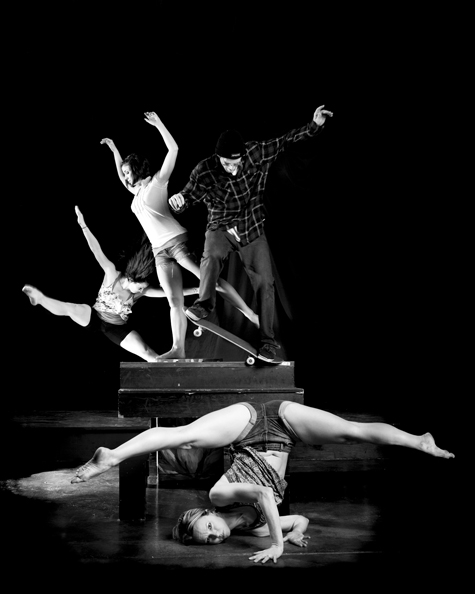
Local photographer Wes Davis has captured an unusual occurrence from behind his camera lens. In the same frame, a skater is caught ollying midair as two dancers are frozen in a leap behind him, while a third dancer crouches below. In another frame a skater grinds a platform while two dancers twirl in the background, positioned as though together the three form a sequence, while another dancer holds the splits upside down beneath them. In each shot, Davis captures the ability of human bodies to fill space with motion.
These photos make up half of Davis’ contribution to Step Free, an exhibition at Beatnik Studios consisting of work by both Davis and local painter Jayme Goodwin. Goodwin’s paintings are primarily focused on dancers, while Davis’ photo collection, an array of both black and white and colored digital photos, juxtaposes the art of dancing against the art of skating. This is the first time these photos are being showcased in an exhibition.
Creating a photography exhibition that features skaters alongside dancers had been an idea floating around in Davis’ head for some time, he tells Submerge during a morning visit to Beatnik Studios.

Portrait of Davis by Mark Dillon
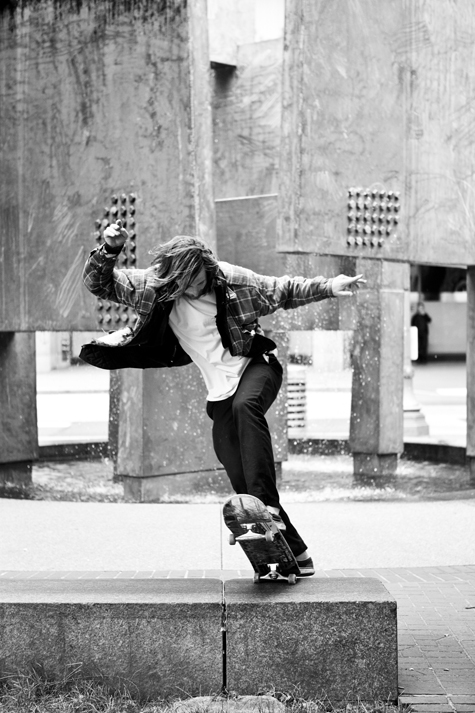
The half of his photos that are in color had been taken within the last one to two years, capturing his friends in their natural elements, flipping boards, ollying and grinding surfaces around Sacramento, Loomis and Portland, Ore. A longtime skater himself, the photos encapsulate an important element of his life on film.
“Pretty much anytime that you’re skating with friends, it doesn’t really matter where you are,” he says. “I really like skating the streets, just being able to push around and zigzag in and out of people, it’s kind of my favorite place to skate. But really it’s who you’re with rather than the place you’re at.”
The other half of the exhibition, the black and white photos, materialized about six months ago.
Davis found some willing members of CORE, a local dance collective, to take part in a photo shoot at Beatnik. Finding skaters for the shoot was easy, he simply had to round up some friends. The crew spent a one-day session at Beatnik and, voila, you have prints that bring skaters to the forefront of an unusual backdrop–dancers. Female dancers leaping, flying through the air, balancing on one arm, on one hand, or just posing with a smile, while a skater soars overhead, board in tow.
Davis’ shots are raw, organic, anything but contrived. The dancers are dressed in shorts and sleeveless shirts, the skaters in T-shirts and jeans. Several of the frames capture laughter, or the subtle awkwardness before someone makes their next move, it’s as though everyone was constantly in motion throughout the entire shoot.
The subjects were allowed a lot of freedom, too, Davis says.
“I like to capture people’s natural movements and their natural expressions, as opposed to portraiture, where you’re trying to create a natural look,” he explains.
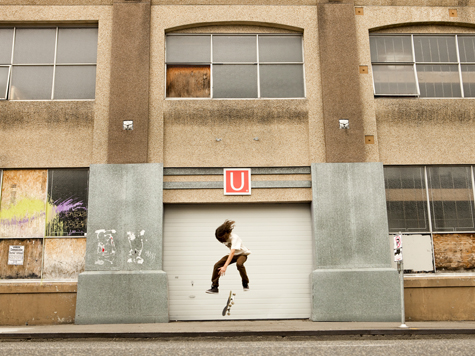
Ryan Stark, 360 Flip - Photo by Wes Davis
His requests of his subjects were minimal: dress comfortably, in whatever clothes are suited for skating or dancing on any given day. He set up a space where the skaters could perform jumps. Then the dancers were asked to fill the outside space with any movement of their choice. The result is whatever passed through the lens of his Canon 5D Mark II.
You could say that the result is a contrast of feminine versus masculine or of grace versus grit. But this stops short of Davis’ intent, which is to reveal the similarities between dancing and skating and the skill that each requires, rather than the differences.
“Dancers go through hell, they break bones, they get hurt, they’re constantly battling wounds,” Davis says. “It’s a really rugged sport, but for the spectator it’s beautiful. Skateboarders and dancers are the same people. It attracts that person that wants to be expressive and wants to be moving and use their body to develop their art.”
Of the two, dance usually gets the better rap, Davis says. Often considered a classy, highbrow art; if you are a dancer, you are considered a performing artist. Meanwhile, skating has evolved into a counter-culture here in the States, and if you are a skater, you are usually seen as the reckless punk.
Nosegrind - Photo by Wes Davis
“You get this a lot out in the streets, people will see you on a skateboard and instantly are like, ‘Alright punks, get out of here,’” he says.
Yet, in Europe, he points out, skateboarding is the equivalent of a street performance. “People love watching it,” he says. “It’s a creative way to express yourself and think outside the box.”
The bottom line is that whether or not people choose to recognize it, both dancing and skating employ motion for artistic expression.
Davis himself picked up skating around 11 or 12, during a time when it wasn’t too common. The cool factor of skate culture wouldn’t surface for years to come. Growing up in Loomis, he was the lone skater, and in high school he would catch the nonsensical insults from jocks.
Nonetheless, his interest in skating soon segued into capturing movement on film.
“Skateboarding is what technically improved my photography [skills], because you have to learn how to shoot fast and how to really command your settings to get what you want out of it,” he explains.
Up to that point, he had been assigned the task of photographer during family vacations in the outdoors, equipped with the Pentax his father used to use while serving in the military in Germany during the ‘70s.
After graduating from Sacramento State with a photography degree he landed a gig as a soccer photographer, traveling in vans with soccer leagues regularly to shoot competitions around the country. But he quickly found himself longing for something other than being a slave to the competitions.
“I got burnt out on that pretty quick,” he remembers.
Ricky Krull, Front Blunt - Photo by Wes Davis
Though Sacramento State prepared him well in the mastery of fine art, the program did a poor job of preparing students for the business aspect, he says. For instance, he knew little about building a photography business, how to price his pieces or what the standards of the industry were. Often he was figuring out this stuff on his own, or by picking the brains of experienced commercial photographers.
Davis also realized an increasing need to hold photographers to a higher standard, where photographers are professionals, not hobbyists fiddling around with expensive cameras.
“There’s a lot of photography out there, and a lot of people that are just kind of hacks,” Davis explains. “I don’t want to insult people, but it’s true. I hear it every day, ‘Oh, I got a camera and I’m starting a photography business,’ but they’re coming to me to get coached on how to even shoot.”
In 2009, Davis quit his job working graphics at the Natural Foods Co-Op to commit himself to photography as a full-time occupation. He opened Beatnik Studios with Lindsay Calmettes, another photographer and graduate of Sacramento State, as a space for photographers to network, learn from each other and get honest feedback from others.
The two hadn’t anticipated that Beatnik would become a vital part of the local arts scene. What started as a photography space blossomed into an art gallery and event venue as well.
“It is fun [and] it is challenging,” Davis says. “It keeps us creatively motivated to restructure and reinvent ourselves.”
The space now operates as a hub for all kinds of local artists as an opportune location to express imaginative ideas, like placing dancers and skaters on the same plane.
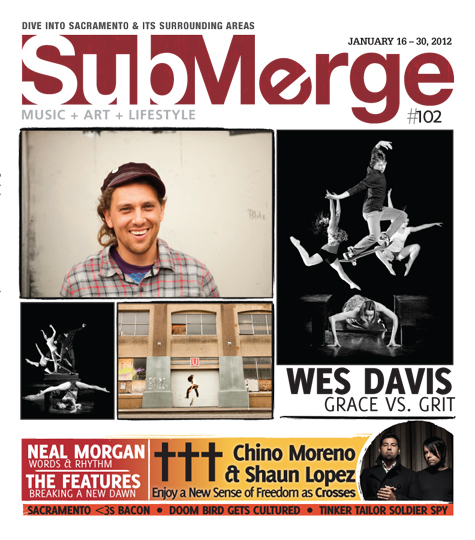
Step Free is up now through Jan. 24, 2012 at Beatnik Studios. Gallery hours are 10 a.m.—5 p.m., Tuesday—Friday. Beatnik Studios is located at 2421 17th Street in Sacramento.

j27 Art Gallery
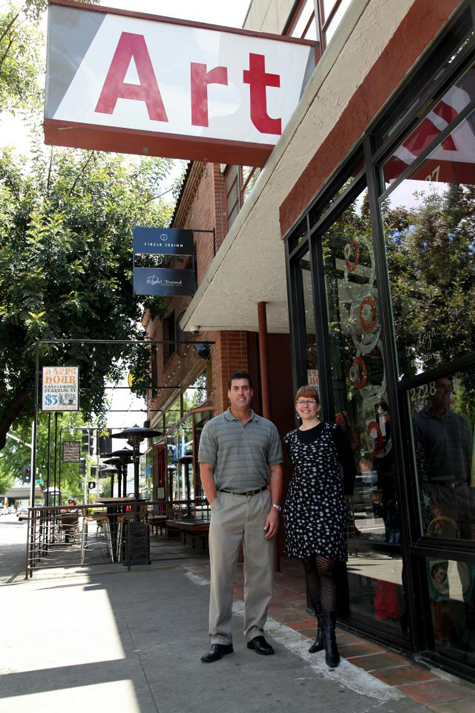
If you’ve driven through or walked down J Street past the 2700 block lately, you’ve more than likely noticed the new sign outside what used to be Papi’s Pizza that simply says, “Art.” Meet j27 Art Gallery, a brand new gathering space co-owned by area artists Susan Rabinovitz and Michael Shane. Rabinovitz, known for her hand-forged jewelry, met Shane, an abstract painter who also owns a shipping and delivery company, at the Sacramento Art Complex where they both had studios about a year-and-a-half ago. “We’d always discussed doing something together,” Shane said during a recent conversation with Submerge. “So about two months ago when I started looking at commercial space I called her up and said, ‘Are you still in?’ and she said, ‘Yeah!’ so we came over and looked at this space. We signed the lease two days later.” Shane pointed out that they are aiming to break the “Second Saturday only” mold and that they want to be “an everyday gallery.” Every weekend there will be something going on, not just on Second Saturdays, be it a live art exhibition, live local music, meet and great sessions with artists and more. Currently represented at j27 are paintings and jewelry from Shane and Rabinovitz as well as a slew of other regional artists’ work including abstract paintings by Gayle Rappaport-Weiland (June’s featured artist); photography from Monica Lunardi and Allister Oliver; fused glass art by Nicole Krohn; sculpture work by Molly Brown, Paula Swayne and Angela Ridgway; paintings from Donna Marie Sterpe as well as cartoonist Eric Decetis’ world-renowned work and much more. Shane pointed out that j27 is proud to be the only gallery selling Decetis’ original art, whose cartoons have graced the pages of countless publications. All in all, j27 has an excellent mix of art found in all sorts of mediums. It’s easy to get sidetracked when in the space, as there are so many eye-catching things to look at. “We’re trying to be very picky about the art that we hang,” Shane said. “We want to have an upscale environment and we want to be the place where people come to buy fine art. But, we want it to be a fun place too; we don’t want it to be stuffy. If you come in, you’re going to hear music, we’ll talk to you about the art, it won’t be dead cold and quiet. It’s important to carry that real high-end stuff, but you don’t have to make it, you know, cold and museum-like.” Learn more about j27 and the artists behind it at j27gallery.com or just stop in. They’ll be open every day starting at 11 a.m. (1 p.m. on Sundays).
-J. Carabba