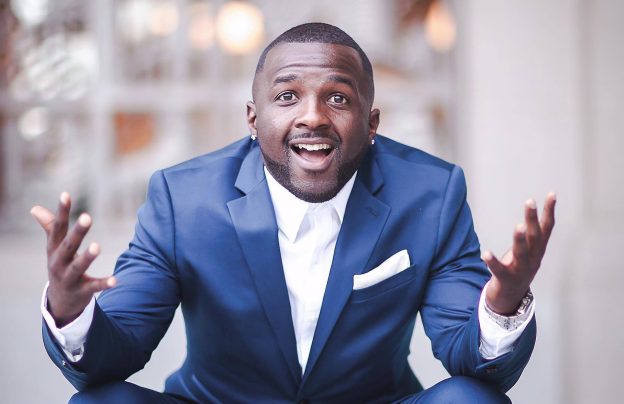
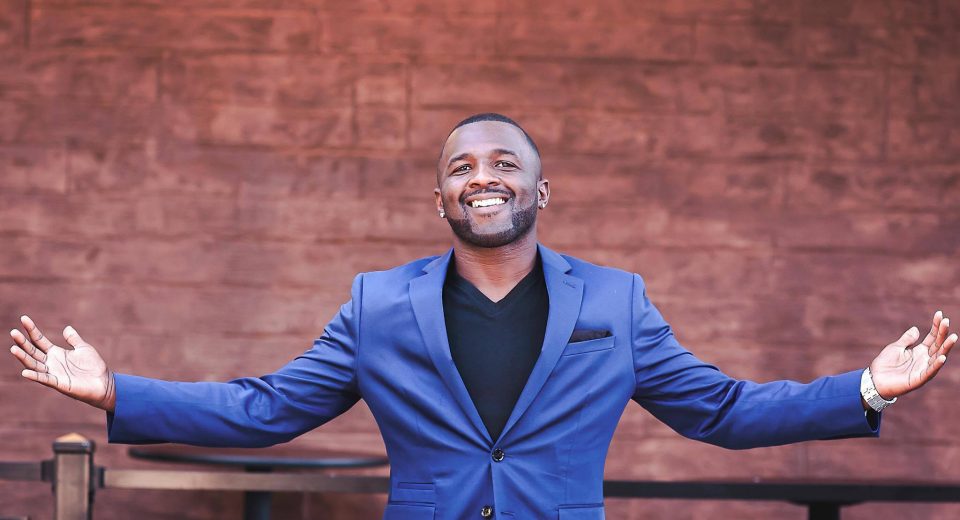
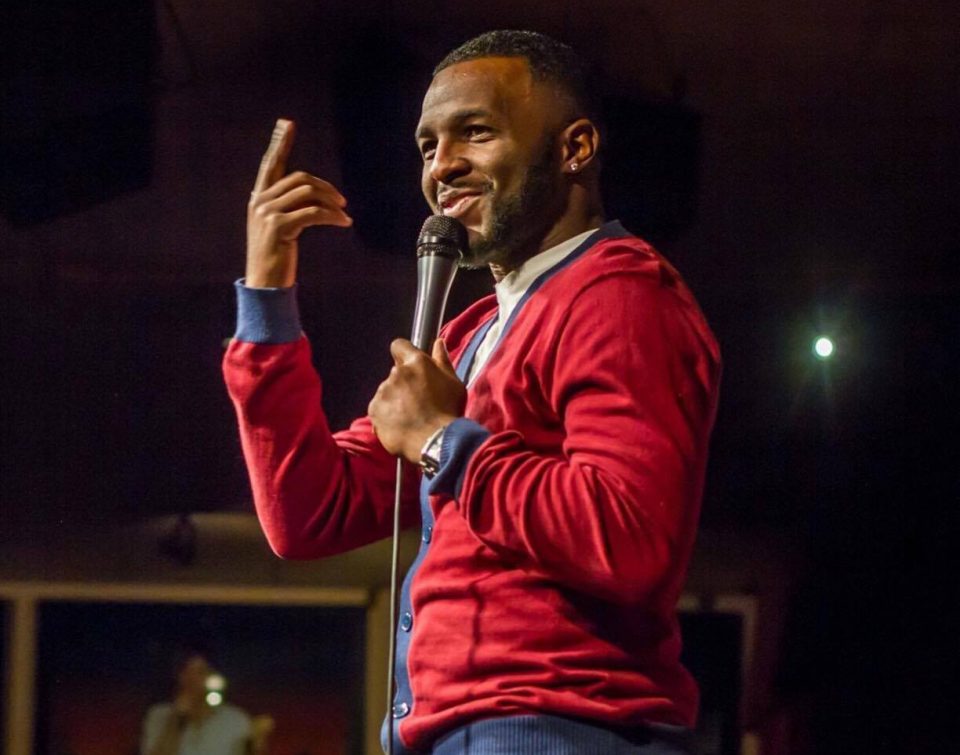
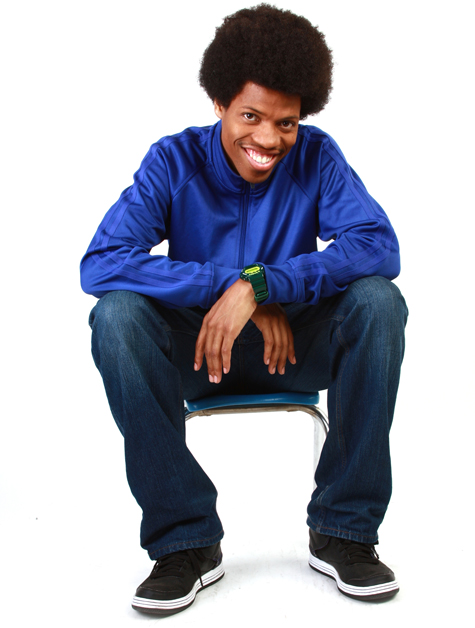
Lance Woods is a comedy force of nature. In just seven years of performing stand-up, he’s gone from hosting variety shows at his church, to opening for Dave Chappelle and hosting parties for Too Short on Treasure Island. His “Lance Woods and Friends” shows are a near-monthly staple of the Sacramento Punch Line and Cobb’s Comedy Club in San Francisco and are regularly packed thanks to his nonstop drive to promote. From Facebook and Instagram selfie posting contests for ticket giveaways, to video sketches based on current events that may have happened less than a day before, he’s easily one of the most consistently funny and recognizable local comedians.
I’ve seen him perform no less than 20 times in the last five years and his material rarely repeats. His early “mistakes” of not repeating jokes, ended up giving him skills to amass a monstrous array of subjects that range from skewering pop culture to helping a friend move. Sometimes it all just goes out the window and he’ll do some of the funniest crowd work I’ve ever seen.
On social media and on stage, he refers to himself as “The International Sex Symbol,” but Woods exudes an over-the-top charm and charisma that lives up to the hype. While sitting with him for the interview at East Sacramento’s Tupelo, there wasn’t a person that walked by that didn’t get a smile and a moment of his time.
Monica S. Photography
I was talking with the editor of Submerge, and we were both agreeing that it’s ridiculous that we haven’t done a story on Lance Woods yet.
I agree! Totally! Wholeheartedly! Every time I see the magazine I wonder why I’m not here!
How long have you been performing stand-up comedy?
My first time on stage was June 2, 2010. I didn’t understand what to do. In my first nine months, I probably got on stage three times, because I thought you could never tell the same joke twice. My first set ever was at the Sacramento Punch Line Showcase.
That’s unusual because it takes some time to get noticed and booked on that.
It’s almost like getting into Submerge! It takes time. You gotta put your work in [Laughs]!
I started comedy in my church, which was directly across the street [from] Punch Line. My pastor created an event for me to host called “The Uprising,” and I would do comedy and we’d get gospel singers, dancers and poets. I told my girlfriend I wanted to do comedy; she started acting like an agent and was looking up places on the computer. She said Punch Line had what she thought was an open mic. So I thought you could just show up there and just do comedy.
I told everyone I worked with and everyone at church that I’m going to perform. The doors open at 7, so I got there at 6:50 and the girl at the door told me to come back in 10 minutes. So I got there at 6:59:59 and I said, “How do you sign up for the show?” The manager said, “Who are you?” That’s the first time I felt this isn’t going to go how I thought it was going to go. The way he said it made me know I couldn’t sound like I was brand new, so I just said, “It’s me, Lance Woods! What do you mean you don’t know who I am? Baby I’m here!” He told me there were no sign-ups for the show.
I felt like the smallest person in the world. I start walking down that hallway and I start hearing that sad Titanic music playing in the background. Then I thought, “I can’t leave, I told everyone I was going to be here!” I remembered D.L. Hughley on the extras of that Kings of Comedy DVD said, “Back in the day, we used to have to fight just to get five minutes!” That stuck with me. I go back inside of the club and started talking to him.
He’s busy getting the club ready, but every time he’d come by and just say something new then walk away and was dismissive. Then at 7:40, I had like 45 people walk in right in front of the bar saying things like “Hey, Lance! Kill it tonight!” So he sees this [and] five minutes before the show he tells me I’m going up first. I didn’t know you were supposed to be nervous about that.
Comics get scared because they think the crowd isn’t warmed up yet.
The reaction was good and the material was good for the level I was at. The comics told me I did a good job, and I thought Hollywood was going to call tomorrow.
A month or two later I performed at A Toucha Class. Two months after that I did Laughs Unlimited. I met a guy named Andre Paradise who did a competition up in Oregon called “The Shades of Laughs.” This is when everything changed. I went out there, and out of 19 comics I placed fifth. These were really good veteran comics. We had six shows.
You weren’t doing any open mics at that point?
No … This was maybe my fifth time performing. I was doing OK, but there’s a level of confidence you feel when you deliver a joke because I wasn’t there yet. These other guys have been in the game 10 to 20 years. They were telling me, “You’re really funny, but you don’t have a clue what you’re doing on stage. We can tell you don’t perform because none of your jokes are finished!” I asked them how often they performed and they told me every day. They told me about open mics. So I got back and did at least 11 mics a week.
So a couple years in doing these mics, what’s different now?
The main thing was that I got the confidence in my jokes. I started delivering jokes with an exclamation point instead of a question mark. The question is no longer if they’re going to laugh, but how big will that laugh be.
Well, it’s like that reluctance to repeat material. Some comics get sick of their jokes. But you’re polishing up a bullet.
When comics ask me questions or run a joke by me, there’s nothing I can tell them. The stage will tell you.
I told a joke to a comedian in the car on the way to a gig at The Throckmorton Theatre [in Mill Valley] and he loved it and asked if he could use it on stage. Nobody laughed … just crickets.
The first time I went to Throckmorton I met Robin Williams. I was at the balcony. I was just going to watch the show, and Kevin Meaney was on stage. I hear to my right this laugh, and I looked and was like, “Is that Robin Williams?” Then he elbowed me and said, “This is funny, right?” We were just speaking about the bits from the background, just comic talk.
You’ve been producing your “Lance Woods and Friends” shows at Punch Line for about four years now. You always have a great draw and a great following.
I’m a special guy [Laughs]! Whenever you produce something, they are coming to see you. Some people just try and grab people that’ll get a bunch of people to come to the show, but they’ll never come back.
But it’s also a different show each time with you, too. You don’t have an hour-long set that I can nail down. If you had to from start to finish, you’d probably have hours and hours of stuff.
It’s a gift and a curse. I think what I do is good for live performance. I don’t know how it translates to television right now. That’s just another step that I have to look into. If I got a call to get on late night and do seven minutes, I don’t know what that seven minutes would be.
How would you describe your comedy to someone that’s going to see a Lance Woods show?
It’s honest and funny. I noticed that I had points where I was thinking something wasn’t funny enough because it was too wordy. I had to find the jokes in the funny things I was talking about.
You probably have one of the more broad material bases I’ve seen. It’s like there’s nothing that’s off limits.
The toughest transition I made was to be in front of “the hood” crowds. I was always just getting by in those rooms. It took me the longest to get good there. I had to up my level of aggression. My natural state is really chill. Sometimes you go to certain rooms, and you have to grab their attention. When I say “hood,” I’m talking about bar crowds. There’s black hood crowds and white hood crowds. Neither one of them want to hear what you’re talking about. You have to make them listen to you.
Your sketch humor and memes kill on Instagram. They’re really funny. So much different than stand-up. When did you start getting interested in that?
The higher you go, the more you see people ahead of you, so I saw a lot of guys with a million-plus followers, so I’m looking at my 21,000 as measly and pathetic. Every day they do a new sketch … every single day. They’re really good at promoting themselves.
You’ve had a lot of crazy experiences with fans.
I remember once at Punch Line I was on stage and some guy in the audience had a high-pitched voice. I couldn’t see what was going on … [mimics his voice] and he said, “All right, I’ll see you after the show.” I walk out and he’s there. He has a fresh out of jail look. He had a big upper body and his legs were weak like he’s just been doing push-ups and pull-ups for years. He had a style that looked like maybe he’d been away for eight years and he doesn’t know people don’t wear that no more.
Like a FUBU jacket?
Yeah! A FUBU jacket with one pants leg up. And he walked up and said, “If someone tells you they’re gonna be waiting for you, they really might be,” and just walked away. That was it!
Lance Woods will be bringing his “Lance Woods and Friends” show to Punch Line in Sacramento on Aug. 27 and Sept. 26, 2017. You can become one of his 21,000+ followers on Instagram at @lancewoods.
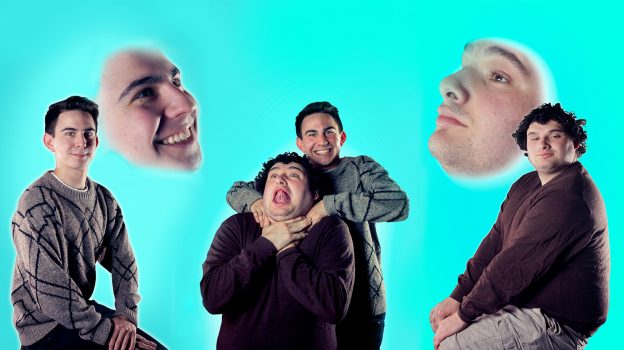
It’s hard enough to be a comedian of any age, but to try to grow and thrive as a minor has additional challenges. You’re still awkward around people, your life experiences may not be as extensive and some venues either won’t let you perform, or make you stand out in the rain until it’s your turn to go up on the microphone. Despite these challenges, Marcus Peverill and Parker Newman are two 20-year-old comics that have less than a year in stand-up comedy but are already getting reputations as fresh, dark and clever personalities. I’ve watched them win over obnoxious out-of-control rooms and bomb horribly in front of them as well.
Marcus Peverill frequently performs in Sacramento but is based out of Modesto. His family recently moved to Virginia, and he stayed behind to keep working on his comedy. He’s 20, but he could easily be mistaken for someone several years younger. Crowds at bar mics often treat him like a kid that snuck in, but once he disarms them with relationship jokes and sarcasm that someone his age shouldn’t have, he quickly gets them on his side.
Parker Newman, also 20 years old, is a Sacramento native and has a style and observational material that is wickedly disturbing and hilarious. Jokes like, “I don’t think it’s such a big deal when someone says, ‘Jesus Loves You.’ He loves everybody. That’s like getting excited about the free square in the middle of a BINGO card,” feature prominently in his wheelhouse. In March, he tweeted “how’s it going dad?” to Artie Lange, which resulted in a chain of responses, retweets and even a phone call with career advice from the comedy vet and actor on HBO’s Crashing.
I spoke with the two of them individually about the challenges and experiences young new comedians face.
What was your first performance on stage like? Marcus Peverill: I first performed at The Queen Bean Coffee House open mic in Modesto. There were a bunch of comedians who had been doing it longer than me who went up. I kind of just bombed my ass off pretty much. Parker Newman: I bombed so badly I didn’t come back for a year. It was horrible. I tried to do an act out that I gave up on halfway through. The joke was supposed be that whoever built a time machine would be really mad about something, so in this joke his motivation was that he wanted to order salad instead of soup. In the middle of my joke, I saw the light and thought I had to get off the stage, so I just said, “That’s my comedy” and walked off.
So the joke was just that he wanted salad instead of soup so he built a time machine? PN: Yeah, I’m not proud of it.
How did you come back after bombing? PN: I waited a year and went to Luna’s Café, because I didn’t want anyone to recognize me. But I didn’t realize the same comics go to all of the mics. I actually did alright when I came back, but I didn’t want to bomb again, so I stopped going for another year. MP: I feel like the reason I stuck with it, even though I bombed, was that all of these comedians told me to keep going. I saw them do well and it inspired me that I wanted to be as good as them, or even better. I kept working on it. I’d go every week by myself, and I started hitting mics in other areas. PN: I got booed and heckled so badly at Vince’s [Ristorante] in West Sac. I couldn’t even respond to the heckles because new ones would come at me before I could even think of a comeback.
What’s it like at Vince’s? PN: It’s a bar crowd, but it makes that bar in Star Wars look like Chuck E. Cheese. I am very happy for stage time, but people there aren’t drinking to escape, they don’t even want to live. I don’t even think they’re drinking alcohol there. It’s like anti freeze or some shit. They’re just downing Windex.
What’s a funny experience talking to someone after they saw your set? MP: I have a joke about my girlfriend hanging herself. I had a couple come up concerned that it actually happened to me. It was so ridiculous that they asked me that I just acted upset that they would even question it. It got really uncomfortable after that. PN: I have an AIDS joke that wasn’t polished at all. A woman told me that AIDS jokes weren’t funny. I just told her I didn’t know how to talk to girls. Then she said that it wasn’t my joke she had a problem with but that Leonardo DiCaprio made an AIDS joke that she didn’t like. I just said, “OK, I’ll keep that in mind.” I had no idea what she was even talking about.
Parker, you got a lot of attention and encouragement through Twitter from Artie Lange. How did that all happen? PN: People said that I looked like him so I tweeted, “Hey, Dad, How is it going?” and he saw another tweet of mine that he thought was funny, and we started shooting the shit back and forth. It was awesome to hear from him. It makes me sound like a dick that I’m bragging.
No. You threw a comment that probably should have got ignored, but he responded and dug your stuff. You actually talked to him on the phone for a while? PN: Yeah, he said he’d like me to open for him. He gave me some pretty good advice. He told me to keep wearing my cargo shorts on stage. “A lot of people will give you shit for cargo shorts, but keep them, and be yourself.” Some people get very anal about how you dress on stage. I get where they’re coming from, but I think it doesn’t matter if you’re not being yourself. You have to be comfortable.
What’s it like performing in a bar compared to a comedy club? PN: You learn a lot more outside of clubs. I can’t stand telling the same jokes, so I like places like that. But if doing open mics kill your self esteem too much then you can go to The Punch Line or Comedy Spot. MP: It’s definitely harder [in a bar], but those are the kind of rooms you need to do well in to murder in a club. It advances your crowd work skills. It’s so much more about the material than your stage presence. What sucks is just looking so young.
Do you think your youthful appearances set an expectation with the audience that helps you? MP: It’s fun because I can talk about things I’ve been through, and they think there’s no way I could have gone through that.
Have you faced obstacles performing at 20 years old? Most of the bars will let you come in to perform, but you have to wait outside, then immediately leave when you’re done. PN: I’m happy waiting outside anyway, so I can prepare my jokes and hang out with people. There’s a few places that flat out won’t let you in.
How would you describe your comedy? MP: Darker material and stuff people are uncomfortable talking about. I talk about anxiety and insecurities. My favorite comedians are Rory Scovel and Bo Burnham who have material like that. PN: Not good yet [laughs]. I’m still working on it, to be honest. People see me as a darker comic but I’m not trying to be offensive. I’m just experimenting with a lot of stuff. I’m still finding my voice and being myself.
You’re getting a lot of praise from veteran comics. Is it hard to get that when you’re so new? PN: It’s great and I’m honored, but at the same time, I try not to let it get to my head. When I first started getting laughs from veteran comics, and I thought, “OK, cool, I don’t have to work anymore!” But I realize that I’m not shit yet, and I need to keep my ego in check.
What comedians inspired you to start comedy? MP: The first time I realized I liked it was watching Bo Burnham’s Words Words Words special. I had seen other stand-ups, but I really didn’t think they were that funny. PN: Bad ones [laughs]. I remember watching people on Comedy Central and thinking I could do better than that. I was wrong. But I love Chris Rock, Kyle Kinane (and a bunch more).
What are goals on your comedy bucket list? MP: By next year, I’d like to travel. My parents live in Virginia, so I’m maybe going to get a couple of comics to come with me from California to there and find some places on the road to perform at along the way. JR De Guzman said he’d put in a good word for me. Just to see what it’d be like to be a road comic. PN: I’m just trying to build up my time. I’d love to be able to write as much as I can. I heard getting 30 good minutes is good for going on the road.
In addition to being regulars at many of the open mics in the area, you can catch both Parker Newman and Marcus Peverill together along with headliner Sean Peabody on the Smile Out Loud show at Laughs Unlimited on June 29, 2017. Newman also runs an all-ages open mic comedy show at Café Colonial every third Wednesday of the month.
**This interview first appeared in print on pages 24 – 25 of issue #239 (May 8 – 22, 2017)**
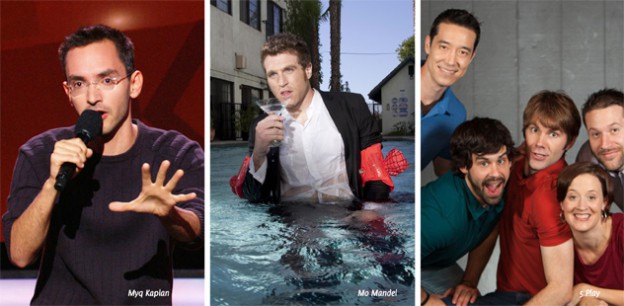
The Sacramento Comedy Foundation, a local nonprofit organization, will be hosting the fifth annual Sacramento Comedy Festival and they’ve now expanded to a whopping nine different venues. The party kicks off on Oct. 2, 2015, and lasts until Oct. 10 and takes place at regular hot spots like Punch Line Comedy Club, Laughs Unlimited Comedy Club and the Sacramento Comedy Spot. But also the festival includes some non-traditional venues such as the Starlite Lounge, Ooley Theater, Luna’s Café and more. Expect some spirited sets by Myq Kaplan of Last Comic Standing, Mo Mandel from truTV’s Barmageddon, and Rick Overton (actor/writer Emmy Award-winning comedian). There will also be a special Lavender Lights—Gay and Proud show on Wednesday, Oct. 7 at Punch Line Sacramento featuring the hilarious Ronn Vigh (Last Comic Standing). Those who love improv will be delighted that Bay Area group 5 Play will perform two shows in two venues over the first weekend as well. If that weren’t enough, there’s even a Stand-Up Comedy Competition, which will have 60 comedians competing for a generous $2000 purse. Come for one show or buy a festival pass. You won’t be disappointed either way. Check out Saccomedyfest.ticketfly.com to get the lowdown.
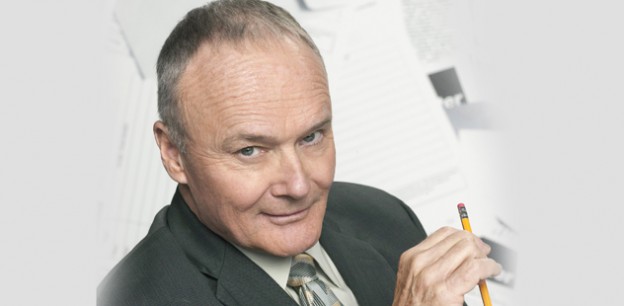
You’ve probably encountered someone like the character Creed Bratton from The Office. He’s that guy you don’t really know but you see every day. He seems innocuous from a distance, but there’s something about him that keeps you from getting too close. Then maybe one day you’re at the snack machine, pushing up against the glass because that Snickers bar you just purchased got stuck on the spiraling metal wire that holds the candy in place. Suddenly you hear an unfamiliar voice from a very familiar face. Perhaps he’s trying to make bizarrely humorous quip about your plight … or maybe he’s equating your struggle with the candy machine to society’s battle with the covert forces of the Illuminati. Whatever he said, for a moment, you were time twisted from your mundane life to some dark, twisted form of Narnia.
The man Creed Bratton is only slightly like the famous character he portrayed on one of the past decade’s most defining sitcoms. However, in many ways, he’s way more fascinating.
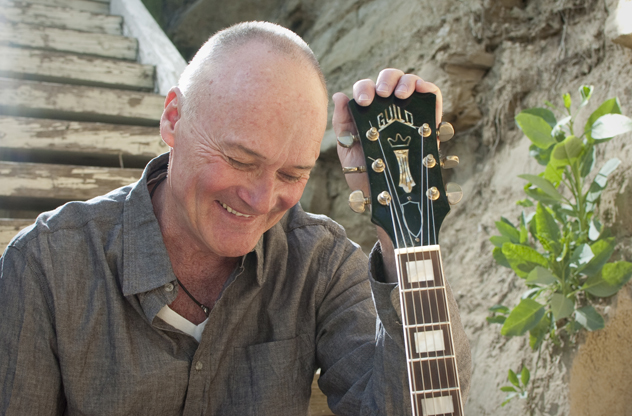
Bratton, a former student at Sacramento State, backpacked overseas for a few years before returning to California to start a band with Warren Entner called The 13th Floor. By 1967, the band changed its name to The Grass Roots and went on to record a few popular radio hits including “Let’s Live for Today.”
Though he got his start in music, it was acting that Bratton actively tried to pursue while he was in college.
“I was always planning to be an actor,” says Bratton, who studied drama while at Sacramento State. “Music was just something I did. I didn’t know until I went to school that everyone didn’t know how to play music. I just thought everybody does this, you know?”
At a young age, Bratton (born William Charles Schneider, later changed to Chuck Ertmoed when his mother remarried) had an ear for music. He first took to the trumpet before picking up the guitar.
“My grandparents had a country-western band called The Happy Timers,” he remembers. “When I was a little kid, I’d sit down and watch them play. I used to go down to Long Beach from the mountains and be with them for two months in the summer … I’d listen to stuff on the radio and just figure it out by ear.”
By 17, he was working professionally as a musician, but after he left The Grass Roots in 1969, his artistic career hit a bit of a snag, or as he put it in our interview, “35 years of thinking I’m not going to get anything going.”
Over that time, though, he never gave up. He spent his time “working, writing, going to class,” he says until, eventually, he once again struck pop culture gold.
“Now I have my second wind as it were, and I’m off doing these shows again,” Bratton says, gearing up for a California tour that will bring him back to Sacramento. “I’m having a great time.” Submerge had the pleasure of speaking with Bratton about his surprising and remarkable career as an actor and musician.
It’s amazing what the music scene in the late ‘60s meant to American culture, and it still has an effect today. What was it like for you living through that time as a musician?
At the time, it was very innocent. The pot wasn’t anywhere near what it is today. It was very mild. We experimented with stuff. For musicians at that time, it wasn’t looked down upon. You were doing what you were supposed to do. You were going to the other side of the veil, finding little chestnuts and bringing them back and writing them down and playing them for people. That was the deal. Some people didn’t come back. I was one of the lucky ones who … What were we talking about?
Badda boom! Drum roll!
It was the ‘60s. It was the best bite of the apple. There was no AIDS. It was free love and pot and everyone was fucking each other and painting flowers on their faces. It was pretty cool. And then it got weird in the ‘70s, but from ‘66 to the early part of the ‘70s, it was just fantastic.
I saw a quote on IMDb that was attributed to you where you said how you did a lot of acid, but never had a flashback.
Exactly! I paid good money for that acid. I deserve a flashback [laughs]. That’s just a joke, though. I would be scared to death if I had one those! I don’t even need that. All I have to do is be locked in a room where they’re smoking that pot from nowadays, and I’ll be crawling the walls [laughs]. I think Louis C.K. says it best, the best way to do drugs is not do them for a while, because when you do them it’s really amazing.
I know, I’m waiting until I retire so I can smoke a joint one more time …
When I’m doing acting and trying to memorize lines, I just can’t do it. It messes with my memory too much. It’s nice to do when you’re on vacation and you’re hanging out with somebody on the beach. That would be great. When it comes to work and stuff, it just interferes.
I know a lot of people know you from The Office, so I wanted to ask you a couple of questions about that. I thought it was really cool that you pitched your character to the show’s creators.
I actually shot an audition tape. I recently found that audition tape, actually. I thought I had lost it. I was working on Bernie Mac, I met Ken Kwapis [director for both The Bernie Mac Show and The Office] and we became friends on the show. When I heard about The Office, I contacted him. He said that they were already cast, but he’d try. He talked to Greg Daniels and said I was a very interesting guy and a musician, and they put me in the background. I left Bernie Mac to take a shot at doing this. I was just starting to get lines on Bernie Mac, but my gut said do this [The Office]. Within one week, I knew there was so many talented people that I had to do something. I wrote an hour’s worth of stuff, like what would happen if someone had stayed on drugs and stuff and ended up at a paper company and created this character. I went to my buddy Joe Moore, who was an A.D. on Bernie Mac, and with his help, I adlibbed a bunch of stuff and picked the best out of what we did and gave it to Ken Kwapis, who was still directing on the first season, and Greg Daniels. The second season came in, and in the first or second week, they threw a script on my desk and said, well, everyone thinks you’re really funny, so here you go. It was a 6-and-a-half-page scene with Steve Carrell, and I was like, “Oh my God, this is it!” It was scary. After it aired, I came in on a Friday, and we aired on Thursday, I saw Rainn Wilson and John Krasinski and they gave me a big bro hug and said I’d knocked it out of the park. That meant so much to me. The next thing you know, I became a series regular. I tell actors all the time, if you’ve got strengths or weaknesses, use them. Make a video and use that as your audition.
The character became such a cult figure, too.
It was amazing how people loved that character, that crazy guy. People still get disturbed when I’m talking to them, and they’re like, “You’re not that Creed guy,” and I’m like, no! It’s close to how I talk and stuff, but still not me, obviously.
I think part of it is that everyone knows someone like that in their lives, that peripheral character who you don’t know much about, but he says that weird thing that you can’t believe just came out of his mouth.
[Laughter] Well the writers took that thing … I would just laugh at the table reads seeing some of the stuff they came up with for me. They did a lot with a little with that guy.
It’s been a couple years now since The Office ended. How has it been winding down from that?
Oh man, I missed it. I remember after the hiatus period, like three months or so, I found myself one morning driving in my car and I was starting to head back to the studio where we shot. I was like a homing pigeon, you know? I’ve done some independent movies, like Band of Robbers, which turned out really well and it will be playing film festivals. I also did Grace and Frankie for Netflix and recorded some new stuff. And of course I’ll be coming to Sacramento. That starts off my California tour. … I want to give a big shout out to Duane Heglie, can you put that in there? He’s my buddy from college and high school. We went to Sac State together.
Your most recent album came out in 2011. Are you working on new material?
I have six solos and four with The Grass Roots. I think about the time I hit a dozen, I’ll make one that really clicks. But right now I’m working on a pilot called Feather Peak that we’re trying to get greenlit. I play a character who lives up in the mountains. He’s a caregiver, but he writes music too, so I’ve been writing songs for the show, and they’re really good! I’ve been doing three or four of them in the show now. They’re all brand new. I’m going to be recording them pretty soon in Los Angeles.
A character who lives in the mountains who plays music, that sounds pretty close to home.
He’s a caregiver who has this ability to realize that when people are dying they hold on to things that keep them from passing on to the other side in a tranquil way. He’s able to facilitate this. … It’s kind of like Northern Exposure meets Touched by an Angel meets the Creed character [laughs], which is kind of an interesting concept if you think about it.
Duane, if you’re out there, this one’s for you. Join Duane and surely many others when Creed Bratton plays live at Harlow’s in Sacramento on Aug. 11, 2015. Ngaio Bealum will take the stage to open the show. Tickets are $15 in advance and can be purchased through Harlows.com.
**This interview first appeared in print in issue #193 (August 3 – 17, 2015).
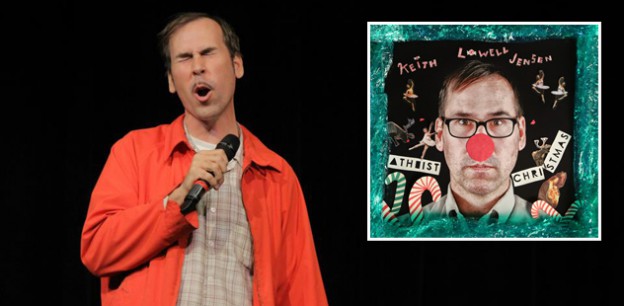
Sacramento funny man Keith Lowell Jensen is back at it again with his new album Atheist Christmas, which was released Nov. 25, 2014 on Stand Up! Records (his second release for the label and fourth overall). Atheist Christmas is a CD/DVD combo pack; the video portion was recorded right here at Sacramento Comedy Spot early last December, and the audio portion was recorded just a couple days after at Punch Line in San Francisco. Submerge was lucky enough to get an early sneak peek at the video special and we can vouch that it is absolutely hilarious! There are cute little Christmas decorations behind him on stage and multiple camera angles. KLJ’s material ranges from relatable jokes about his daughter acting like a tiger, to weird/traumatic childhood experiences at church camps, to much more outlandish and slightly embarrassing jokes about his doctor sticking fingers up his ass, masturbation and how his life peaked in elementary school (it’s a funny story involving bird shit). You know, everyday normal conversation-type stuff for a comedian. “I do know that I’ve been talking about a lot of depressing stuff,” Jensen says at one point. “But I did warn you that this was going to be a Christmas special!” Jensen is having a Sacramento release show for Atheist Christmas on Thursday, Dec. 4, 2014, at Punch Line Comedy Club on Arden Way. Joining him on stage will be some of his best comedy pals Johnny Taylor, Matt Lieb, Michael Patten and Robert Berry. Show starts at 8 p.m., is 18-and-over, $15 cover charge, and there’s a two-drink minimum. For more information on Keith Lowell Jensen and to buy Atheist Christmas, visit Kljshop.com or Rockass.net.
Just like our music scene and our art scene, Sacramento’s comedy scene is an ever-changing beast. Here are a few noteworthy things going down in the local comedy scene as of late: Sacramento Comedy Spot, located in the MARRS Building, is expanding and opening up a new space called the “Comedy Spot Lab,” located at 1812 J Street, Suite 9 in Midtown Sacramento. According to a press release, The Lab will serve as an additional classroom, rehearsal facility, and podcast recording studio. With the extra space, the Comedy Spot can offer new sketch comedy and stand-up classes as well as additional beginning improv classes. Learn more, sign up for classes and check out upcoming shows at Saccomedyspot.com
After a long and impressive run, Comedy Night at Luna’s is coming to an end on Wednesday, May 14, 2014. Keith Lowell Jensen started Comedy Night at Luna’s in 2009 after recording a CD there and falling in love with the small, intimate space. “I long thought Sacramento needed a good workout room,” Jensen told Submerge. “Something to serve as the next step after the open mic scene helped comics get their first five. I wanted a place to get that first 10, 15, 30. I’m really proud of how many comics had ‘firsts’ at Luna’s.” He says he doesn’t really see a need for the recurring night anymore, that they proved it can work, and that “lots of people are doing kickass showcases and rooms downtown that can be a little more alt.” Plus, he may be able to use the free time for “new projects,” as he put it. Keep up with KLJ at Rockass.net and be sure to check out his podcast called “It’s Funny Because…” available on iTunes and Lybsin.
A group of local comedians including Johnny Taylor, Daniel Humbarger, Stephen Furey, Jaime Fernandez, Michael Patten and Alfonso Portela, are teaming up to launch an all new recurring weekly stand-up show on Wednesdays called The InFIRMary at Thistle Dew Dessert Theater (1901 P Street). The show will feature special guests every week as well as sets from most (if not all) of the names mentioned above. Thistle Dew is a unique little spot with less than 40 seats, so these are sure to be intimate shows. You are encouraged to bring your own wine and/or champagne (don’t forget to bring your own glasses, too!) and there will be desserts available for purchase. Tickets are $8 each and the show gets started at 8 p.m. every Wednesday starting May 28. Snag tickets in advance to ensure your seat at the kickoff show at Infirmary.brownpapertickets.com
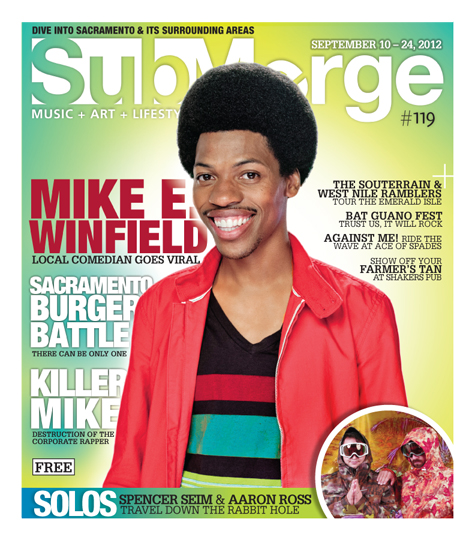
Sacramento Comedian Mike E. Winfield gets ready for the premiere of his new comedy/music mashup on FUSE TV
Words by Andru Bell
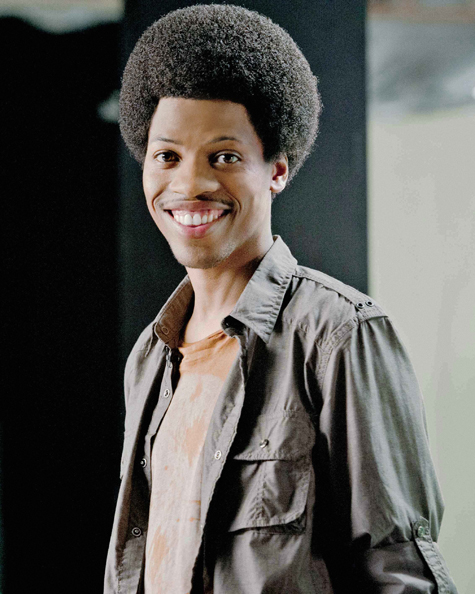
The first thing you notice about comedian Mike E. Winfield before he ever tells a joke is his smile. He has the kind of contagious, ear-to-ear grin that you can hear over the phone.
These days that smile might have a lot to do with the fact Winfield is counting down to the premiere of his new TV show, Off Beat, on the FUSE network Sept. 14, 2012, a dream he has been working toward his entire career. Winfield will host the weekly viral video music/comedy mash up with sidekick Mal Hall dissecting and analyzing the most outrageous music themed videos and viewer submitted clips (think “Chocolate Rain” and “Hot Cheetos and Takis”).
Off Beat features a heavy hitting production team including the legendary Vin Di Bona as one of the executive producers as well as creative consultant Mike Gibbons who worked on Tosh.0. “It’s viral videos that have a connection to music,” describes Winfield. “There could be someone at church dancing and they fall out the cathedral window. That could make the show.”
With the first season wrapped, and Hollywood notoriety around the corner, Winfield is still incredibly humble when speaking about his comedic roots and the path to his current success.
“In school I was hilarious to about three people only,” Winfield says when asked if he was the class clown. “I feel that everyone else knew me as Michael, the dude chillin’, trying to make the team.”
At points, growing up in East Baltimore, Md., was anything but comedic for Winfield. “I didn’t know how bad areas were where I lived until I got older,” he reflects back. “By eighth grade I was able to recognize that people were selling drugs on the block where I lived. I knew where not to get shot. I even knew how to spot an undercover vehicle.”
It wasn’t until moving to Sacramento after high school that Winfield would even step on stage for the first time to try his hand at stand-up comedy. His sophomore year at American River College, a small audience caught the first glimmer of greatness. Or something like that.
“I get on stage at this open mic believing I have the skills to freestyle a five minute set,” Winfield recalls. “I can barely freestyle a five minute set now, so it goes awry. I’m not booed, but it’s silence and stares–very awkward and uncomfortable. I figure that live comedy is not for me…and I focus on finishing college.”
Three years later, after graduating from Sacramento State with a bachelor’s degree in English he is faced with the decision to enter the teaching profession or attempt stand-up comedy again.
“I built the courage to return to the beast,” Winfield says. “But this time, I actually write material, which is the difference.”
The rest is Sacramento comedy history.
“I just started going to open mics and hitting them every week until more shows and doors started opening.” This was 2004.
Since dedicating his life to the art of making a crowd laugh Winfield has been featured on BET’s Comic View, Comedy Central’s Live at Gotham, Showtime’s Comics Without Borders, Comics Unleashed, The Late Show with David Letterman and NBC’s The Office before being selected for his latest role as host of Off Beat.
The audition process for Off Beat started last year in Los Angeles when Mike E. Winfield and thousands of other comedians and on-air personalities of all kinds auditioned for the gig. It wasn’t until this past February that Winfield got word that he had beat out the competition and was Hollywood bound.
“It’s funny because I said, ‘I want my own TV show,’ but something like Off Beat I would’ve never planned,” Winfield says. “It’s weird because I don’t know what else I would be more fit for.”
Though he is the figurehead for a team of writers now, Winfield promises the same personal connection with the audience that has fueled his stand-up success.
“With Off Beat it feels so much like it is mine and people will really get to know me. They see so much of me just being myself so it’s more fitting than anything else I could even imagine.”
Now living back and forth between Los Angeles and Sacramento, Winfield is touring to promote Off Beat’s upcoming premiere. A comedian’s comedian, Winfield isn’t spending all of his time talking to morning news shows though. In fact, he is known for making impromptu appearances at local open mics from Sacramento to New York City. He explains, “Whatever town I find myself in, I’m trying to hit the stage.”
If you don’t Google him, you might spend an entire night hanging out with Mike before you realize that he’s sort of famous.
A few weeks ago, while back home visiting, Winfield dropped by a showcase at Luna’s Cafe, hosted by comedian Johnny Taylor, to do a set completely unannounced. “Mike E. is on the verge,” described Taylor, “but he’s different, because you know he’s one of those guys that really wants to bring the city with him.”
When asked how he plans to deal with the fame monster, Winfield jokingly responds that he has already scouted out a place to buy afro wigs to outfit his army of imposter drones in true pop star fashion.
“Britney Spears has to leave her house through some hidden chamber in the basement and has imposters that look like her,” he explains. “I have this place where I go get afros, throw them on people, and then have them leave before me.”
In reality, the gradual climb up the ladder of success has readied Winfield for the upcoming wave of (much deserved) recognition. “I feel like there was a set up for this,” he explains, “It’s a slow, gradual… BOOM.”
When asked his advice to aspiring comedians, there is no hesitation. His answer is immediate and fires off like a mantra. “Everything is about the work you put in,” he says, “I believe when you work hard at anything you see results even if it comes back to you another way. So it’s not talking about it. It’s doing the actual work. I’ll perform anywhere. I’ve performed at poetry shows, open mics and cafes. I’ve performed in the back of a vegan restaurant. If there is a microphone, I’ve been on it.”
It would be remiss to credit Winfield’s relentless work ethic and fail to mention his secret weapon, wife Kisha, who has stood by the comic’s side every step of the way and played the most important role behind the scenes. “September we’ve been married 10 years,” says Winfield. “The thing is we’re stronger than ever. She’s the one behind the scenes getting stuff done.”
Though his marriage is not off limits as fodder for his stand-up, it is clear that she is another reason for that famous smile. You have to respect and admire a wife that can truly support a struggling comic with showbiz dreams. And clearly Winfield does.
Mike E. Winfield will be back in Sacramento headlining at The Punchline on Oct. 4, 2012 as well as multiple shows over Thanksgiving weekend, also at Punchline. …And you never know where he’ll show up between now and then.
Keep up with Mike E. Winfield as Off Beat hits the airwaves and set your DVRs for the premiere Sept. 14th at 7 p.m. on the FUSE network. You can also follow his misadventures in viral video via his Twitter, @MikeEWinfield, and his website http://mikewinfield.com/. You can see Winfield live at the Punchline in Sacramento on Oct. 4. For tickets and more info, go to http://punchlinesac.com/
W. Kamau Bell on America’s Racial Tourette’s
Words by Vincent Girimonte
W. Kamau Bell reassures me in our conversation last week that yes, I read the fine print correctly: if you bring a person of a different race to his show, The W. Kamau Bell Curve: Ending Racism in About an Hour, slated for two performances Aug. 20, 2010 at The Comedy Spot, you will be rewarded with a two-for-one discount. This bargain first struck me as some sort of revealing trap, or maybe just a joke I wasn’t quite in on–“people are so cynical.” My next question: who’s in charge of this…profiling of a racial nature?
“We have a strict ‘don’t ask, don’t tell’ policy at the door,” says the San Francisco-based comedian, who, in addition touring with the Curve, released his second stand-up album, A Face Full of Flour, earlier this year. “You don’t want to put some door person at the forefront of telling somebody ‘you two are the same race!’”
The show’s moniker is as unambiguous as Bell himself, a “race-ist” commanding attention through a blunt dialogue on our racial States, and his build even–6-foot-4 with an afro. Digital slides, video clips and various other media are used as part of Bell’s shtick, striving to stimulate and invigorate the atrophied, “post-racial” conscience, white, black, brown or Polish (remember: no asking or telling).
It seems as though your show employs some didactic techniques; are you giving us a race lesson, in a sense?
I definitely like people leaving the show thinking “I didn’t know that,” but it’s a comedy show. If people want to learn, there are people way smarter than me to learn from–it’s not a funny lecture. I’ve always liked comedy that left you with something afterwards, though. I’m a big fan of Bill Hicks and Lenny Bruce, people who were comedians first, but also want to change the way you think about things, change the air in the room a little bit. I’d be stupid to compare myself to two of the greatest comics in the history of mankind, but I think that’s the school of comedy [under which I perform]. I think that’s also true of Chris Rock; he wants you think differently when you leave the room.
How did race first manifest itself in your material?
Like a lot of things, it’s the fault of your parents. My mom was a Ph.D. student at Stanford back in the ‘70s. She was trying to get her degree in African-American literature, but at that point Stanford didn’t consider African-American literature to be a field of study. She withdrew from the program rather than take a Ph.D. in a program she didn’t want…so that’s my mom. My dad has always been the kind of black person who was either the first or “I’ll be better than everyone around me.” He’s been a super successful businessman because he refuses to be defined by his race. Being raised by those people sort of puts you in the way I see the world. I’ve always struggled with how the world sees me versus how I see the world.
You spent much of your youth in Chicago. How did your time there influence your views on race?
Chicago is one of the most racially segregated cities in the United States. There are probably still places in Chicago where black people shouldn’t go. The difference in Chicago is they might tell you when you walk in, “Oh no, black people shouldn’t be here.” Oh thanks, I’ll see you later. Coming out to San Francisco, which has the reputation of being super liberal, there are places where black people shouldn’t go, but they just don’t talk to you. That’s true of every racial group–I’m only speaking from the black perspective. The racial dialogue in San Francisco isn’t usually talked out loud, because people think we solved it by virtue of our area code. In Chicago, I feel like you can tell somebody, “You’re being racist,” and they’d be like, “You’re damn right I’m being racist,” which is a different problem. In the Bay Area it’s, “What? How could I? There’s no way. I have a black friend. I order my burritos in Spanish.” I think living in San Francisco is what pulled the show out of me.
You’re a language guy. Give me an accepted word or phrase pertaining to race that you find annoying.
We’re two years into the era of the first black president, and there’s still this debate about whether or not we’re living in “post-racial” America. That was solely an invention of the media. It doesn’t even make sense. I looked it up in the dictionary and found out it’s not in the dictionary. It doesn’t mean anything. In the show I talk about how I can disprove the idea of post-racial America in two words: Cleveland Indians. I show the logos for the Indians, for the Redskins, the Braves: We still have sports teams named after races of people.
The last six months of news has been fraught with racial tension–I’m thinking Shirley Sherrod, the Tea Party, Arizona SB 1070. What did happen to that “post-racial” society of November 2008?
When I started doing this show, people thought this guy Obama could maybe be vice-president for Hillary Clinton. How quickly things changed. It’s interesting to me, because America having their first black president has become a lightning rod for racists. It’s almost like having racial tourette’s. And the right has done a really good job of making people believe that their problems are the fault of [Obama]; not that we, the rich people, have destroyed the economy. It’s easy to blame the black guy. I’m also not there to cheerlead Barack Obama. The show is hyper-topical; there are things that come in and out of the show based on how topical they are.
Why can Americans laugh about race but not talk about it seriously?
Well a lot of race humor–and this is what I try to steer clear of–is just making fun of other races. A large part of humor settles on making fun of people; not that there’s anything wrong with that, but it’s not the same as when Chris Rock talks about race, or Dave Chapelle talks about race. The thing I’m trying to do with the show is use jokes to indict stuff I don’t like, but I’m not just making fun of it. It’s easy to make fun of other people, you know, “That’s true! Chinese people do blah, blah, blah.”
Catch The W. Kamau Bell Curve: Ending Racism in About an Hour at The Comedy Spot, Aug. 20, 2010 playing back to back at 8 p.m. and 10 p.m.
Comedian Mike E. Winfield stands ready to command a larger audience
With a performance on The Late Show with David Letterman airing in the near future, Mike E. Winfield has succeeded in dropping the “local” prefix from his title of comedian. In fact, the local label has been absent for some time, given Winfield’s appearances on Last Comic Standing, Comedy Central’s Live at Gotham, and various comedy festivals and competitions.
After eight years deep in comedy, 2010 could be his breakout year–Mike officially quit his day jobs to pursue comedy full-time. He attributes his success to a dedication to the craft and inspiration from New York Times bestseller Outliers and its 10,000 Hours Rule, which states that greatness in a specific field requires 20 hours of work per week over 10 years. “Certain people aren’t successful just on talent,” he said. “It’s the people who mix talent with opportunity. When I do shows, if it’s in my power, I stretch it to make an hour show an hour-and-15-minute show. It’s an art. That’s what it is. I’m working on this artistic form all the time. Putting it out there and getting a Facebook request a day.”
So far, he’s stayed busy. He touched down in Sacramento the day we arranged an interview, fresh off a flight from Nebraska–“yes, Nebraska, Nebraska,” he confirmed. Two months prior to his stint in Cornhusker land, he did a U.S.O. show in Okinawa, Japan. This month, he’s treating his hometown to a headlining show at the Punchline. “This one has the most buildup,” he said. “It’s from an accumulation of being on stuff. More people recognize me now.”
So I read on your blog that you went snowboarding once, and it’s going to be the only time. What happened that was so traumatizing?
I hit a little kid, man. I was dumb. I forgot to learn how to brake before I went to the more advanced slopes. I was doing full speed and this kid was coming horizontally. I see the kid from far away coming toward this perfect intersection.
I kept thinking, “No, this is not about to happen;” that poor little girl, man. She had on pink and her skis ended up stuck straight up in the snow. I played like I was hurt so I wouldn’t look like a dick. Her dad yelled at me. My friend, who I will never hang out with again, he was like, “You should probably apologize.”
It was fun up until that point. I didn’t even have the right attire. I just put on a whole bunch of clothes. I had Vaseline on my face because I heard it would keep me warm.
I feel like somebody played a joke on you with the Vaseline thing. You also just got back from Japan?
Yeah, I was in Okinawa for a military show. There are troops stationed out there. You want to talk about people who appreciated a show. You didn’t want to leave. There are some bad situations out there. You feel for the troops. They are working hard. A lot of them don’t want to be there. There’s nothing to do. All their outlets are alcohol and clubs, just drinking, waiting for their time to pass.
That was my first one, and I’m down to do more. It felt like I was giving. I am doing what I’m supposed to be doing in life for the right reasons finally.
Are there any weird cultural experiences you had?
The fact that all the vehicles were the same things we had, but smaller versions of them. That struck me first.
Did you earn your stripes in Sacramento?
Yeah, I think I first got on stage at Laughs Unlimited. My first work, I did a weekend at the Punchline, then the following weekend I was booked at Laughs Unlimited. So like my first week of work was two back-to-back weeks. It just didn’t stop. I felt like a new person because I was getting a lot of work. I think it was because I was really clean. It’s opened up a lot of doors.
Would you still consider your material to be clean?
I have my times. Lately I’m on being whoever I am. I just want to be myself and have people say, “Yeah, I’m going to see this guy because he’s funny,” not because, “He does dances and then a flip at the end.” I just want them to go because they think Mike E. Winfield is a funny dude.
I read that you consider your college speech class your start at comedy. Is there truth to that?
As soon as I’d walk in front of the class they’d just start laughing. I would talk about how to make a Whopper. I didn’t have any intellectual speeches. I’d get grades on the delivery, but the content would get Ds. The professor said to just try [standup].
It was fun. I wish I could take another speech class to make up for what I did back in the day.
Whatever happened with the pilot you did with Bobby Lee of MadTV? I take it that didn’t get picked up? Are you trying to break into television and film?
That was like two and a half years ago. It just didn’t get picked up. I’ve been in some other stuff. I’ve decided this is my goal: I’m just going to do standup until I’m happy with the product I have from it. When I’m ready to pitch my own show, I’ll already have my sitcom ideas. If somebody gives me an offer, I’ll do it. I’m just not going to audition for some crap I don’t want to be in anyway.
You look at the greats. They came up with their own product. They had a fan base from standup or whatever else, and they pushed their own stuff. I enjoy standup too much anyway.
Why is it important we include the E. when printing your name?
Right now, it sticks out. The E. has a ring to it–just a little. That’s going to be my thing. Remember when Puff Daddy changed his name? When I get big I’m going to drop the E. That’s how you’ll know. I’ll even throw a press conference.
Ngaio Bealum Brings the Eighth or Ninth Cannabis Comedy Festival to Sacramento
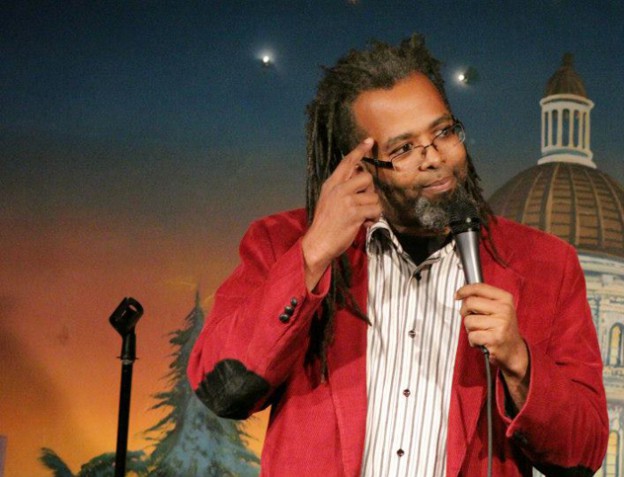
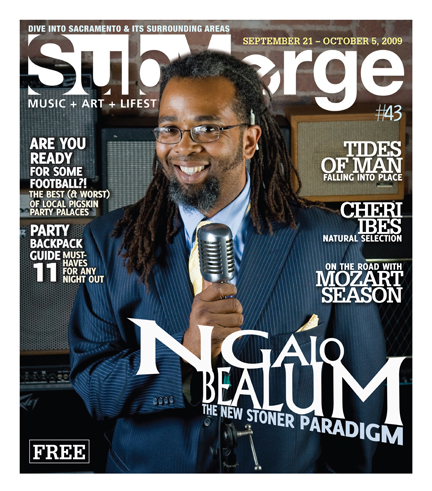
Ngaio Bealum is out to change your perception of what a stoner is supposed to be. Though the Sacramento-based comedian makes no qualms about his love affair with marijuana, his track record isn’t that of a couch-bound video game/Saturday morning cartoon junkie. Instead, you’ll find a man who is hard working and highly motivated.
“I’m not always a fan of how stoners are portrayed in the major media,” Bealum says. He believes his standup routine shows “cannabis consumers” in a different light. “I’m a pretty cool guy; I’m relatively smart, quick-witted. You know what I’m saying? I’m not dumb or unmotivated.”
If watching his act won’t change your mind, just look at his resume. Not only has he survived as a professional standup comedian for the past 20 years (he celebrates his 21st anniversary as a pro in October), he also publishes his own magazine, West Coast Cannabis, a full-color 96-page glossy, which first hit shelves in February 2008.
“It was really a ‘How hard can it be?’ sort of decision,” Bealum says of his choice to fit producing a magazine into his busy touring schedule. “But it turned out where it’s not too hard, but it was definitely a challenge at first. We’re getting it to where it flows pretty good now, but there was definitely a point or two where it was like, whoa, you know.”
In addition to that, Bealum also organizes the Cannabis Comedy Festival, which will celebrate its eighth or ninth installment (Bealum couldn’t remember which) Oct. 7 and 8 at the Punch Line in Sacramento. Bealum will host the event that boasts a lineup that includes DJ Mervin, Caitlin Gill, Keith Lowell Jensen and others. The traveling event has made stops in Portland, San Francisco and New Orleans in the past and is a fundraiser for Americans for Safe Access, an organization that helps “people who need marijuana for medical reasons have safe access to it,” says Bealum.
“I’m a big fan if you can raise money, educate and have a good time all at the same time,” he explains.
Submerge spoke with Bealum as he was preparing for a second night at Punch Line in San Francisco, after just returning from Hempstock in Portland, Ore., an event he likened to “an Oktoberfest or a wine tasting.”
“You know, all the connoisseurs get together and bring their favorite flavors, and other people bring smaller things that they had grown,” Bealum said of Hempstock and other events of its ilk, such as the Cannabis Cup. “It’s all really medical. It’s really nice.”
In the following interview, Bealum talks about his decades-long career and his favorite flavor of, well, you know”¦
Do you consider yourself a marijuana connoisseur? Do you have your favorite strain?
I’m a connoisseur for sure. I’m a big fan of sativas”¦not so much the Trainwreck, I like this new Green Ribbon that’s out right now.
What do you like most about it?
I like the kind of buzz-y head-high effects where you feel a little energized and maybe kind of chatty. I’m not so much the sit on the couch all day smoking weed stoner. That’s not for me.
If you were that kind of stoner, what would you recommend?
For that, if you’re old school, you’d go with a Romulan. But if you’re the new kids, they like the Kush or the Granddaddy Purple.
The number I’m calling you on is a Southern California number, but you’re living in Sacramento now, right?
I’ve been living in Sacramento for about a year, but it’s an open secret, so if they call me from L.A., I can still pretend. “I’ll be right there”¦in about five hours.”
What made you move up north? It seems like L.A. would be a more happening town for a comedian.
L.A.’s not really my style. I love Sacramento. It’s got a lot of civic pride, and my girlfriend lives up here, my brother lives up here, and my mom’s not too far away. She lives in San Francisco”¦ It’s got good restaurants. We rode our bikes to go to The Crocker, and then to the River Cats game. It was awesome.
Was there a final straw for you that caused you to move out of L.A.?
No, L.A. and I just get along better from a distance”¦ It’s better when I can just go down there to work and then come home.
I’ve had friends who have had prescription cards for marijuana. Do you have one as well?
I do.
A couple of friends who had cards, they didn’t really have a condition or anything. They just got their cards from doctors who were quick to give them out. I’m not saying that’s the case with you, but do you think that sort of thing hurts the cause of people fighting for marijuana legislation reform?
I quote Dennis Peron when he says, “All marijuana use is medical use.” Now, some people may not take it to that extreme, but if you derive some therapeutic value from feeling better”¦ Studies say that if you take a shot or two or have a glass of wine after dinner, you may actually get some benefit from it, so who’s to say that people who enjoy a toke or two aren’t getting some benefit from it. It’s a natural anti-inflammatory and mood leavener, so who doesn’t like to smooth out and feel less pain?
Do you foresee a day when marijuana is just legal across the board?
Yeah, I don’t think that’s too far in the future, actually. It’s getting there. We’re starting to reach the tipping point.
You’ve been doing this for 21 years now”¦
Yeah, 20 years. October will be my 21st anniversary as a professional comedian. Where’s my watch and retirement plan?
Is there a good pension for comics?
Yeah, it’s called shitty one-nighters. You can do those till you’re 80—have your kids drive you. “C’mon, we’ve gotta get to Missoula. Hurry!”
Does it bother you to be labeled as a weed comedian?
No. As I’ve said, I’ve made a pretty good career out of it. You know, it’s funny, because I did a show at the Punch Line last night, and it wasn’t even a stoner crowd, which was funny to me. It took me by surprise at first, because I didn’t really go for a lot of the marijuana jokes, so fortunately, I have a whole other act that consists of jokes about my kids and quantum physics and psychedelic poetry.
In the years you’ve been a professional comedian, how have you seen the scene change?
I started comedy in 1988, which was sort of the ass-end of the comedy boom. Comedy was just starting to take off, there were a lot of clubs and there weren’t really that many comics, so there was a lot of work everywhere. It was really comedy-based. If you were really funny, you’d get a lot of work. It didn’t matter if you were on TV or not. When I started, you had to do a lot of roadwork in clubs to get on TV, and now, you have to get on TV to get into the clubs. I also think that comedy is changing its model, because more and more corporations have gotten involved. You know, Viacom owns Comedy Central, so comedy has become a commodity and not just a visceral way to entertain people. But with the advent of the Internet, I think the underground scene is coming back again, and the do-it-yourself punk rock vibe where all you really need is a room and a microphone and 50 people who can pay $5. You can make some money and get your point across without worrying about what you can and cannot say and how you will be perceived on television.
See the Cannabis Comedy Festival on Oct. 7 and 8 at the Punch Line in Sacramento. The show is 18 and over and carries a two-drink minimum. For more information on Americans for Safe Access, go to www.safeaccessnow.org