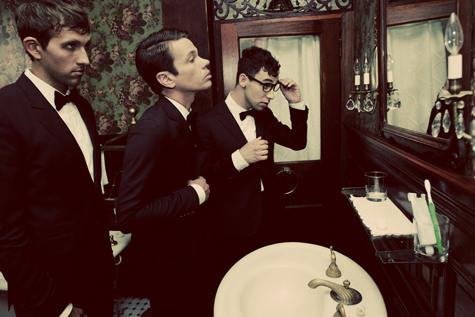
Jack Antonoff of Fun. sounds off on an important time for his band and a key moment in American history
Fun. stands at a difficult crossroads for any band. Their hard work over the past four years is starting to pay off in bigger success and more recognition. Some Nights, the band’s sophomore album, was released by Fueled by Ramen on Feb. 21, 2012. Powered by the hit single “We Are Young” (featuring space-age hip-hop chanteuse Janelle Monae), the album topped Billboard’s rock and alternative charts and peaked at No. 3 on its Top 200. Submerge spoke to Fun.’s Jack Antonoff before he and his band were set to head out on a spring headlining North American tour through early May, of which many of those dates are already sold out. Antonoff sees the tour as a big step forward for Fun.
“I don’t know if it’s just the tour or a lot of things that are culminating for us now,” Antonoff says. “For better or for worse, we’re definitely having a moment.”
This has left Fun. having to deal with the sometimes cumbersome burden of increasing popularity, though it’s not a burden they seem to shy away from shouldering. However, Antonoff acknowledges, “It’s not a very simple thing. There are a lot of angles to it.” He expresses a desire to keep the best interests of those fans who have been with Fun. since the beginning close to heart.
“One thing that constantly crosses our minds is that the fans who have been coming to our shows and supporting us for the past three years never feel alienated,” Antonoff says. “With the song being played on the radio and all of the TV stuff happening and the band becoming more popular, that can be weird for some of the people who have been here since the beginning.”
Fun. has made headway into the late-night talk show circuit, appearing on Conan, but the band has also gotten the Glee treatment recently. “We Are Young” was covered by the students of the fictional William McKinley High School on a recent episode of the popular TV program.
“We thought they did it incredible justice,” Antonoff says. “With a song like ‘We Are Young,’ it could have been placed in a really cheesy scenario, but they put it in a really poignant moment, in a real culmination and an emotional moment in the show. It was great to see the way it played out.”
“We Are Young,” as with many of the songs on Some Nights, would seem a perfect fit for a show like Glee. Soaring, sing-along-worthy, energetic pop wrought with emotion is the order of the day. The album has the feel of a mini-rock opera in which Fun.’s singer Nate Ruess seems to be giving a tactful nod to the great frontmen of the past (Freddie Mercury comes to mind). However, much has been made of Ruess’ growing infatuation with hip-hop as a major impetus behind the album. This was probably compacted by the band’s hiring of Jeff Bhasker, who has worked with artists such as Birdman and Kanye West in the past. The hip-hop influence can certainly be heard in the layers of production and catchy beats, but Antonoff says that those who are familiar with the band won’t have to readjust to a new and radically different sound.
“I think hip-hop gets talked about a lot because it was one of the more recent influences, but huge classic rock music and theater and classic pop are the influences that the band was built on,” he explains. “Those don’t go anywhere.”
In the following interview, Antonoff talks a bit about working with Bhasker and touches on an issue he and the band take very much to heart–gay civil rights.
You were picked to be on Glee, and I was wondering how that came about and what your initial reaction was to that.
With Glee, they just called us and asked us if they could use the song. There wasn’t really too much more to it.
We were really excited about it, because Glee is a really positive, really cool show, in a time in America when you don’t get a lot of that. There are very few sources in the media on the mainstream level that are telling the stories and giving the voice to any sort of underdog–particularly in Glee with the gay community. If you could imagine being a young gay kid growing up in Middle America, a show like Glee may be your first opportunity to come to realize that you’re completely normal. We were really proud of it.
Listening to the song, it seems like it would be tailor-made for that kind of thing–a show about young people and it has such a big sound to it. I saw a clip on MTV.com where you mentioned that “We Are Young” was like the bull’s-eye of Some Nights. Was that one of the first songs you wrote for the album?
I think it was the second or the third, but it was the first song we worked on in the studio. It was the first song that we realized that would dictate a lot of the album.
So after that song came together, did you find the rest of them clicking into place? Did you start tailoring the rest of the songs so they’d fit in that vein?
I don’t know if songwriting is ever a problem, it’s more about production and feeling and where to take them on that level. After that, it became very clear the parameters of the album, and the job of fitting everything else into that–because you want an album to have a sound, but you also want it to be extremely diverse and fascinating, so you really have to set a framework of where you can go with what that album is. To have a centerpiece is really an invaluable tool.
How was it working with Jeff? What did he add to the album?
Jeff was amazing. He added this whole element that we never would have come across on our own, which, at the end of the day, is what you hope for in a producer. On a very specific level…but more importantly on a non-specific level, it was his attitude, his excitement, his passion for the music. Not that we don’t have it, because we have a great deal of that, but he had a different kind of it. It’s his special brand of it, which is almost physical and intense, which really rubbed off on us. It made us more excited and more willing to make an album that was going to have a more physical and more immediate reaction on that kind of level…
Everything is always going to be our vision, and his job is to guide that vision. He was the element in the studio that made a lot of those dreams come true.
I saw that you guys are working with Revel and Riot on this spring tour, and I was wondering how you got involved with that organization and if you’d like to talk about that a little bit.
We’re really excited to be doing that. Gay rights mean a lot to us, and more importantly they should mean a lot to everyone, but unfortunately in 2012, a lot of people are really apathetic about it, or even worse and have some bizarre opinions about it. It’s a human rights issue. We all know where it’s headed, and we all have the opportunity to help make it right, or be silent and be a part of holding it back and denying people their basic rights.
One of the biggest problems with the issue is a lot of people don’t see it as their problems. They don’t say anything, they don’t speak up. They quietly support and therefore don’t really support at all. As a band of three straight guys, we feel it’s vital to use whatever platform we have to make a statement about this and help educate and be very clear about where we’re coming from. We’re the kind of people, and our shows are the kind of shows, where none of that bullshit would ever be tolerated–no homophobia, or non-acceptance of any kind of person. More importantly than that, we urge our fan base to really take a good hard look at how they personally are or aren’t helping the issue.
We live in a huge moment when it comes to gay rights, where it’s going to tip one way or the other. It’s getting to the point where we’re all on the hook, whether we’re doing nothing or we’re doing everything. Whatever we’re doing is some sort of statement.
Maryland just passed a bill allowing gay marriages. It seems to be tipping in a positive direction. Do you see that continuing or are you skeptical about the climate in the future?
What makes me skeptical is that–I think about African American civil rights–people were treated a certain way, because that’s all anyone knew. So when that changed, people were reeducated, and as generations moved on and things changed, it became more of a level playing field. What’s different with gay rights is that the Bible, which a lot of people think is really great, says it’s a sin to be gay, and I don’t see the Bible going anywhere. That creates a different scenario. What I see is a lot of great legislative change. I see gay marriage becoming legal in more and more countries… In a perfect world it would go straight federal and that anything that’s separate or unequal would be completely abolished. But even if that were to happen, you’d still have a large portion of people who’ll have a problem with homosexuality based on religion. I think that it’s going to be an ongoing issue in the sense that it’s always going to be something we’ll have to consider, and it will always be a fight. Hopefully it will end up as benign as the way religious people feel about the rest of us, that we’re going to hell and who cares. In the current climate, unfortunately a lot of people who have the Bible on their side are also the same people who are voting and making laws and more importantly stopping laws that could really help another human being. I do see it changing in the future, but I just think it will be a strange road for it to get there.
Fun. will play a sold out show at the University Union Ballroom at Sacramento State on March 26, 2012. Learn more about Fun. through the band’s website http://Ournameisfun.com. If you’d like to know more about Revel and Riot, go to http://Revelandriot.com
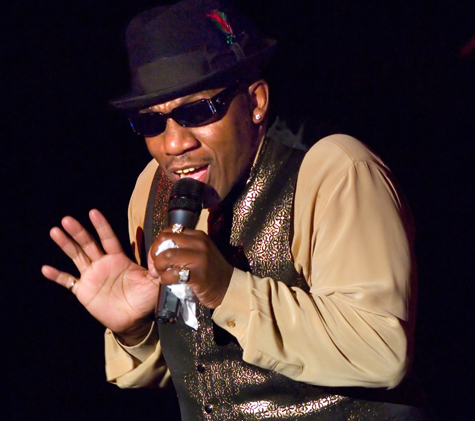
Bluesman John Lee Hooker Jr. set to release new album
Taking up the family business may seem like the logical step for any child of a successful parent. However, there are some pitfalls of embarking upon this path. For example, is it even possible to forge your own identity, or are you doomed to be compared to who came before? It’s a challenge that John Lee Hooker Jr. has taken on headfirst throughout his career.
Son of the late, great Delta bluesman John Lee Hooker, the junior bluesman himself has had a long and storied journey through his career, though it hasn’t been the smoothest ride. He began performing music as a child, and by his teens, he was on the road touring and recording with his legendary father.
Drugs, alcohol, divorce and imprisonment derailed a promising career for a long time. But faith helped resurrect him, and in 2004, in his early 50s, he released his first album, Blues with a Vengeance, which was nominated for a Grammy. Three albums followed–studio releases Cold As Ice and another Grammy nominee All Odds Against Me and 2010’s Live in Istanbul, Turkey.
Speaking with Hooker Jr., it’s clear that even at age 60, he’s as exuberant as his music, old school blues infused with a modern R&B swagger. He attributes this to God, exercise and a healthy lifestyle (he even proudly boasts that he graced the cover of Healthy Living Magazine). Also, it’s the music that keeps him vibrant. Even after all this time as a performer, he says he still is able to experience new things.
“There’s always something that you haven’t experienced,” he says.
In February 2012, he and his band played the Mahindra Blues Festival in Mumbai, India. Visiting the country and performing there was a new experience.
“What an experience,” he recalls. “It was something that’s a lifetime experience. Something you’d normally see in documentaries or in the newspaper, and you fantasize or imagine about it, but we were actually there. The people were the kindest people I’ve ever met. The culture is so unique and hospitable. I can’t describe it but to say it was awesome. It was really awesome.”
It’s clear that Hooker Jr. is not done yet. In April, he plans to release his fourth studio album, which he said would be titled All Hooked Up. The album will feature Lucky Peterson, Joe Louis Walker and others.
“We’re just going to have a good time, because I’m all hooked up with my friends,” he says over the phone from Colorado.
In the following interview, the bluesman shines a little light on to his writing process and tells us why riding trains in Europe sparks his creativity.
I was listening to your most recent studio album All Odds Against Me today. I’d read on your website that this was the first time you recorded an album without covering one of your late father’s songs. Was that a difficult decision for you to make?
I mean, you know, it wasn’t a big effort to not do any of his music. I do what I feel, and if I feel that that’s what I want to do, then that’s what I want to do. On a couple CDs, that’s what I felt that I wanted to do–pay tribute to my dad. There are other ways that I pay tribute to him. Some would think that I wanted to stop the critics. “You’re always covering…” I didn’t want to stop the critics; that’s just the way I felt. The next album that will be released in April, that doesn’t have my dad in it either. It’s just how you feel.
I was listening to the first track, “Dear John.” I really love the lyrics to that track.
“Dear John.” Everyone loves to hear “Dear John.”
Is that a crowd favorite when you play it live?
Yeah, we’re playing that every show. People look at the back of those CDs, and they say, “Where’s that Dear John? Where’s that letter your wife wrote you?”
It seems so intensely personal. Is that a song that you really connect with when you’re performing it?
I connect with all my songs, but it’s a crowd attractor. People really listen to that letter, as soon as that band hits, breaks down and it says “Dear John,” people’s ears stretch out, because they really want to hear what she said while he was in jail. “Dear John.” If you don’t say anything else but “Dear John,” you have people being quiet.
Photo by Frank Vigil
You mentioned the album coming out in April. How is that coming along? Have you been working on it while you’re on the road?
It’s coming along well. I have my little tape recorder with me for my ideas, and my scrap paper in my back pocket. I’ve got my songs with me. It’s coming along well. I just brought up another thought for this next song that I’m writing. It’s called, “Leave Your Egos at the Door.” It goes, [singing] “If you want to be in my show, leave your egos at the door.” I’m laying down, so it might sound kind of funny, but that’s the thought I got and I taped it, and I said, here’s my idea. [Singing] “If you want to be in my show, leave your egos at the door.” It’s going to be nice. I’m going to open up this dialogue that you might not like–one that makes you always want to fuss and fight. I got my thoughts going, and that’s all I need to start a song. And that’s how I do it.
It sounds like you write a lot on the road. Is that where you get most of your ideas?
I wrote a Grammy-nominated CD in this city–right here in Lyons and Longmont. I’m about 15 minutes from Lyons, but this is where I wrote a Grammy-nominated CD…
I’m not trying to give the idea that when I’m in Colorado, I’m inspired to write. I’m inspired to write when I’m in Europe on the train. That’s when I’m really inspired–the train.
Can you put into words what inspires you to write when you’re in Europe on the train?
I’m in outer space, in my own outer space. There’s no one there but me. I don’t have any worries of family. I don’t have any worries or concerns of band members or friends, it’s just me and the music. The music is something that’s being translated from one entity into my consciousness, and I just go [laughs].
I’m in my own little space bubble. I really mean that. I’m in my own little space bubble, and everything is locked out. Europeans are very quiet, very quiet. I don’t have any noise. They don’t bother me, and I don’t bother them… I shouldn’t have said “bothered.” Everyone’s just quiet, and I’m just able to do my thing. If I was in America on the train, it would be, “Did you see that game last night? Oh, the Bulls are going to beat them. Oh, the San Francisco 49ers.” And babies crying, “Waaaah,” but not over there. Not over there. So that’s where I do my thing. I wrote another Grammy-nominated CD over in Europe, and that was All Odds Against Me.
John Lee Hooker Jr. will play the Torch Club, which he calls one of his favorite places to play, on March 10, 2012. Go to Torchclub.net for more details. If you’d like to keep abreast on the release of All Hooked Up, tune your browser ito Johnleehookerjr.com.
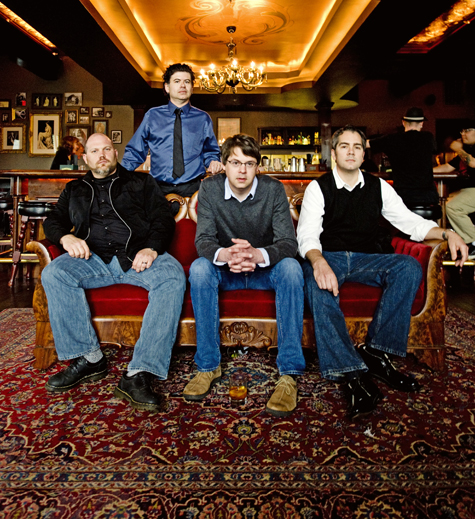
Endings, as the saying goes, often lead to new beginnings. When Sacramento indie rock band Holiday Flyer called it quits in 2002 after almost 10 years as a group and four full-length albums, its members found new avenues to express themselves musically. Three-fifths of Holiday Flyer–which began as the brother/sister duo of John and Katie Conley, but grew into a five-piece band by its final album, 2001’s I Hope–went on to form Desario just two years later. Frontman John Conley, bassist Michael Yoas (making the jump from bass back to his first instrument guitar in Desario) and drummer Jim Rivas were joined by bass player Mike Carr. Desario released its first album, Zero Point Zero, in 2009. On February 28, 2012 the band will put forth its sophomore effort, Mixer, which shows that even after many years as vital parts of the Sacramento scene, the guys of Desario are still looking for new ways to expand their craft.
Yoas produced and engineered the entirety of Mixer, which was mixed by Larry Crane (who has worked with Elliott Smith, among others). Last time around, on Zero Point Zero, Yoas recorded everything except the drums. He says he and Conley had been playing music together as far back as the ‘80s. “We started in punk bands together in high school. We wrote together back then, and then I didn’t play music for quite a while.”
It was eight to 10 years by Yoas’ estimation that he hadn’t played music until his old friend lured him back into the studio. Yoas laid down bass for a few tracks on Holiday Flyer’s third album You Make Us Go and enjoyed an expanded role as a fixture on I Hope.
“Jim [Rivas] and I joined and put our stamp on it with bass lines and drums and percussion and added some arrangements,” Yoas says. “But for the most part, Holiday Flyer was John’s vision.”
Desario is an entirely different animal. Instead of leaning on one songwriter, the band takes a four-heads-are-better-than-one approach. In fact, the title of the album refers to the fact that the songs on Mixer were a group effort.
“It really is a band effort,” Yoas explains. “Other than the lyrics–John writes all the lyrics–it really can start with any one of us.”
This time around, the songs came together in Desario’s practice space, evolving from jams to the fully realized recordings found on Mixer. The album has a layered, sometimes spacey sound that’s imbued with underlying warmth. Songs such as “Victoria Island,” which begins with a sort of watery synth burble, stretches out into a well-paced five-and-a-half minutes of absorbing rock, layered with shimmering, distorted guitars. It’s indicative of what you’ll find on Mixer–songs that are a bit challenging, yet easy to get lost in.
On an early Saturday morning, Yoas took the time to answer some of our questions about how the album came together, and revealed how Desario thrives by keeping their songwriting process fluid.
How was the process of producing Mixer as opposed to Zero Point Zero?
Kind of arduous at times. When it’s your own music, you’re never quite sure if you’re going in the right direction or not. You’re constantly second guessing yourself. But in the end, we’re really happy with it.
Are you at all interested in producing other people’s work, or have you produced other people’s work?
Yeah I am. I’ve recorded some demos for a couple of bands. I haven’t finished them through yet, but I’m definitely interested in recording some other bands in town and getting more into that.
How is it working on someone else’s stuff as opposed to working on your own?
Honestly, it’s a lot easier for me. I have no problem giving my opinion on something, or if I’m hearing something to add or take away, it’s pretty easy giving my opinion and feel good about it. I am an avid music fan as well. When you hear something, just throw it out there.
When you’re giving feedback when you were working on Mixer, did you find that you had to be more tactful in giving your opinion since you’re a member of the band?
Absolutely…
Do you find yourself holding back sometimes? You’ve known the guys for a while. It must be an interesting dynamic in the studio.
Oh, you mean giving Desario advice?
Yeah.
Oh no. I’m not tactful at all [laughs]. As far as the guys in my band, I think at times I might have been kind of hard and had a vision and did everything I could to get out of them what I was hearing, knowing that we could all go back in the end as a group and sort things out and edit things. I definitely wanted to try to get a lot of different takes of everything just to have options.
As far as your vision for this record, is that something that came through in the writing of it or afterward when you started recording?
Definitely in the writing. We were going through a phase with this batch of songs. This batch of songs probably came together over the course of three years or so. We were trying to do things–for lack of a better term–more intricate and more elaborate, I guess, and not by choice, but for whatever reason it’s the place we were in for a couple of years. Just looking to make it as interesting with synthesizer and other elements we didn’t use at all on the first record.
You mentioned that the songs came together from jamming as a band. How did you like working that way?
It’s funny, all of us in the beginning were like, “It’s tough for us to jam. It’s hard to come in without any starting point and create music.” As we evolved as a band, we found that we all played so well together, it was really easy to jam–starting with one of Jim’s drumbeats or Mike’s bass lines. It could be anything that would make someone say, “Hey, keep doing that,” and that’s how most of the songs on Mixer started…
There has been many practices where we don’t have any shows to practice for, or we’re not recording anything. We’re very diligent. We have a scheduled practice night every week, and regardless of what’s going on, we make it a point to go in that night and practice, even though we have no reason to be there, just to see what might come out of it.
In that regard, are you guys writing all the time now? Has that process opened you up to be more prolific songwriters?
I think so. We’re constantly writing. With the stuff that we’re writing after Mixer, we’re taking a slightly different approach. John and I are trying to noodle with some ideas together and bringing them to the band to see if they think it’s worth moving forward with those ideas at this point. We’re constantly trying to change how we song-write, just to keep it interesting and so we’re writing different kinds of songs all the time.
So you’re working on stuff with John for a next record?
As a band we’ve already got six songs written. We basically have all the ideas for another album’s worth of material that we just need to hash out as a band and get arranged and just get it completed.
No rest for the weary, then.
Exactly. Yes, we’re always writing, but we definitely go into practice now with an idea of what we want to do instead of going in without any purpose.
You guys have a listening party coming up for Mixer before playing the CD release show on March 3. What do you have planned for the listening party?
We’ve got two hours at Phono Select. We’re going to let the CD play a couple of times in the store. It’s going to be available for sale. We’re going to put out some beverages and snacks. We’re just going to make it a real casual thing–come in, check out the record and enjoy a beer or a glass of wine and just have a good time.
Is it more nerve-wracking to play the new songs live or watching people listen to the CD at the listening party?
That’s a good question. I’m a little more anxious about watching people listen to the record than playing live. Playing live, obviously, I’m more focused on what I’m doing than watching the reaction of people listening to it.
Desario’s CD release show will take place at Beatnik Studios on March 3, 2012. Joining Desario will be Tremor Low from Oakland and Hearts + Horses.
Being a hero is all well and good, but what exactly does that entail? Altruism will only get you so far in a world where things are rarely black and white.
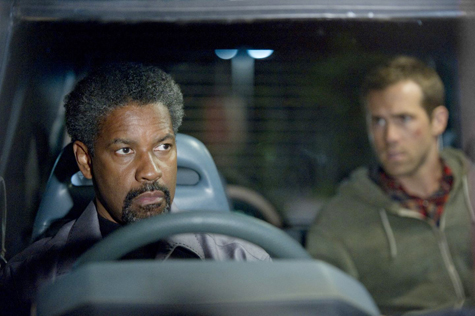
Safe House isn’t as deep as all that. It’s an action movie. But it does touch on some of the shadier aspects of life in a post-Cold War/Global War on Terror world. And there are explosions. Lots of them.
The film opens in Capetown, South Africa, where we find fledgling CIA agent Matt Weston (Ryan Reynolds) charged with guarding a safe house. He’s young, idealistic and ambitious. He wants to play a bigger role with the agency, presumably to keep his country safe. He yearns for a day when he can leave his cushy detail behind and really get out into the field, doing serious work.
He gets what he wishes for when he crosses paths with Tobin Frost (Denzel Washington), a legendary but disgraced CIA operative. Frost, a rogue agent accused of treason, inexplicably turns himself in to a U.S. consulate in South Africa after gaining some coveted intel from a British MI6 officer and narrowly escaping a pack of faceless, bloodthirsty heels out for his head. Frost is brought to Weston’s safe house to undergo questionable interrogation practices to find out just why he brought himself to Capetown in the first place. That’s when the shit hits the fan.
Weston’s safe house has been compromised. The same men after Frost in the beginning of the film have stormed the supposedly secure location, and Frost and Weston sneak out by the skins of their teeth. The latter then does his best to bring the rogue agent to justice and get to the bottom of the mystery surrounding his surrender, and what follows is a proverbial journey into the heart of darkness.
Safe House is stingy in divulging the details of exactly what’s going on. The film moves from one elaborate action-filled set piece to the next with nary a moment for the audience to catch its breath. Swedish-born director Daniel Espinosa, making his Hollywood debut, certainly makes an impression. Safe House has a very distinct look. The colors are saturated, the film looks grainy and the rapid pace of the shaky camera work is extremely disorienting. One close-quarter fight in a tenement between Frost and Weston and two armed pursuers may very well induce seizures. At points, it feels like style over substance. The technique is so flashy that it overshadows the action itself. However, with all the extreme close-ups and first-person feel of the camera work, there’s an intimacy to the violence, of which there’s plenty. Even the deaths of nameless henchmen feel personal.
Even at its most nauseating, Safe House’s action is extremely vivid. Unfortunately its plot isn’t so forthcoming. Playing the intricate details of the story so close to the vest, it’s a good two-thirds into the film before we’re even given a hint of why all these people want Frost dead–and it’s a vague hint at that. There’s a file, sure, and it points to some very powerful people. That much was apparent from all the hullabaloo surrounding the events of the film, but it never feels specific enough.
Luckily, Safe House has a good enough cast to keep things interesting, even through its most head-scratching moments. Vera Farmiga, usually solid, exudes confidence as the only notable female presence in the film. Most of Safe House rides on the shoulders of Washington and Reynolds, who have little problem carrying its weight. Washington may be showing his age, but he’s still a force to be reckoned with in a role that demands such physicality, and Reynolds doesn’t wilt in the shadow of such an accomplished co-star. There’s not even an inkling of the wisecracking caricature Reynolds is known for. Instead, we see a more or less honest portrayal of a good man pushed to the edge.
Sarcasm has no place in Espinosa’s Safe House. This is an entirely humorless film, but it’s not a tedious one. It’s more sweet than savory, but if you want to experience two hours of chaos from the safety of a cinema, you could certainly do worse.
I remember going into a mom and pop electronics store (those used to exist) with my parents. I must have been in the fifth grade. There was a room full of giant televisions with state of the art audio and visual equipment. This was the ‘80s, mind you, so the shit was huge. Big screen televisions were like monoliths of glass and plastic. Surround sound wasn’t ubiquitous–maybe it wasn’t even really invented yet–but the stereo systems were equal in size, boasting racks upon racks of cassette decks, graphic equalizers and turntables. Speakers encased in cabinets stood large, loud but stoic.
The store had cable, though, which was something I’d never seen before. One of the televisions was playing MTV, and back then the M actually stood for music. As fate would have it I was not only watching my first music video, but also experiencing my first crush.
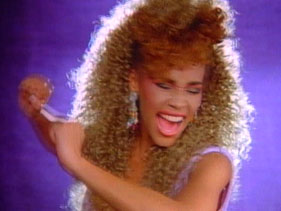
The video for Whitney Houston’s “I Wanna Dance with Somebody” was playing on the tube, and I couldn’t take my eyes off it as my parents were off in the corner of the cluttered shop, being courted by a salesman. In the video, Whitney had a big voice, titanic hair and a variety of brightly colored outfits. In that respect, she was like one of the Muppets, who I also loved, but this felt totally different. I figured that Whitney and I would meet one day, and we would be married, because that was the extent of my knowledge of male-female romantic relationships up until that point. Sadly, all these years later, my knowledge of such things is only slightly more extensive.
We left the store without buying anything. My parents used to love to go shopping, but buying things was another matter entirely. It didn’t matter, though, because I had clearly undergone a transformative experience. We continued on our way to an aunt and uncle’s house, who also had cable, and as luck would have it, “I Wanna Dance with Somebody” came on during our stay. Someone commented that they liked the song, but I kept quiet. Our love was a secret until, well, right now actually.
Whitney moved on, clearly, and so did I. Around the same time, I met Jennifer Connelly in Labyrinth and forgot all about the pop star. I’m sorry. Love’s a fickle thing sometimes. Houston, of course, married Bobby Brown, which turned out to be a tumultuous affair. I never hooked up with Jennifer, but you know, there’s still time. I figure it’s probably because she hasn’t met me yet. (Call me.)
My window with Whitney has closed, however. As you most likely know, the 48-year-old mega pop star was found dead in her room at the Beverly Hills Hilton on Saturday, Feb. 11, 2012. Cause of death wasn’t known as of this writing, but I’m sure until the toxicology reports are made public, people will speculate that drugs were somehow involved. People are right to, I guess. Given her history and battle with addiction, drugs most likely played some role, even if indirectly.
I found out over Facebook, which is the only way anyone ever hears about who’s dead, who’s in jail and who’s getting married anymore. Within minutes, my feed exploded with snarky remarks, heartfelt memorials and simple surprise. Oddly enough, the news brought me back to that day in the electronics store–something I hadn’t thought about probably since the day it happened. I’m sad for her daughter and for her fans, but personally I felt a shudder of mortality. It wasn’t at all pleasant.
The night of her death I found myself at a bar, and the DJ played “I Wanna Dance With Somebody.” A gaggle of drunk young women, who may or may not have been born when the song was first released, howled and raised their Styrofoam cups. They began to dance, huddled in a circle, hugging intermittently. At another table, someone stood on her chair and raised a lighter. “Put ‘em up for Whitney Houston,” the DJ enthused. I couldn’t tell if he was being ironic or not, but I put up my glass all the same.
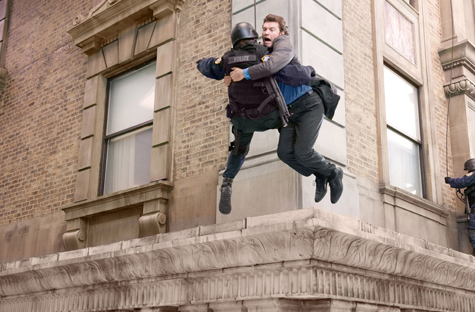
Man on a Ledge begins much as its title suggests it would, with Sam Worthington playing ex-cop turned escaped felon Nick Cassidy stepping onto the ledge outside his 21st floor New York City hotel room window. As a lady on the street below screamed, “There’s a man on the ledge,” I was instantly reminded of a drinking game a friend of mine once told me about. The rules, as they were explained to me, was that every time a character in a movie says the name of the movie, or some derivative thereof, you take a shot. As it turned out, if I had gone to the cinema prepared, I would have caught a decent buzz about 10 minutes into the film. It’s a shame, because I sure could have used it.
As previously stated, Worthington stars in the role of Nick Cassidy. He’s serving 25 years in Sing Sing for a crime he says he didn’t commit. He has a death wish–or so it seems–and he regularly gets into fights with other inmates. He gets a day outside prison walls to attend his father’s funeral, but he ends up putting his mourning on hold long enough to kick his little brother’s ass (in front of his girlfriend no less) and escapes the authorities. Instead of high tailing it to Canada or something, he travels to New York City to clear his name. It would seem that some crooked cops and a wealthy dude named David Englander (Ed Harris, slumming it) framed him for the theft of a giant diamond, which I believe was roughly the same plot as The Great Muppet Caper.
Unfortunately for us, Jim Henson’s charming creations are nowhere to be found. What we’re left with is the most implausible piece of horseshit “action” movie to crawl out of Hollywood in a good long time.
The film’s biggest problem (though it has plenty) is that it becomes the victim of its own premise. It’s an action movie that places its most viable action star, Worthington, on a ledge where he can’t do anything but toss money on the crowd of onlookers below him, feign jumping and chit-chat with officer Lydia Mercer (played by Elizabeth Banks), but really I can’t fault him there. By the time the story takes our man on the ledge off the ledge (spoiler alert), he’d have to kick the asses of an entire army’s worth of Predators to make up for the shit sandwich we were forced to endure for the hour or so prior.
A good action movie also needs a vile villain, and in that regard, Man on a Ledge also fails miserably. Harris spends most of the movie pensively sucking on his expensive cigar while looking out the window of his high rise. Other than walking around as if he had a stick up his ass, the only bit of orneriness he displays is when he hurls a watch a sniveling underling gave him as a suck up gift against a wall. I guess that’s kind of evil, being so unappreciative. Englander’s main crime seems to be that he’s richer than anyone else. So yeah, you know what? Fuck that guy.
Banks serves as the film’s only bright spot. Not because she’s particularly good in the role–not even Meryl Streep could have pulled that off–but because she’s the only one who seems to give a damn. As Mercer, an officer who failed in talking another jumper, a fellow cop, out of taking a dive off the Brooklyn Bridge, Banks gives it the old college try. (She also proves that movies are the only place where it’s possible to wake up with a raging hangover and still look amazing.) That effort would probably be better served elsewhere.
In short, if you go see this, you’ll probably need someone to talk you down. I hear life is so worth living. I’m just not so sure any more.
Daniel Ellsworth and the Great Lakes’ old school approach yields new school success
For better or worse, the digital music age has leveled the playing field. Independent, more or less unknown bands and artists have just as much opportunity to be heard as major label acts. One band that has taken advantage of this is Daniel Ellsworth and the Great Lakes from Nashville, Tenn.
In May 2011, the band released its first full-length album, Civilized Man. Fan-funded, Ellsworth and company used money from a Kickstarter campaign they started at the end of 2010 to self-produce and self-release the album and hire notable Nashville sound engineer Mark Nevers, who has worked with Yo La Tengo, Andrew Bird and Bonnie Prince Billy. Despite being 100 percent DIY, according to the band’s singer/songwriter and namesake Daniel Ellsworth, he and his Great Lakes’ labor of love didn’t go unnoticed. Civilized Man cracked Amazon’s Top 100 albums of 2011 (landing at No. 76; including No. 66 on the site’s Outstanding 2011 Albums You Might Have Missed list), and the song “Shoe Fits” climbed all the way up to No. 7 on Amazon’s The Best Songs of 2011 list. Not bad for a band you most likely haven’t heard of–yet.
“For some [artists] like Jay-Z or people like that, they probably don’t think about the Amazon Top 100, but for us that’s huge,” Ellsworth says. Coincidentally, Ellsworth and the Great Lakes edged past the megastar rapper on The Best Songs of 2011 list. Jay-Z’s “Niggas in Paris” (from Watch the Throne) landed at No. 8 on the list.
“Amazon and iTunes are becoming tastemakers for people,” Ellsworth continues. “In the past it was record stores, but now it’s online record stores.”
Ironically, Civilized Man is more of a throwback album, not at all exemplary of the single-driven releases of the digital age. At 12 tracks and over an hour in length, the album feels like the grand pop/rock long players of old. Imbued with a solid groove and a warm sound, Civilized Man begs you to shut off the shuffle play for once and to be ingested en masse.
“I think that our favorite bands, and the bands that are making the most interesting music, are still focusing on making a really solid album,” Ellsworth says. “People tell us that you could listen to 1, 5, 12, in that order, and it feels like they could come from different albums, but if you listen to it all the way through from start to finish, it feels like an intentional album, and it feels like it was meant to be listened to in that order. That’s how my favorite albums are, and I think that’s what we strive for.”
Submerge spoke with Ellsworth while he and the band had a couple days off in Nashville before heading out on a jam-packed string of dates that would take them to the Pacific coast and back. In the following interview, we discuss working with Nevers, Ellsworth’s appearance on the NBC reality television show The Sing Off and how the singer/songwriter found his voice in the band dynamic.
Did Mark Nevers contribute a lot of ideas when it came to recording?
A little bit. We sort of came in wanting to produce it more ourselves and call the shots as to what would end up on the record. What he contributed, and what I most love and know about him, is the sounds he captures on albums. The way he’s able to capture a warm, organic sound. What we do is a little bit different than who he usually works with, but we wanted to take that sound, that warm, organic vibe, and apply it to our more rock/pop material.
Listening to the album, I was thinking that it really feels like a live album. It seems very spontaneous. Were a lot of things done in one take?
That was something that we tried for. We tried to do as much of it live as we could. It’s interesting. I like when people listen to that and take that from the album, because we get a lot of people–and maybe that’s to our drummer’s credit–that say we use tracks, or electronic stuff, but 90 percent of what you hear on the album was tracked live.
Do you feel with the first album released that things are falling into place? Do you feel like you know where you want to go with the next record?
Yeah, I guess the last year and a half with making the album and working on these songs as a band has been a whole new process. I left for a few months to do a television show and to come back from that and have a new guitar player and come back to these songs and take them on the road, the songs have taken on a new life and a new energy. It’s never felt more like a band than it does now. It’s exciting every time we play, we get more excited about the next time we’re going to play.
Is this kind of touring schedule new for you guys?
It’s definitely new from a band standpoint. We’ve done some small-scale stuff while we were working on this material. Prior to that, I was doing more of a solo artist thing, which is completely different. It just wasn’t the right thing… It took me doing that to get to this point. This is what I’m supposed to be doing. This is how I always imagined it.
What is it about being a part of a band that works for you more than being a solo artist?
I think doing the solo artist thing, and being in Nashville and being just out of music school, I was writing to mimic something… It was less original. It never felt like the right thing, and I was all over the place stylistically. I always would imagine things with a band or imagine how much better it would be to have a band to bounce ideas off of. I think that’s the thing, having these people who you trust to bounce ideas off of and really fuse everyone’s different influences into making something that takes on a life of its own as opposed to me sitting down by myself and trying to come up with something.
Nashville is a big country songwriter kind of place. Was that what you were trying to do when you were out of school?
Yeah, a little bit of that. Not so much in the country scene, but I thought maybe my place was in the pop singer/songwriter scene out of Nashville. But my songs were never singer/songwriter-y, pop-y enough. They were a little too weird for that, but not weird enough that they really felt original or truly mine in a weird sort of way.
I wanted to ask you about The Sing Off. You were there with a group called The Collective. What was that experience like?
That was kind of crazy. A friend of ours who’s an artist in Nashville named Jeremy Lister, he was on the show. He was in the group called Street Corner Symphony that got second place in season two. He sort of approached us and said, “Hey, the producers of the show thought it would be cool to get some of my favorite Nashville artists and put together a group who have never done a capella before and sort of see what happens.” We were all pretty skeptical. Some of us had sung a capella before, mostly back in high school in choir, but certainly we hadn’t sung together as a group. We all knew of each other, but most of us didn’t know each other. We did a few hours of rehearsing and singing, and it sounded really good… We made a video of it and sent it off to the producers, and the very next day they were like, “We love it. We want you guys on the show.” It was literally last minute. A few weeks after that, we were on a plane to Los Angeles like, “What the hell are we doing?”
There was another guy in the group who has a rock band similar to what we do, so far from a capella music, and everyone else were successful singer/songwriters. It was so far out of the box for everybody to take that on, but we went out there. It sounds silly to say, but episode one of The Sing Off was our first performance as an a capella group ever, aside from making our audition tape. All things considered, we all went out there and dove right into it and figured out how we worked musically and how we best arranged together. We made it to eighth place. We got six episodes into the season [season three].
Was it a positive experience?
Yeah it was. I don’t know if it’s something I’d ever do again. It was certainly never my plan to do a reality show, and definitely not an a capella at that. But it was a really great experience. There was a lot of talent on that show. You know, you have the bullshit that goes along with the TV side of things and what they’re trying to do, but the music director and the music team on that show, they were so dedicated to the music. That was cool to see.
We would never do anything like that in our personal careers, but to set that aside and just sort of do that thing together, it was a lot of fun.
It sounds like something you’d take with you into your own music.
It was cool because we’ve gotten the chance to know one of my idols growing up–and still is–Ben Folds. Since the show, we’ve gotten the chance to get to know him and spend a lot of time with him and hang out. For me, that was worth the whole thing right there.
Daniel Ellsworth and the Great Lakes’ trek around the country will take them through Sacramento on Valentine’s Day (Feb. 14) when the band plays The Torch Club (904 15th Street). The show starts at 6:30 p.m. Show them some love. You’ll be glad you did. For more about the band and to order their album, go to Danielellsworthandthegreatlakes.com.
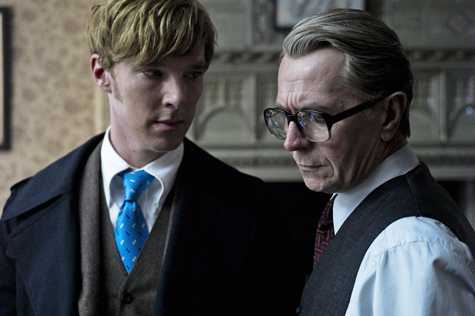
Funny story. The theater where I saw Tinker Tailor Soldier Spy saw fit to place the film on the screen next door to a big action movie (I assume the new Sherlock Holmes). This had no real bearing on my enjoyment of the Gary Oldman-led Cold War-era spy drama, but it was certainly an odd juxtaposition. The walls rattled under the brunt force of the skull-rattling sound effects next door; meanwhile, inside our cozy, sparsely populated theater, Oldman and company built intrigue the old-fashioned way–with dialogue.
Not that they spoke all that often. In fact, Oldman, in the role of semi-retired British intelligence agent George Smiley, remains silent in his first five or so minutes of screen time. The point here being: pay attention, because when someone does open their mouth, it’s probably important.
The main action in Tinker Tailor Soldier Spy takes place in 1973, a year after a British intelligence agent by the name of Jim Prideaux (Max Strong), is presumably gunned down by Soviet operatives while on a mission in Budapest. Control (played by the great John Hurt) has sent Prideaux behind the Iron Curtain to the Hungarian capital so that he may learn the identity of a mole occupying a high-ranking seat in MI6. Prideaux ends up shot in the street, and the botched mission precipitates a major shakeup at the agency, resulting in the expulsion of Control, who passes away soon thereafter, and the erroneously named Smiley.
It’s not over for Smiley, though. News of a mole in MI6 has spread to other levels of the British government thanks to rogue agent Ricki Tarr (Tom Hardy). Smiley is brought in to investigate the remaining powers-that-be of British intelligence: Percy Alleline, Bill Haydon, Roy Bland and Toby Esterhase (Toby Jones, Colin Firth, Ciarán Hinds and David Dencik, respectively).
Tinker Tailor Soldier Spy is a study in subtlety. Major reveals unfold in gestures as the true nature of the plot slinks spy-like in the shadows. At times, like the spies depicted herein, the film is almost too sneaky as it shifts without warning from the present to a “happier” time in the past, when Prideaux, Haydon, Alleline, Bland, Esterhase, Control and Smiley all worked together to further the British war effort. In a scene between Smiley and another dismissed operative Connie Sachs (Kathy Burke), she bemoans a time when the English had a right to be proud. Here, the film makes a neat statement about the shifting nature of war–from an idealized time (if you could call it that) when brave combatants honorably faced off on the field of battle, to the Cold War model, where decrypted telegrams and double-crosses became the weapons of choice.
But even when the film leaves its audience straining to keep up with its levels of intrigue, Tinker Tailor Soldier Spy still boasts quite an arsenal. Its cast is impeccable, turning each economical line of dialogue into a multi-faceted gem worth pondering over. Oldman distinguishes himself even among such distinguished company. He has an uncanny knack to say so much with a single expression, without uttering a word. For the most part, he wears a sullen countenance and a monotone voice. But as he begins to unravel the film’s mystery, glimmers of a sly fox begin to shine through. Elsewhere, at an office holiday party that serves as a sort of touchstone flashback throughout Tinker Tailor Soldier Spy, Smiley discovers his wife cheating with a coworker, and his stoic exterior cracks in a painfully human manner.
Oldman is worth the price of admission. The taught, cerebral suspense is just icing on the cake. Silence truly can be golden.
Far’s Shaun Lopez and Deftones’ Chino Moreno let their creativity loose with Crosses
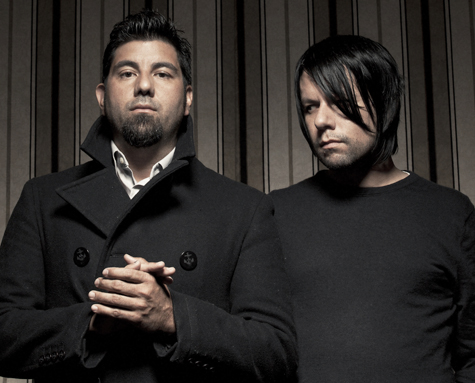
Shaun Lopez (guitarist for Far) and Chino Moreno (vocalist for Deftones) have left an indelible mark on the Sacramento music scene–as well as rock music beyond the River City. Sometime last year, the two (along with bass player and songwriter Chuck Doom) began meeting–more or less in secret–on a new project that would leave a new kind of mark, âœâœâœ, aka Crosses.
Lopez and Moreno worked closely together before, though according to the Deftones vocalist (who also provides vocals for Crosses), it wasn’t the most positive experience. Moreno says that the vocals for Deftones’ Saturday Night Wrist, released in 2006, were recorded at Lopez’s studio.
“We worked pretty close then–a little too close,” Moreno says. “It was a gnarly time. There was probably one point when we were doing that that I said in my mind, ‘I will never work with Shaun again.’”
Lopez adds with a laugh, “I said the same thing.”
One thing positive that did come from the experience was that the two remained friends, despite the difficulty. Moreno recalls that it was a rough time for him personally and that he felt a lot of pressure surrounding Saturday Night Wrist. This time around, however, things were different. Crosses didn’t bear the same level of expectations as did that Deftones album. In fact, for the most part, no one even knew that Moreno was working on new music.
“The music is pretty powerful,” Moreno says. “I hate to sound corny, but when we get together to make some stuff, it straight up sounds good. I think we just enjoy that.”
Crosses got off the ground with just Lopez and Doom at the helm. Lopez says that he’d met Doom two or three years ago through a mutual friend. Doom was looking for a space to lay down tracks for another project he was working on, but as he and Lopez began getting to know each other better, they began writing together.
“He started bringing in some other ideas that were different than what he was doing already,” Lopez says of Doom. “I thought that it was really cool, maybe I can throw some stuff on top of this. Maybe we could do some co-writing. That was sort of the birth of Crosses.”
Beyond that, Moreno calls the enigmatically named Doom a “very interesting guy.” Moreno says that Doom has a penchant for “really old gear” and still employs floppy disks as part of his recording arsenal.
“I think that’s inspiring to me, because it’s not like he’s got an iPad in some room and he’s making shit that sounds like everyone else,” Moreno says. He goes on to praise Doom’s tireless, and perhaps eccentric, work ethic.
“I’ll get an e-mail at 7:30 in the morning sometimes, and it’ll be a 30-second clip of four chords with this weird loop around it… It’s kind of cool to see how [Crosses songs have] evolved from something as little and abstract as that.”
Moreno was the final piece of the Crosses puzzle. Originally, Lopez had planned on having a revolving door of different vocalists to sing over the music he and Doom were creating, but once he heard Moreno sing over a track, it seemed like he needn’t look any further.
“Once we heard what he could do over it, and it just really made sense,” Lopez says. “It all just sounded like something we could hear Chino’s voice on. He basically told us, ‘I don’t want anyone else singing on these songs.’ It was nice that it worked out that way, that it was really natural and really organic, and nobody was forcing anybody to do anything. He was like, ‘I really like this. I want to sing over these songs.’ He heard it, and then we started writing more songs, and he said, ‘I want to sing on all of these.’ So we were like, let’s do it.”
“I’m just that good,” Moreno quips.
It must have been the right formula, because the partnership became pretty prolific. Moreno reports that the trio produced over 20 songs in about six months. The group released its first album, a five-song EP titled EP ✠in August 2011. The album was released for free download through the Internet (it can be downloaded at Crossesmusic.com). Another EP, EP âœâœ, will be released in the same manner on Jan. 24, 2012. The goal is to release a third EP thereafter, and Moreno hopes that they will then compile them all into a full-length album along with five new songs. Both he and Lopez are reveling in the fact that they’re making this music on their own, with little outside pressures or expectations.
“To me, that’s one of the lamest parts of being a part of a big label, at least from my experience,” Moreno says. “Every time you’re making a record, you have someone’s opinion who’s outside of making the record, it’s always a damper.”
“And not so much the label, but anticipation from outside the project…right away there are a million opinions of what it’s going to sound like, what it should sound like. We went into this without any of that. It was cool to do it for fun as it went along. Now that it’s done, I guess people will have their opinion now, but it’s done. It is what it is.”
What it is may not be what Moreno’s fans expect or even want to hear from the lead singer of Deftones. EP ✠is a dark and brooding, ambient yet heavy release, perfect for turning up loud in your headphones and losing yourself in. “This Is a Trick” opens the album with creepy organ sounds washing over a glitchy digital beat that gives way to a chorus in which Moreno’s voice fluctuates between an almost pleading tone to a more metallic yell. From there, the EP traverses down more of a trippy, atmospheric road. Lyrically, the album seems to hold common themes of fantasy versus reality. Moreno says that these are ideas that are actually apparent in his other projects.
“I have a hard time deciding that I’m going to make a song about this topic and just doing it,” he explains. “To me, that takes away all the fun. It puts up walls all around you… I think that’s where the escapism comes through in the lyrics, with all my projects. It’s not like I write differently for this project or that project. When I sit down to write, it comes out however it comes out. A lot of times, it’s a sort of fantasy/escapism, things that are so detached from everyday life or emotions or feelings. I think those things come through anyway.”
Similarly, Lopez and Moreno have a take it as it comes approach toward Crosses. The band will be playing a series of live shows starting Jan. 31, 2012 something they hadn’t really planned to do with the project at its inception. Crosses will play a string of four dates in California, and then two dates in South America (Santiago, Chile for Lollapalooza Chile and Quilmes Rock 2012 in Buenos Aires, Argentina) in late March/early April.
As for the upcoming EP, Moreno gave few details. He says that he doesn’t feel comfortable describing what it will sound like, but mentions that it was recorded at the same time as EP âœ, so it will have a consistent feel, though it will probably be more up-tempo.
“I don’t want to give anyone any pretense of anything,” Moreno cautions.
Those with adventurous ears may find Crosses very rewarding. If nothing else, it’s a shining example of what a group of talented songwriters can do when they’re free to create as they will.
“I think that’s a liberating thing, especially for Chino, that we write, we record, we mix the record, and we basically turn it in and it’s out,” Lopez says. “There still aren’t a lot of people who know about it, which is cool. There are more people learning about it every day, which is kind of what we wanted.”
Crosses will play Ace of Spades in Sacramento on Feb. 3, 2012. Also performing will be Secret Empire, Dawn Golden and Rosy Cross. Doors for the all-ages show will open at 7 p.m., and tickets can be purchased through Aceofspadessac.com
It feels like a cold, hard winter without the kids from Hogwarts to bring children of all ages out to the cinemas, and the first installment of Peter Jackson’s The Hobbit is still over a year away. For those in need of a literary hero translated to the silver screen, Sony and MGM offer Lisbeth Salander from the frozen north of Scandinavia. She may or may not be good with a wand or sword, but she has a whip-smart mind and is lethal with a Taser.
The Girl with the Dragon Tattoo was the first in a trilogy of novels written by Swedish author Stieg Larsson. It was a wild international success throughout Europe, and even spawned a trio of foreign films starring Noomi Rapace (whom U.S. audiences can see in this holiday season’s Sherlock Holmes: A Game of Shadows), all of which were released in 2009. Now, TGWTDT gets a well-deserved American remake–sort of–with Rooney Mara cast in the lead role opposite the most recent James Bond (Daniel Craig) and The Social Network director David Fincher at the helm. It’s the making of a perfect event film, the kind that you’ll discuss over the water cooler at your office on Monday, but if you’re expecting the usual Hollywood-style big action flick, you’ll be sorely disappointed.
Craig plays Mikael Blomkvist, a disgraced journalist who is hired by Henrik Vanger (Christopher Plummer) to supposedly assist in writing a memoir. In reality, Henrik requires Blomkvist’s help in investigating the murder of Harriet Vanger, Henrik’s niece, who disappeared some 40 years ago. The investigation brings Blomkvist to an isolated island in northern Sweden inhabited by the Vangers and reveals the rich, reclusive family’s tortured and sordid past.
It turns out to be a difficult job, one that Henrik has more or less resigned to be futile. But when the trail proves warmer than anyone had thought, Blomkvist seeks help with his investigation. He eventually gets hooked up with Salander, whom the Vangers had hired to investigate Mikael before hiring him, and the two delve into a world full of Nazis, betrayal and Bible-thumping serial killers.
TGWTDT is the sort of movie that grabs you by the nostrils and shakes you around–at times quite violently. The frayed relationships between the members of the Vanger family–i.e. who refuses to speak to whom–is as difficult to keep track of as the myriad character names. Blomkvist even makes a wise crack about that very predicament as Henrik gives him a breakdown of the Vanger family tree. On top of that, the film hops back and forth between Blomkvist and Salander’s disparate plot lines, with him hot on the trail of an intricate mystery, and her forced to perform despicable acts in order to survive as a ward of the state. Fincher is asking you to trust him as he bombards you with twisted layers of intrigue, a menagerie of characters and scenes of violence that are difficult to sit through, without giving much of an indication where it all might be heading.
It’s a leap of faith, but luckily it turns out to be a rather rewarding one. The mystery that is at the film’s heart unfolds with great suspense, and once Salander and Blomkvist’s paths finally intertwine, TGWTDT bursts with frenetic energy. Craig and Mara are fantastic together. An odd couple of the highest order–he is clean cut, professional and cosmopolitan while she is donned always in black, her face pierced and shock of jet black hair–the two characters actually share a similar lost-in-the-woods quality. Blomkvist sees his career in ruins and is engaged in a long-standing affair with his boss, a married woman; meanwhile, Salander is a chronic outsider who craves a real human connection more than she’d probably like to admit.
To the film’s credit, the resolution of the mystery doesn’t mean the end of the characters. There is a long epilogue that follows that wraps up most of the loose ends while creating others. What all this does is make for one hell of a long movie–nearly three hours!–but there’s no reason for that to deter you. Get comfortable and enjoy. Baby, it’s cold outside.