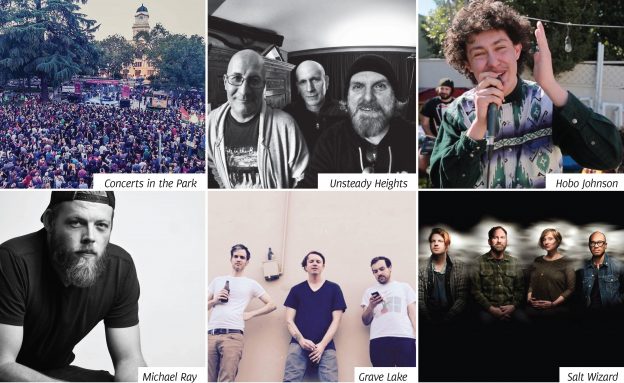
Easily one of the biggest and most hyped local concert series, Concerts in the Park, is holding a free event called Lunch + Launch on Thursday, April 5, from 11:30 a.m. to 1:30 p.m at Cesar Chavez Plaza (9th and J streets) to reveal the lineup for this year’s run of shows, which will kick off on Friday, May 4 and run through the end of July. In addition to the lineup announcement, which will include national touring acts and the best of the local scene, DJ Joseph One will be on hand spinning some jams, plus there will be four local food trucks, and you can even make your own prints with Verge Center for the Arts or shop at Wild Poppy and Co. Mobile Boutique. If you can’t make the event, keep an eye on our website, Submergemag.com, as we will be breaking the news about CIP’s lineup early in the afternoon of April 5. Learn more about Lunch + Launch and the history of the CIP series at Godowntownsac.com.
Local blues musician Michael Ray is readying the release of his new album, Raw—a fitting title considering the album was recorded live in one take in front of a small audience at Gold Standard Sounds. The album release party, which will feature a slew of guest musicians joining Ray on stage, is scheduled for Friday, April 6 at The Torch Club (904 15th St.) at 9 p.m. Visit Michaelrayblues.com for more.
Legendary punk rock musician and Sacramento local Kevin Seconds, best known for his work with 7 Seconds (who by the way just formally announced last week that they are calling it quits after almost 40 years!), has a super rad new band that’s starting to play out more called Unsteady Heights. I’ve yet to personally see them live, though I hope to change that when they play Phono Select Records (2475 Fruitridge Road) on Saturday, April 7. I have listened to their two-song demo on Bandcamp quite a few times, and you should, too. Go to Kevinseconds.bandcamp.com and click on “Unsteady Heights” on the right hand side to check out the tunes “My Mental State” and “Angry Gina.” Keep up with the band at Facebook.com/unsteadyheights. The April 7 gig also features Sitting and Waiting and Urban Wolves. It’s all ages, starts at 7 p.m. and donations will be taken at the door.
Sacramento indie-rock/experimental band Salt Wizard is holding a release show for their sophomore album Creature Sounds on Saturday, April 14 at The Red Museum (212 15th St.). Also performing will be locals Separate Spines and Oh, Rose from Olympia, Washington. The show is all ages and kicks off at 8 p.m. with a $10 cover at the door. The Wizards will be selling their new record for just $5 one night only! Learn more at Facebook.com/saltwizard or Saltwizardmusic.com.
Local garage-rock trio Grave Lake released their kick-ass second EP, appropriately titled EP II, in December of 2017, and are finally playing a cassette release show on Thursday, April 19 at Press Club (2030 P St.). Pick up a tape for just $5 and groove out to the sounds of Black Mare and Glaare, both amazing and on tour together from Los Angeles. This show is at 8 p.m., is 21-plus and just $8 at the door. More info at Facebook.com/lullpresents.
And finally, local rapper/poet/songwriter/whatever-the-hell-you-wanna-call-him, Hobo Johnson, has had quite the last few weeks. The dude is straight “blowing up,” as the kids say (do kids say that anymore?). On March 7, he and his band The Lovemakers uploaded a live video they shot in a backyard of a previously unreleased song called “Peach Scone” as their submission for NPR’s Tiny Desk Contest, and the video has since gone super-viral on Facebook and elsewhere on the web. As of press time, on Facebook alone the video had an astounding 6.9 million views, more than 90,000 shares and more than 20,000 comments. On YouTube it has more than 1.5 million views (not too shabby) and since the video has gone interstellar, Hobo’s been featured on a crap-ton of websites and blogs, everything from Djbooth.net to Perezhilton.com. At last check, his track “Romeo and Juliet” off his recent full-length album The Rise of Hobo Johnson, was at number 4 on the “Global Viral 50” list on Spotify, and at one point recently he was trending on the iTunes store. Hell, even MTV sent out a tweet about him, saying, “Very much in love with @_HoboJohnson.” Then, just last week, Hobo Johnson and the Lovemakers sold out their show at San Francisco’s famed Bottom of the Hill and they are likely going to sell out their upcoming hometown show at one of Sacramento’s biggest venues, the 1,000-plus capacity Ace of Spades (1417 R St.) on Saturday, May 12. Tickets for that one are just $12 in advance at Aceofspadessac.com and the bill also features Sunmonks, Petaluma and Thiing. All ages are welcome, doors at 7 p.m. For more on the man himself, check out Hobojohnson.com or Facebook.com/hobojohnson94Corolla. [Editor’s note: Hobo’s show at Ace of Spades has sold-out!]
**This piece first appeared in print on page 8 of issue #262 (March 26 – April 9, 2018)**
This month, Allyson Seconds will release her second solo album, a collaboration with homegrown songwriter and producer Anton Barbeau, whom she met as a teenager working at the Java City on 18th and Capitol.
Barbeau is one of many local musicians with whom Seconds forged a musical bond during her time at the popular coffee shop/venue in the mid-‘90s. In addition to Barbeau, she met her husband, Kevin Seconds of the band 7 Seconds, and local booking legend Jerry Perry, who was recently tapped to book the live music for several massive Bernie Sanders rallies in Northern California this summer, including one at UC Davis where Allyson and her husband played in front of nearly 10,000 people.
She’s an environmentalist and an animal lover who draws zero distinction between her personal life, her music and her politics. She made that clear during a recent phone call with Submerge, when the conversation dipped briefly into the election on the heels of the first debate. She is who she is, whether she’s singing, hiking trails, taking photos or running her fitness company.
Her upcoming album, titled Little World, will come out on Oct. 21, 2016. She’ll play a release show at Shine the following day, with Barbeau and Kevin Seconds joining her on the bill.
Seconds recorded the album while fighting off an illness she caught after flying home from a tour and descending into the smoke of last summer’s wildfire-ravaged hellscape.
“It looked apocalyptic outside and it felt apocalyptic in my throat,” she said of the recording sessions in Barbeau’s father’s living room.
“We embraced the edge of rawness in [Allyson’s] voice,” said Barbeau, noting that a casual listener likely wouldn’t notice a difference, but that an extra layer of authenticity could be found.
We talked about everything from the importance of those early musical years in Sacramento to the recording of Little World which is layered with rich harmonies and anchored by catchy melodies. This is a playfully experimental collection of pop songs that will simultaneously stick in your head and keep you guessing from one verse to the next.
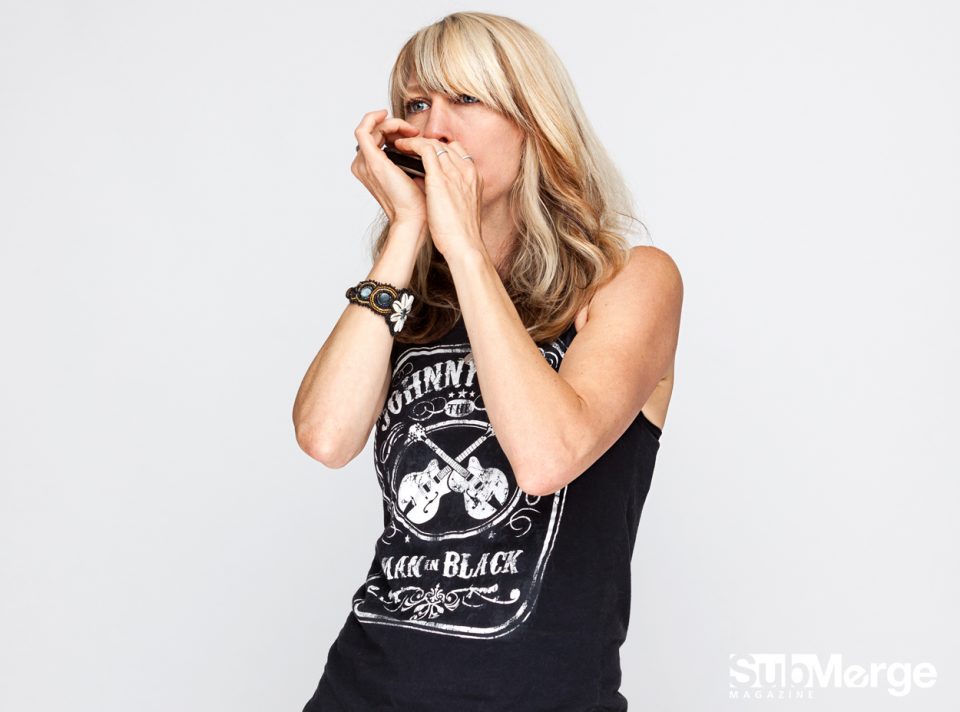
How did you and Anton begin collaborating?
I met Anton around town in the early ‘90s. I worked at Java City on 18th and Capitol when that was the only thing going on around town. There was nothing else going on except for, like, Cattle Club. There were staple folks, and Anton was definitely one of them. That’s actually where I met my husband and we started singing together. Anton’s songs always spoke to me. They just have a melodic aesthetic.
What was the recording process like?
Anton and I have a first CD that we did together in 2009 called Bag of Kittens. That came about because I was going to ask all of my favorite singer-songwriters in Sacramento to just write me a song because I had sung harmony with basically everybody. Everyone was like, “When are you going to do your own solo thing?” and I was like, “I don’t know. I suppose I should do that before I’m like 80 years old.”
It’s scary to sing alone if you’re a harmony singer, but I like to push myself. I asked Anton to write me one song and he basically wrote me like 13. So that’s how the first album came about. He comes home [to Sacramento from Europe] every year to be with his dad. We’ve recorded both albums in his dad’s living room. The second album came about from us hanging out and going, “Hey, wanna do that again?” It was so nonchalant and kind of wonderful that way.
What’s the living room studio space like?
It’s a dusty Sacramento living room and it’s got Anton’s scrappy drum kit and laptop and Wurlitzer and microphones. We just make it work. We’ve recorded so much stuff there. On this album and the last album, the trumpet was recorded by Vince DiFiore from Cake in that living room. It’s not any sort of spiffy set-up at all. It’s so Sacramento.
What’s it like harmonizing with yourself, as you often do on Little World?
I have a weird voice dysmorphia and I have no idea what I sound like, or if it sounds good at all. I’m one of those people. Anton loves when I harmonize with myself in recordings and I’m like, “Really? Are you sure that sounds good?” He’s like, “I love it! We’re doing it!” I’m like, “I’m going to trust you!”
What’s your approach to writing a harmony?
I liken it to playing piano by ear. You kind of just play along until you find the right thing and you know it’s good or you know it isn’t. You go for the things that feel good. That’s how I do harmony with almost everybody I play with. Sometimes I sing with my husband and he’ll have kind of an idea in mind. I’ll try to do that and I‘ll morph it into something else and he’ll be like, “Aww yeah, that’s better!” It just depends. It’s mostly just finding what works.
I read that you felt sick during a chunk of these recording sessions. How challenging was that?
I was on an airplane coming back from being on tour with Kevin. I came back to the wildfires last year that were just horrendous. The air was visible. Those two things took a toll. We had a timeline for recording because Anton was leaving to go back to Europe, so we wanted to get it done. The album cover is a picture I took at that time, and it’s just hazy and looks so apocalyptic.
When it came time to sing, were you able to settle in and find comfort?
No, it was hard. There were a couple of songs where we were pushing my voice a little higher and some lower. Anton has an affinity for my lower voice.
You are vocal about treatment of animals and the environment. How does that manifest itself in you as a person and as an artist?
Nothing is separate at all. It makes sense that when Anton was writing these songs [the environment and nature] would be a part of it. He does a great job of thinking of me and who I am and what’s going on in my life. He did it for the first album as well. It’s all encompassing—an extension of me completely.
How many dogs do you have?
Two dogs. Lulu made both album covers and was the cover model for the last 7 Seconds album, so we’re kind of obsessed with our animals!
How does the other dog feel about that?
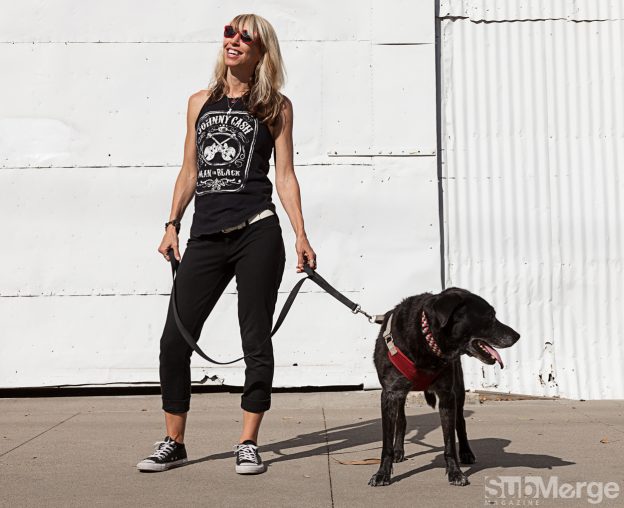
What’s great about Hank (pictured above) is he cares less about the limelight. He doesn’t care. Lulu just sounds like someone who would care more about the camera and will always pose for the camera. She’s a photographer’s daughter for sure.
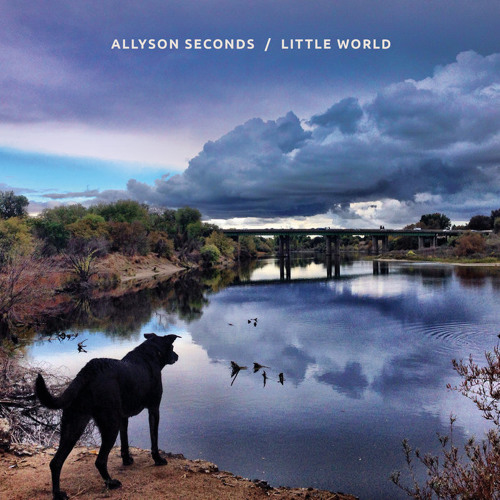
What’s the story behind the album cover?
Anton picked that photo out. I had no idea what the cover would be, but he did a mock-up and surprised me and I went, ‘Whoa, that’s perfect!’ It really encompasses it. As apocalyptic as it looks, there’s still a bit of blue sky poking through.
Where was the photo taken?
It’s my favorite spot on the American River, behind REI and Costco. I don’t go there anymore because it got too dangerous with different run-ins. I’ve just sadly had to start going somewhere else, but I’m not giving up. I’m going to head back there because I love it so much.
There has been less and less support for the homeless and a lot of programs got cut. I went there all the time because my dogs are barkers. I went there for years, daily. We’re talking 300 out of 365 days a year I’m at the river. I love it. I’m friends with several of the folks who live out there because I see them so often, but a whole other host of people have come out there and it’s quite dangerous. So that’s the state of things now.
You and Kevin played the Bernie Sanders rally at UC Davis. How did that come about?
That was so exciting. We know Jerry Perry really well and he was booking all of those rallies. I’ve known Jerry since I was 15 probably. He asked Kevin and I to do the UC Davis rally, and that’s where I went to school, so that was really exciting. That was definitely a highlight of the year. Bernie really supports a lot of environmental issues that I also support. He’s for fair and humane treatment of everyone. We kind of knew it was a rough chance [for Bernie to win], but just to be able to support him by singing at a rally felt great.
How did you feel when his candidacy ended?
The way I feel about things now is that basically, in any way possible, we cannot and should not allow Donald Trump to be our president. That says it all. Whatever we can do to eliminate that chance of happening is what we must do. That’s how I feel.
You said you met Jerry Perry back at Java City in Midtown as a teenager. What was it like being there back in the ‘90s?
I feel grateful to have grown up in Sacramento. Lots of folks from different towns do not understand that statement at all. But if you were privy to that era of Sacramento music—the early ‘90s to early 2000s was a magical time. I don’t think I’m exaggerating that, because so many folks agree. It was a real boom time for music here. I was in my early 20s getting into bands and sharing stages and seeing shows. Knowing someone like Jerry since I was 15—it’s so familial. Everyone knows everyone and we’re all working for the same thing. We love music and community. I’m absolutely grateful to have grown up in a town that has such a rich music and art life.
There were never a ton of venues in town, so you had to be active. Had to get shit happening. It’s almost like being music activists. I grew up in a time when we had to make our own flyers and staple them on posts. Sacramento is a small and tight-knit community. Everyone is just like two to three degrees from each other.
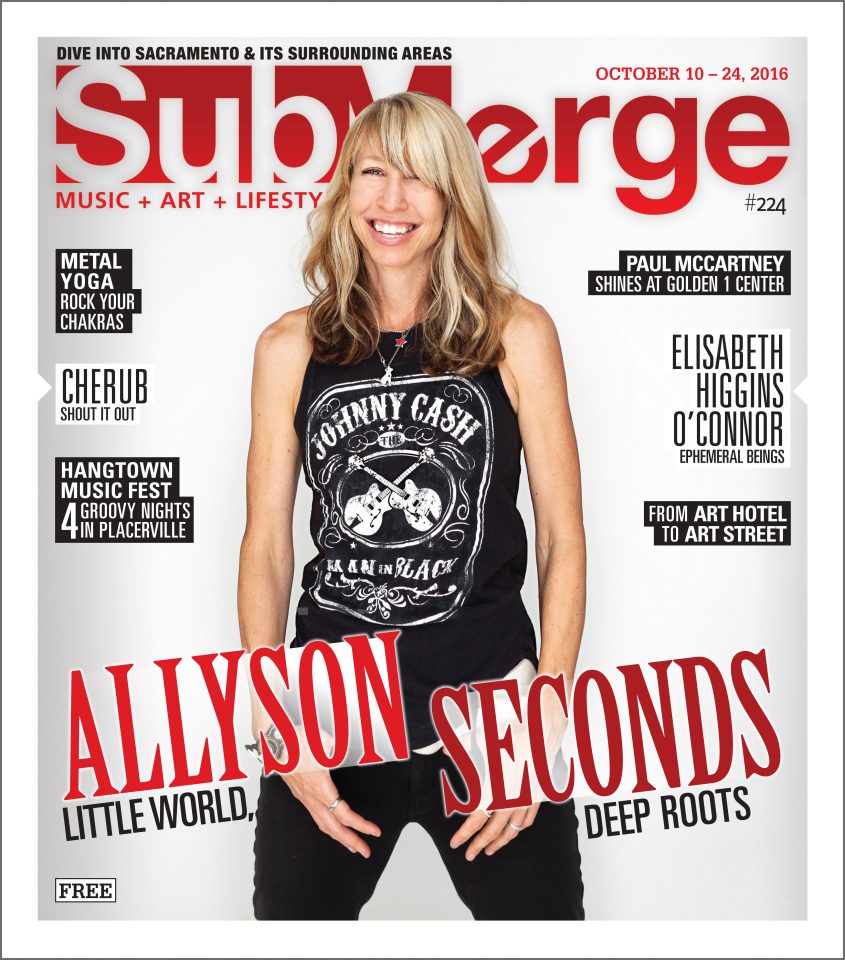
Allyson Seconds will be marking the release of Little World with a CD release show featuring special guests Anton Barbeau and Kevin Seconds, Oct. 22, 2016 at Shine, located at 1400 E St. in Sacramento. The all-ages show starts at 8 p.m with a $7 cover charge and one-drink minimum.
Legendary Sacramento-based singer/songwriter Kevin Seconds (of the highly influential hardcore punk band 7Seconds) is readying the release of a new solo record, Don’t Let Me Lose Ya. The 10-track album, which Kevin calls his fifth “official” solo release (he’s made all sorts of homemade, limited-run releases over the years), will be available through Asian Man Records on Oct. 9, 2012.
“I kept it pretty simple and close to my heart,” Kevin recently told Submerge. Rather than enlisting the help of musicians from all over the country, which Kevin had considered, he kept everything close to home. “I’m really fortunate to have some amazing and talented people so willing to help me out, my wife Allyson first and foremost, of course. I’m never more excited than when I’ve got my vocal parts done and I know it’s her turn to come in and sing.”
Kepi Ghoulie played drums, Alison Sharkey laid down crucial cello parts and David Houston, who recorded the album at his studio, played on the album as well.
“I’ve known David for 17, 18 years now,” Kevin said. “I consider him to be one of my closest friends, I love the man. He’s brilliant, fun to hang out with and inspires me in so many ways I cannot even begin to tell you.”
After recording his last couple solo albums himself, Kevin felt like he needed to collaborate a little, to reach out and let someone he knows and trusts put their touches on this new album. It paid off.
“It was actually the funnest, easiest time I’ve ever spent in a recording studio,” he said. That definitely comes off when you listen to Don’t Let Me Lose Ya, nothing feels forced, it’s very organic sounding and Kevin’s masterful songwriting and storytelling are right up front on display as best as they ever have been.
His official CD release show will take place on Saturday, Oct. 13, 2012 at Naked Lounge. That show will also be Kepi Ghoulie’s and Kevin’s U.S. tour kickoff. For more information and to pre-order Kevin Seconds’ new album, visit http://kevinseconds.com/ or http://asianmanrecords.com/
Submerge has got your first look at the lineup for this year’s Friday Night Concerts in the Park series. The 13-week shindig kicks off on May 4, 2012 at 5 p.m. at Cesar Chavez Park in downtown Sacramento. You can see the entire lineup right here. Major brownie points to anyone who can name all of the artists that have been on the cover of and/or featured in the pages of Submerge (hint: there’s a lot of them).
May 4
Arden Park Roots (reggae/rock)
Island of Black and White (acoustic/blues/reggae/rock)
The Storytellers (roots/reggae/ska)
Shaun Slaughter (indie/electro/pop)
May 11
Middle Class Rut (rock)
Lite Brite (rock)
Horseneck (rock)
DJ Whores (electro/indie/dub step/alt)
May 18
Nickel Slots (alt-country/Americana)
Infamous Swanks (rockabilly)
Blackeyed Dempseys (Irish rock)
DJ Adam J (indie/dance/alt)
May 25
ZuhG (funk/reggae/jam)
Element of Soul (acoustic/jam rock)
Playboy School (electronic indie/pop)
DJ X’GVNR (pop/top 40/electro/dance/dub step/house)
June 1
Oleander (rock)
Allinaday (rock)
Trackfighter (rock)
Verdugo Brothers (house/top 40)
June 8
Mumbo Gumbo (zydeco/roots/dance)
Todd Morgan and the Emblems (blues/rock/jazz)
DJ Mikey Likes It (top 40/‘80s/‘90s/party groove)
June 15
Relic 45 (blues/rock)
Out of Place (acoustic/alternative/rock)
Sexrat (alternative/rock)
Reggie Ginn (pop)
Shaun Slaughter (indie/electro/pop)
June 22
7 Seconds (punk)
Bastards of Young (punk)
City of Vain (punk)
DJ Whores (electro/indie/dub step/alt)
June 29
The Nibblers (funk)
The Coalition (world beat)
Diva Kings (folk/pop rock)
DJ Fedi
July 6
Full Blown Stone (reggae rock)
Dogfood (alternative rock)
Street Urchinz (reggae/rock)
DJ Nate D
July 13
Another Damn Disappointment (ADD) (punk)
Walking Dead (punk)
A Single Second (punk)
The Left Hand (punk)
DJ Blackheart (house/electro/punk/indie)
July 20
Walking Spanish (blues/indie rock)
Jack and White (alternative/pop rock)
Autumn Sky (folk/pop)
CrookOne (soul/pop/hip-hop/Motown/indie)
July 27
The Brodys (pop/rock)
Early States (pop/rock)
Hero’s Last Mission (pop)
Chaotic Fusion (DJ Oasis & !nkDup) (rock/top 40/dance/mash-ups)
As you probably know by now, this year’s lineup was not booked by longtime promoter Jerry Perry, but instead by a committee of local promoters, musicians and music enthusiasts that go by the name Play Big Sacramento. One committee member, Andy Hawk, who works at Entercom radio stations and promotes Wednesday night shows at Powerhouse Pub in Folsom, recently told Submerge of this year’s lineup, “As a committee we worked with venues, clubs, bookers and musicians in an effort to create a lineup of the best Sacramento has to offer. We have 13 weeks of shows filled with the biggest headliners in town, and have added the most talented DJs in Sacramento to play in the beer garden. Friday Night Concerts in the Park this year will truly be the centerpiece of entertainment in Sacramento this summer.”
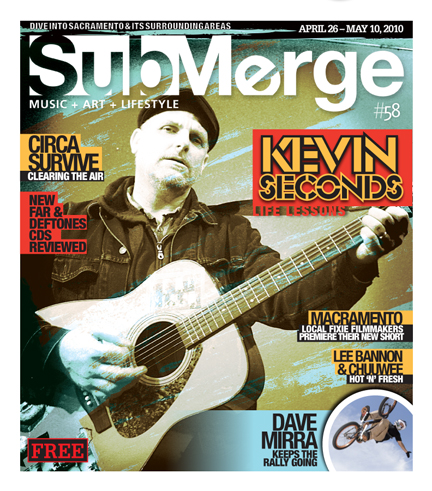
Kevin Seconds finds solace in music
Listening to Kevin Seconds speak about his music, you’d hardly believe he’s been in the game for more than 30 years. Serving as frontman for 7 Seconds, one of California’s most seminal hardcore punk bands, you’d think the years on the road, spitting bile at the young and the restless would make him a salty individual, but that’s just not the case.
“We’re from the era of hardcore punk rock,” he says of his early days touring with 7 Seconds. “We would go out for two or three months straight, come back home for a month and then go back on the road. We thought that was the way to do it. At that time it was.”
Of course, as time marches on, things change, even for musicians. Children, marriage and the other trappings of adulthood eventually claim most of us–not that that’s a bad thing. Even the most unruly and defiant among us aren’t immune. Seconds has managed to change with the passing of time and not lose his edge, though the music he’s spending most of his time making nowadays is a far cry from the brazen punk rock of his youth. He stands as a perfect example that it’s possible to grow up gracefully in the music business and still have a good time doing it. When Submerge contacted Seconds, he was happy to report that he’d just received a text message from his label, Asian Man Records, that his latest solo CD, Good Luck Buttons, had come in.
“I was pretty excited, actually. After all these years of having different records out, it’s still pretty exciting to get word that the new CD is done,” he says. “It’s definitely one of those little thrills you get–realizing that something you’ve been working on for two years has come to fruition.”
It would seem that Seconds’ continued enthusiasm for his music has bled into his songwriting this time around. Good Luck Buttons, out May 11, 2010 bears a much sunnier disposition than its most recent predecessor, 2008’s Rise Up, Insomniacs! Seconds said a lot of Good Luck Buttons was written while he was on the road for Rise Up…, which had a big effect on the finished product.
In our interview, Seconds talks about how real-world stress got him down, and how he was able to find solace and brighter days by focusing on his music.
You did a lot of solo touring for your last record. Did those experiences have a big effect on your writing of Good Luck Buttons?
Yeah, definitely. Living in Sacramento, and I’ve been here a long time, Sacramento always inspires my writing–at least my acoustic stuff, because I got started doing the solo stuff here in Sacramento, playing open mics and coffee houses and stuff like that. This time around, I got to go to Europe a couple of times and toured around the States, and [the songs on Good Luck Buttons] definitely have a travel feel to them–at least in the way that I wrote. I would pull over, resting somewhere, and jot down ideas for a song. The last record was a tense, stressful record, because all the things leading up to that record coming out–it took me forever to put out. I had crazy back problems; I was dealing with our business going under. All this stuff was happening. It was more like, “Let’s get this thing done so I can get it out and be happy again.” This new one is a little more free-spirited. I think it’s a happier record, at least. The road influenced it quite a bit.
There’s a sunny vibe to this record, listening to it all the way through. There’s almost a pop feel to it.
That’s cool. I love melody and harmony. Good pop–I love it…unless you’re talking about Britney Spears pop. I love good melodic pop music. Even when I try to do one kind of thing so I can establish myself doing this kind of thing. I listen to gospel music, I listen to metal–if it pops up in there, I guess it’s bound to happen. It’s not an accident if it’s in there. [Good Luck Buttons] is more up-tempo and not as mopey-sounding as the last record.
You were mentioning the problems you were having with the business. Was it difficult to balance all your music projects while running the True Love coffee house?
It was. My wife Allyson and I ran the first location starting in 2001, and we were open for almost four years at that location, and I did some shows, and 7 Seconds did a couple of little road trips, but I decided it was going to be a big deal and that I should really commit to this and be a business owner. That was a big switch for me, because I’ve been pretty irresponsible for most of my adult life. I’ve just been able to get in a van and go, you know, and not worry too much about paying rent and paying bills, but I learned a lot from it. It also brought stress in my life. I was having panic attacks every other day. This was the first time in all the years I’ve been on Earth where I’ve been responsible…
We closed on a high note, we were doing the best we’d ever done, but we had a horrible relationship with our landlord, and we couldn’t renegotiate with him because he was being such a prick. We said, “Instead of dealing with this, let’s shut it down for a while, and if we want to do it again, we’ll do it at another venue.”
In that time between the first and second True Love, I purposely filled up my calendar with as many shows and tours that I could. It was great getting back to something I knew and that I’d been doing since I was 16, but as you get older, it takes a lot out of everything. When I was 20, I could get in the van for three months straight, but now it’s like, I love these guys, but come on.
But I’m still good at touring, and I love traveling. When you go to other cities and other countries, your brain and your heart change. You can’t be the same person you were when you come back. You look at people differently, you look at food differently, you look at art and music and film differently. If I don’t have that, I feel like I’m working at half-power. At the same time, it was really gratifying being a part of and running a place that meant something to Sacramento. It was a little more than just a coffee house. It was a hub for the community. It was nice to give that to Sacramento. Allyson and I talk about it like, “Are we crazy enough to do it again one of these days?” We probably both are.
The title of the album comes from the song “No Good Eggs.” Was there a reason you picked a line from that song in particular?
Titles are really hard for me. I try to stay away from the most obvious things, or what I think are the most obvious things. Whenever I sing the line, and Allyson sings that with me live a lot, and I think just because of her harmonies, it really resonates with me. I’m not really sure if it has a meaning or if it’s a good title or not, but it just stuck out, and I liked it a lot. The last record, now that I look back on it, was such a downer, and it seems like I was trying to make it a downer. A lot of stuff was going on, I lost a lot of really close friends, Allyson and I were having problems, so I had to fill it up with a lot of negative stuff to get it out of my system. Good Luck Buttons seems like a harmless, meaningless title–no huge meaning, but I guess it just came down to thinking it sounded cool.
It definitely fits the songs. One song in particular that I really liked was “Sunday Afternoon Bicycle Polo.” Where did the lyrics for that one come from?
I had this space that I turned into a studio. I did my paintings there, and I also did some recordings there. It was over near 19th and X streets. I had it for a few months. In fact, a lot of the stuff on the last record was recorded at that little studio. One day, I was not having a good day. Nothing was coming together. I was bummed at myself for wasting time and not getting anything done. I looked out the window, and across the street was an overpass for the Capitol Freeway, and there are these big concrete patches of property. There were these kids out on the concrete playing bicycle polo, and I thought it was funny because they were these young, hip kids. At first, I was really annoyed by it, like, “Look at these fucking hipsters. Who do they think they are?” Then I realized, it made this thing change in me like, “Why are you being this old, cynical prick?” It’s kind of cool that they’re out there doing it. It’s nice and warm. What I always do with songs is that I’ll have an idea for a song, and then in the middle of it, it just changes. All of a sudden it became this love song about someone I know. She’s a great person, but she’s always on the outs. She’s always trying to be a part of something, but she can’t quite fit in…
In the bio you sent us, you were sheepish about 7 Seconds’ influence on younger bands. You made a joke where you apologized if your band had had any influence on younger bands. Is the influence you’ve had on youth culture difficult for you to admit?
It’s not difficult at all. For me, it’s more of an embarrassing thing when people say it. I still haven’t embraced the idea that we might be a bigger deal in some people’s minds than we are. I love that we are. I love that when we play, a lot of great bands will come up and say that they were influenced by us. Of course it’s very nice to hear, and we love it. But I’ve never been good with big compliments–when people come up to me and start calling me legendary, it’s like, “I’m still alive!” Call me legendary after I die.
It all comes from a good place. I know that. I don’t shit on it. I don’t ever want to be somebody who comes off standoffish or who doesn’t appreciate the fact that people have been so supportive of what me and my good buddies have done for the past 30 years… I have this tendency to be a little too self-deprecating at times, and my wife will be like, “Stop that!” It’s how I handle people giving me or my band compliments.
After Two Decades of Creating Music, Brian Hanover Collects No Dust
Words Anthony Giannotti | Photo Scot Stewart
Brian Hanover is most well known for his years fronting the Sacramento-based street punk band Hanover Saints. After seven U.S. tours, two full-length records, four EPs and nearly 10 years playing together, Hanover Saints called it quits in 2005. Fast forward to 2010: the 35-year-old is about to release his second solo album, publish a book of his writings, continue running his own screen-printing business and still finds time for his family. Brian’s mindset fully embodies the D.I.Y. lifestyle, going as far as to release his solo albums on his own record label Revolution Ink Records, casually saying, “I work hard, it’s just what I do; I don’t know anything else.”
This impressive work ethic has served him well in nearly two decades of playing music. Brian slyly smirks while saying, “I’ll always play music because my mind won’t let me stop writing songs!” His easygoing demeanor and friendly attitude make it hard to not to like him. The depth and honesty of his songs allow him to win over audiences with just an acoustic guitar and harmonica. Brian likes to involve the fans at his live performances by leaving a tambourine out for people to play. He laughs as he says, “You just hope whoever grabs it at least has a little rhythm.”
He also does something a lot of older musician don’t do. He doesn’t rely on his past successes. “I want to stay relevant,” Hanover says. “I don’t want to be the crusty old guy that doesn’t know what the kids are listening to.” I had a chance to catch up with Hanover over a few pints of Guinness at one of my favorite Sacramento dive bars, The Press Club.
Thanks for meeting up with me here; I know you’re a busy guy.
No problem, thank you. I’ve only been here a couple times. One of the first times I came to The Press Club was in the early ’90s to see U.S. Bombs. It was a crazy night; I was over there behind Townhouse smoking and some kid got stabbed at the show!
So you’ve been around the Sacramento punk scene a long time.
In 1984 I was skating a launch ramp with some friends, and someone down the street was blaring 7 Seconds Walk Together Rock Together. Later that day I made my mom drive me to the record store—back then there was Dimple, Record Factory and of course Tower. I got my first punk records that day, 7 Seconds’ The Crew, and Black Flag’s Damaged. I started going to local shows in the mid-’80s. I even met my wife at a Suicidal Tendencies show back when Big Shots was still open.
Yeah congratulations on the 10-year wedding anniversary. You just got back from a little trip?
Thanks, it’s been a good 10 years. We went up to wine country for the weekend.
What’s it like trying to balance your own business, wife, kid and being a recording/touring musician?
[Laughs] There really is no balance; I think it’s priorities for sure. My wife knew what she was getting into. This is just what I do, and I was already in a band when we got together. One thing that really strengthens us as a couple is being able to do our own thing, it allows us to grow together, really surrounds us with love and grace, [laughs] a lot of grace.
Speaking of doing your own thing, I took a listen to the new release. It’s very good, quite the departure from the Hanover Saints”¦
Yeah some of it is. For this album I wanted to strip most of the songs down so I really only used an acoustic guitar, tambourine, harmonica and on a few songs electric guitar. All accept the fourth track; it actually was a Hanover Saints song that never made it on an album. It was right toward the end of it. I had already been writing solo stuff, and I brought it to practice when we were playing as a three-piece with Chris from Killing the Dream on bass.
Some of the songs on here have a real Johnny Cash/Bob Dylan singer/songwriter vibe jumping off them.
Each song is a little bit different from the other; they may have a common thread but I tried to get a large variety. Everything I sing about is all true stories, all personal experiences, kind of a Pete Seeger thing. I wanted to do this release differently because of all the different formats everything is coming out in. So the way I’m doing this release is in three volumes, every four months four more songs come out. The next volume is going to come out with a book I wrote and a coffee mug, because it all started with coffee and late-night rants for me.
How did the book come about?
Like I said, I was always at coffee shops writing. Some of the Hanover Saints lyrics I always really liked as standalone pieces. I had been cleaning out some old papers, and I found old poetry, short stories and some other stuff. I thought I’d like to publish it; I don’t know if it’s any good. Sometimes writers can think a little too much of themselves, think they’re a little bigger than life, but I went to a bookstore and picked up a book of poetry and one of the stanzas I turned to was literally four sentences. I thought, I can totally do this. It’s ridiculous.
Do you think it was the writing that attracted you to more of the acoustic style as opposed to staying in the punk rock genre?
Most of the Hanover Saints was written on acoustic or electric. It just depended on how I heard it in my head. One day I was playing the song “Bad Man” at home, Mike Erickson happened to be doing some work for me and heard it. He talked me into putting that song on Hanover Saints record Murdertown, which Pressure Point was producing. By the end of Hanover Saints I felt I had said everything that avenue would allow me to say. I really wanted to get that one on one connection with the audience. I definitely think there is a place for the loud thing. I’m always going to be into punk, and I’ll probably play it again, it’s just if you’ve said what you need to say for that part of your life I don’t feel the need to keep dragging that dead horse around.
Have you found that one-on-one connection?
I wanted to try getting up and doing a solo show but I was too afraid. Then in 2005 Kevin Seconds talked me into being on a bill with him. I just fell in love with it. Being able to play coffee shops, small bars, garages, living rooms and really some sketchy places is an entirely different, incredible, personal experience for me. You can get to know the people and the city you are playing in instead of rushing through to the next gig like when you’re in a full band. I’ve made some great friends all over the country playing solo.
You can get personal with Brian Hanover at the Blue Lamp March 17, 2010 for his 21 and older CD release or March 19, 2010 at 16th Street Café (The old Javalounge).
Pressure Point Celebrates Sweet 15
This year, Sacramento’s own street punk/Oi! prodigies Pressure Point will celebrate their 15th anniversary. An impressive feat in its own right—especially considering the tumultuous nature of the punk rock scene—what makes Pressure Point’s quinceañera even more notable is that they’ve managed to survive on their own terms. Though Pressure Point has shared stages with punk rock giants such as Rancid (Lars Frederiksen acted as their producer on two full-length albums and a 7-inch) the band has managed to survive, and thrive, in what lead singer/cofounder Mike Erickson calls an “underground within the underground.” To commemorate their 15th birthday, Pressure Point will release on Sept. 30 Get it Right, an anthology that re-imagines some of the group’s earlier material and includes a few new songs and covers. Before heading out on a tour that would take them to the Midwest and back, Mike met with Submerge to discuss the new release and the difficulties in bridging punk rock’s generation gap.
You’re heading out on tour pretty soon. Do you want to talk about that a little bit? Is it to promote the new album?
Sure. Honestly, one of the biggest reasons that I like to be in a band is that I get to travel, and it’s an unconventional way to see America. I see America through the eyes of people like me. It’s not a tour guide or a travel agent. I get to see this country through the eyes of people who are similar to me, who I enjoy being around, and have similar beliefs and philosophies. We’re not only touring to promote the record, but you know, it’s summer time. It’s a good excuse to get out and be with your friends and have a good time.
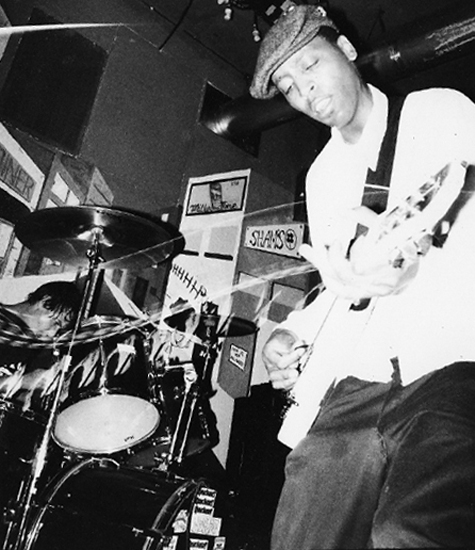
How have you seen the country change in the time you’ve been touring with Pressure Point?
In terms of the punk scene, the scene that I’m a part of, things have changed drastically since we started. There are still people like”¦Anti-Heroes and Agnostic Front—people that we met real early on who are still out there doing it and have the same beliefs and the same attitudes. But what I saw, with really good bands like Rancid—who were able to break through and bring what I consider legitimate punk rock to the masses—the aftermath of that was that every label wanted to get their own Rancid. They wanted to make even more money. They would get their carbon copies. They wanted to dumb them down. They would water them down, sweeten them up, so they could be more mass-produced. And there were some bands that were willing to play ball. When those bands did that, it watered down the punk scene at large and began to split it.
With the latest release, you guys are revisiting older material. What was that like for you guys?
A lot of the material was written by Kenny [guitar] and I really early on. When we started this band, we struggled to find the right fit with the different members because of the style we played. The approach we had and the type of politics we had were all really unconventional, and to be honest, kind of dangerous for this town. There weren’t a lot of promoters or record labels that were willing to work with us, and that was true all over the country. Pretty soon, we were able to connect and hook up and an underground within the underground developed. Because of all that, we always heard the songs a certain way when we wrote them, in our minds’ ear, but it never really came out on tape like we wanted them to. Over the years, we’ve had good friends and good band members and we’ve got the Nates [Hat and Mohawk, bass and drums respectively]. We’re turning 15 years old this year, and we wanted to celebrate that, so we went and revisited a lot of material, and now we were able to update it, refresh it and record it so it sounded the way we originally heard it.

Other than rerecording the songs, did you revamp them in any way?
That was a debate within the band. We decided that we were going to do the things we needed to do to make the songs better. Lyrically, I decided I’d leave the songs alone. There were a lot of lyrics that were really naïve when I wrote them. I wrote some of those songs in my early 20s, but I decided that they capture a time and a place and that I should just leave them alone. Musically, we altered and changed some of the songs.
Before you mentioned the songs you were doing were dangerous for the area. What did you mean by that?
Sacramento in the mid-’90s, the punk scene was kind of smoldering. It was suffering from a lot of things left over from the ’80s. Within the scene in the late ’80s, early ’90s, there were a lot of Nazi skinheads that were left over, and they were threatening the entire punk scene at large, so you had that violence and that danger, and then you had on the other side of it people like Kenny, people like me, who grew up in Sacramento lived in Sacramento, lived through that, and were battling, of course, against those kinds of notions. So for us being a straight up Oi! band, a street-punk band, a band that espoused a skinhead philosophy and attitude—of course a traditional one—a lot of promoters around here got scared. A lot of them said, “Oh, I don’t want that.” We were never ones to look at the problem and just sweep it under the rug. We confronted it head-on, recognized it and dealt with it. They were afraid there would be trouble at gigs, that if they put us on bills, it would draw them [Nazi skinheads] to shows. These guys were coming to shows anyway. We did our own shows, and now we have our own scene. It’s fresh and vibrant. We don’t have those same problems, we don’t have those same issues, and over the years, we were able to hook up with a lot of national acts that were really getting big, and if it wasn’t for them demanding that we get on bills, a lot of the promoters around here would not work with us.
For the new songs you wrote, could you talk about those lyrically?
One of the new songs on the record is “Fuck the Kids,” and it’s a hardcore song in the tradition of New York style or early ’80s style. The American landscape early on, there weren’t many divisions. When we went to shows, you’d have Reagan Youth playing with Bad Brains playing with Sick of It All playing with Gorilla Biscuits. So you’d have straight edge bands playing with skinhead hardcore bands playing with more leftist punk bands. Everyone had a lot of respect for each other and just did their thing.
It seems that over the last 10 years, especially the last five, there’s been a lot of sectioning off and divisions within the scenes at large. I noticed that as a skinhead that me and a lot of my punk rock friends would go to hardcore shows, because we really appreciate that kind of music, and the kids would shun us like we didn’t belong there because we didn’t look like them. And that with the infusion of metal made it so that it wasn’t really connecting with where it came from or where it was”¦or what it is.
I wrote a song called “Fuck the Kids” and Kevin Seconds from 7 Seconds sang on it. I asked him because they were pioneers of the original West Coast hardcore movement, which had more of a positive vibe, bringing people together. Even though we’re not a posi band, we have a similar attitude. It’s about taking people who are outside of mainstream society, or the people who at least don’t fit necessarily. They don’t want to fit”¦they would find their way in this other scene at large as individuals, and that seems to be lost. There seems to be a lot of conformity, a lot of packaging, a lot of formulaic nonsense within the hardcore scene, and it happened in the scene of music we play, too, in the late ’90s, and I think in a lot of ways that’s what killed it. And whenever you lose that identity, you lose that ability to sound original or to be original or to think on your own, then you lose touch with where you came from, and that’s why I wrote “Fuck the Kids.”
Why do you think that the fractioning of the scene has happened?
I think it’s largely people like me who are to blame for that. I’m 38, and I don’t think people my age were as vigilant as they should have been, or maybe in some cases as welcoming as they should have been to the new generation. I also think that, again, hardcore broke and record labels were like, “Oh, package it, sell it, it’s all about money,” so you had a lot of bands that sounded the same, and a lot of kids glommed on to it. The attitude became more of a mob mentality as opposed to a punk mentality. When I overhear people who are into hardcore—and I’ve overheard them telling Kevin Seconds that 7 Seconds isn’t a hardcore band—that’s the attitude right there that I’m talking about.