[Editor’s note: We here at Submerge were devastated to hear of Daniel’s passing on April 8, 2017. His impact on Sacramento’s music and art communities will never be forgotten. Rest easy, old friend.]
The P and 21st block is a sleepy pocket in Midtown. Tucked away from the white noise of the freeways, littered with parking lots and office buildings and a tattoo parlor, it’s low-profile–unless it happens to be a dance night at Press Club or The Townhouse.
Both clubs are infamous alternatives to the posh world of dress codes and bottle service. At Townhouse, or Toho as some call it, the beer’s cheap, the drinks are stiff, the tagged-up bathrooms are claustrophobic and the entire interior is low-lit to obscure seedy behavior. It’s the only spot in town suitable for a dubstep and bass night called Grimey. Being coined by a local DJ who goes by Whores is just another notch in its anti-glamour esteem.
On his birth certificate, Whores is Daniel Osterhoff. He’s Dan to those who knew him before he was Whores. We met at his apartment on the north side of Midtown a few hours prior to Grimey. He does not live in a high-rise loft or a gutted warehouse that doubles as a skate park. He lives like the rest of us, in a modest complex with carpeted floors and enough space to stretch. Two fellow DJs, one of which was Jubilee just flown in from Miami, and Grimey resident photographer Eric Two Percent were hanging out. The walls were like those you’d find at any graf-writer/graphic designer’s abode; dozens of pieces from abstract to lowbrow with the exception being a giant rusted-red W mounted on the wall.
“Russell Solomon of Tower told me the letters were lying around on the roof of Tower Cafe,” Whores said. “So one night I climbed up there and took the W.”
While grabbing me a Red Bull from the fridge he apologized for the hair on the kitchen floor. A stylist friend that was hanging out had sharpened Whores’ close-cut before my arrival.
We stepped outside for a cigarette and chopped it up. It was not long before James Blake’s controversial quotes to the Boston Phoenix that caused a stir in dubstep were discussed. An uber-popular British electro-soul and dubstep artist, Blake railed the genre’s burgeoning “frat-boy market,” which is being labeled “bro-step.” His rant was widely publicized for statements like, “It’s a million miles away from where dubstep started,” and “It’s been influenced so much by electro and rave, into who can make the dirtiest, filthiest bass sound, almost like a pissing competition, and that’s not really necessary. And I just think that largely that is not going to appeal to women.” Periodically throughout the night, Whores and his fellow DJs coolly reminded me that it’s neither their taste nor in step with the identity of Grimey.
The success of the night is owed to the attention to taste, which can be misperceived as snobbery, but should not be construed as such. Even when resident DJ Jay Two approached Whores with the idea of a dubstep night, Whores was interested but hesitant due to a feeling that dubstep had reached its high water mark.
An attendee of Grimey is not given the opportunity to gripe “not this damn song again,” because its resident DJs (Whores, Jay Two and Crescendo) are intent on remaining ahead of the curve by playing records acquired on advance or playing the newest tracks they think need to be heard. It’s a dedication to the cutting edge that is scarce in the local clubs that rely on Top 40 or are just held down by stubborn old dogs disinterested in new tricks.
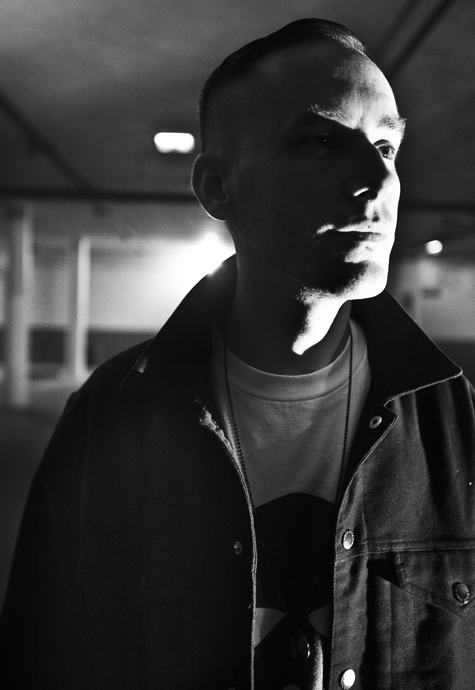
“I just hold steady with playing what I think people would like,” Whores said. “I’ve attended a lot of different dance nights everywhere from New York to Los Angeles, Seattle, Portland, San Francisco and Oakland. From the most underground to the most mainstream clubs, and I’ve taken little elements from each. But once you get the word out there, the word kind of does it itself.”
Much like fellow local veteran DJ, Shaun Slaughter, Whores is well traveled. He started DJing in 1997 as part of 916 Junglist before moving away in 2000 to Portland. Each move, he connected with different crews in Portland and Seattle before moving back to Sacramento in 2005. “Most people don’t know that about me,” he said. “They just think I came on the scene or think I’m from Portland, but I’m born and raised in Northern California.”
I reconvened with Whores outside of the Townhouse around 9:30 p.m. He was talking with Matt B of Bass Science, who had arrived in a rental from Tahoe. Whores was quick to share his knowledge on Bass Science, practically orating a short bio. “He started the whole glitch hop scene basically,” Whores said. “When Glitch Mob was starting out and Lazer Sword, he was right there. This guy’s got quite a big history in the newer EDM alternative craze.”
All professions have a language and despite my familiarity with Grimey and its music, talking to the actual artists involved meant brief interruptions to ask if they were saying “IDM” (intelligent dance music) funny, only to learn that EDM translates to electronic dance music–the domain in which the sub-genres operate. The confusion then sparked the two DJs into weighing the blurring sciences between EDM and IDM. “Some of it is [IDM] though nowadays,” Whores said. “Some of the juke stuff. Machinedrum’s new album.”
“The Lazer Sword,” Matt B added. “It’s intelligent footwork basically.”
“EDM is basically a very blanketed term,” Whores continued. “Nowadays everybody plays a little bit of everything because people’s attention spans are about this small [makes his index and thumb nearly touch]. So if you play one genre of music, you’re pretty much pigeonholing yourself and boring the shit out of the crowd.”
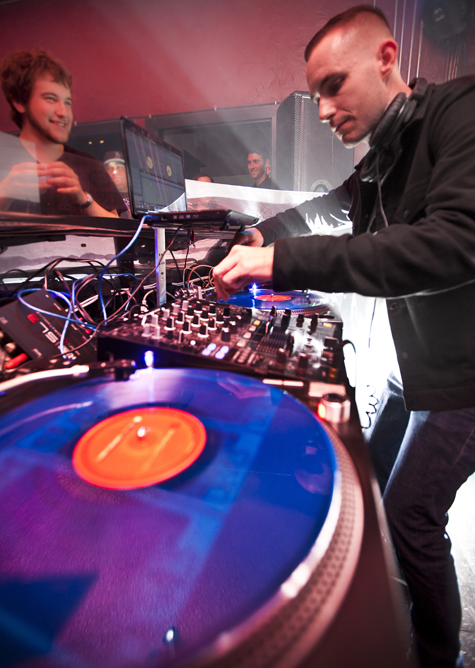
Whores stepped into the booth at 10 p.m. The bar was filling out and overflowing onto the dance floor with more than just gangly dudes having acid flashbacks from the Jungle club days. Whether it’s the Whores hype, the distancing from “bro-step” and “filthy bass” or just a misnomer, Grimey is never short on female attendees. By 10:30 p.m. the dance floor was gaining steam with a few girls entertaining each other, but come 11 p.m. to 2 a.m. the floor was a grinding, thrusting hot box of sweaty bodies–sweet, sweet uninhibited decadence.
Whores neither bores the crowd nor himself when he DJs. He keeps a folder of over 10,000 tracks on his computer at all times and does not practice a strict set. “It’s a lot more fun freestyling sets,” he said. “Sometimes when I record the sets and go back to listen to them, it’s like, ‘Man, that mix really worked.’ Others it really didn’t work, but what it comes down to is if you’re a professional, you can treat it like a jazz musician and play out of it. It’s all what you do with an error. Some DJs don’t know how to bounce back, they flop or they panic and that shows. That’s the difference between me and some DJ who took it up two years ago.”
Back outside we resumed our interview session in hopes of a quieter haven, but Grimey is the dance night with just as many attendees milling about the roped-off outdoor smoking section and back parking lot as there will be jammed into the dank of The Toho.
Whores clearly enjoys the popularity of Grimey, but he lamented that its success led to the compromise of his HUMP night on Wednesdays opposite Grimey. Originally called Warpaint Wednesdays with Terra Lopez, Whores came on to assist with the DJing and teach her techniques. Once Lopez began Sister Crayon, she forked over the night to Whores who renamed it HUMP.
“It used to be a popular night,” he said. “When Grimey came around it took the spotlight. I’ve been bringing around a lot of relative and instrumental electronic artists and musicians to try to bring it back.”
It was none of my business, but Whores willingly broke down the financial losses he’s incurred in the past two months that’s led to HUMP’s demise. DJs that are not conveniently touring the West Coast are flown into Sacramento and given hotel accommodations on Whores’ dollar. If no one shows, it means he bites the bullet.
San Francisco electronic artist EPROM and Frite Nite’s Salva, two rising beacons in the West Coast, are booked for HUMP at the Press Club this week. After that it’s the anniversary party with locals only in November, including Dusty Brown’s Little Foxes project, which is quite possibly also HUMP’s night of eulogy.
With Fuck Fridays dissolved, the Toho was in need of a new Friday night event, and Shaun Slaughter was back on the market for work. Rather than compete for the local crown, Whores and Slaughter teamed up to create Heater, an exclusive once-a-month party that combines glitter and gutter. “It’s more like HUMP with an open format,” Whores said. “We can play anything from house to electro to Baltimore to indie to dubstep and bass n’ breaks, whatever. It’s just straight party.”
The party debuted last month with the two DJs performing separately, and then trading off tracks for the last hour. “There’s always been an odd tension between us, but we’ve always been super-friendly with each other. I’ve been super-supportive of his nights and he’s been super-supportive of mine. The odd tension was because it’s a small town and he’s held the crown for quite a while. I think we’d really benefit if we did more stuff together, which is why we’re only doing it as a monthly.”
Our vibrations are in good hands with the Grimey residents. It’s a rare event where making requests is the greatest faux pas. “I don’t think it’s common knowledge that people know it’s rude,” he said. “Believe it or not, I have one job and one job only and that’s keep the vibe going. As soon as I stop to talk to someone and they go into detail about what they want to hear and why they want to hear it, all of a sudden they take me out of the groove I’m in, which takes away from the vibe. The next mix I do will be less involved and the crowd will notice, believe it or not. They won’t necessarily think about it like, ‘That mix sucked,’ but just have a moment to consider going out for a smoke.” Put your trust in Whores, kids.
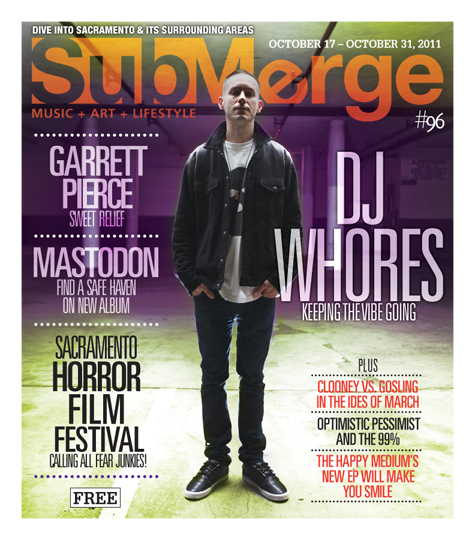
Grimey gets down at the Townhouse every other Tuesday night at 9 p.m. ($10 cover). DJ Whores and Shaun Slaughter’s Heater happens one Friday per month, also at the Townhouse. It’s free to get in before 10 p.m. with an RSVP. You can also catch DJ Whores at the Golden Bear on Saturday nights.
Who Cares Teenage Ego Trip
(Independent release)

When I was introduced to Who Cares, I heard a group with the purest of intentions struggling to craft music beyond the traditional hip-hop realm, while not betraying its beloved culture. I’ve always admired the courage in a group that was willing to make a song as heavy as “Heaven Ain’t That Hard” and follow it up with a Bambaataa-esque throwback like “They Killed the Radio” with Egyptian Lover.
Despite my admiration, there was a glaring struggle in identity that I always perceived as heavy-handed and off-putting. It was as though Who Cares might function better as two entities, one that loves trans-European electro-party jams and one that is meant to be heard during a rainy-day self-reflection session. Who Cares’ third record, Teenage Ego Trip, released last month, is its finest to date. With the help of an engineer and studio guidance, the album also serves as the resolution of the aforementioned identity crisis.
Easily the wisest move Who Cares made in crafting Teenage Ego Trip was pulling Dusty Brown into the project as its engineer, contributing producer and co-writer. His fingerprints leave evidence throughout the long player as he employs the same trademarks that made his This City Is Killing Me EP an instant classic. With Dusty behind the boards, Who Cares resolved its clash in styles found on the previous CD-R the group peddled at shows. Teenage Ego Trip is rich in texture, featuring a studio band intent on boastfully marauding for abstract sound pieces typically reserved for the likes of Damon Albarn and his Gorillaz project. This makes previous Who Cares efforts sound like skeletal demos; it’s as though the past years of songs were written in order to achieve this sort of breakthrough.
Subtle and lush, no song is without nuance in style that is not only rewarding, but adequate in placement–no tricks for the sake of flare–nor are the instrumental affairs exaggerated or embellished. In the past you could have made a case that Who Cares was wanking off a bit, or that a different perspective was relying too heavily on its virtuosity–take your pick. The choicest amount of care is given to production. Take, for example, the snare drum intro on “Cherry Boy” that’s run through filters, muting the percussion to a pitter-patter that, once refashioned, creates a pop to the instrumentation as Ernie Upton, aka Fernie Fresh, comes in with the vocals. The Who Cares style of old haunts the record in small doses: grandiose sax solos are fed as distant radio transmissions. Young Aundee’s falsetto crooning is employed sparingly, not to suggest it should be, but “These Three Words” is given room to breathe and earn its electro-outro that features an Aundee refrain, instead of forcing a vocalist into a boom-bap production or customizing the boom-bap and running the risk of the cursed “crossover” scarlet letter.
Who Cares is well past its juvenile days of rewriting Pete Rock and C.L. Smooth’s “T.R.O.Y.” a dozen times over. The transformation is strictly from a sonic perspective as Fernie Fresh maintains a deep connection with the disenfranchised and half-broken in his lyrics. Teenage Ego Trip is a well-constructed teddy bear for the latchkey kids and survivors of broken homes that took to the seedier side of life and are seeking to do better with their days and weeks. Perhaps it’s time to heal the gloomy demeanor of the Who Cares bear cartoon, give it a congratulatory pat on the back and put a crooked smile on its worried mug.
Who Cares’ Teenage Ego Trip is available for free download online at www.forhiphop.com.
The New Humans’ Avalanche Drops, Finally
Words by Vincent Girimonte | Photo by Raoul Ortega
Don’t broach the time before The New Humans with The New Humans; it’s akin to rehashing a saga and you’ve missed the first couple of installments where some real heavy shit went down. Sitting in front of Temple Coffee on 10th, that savory little nook of downtown Sacramento that feels like a downtown, Cole Cuchna and “new” singer Scott Simpson gingerly sidestep their previous selves as if they were officers in some cult; Simpson speaks briefly on his days with Sacramento rock outfit Still Life Projector while Cuchna is less forthcoming.
“I’m going to drop [Cuchna] out right now too–Cole was in a band called Red Top Road that was kind of big around the same time,” says Simpson. Once you’ve jumped from the ‘burbs, all that noise must be like Calvin Klein to Mark Wahlberg.
But nobody likes the then, especially when the now has finally shown up. The New Humans release their first EP, Avalanche, Aug. 21 with a Korg shakedown of sorts at The Townhouse, supported by Dusty Brown side project Little Foxes and those plucky FAVORS kids making their live debut. And yes, this is The New Humans’ first EP, which is no doubt a little surprising given the all the buzz The New Humans have created over the past few years, playing as an instrumental band nonetheless.
“It was never planned,” says Cuchna of the band’s instrumental phase. “We always thought the songs sounded incomplete. It was never really what we wanted to do.” Simpson took over the vocals after an arduous search for that elusive frontman, futile as they often seem to be. “We got tired of it. Trying out a bunch of people, no one was really going to grasp what we were going for besides one of us,” Simpson admits, though the group maintains that perhaps it was for the better.
The New Humans were conceived on a laptop, initially with a fairly direct “screw the guitar” mentality stemming from their previous ventures. Simpson and Cuchna, childhood friends from their days growing up in Elk Grove, wrote dozens of songs before picking up bassist Robert LaCasse and later adding current drummer, Mike Steez.
“When we started we were a lot more excited about it. I almost forget about it now,” recalls Cuchna. “Our intention was never to be like, ‘Oh check out this band, they don’t have guitars.’ I guess that would be one cool thing about us now.”
No guitars in today’s Midtown doesn’t turn any heads. It’s not uncommon to see a show with the MPC 1000 or something of the like running things on the floor, people kneeling over it awkwardly like some Ouija board. The New Humans occupy a very different side of this trend, though. Sugary, glam-y, coked-out even; it’s glitzy–not janky–in the way K Street is trying to be. “Fever” is the punchy single that predates the EP by what seems like eons, but it’s “All the Kids,” the EP’s opener, that does well to outline the album’s general framework: catchy synth melodies, live drums with percussion loops on top and a piano underneath trying to tether it all down.
“[Not having guitars] lets in the stylistic, bluesy or jazzy undertones–there’s a song on the EP with a Latin-y undertone. It lets all that color come through,” says Simpson, the pipes of this sassy “disco generation.” Some opening falsettos belie his trepidation over taking the lead vocals, and I wasn’t the first to mention that his inner diva was beginning to surface.
“I feel like every show we play, it’s coming out a little more, and in another year I’ll be a complete fucking monster.”
If there’s a sense of relief following the completion of any project, The New Humans are the divorcee who finds love again after Dad packs up and leaves. Six months were spent recording in a Sacramento studio (names are omitted per band’s request), and though both parties remain cordial, those six months were scrapped due to artistic disputes and “fake promises.”
“He wanted to produce it, so we were like, ‘OK, produce it,’ not knowing how far the producing would go,” Simpson says. “It’s a lot of trust to put in someone when you’ve never heard anything they’ve produced before. I don’t trust anybody with my band that way, unless maybe you like, produce fucking Radiohead.”
Cuchna adds, “I think that it was probably our fault for not really setting ground rules.”
Cuchna cites differences in process rather than the actual material being recorded; Simpson recollects on an uncomfortable foray into “L.A. bullshit,” where the band was allegedly being pushed into a deal with a sheisty label.
“It was a commercialized process, which could work for us, but it was an over-commercialized process,” says Simpson. “All the bands, they were trying to get them on The Hills, shit like that.”
The group self-produced with some guidance from Ira Skinner, using his studio space essentially for their own devices–“[Skinner] put in advice where we needed it and where we asked for it,” says Simpson. The New Humans purport to be in the “electric piano rock” vein, and though we can’t derive too much from that, the production doesn’t always speak to the band’s live panache–some tracks lack articulation, components grind together, coming up a little short in the “pop” factor that one generally demands with any electronic project under the umbrella of “dance-y.” But it’s their first production, more of a “demo” according to Cuchna, and he stresses the fact that they were past due on getting the EP released.
“That’s my only thing with the EP–it’s kind of all over the place…not all over the place, but we’re kind of treating it more as a demo,” he says. “At this point, we just needed to get the songs out.”
A mini-tour is planned for the fall, hopefully with a label supporting it. At this point the band is eager to get the EP “in the hands of the right people,” whomever they might be. Suffice it to say they’re in no particular hurry.
Dusty Brown Rides the Buzz of This City Is Killing Me Toward a New Album
Stolen gear, finicky crowds at shows and an anxiety toward giving his music to anyone he doesn’t call “friend” are just a few of the reasons Dusty Brown feels like this city is killing him. If the local scene is the cause of his suffering, why can’t Dusty Brown abandon Sacramento?
His insularity could be his greatest downfall, but in that apprehension to be seen or be the scene, he’s surrounded himself with friends within music who will gladly step in to exalt his art. After turning over a little five-song EP to his friend and electronic-colleague Scott “Tycho” Hansen, Dusty Brown was uncertain of his friend’s intentions. Hansen’s artistic talents stretch beyond his propensity for finely crafted down tempo IDM. Hansen fashioned the This City Is Killing Me with artwork based on photos by Raoul Ortega and put it on his ISO50 blog for free download.
Hansen was not bashful in introducing Brown to his fan base, as the post was accompanied by a three-paragraph salute to Brown. Hansen wrote, “I’ve learned more about music from Dusty than anyone else; his production style and methods are truly awe inspiring.”
Brown’s career arc illuminates the thought process behind naming a collection of songs This City Is Killing Me. After the dissolution of the electronica scene, Dusty’s band, consisting of his sister Jessica and cousin Zac, had its live equipment stolen in 2007. To recoup the losses, the band put out its Hope You’re Happy LP. “It succeeded in getting my money back to the dot,” he said. “I put a post out thanking everyone and the sales literally dropped flat, which was…great.” Since that record, the group limited itself to the studio and the occasional gig at The Press Club or The Hub.
Brown spoke as though he’s a man out of his proper time. He married at 18 years of age and now has four children with one more on the way. Brown said he understood the music business some in the ‘90s–the tour and make connections plan–but as a family man with hermetic impulses, he never thought that giving his music out for free would put a buzz into the band again. “Twenty-five hundred people downloaded it within three days, when before I was lucky to get one or two people to hit my Web site in that time,” he said.
With one stamp of approval blog post from Tycho, the band Dusty Brown went from strictly known in Northern California to receiving coverage from national music Web sites like XLR8R, Pitchfork Media and Yourstru.ly.
“It was a pretty incredible feeling that week,” Brown said. “Coming from a Sacramento guy, who nobody literally knows who we are outside of Sacramento, to have people donate from the Dominican Republic is crazy. The fact that it reached so many people so quickly, shows the old model of touring for months for people to hear your music is completely gone.”
The instant gratification benefited Dusty’s creativity, as he’s eager to finish a new full-length that’s nearly completed. And with the couple-hundred donated by downloaders of the EP, he’s toying with the idea of pressing This City Is Killing Me on vinyl.
Dusty Brown might be riding a high wave this month, but he’s grounded enough to recognize he still lives in Sacramento, a city that from his perspective is still trying to kill him. He played a capacity night with Tycho at the first annual Sacramento Electronica Music Festival in January, only to play again a week later to three people. “This month the NBA Finals will be the reason no one comes out,” he said. “But, I’ll end up playing for a random hippie that doesn’t care about sports.”
He went on to say, “I feel like there’s a superficial love for live music [here]. The minute you feel like it’s authentic you realize it’s not.”
It’s those one-off nights of capacity crowds, that lone hippie appreciator and the seclusion of Sacramento, where his family lives, that keeps Dusty Brown among us. He said that for all the depressive tones his music can take, he often describes it as “melancholy electronica.” “I’m not a very emotional person, so when it comes to music I kind of let it go a little bit,” Brown said. “I’m sad, then I’m pretty happy about the fact that I got over I was sad.”
This City Is Killing Me is Dusty’s passive aggressive bout with the naysayers that have hurt his feelings. But it’s when his sister Jessica takes cues from his sounds and applies them to her experiences that the Dusty Brown music finds its plateaus of euphoria. “I wouldn’t say we’re completely connected, but I think she listens to the frustrations I have,” he said.
At five songs the EP is concise, overlapping tones and instrumentation; but for every brooding moment, the band releases the tension with bursting chorus lines on “How’s That” or the glimmers of hope in the refrain of “Back to Back” as Jessica sings, “As we remember the light in our dark past.”
With the small window of hype surrounding This City Is Killing Me, Dusty said he’s ready to push ahead with the mountain of music he’s been keeping in the vaults. Dusty once employed a writing method in which he wrote three to four new songs for every live set, instilling a prolific work ethic. My phone call interrupted a recording session with Steve Borth of CHLLNGR, who uses Dusty’s home studio whenever he’s in town. In his three years of recording silence, Dusty produced a hefty chunk of the upcoming Who Cares record and prepared several EPs with Jacob Golden under the group moniker Little Foxes. “That EP was just a precursor to a full-length album,” he said. “I’ve got mass amounts of music I need to get out before the end of the summer because I’ve got a baby coming.”
Brown framed the buzz around his EP as “not much” in comparison to what most artists receive, shaming himself for strictly showing his music to people he deems “friends.” I jokingly asked if, after this surge of releases, it would be another three years before we hear from Dusty Brown again. He followed up with an anecdote about a night in the studio with Who Cares: “I was playing them some of the music I’d written over the last 10 years. I didn’t realize two hours went by. I wasn’t even halfway done. I’m starting to think I should create another name just to release all this lo-fi drum ‘n’ bass and hip-hop I wrote.”
Why not?
Catch Dusty Brown with Paper Pistols at Capital Garage on Saturday, June 26. Or you’ll be able to see them at their EP Release show Saturday, July 17 at the Townhouse.
Click to download Dusty Brown’s This City Is Killing Me
Tycho
Tycho and the Command Collective look to the next decade of Sacramento Electronica
Sacramento is a cowtown; we cannot escape that fact. Living in a city disrespected by the rest of California keeps us out of the Hypemachine, to a fault, but it’s also a benefit. Our artists move to San Francisco and blow up, resulting in press that neglects to mention origins prior to the Bay Area. Ambient electronica darling Tycho is one of our lost children. But not lost entirely as Tycho, who in a brief interview, enlightened me to the reunion of a lost scene he once helped cultivate in his true hometown.
“We used to have this thing called Command Collective,” Scott Hansen said. Hansen is Tycho, and Tycho is on the rise in national exposure with the Coastal Brake 12-inch on Ghostly International. Hansen was raised in Fair Oaks and lived in Midtown for eight years, where he made his first two (and a half, somehow) albums. Circumstances lacking relevance to this story resulted in Hansen moving to San Francisco, but he spoke with candor of his fledgling years in Sacramento designing Tha Fruitbat’s album art, Blue Bell compilation covers and Command Collective show posters.
“Doing those show posters and compilation covers were the impetus to my whole style,” he said. “I talk about it like it was a big deal in my career, at least in my head, but I don’t know how much of an impact it had on the random people who went to the shows.”
The early Noughties were ripe with enthusiasm for electronic music. A new millennium aroused hope of flying cars and space-age fabrics that would dress us down in shiny suits. Electronic music, devoid of organic instruments made of brass, wood, sheep intestines, gourds and bones, was an evolutionary step providing temperance to our insecurities about relying on advanced technologies as the providers of aural fascination. Unfortunately, for some, watching a nerdy dude stand at a laptop, nodding to his push-button performance lacked the visceral visual aesthetic of rock star power poses and frenetic shirtless drummers drenched in sweat.
Opinions varied, but according to reports, there was a consensus that between 2002 and 2004 Command Collective shows at Espresso Metro were “the scene.” For those who lived for it, it was a window of fortunate times. For some outsiders trying to understand the emerging scene, attention spans were tried with grueling self-indulgent sets.
“It was a pretty loose deal,” Hansen said. “It wasn’t like we were a group making music together. The reality of it was we were the only electronic musicians in Sacramento. We might as well play these shows together rather than open up for a bunch of rock bands.”
Command Collective was Dusty Brown, Evan Schneider (who operated as Tha Fruitbat and formed the groups Hysteresis Loop and Two Playa Game), Park Avenue (now known as Lifeliner), Tycho and Chachi Jones. DJ Mupetblast was the resident DJ of the collective, filling in the downtime between sets at the Metro. “Donald [Bell, Chachi Jones] and Tycho put [the collective] together to reel in all the top dudes from the different crews that were doing beat shows,” Schneider said. The collective focused on IDM, jungle and ambient sounds. There was a dance scene, that cannot be ignored, but it was another scene entirely.
Schneider began in ’98 with his band Hysteresis Loop. He and Dusty Brown came up together as operators in the drum and bass scene at raves and underground venues. Later, Schneider and Dain Fitzgerald, known as DJ Mupetblast, had Synthetic Sundays, a weekly (later became monthly) night of electronic music at The Press Club.
Schneider said the impact of Command Collective as a voice for the electronic scene resulted in the inclusion of an electronica award in The Sammies. The addition was prompted by a biting letter from Bell to the editor, who responded to a negative review of a Metro show. “He was the writer in the group,” Schnieder said. “It was great that he used his skills to volley some back at the critics.”
Several factors contributed to the dissolution of Command Collective. The Rave Act limiting the underground shows, a dwindling support of electronic music by venues, promoters and fans, the revivals of rock and folk as respected genres and the collective’s members’ lives changing. Chachi Jones moved to San Francisco for a six-figure editing job, and Hansen had his journey to pursue as well. Everyone carried on, but the name slowly dissipated with the scene.
“It felt like things died a couple years after it got started,” Hansen said. “Metro got sold, which was one of the only venues sympathetic to our cause at the time. People knew about those shows and it was a really cool centralized location. After that [closed] the whole movement lost steam.”
As for the “dude at a laptop” performance criticism, Schneider said it was a crutch of the era adapting to change. “When you’re someone who started with racks of samplers, synths and shit and you finally get a laptop with all that built inside of it, you do have a whole studio onstage. It’s just hidden,” he said. “It also wasn’t very affordable for any of us to do a sick multimedia show.”
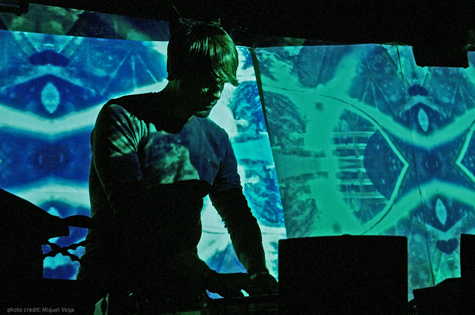
Therein lies a vital adaptation by electronica, the inclusion of visual aids to pull your attention away from the man at the laptop. Tycho’s live set is ripe with live tweaked visuals based around his graphic design. Schneider said he tries to bring a “video guy” to his bigger shows as well.
When Hansen blogged on his ISO50 design Web site about the Sacramento Electronica Music Festival, he did not hesitate to mention the partial reunion of Command Collective; partial because Chachi Jones is not playing. The SEMF could be the first step in a resurgence of the scene and Schneider feels the climate is right for it. “Everybody is stoked on the post-Command Collective stuff,” he said in regards to Tycho. “The scene has expanded as far as people making more diverse music. Most of the indie rock and IDM people have heard of Tycho. I’ve been to Seattle and have people know who Tycho and the Command Collective are.”
When Hansen attends shows that Dusty invites him to, he gets the occasional scene supporter of yore regaling him with “I miss those days” comments. Besides nostalgia for the tight-knit scene he once cultivated, Hansen said he misses Sacramento in general. Schneider said with the name garnering a buzz, he hopes for an integrated scene once again. He mentioned Sister Crayon and CityState as the fresh talent emerging that could bring new life to the scene. “My exposure to the scene now is whatever Dusty is doing,” Hansen said. “From what I’ve heard from Dusty, things are on the upswing again.”
Catch Tycho along with a long list of performers at the Sacramento Electronica Music Festival from Jan. 28-30. For a full lineup and more information, go to www.sacelectronicafest.tumblr.com
Dusty Brown w/ DJ Whores
Sunday, Jan. 25, 2009
The Press Club, Sacramento
Do you ever wonder if the musicians you love really understand how talented they are? Music is a powerful thing that has the ability to move and change us; it can conjure the good or the evil that resides deep within our souls. If these musicians that we wonder about really knew the power they possessed, I’d like to think that they would always choose to use it for good.
Call me naïve, but when I witness a performance like that of Dusty Brown, Sacramento’s shining gene pool of electronica soundscapes, it fills me with feelings of hope and unrestricted love. Their latest Club Pow performance at The Press Club is a testament to their musical abilities.
Dusty Brown are veterans of the Sacramento music scene with a half-dozen Sammies under their belt as well as a Hall of Fame induction after winning the award too many times. I’ve been there for a good portion of that ride, so I’ve seen all the tricks and heard all the songs and own all the CDs. Normally, Jessica Brown’s vocals break my heart into a million tiny pieces that are then reassembled by Dusty’s intricate drum programming and ethereal Moog keyboard lines. I am swooned; and when I think I can sink no deeper into the melody that engulfs me, along comes Zac Brown, who patiently places his affected guitar riffs in all the right cracks and crevices that the song might allow. They have a power over the audience—hypnotizing each and every one of us with our bobbing heads and glazed eyes.
However, tonight will be a little different. Tonight, Jess Gowrie, the drummer from the now-defunct rock group Red Host, will be playing for a few songs and Dusty informs me that he will even hop on the bass for a track. Dusty Brown unplugged? Er”¦kinda.

Across the dance floor, DJ Whores is perched above the crowd, which he is sizing up methodically, waiting to drop the needle and send us all into motion. The Press Club’s stage sucks you in and makes you part of the performance whether you have the courage or not. It’s an intimate setting that feels comfortably snug rather than claustrophobic. DJ Whores’ distinct style of dance floor bangers is the product of hard work—the work of digging for just the right song. His electro selection introduces everyone’s ears to abrasive bass lines that move back and forth along the kick and snare. He prepares us.
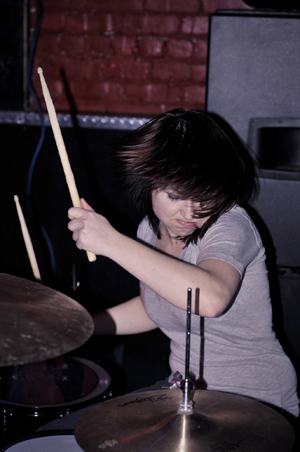
Dusty Brown’s set begins with a few crowd favorites that have the girls feeling giddy; the hoodies that have assembled in the front are moving back and forth like Apache rain dancers. I see Jess appear to my left. She gazes at the stage that will soon be hers. Jessica Brown rewards my patience with a fuzzy comment into the microphone, saying something to the effect of, “I think it’s time for Jess.” The song begins without Gowrie as she approaches her low-seated Rocket Shell drum set—readying herself—then yields to her quickly climaxing drum build. She explodes into the chorus of the song and turns an electronica track into a heavy, Moog-flavored rock song. She can’t be denied now. Gowrie powers through two songs with the rest of the band that are crash- and snare-heavy. She finishes the songs and returns to the bar where she paces back and forth, breathing heavily and making no eye contact. I take a deep breath too, exhausted by the powers of good music.