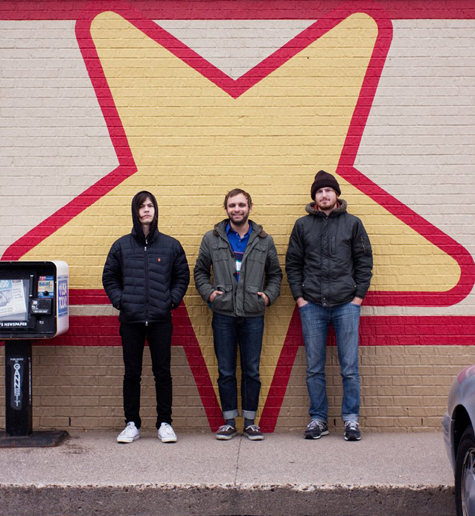
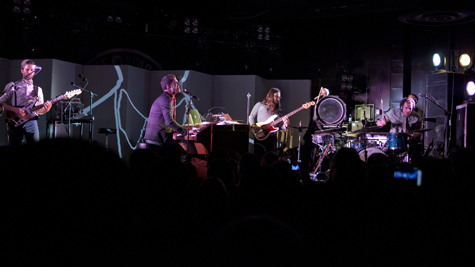
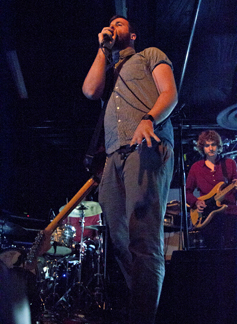
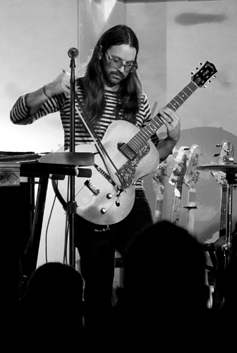
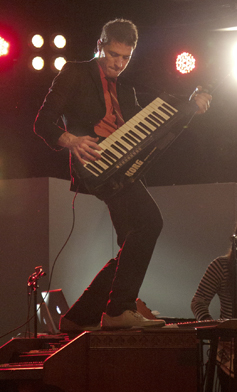
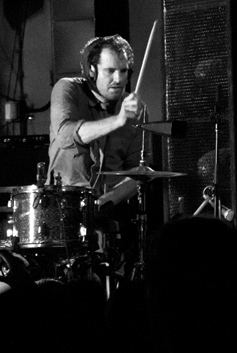
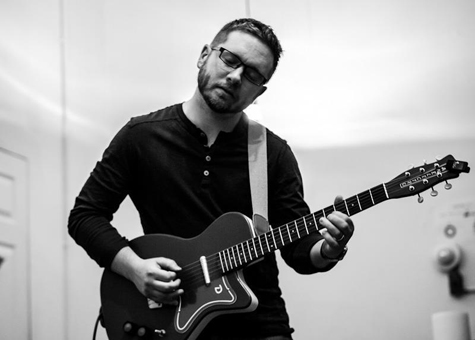
Sacramento’s genre-smashing math-rock trio Tera Melos is hard at work recording a new full-length record, a notion that excites Submerge very much. Their 2010 release, Patagonian Rats, scurried its way onto our annual year-end list, they snagged the cover of issue No. 67 and most recently they co-headlined/melted faces at our 100th Issue Party at Ace of Spades in December. The yet-to-be-titled album is being recorded at Earth Tone in Rocklin with longtime friend Pat Hills (who plays in Bastards of Young and has been in other credible local bands over the years including Hanover Saints).
“He’s like our go-to guy,” guitarist/vocalist Nick Reinhart told Submerge, pointing out that Hills has added his touch to every Melos record in some form or another. “We all grew up playing in punk bands together. We know him really well, he’s super familiar with our musical personalities.”
In the end, Reinhart predicts there will be 13 songs on the album. “To me, it’s a progression from the last record,” he said of the new material, all written within the past couple months. “It does not sound like the last record. It sounds like the record our band would make after Patagonian Rats, if that makes sense…Without giving too much away of what it’s sounding like, I just definitely think it’s like, ‘Oh wow, these guys stepped it up and did something even more different this time.’”
Reinhart said to expect an early 2013 release via Sargent House. In the meantime, catch Tera Melos opening up the fIREHOSE reunion tour dates (including Harlow’s on Thursday, April 5, 2012) before they head overseas for two months in May for their first ever “proper” European tour. “We’re finally making it over there for reals!” To learn more about the band and view tour dates visit Facebook.com/teramelosmusic or Teramelosmusic.com
Local bicycle enthusiasts team up to bring the prestigious North American Handmade Bicycle Show to Sacramento
To anyone who has ever owned a bicycle, it’s a universal reality: all the pleasantries of a bike ride quashed by a bicycle chain mishap. Nowadays, however, there is such a thing as bicycles without chains. These bicycles are belt-driven; rather than being equipped with a chain, they are equipped with unbreakable, motorcycle-style belts.
There is a market for these bikes, just as there is a market for bikes made of carbon fiber, in addition to bamboo.
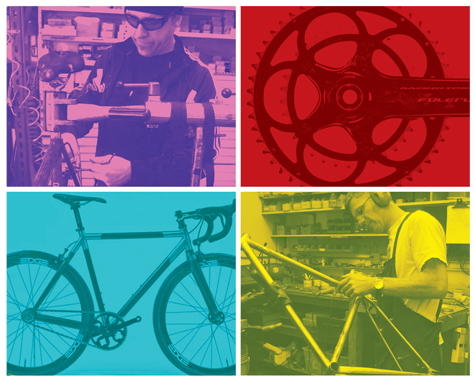
Some of the industry’s most innovative bicycle designs are being generated not by manufacturers, but rather by handmade bicycle frame builders.
As with any niche, when you get into talking about the specifics of how a bike is made and the materials used, the discussion easily becomes esoteric. But regardless of whether or not you can keep up with the bike jargon, if you have even the slightest interest in bicycles, then the North American Handmade Bike Show (NAHBS) is a must-see, says Don Walker, longtime bike frame builder and the show’s founder and president.
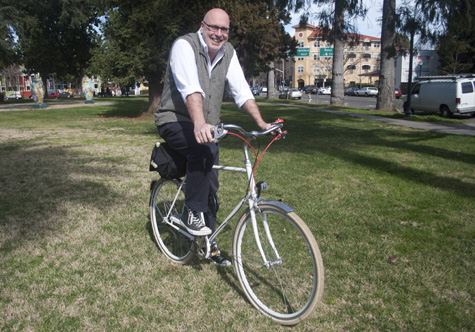
Don Walker
This is the one opportunity of the year where bike enthusiasts can see “eye-popping, over-the-top, beautiful, yet functional, bicycles,” Walker explains. “In my opinion, there are no better bikes on planet Earth in any one location other than the NAHBS show once a year.”
Nor is there a larger gathering of bike frame builders that occurs anywhere else in the world than the gathering at NAHBS, he adds.
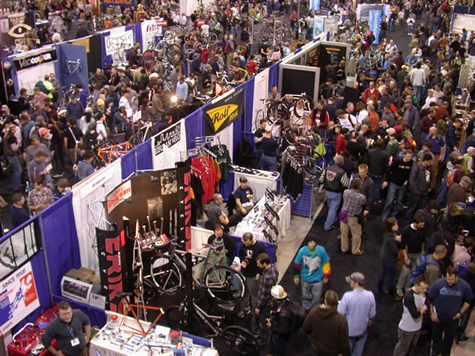
The three-day show, now in its eighth year, will come to Sacramento. This year, 158 exhibitors will be featured at the show, the highest number of exhibitors at any NAHBS show, with the exception of last year in Austin, Texas. (There were 174 then.)
Builders will compete for “best of” categories based on the type of material used, the style of the bike and frame, the finish and overall best builds. Handmade bike frame builders coming from as far as Italy, France, Japan, England, Denmark and Canada, and as close as Texas, Oregon and San Francisco, will spend three days at the Sacramento Convention Center showing off their best work.
Track bike by Don Walker Cycles - Urbanvelo.org
The concept of a handmade bike frame is not unlike that of handmade clothing, local bike enthusiast Rick Houston says, in the sense that it is a high-caliber item tailored and customized to fit an individual.
Houston, co-founder of Sacramento Tweed, a mass gathering of cyclists who don vintage and tweed during big bike rides around town, is also primarily responsible for bringing NAHBS to Sacramento this year.
After reading his fill about the show in bike magazines, Houston made a spontaneous phone call to Walker in January 2010 asking him to bring the show here. Though he had been absent for some time, Walker just so happens to be a Sacramento native who grew up in the Arden-Arcade area and used to cycle race in Sacramento in the early ‘80s.
The next time Walker was in town, Houston met with him over burgers and beer at Rubicon and pitched a list of reasons why the show should come to Sacramento: the city boasts a mild climate, flat topography, and a solid infrastructure, he explains. Not to mention that the headquarters of the California Bicycle Coalition is based here, and the U.S. Bicycling Hall of Fame in Davis.
Rick Houston - Photo: Jenn Walker
“Sacramento is a great bicycling city,” he says. “We have advantages that Portland can’t dream of.”
After making his case, Houston successfully convinced Walker to make Sacramento the 2012 NAHBS destination.
This year’s show has certainly evolved from its beginnings eight years ago, Walker says. The show grew out of an online handmade bike crafters forum, he explains, and was first held in 2005 in Houston, Texas. In addition to featuring work by some of the world’s top handmade bicycle frame builders, it was meant to provide an opportunity for beginning builders to network with the pros.
That show featured 23 exhibitors. Walker realized he was on to something when 600 to 700 attendees came through the doors over the course of three days.
NAHBS 2010, Richmond, Viginia - Photo: Dave LaMay
“My mission in life at that point in time became: make sure that every cyclist on Earth knows that if they’re interested, that they can buy a handmade bicycle, usually for less than they can than a brand production model if it’s made in China,” he says.
Awareness of the show is increasing exponentially. At the San Jose, Calif., show in 2006, there were four times as many exhibitors. NAHBS has become an internationally acclaimed event for the cycling industry, and it is now maxed out in capacity.
This is the one show that bike builders can look forward to, Walker says, because they can show their best work, and the whole world will see it, either through the media or viral online buzz.
“[Bike builders] understand that NAHBS is the best bang for their marketing dollar,” he adds. “It’s those guys and gals that really dig your stuff that will take a picture and post it somewhere.”
Walker, who himself has built close to 500 bikes since the start of his building career in 1991, will bring his handcrafted steel bikes from his two-garage operation back in Kentucky to the show.
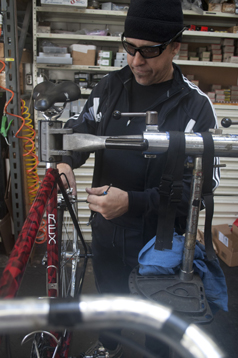
On the local front, Sacramento’s Steve Rex will have an exhibition featuring a variety of his work. Being the only handmade bike frame builder in Sacramento, he stays pretty busy building bikes for recreational and sport riders within the Northern California region alone. As busy as he is, he is still participating in this year’s show.
“I love Sacramento, and I think [NAHBS] will reflect well on the city,” he says. “There will certainly be buzz about it for a couple of years.”
Coincidentally, the show overlaps the 25th anniversary of his building career. A tribute event is planned in which all the fundraising proceeds will go to Sacramento Area Bicycle Advocates (SABA).
To date, Rex has participated in three NAHBS shows; his bikes were on display in 2006 and 2007 in San Jose, as well as in Portland, Ore., in 2008.
Dean Alleger - Photo: Jenn Walker
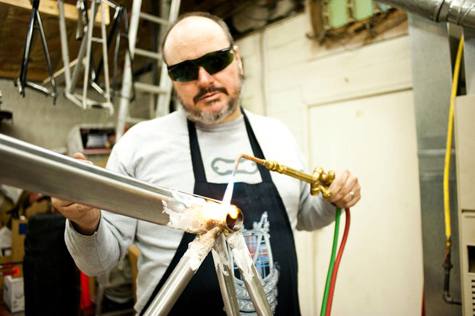
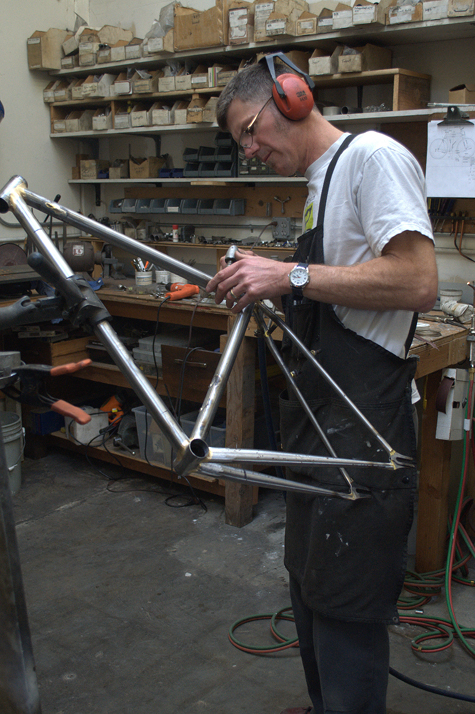
The day Submerge paid Rex a visit, he had been working on building two bikes: a single-speed cyclo-cross bicycle and a road bike, both fillet-brazed. If fillet-brazing is lost on you, just picture this: it is when two tubes are fused together without being melted, instead only the joining or filling material melts, Rex explains. It is a less-commonly used technique that requires more time and patience in comparison to the Tungsten Inert Gas (TIG) welding method, he says.
Once a cycle racer, now Rex’s days are spent building bikes from steel and carbon fiber, whether they are mountain bikes, tandems, road bikes or cyclo-cross bikes. He specializes in building fillet-brazed bikes with carbon tubes and steel joints. The carbon tubes are glued into the steel lugs, or joints, he explains.
The carbon fiber he uses is sourced from and custom-made in Utah, and the steel is from a plant in Missouri. A Rex bike can take anywhere from eight to 20 hours to make; and, considering he is the only one in the shop who actually makes the bikes, it’s understandable that delivery time ranges from three to five months.
Whether from near or afar, the common denominator between NAHBS exhibitors is the high quality of craftsmanship they bring to the show.
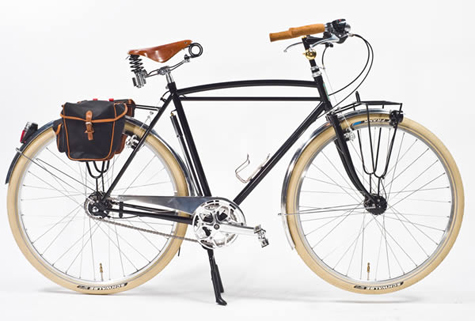
City bike by Alternative Needs Transportation - Urbanvelo.org
“Everybody is bringing their A game [to the show] every year all the time,” Walker says. The show always has been, and will continue to be, about bike fanatics, he adds.
“We’ve got all walks of life that come in [to the show],” he says, “from new cyclists to veteran cyclists, people who have been riding for 40 years or more.”
Based on past years, NAHBS expects 30 to 40 percent of attendees to come from outside of the state, 15 percent of whom will be repeat visitors. Of the 158 exhibitors, Walker estimates that 15 to 20 will be international, while the rest will be from within the country.
Needless to say, there are countless hands involved in setting the 2012 NAHBS show into motion, Houston says. He himself has been working with about 200 volunteers.
“The volunteer spontaneity overwhelms me,” he says. “I don’t know what kind of city we are, but we are an amazing village.”
Eddie Stein - Photo: Jenn Walker
Apropos to Houston’s statement: To show how enthused locals are about the bike show and about bikes in general, within about a month, Sacramento volunteers have organized ArtBike! in conjunction with NAHBS.
In short, it is an art project displayed around the city that pays homage to bikes. Photos, sculptures, paintings and mixed media depicting the two-wheeled machine are featured at Cuffs, The Golden Bear, Milk Art Gallery, First Edition and the Ancil Hoffman Golf Course.
The objective is to express just how much of a creative and bike-friendly city Sacramento is, says ArtBike! organizer Julia Beckner.
The project will culminate on March 3, 2012 with what Beckner describes as a Burning Man-esque bike parade starting at the Convention Center.
Expect the absurd, Beckner warns, including a 5-by-5-foot hollowed toaster that will be maneuvered by cyclists.
“It will blow people’s minds,” she says.
Expectations aside, Houston forecasts that, considering 20 to 30 percent of the Midtown and downtown crowd spends time on a bike at any given time of the week, either commuting or leisure-riding, NAHBS should have a huge turnout.
Regardless of what cyclist tribe you identify with, whether it’s the fixie riders, the road racers, or the mountain bikers, there’s something for everyone at the show, he says.
Naturally, he has invited anyone and everyone, including Congresswoman Doris Matsui. We’ll see who shows up.
The North American Handmade Bicycle Show will occupy the Sacramento Convention Center March 2 through March 4. Three-day passes cost just $50, and single-day passes are also available. For more information on this event and ArtBike!, go to 2012.handmadebicycleshow.com.
Mutemath, Canon Blue
Ace of Spades, Sacramento – Wednesday, Feb. 8, 2012
Words by Ashley Hassinger – Photos Mike Ibe
Mutemath returned to Sacramento for a stunning performance with musical guest Canon Blue. With distinctive musical styles, these two bands complemented each other flawlessly. A strong emphasis on an array of instruments and powerful lead vocals illustrated genuine musicianship.
Canon Blue, solo project of Daniel James, opened up the night, playing as a trio on this occasion. With the recent release of Canon Blue’s sophomore album Rumspringa, James spoke to the audience about Amish culture being a heavy influence on the album.
His six-song set lasted 30 minutes. James’s set list was a mixture of old and new tracks, allowing the audience to get a full taste of the rich and funky Canon Blue.
An essential feature you can hear with Canon Blue’s recent music is a string quartet. This element gives Canon Blue a unique quality and James is able to recreate this sound with samplers during his live show. Layering a combination of string instruments and James’ vocals generates a refreshed sound. Canon Blue gives listener’s unpredictable sounds and lyrics and has a euphonic substance.
In addition to the layering, the tracks have a variety of tones varying from light and jazz style to an alternative and fast tempo. Canon Blue’s unorthodox sound is what draws in new listeners.
Canon Blue wrapped up their set with a funky and upbeat jam titled “Chicago.” This track is a perfect example of the sound you’ll hear on Rumspringa: a string quartet introduction ultimately bringing in James’ voice.
Standing in the crowd, I overheard a few audience members mumbling, “Who is this band?” Canon Blue made a substantial impression on both fans and new listeners. Their opening made a great introduction to the headlining Mutemath that was to follow.
Writing and performing for almost a decade, Mutemath have polished and perfected their art of music. With three full-length studio albums including their most recent release in October, Odd Soul, Mutemath had a great deal of material to work with for the show.
For those unfamiliar with the sound of Mutemath, imagine a fusion of funk, jazz and rock. Lead vocalist Paul Meany adds an undertone of soul to complete their colorful and distinguished sound.
Known for their exceptional live performances, Mutemath didn’t delay to impress the crowd with a non-traditional entrance. Drummer Darren King led the band in a drum-line formation from the audience onto the stage, with a string of lights hanging above them.
As they took to the stage, there was no hesitation in energy and excitement from the band members as the first song “Odd Soul,” off their third studio album, started up. Bassist Roy Mitchell-Cardenas and newest member Todd Gummerman on the guitar joined in with King and Meany with an immense amount of liveliness on the stage.
The excitement wasn’t limited to one area with Meany interacting with the crowd, and singing in the middle of the audience for the performance of “Equals.”
A favorable characteristic of Mutemath’s performances is their ability to have quick transitions. There is little downtime between songs, allowing for the audience to get the most out of the show.
Along with their swift changeovers, there was a great light show throughout the performance, which took the concert to the next level.
With high energy and dedication, Mutemath gave an exceptional arrangement of their songs over the years, and their animation was contagious to the crowd. Mutemath is one of the few bands left that performs solely for the joy of their audience.
The songs they performed included “Blood Pressure,” “Spotlight” and “Walking Paranoia,” to name a few. The band played a total of 26 songs, giving the audience a passion-filled show.
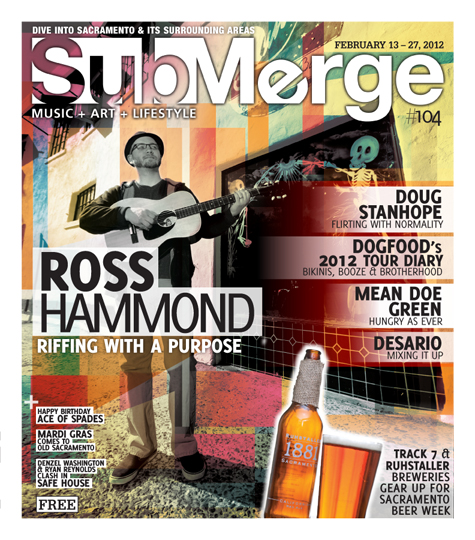
Ross Hammond discusses his new album with The Ross Hammond Quartet and His New Muse
Interviewing Ross Hammond on a Friday afternoon while his wife was out of town meant a secondary task of taking his 18-month old daughter, Lola, for a stroll around the 17th and L block of Midtown.
Lola led the way, while Hammond and I discussed his upcoming Ross Hammond Quartet record due this month. As we strolled and pointed out flowers, dogs and trucks (Lola loves trucks and buses), it became apparent the little blondie was responsible for changes and inspiration in her father she’ll not understand for years. The record, Adored, and Hammond’s artistic growth displayed on the album would not be possible without her.
Our walk began in the alley outside Old Soul Coffee. We did roughly three laps of the block and if we stopped the question was posed, “Lola walk?” In answering, Lola formed her first contribution to the interview tape “Lola walk.” Many of Hammond’s responses were fractured with quick “stay close” requests, but we eventually got down to brass tacks. The immediate information to hash out: Who are the players in the Ross Hammond Quartet?
The ensemble came together mostly through the intricate web of the jazz scene involving booking, travel and of course, collaboration, although Hammond first came to know each member from owning their albums. Whether on stage or in the studio, he said he had several surreal moments that left him pondering, “How did I get here?” The Quartet comprises Hammond on guitar, Vinny Golia on saxophone, Steuart Liebig on contrabass guitar and Alex Cline on percussion. Hammond said he’d known Golia from booking him a gig at the Cool Cat Gallery on 24th–back when it existed–and Cline in a similar fashion. Cline is the twin brother of legendary guitarist Nels Cline, who’s currently playing lead guitar in Wilco. “It’s freaky, dude,” Hammond said regarding the Cline brothers. “They’re identical and both really tall.”
As for Liebig, “I don’t know how I met, Steuart… I guess through the scene.”
He played three to four gigs, including the In the Flow Festival in Sacramento last year, with the members, planting the seed for the quartet. After he’d enlisted the three musicians for a studio session in Los Angeles, the makings of an official ensemble came to fruition.
When it came time to name the project, Hammond was surprised by the other members’ suggestion of naming the quartet after him. At 34, Hammond is the youngest member of the group while the rest were born as far back as the ‘40s. It is a humble and impressive gesture coming from three renowned L.A. jazz musicians who have each had ensembles bearing their namesakes.
“For lack of anything better that’s what it is,” Hammond said. “I’ve never had a quartet before. I also feel like I couldn’t replace any of those guys and still call it the same thing.”
Recorded at Newzone Studio and engineered by Wayne Peet, the album was tracked in six hours with only a few songs needing alternate takes. It’s a feat that speaks to the veteran musicianship of Hammond’s quartet. Hammond would play the riff he had in mind for a song and the ensemble would offer a nod or “OK”–no further tutelage required. He said after each track, it was understood that it felt good and they would move on to the next song.
“Playing with these guys it’s just about staying on the wave,” he said. “You don’t have to give them much instruction at all. I think one of the instructions I gave Vinny was, ‘OK, as soon as this song starts you have to come in like an elephant,’ and that’s what he did.”
Adored is carved from a foundation of folk songs with the title track being a lullaby Hammond sings to Lola at bedtime. Hammond said three of the songs are lullabies he sings. After she’d go to sleep he would figure out the notes and write out the lullaby. The writing is at its most encrypted on “Maribel’s Code,” in which the melody is an intervocalic code built from Lola’s initials: LMH.
“Most of the stuff I write has either a dedication or an idea, be it political or romantic,” Hammond said. “I’m never just like, “oh this is a cool riff, I’ll call it…’”
Three years ago when I first interviewed Hammond, he shared a similar sentiment. The inspiration behind the album title An Effective Use of Space came from a saying his wife frequently used. He said it’s one she still uses to this day. Hammond listed his wife as still his deepest muse, but the birth of his daughter is the primary source of inspiration behind Adored.
The immediacy of the recording is palpable, but it’s done in maturity. Hammond said the difficult task in preparing the music was giving the songs a collected feel, but without being united to the point of bleeding the songs together. Adored roars in, spastic and angry, with “Adored” but as “Sesquipedalian” mellows out it introduces the soft lullaby of “She’s My Little Girl.” Consider the album to be much like Hammond’s day-to-day with Lola; awake at 6 a.m. and full of energy, a settling in period, a mid-day walk with small fits of exuberance and crankiness, a lullaby for a nap or the night’s tuck-in. It is all lovingly expressed in the sea changes of Adored.
“Alex [Cline] told me he doesn’t think you mature as a musician until after you’ve been a dad,” Hammond said. “The gist of it was you stop trying to impress people and focus on filtering this feeling you have and this beautiful thing and turn it into a song. Your muse is different. The goofy songs aren’t there anymore. Having a kid forces you to grow up and you grow up in everything. If anything it’s more purposeful now.”
With the particulars of the album discussed and rocks and leaves in our pockets courtesy of the tyke, Hammond asked Lola, “Wanna go swing? Lola swing?” She offered her second sentence of the afternoon; a sharp “Lola swing.” With that, they strapped into a bicycle and road off to the park.
Track 7 Brewing Company sticks to its home brewing roots
Words & Photos by Adam Saake
All hail to the home brewer, the humble beginning of so many great beers we enjoy today. From an independent and environmentally conscious Sierra Nevada Brewing Company headed by Ken Grossman, who like many of today’s brewers started out with experimental 5-gallon batches, to home brewer Sam Calagione who grew the small Deleware brewery Dogfish Head into one of the most recognized and respected craft beer names in America. In short, great beer begins with a love of brewing and a passion to share it with those who love to drink it. Geoff Scott and Ryan Graham of Track 7 Brewing Company are among the ranks of home-brewers-turned-legit who share this same philosophy. Their recently opened brewery and taproom in the Land Park area, just over the Sutterville Pass, is sure to become an off the grid destination for beer drinkers and has already been established as a local watering hole for its surrounding neighbors.
Scott says that Track 7 has been open since the end of December and the space they occupy, an industrial warehouse with a rollup door, isn’t just a brewery.
“We got a special use permit from the city that allows us to manufacture and then have a tap room,” says Scott.
This mixed-use space creates something similar to what larger, more industrial-sized breweries attempt to accomplish in their accompanying restaurants or public view spaces. The difference is that Track 7’s space feels like you’re sitting and relaxing in the back yard of your friend’s house, except there are fermentation tanks off in the near distance making the delicious suds you’re savoring. The vibe is immediately neighborly. Couples cruise in with their dogs for a pint and groups of friends meet after a long day to unwind and chat with Geoff and his wife Rebecca, who greets guests from behind the bar and pours the day’s offerings from the orange and chrome taps.
Both Scott and Graham have been brewing beer for eight years. They started out by collecting their some-odd 15 batches of beer and having parties at their house where their friends would come over and enjoy the duo’s creations. But it wasn’t just their friends’ enjoyment and a collective skill for brewing good beer that motivated them to take the leap to brewery status.
“People said, your beer is really good, and at the same time our wives pretty much said, you have too much stuff at the house so you need to move it out. So it kind of worked out that way,” says Scott with a grin.
The transition from home brewing to having an actual brewery and operating on a larger scale wasn’t that difficult for the two in terms of process. Brewing was brewing. What did throw them for the loop was the assembly required to actually get started.
“One thing we struggled with was, the guy who built the brew house for us, he kind of just gave it to us and said here you go. We had to do all the piping underneath and it was like a giant puzzle trying to put it all together. We went off of one picture,” says Scott.
But the brewery did come together and the beer has been pumping out. Both Scott and Graham have different styles and tastes, which balances out their selections. Scott is more into IPAs and stouts like their Soulman Stout or Big 4 Strong Ale, where Graham gravitates more toward the Belgium style beers like their Alkali Wit that boasts flavors of coriander and orange. These beers, along with the rest of their concoctions, are all carried over from their days of brewing small batches and experimenting. Sometimes it works, sometimes it doesn’t.
“It’s interesting. Some beers like the Wit we probably tinkered around 25 plus times, and others like the Big 4 were born on the second or third try and that’s how they ended up,” explains Scott.
The four founders are dedicated to community and take pride in being a Sacramento brewery. Local artists like Skinner and Jesse Baggs have designed their bottle labels; their taproom table, a recovered railroad track and glass top, was also designed by a local artist. The name itself, Track 7, is derivative of railroad slang that refers to being out on the furthest track. Scott and Graham, two very down-to-earth guys, had a connection to this slang and felt it appropriate for their new venture. The beers they brew speak to their humble nature; thoughtfully crafted with balance and unique flavor. All eyes will be on Track 7 to see what they grow their new brewery into.
Track 7 Brewing Company’s taproom is located at 3747 West Pacific Avenue, Suite F, Sacramento. The brewery has a few events lined up for Sacramento Beer Week, including the release of a new beer Trainwreck Belgian IPA, which will be available at Track 7 starting Feb. 24, 2012. For more info on what they’ll be up to during Beer Week, go to Track7brewing.com.
Comedian Doug Stanhope never abided by the rules, and we wouldn’t have it any other way
In one word, Doug Stanhope is polarizing. If you are a fan of his work, you probably think he is a comedic genius, unparalleled by any other active in his craft. Should you fall on the other side of the spectrum you probably think he is a vile, drunken psychotic who should be jailed for abuse of the First Amendment. It’s not a conscious effort on his part to be a polarizing comedian, though, and while ultimately he is an entertainer, he is not an actor playing a role. His ingenuity, love it or hate it, is in his sincerity. He flaunts his flaws and mocks his shortcomings, and though his views of the world may come off as bleak, they are not shortsighted shock value statements. His approach is unfiltered tact; nothing is off limits, and if you are offended, you probably shouldn’t have been listening in the first place.
With more than two decades of stand-up experience, 11 live albums and a resume that spans the BBC and The Man Show, Stanhope is no slouch. He exists within his own lane, and with a DIY approach to his profession has established himself as an undisputed comedic heavyweight. On the stage is where he thrives, and from Feb. 23 through 25, he will be headlining the Punch Line, testing out new material before he heads overseas for a tour of the United Kingdom. In anticipation of the gig, the following conversation conveniently took place immediately following the State of the Union address.
So when you watch something like the State of the Union address are you solely as a comedian, or is there a part of you that is watching as a citizen?
Completely as a comic, especially on Twitter. It was funny to watch my brain work actually. This live tweeting thing was new to me, though. It was like open heckling. To keep up with what he’s saying, and type as clumsily as I type, and then to read what others are saying so I don’t copy them, I just felt like, “Oh shit, I’m taking too long.” It was like playing bingo with too many cards, and I hate that I know what that reference means.
Do you think you could do your stage show with a John Boehner type of figure behind you?
There is always a John Boehner type behind me, and it’s the negative version of me judging all of my jokes saying, “You’ve said that before! Everyone is bored with you!” And there is a Joe Biden on the other side, the angel on my shoulder saying, “Just take the check.”
Do you ever hit dry spells or do you find that the political climate and endless stream of social bullshit provides you with enough material to never run out?
Oh yeah, I’ve been in a dry spell for years. The things that I’m passionate about start drying out, that’s simple mathematics. The longer I do comedy I start running out of ways to talk about things. Like over-population, I don’t know how to find a new angle on that, but it’s something that really bothers me. I’ve found ways in other stuff, but I can’t keep saying the same shit again and again. Over 20 years, I don’t want to fake being angry about things I’m not passionate about, #BillMaher.
One of my favorite lines of the speech was, “America is back and anyone who says otherwise doesn’t know what they are talking about.” Would you like to elaborate on that?
Yeah, I mean, it’s the exact same America I’ve always lived in. I’m 45 now, and it’s all the same shit every year. Every year we need to change something or stop something, and then I realize that none of this will affect my life. Nothing that any president has done or talked about doing has affected my daily life. Taxes, yeah maybe I have $20 more, or $20 less in my bank account at the end of the year, but it doesn’t affect me day to day. I’m sure it does some people, but they play by the rules, which I never did. I don’t mean like, “Oh, I play outside the lines, the rebel,” I just live a weird life.
Have you always been like that?
Yeah, I quit school when I was 16, but I had to live at home until I was 18 by law. As soon as I turned 18 I jumped on a train with $400 and went to Los Angeles to be an actor. That lasted four months, moved to Florida for four months. I did fraud telemarketing and just fucked off until I started comedy when I was 23.
What inspired you to blaze your own path like that?
I have no idea. I was always a weird kid. I was very similar to what I am now, which doesn’t really fit for a kid. I had a really dark sense of humor. I still have a framed letter from my school psychologist on my wall, hold on a second, let me read it. The second paragraph reads, “I very strongly believe that Douglas is in need of professional help. As you know he is extremely negative about getting help.” I was just being funny, drawing fucked up doodles. You know how you would trace your hand? Well I would trace my hand, but move three of the fingers over to the side like they just got chopped off and then make pools of blood around them. I thought it was cool. They thought I was a psychotic.
I love that you had the foresight to hold onto that letter.
Yeah, definitely. When I first got into comedy I had no press pack so I would put this letter in there and highlight the sentence I just read.
So were you the funny guy then?
No, people thought I was creepy. A couple people thought I was funny but most were creeped out by me. So I guess with that, I have the same ratio of fan base I have now. I had a cult following in school, but I was generally observed as way too dark for the room.
You have very strong beliefs and opinions. Do you want people to share all of your beliefs?
Yes, I do. Or I want to share theirs. I just see things a certain way, and I wish that was normal. I don’t like feeling different all the time. I’m not the goth kid who is dyeing my hair and putting on temporary tattoos to stand out. I want to be normal. I want to be able to put on my iPod at a party and have more than three songs play before someone goes, “What the fuck is this!?” I want to fit in and have more friends.
I feel like when people describe your work they only highlight the debaucherous side, but no one ever mentions that you are really smart, which I think is a huge discredit to what you do.
Unless you disagree with me, then I’m just a drunken idiot. That’s one thing that really bothers me, because I do think people who disagree with me will always blame it on alcohol as if I would have completely different opinions if I didn’t have a cocktail at 7:30 p.m. Christopher Hitchens was the only guy I know smart enough to overcome the [drunken idiot image]. He was one of the guys I wanted to get drunk with before I died. Him and Bill Murray. Hunter S. Thompson was fantastic, but you would never want to be him to be that brilliant, and I think the same goes for Charles Bukowski. They aren’t people you want to emulate, because you know their lives were miserable. I would rather put out shitty art and have a nice life.
Your comedy is pretty boundless. Generally speaking, do you give a fuck?
Well, I’ve become angrier which is the antithesis to not giving a fuck, but it’s usually pointless rage. Patrick Cox of Taxmasters, every time I see that commercial with his fat bullfrog throat, I get angry. I call them and accuse him of looking weird at my kid through the TV all the time. I get angry at really stupid things, and I know they are stupid, but it’s actual rage. I get more scared of people and things too. Generally, I give a fuck in a desperate and helpless way. I want things to be different, and there is no way to do it, and that makes me angry. I’ve given up hope. I don’t know if I don’t give a fuck, but I’ve given up hope.
Doug Stanhope will play five shows in three days at Punch Line Comedy Club in Sacramento beginning Thursday, Feb. 23, 2012. Shows will start at 8 p.m. (all three days) with 10 p.m. shows on Friday, Feb. 24 and Saturday, Feb. 25. Tickets range from $18.50—$23.50. You can purchase them through Punchlinesac.com or Livenation.com.
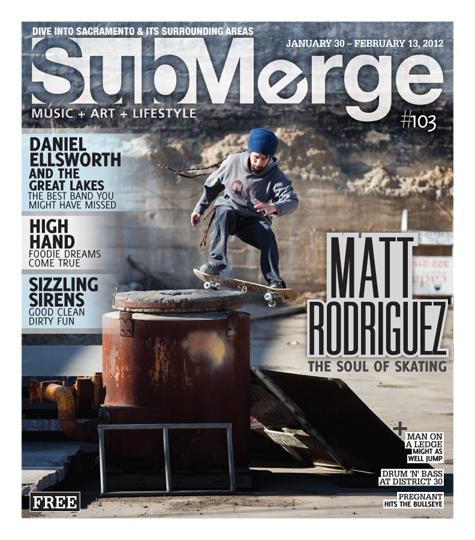
Local pro skater and longtime musician Matt Rodriguez has a style all his own
For having had such a long, successful career as a professional skateboarder, going on trips around the world to film countless videos, landing in magazine spreads left and right, co-founding a popular footwear company called iPath, all while earning what many might call “legendary status” along the way, Matt Rodriguez is a really mellow, surprisingly normal guy. In fact, when Submerge arrived at Rodriguez’s Midtown house in early January, we found him in his backyard shoveling dog poop. See, pro skaters are just like you and me.
One major difference between Rodriguez and the rest of us, though, is that the remainder of his yard, the part not covered in dog doo doo, is made up of a custom skate park with ramps built from salvaged wood.
“It was kind of like a scavenger hunt,” Rodriguez said of his lengthy search for re-usable lumber. Although extremely well built, the ramps are steep and gnarly with tight, technical lines; definitely not easy to skate. In a way, that sort of sums up Rodriguez’s style. He’s known for rolling up to spots that to the untrained eye might not even look skateable, but before long he’ll have a couple tricks bagged and will be ready for band practice (he plays drums in local band The Storytellers as well as percussion in a musical experiment called Blktop Project with fellow pro skaters Ray Barbee, Tommy Guerrero and Chuck Treece). A dirty drainage ditch here, a makeshift plywood ramp leaned up against an electrical box there, and Rodriguez can make anything and everything he approaches on his skateboard, no matter how sketchy or unusual of a spot it is, look downright stylish.
Case in point: After an interview sitting with Rodriguez amongst the ramps in his backyard, photographer Wes Davis and Rodriguez set out on one of a couple missions to snap some photos to accompany this article and Submerge decided to tag along. After loading up a couple skateboards and a case of camera equipment into one car, we headed for a bank spot in West Sacramento near Raley Field that Rodriguez wanted to session. “It’s been here for years but was always fenced in, so I couldn’t get to it,” he said of the feature. The fence recently came down so he’s taking full advantage. As we rolled up to the spot, Submerge couldn’t help but notice that the small concrete bank Rodriguez spoke of was literally smack dab in the middle of a dirt field. Not where you would typically think to go to snap a photo of a skater, like, say, somewhere with more concrete.
“This is the story of my career, fucked up spots,” Rodriguez joked.
We arranged three or four long, narrow pieces of wood as his run-up to the bank to gain speed. He’d start in the dirt with his board in hand and would sprint toward the makeshift ramp, hop on his board and then pop a trick on the lip of the bank. Davis lined up the shot from a number of angles, at times getting down and dirty laying flat on the ground to get the proper vantage point.
“Sometimes you’ll be at a spot for hours trying to get a shot,” Davis said of the tedious art that is photographing skating.
Lucky for us, Rodriguez was on this particular day and half-an-hour or so later we had a few keeper shots, some of which show the Tower Bridge directly behind Rodriguez mid-trick. We’d captured two Sacramento icons in one shot, a success indeed.
After the dirt field bank spot, we headed around the corner to an entrance near the ballpark and immediately started, pulling pieces of plywood off of nearby lumber piles, building a makeshift launch ramp and a landing with a tall obstacle in the middle for Rodriguez to olly over. You know, another typical Rodriguez style set-up consisting of randomly found wood and obstacles. Just as we were about done with the set-up and Rodriguez was getting ready to hit it, we heard someone yell at the top of their lungs, “Hey!” and we saw what looked to be like a security guard pointing at us from a distance. We thought nothing of it until we saw him start running, so we scurried back to our car and hopped in before he could give us any shit. Crisis avoided.
“Just like the old days,” Rodriguez said, smiling ear to ear as we sped off, tires chirping.
On the car ride back to his house, Rodriguez spoke of wanting to get into photography, stating that it would be a good way to keep involved in the sport as he gets older. At 35, Rodriguez is surely no young buck, but one look at his part in the recently released iPath team video The Other Ones shows he’s still at the top of his game and likely will not be dropping off the radar anytime soon. “Trust me, I’ve been a part of a lot of videos,” Rodriguez said. “Some I’m proud of and some I’m not so proud of. This one, as a team we did some missions and covered some ground and gathered some good footage. It is what it is, I think it’s good, honest skateboarding.”
In the following interview with Rodriguez, you’ll learn more about iPath and his involvement in the company, his passion for music and how it ties into his skating, his love for Sacramento and tips for growing dreadlocks. Pick up The Other Ones at local skate shops or find it online by searching “iPath The Other Ones.”
What have you been up to lately? What have you been focusing your energy on?
Skate-wise, doing a lot with iPath right now, designing some shoes and trying to scout out some possible new members for the team. We just finished a video, The Other Ones, so just doing that, keeping that fire burning. And you know, music, The Storytellers and Blktop Project. We just did a Blktop tour in Japan.
How was that?
It was awesome, we went for eight days. It was great.
You were one of the original founders of iPath back in the late ‘90s. Since then the company has gone through a couple of ownership changes and it seems like it’s been on a bit of a roller coaster. What is your role at the company now?
Just someone who they, at least the new owners, look at as a headstone basically. Being there from the dirt up, going through all the metamorphosing, to team changes and new owners. Now it’s on its third owner, and hopefully its last. Just being someone who they look to for direction, being a skater, you know, they figure, “This guy knows what he’s doing and has been here from day one.”
I’ve read that Klone Lab, the new owners, want to get the company back to its roots. It’s got to feel good knowing that everyone is on the same page when it comes to realigning the company with it’s original values and image, right?
Yeah, whereas a lot of stuff changed when Timberland bought it. They hired a general manager, he came in and just cut half the team, and the half of the team that he cut were big personalities and a big part of the company, that makes up the vibe. A lot of stuff went through change then. But Timberland came into the situation not knowing who the hell was who in skateboarding. Through the time they had it, it grew and maxed out every year and was showing increasing growth, but I just think it wasn’t enough for them and they had other stuff on their plate. They actually sold Timberland, so the good thing is that they put iPath on the market for someone to take instead of canning it. They could have been like, “We’re over it, sorry.” But they realized that it’s a collective of skaters and artists, and a lifestyle even beyond just skateboarding, and they respected that and they wanted to give it a chance for someone else to take the time and energy. So Klone Lab stepped in.
It’s a tough market out there for small shoe companies, isn’t it?
Oh yeah, you’ve got companies like Nike, even all their pros that they pay to skate for their team combined is still barely a chunk of what they pay Tiger Woods. So skating for Nike, it’s fun, they can have fun with it, but it’s not their livelihood. With something like iPath, from the original investors to the investors now, that’s all they have, they have to make it work. But, you know, we’re just wanting to take more road trips, trying to get articles, making some films, get it all out there and just keep it going. Just keep trying to show the raw side and the soul side of skating.
As a company, especially coming from a grassroots budget, let alone motive, it’s not always easy. We don’t have X amount of dollars to just blow and have fun with, we have to make every dollar count. Granted, not everything runs smooth, even when you have all the dollars to wipe your ass or sweaty forehead with. But nonetheless it’s all about keeping going, nothing is going to be perfect. It’s like a band, sometimes a member gets fed up and can’t take it, or you want to bring a new member in, or someone wants to go in a different direction, or there’s a falling out. Whatever you have left, you have to work with.
The iPath skate team has gone through changes recently and a lot of people were dropped, right? Who is officially on the team now? I read somewhere it is just you, Fred Gall, Kenny Reed and Steve Nesser. Is that true?
Yeah, for right now.
About The Other Ones, there’s a long story behind why it didn’t get “officially” released through iPath, can you touch on that please?
It’s an independent effort from the team, because at the time iPath knew people were going to have to be cut, and they didn’t want to put it out as “the iPath video” and then a month later, half the team is gone. So for now, for our individual talent and credibility, the video is out. It’s out there as opposed to out of sight, out of mind. The team got together and were like, “Fuck it.” iPath still put in some money to produce it, most of the footage in that video is from iPath tours, so iPath is still a big part of it.
The song during your part, you recorded that right?
Yeah that was me and Tommy [Guerrero], that was just on the cuff. I was like, “Yo I want to come down and throw down a rhythm.” We set up the mics and just fucking went for it. He had a bass line and we just did layers.
Is this the first time you’ve recorded a song for a video part of yours?
No, I’ve done that before, but it was all percussion. This one was percussion, Tommy on bass, a little guitar, some melodica, some shakers.
Is that something you’ll continue to do? Not a lot of skaters can say, “That’s my song during my part.”
I figure whatever I have to offer, you know? I’m going to need a song, why not throw down a little something?
How old were you when you started playing music? What instruments were you first drawn to?
In fourth grade I definitely was tearing down boxes and buckets and banging away on anything I could get my hands on. We had an extra room and I lived on Madison and Sunrise, and it was like all around me. I just had like boxes and buckets and pans. I’d play with my mom’s coat hangers, I’d snap them so I had sticks. I finally got my first drum set when I was in sixth grade.
So it was percussion that drew you in?
Yeah, basically. Drumming and time, rhythms and patterns. I like how physically demanding it is, like skating. That’s what attracted me to skating, because I used to break dance when I was young in San Jose. So when I first seen skating…
Wait a second, that didn’t come up in my research! How into break dancing were you? And how old were you?
I’d go to battles, me and my older brother.
I was like 7 to 10 years old. Then I found my first skateboard when I was 10-and-a-half.
You found the board in one of your grandparents’ closets, right?
Yeah, my grandpa’s closet. It was my older brother’s, but I’d never seen him ride it. I was like, “Sick! Something to roll on!” From then on I met skaters, and they showed me Thrasher mag and who were the dudes. I was like, “Oh sick, there’s a whole world here.” I was captivated.
You’re 35 now and still going hard in such a physically demanding sport. How do you keep your body and mind so healthy and fit? What are your secrets?
It’s just will. I don’t ever see myself just being like, “Ugh I’m too old,” or mad I’m not getting paid, or being sent around to do demonstrations. I’m going to skate, go find a ditch and have at it.
You skate with your trucks ridiculously loose. What’s that all about?
Jeff Toland and Ricky Winsor and Sam Cunningham, so many amazing guys like that, I naturally gravitated to it because I grew up seeing it. Those dudes literally schooled me, I was basically blessed to grow up with those guys. They were raw, they rode their trucks super loose, they didn’t give a shit, they were like, “Fuck you, we’re skating! Don’t talk shit or we’ll caveman the side of your car’s fender.” They were just so raw. You know, back in the day learning flip tricks and whatnot… You evolve over time, your skating may change. I definitely realized my skating was changing and wanting to do something different. I always want to do something against the grain, you know. I get sick of seeing the same redundant shit out there. As far as skating with my trucks loose, that was just more of a way to be like, “How can I make my circumstances more screwed up and still pull it off?” Back then, they weren’t doing the tricks that are around today, but nonetheless, it’s possible. So I slowly worked my way looser and looser.
And now your trucks are barely on your board…
It’s a challenge, yeah. My board’s fucked, but I’m still rollin’ away!
Have you always called Sacramento home?
Pretty much, yeah. I moved here when I was 11-and-a-half. Grew up all around skating, knowing different skaters around the perimeter, downtown and all the outskirts. I moved back to San Jose when I was 16 for two years only to realize I just loved it up here, all the trees–the people, the pace, just the vibe, you know? The seasons, you can actually see them. And just the people, the friends I met through skating here. So I moved back after high school. I’ve been here ever since. I go around the world, I’ve seen a lot of beautiful places, but when I’m coming home to Sac, I’m like, “Ah man, good old Sac.”
Lastly, how long have you been growing those dreads?
Oh, this mop? Seven years. The secret to fast-growing, long hair is to eat a lot of beans. Lentils, peas and kidneys, it’s all the calcium.
Learn more about iPath at ipath.com. Pick up The Other Ones at local skate shops or find it online by searching “iPath The Other Ones.” Learn more about Blktop Project at Galaxiarecords.com/album/blktop-project. Look for upcoming Storytellers show dates at Facebook.com/sacstorytellers and expect a new album later this year. That Rodriguez, he’s a busy dude.
Ruhstaller Beer Tastes of Sacramento’s Rich Beer History
Words by Adam Saake
J-E Paino, a Sacramento native by way of San Francisco, is the proprietor of Ruhstaller Beer, an up and coming Sacramento beer company whose name and history date back to the 1800s when Sacramento was a true Wild West beer town. While studying at UC Davis, Paino fell in the love with the rich and bountiful story of the Sacramento beer industry and how west of the Mississippi, we were home to the largest brewing facility–Buffalo Brewery where the present day Sacramento Bee is located–larger in fact than Anheuser-Busch in St. Louis, Mo. To add, Sacramento had numerous brewing facilities that were in full production, brewing and shipping out beer to thirsty Americans.
“Sacramento’s never done anything better than make beer,” says Paino. “We were made to make beer.”
That we were–and still are today. It all makes sense, really. Consider that Sacramento has dark, nutrient-rich Delta soil, two rivers intersecting the city, trains constantly whistling and crisscrossing the streets and, until a while back, acres and acres of hops and barley growing all throughout our surrounding areas. There’s farmland, transportation and the climate for key ingredients. This isn’t breaking news to your grandparents because they remember some of this stuff, but the younger generations haven’t been exposed to this very important piece of Sacramento’s history because there isn’t much record of it and the schools sure as hell aren’t assigning home brewing as class projects.
“And there’s absolutely no remnant of it. No one talks about it, you read history books–gone,” says Paino with fervor.
Paino seems to be on a personal mission to change that, and he’s doing it in the best way he sees fit; by making beer that pays homage to this time and place.
While Paino was a student at UC Davis, he began a project that consisted of researching the history of Sacramento. He realized that there was this lack of information and he kept coming up with the same results.
“They all went the same way,” says Paino. “John Sutter lands, some Indians, lots of flooding, tomatoes, cows and all of a sudden there’s a governor’s mansion built and we’re the capital of California.”
And hell! Throw in the trains and trees and that’s a great history, something that many of us pride ourselves on and more often than not becomes the talking point of what makes Sacramento what it is. But Paino kept poking his nose around and eventually he struck upon a different version of what Sacramento’s history once was.
“Somehow I stumbled on a book by Ed Carrol. He was doing his thesis at Sacramento State. He wrote about the history of Sacramento, the beer industry in Sacramento,” explains Paino.
The Sacramento History Foundation ended up publishing a portion of Carrol’s thesis, which Paino read and was inspired by.
“It was phenomenal,” exclaims Paino.
Photo by Carolyn Jaime
The figurehead that continued to pop up was a gentleman by the name of Captain Frank Ruhstaller. He left home with his brother to flee the constraints of family duties and commitment. According to Paino’s research, the brothers left Switzerland because they didn’t want to be priests like their father had envisioned; they were set on brewing beer. Frank bounced from his homeland to the East Coast of the United States and eventually ended up in Sacramento, where he was part of Buffalo Brewery. He eventually broke off from Buffalo and started his own craft brewery called Ruhstaller where his “flagship beer was called Gilt Edge Lager.” The focus was on premium beer and making it the beer of Sacramento.
From there, Paino’s direction moved toward actually making a beer. It all began with Charlie Bamforth, the guru of fermentation sciences at Sacramento State, who is responsible for more than a few brewers’ careers. To even begin to touch on his influence and/or career attributes, well, that’s an entirely different article. Paino came to Bamforth looking for guidance and Bamforth lent him some of his literature–some science and some history–and Paino read both. But Paino is no brewer and the history was more to his liking. “Well you’re going to have trouble making beer,” Bamforth said to Paino. He then recommended a few candidates, and suddenly Paino was on the path to turning his love of Sacramento beer history into an actual drinkable product.
One was a gentleman by the name of Peter Hoey and the other was a woman by the name of Lindsay Guerdrum, a star student of Bamforth, who at the time was being offered a position at New Belgium Brewing Company. Yes, the New Belgium as in Fat Tire. Paino wasn’t in the position to match that offer, nor was he going to hold her back.
“We said, we’re the little guy. You can always work for the little guy, you only get one shot working for the big guy,” says Paino.
So Hoey was the man for the job. He and Paino got along well in the first place, and so began production of Ruhstaller Beer. Paino’s philosophy was focused on keeping the product locally produced, something not too common in the Sacramento brewing community. And with this, the expression of place could speak for itself.
“Let’s go find the best ingredients we can, source them locally as possible and let’s go make a beer that isn’t just a one liner but it’s more sophisticated. It kind of has a nose and kind of has a beginning middle and end, and when you’re done with it you want to read the book over again,” says Paino.
Paino is passionately telling me all of this as he sits across from me at a high top table in the corner of a very crowded and noisy Grange Restaurant, tucked underneath the elegant and very boutique Citizen Hotel. He’s a clean-cut guy, tightly buttoned collared shirt tucked into his jeans and he’s sipping tea not beer. I later figured out that he knew he was going to talk my ear off for an hour about his beer and Sacramento’s beer history. He was sort of warming up like a vocalist might do before a concert. “He looks like the guy from Cash Cab but with darker features,” said a few bartenders at Grange, joking lightly when I asked what he looked like. Paino was just about the only guy I hadn’t met or spoken to that was involved with Ruhstsaller. I was already greatly familiar with their PR and social media aficionado, Andrew Calisterio, as well as the aforementioned brewer, Peter Hoey, who seems to have his fingers in every kettle around town these days. I tried to contact him for this story, and he seemed apologetic for being out of touch, being what he called “a moving target these days.” Hoey stopped consulting for Ruhstaller in November, he told Submerge in an email, but all of the recipes for their current lineup of beers are still his.
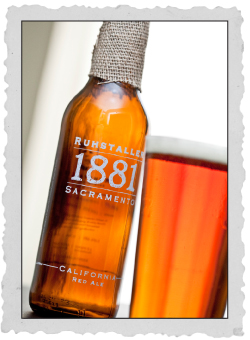
The current lineup consists of their 1881 California red ale, the Captain California Black IPA and the wet hopped beer, Hop Sac, which is a seasonal beer.
Rushstaller is still a fledgling beer company, having been in business for roughly two and a half years and actually making beer for nine months. Their product is solid but the future is wild like the history off which they feed. Their crudely spray-painted logo that dons their wooden mobile taps and kegs is indicative of the rustic vibe they seek to portray. Even the bottles that can be found on the shelves of Whole Foods, Nugget Market, Pangaea and Corti Brothers are draped in burlap, a material that Paino says “holds California together” and is “the working man’s fabric.” This is a beer that is meant to speak to the people. Listen up Sacramento, this is your beer.
Look out for Ruhstaller events during Sacramento Beer Week including collaborations with Grange and Charlie Bamforth, Magpie Catering, Mulvaney’s Building and Loan and the infamous Rex Bikes. For a full list of events, go to Sacramentobeerweek.com or Ruhstallerbeer.com/events
Our good friends at the downtown Sacramento all-ages music venue Ace of Spades recently celebrated their one-year anniversary, which made Submerge think, “Damn, it’s only been a year?!?” We literally cannot count how many amazing shows we’ve seen there in the past 12 months! The venue’s debut on Feb. 9, 2011 with Rob Zombie was a sold-out show, a term the venue would get used to. From there they hosted everyone from Tesla to Deftones, Snoop Dogg to Mastodon and countless local and regional acts as well. Pollstar, the concert tour industry’s leading trade publication, recently named Ace of Spades No. 52 on their 2011 year-end worldwide ticket sales top-100 club venue list. “What? There’s 51 clubs ahead of us? We got work to do!” joked Ace’s co-owner Bret Bair. “In all seriousness, we’re extremely proud of what we have been able to accomplish in our first year and to be the No. 52 club is awesome and feels very rewarding.” Only a few California venues beat out Ace on Pollstar’s list, most notably San Francisco’s The Independent, which snagged the No. 30 spot. Bair mentioned that they weren’t surprised with the accolade for two reasons: They pride themselves on booking artists from a wide range of genres, and Sacramento is a top 25 market. “Eric [Rushing, co-owner] and I always felt that the city and its passionate music fans would support a larger music venue if we could get the talent, and they have!” Looking back on the venue’s first successful year, Bair mentions that the most memorable moment for him was when the Snoop Dogg show came together perfectly. “I actually stopped for a moment to reflect and thought to myself, ‘Holy shit, Snoop Dogg’s on our stage rappin’ ‘Gin and Juice!’” “I would like to give the City of Sacramento and its suburbs a shout-out!” Bair said, continuing with, “We love the fact that fans keep coming to the shows and having a good time, and that’s what it should be about at the end of the day, getting lost in the music and having a good time. We also want to thank all the local artists who have played our local shows or have supported some of the bigger national shows; without them, we would be out of business by now!” Learn more about Ace of Spades by visiting Aceofspadessac.com
Daniel Ellsworth and the Great Lakes’ old school approach yields new school success
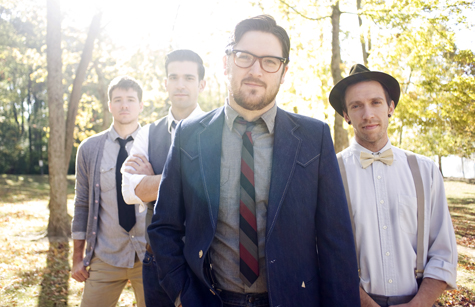
For better or worse, the digital music age has leveled the playing field. Independent, more or less unknown bands and artists have just as much opportunity to be heard as major label acts. One band that has taken advantage of this is Daniel Ellsworth and the Great Lakes from Nashville, Tenn.
In May 2011, the band released its first full-length album, Civilized Man. Fan-funded, Ellsworth and company used money from a Kickstarter campaign they started at the end of 2010 to self-produce and self-release the album and hire notable Nashville sound engineer Mark Nevers, who has worked with Yo La Tengo, Andrew Bird and Bonnie Prince Billy. Despite being 100 percent DIY, according to the band’s singer/songwriter and namesake Daniel Ellsworth, he and his Great Lakes’ labor of love didn’t go unnoticed. Civilized Man cracked Amazon’s Top 100 albums of 2011 (landing at No. 76; including No. 66 on the site’s Outstanding 2011 Albums You Might Have Missed list), and the song “Shoe Fits” climbed all the way up to No. 7 on Amazon’s The Best Songs of 2011 list. Not bad for a band you most likely haven’t heard of–yet.
“For some [artists] like Jay-Z or people like that, they probably don’t think about the Amazon Top 100, but for us that’s huge,” Ellsworth says. Coincidentally, Ellsworth and the Great Lakes edged past the megastar rapper on The Best Songs of 2011 list. Jay-Z’s “Niggas in Paris” (from Watch the Throne) landed at No. 8 on the list.
“Amazon and iTunes are becoming tastemakers for people,” Ellsworth continues. “In the past it was record stores, but now it’s online record stores.”
Ironically, Civilized Man is more of a throwback album, not at all exemplary of the single-driven releases of the digital age. At 12 tracks and over an hour in length, the album feels like the grand pop/rock long players of old. Imbued with a solid groove and a warm sound, Civilized Man begs you to shut off the shuffle play for once and to be ingested en masse.
“I think that our favorite bands, and the bands that are making the most interesting music, are still focusing on making a really solid album,” Ellsworth says. “People tell us that you could listen to 1, 5, 12, in that order, and it feels like they could come from different albums, but if you listen to it all the way through from start to finish, it feels like an intentional album, and it feels like it was meant to be listened to in that order. That’s how my favorite albums are, and I think that’s what we strive for.”
Submerge spoke with Ellsworth while he and the band had a couple days off in Nashville before heading out on a jam-packed string of dates that would take them to the Pacific coast and back. In the following interview, we discuss working with Nevers, Ellsworth’s appearance on the NBC reality television show The Sing Off and how the singer/songwriter found his voice in the band dynamic.
Did Mark Nevers contribute a lot of ideas when it came to recording?
A little bit. We sort of came in wanting to produce it more ourselves and call the shots as to what would end up on the record. What he contributed, and what I most love and know about him, is the sounds he captures on albums. The way he’s able to capture a warm, organic sound. What we do is a little bit different than who he usually works with, but we wanted to take that sound, that warm, organic vibe, and apply it to our more rock/pop material.
Listening to the album, I was thinking that it really feels like a live album. It seems very spontaneous. Were a lot of things done in one take?
That was something that we tried for. We tried to do as much of it live as we could. It’s interesting. I like when people listen to that and take that from the album, because we get a lot of people–and maybe that’s to our drummer’s credit–that say we use tracks, or electronic stuff, but 90 percent of what you hear on the album was tracked live.
Do you feel with the first album released that things are falling into place? Do you feel like you know where you want to go with the next record?
Yeah, I guess the last year and a half with making the album and working on these songs as a band has been a whole new process. I left for a few months to do a television show and to come back from that and have a new guitar player and come back to these songs and take them on the road, the songs have taken on a new life and a new energy. It’s never felt more like a band than it does now. It’s exciting every time we play, we get more excited about the next time we’re going to play.
Is this kind of touring schedule new for you guys?
It’s definitely new from a band standpoint. We’ve done some small-scale stuff while we were working on this material. Prior to that, I was doing more of a solo artist thing, which is completely different. It just wasn’t the right thing… It took me doing that to get to this point. This is what I’m supposed to be doing. This is how I always imagined it.
What is it about being a part of a band that works for you more than being a solo artist?
I think doing the solo artist thing, and being in Nashville and being just out of music school, I was writing to mimic something… It was less original. It never felt like the right thing, and I was all over the place stylistically. I always would imagine things with a band or imagine how much better it would be to have a band to bounce ideas off of. I think that’s the thing, having these people who you trust to bounce ideas off of and really fuse everyone’s different influences into making something that takes on a life of its own as opposed to me sitting down by myself and trying to come up with something.
Nashville is a big country songwriter kind of place. Was that what you were trying to do when you were out of school?
Yeah, a little bit of that. Not so much in the country scene, but I thought maybe my place was in the pop singer/songwriter scene out of Nashville. But my songs were never singer/songwriter-y, pop-y enough. They were a little too weird for that, but not weird enough that they really felt original or truly mine in a weird sort of way.
I wanted to ask you about The Sing Off. You were there with a group called The Collective. What was that experience like?
That was kind of crazy. A friend of ours who’s an artist in Nashville named Jeremy Lister, he was on the show. He was in the group called Street Corner Symphony that got second place in season two. He sort of approached us and said, “Hey, the producers of the show thought it would be cool to get some of my favorite Nashville artists and put together a group who have never done a capella before and sort of see what happens.” We were all pretty skeptical. Some of us had sung a capella before, mostly back in high school in choir, but certainly we hadn’t sung together as a group. We all knew of each other, but most of us didn’t know each other. We did a few hours of rehearsing and singing, and it sounded really good… We made a video of it and sent it off to the producers, and the very next day they were like, “We love it. We want you guys on the show.” It was literally last minute. A few weeks after that, we were on a plane to Los Angeles like, “What the hell are we doing?”
There was another guy in the group who has a rock band similar to what we do, so far from a capella music, and everyone else were successful singer/songwriters. It was so far out of the box for everybody to take that on, but we went out there. It sounds silly to say, but episode one of The Sing Off was our first performance as an a capella group ever, aside from making our audition tape. All things considered, we all went out there and dove right into it and figured out how we worked musically and how we best arranged together. We made it to eighth place. We got six episodes into the season [season three].
Was it a positive experience?
Yeah it was. I don’t know if it’s something I’d ever do again. It was certainly never my plan to do a reality show, and definitely not an a capella at that. But it was a really great experience. There was a lot of talent on that show. You know, you have the bullshit that goes along with the TV side of things and what they’re trying to do, but the music director and the music team on that show, they were so dedicated to the music. That was cool to see.
We would never do anything like that in our personal careers, but to set that aside and just sort of do that thing together, it was a lot of fun.
It sounds like something you’d take with you into your own music.
It was cool because we’ve gotten the chance to know one of my idols growing up–and still is–Ben Folds. Since the show, we’ve gotten the chance to get to know him and spend a lot of time with him and hang out. For me, that was worth the whole thing right there.
Daniel Ellsworth and the Great Lakes’ trek around the country will take them through Sacramento on Valentine’s Day (Feb. 14) when the band plays The Torch Club (904 15th Street). The show starts at 6:30 p.m. Show them some love. You’ll be glad you did. For more about the band and to order their album, go to Danielellsworthandthegreatlakes.com.