Hardly Sleeping All Night
It wasn’t that long ago that a batch of pissed off, combat-booted, plaid-clad debutantes from the Pacific Northwest began creating racket in the garage, siphoning the marrow of blues, classic rock, psychedelia, punk and metal into a new kind of artistic fibula. The media called it grunge, but it was nothing if not a clean break from what had become a stale but ever-steady flow of rock-lite. To say that Sacramento’s Prieta is resurrecting the ghosts of grunge’s past would be wrong, and it would be incredibly stupid to boot. Which is why I didn’t do it”¦sort of. While the band has garnered (not unduly) comparisons to (insert genre here, anything but grunge) pioneers Soundgarden, the band isn’t out to emulate or revive a scene that died out pretty much exactly when it should have.
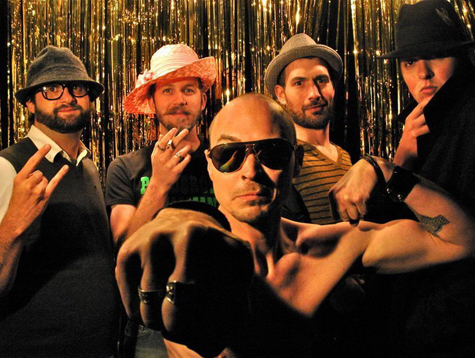
Still, Prieta’s bag of tricks lends itself to the aforementioned pillars of rock ‘n’ roll. Their new EP, Sleep All Night (recorded at The Hangar with band friend Joe Finocchio, who works out of Different Fur Studios in San Francisco), is a dirty drive down memory lane, shifting gears from first wave sass-rock like The Stooges, to second-wave desert metal like Kyuss. Sounds great, right? It is. Simply, they’re a rock band, and they have their proverbial shit together.
The band took some time out of their no-doubt busy schedules to talk to Submerge about, well, basically everything having to do with their band.
There’s an unmistakable late ’80s/early ’90s spin on blues, classic and psychedelic rock of the ’60s and ’70s in your music. It seems to remain almost exclusively true to that sound, with little modern embellishment. When you began, were you reticent to experiment with that to modernize it?
Alex Ayers (vocals): I assume you are talking about grunge. Which is a common thing mentioned to us, but none of us are huge grunge fans. We like select albums here and there, but that goes for any and all genres/decades. We have never even addressed the question of modern vs. vintage. There was never any expressed decision made in regards to our music. When the band was forming we would just sit around and jam out things that were easy to work as a group on. Our first batch of songs was absolutely not classic, so when the “classic” question comes up, we are kind
of dumbfounded.
Brian Breneman (drums): The part of the grunge thing I can understand is this: a lot of those bands took a decidedly less flamboyant, more back-to-basics approach to blues-based rock than what had been popular up to that point in time. But a unique take on the blues is nothing new. Bands from Deep Purple to Soundgarden to Queens of the Stone Age have all tapped into the same attitudes and musical conventions. I feel like we embody some of those principles.
Mat Woods (guitar): Everyone still likes Sabbath. Everyone still likes Creedence. If there was any decision made it was more along the lines of, “Let’s emulate bands that did a great job,” not, “let’s emulate bands that are doing new things.” But that is still a big “if.” All of the things I have written have been written because of something I was feeling or something I wanted to feel, and it really ends there.
In what ways did the band progress musically, and in your approach to recording, with your new EP, Sleep All Night?
AA: Preproduction: a concept we have to work harder and harder at every time we go into the studio. The goal of every recording is to, for lack of a better word, embarrass the last recording. We are learning right now. Yes, we perform. Yes, we record. But until we get label support, we are
at school.
BB: I think we’ve managed to make our sound even more focused. We were really trying to make a record that sounds like us playing in a room together. The less production, the better. Our heroes didn’t need a lot of technology to sound good. They wrote great songs and performed the hell out of them. From a recording standpoint, we just need to capture it.
Ian McLachlan (bass): All in all, it is the same as it has always been for me. As far as the new recording goes, I tried to not nit-pick the bass lines; work more off the cuff and allow a little more experimenting with amps and basses. We got to use a lot of different equipment.
MW: We figured out that the less we internalized things and talked about them the easier things were. We don’t talk about songs, we write them. Our most solid songs were written surprisingly fast.
What do you feel sets you apart from the retro rock revival, so to speak, so inherent in bands like Wolfmother, whom you’ve been compared to. Is your music meant to be an ironic homage?
AA: Not at all. As we have said before, our music is a result of many things; a sense of revival is definitely not one of them. If there is any irony around our band it is the fact that we keep getting compared to rock revival bands that we don’t even know about. It may seem like a small thing, but look at us. Only one of us has long hair, one of us types in an office all day, none of us have “style” we cling to. There is no image or sound we are going for and that right there is enough to set us apart from other dudes, other dudes that shop exclusively at their father’s closet. It isn’t us.
MW: Seriously. No frills. We are just an honest-to-god rock ‘n’ roll band.
BB: It’s just about the songs. I’m here to give something back for all the music I’ve enjoyed throughout my life. Sometimes it can be kind of a turn-off to see bands actively encourage people to not take them seriously, to stand behind a wink and not be giving 100 percent of themselves. I think it takes far more conviction to be able to honestly say that you don’t need to control how people understand your music. If it is real, then people will connect with it.
What has been the band’s response to such a quick ascent into the local spotlight?
AA: It has been quick, I agree, but we are nowhere near the spotlight. There are thousands of people in this town alone who have no idea we exist. We’re fuck all at this point.
BB: Thanks to all our fans! We’re glad you like it. It’s only going to get better.
IM: Any ascension is completely welcome to me. I am ready for it because I have been in a lot of bands that have received little or no attention. It’s not like it fazes me in any way. I have been hungry for this for years.
MW: It’s been a little unnerving. People think we have been around for years when we haven’t. We are just beginning. We’ve got a lot of shit to do.
The Donnas Hit the Road With Their Greatest Hits in Tow
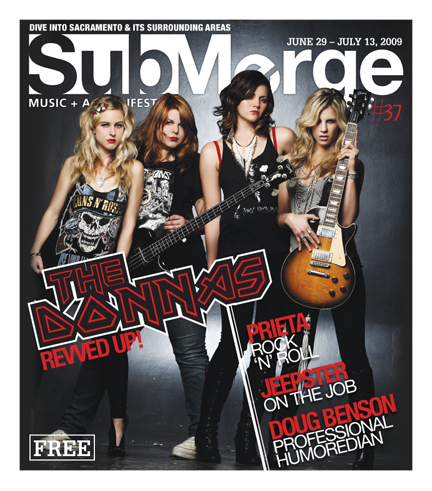
The Donnas sound like staying out way past curfew, sneaking cigarettes in parking lots, or whatever you know you shouldn’t be doing but would regret if you didn’t try it at least once. The foursome from Palo Alto, Calif., embodies a carefree, fun at all costs ethos, which may make it hard to believe that the band has managed to stand the test of time. Believe it or not, their self-titled debut was released back in 1997, and even before that, the four girls—Maya Ford, Allison Robertson, Bret Anderson and Torry Castellano—were making music together as far back as when they were 13.
“I think when we first started, we had no idea we would be trapped in this band forever. It’s such a terrible burden,” Ford, The Donnas’ bass player, jokes over the phone. “I think it was just purely that we didn’t have anything else to do, and we really liked music and wanted to have fun. We wanted to be cooler than the stupid boy bands at our school.”
Submerge caught up with Ford as she was busy preparing for a summer of touring. The Donnas will be heading out on the road in support of Pat Benatar and Blondie. An intimidating bill, perhaps, but Ford doesn’t seem worried about having to share the stage with some of rock’s more notable female-fronted acts.
“It’s different opening for an act,” says Ford, who reports that she’s met Blondie frontwoman Debbie Harry before and even owns “a pair of her green stilettos.”
“It’s less stressful, because people are just getting there,” Ford continues. “They’re kind of watching you, but they’re into the other bands. We want to be good, and we are going to be good, but the pressure’s not going to be on us. We just have a short set to play, and then we can just hang out with these cool ladies afterwards.”
In addition to their opening slot on the Benatar/Blondie tour, The Donnas will also headline their own slate of shows in support of their upcoming release, Greatest Hits, Vol. 16. The album is a retrospective of the band’s career, offering unreleased tracks from their early years, re-recordings of older material and live versions of their most recognizable songs. Ford took a trip down memory lane with Submerge as she made some critical tour decisions.
You’ve got a lot of stuff going on this summer. You’re touring with Blondie and Pat Benatar and also on your own headlining tour. Are you gearing up for that?
Yeah, we’re going to practice this weekend, and I’m trying to organize my T-shirt collection and trying to figure out what to wear on tour.
Are you busting out any new T-shirts for this tour?
I think I have same Scorpions and Mötley Crüe shirts, and my favorite shirt is this weird metal shirt from the ’80s that says, “’80s metal heads” on the back and on the front is this girl in a bathing suit, so she’s almost naked, and she has war paint and a big gun.
Nice! Where’d you get that?
I think I got it at the Rose Bowl.
You’re also putting out a greatest hits album this July. Is that a strange feeling?
It’s pretty exciting. We’d always talked about it like a joke. Our second album on Atlantic, we wanted to call it Greatest Hits, Vol. 2, just because it ended up being like, “Oh, it’s not a hit, you’d better write another song,” or, “Re-record that song and make it sound like a hit.” So now it’s a big “ha ha,” because we’re putting out Vol. 16. It’s cool because it’s in chronological order. It starts with the newer stuff, and then it goes backwards. By the end of the record, you’re like, “Oh my God, who are these little freaks?”
On two of the songs toward the end of the album, it sounded like you were 13 or something.
15, yeah.
How did it feel to revisit that old material? Was it difficult not to get nostalgic?
I think we all burst out laughing when we finally heard that song. We’ve had the reel forever, but we couldn’t get the right machine to transfer it so we could listen to it, because the tape was too small. And so we were like, “How is that song even going to go? What does it sound like? We know it’s funny, but how funny is it?” When were heard it, we were like [screams, then laughs].
Is there any song in particular that really ties you to a specific memory with the group?
I think the ones we were just talking about, “Don’t Wanna Break Your Head” and “Teenage Rules,” because that was back when we first started, and we were just recording in someone’s living room. We were like, “Oh, we’re going to Japan? This is so crazy. We can’t believe anyone bought our 7-inch. What is happening? This is the silliest song in the world.” We were just in disbelief. Re-recording the old songs was really fun too, because we couldn’t believe how we could possibly play that fast. It was like, “Did I play that right? It went by so fast I didn’t even realize I was playing it.”
Back then, Darin Raffaeili had a big influence on the band. He wrote the songs on the first Donnas album. How did he mentor you along?
We were already a band. We were called Ragady Anne and the Electrocutes, and we were playing at community centers and stuff. I’d made friends with this guy in another band, and he knew Darin, and he came up to us and said, “Hey girls, you want to make a rock record?” And we were like, “We already made a record. We already played rock music.” We thought he was weird. But then he tried to explain it, and we still thought he was weird, but we thought he was funny and we didn’t have anything else to do on the weekends, so we went to where he worked at Mail Boxes Etc. and recorded some songs one night. I was like, “This sounds like ‘Sheena Is a Punk Rocker.’ This is stupid. Why would anyone like this band?” We thought The Donnas were so lame. We would make fun of them as our other band all the time. We thought it was dorky and lame, but we also kind of loved it and had so much fun with Darin, because he’d always drive us around and we’d eat tacos and listen to music. He was like our fried older brother or something.
When you left your old band behind, was it Darin’s influence, or did you really find yourself musically as The Donnas?
It wasn’t that we found ourselves musically that much. We just had to fuse the two together, and it just ended up that people knew The Donnas more, because they had more 7-inches. Our songs were catchier, and Electrocutes songs were just weird and noisy and screaming. But we thought it was kind of cool, but we were really into Mötley Crüe, so when we went to make the second Donnas record, that’s when we were like, “OK, Darin, we’re going to write some of the songs too and add our own style into it,” and then he went on to his own thing, and let us do our thing by ourselves, and we were like, “OK, how do we write a Donnas song?” It wasn’t that hard to figure it out.
You were on Atlantic for a while in the early ’00s, but now you’re releasing your own records on Purple Feather. You released Bitchin’ and now the greatest hits compilation. How has it been working on your own?
We have to answer a ton of e-mails, and sometimes that’s really annoying because we all have to be CC’d on everything, but it’s pretty awesome, because we can do whatever we want. There are some drawbacks, because we can’t get an advance if we don’t have any money. There’s no big person to lend us any money, but it’s kind of nice that way, because we don’t end up spending money we don’t have. And when we have meetings, we don’t have to meet with a bunch of people we don’t know and don’t really like, we just meet with ourselves.
I’d read a quote from Allison about how you all have been able to stick together as a band for this long without any lineup changes. How have you been able to stick together for so long?
We were best friends when we started the band, and we’ve always been really close. We’ve just been through so many things together, you know? All of those experiences really bond you, and it’s hard to hate anyone who you’ve seen so many things happen to. It’s impossible to hate each other. There are days when you don’t agree with everyone, and you get annoyed and want to go home, but in the end, we’re family.
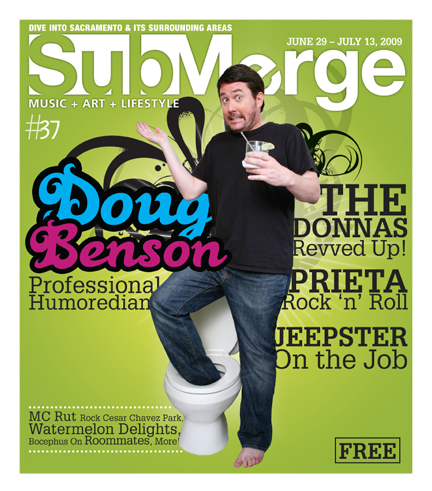
Comedian Doug Benson Returns to Punch Line
Humoredian Doug Benson has it made. While you and I sit at home angered by celebrity antics, cursing the television, while we watch movies and comment to our friends on merits, while we get stoned and laugh at silly nonsense, Benson has signed some deal in blood to get paid for these slacker pastimes.
Benson is currently on tour, so I called him at a Hampton Inn in St. Louis (proving he is not too famous for our little publication). He had just finished an appearance on the Great Day St. Louis morning show and returned to his room to escape the “hella hot” Midwest forecast. Upon hearing a familiar, often abused, Northern California slang term, I asked Doug if he was from our territory. “I just hear a bunch of words and repeat them,” he replied. “It’s not habit.”
This August, Benson will be at Sacramento’s Punch Line, a venue he has played before. He was particularly intrigued with the strip mall location of the Punch Line, which probably looks a little different now. “It’s the strangest comedy club positioning I’ve ever seen,” he said. “There [was] like a foam store, a TJ Maxx and a mattress store. It’s like a one-stop shopping center for a pimp. He’d be able to get all his shit there.”
Those still unfamiliar with Doug Benson might need to take a morning or two off from wake-and-baking. In 2006, High Times named Benson Stoner of the Year, aka your hero. His film, Super High Me, took the premise of Super Size Me and exchanged it with pot. He is the co-creator/writer/star of The Marijuana-logues, which is self-explanatory. He once saw a vagina smoking a joint.
Along with his pot-related accolades, he is a talking head on Best Week Ever, finished top six on Last Comic Standing, has a podcast called I Love Movies, a comedy album called Professional Humoredian—and he said I was a good interviewer.
Most comedians, or people for that matter, are forced to keep their personal habits ambiguous—possibly telling pot jokes or laughing at pot jokes, but not too frequently so they don’t arouse suspicion. Benson has managed to become a renowned toker, yet makes appearances on local morning shows without network hesitation. “They keep it clean and family-style, but it’s also live,” Benson said. “Sometimes when I’m talking, I can see in the eyes of the host that I’m being too risqué for morning television.”
He admits he does not mind the interviews that dodge his pot humor, since he has plenty to talk about beyond marijuana. Yet, his core fans remain a faded following. On Twitter the night prior to our interview, he thanked a St. Louis kid, whose name he could not remember, for smoking him up in his car. I asked Benson if it was bothersome to be loved by a group of people so eager to share their budding wealth. “It’s an exciting thing to have in my life if I am just wandering around and someone offers to smoke me up,” he said. “At shows I get so many offers I can’t say yes to everybody. People get bummed out, which is kind of a drag. I’d be happy to smoke with everybody; unfortunately I’ve got things to do. I certainly didn’t start telling jokes about pot to get free pot, but it’s been an amazing side benefit.”
Benson began his stand-up career on a dare from a friend, while working as a stand-in and extra in Los Angeles. That was 23 years ago. Benson made new friends through comedy by becoming part of the Comedians of Comedy, a group he has toured with extensively. In Super High Me, several of his comedian friends smoke weed on camera, specifically Sarah Silverman and Brian Posehn. Benson has admitted that he did not smoke weed until age 27 when he started working with Bay Area comedians who toke after every show. Now, Benson can’t be seen in public without accusations of being blunted beyond belief; even followers on Twitter that day accused him of being high on a morning show, to which he attested, “No I just woke up and did a show. I’m not one to set the alarm for 15 minutes earlier so I can wake and bake before a show.”
“I do have naturally squinty eyes,” he said. “And I do smoke a lot of pot. So I don’t blame them for thinking I’m high. I can make jokes even when I’m not high. I’m that good at it.”
Truly Benson is capable of entertaining beyond cannabis conversations. His I Love Movies podcast, which he records at Los Angeles’s Upright Citizens Brigade Theater, has a simple premise. Benson and his comedian friends record their rants on movies in front of a studio audience and play the Leonard Maltin game or the Name That Tune game show’s Bid-A-Note round, but with movies.
A fan of the summer blockbuster push, he said he is disappointed with this season thus far. “Terminator was disappointing, Wolverine was disappointing,” he said. “I watched five minutes of Angels and Demons, then got up and left. I was like ‘I can see Star Trek again.'”
Still he found Star Trek was not a perfect movie beyond criticism. In fact, Benson raises an interesting point regarding the story. “I didn’t have the excitement over it that I hoped to have,” Benson said. “It did a good job reinventing all the characters.” Benson immediately broke into a rant with possible spoiler alerts, “Why do they always have to bring time travel into it? Now that they’ve introduced time travel and old Spock tells young Kirk what to do, why can’t old Spock just show up all the time when there’s a problem.” He went on to compare it to Superman spinning the world backwards to turn back time.
Benson included The Hangover in the short list of summer movies he’s enjoyed so far. Show stealer Zach Galifianakis is a member of the Comedians of Comedy and makes an appearance in Super High Me as Benson’s friend. “Well, I take a lot of credit for breaking Zach’s movie career with his appearance in Super High Me,” he said. “Things have been going great for him ever since. I look forward to riding his coattails.” Benson expressed his own interest in pushing into feature films, but admitted he is not prepared to do the full frontal nudity that Galifianakis bared. “I’m a little shy when it comes to public nudity,” he said.
Benson’s current tour is in preparation for his new comedy album, Unbalanced Load, on Comedy Central Records. He is performing an “evolving set” that includes new material. “Certainly anyone who saw me when I was last in Sacramento can expect a lot of new material,” he said. “I will be doing a lot of material from the record that week.” Benson said he usually reserves some time near the end of his set for requests from the audience outside of “more jokes about pot.” He just encourages enthusiasts to shout their favorite bits without tampering with the joke. “The best way to ask for a joke during the show is to not yell out the punch line of the joke,” he said. “Where do I go from there?”
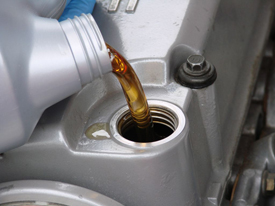
You can’t get an oil change on Sunday. Trust me, you can’t. If you can, then I find you suspect. You see, I think I may have uncovered a new secret society! It wasn’t something I was looking for; it sorta just revealed itself one day. What I found proved to be seriously disturbing and I knew it was my duty to bring it to you, the public at large.
When filing an exposé of this level, it’s believed that one should verify all information to ensure that the final product is, in fact, the truth. However, I’ve selected a different course, and my report here today is wildly speculative and mostly fabricated. With that in mind, I say to the brothers and sisters of Let Us Be Elsewhere Sunday (L.U.B.E.S.), your secret is no longer safe!
It begins with a drip. L.U.B.E.S. and prospective members (known as Drips) gather after hours on Saturday to discuss business, christen new members, fraternize, drink and get freaky. Drips must be sponsored by existing members (who are also known as Lubites). The initiation period lasts six months or 1500 oil changes (whichever comes first), and is rigorous, to say the least. Drips are expected to learn both viscosity grade and brand of oil by taste. In addition, they must each take a shot of used motor oil to the eye.
After a successful taste test and reception of the ol’ black eye, Drips are given a personalized blue shirt and engraved tire pressure gauge. The next step is a baptism of sorts. It starts with just a few drips of oil, but it soon becomes a shower. Newly christened Lubites are left covered head to toe in the slick. It’s meant to remind them that, while they may live in a dirty world, at least they control its flow. These gatherings typically carry on into the wee hours of the morning. Eventually, everyone chooses a place to sleep and cars are lowered from the ceiling to protect the slumbering Lubites.
Don’t get it twisted… this ain’t your grandma’s knitting circle! These cats are serious; they know the amount of power they hold. You know why Hitler lost in WWII? Tanks can’t roll without that black gold, dunny. That’s where the Lubites come in; they maintain the machines that we depend on. In fact, their credo is, “Domination through lubrication.” That’s right; these grease monkeys can literally grind your gears. Sure”¦you could change your own oil; but let’s face it, your ass is way too lazy and oil is way too dirty. You know you don’t want to crawl under the whip with a pan. And what are you gonna do with the old oil? And yet, on one day a week we are left with no other choice.
Lubites flex their muscles every week by closing their shops on Sunday. They like to show us who has the power in this relationship. We are to be inconvenienced by them, not the other way around. Obviously, Lubites take their Sabbath seriously, but what, exactly, do they do on Sunday? Lubites typically rise around 10 a.m. to enjoy a cup of old black coffee and a few pastries from yesterday. The plotting begins over breakfast. Some will be sent out to drop tacks at major intersections; others trigger engine service light warnings in cars all over town. Drips are encouraged to go out and “sample” the local cuisine. These dipstick lickers have been known to drain entire semi-trucks in under a minute.
In addition to pissing me off, L.U.B.E.S. also presents a growing threat to national security. They seek to control every major facet of our lives through building dependency on their services. For many of us, Sunday is the day to get shit done. When you need them most, where are they? I’ll tell you where… out there screwing you and your ride! We cannot continue to sit idly by while engines seize and breaks squeak. Carpe diem people! Let’s get these bastards!
Matthew Michel Hopes His Art Will Make You Worry Free
By Nicole Martinez
“I believe in the year 16000,” says illustrative artist Matthew Michel. It is midday, sunny and warm. He is casually sitting at a table in a small teahouse. There is a buzz of hurried customers around him. In and out the door, people walk with quick steps. Those sitting nearby are all on cell phones, laptops or pacing near the counter waiting for their drinks to-go. Almost everyone seems anxious with serious preoccupied faces.
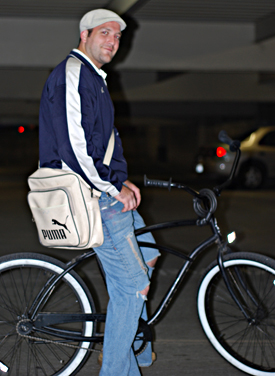
Then there is Michel. Leaned back in his chair, he is slowly sipping iced tea and tasting honey sticks. He is relaxed, mellow and all smiles. He is 6-foot-2 wearing a madras cabby hat, black vest and jeans. Present and in the moment, Michel is in no rush at all, especially when it comes to creating.
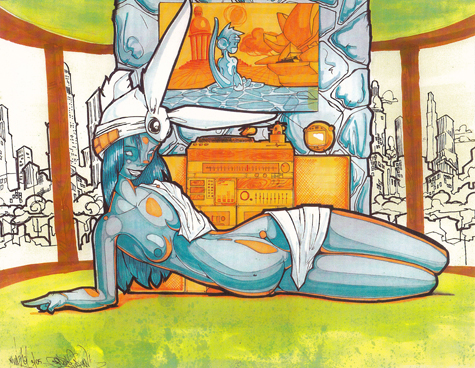
“It’s like the art and music of the past in a futuristic setting where people wear headdresses,” he says describing his pieces. Michel illustrates a post-modern world where elements of the future and the past have merged into a place of relaxation and bliss. Michel imagines that the simple items of today like boom boxes and light bulbs will be relics to treasure in the far, far future. He envisions graffiti throw-ups as huge monumental pieces fixed in stone as unavoidable public art. This of course is juxtaposed with a lovely muse sitting peacefully amid ruins of modern cityscapes and flowers clothed in a flowing robe and giraffe headdress.
“The headdresses are representative of the feelings or personalities of each muse,” Michel says. He uses animal symbolism in much of his work. Giraffes representing regality and elegance, birds as fleeting dreams, pandas can be simple and fish are wise. “It’s like when nature takes back over.”
Contrary to the plain and worn out portfolio in which he carries his prints, each brightly colored ink drawing he shares is a vibrant colorful scene. He uses vivid hues of reds, oranges, yellows and turquoise-blues to capture attention and make certain images stand out. Backgrounds are subtle browns, grays and tans to soften the mood and create a calm, leisurely feel.
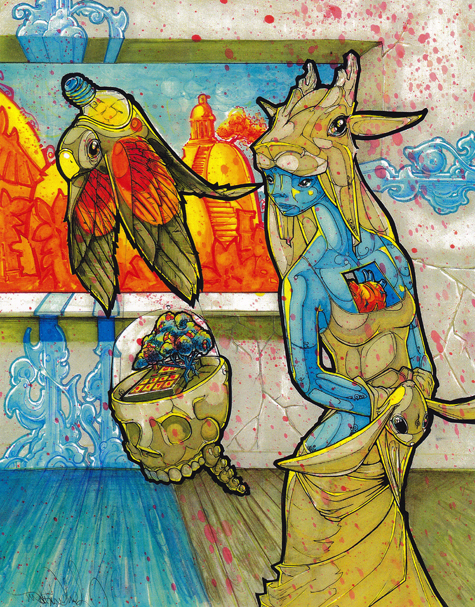
“I would like to use my art to encourage people to take it easy,” he says. He offers a visual opportunity for people to leave their current world of stress, schedules, jobs and worries behind and melt away into a state of relaxation. Recently liberated from his job as an accountant for a law firm, Michel is ready to relax and enjoy the small things himself.
“I’d rather look at the lighter side of things, the good side of life,” he professes about himself and his art. Michel wants people to get a sense of “neat-o” when they his work. “I want to illustrate a positive experience, to encourage people to participate, to listen to some music or just enjoy themselves.”
Born and raised in Sacramento, Michel is part of a network of creative people. His mother and father are musicians. Of his two brothers, one is a very precise architect and the other a musician. He himself has always been science and math minded in school but was always sketching and imagining with a pencil in his hand. Working with his family and friends, Michel is part of two art collectives, the Gerald4um, and Revenge of the Cool. Both are collaborative groups of artists, musicians and dancers. Their intent is to bring all sides of art together for people to connect with and just feel good.
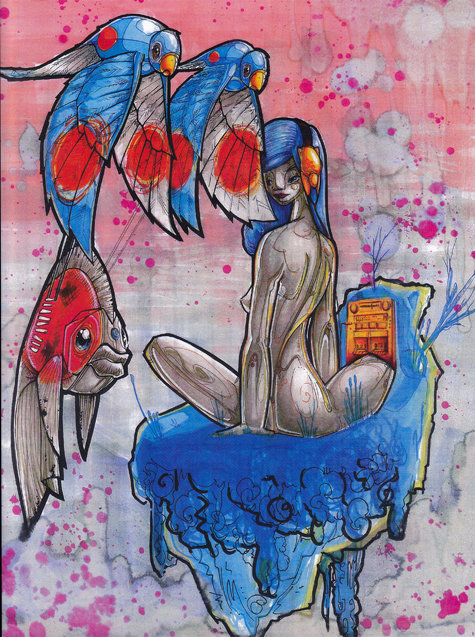
“I’ll always be an artist, why not?” says Michel. He can’t help it. “I just want to see what things would look like for the fun of it. Like dinosaurs pushing shopping carts.” He aims to take simple ideas and express them in new ways. He takes pleasure in the world surrounding him and puts it all together, past present and future. With markers and pens he aspires to create the next elevation. Inspired by everything around him he asks, “How can you not do something?” Sitting back again, Michel grins and looks up out the window. “Enjoy the clouds,” he encourages.
Sean Barfly Examines MindX’s Addictive Brew
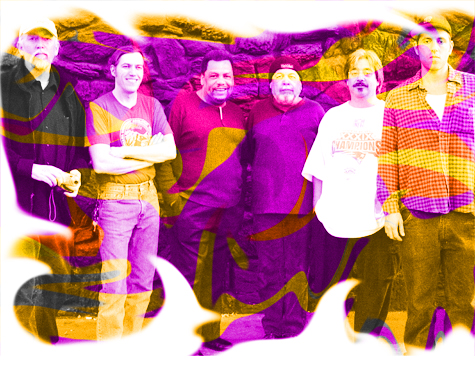
In 1996, Sean Barfly arranged a jam session at Sacramento’s historic Golden Buddha. He didn’t know then, and seems to this day baffled, that the convergence of musicians would generate what is now a decade-long journey into the fluid annals of MindX. Having schmoozed with some of jam-rock’s most well-to-do performers through various grassroots connections, Barfly soon found himself at the nexus of a thriving chemistry of songwriting, one that boasts an Americana/bluegrass concoction, full of extended compositions and brimming with pop culture parody (“a sick, warped, demented, politically incorrect sense of humor,” hails their bio. And it’s true).
The band has gone through some major changes during the course of its career, with the original quartet disbanding in 2000. It wasn’t until Shawn King and Rick Zamora joined in on percussion and lead guitar respectively that the necessary building blocks were in place for a solid future. In 2003, Peter Philis and Martin Holland joined in and the unit was set. MindX was now ready to saturate the avenues of back porch country, wheat-in-yer-cap bluegrass and flannel-clad Americana for a community perfectly poised for it all.
The long-running jam heroes will be releasing their new album, Jonesers and Tweakers, on June 26. The album features an impressive list of collaborators, including Steve Kimock, Melvin Seals, the late Martin Fierro, Jimmy Pailor, Peter Grant, Tony Passarell and others. Despite a heavy schedule, the band continues to be a staple on the Sacramento Happy Hour circuit, while also readying a comprehensive “party band” tour of bluegrass festivals throughout the summer.
Barfly took time out of his schedule (which may or may not include preparing for a solo gig in Amsterdam this August) to discuss with Submerge the ins and outs of one of Sacramento’s most ballyhooed jam bands, as well as exactly what the hell is the Slapaho Nation. Here we go!
It seems you didn’t set out to do anything more than form a band you could jam with. How does it feel to have now been around for over 10 years and have created a sort of niche within the jam scene?
I really didn’t have a vision of putting “a band” together at the time. I had already played in bands and understood the concept of playing arranged songs, but wanted to really try to let go and see what could be created rhythmically and melodically, and wanted to see what could happen with various textures harmonically. What came out of that was just the opposite. The first six years with Gerry Pineda, David Vandusen and Eric Crownover was the first time I was in a real “band.” Sure, there was some jamming, but our strength was our complexity, arrangements and great chemistry for what we were doing at the time. MindX became a jam band after the original band was no longer playing together and Martin Holland, Peter Philis, Shaun King and Rick Zamora joined the band. As far as how it feels 10 years later, well I guess the best description is trying to reinvent what we do and keep it interesting for the band, as well as our fans.
Explain the Slapaho Nation to the novice of MindX.
Ah, the Slapaho Nation. The whole joke started out with our former bass player Gerry Pineda. He was already a busy working professional when we were fortunate enough to have him play with us, but he was unable to play all the gigs we threw at him. He was in demand for obvious reasons, and we affectionately called him a “ho.” We were booked to play the Trinity Tribal Stomp Music Festival, a festival that is a benefit for various Native American Indian tribes that was held in Trinity County for many years. On the way to the gig in our car, we came up with our own tribe called the Slapaho Tribe, mocking the nickname we had given to our Chief (Gerry Pineda), and it was born. The funny thing is, it has never been a gender thing, and it seems it can be taken out of context and turned into a whole other thing that we find ridiculous if you really know any of us personally.
Has being the only original member left in the band done anything drastic to the direction of the band from a thematic or chemistry standpoint?
Once the original quartet dissolved, MindX became more of the band I originally had conceptualized. We were much more of a jam band, and I think the band members had much more in common musically. The new band was open to far more ideas that I had than the previous lineup, but I think that was more because the band had run its course. The direction of the band at this point was directed by me, which were big shoes to fill as the former group was a total democracy creatively.
It’s difficult to pin down the tongue-in-cheek from the serious moments of your music. How much of it is parody, and how much of it is to be taken seriously?
My philosophy when making a studio record is the jam band thing simply does not work in the studio. My favorite parts of the former band are what works in the studio—complexity and comedy! It’s amazing; we will play a show and throw some complex material at the crowd and you’ll always hear someone scream, “White Trash Town” or “Salty Balls” and we have just finished some complex arrangement I have always dreamed of playing, and they want to hear one of my dumb songs about tweakers. But laughing is the most healing medicine in the world, so that’s cool.
Additional information?
A side story that is very important to the band is that we dedicated this record to the memories of Merl Saunders and our good friend Martin Fierro, but most importantly we dedicated this record to our good friend and brother Erik Klevin. He was one of the greatest musicians/people I’ve ever encountered and we (the music community) miss him every day!
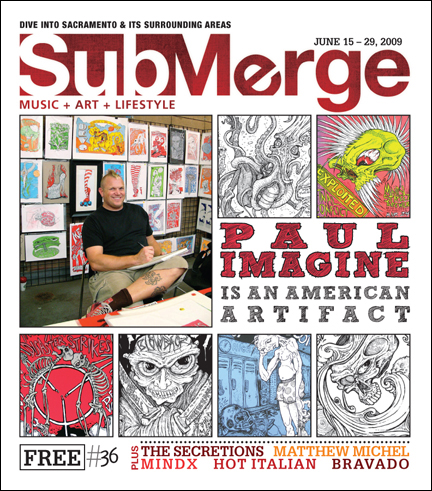
Sacramento Rock Poster Artist Paul Imagine Featured in Documentary
No matter what uptight musicians will have you believe, music is not all about the music. Image is important. If you don’t agree, go to any concert in any bar, club or arena anywhere in the world. Chances are, the look of the crowd will mimic that of the people on stage.
It’s nothing to be ashamed of. Hey, if you can cram yourself into a pair of skinny jeans, good for you. Humans are just visual creatures. But the images we associate with the music we love doesn’t have to be as superficial as the right pair of sunglasses or the ironic value of a T-shirt. What we see can actually—and should—enhance what we hear. And if those images say something about the time in which the music it represents was created, then all the better.
Documentarian Merle Becker has long had a fascination with the iconography surrounding music. A self-described “obsessive music fan,” Becker’s first job out of college was working for MTV’s embarrassingly seminal ’90s cartoon program Beavis and Butthead. She worked alongside the person who selected the music videos shown in each episode.
“I was going through the MTV library looking for obscure and bizarre music videos,” Becker admits. “It was basically 9-to-5 watching music videos, which I loved, but I think anyone else would probably have slit their wrists.”
If nothing else, her work with Beavis and Butthead only seemed to strengthen her draw to the imagery of music. Fast forward to 2004—years after the misanthropic animated duo uttered their final, “Heh, heh”—when in a book store, Becker stumbled upon The Art of Modern Rock, a coffee table compendium of rock poster art. Though she admits she wasn’t a collector or even a fan of the genre prior, the book certainly piqued her interest.
“That was the first time I was aware people were still doing [rock posters],” Becker says. “I thought the ’60s had happened, and I didn’t realize people were even still doing them.”
She was so “blown away” by The Art of Modern Rock that she decided to delve deeper into the world of rock posters. She left her job at MTV and embarked upon a four-year journey that culminated in American Artifact: The Rise of American Rock Poster Art, a documentary that follows the timeline of American rock poster art from its birth in the 1960s.

Merle Becker
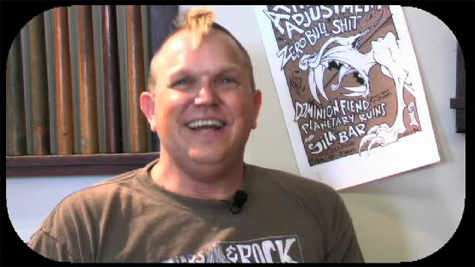
American Artifact interviews collectors and also some of the genre’s most notable names, spanning decades, including Stanley Mouse, Jermaine Rogers, Frank Kozik, Coop and Tara McPherson. These artists have created posters for bands such the Grateful Dead, Death Cab for Cutie, Green Day, Tori Amos, Pearl Jam and many others. Also featured in the film is Paul Imagine, a Sacramento rock poster artist who has worked for bands that he admits, “Most people don’t know.”
“The thing I love about Paul is he’s always laughing,” Becker says of Imagine. “I don’t think I’ve ever talked to him when he wasn’t giggling. When I was putting the film together, it was a lot of fun to go through his footage, because he’s always joking around and laughing and giggling. We would sit in the edits and start giggling with Paul.
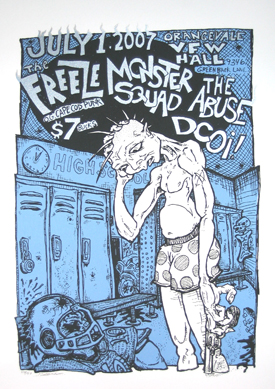
“He has done a lot, and is very active in his local scene,” Becker continues. “Not just with his poster art, but putting on shows, and bringing other poster artists to do shows in Sacramento. I was drawn to him because he’s so active, his work is so fabulous and he’s just a funny, super nice, giggly guy. And he said some fun stuff in the film. His quotes always seem to get a laugh from the audience.”
Submerge interviewed Imagine via phone from his home as he was “chilling and just checking e-mails.” And, as Becker suggested, he laughed quite often as he explained how he got into creating rock posters and got involved with American Artifact.
Imagine credits heavy metal album art as one of his earlier influences.
“I used to draw Eddies from Iron Maiden everywhere,” Imagine explains. “When I was in high school, I was a big metal head.”
However, it was in the punk scene that he eventually found a home. Originally, Imagine wanted to be a musician, but soon realized he “had absolutely no talent for it.” But being active in the scene, going to shows through out the ’80s and ’90s, he found another way to contribute.
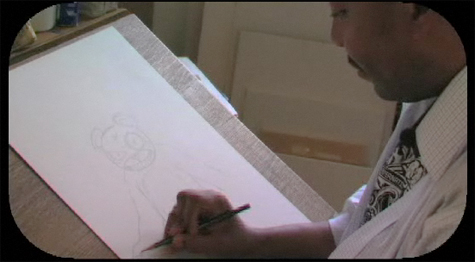
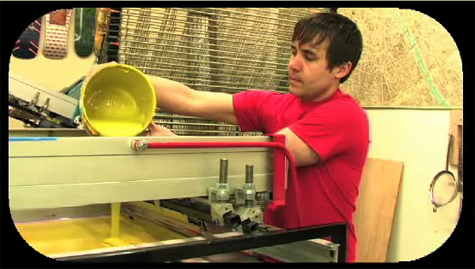
“I met a lot of bands, and they needed fliers, and it went from there,” Imagine says. “I started doing friends’ bands and photocopied fliers. I’d learned how to screen print, because I wanted to put my artwork on T-shirts.”
It wasn’t until around 1999, when he attended a rock poster show in San Francisco, that he graduated to screen printing rock posters.
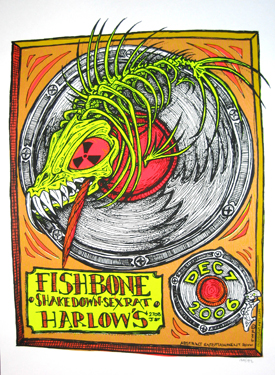
“I actually talked to some of the artists like Firehouse and Chris Shaw, and I was blown away,” Imagine explains. “I was like, ‘Dang, I can just start printing posters instead of photocopying fliers,’ and right after that, I
just started.”
Since then, Imagine has managed to gain some measure of notoriety in the underground world of rock poster art without creating images for big names in the music world. Though he’s not entirely opposed to the idea.
“I would have to love them,” Imagine says of the possibility of working with marquis music acts. “I don’t listen to radio bands and stuff. I mean, if Iron Maiden wanted a poster from me, I probably couldn’t turn that down. I stick to shows that I would want to go to. I don’t go to the big auditorium shows. I stick with the punk rock bar shows and small clubs. If I don’t want to go to the show, I won’t do a poster for it.”
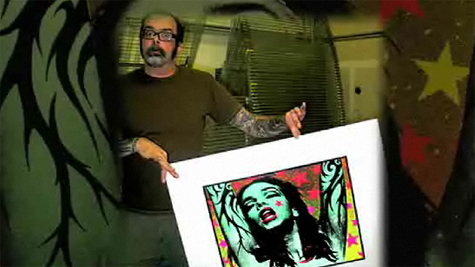
A lot of his aversion to working with major music acts has to do with his distaste for working under restrictions. Perusing Imagine’s art, you’ll find bizarre creatures, chaotic lettering arrangements and plenty of skulls—a freewheeling, outsider aesthetic befitting the bands (such as Melvins, Diseptikons and Secretions, also featured in this issue) Imagine chooses to work with.

“I don’t like the bigger shows where you get art directed,” Imagine says. “I can’t handle being art directed.”
Imagine got involved with American Artifact at the behest of The Art of Modern Rock co-author Dennis King, who suggested the artist to Becker. Imagine says he was surprised to be contacted.
“I’m always surprised when this stuff happens,” Imagine says. “Any of the books I’m in, I’m like, ‘Woah, I’m in!’ To get into this, with so many incredible poster artists out there, is pretty amazing—especially since my style is not quite mainstream. All the posters I do are for small label, no-label, touring punk rock bands, so I don’t have the whole, ‘Well, I did posters for Van Halen!’ thing going on.
“When I get asked to do these things, I just go along with it, and figure somebody made a mistake along the line,” he adds with a laugh. “I don’t want to alert them to their mistake.”
Mainstream or not, Imagine certainly holds an important place among the canon of rock poster artists. And while the genre has been labeled “lowbrow,” rock poster art, as Becker asserts during our interview and in the course of her film, should be “preserved”¦and celebrated,” she says. According to Becker, the work is important because it is an “artifact of the time period that it came from.”
“A hundred years from now, when you look back at the art that was coming out from the period, you’ll be able to look at the rock posters and see a little bit about what was going on in the underground and the political views of the artists at the time,” Becker says.
Musical Charis Opens Music School in Oak Park [Sacramento]
When Musical Charis’s vocalist Jessie Brune says her band doesn’t “function like a traditional band,” it’s hard to argue with her. In fact, you’re better off not calling Musical Charis a band. It’s an arcane notion, anyway.
“We’re not really a band. We’re more of a musical entity, if you will,” Brune says. “We don’t sell out, we don’t take press photos, so our motives are a little different than most California bands. We’re just a big group of people who like playing music together and try to do good all the time.”
While Brune’s approach to Musical Charis may sound lackadaisical, make no mistake that she and the other members of the group take their music very seriously.
“All of us eat, breathe and shit music, probably more than any bullshit band out there that says that they do,” she says. “We live together, we eat together, we write music together, we pay each other’s bills.”
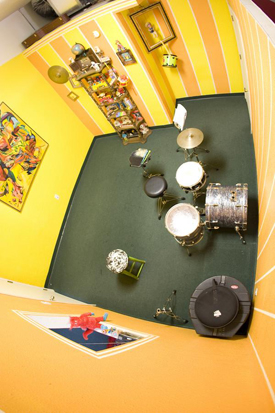
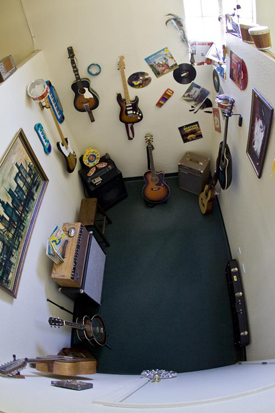
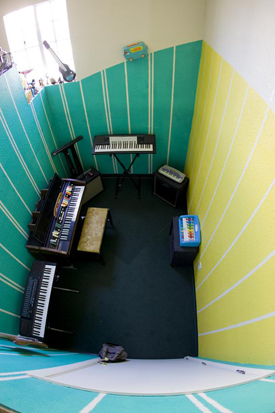
Brune is also serious in her assertion of Musical Charis’s desire to “do good.” Along with Charis cohort Blake Abbey and with help from other musicians who often play with the group, Brune co-created the all-ages Musical Charis Music School in Oak Park, which celebrated its grand opening on May 2, 2009. The school is open to students of all ages, offering a free place to hang out and play music and inexpensive lessons. More than giving Oak Park kids something to do, it also provides a valuable service to the community.
“A lot of the moms and dads will come into our school and be like, ‘We’re so glad you’re here,'” Brune says.
Musical Charis’s work in the community has also attracted the attention of Mayor Kevin Johnson, who has met with Brune on a couple of occasions. After discussing the project with the mayor, Brune says she realized that the Musical Charis School could fill an important need in the area.
“We were talking about how there needs to be more afterschool programs or just activities for kids, because the crime rate has gone up within the schools themselves exponentially in the last five to 10 years,” Brune says of her meeting with Mayor Johnson. “That’s due to a lack of funding for programs and opportunities for kids.”
Aside from helping the community, Brune says Musical Charis’s work at the school has been inspiring in more ways than one.
“They excite us, because they’re so young and so passionate, and their eyes are wide when they come in the door,” she says of their students. “Some of them have never touched a guitar or played a piano, and for them to just come in and hang out with us and get some sort of encouragement, that’s the coolest part.”
Musical Charis is also hoping to release an album around the end of June, though Brune admits that the release date isn’t firm.
“We’re not super crazy hardcore about deadlines and stuff like that,” Brune says. “Everything will happen in its time and when it’s supposed to.”
Submerge spoke with Brune prior to Musical Charis’s performance at the Beatnik Studios one-year anniversary celebration.
Has this been a project that’s been a long time in the works? Did you go to school for music or education?
We all have various backgrounds in music and teaching, but it wasn’t a preconceived notion. We live in an area where we’d drive by this empty building every day. We saw the number and Blake decided to call. It was weird, because the day before, Blake was like, “Why don’t we give lessons? Why don’t we just teach or do something cool, something different, because the whole band scene thing is overrated, and it’s a bunch of bullshit most of the time”¦” It basically occurred overnight. It was something that just fell into our laps, like a big blessing.
On the business side of things, are you hoping to set up the school as a 501(c)(3)?
We’re trying to seek sponsorship and whatnot. We’re heading in that direction. For now, we’ve been paying out of pocket and through sponsors. It always seems like so much money, every time bills come around, it’s like, “Oh my gosh, this is crazy. We’re 22, we’re 25, how are we going to pay for this?” But always at the last second, something comes through. I think that’s because when you’re trying to do something good, it works out.
How much time are you able to dedicate to the school given the other stuff you’re doing?
We’re at the school every day. We get to practice there, and we get to run our business out of there. We record, mix and write there, as well. Even if there’s not a specific lesson that we’re doing, we’re still there, so it’s kind of like killing two birds with one stone, if you know what I mean.
It’s a multi-use facility for you, then?
For sure. Basically, it’s a circular thing. We’re nurturing”¦musical desires in people, and in turn, we get a place to practice and a safe haven to write.
What was meeting with the mayor like?
Hmm. Let me think. He was really cool, because he grew up in Oak Park, and he’s a big inspiration for a lot of young people, because he made something of himself. He’s doing a lot in the community. We feel like a lot could be done in Oak Park, especially. He was a really nice guy—I met him a couple of times—and he’s really willing to listen, which is awesome, because I’m just this 22-year-old girl, a musician kid, but he listened to what I had to say.
Before, you sounded a little disillusioned with the idea of a music scene. Is that with music scenes in general, or specifically Sacramento?
We’re not jaded by any means. We’ve all had our experiences with the music industry and know that it’s full of snakes and is a bunch of bullshit. But as far as the local scene goes, I think there was a shift that’s going to occur, and hopefully a lot of the good musicians, the true musicians—true being the key word: good intentions, and those who actually love their art and don’t try to pre-package everything and put barcodes on their asses”¦ We’re hoping there’s going to be a generation that’s factoring the art itself, instead of making money. I mean, there’s these kids who grow up and they have everything given to them. Their mom pays for them to be on the front page of Purevolume, and their mom pays for their ad to be in AP magazine. That’s just not real. That’s not true. We’re tired of seeing that happen a lot.
Is that something you try to impart on the kids who come into the school?
We’re not trying to tell them they have to think or feel a certain way. We just want to hang out with them and be real. I know there are programs out there that teach them how to paint their nails black, straighten their hair and be part of the scene, but we’re not trying to do that. We’re just trying to generate good musicians.
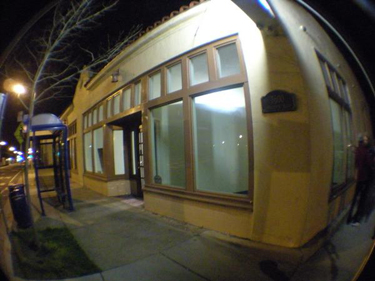
The Musical Charis Music School is located at 3600 Stockton Blvd. in Oak Park.
For more information about the school, the band and the imminent release of their full-length album, go to www.musicalcharis.com.
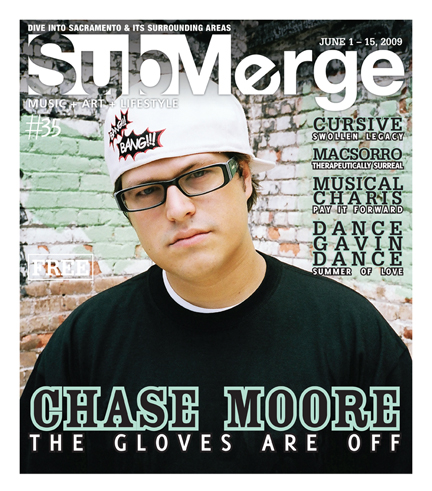
Chase Moore Steps to the Mic for Cawzlos’s LMNH Records
For the true MC, proving oneself in a battle is paramount; not just to prove he is gifted, unlimited with rhymes universal, but as a chance to rep his crew and community. Only the choicest of battle rappers are able to put such weight on their shoulders. After an evening conversation with Chase Moore and his crewmate Cawzlos, it is apparent that someone is hungry for some weight.
Intimidating is not synonymous with Chase Moore’s physical presence. He stands comparative to the average California male, but it’s rash to discount his size in a battle. Mixing words, Chase Moore stands strong on his own, tossing punch lines like darts at his opponents. In March, Chase battled in Santa Cruz, practically eating a burnout local rapper named Dopey Delik alive with lines like, “So if you swear you got great diction/Beware of Chase spitting/You should be scared I’ll raid where you living/I know you got chips/Your parents paid your tuition.“ Stingers.
If you follow the battle circuit, the names will become hella familiar; but rarely is it possible to find music from the rappers, and even more difficult to find good music. For Chase, battling seems like an effortless exercise requiring minimal practice. Chase’s true grind comes from the pursuit of notoriety outside the spitkicker circuit. “[Battling] is really just to raise awareness for my album,” Chase said “I can definitely do both. Ninety-five percent of [battle rappers] make horrible music. You’ll hear rappers who are amazing in battles and you throw on the record and it’s”¦ [Chase shudders at the thought] I spend a lot more time in the studio than I do battling.”
Born into music, Chase’s father, Neil Moore, is an accomplished pianist who invented a playing-based piano teaching method called Simply Music. In 1994, Neil moved his family from Australia to the United States to start his business, which is now an international success. In speaking about his father, Chase used words like “visionary” and “entrepreneur,” appreciating his father’s hustle. “It didn’t happen over night,” he said. “Me, my brother and my sister shared the same room for years. It’s dope, though, that he had that much faith and belief.”
Growing up Down Under, he said exposure to hip-hop beyond commercial hits brought over from the United States was limited. Chase borrowed an old keyboard from his dad in eighth grade to make beats. He learned the drums in seventh grade and said every year he took the hobby to heart, eventually rhyming over his production. It’s no surprise a young Chase was influenced by Wu-Tang Clan’s debut, Enter the Wu-Tang: 36 Chambers. Chase said hearing “Bring Da Ruckus” in sixth grade blew his mind. Now, Chase blasts a hype verse in a gruff voice that’s tough like an elephant tusk. “By the time I really got into hip-hop I had lost my accent,” he said.
Chase spent his young adult life rapping in numerous groups, self-releasing albums to mixed reception. His group Capital Conspiracy earned a Sammie nomination. Chase attributes his youth and limited business knowledge to these ephemeral albums, some of which were never released. In 2007 Chase and Cawzlos moved to Los Angeles with the intentions of getting a record deal.
Young and hungry, the two linked up with Mike Conception, a former Crip who worked with Eazy-E, Dr. Dre and MC Hammer. Conception also allegedly struck a deal with Russell Simmons to call off a hit on rap group 3rd Bass, who dissed Hammer on record, in exchange for a seat next to Michael Jackson at the 1990 American Music Awards. Chase’s song “Lonely Road” briefly addresses his stint in Los Angeles, “I was thrown for a loop/Basically, I was too broke for some food.“ “Working with a heavy hitter in the streets was a crazy experience, but I wouldn’t change it for the world,” Chase said. “For me, as an artist and producer, I just had to move back, regroup and start over.”
Chase is scheduled to release his debut, Moore to Chase, in July on LMNH (Look Mama No Hands) records, a label run by PCM (Paper Chase Music) crewmate Cawzlos. Two years in the making, Moore to Chase seemed doomed from Chase’s lack of focus and his struggles with procrastination. “Because I’m a battle rapper, I relied on a lot of punchlines and wordplay,” he said. “A lot of the material I did lacked content—just smoking weed references and I’m-better-than-you, generic content.”
Now 23 years old, Chase rung in 2009 with a renewed clarity, quitting weed and booze cold turkey. As we sat down to talk at Aura on J St., we casually ordered drinks; myself a Dos Equis and Chase a diet cola. “I started smoking and drinking around 12,” he said. “It got to a point where I was blacking out every weekend, smoking zips of weed. I just felt like I was getting sidetracked.” Chase admitted the vices never go away—a time might come when he returns to them. “I just wanted to get my head clear,” he said. “It was hard at first, but it’s for the better. I made a pact to myself that I will be sober this whole year.”
“I was always loaded in the studio,” he said. Hearing his music sober, Chase spent January re-recording old songs and writing personal songs delving into his struggles with establishing an identity and turning his back on addiction. On “Lonely Road” Chase declares, “In order for my clique to get ample wealth/There’s a lot of business I got to handle myself/And I’m not demanding help.”
Chase and Cawzlos are fervid in establishing their crew and label into Sacramento streets. Fed up with a lack of community support, Cawzlos caused a couple eating dinner next to our table to leave as he shouted “fuck you”s to local radio stations and bars that won’t support local music without payola. “We act as if we hate politics, but at the end of the day our front yard is the Capital,” he said. “We politic like crazy. We clique up. We campaign hard.”
As Chase and I talked, Cawzlos paced the block, talking on his phone and with fellow musicians who happened to pass by. Cawzlos expressed frustration with his contemporaries. He said the conversation was essentially two people “all about their own shit.” Cawzlos recalled when, only a few years ago, Sacramento hip-hop was thriving with artists getting features in Vibe magazine. He said cold shoulders from radio stations caused artists to turn cold shoulders on each other. “If people continually shun you, you’ll recreate a new method to getting your shit out there. And when you figure out your niche, you’re not telling the next guy. Why would you tell the next guy, because it took you 14 years to figure out how to even get to this point?”
It’s not all distaste for Sacramento. Cawzlos is featured on Chase’s album on a cut called “City of Trees,” in which the duo shows love. “We don’t deny that we’re from here, or that we love it here,” Cawzlos said. On “City of Trees” Chase acknowledges a hurt that lingers here as he raps, “When Robert Horry hit the shot we couldn’t stand the Lakers/Could you believe it?/Ai-yo Maloofs we need a new arena.”
The crew recognizes the next few months as a gamble with Chase as the guinea pig. “If you want to swim, you gotta jump in the water,” Chase said. “We’re coming in a big-ass boat ready to dive in the water.” Cawzlos added, “Yeah, I want to be rap star, but as a CEO I have to decide who is the most fit to play that role on our label right now. Even for me to say that, it hurts as an artist, but I’m realistic. Chase is our flagship artist and Moore to Chase is going to be the stepping stone for everyone to follow.”
Moore to Chase will be released in July as a dual package that includes Right on Time, a collection of extra songs that did not make the debut cut. “You have to give a lot more before you can be ready to receive,” Cawzlos said. Catch Chase in Oakland on June 6 battling in the Grind Time Battle of the Bay IV.
Magpie Caterers Market & Cafe
1409 R Street, suite 102, Sacramento
If you could take words meaning “unexpected,” “in a good way” and “fulfilled” and put them into one word, that is exactly how I would describe my luncheon experience at Magpie Caterers Market & Café.
Strolling up to the newly finished half-block brick building, I was shocked I hadn’t noticed the Midtown renovation. The temperate, but overcast afternoon had just a bit of a breeze and demanded an outdoor eating sesh. Crossing the very threshold into the embrace of the Magpie Market & Café, I instantly felt transplanted to a perfect metropolis far, far away. Who’d have known it could take so little, or that one little market café and its caretakers could create such a fulfilling scenario.
When making a decision on what to eat at the counter with gourmet food on full display, I wasn’t overwhelmed with choices or ingredients. There’s a solid set of certain items featured daily, but the market café also features revolving specials and soups. With actual plates of the specials on display, there’s no guessing whether or not the ensemble selection is appetizing.
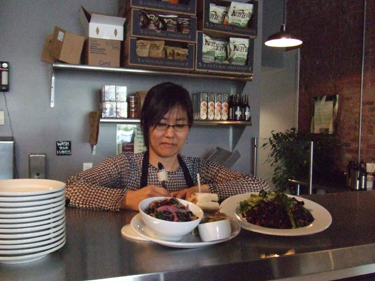
Although the roasted carrot with parsley oil soup of the day was my top choice, they were fresh out by the time I arrived that mid-afternoon. That was unfortunate, but led me to choose the grilled free range chicken and chipotle cheddar sandwich with organic black bean salad ($9.25). Viewing all the salads, a golden beet, orange and basil salad caught my eye, and I asked to have it accompany my panini, supplementing the black bean salad. My lunch buddy chose the signature Fra’Mani sampler ($9.75), two half sandwiches featuring different Italian meats from Fra’Mani Handcrafted Salumi in Berkeley.
The baked goods distracted me from the beverages and by the time I spontaneously ordered a cinnamon pear scone with sage, I realized I had no room left for liquids. My buddy ordered a fresh lemonade that was tart and served with a sprig of mint.
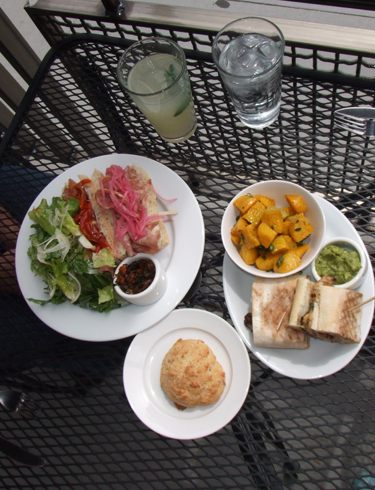
The grilled chicken sandwich was warm, with tender chicken on crunchy ciabatta bread, with white chipotle cheddar and cilantro sprigs. Guacamole sans jalapeños and tomatoes accompanied as an optional spread. I think guac is only avocado dip without tomatoes, but smoky ground chilies seemed to fill the space nicely. The golden beets were from-the-garden fresh (like all of the veggies!) and surprisingly seasoned with basil, olive oil and tons of wonderfully cracked peppercorn.
The attention to detail given in creating the Fra’Mani sampler is obvious. Two simple-as-meat-and-ciabatta bread sandwiches were presented side by side like Italian tacos and served with a mixed spring greens salad garnished with shaved fennel and fennel seeds. One sandwich featured traditional dry cured salami and topped with grilled red peppers that were smoky, but not at all sweet. The other, presenting a cooked cotto salami that had a wonderful honey ham quality with lightly pickled red onion served atop.
We didn’t necessarily get lots of food, but we were quite full. It’s strange how very fresh, flavorful, high quality food has a way of doing that to you.
Although dining was a casual order-at-the-counter protocol, the service was great and genuine. Food was delivered to our table and staff followed up for any needs. Both of the owners were behind the counter and delivering food and I have a feeling they’re at the café most days.
Janel Inouye and Ed Roehr have been homies and partners in fine food for many years. After growing up in Sacramento, Inouye and Roehr worked together and separately in locations all over the U.S. and abroad before deciding to open their own catering company four years ago. Magpie Caterers Market & Café is not new to Sacramento, but it’s relocation from Del Paso to Midtown is.
Inouye and Roehr shared more about their company that they started in the “bread basket of the state” because Sacramento is “the place to be if you wanted to make interesting food, seasonally,” according to Roehr.
When people choose to dine out for fine food, they have different expectations for the price and service. Inouye and Roehr opened a market café to offer people a more casual environment, where they enjoy fine food and feel free to do as they please in a café setting, Roehr said.
“[We offer] nicer quality food, but little bit more approachable, a little more affordable,” Inouye said.
“I really hope people come and use the space,” Roehr said. “And come and see what we have to offer.”
I found my lunch to be a very fulfilling experience. My appetite was engaged and satiated and my spirits raised from the setting, service and sandwiches.
I honestly couldn’t find a thing wrong with the Magpie Caterers Market & Café or the food it offers. For what it is, it seems to be perfect. I can’t wait to go back for dinner.