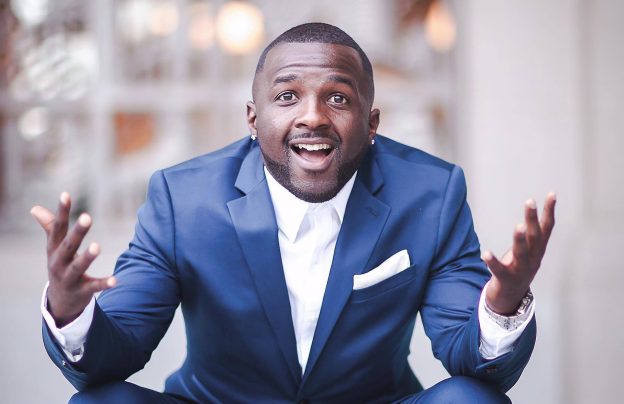
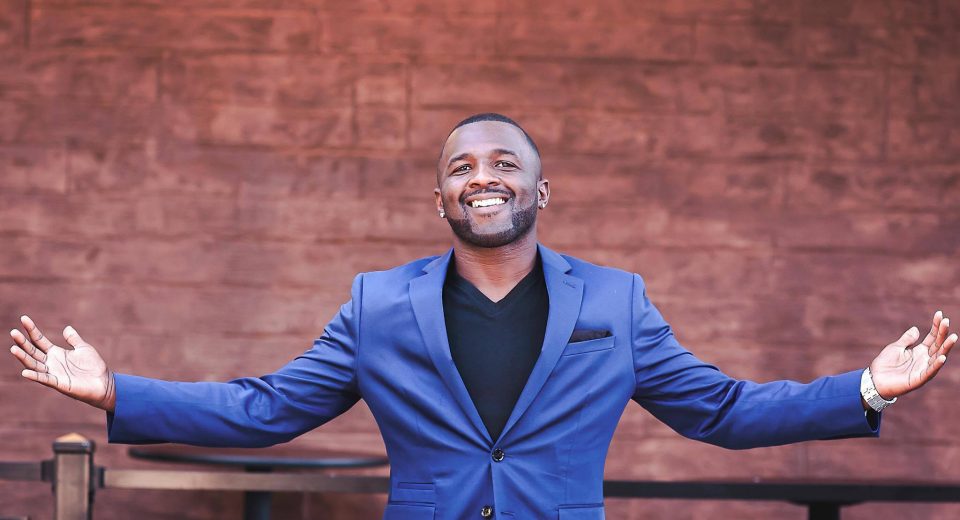
Lance Woods is a comedy force of nature. In just seven years of performing stand-up, he’s gone from hosting variety shows at his church, to opening for Dave Chappelle and hosting parties for Too Short on Treasure Island. His “Lance Woods and Friends” shows are a near-monthly staple of the Sacramento Punch Line and Cobb’s Comedy Club in San Francisco and are regularly packed thanks to his nonstop drive to promote. From Facebook and Instagram selfie posting contests for ticket giveaways, to video sketches based on current events that may have happened less than a day before, he’s easily one of the most consistently funny and recognizable local comedians.
I’ve seen him perform no less than 20 times in the last five years and his material rarely repeats. His early “mistakes” of not repeating jokes, ended up giving him skills to amass a monstrous array of subjects that range from skewering pop culture to helping a friend move. Sometimes it all just goes out the window and he’ll do some of the funniest crowd work I’ve ever seen.
On social media and on stage, he refers to himself as “The International Sex Symbol,” but Woods exudes an over-the-top charm and charisma that lives up to the hype. While sitting with him for the interview at East Sacramento’s Tupelo, there wasn’t a person that walked by that didn’t get a smile and a moment of his time.
Monica S. Photography
I was talking with the editor of Submerge, and we were both agreeing that it’s ridiculous that we haven’t done a story on Lance Woods yet.
I agree! Totally! Wholeheartedly! Every time I see the magazine I wonder why I’m not here!
How long have you been performing stand-up comedy?
My first time on stage was June 2, 2010. I didn’t understand what to do. In my first nine months, I probably got on stage three times, because I thought you could never tell the same joke twice. My first set ever was at the Sacramento Punch Line Showcase.
That’s unusual because it takes some time to get noticed and booked on that.
It’s almost like getting into Submerge! It takes time. You gotta put your work in [Laughs]!
I started comedy in my church, which was directly across the street [from] Punch Line. My pastor created an event for me to host called “The Uprising,” and I would do comedy and we’d get gospel singers, dancers and poets. I told my girlfriend I wanted to do comedy; she started acting like an agent and was looking up places on the computer. She said Punch Line had what she thought was an open mic. So I thought you could just show up there and just do comedy.
I told everyone I worked with and everyone at church that I’m going to perform. The doors open at 7, so I got there at 6:50 and the girl at the door told me to come back in 10 minutes. So I got there at 6:59:59 and I said, “How do you sign up for the show?” The manager said, “Who are you?” That’s the first time I felt this isn’t going to go how I thought it was going to go. The way he said it made me know I couldn’t sound like I was brand new, so I just said, “It’s me, Lance Woods! What do you mean you don’t know who I am? Baby I’m here!” He told me there were no sign-ups for the show.
I felt like the smallest person in the world. I start walking down that hallway and I start hearing that sad Titanic music playing in the background. Then I thought, “I can’t leave, I told everyone I was going to be here!” I remembered D.L. Hughley on the extras of that Kings of Comedy DVD said, “Back in the day, we used to have to fight just to get five minutes!” That stuck with me. I go back inside of the club and started talking to him.
He’s busy getting the club ready, but every time he’d come by and just say something new then walk away and was dismissive. Then at 7:40, I had like 45 people walk in right in front of the bar saying things like “Hey, Lance! Kill it tonight!” So he sees this [and] five minutes before the show he tells me I’m going up first. I didn’t know you were supposed to be nervous about that.
Comics get scared because they think the crowd isn’t warmed up yet.
The reaction was good and the material was good for the level I was at. The comics told me I did a good job, and I thought Hollywood was going to call tomorrow.
A month or two later I performed at A Toucha Class. Two months after that I did Laughs Unlimited. I met a guy named Andre Paradise who did a competition up in Oregon called “The Shades of Laughs.” This is when everything changed. I went out there, and out of 19 comics I placed fifth. These were really good veteran comics. We had six shows.
You weren’t doing any open mics at that point?
No … This was maybe my fifth time performing. I was doing OK, but there’s a level of confidence you feel when you deliver a joke because I wasn’t there yet. These other guys have been in the game 10 to 20 years. They were telling me, “You’re really funny, but you don’t have a clue what you’re doing on stage. We can tell you don’t perform because none of your jokes are finished!” I asked them how often they performed and they told me every day. They told me about open mics. So I got back and did at least 11 mics a week.
So a couple years in doing these mics, what’s different now?
The main thing was that I got the confidence in my jokes. I started delivering jokes with an exclamation point instead of a question mark. The question is no longer if they’re going to laugh, but how big will that laugh be.
Well, it’s like that reluctance to repeat material. Some comics get sick of their jokes. But you’re polishing up a bullet.
When comics ask me questions or run a joke by me, there’s nothing I can tell them. The stage will tell you.
I told a joke to a comedian in the car on the way to a gig at The Throckmorton Theatre [in Mill Valley] and he loved it and asked if he could use it on stage. Nobody laughed … just crickets.
The first time I went to Throckmorton I met Robin Williams. I was at the balcony. I was just going to watch the show, and Kevin Meaney was on stage. I hear to my right this laugh, and I looked and was like, “Is that Robin Williams?” Then he elbowed me and said, “This is funny, right?” We were just speaking about the bits from the background, just comic talk.
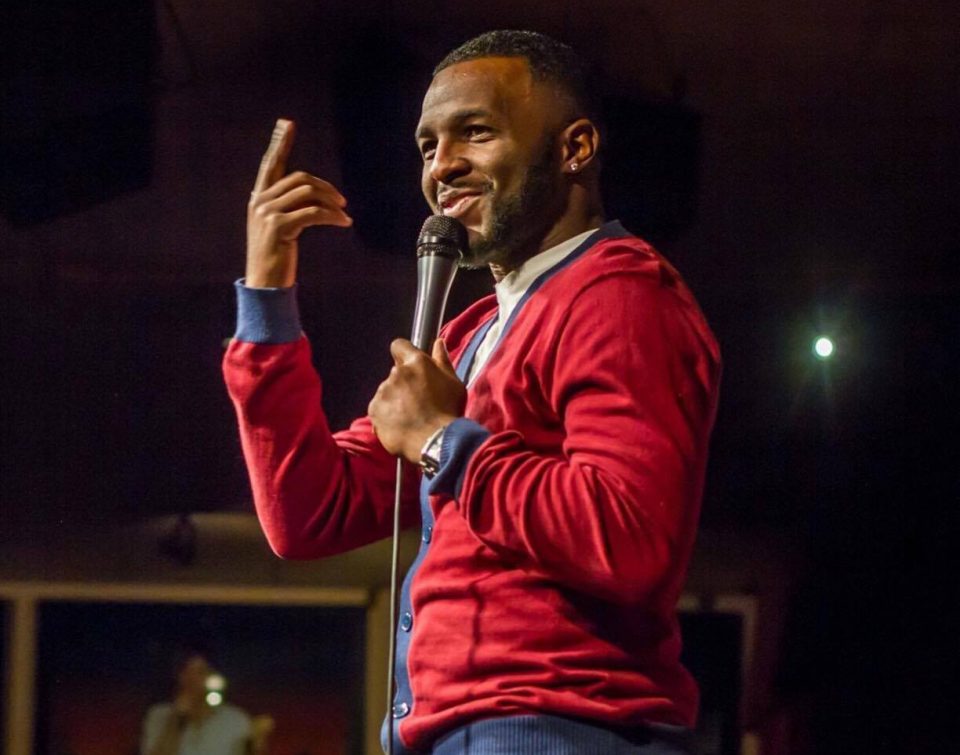
You’ve been producing your “Lance Woods and Friends” shows at Punch Line for about four years now. You always have a great draw and a great following.
I’m a special guy [Laughs]! Whenever you produce something, they are coming to see you. Some people just try and grab people that’ll get a bunch of people to come to the show, but they’ll never come back.
But it’s also a different show each time with you, too. You don’t have an hour-long set that I can nail down. If you had to from start to finish, you’d probably have hours and hours of stuff.
It’s a gift and a curse. I think what I do is good for live performance. I don’t know how it translates to television right now. That’s just another step that I have to look into. If I got a call to get on late night and do seven minutes, I don’t know what that seven minutes would be.
How would you describe your comedy to someone that’s going to see a Lance Woods show?
It’s honest and funny. I noticed that I had points where I was thinking something wasn’t funny enough because it was too wordy. I had to find the jokes in the funny things I was talking about.
You probably have one of the more broad material bases I’ve seen. It’s like there’s nothing that’s off limits.
The toughest transition I made was to be in front of “the hood” crowds. I was always just getting by in those rooms. It took me the longest to get good there. I had to up my level of aggression. My natural state is really chill. Sometimes you go to certain rooms, and you have to grab their attention. When I say “hood,” I’m talking about bar crowds. There’s black hood crowds and white hood crowds. Neither one of them want to hear what you’re talking about. You have to make them listen to you.
Your sketch humor and memes kill on Instagram. They’re really funny. So much different than stand-up. When did you start getting interested in that?
The higher you go, the more you see people ahead of you, so I saw a lot of guys with a million-plus followers, so I’m looking at my 21,000 as measly and pathetic. Every day they do a new sketch … every single day. They’re really good at promoting themselves.
You’ve had a lot of crazy experiences with fans.
I remember once at Punch Line I was on stage and some guy in the audience had a high-pitched voice. I couldn’t see what was going on … [mimics his voice] and he said, “All right, I’ll see you after the show.” I walk out and he’s there. He has a fresh out of jail look. He had a big upper body and his legs were weak like he’s just been doing push-ups and pull-ups for years. He had a style that looked like maybe he’d been away for eight years and he doesn’t know people don’t wear that no more.
Like a FUBU jacket?
Yeah! A FUBU jacket with one pants leg up. And he walked up and said, “If someone tells you they’re gonna be waiting for you, they really might be,” and just walked away. That was it!
Lance Woods will be bringing his “Lance Woods and Friends” show to Punch Line in Sacramento on Aug. 27 and Sept. 26, 2017. You can become one of his 21,000+ followers on Instagram at @lancewoods.
You May Know Him Best as Huell in Breaking Bad, but Lavell Crawford Also Brings with Him an Impressive 25-year Resume in Comedy
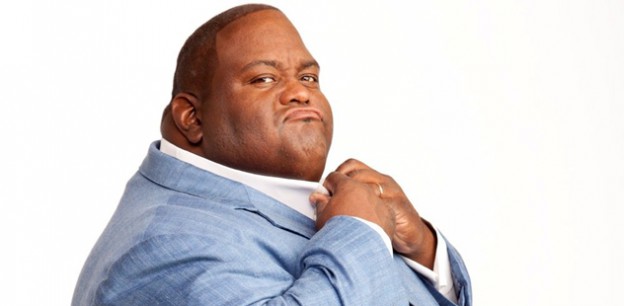
When Lavell Crawford saw the pilot for Breaking Bad, he thought to himself, “Damn, this is gonna be a great show if it takes off.”
But like much of America, he didn’t return to his couch on Sunday nights to witness as the pressure surrounding Walter White ratcheted up week by week. As the show struggled, he was busy making a living as a working comedian.
Little did he know, just a few seasons later, he would become a crucial part of that show just as it crept out of the underground and took its cultural grip on the American consciousness, resulting in one of the biggest TV dramas in history.
To many, Lavell Crawford is Huell, the sizable muscle behind Breaking Bad’s Saul Goodman. To others, he’s the runner up from Season 5 of Last Comic Standing. But above all else, he’s an entertainer with 25 years of comedy under his belt.
I spoke with Crawford last week by phone, while he was in Santa Fe, New Mexico, filming a new Adam Sandler movie called Ridiculous Six.
Truthfully, he seemed a bit absent as we started the interview—barely interested in talking at all, let alone being funny. I’ve heard this isn’t rare with comedians, who make an on-stage living drawing laughter out of audiences. The idea that they should have to extend that performance into every nook and cranny of their life is unreasonable. We don’t ask that of musicians and actors or accountants and bellhops, so I suppose we shouldn’t ask it of comedians.
But thoughtful responses are the foundation for any worthwhile article, so I hoped he would loosen up. I made a point to shift out of “interviewer” mode and just ride the flow of the conversation, picking my moments to probe. With quickness, he settled in and began to provide a thoughtful, authentic glimpse into his world. Not only did he have me laughing by the end, but he had himself bellowing as well.
Crawford was 22 when he got into comedy. He was living at his mom’s house in St. Louis at the time.
“My cousin’s boyfriend was a comedian and I had seen him on public access and I thought he was OK,” he said. “There were all kinds of little comedy shows out there and Comedy Central had really gotten started. It was just calling me.”
He knew growing up that he was a clever kid and that he enjoyed the feeling of drawing laughter out of others, but that didn’t crystallize until he got in front of an audience himself for the first time.
“Once I started getting on stage, then I got the bug,” he said. “I became a promoter as well as a comedian, so I started making a living at it.”
After years of that, his career got a kick in the ass when he advanced to the finals of Last Comic Standing. And then came Breaking Bad. Now he finds his IMDb page stacked with movie roles, TV appearances and comedy specials.
In our interview, we talked about his influences, his upcoming show at Cache Creek Casino on March 21, 2015, and the possibility that Huell could return to the small screen on Better Call Saul—the new Breaking Bad spinoff/prequel.
What was your financial situation like when you started?
I was living with my mama and I had a little part-time job, but I was cool. I always thought logically. I wasn’t out there just trying to do comedy and making that my sole means; that would be stupid.
Who were your main influences?
Richard Pryor, Rodney Dangerfield, you know. Lots of good ones who got up there and told stories. George Carlin. They all were inspirations. Anybody who gets on that stage and makes somebody mad has always been impressive to me. It’s almost like a fighter in the fight game. It makes you think, “Man, I wanna fight.”
Have you played Cache Creek before?
Yeah, I played there with the Last Comic Standing tour, but this is the first time I’ll do it individually.
How much does your act change from one night to the next?
I dabble in new stuff, but I have specials out there that people have seen and I’m on YouTube, so they have their favorites. In the people-pleasing business, you can’t please everybody. But I don’t really like sticking to one routine. I’ve been doing this for 25 years, so I’ve got a lot of things I can talk about.
How long do reporters typically wait to ask you about Breaking Bad in interviews?
Well shit, usually the first question is Breaking Bad! The first thing that comes out is, “Sooooooo, Breaking Bad…”
You joined the show in Season 4. Were you watching before you were cast as Huell?
I knew about Breaking Bad because I had watched the pilot, but I was working comedy clubs and doing stand-up, so I didn’t get to watch it for a long time. But then when I got called for an audition, I was like alright.
My audition was at 6 in the evening and I had just gotten off the road. I was exhausted and I had moved my wife and my two step kids to Los Angeles. I really wanted to just go home and sit on the couch and let everything ooze out of my body, but they wanted me to come in. The manager was so hyped.
I read for Luscious the truck driver, and then they asked me to read for this other part. I was like, “OK, I didn’t know I was supposed to read for that part.” But I read for it and they were like, “When could you start?” and then Huell was on there for two seasons.
Had the show become a phenomenon yet?
It was a cult classic, but they weren’t making money. They hung in there, and then in Season 4 it became the monster it became. I think that was because it was on AMC. If it was on HBO, it would have been a monster from the get-go.
Could you tell it was a special show while you were shooting?
Honestly, they don’t really let you in on all of the info. They give you some of the pages from your script, but that’s it. But every episode we were doing was just so powerful. The fourth season was epic and the fifth season just caught on fire. It was another level of “Oh my goodness, what’s gonna happen? Am I gonna get shot today? What’s gonna go down?”
How often do people recognize you from Breaking Bad?
A lot, because I did make a big impact on the show. But I met this one chick on the plane last night coming here to Albuquerque and she was like, “I remember when I had ‘Mike’ from Breaking Bad on my plane. I’m always excited when Breaking Bad characters are on my plane.” [Breaking Bad was filmed in Albuquerque.] She was telling me this, looking me dead in my face. She fucking didn’t even get it that I was on the show. I had to show her ass a picture of me and Saul Goodman and she was like, “Aww shit.” I said, “Well damn, I don’t know if you’ve got selective memory, but did you really watch?”
You’re not particularly a forgettable looking guy.
That’s what I’m saying!
So you’ve acted, done stand-up, voiced animation. Do you still consider yourself a stand up comedian above all else?
Well, I’m a comedian first, actor second. You don’t have to put a bunch of titles on what you do, shit. Let everybody else do that. That’s just a waste of time.
Did the Breaking Bad role open up a lot of acting opportunities for you?
Oh hell yeah, every step is gonna open doors. Last Comic Standing opened me up to the acting world and put more money in the clubs for me. And then Breaking Bad was like the key to the city, because everybody that was in Hollywood who had a part wanted to meet with me.
I got to do The Crazy Ones and It’s Always Sunny in Philadelphia. I just did a movie with Kristen Stewart and Jesse Eisenberg called American Ultra. Now I’m on set in Santa Fe for a movie with Adam Sandler called Ridiculous Six, so it’s opened up a lot for me.
Will we get to see Huell on Better Call Saul?
I’m sure we will. It’s a prequel, so I think they’re going to figure out a way to introduce me. They never show how we met in Breaking Bad. I think the fans want it, so I think they’re gonna figure out a way to get it going.
Not to change the subject, but do cougars’ vaginas bite?
[Laughter] I don’t know!
Context: Nearly all of Crawford’s tweets are short questions or comments like the one I just posed back to him. He follows them up with the word, “Discuss” For example: “Hard-ons and jogging pants. Discuss.”
They’re just random-ass thoughts I have, like, “If you eat Taco Bell, do your farts ring?” “Discuss.”
So that’s your approach to social media? If you have a fleeting thought, you fire it off?
Yeah, I put “discuss” at the end so people know I ain’t trying to be funny. Everybody’s trying to be funny or be a jerk. Thinking they always got to find a way to put somebody down. I just don’t believe in that. I’m 46 years old. I have children. I believe in God; I’m a church person. I just think the whole energy that social media brings is just something you shouldn’t allow inside you, man. It’s horrible. That’s why I say things like, “Women twerking to gospel music, are they Jesus freaks? Discuss.” Ya know, it’s funny, stupid stuff.
Have those ideas ever made it into your act?
Oh yeah, a lot of times I bring them on stage even though they’re stupid to me. And sometimes people really have jumped on it. Like one time I said, “Do squirrels have orgasms, or do they bust nuts?” The people laughed because it’s silly. We’re just having fun.
Have fun with Lavell Crawford at Cache Creek in Brooks, California, on March 21, 2015, at 8 p.m. Tickets range from $35 to $45 and can be purchased through Cachecreek.com.
Comedian Iliza Shlesinger moves from reality show fame to rise the stand-up ranks
Talent, hard work and confidence–and a dash of luck–are needed to nurture any career in entertainment, and Iliza Shlesinger has been fortunate enough to have all these ingredients in abundance.
The winner of Last Comic Standing 6 back in 2008, Shlesinger is the only female comic to take the title, though even that wasn’t an easy road. She staved off elimination multiple times in order to take the prize. It’s an accomplishment to be sure, but it’s not something she has ever hung her hat on.
“It’s a cool thing for sure, but I think other people are more impressed with it than I am,” she says. “I would be a real tool if I rested on those laurels and still talked about it.”
While it’s not her sole accomplishment, it certainly gave her a quicker start than others in the field. Still, it’s what she’s done since that’s entrenched her as a force in stand-up.
“I know comics who have been doing it longer than I have,” Shlesinger says. “I know comics who have been doing it for 10 years, and they’re still featuring, and there’s nothing wrong with that. That’s the way it is. I’ve had the luxury of skipping a lot of the BS that stands between opening and being a headliner. I’m very fortunate to have been able to do that, but there’s also lot of hard work that I’ve put into it.
“I don’t brag about it, because I know what I did. As we get farther and farther away from it, I don’t want to be the guy who’s like, ‘Remember how good I was at football in high school?’”
Her journey in comedy began before Last Comic Standing. She says her first loves were sketch comedy and improv. She wrote for a troupe while she was in college, but then one day, she wrote a one-woman show, which, probably more so than her victory in the popular TV show, laid the roadmap for her current career.
“I was the only girl in my troupe who wrote stuff, and then it hit me, why am I writing stuff for other girls who aren’t writing for themselves?” she explains. “Why don’t I throw my thoughts in linear form on to paper and write them for myself? I just started writing paragraphs. It’s a weird answer, but I moved to Los Angeles, and it didn’t seem like a stretch to start doing stand-up comedy. Someone gave me some stage time, and they asked me to come back the next week. I just kept coming back and getting asked to do other shows, and it just became something I was obsessed with, I guess.”
Shlesinger says that she always knew she would be “funny for a living.” She was so single-minded about that inevitability that she “just didn’t think about anything else.” For years, she hosted The Weakly News, a news satire show for Thestream.tv in addition to touring as a stand-up comic. Armed with striking good looks and an even sharper tongue, she has recently made the jump to more traditional airwaves, hosting the syndicated dating show Excused, which has recently been picked up for a second season. Shlesinger discussed her latest endeavor, how success as a stand-up comic hasn’t necessarily translated to success in auditioning for acting roles and fetishist Google searches in the following interview.
When I Googled your name, the second thing that popped up was “Iliza Shlesinger feet.” I wasn’t sure if you were aware of that.
I don’t know why. It’s very odd. Everyone mentions it to me. I don’t have a foot fetish, I don’t know people who have feet fetishes. People are just creepy.
It’s because of that one video you did, right? For The Weakly News where you showed your feet because you injured one of them.
I guess, but it’s not like billions of people watch it, but I’ve done plenty of videos where my arms are showing, and people forget about that.
That’s just the one that happened to catch on.
Yeah, people are sick.
How did you get hooked up with Excused and how has the experience been so far for you?
I wish I got hooked up with it. I auditioned for it. Do little girls dream of hosting a dating show when they grow up? No. [Loud car horn] Sorry. [To another driver] For real?! Oh my God! I’m sorry, this one person is ruining my life single-handedly. Give me one second. Is it bad that I believe she should be put in jail for being that bad of a driver? My whole thing is like, if you’re driving and this is a simple turn that you can’t complete, what poor decisions are you making in everyday life that are affecting the rest of us. You’re an animal. You shouldn’t be allowed out if you can’t make a left hand turn.
Anyway… It’s a late night dating show, and I got the gig, and I was like, I either do it my way or I don’t do it at all. I make up all my own jokes on the spot. There are no writers, there’s nothing like that. I’m fortunate, because most stand-up comedians get a gig, and they have to read lines…but for me, they really let me say what I wanted to say.
I’ve seen a few clips from the show, and you really don’t pull any punches with the contestants.
There are things that I want to say that they won’t let me say. Then you watch it, and because of standards and practices, they edit out a lot of things. Even though it’s a late night show, in some places it’s syndicated at 4 in the afternoon, and it’s like, really? It’s weird what will fly and what won’t. Last night, I made a gay joke on the show, and they kept that in, but I’m not allowed to say, “douche bag.” It’s like, OK, let’s offend the gay community, but not douche bags.
Were you into dating shows when you were younger?
No. I loved Blind Date when I was in middle school or high school. I don’t remember, but this is the same producer who did Blind Date. Everyone liked Blind Date. I remember, of course, watching Singled Out. I really liked Jenny McCarthy, and I always thought she was great on that show. It’s kind of ironic that I looked up to this blonde woman with big boobs who was funny and crazy, and now I do that for a living. I don’t think I look like Jenny McCarthy at all, but it’s funny how things come full circle.
Has the show affected your views of the dating pool or the dating scene?
No. It’s such a microcosm. You’re going to get creepy guys and gold diggers and douche bags no matter where you go or what you do, so the fact that we condense that world down to 19 minutes and put it on display, I’m not disheartened or anything like that. It’s a TV show, so everything’s exacerbated. I look for very specific things in mates, and I don’t think I’ve found it on my show, so I don’t like to judge them because different people like different things. I’m trying to be as political about this statement as possible [laughs].
Is writing something you’d like to get more into?
For TV shows? No. The people who love writing, all they want to do is be writers, just like teachers or nurses or whatever. I find a lot of times for stand-up comics, you write because it’s a gig that you can get that you’re good at, but if you had your druthers, you’d write for yourself or do your own thing. I’ve been very fortunate that I’ve never had to take any sort of job in comedy that I didn’t want because of these small successes that I’ve had. Writing for my own show would be one thing, but I don’t really have an interest, other than for a friend or a really cool project, in sitting in a writers’ room and writing for someone else. It’s hard to do once you’ve done stand-up. It spoils you for a lot of things.
Is it the singular control you have over it?
Kind of. I could imagine any writer would be like that. When you write a joke, you want to have it said a certain way, and depending upon your director or your producer with his two cents, the actor may say it differently. For me, I don’t think I would want to have the challenge of writing for someone else’s voice. I’m always impressed when writers can do that. Being a stand-up comic is a weird thing, because when you’re on stage, everyone loves you and you’re a star. And then the next day, when you go out on an audition for like girlfriend No. 3, you walk in the room and no one knows who you are. Someone will be like, “Oh, have you tried stand-up?” and you’re like, “Yeah, I’ve tried, and I’ve bought a house with that money.” One art form doesn’t necessarily mean you’ll be good in another art form or recognized in one, so it’s a real mindfuck for lack of a better term.
Sometimes I’ll see stand-up comics who I really like, and they’re in a commercial for like two seconds, but I know them by name.
Right, right. It’s weird. Even just from an appreciation standpoint, you go to a club, you’re there for the weekend, they pick you up in a car, your fans come. You want to go to these casting directors and say, “I have fans.” People ask me for my autograph, and you want me to show me your profile so I can read this horribly written thing about being a sexually frustrated neighbor. Give me a break. It’s the weirdest thing ever.
Is it tough to find good roles for women in comedy?
I think it’s getting easier and easier. I think people are starting to realize that women are just as funny. It’s not about the fact that you have a vagina. Don’t get me wrong, there are plenty of unfunny women, but there’s also plenty of unfunny guys. In fact, there are probably more unfunny guys. Pretty much everything I read is, “You’re the quirky neighbor who just wants to have sex and doesn’t understand relationships.” I’m like, I don’t really know a ton of women like that, but OK. A lot of them are written in a very similar voice. One network will get a show that’s a hit so every network will copy it. I think women are gaining more and more. You look around at movies and TV shows, and women are getting more of a chance to give their opinions, and I think that’s great.
Iliza Shlesinger will play Punch Line in Sacramento Nov. 15—17, 2012. You can buy tickets for the show through Punchlinesac.com. To keep up to date on Iliza, you can follow her on Twitter at Twitter.com/Iliza, where, amongst other things, you can view daily pictures of her freakishly adorable dog Blanche.
J.B. Smoove lives and creates on the fly
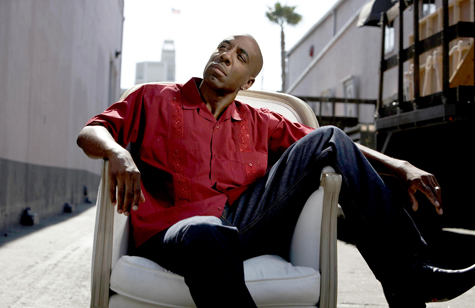
The birth of Jerry Brooks’ first child (his now 18-year-old daughter) was a pivotal moment in his life in more ways than one. Brooks was working as a graphic designer for a T-shirt company around the time his daughter was born, doing stand-up comedy at nights. But the arrival of his baby girl brought him to a crossroads. He decided to veer away from the comfortable path of his career and immerse himself in comedy and acting. In retrospect, it was a very wise decision.
“I quit my job,” he says. “I felt like the only way I can dive in there and do this comedy stuff, I’d actually have to do it. When you have something to lean on, you can’t really achieve your dreams, because you’re always leaning on something else. I said the only way I’m going to be able to do this is if I go full throttle, so the day she was born, I quit my job, which made me have to do it. It made me have to get out there and get downtown and do gigs and go on auditions and get photos taken. It made me have to do all these things to keep the lights on.”
A risky leap of faith with a new mouth to feed at home? Maybe. But it turned out to be worth the gamble. You probably know Brooks better nowadays as J.B. Smoove–who in addition to having a successful stand-up career and being a former writer and performer for Saturday Night Live– has rose in popularity as Larry David’s hilarious foil Leon Black on HBO’s Curb Your Enthusiasm since its sixth season. Prior to his life as a comedian and actor Brooks was in school to be an engineer, receiving a associate’s degree in engineering before the math caught up with him and he decided to move into graphic design.
“I think about The Brady Bunch, and the dad was an architect, and I was like, ‘Damn, no one mentions this part.’ They don’t show the math part; all they show is him walking around with the blueprints and looking real cool,” Brooks says. “But that math will kick your ass so bad, it will make you switch your major.”
A life as a comedian eventually won out over more traditional pursuits. He admits that becoming a father and making the jump into a highly competitive field was “challenging,” but it was the difficulty that drove his passion.
“I get a high off of challenges,” Brooks says. “Even not knowing what I’m going to do in a scene, if they don’t give me any lines, even if not knowing all that stuff, I get a certain kind of energy from that too. Part of me is like, ‘What the fuck am I going to say?’ and another part of me is like, ‘I can’t wait to say what I’m going to say.’ It’s like…someone’s leading you down a corridor and downstairs, and you’re blindfolded, and you don’t know where you’re going.”
Taking that into consideration, it’s clear that Brooks has the perfect mental makeup to excel in a show like Curb Your Enthusiam, which is largely improvised. He explains that the actors were given eight-page synopses of each episode as a sort of guideline, but Brooks says that he never really read those.
“I don’t like to see the outline, because I feel like I’m going to over-think my scene,” he says. “So I just get to the set and allow the writers to tell me what’s going on…I like to go off instinct and what I’m feeling in the moment.”
In this way, Leon Black has become a real person to Brooks, much as the character has to his many fans–or Leon Nation, according to Brooks.
“I find myself talking about Leon like someone I know,” he says. “I would do a bunch of Leon scenes, and on my way home, I’d call my wife and be all, ‘Leon is crazy as hell!’ And my wife will be caught up in it too. She would say, ‘What did Leon do today?’”
Diving headfirst into his character is something Brooks really enjoys.
“It’s hilarious to talk about him as if he’s some other person, which I find to be a better process,” Brooks explains. “I’m more in that frame of mind when the cameras roll. I don’t feel like I have to jump into it. I can just have him ready to go, get dressed, walk to the set and allow him to do what he does. And when I leave, I have the chance to talk about him over the phone to my wife and to my friends. Leon’s a damn fool!”
This sort of approach has fueled his stand-up, which has always featured a good deal of improvising. In the early ‘90s before he broke into stand-up, he got his feet wet by taking an improv class, which taught him how to be comfortable with creating on the fly. Brooks claims that you’ll never see the same J.B. Smoove comedy show twice.
“I don’t perform a set where it’s always 1-2-3, 1-2-3, like I’m doing a dance or some shit,” he says. “I like to perform for my audience.”
He keeps his sets different and fresh by being observant. The day’s weather may inspire him, or perhaps even an everyday object like a stool could be incorporated into his act. Brooks says that he also likes to get around the town he’s in and get a feel for it to find out “what’s funny about that city.”
“I think that’s what makes you in that moment, because you’re actually visiting, and you’re performing in their city,” he says. “You’re bringing everything that you do to them, because you have to let them know what you noticed about being here that’s so cool and so funny.”
The venue itself could also play into his performance. Brooks recalls playing a nautical-themed club called Captain Brien’s in Marco Island, Fla. The décor, which featured fish nets on the ceiling and a replica shark bursting through the wall by the stage, ended up playing a big part in his act.
“Man, I must have did 20 minutes on just that stuff alone,” Brooks says with a laugh. “Somehow I took all of that stuff and made an episode of SpongeBob SquarePants out of it.”
The exciting thing for Brooks is that a performance like that is pretty much unique.
“It was so damn funny, but I realized I could never do it again,” he says. “I could only do it there. It was a one-shot deal. I couldn’t go to Chicago and do that same bit, because it wasn’t the same setting.”
His reputation for off-the-cuff gems such as this and the celebrity he’s garnered from Curb Your Enthusiasm has really started to pay dividends. Next year, Brooks will be featured as the voice of Harold alongside household names such as Billy Crystal, Steve Buscemi and John Goodman in Disney/Pixar’s Monsters University. Familiar with his work, the filmmakers allowed Brooks a lot of freedom to create with his character, which turned out to be a lot of fun for the actor.
“They let me get in there and play around with stuff, which is great. It’s more comfortable. It’s easier to create on the go,” he says.
Brooks will also be featured as the voice in two other animated films slated for 2013, according to IMDb, Hell and Back (as Sal the Demon) and Smurfs 2 (as Hackus).
Between that and his stand-up career, Brooks will have plenty on his plate in the year ahead. But what about Curb Your Enthusiasm? Season after season, It’s always anyone’s guess whether or not the show will return to TV. As Brooks puts it, “I think we’re always at the mercy of Larry [David], so we’ll see what’s going on. When you’re that damn rich, you don’t need a paycheck, you know what I mean?”
But Brooks has been in contact with David and reports that another season may be in the works.
“I give Larry a call off and on just to see what the hell Larry be doing, just to see what kind of adventure Larry is up to,” Brooks jokes. “You gotta check on rich people just to see what the hell they’re doing. What boat you on, Larry? Where you at, what country you in? What room are you in, in your big ass house? Which car are you driving? I like to check in on Larry David once in a while just to see how he’s doing. So far, there’s no definite answer right now. I’m thinking possibly some time in 2013, that’s going to be the platform right now for it. I don’t think it will be any time this year. So I think next year he’ll make his mind up.”
Until then, fans have a chance to catch Brooks live, in-person as J.B. Smoove, bringing the ruckus as only he knows how. It’s hard to say what to expect from one of his comedy shows, but it’s a gamble worth taking.
You have multiple chances to see J.B. Smoove live when he plays five sets in three nights at Punchline in Sacramento, July 19—21, 2012. Tickets can be purchased through Livenation.com or http://punchlinesac.com/
Sacramento comedian Johnny Taylor’s recurring gig “Comedy Kill,” which goes down every fourth Friday at Sacramento Comedy Spot, is quickly becoming one of the city’s premiere stand-up nights. Taylor started Comedy Kill to give him and his friends somewhere to highlight the type of stand-up they’ve been doing. “I thought it would be really rad to showcase smart, offbeat comedy on a consistent basis,” Taylor recently told Submerge. “It’s grown to a point that I get to bring some really talented friends up from the bay area as well,” he said. Taylor has been doing stand-up comedy for just over a year, but has already performed a number of times at 142 Throckmorton Theatre in Mill Valley, Calif., a highly sought after venue. “You never know when you’re gonna be sitting in the green room and Robin Williams or Dana Carvey stroll in,” Taylor said. “I always leave that place feeling starstruck at least once.” Taylor also recently had his set from a gig at Pasadena Ice House recorded for Comedytime.tv. Catch him hosting and cracking jokes at the next installment of Comedy Kill on Friday, April 27 at 9 p.m. at Sacramento Comedy Spot (1050 20th Street, Suite 130) alongside headliner John Ross and featured performers Nick Aragon and Kiry Shabazz. “There are so many talented comics in Sacramento,” Taylor said. “People sleep on this city, but I’d put the top guys in our scene against any other city out there in a stand-up comedy battle royale and feel pretty comfortable with our chances.” Get your tickets for Comedy Kill for just $10 at Saccomedyspot.com.
-J.Carabba
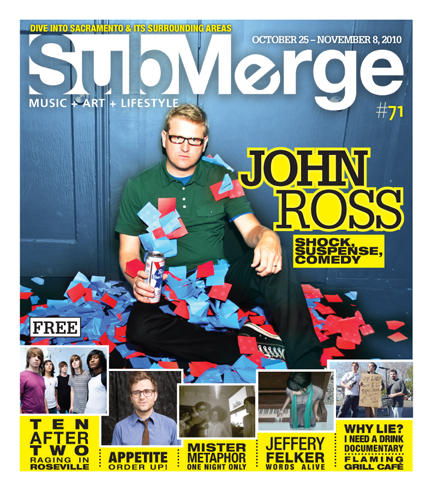
Shocking Subjects, Sensationally: The Comedy of John Ross
Words by Joseph Atkins | Photos by Duy Ninh
John Ross is occasionally unshaven, his hair is regularly maintained, and he wears thin black glasses. He’s got a low-key demeanor emphasized by his polo shirts and Dickies pants. He’s got three kids, a stable marriage, and he just got a job selling plumbing supplies. He’s a regular, well, John. Oh, and as a hobby he writes and performs jokes.
Ross has a dry sense of humor that depends on awkwardness, absurdity, and tension. He’s not flamboyant, in your face or crazy on stage. Ross slowly threads out a joke, waits a few seconds to build the audience’s confusion, and then flatly drops the punchline. After awkward crickets, suddenly everyone is laughing.
To summarize his story is to sensationalize it: Ross was born addicted to methadone, his parents were junkies, and he was molested once by a 12-year-old. But in talking to Ross, you’d never know such an average dude would have such an Oprah-esque back-story. But with his comedy, the audience is invited to laugh at and laugh with Ross: while he uses his sensational history for subject matter, he’s likely smiling the entire time and repeatedly shattering the boundaries of personal-information discomfort.
In July, Ross recorded his live set at the Sacramento Comedy Spot and since then has been hard at work editing it into a DVD feature. Ross will celebrate the DVD release of I Really, Really Love Me Nov. 13, 2010 by sharing the stage with his favorite local comedians and friends. We sat down just next to the Comedy Spot and discussed comedy, family and sensationalism over slices of pizza. For most of the interview, a group of children ran around us, sword fighting.
So, what does being born addicted to methadone mean?
It means my mom was born addicted to heroin, and my mom went on methadone to make sure I wasn’t retarded or developmentally disabled. There’s a weaning process, detox, when I was an infant. As far as I know there were no long-term effects. I don’t walk with a limp or anything. I do have a hard time focusing; I wonder sometimes if it has something to do with that. Or I’m just normal.
Your comedy relies a lot on your personal history. Why is that?
This sounds really cheesy, but I think I have a very interesting upbringing. Everything from being raised by junkies, to being Pentecostal Christian for a while–I’ve been through a lot of weird things. This might sound really retarded, but it might be an interesting story, so why not tell it? Not to exploit it. I’m not saying I think it’s a story that needs to be told to the world, but it’s a good story. A lot of my stuff is character-based, kind of true, kind of real, just embellished a little bit. I just tell you a story…
How did you decide that stuff would be a good subject for jokes?
It was kind of my first instinct when I started. I could do tons of dick jokes, jokes about having sex. If I do my parents are heroin addicts jokes, I know I’m not accidentally copying anyone. I’ve been doing jokes about when I was molested when I was 4, by a 12-year-old. Yeah they’re pretty harsh subjects, but it’s fucking funny. I like to build tension, and then release it. And if you’re going to steal my joke, it’s going to be obvious. Everyone’s going to know it.
What is it about absurdity that is so funny?
It’s just that you can say something and not say anything at all. You can take a real issue, something that you’re passionate about, but unless you’re like George Carlin or something, no one wants to hear you. Absurdity can take something pretty far; you can say something you wouldn’t say in a regular conversation. I’ve got a joke that Elvis is a racist, and I’m like, “I’m already a fan!” The further you go, the more obvious you’re not a racist. You can take a sensitive issue and go as far as you want; the further you go the more people know you’re not serious. They start uncomfortable and by the time you’re finished, they’re like, Thank God, he’s joking.
I think comedy is about awkwardness. I like to make feel people feel awkward, corporately. And let them know I’m messing around. I like to be as honest and absurd as I can. I don’t choke up. Anything horrible I try to make a joke out of; maybe it’s a defense mechanism.
I think your act is pretty funny, but I could imagine that some people might not really get what you’re doing. How do crowds react differently to your joke aesthetic?
With smart crowds you can get away with a lot more, people who know comedy. More conservative crowds, they just want to hear dick jokes, they don’t get subtlety. Lately I just say what I’m going to say. I did a show in Woodland, and it was a great crowd. But I could tell that I was making them uncomfortable. I didn’t apologize, or I didn’t apologize too much. If I get a really conservative crowd that isn’t biting on anything, I will punish them. Sometimes it’s just fun to be on stage, tell the awkward story to your friends.
Part of your routine relies on a weird music-box device. What’s that called?
It’s called an Omnichord. With the Omnichord I have to be careful, anything more than 15 minutes, people start going, “What the fuck? This is annoying.” In a shorter set, with the Omnichord, I like to do a lot of non-sequiturs, one-liners. You can get away with a lot of darker stuff with the Omnichord.

There’s a lot of shocking subject matter in your jokes. Would you consider your jokes in the tradition of shock?
I’m not going to say fuck just to say fuck. I’m not going to talk about junkies just because. I don’t go out to shock for the sake of shock. I’m not as edgy as some comics are. I’m actually fairly clean compared to some comics.
When you’re writing material, do you have an agenda, or are you just trying to come up with funny things?
I’m only 32, but the older I get, the more agenda-ridden I get. If I want to talk about something, I just do. My daughter turned 1 the other day, and I was thinking about it, all the change she’s going to see in her lifetime, all the technology. And the one thing I hope she sees before she dies is her first white president. As long as she makes it to like 3, she’s pretty good. Like wow, she only knows a black president. How weird is that?
Race seems to be somewhat taboo in our culture. What’s up with that?
I do a lot of racial jokes. I try not to do racist jokes. Race is fascinating to me, and I don’t think you find a lot of white guys doing race jokes. I don’t make fun of the homeless, but I saw a homeless guy wearing a “World’s Greatest Dad” shirt. And I was like, that’s all I have to say. I saw him. That’s the end of that joke.
You’ve been performing comedy for six years; who have you performed with?
I got to open for Bobcat Goldthwait at Laughs Unlimited last year. I think he’s doing comedy just to pay for his divorce. He was really nice; he bought me dinner. I thought he was funny.
The biggest guy I ever opened for was Norm MacDonald. I was in Los Angeles, and my buddy runs the Hollywood Improv and he put me last on an early show. It was completely packed. Right before I went up the promoter told me to cut my set to five to six minutes, Norm MacDonald had just shown up. And I’m like what the fuck! Norm MacDonald is my favorite. I love this guy. I had one of the best sets ever. I got done and I was shaking hands, and I look up and it’s Norm MacDonald. He was like, “You’re really funny there. That was really funny.” I was like, “Thank you, Norm MacDonald.” Oh my God. I floated back to my seat. I watched him bomb, it was funny. He was drunk. He’s a throwaway comic anyway. He doesn’t care.
That same night I met Nick Swardson. I talked with Gallagher at the bar too. My buddy told me he’s gay. I heard he tries to fuck young comics. He’s self-hating, that’s why he crushes fruit. He was kind of bitter. My buddy was like, “Watch out, man.” I’m thinking, “Gallagher’s not gonna fuck me. Well maybe he could, if it would help my career.” We talked about my Omnichord. He gave me some good ideas on how to use it. It was pretty surreal.
That was the best night of comedy ever. One night in L.A. is like six months in Sacramento as far as networking. I just met a ton of people on an off night, a Sunday night.
What advice would you give to aspiring comedians?
If there’s something fucked up in your life, find it and make it funny. And don’t steal shit.
Thanks man.
Thank you. If you can, don’t make me look like a dick.

John Ross will celebrate the release of his DVD, I Really, Really Love Me, at the Sacramento Comedy Spot on Nov. 13. Tickets are $10, and the show time is 7 p.m. DVDs will be on sale at the event for $7. For more information, go to www.saccomedyspot.com.
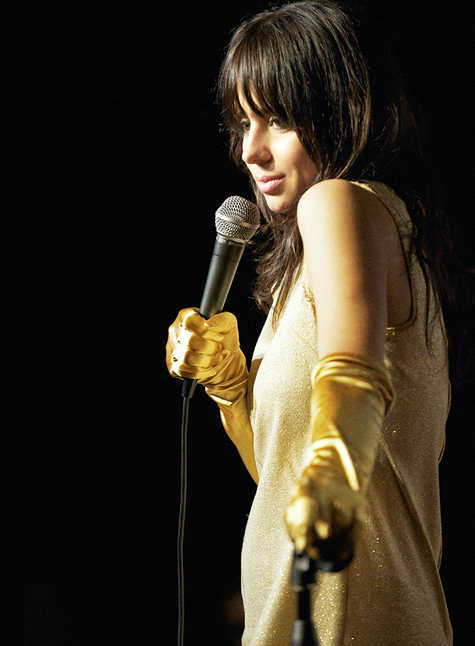
Standup comedian and general pop culture humorist, Natasha Leggero
Although convincing in her roles portraying strippers, sozzled skanks and “housewives” on It’s Always Sunny in Philadelphia and Reno 911, Natasha Leggero is no high-class hooker. She is a comedian.
A standup comedian who also does comic acting, Leggero is the voice of Callie Maggotbone on Comedy Central’s Ugly Americans, has been on the Tonight Show twice, as well as the Late Show, Samantha Who and The Sarah Silverman Program, was a judge on the last season of NBC’s Last Comic Standing and gets down digitally with a weekly podcast and a steady stream of pop culture jokes on Twitter.
She’s honed her flailing-arm, bourgeois physical comedic persona while smoothly imparting socially undertoned and well-timed jokes. Such humor and general likeability matched with comedic respect is unexpectedly bold and witty for someone so petite and pretty.
Certainly recognizable from her function as a social humorist, Leggero has been a consistent roundtable guest on E!’s Chelsea Lately since 2007. She’s that unarguably hot little lady with the big sparkly eyes, glossy long dark hair and the kind of jokes that don’t cut, but smack you upside the head with a thud.
Especially feeding on the hilarity of our current social climate, Leggero likes to dress in a glamorously classy fashion (read: wearing pearls while sipping a Manhattan at 11:30 a.m.) and question reality TV, hip-hop songs and “toilet babies” (babies delivered in toilets by women who didn’t know they were pregnant).
Born in Illinois and having attended performing arts school in New York, Leggero moved to Los Angeles to begin her comedy career, working to lose her “flat-A” accent along the way. A fond memory of transitioning from a Midwesterner was being in a place where “people know what sparkling water is,” she shared.
Leggero spoke with Submerge about doing standup, Snooki and why it’s so natural for her to act obliterated.
How long have you been doing standup?
Nine years.
Do you remember the particular club or city where you started your standup career?
I was in Los Angeles at the Comedy Store in the Belly Room, which is a room that was actually designed in the ‘70s for women comedians, and it’s just a great, easy room for comedy. It’s a great place to start out. I think they call it the Belly Room because it’s kind of like a womb. There are no distractions. It’s this small, dark room with low ceilings and no bar in the back. It’s a really kind room for comedy.
No big mistakes that first time?
I’m still trying to get a set as good as the first time I was onstage. It was a great set, and then I was so shocked that everyone was laughing. Yeah, it was just this amazing experience. The laughter just felt like waves coming over me. But now that I think about that story, I remember someone had given me a Xanax, and I had had some wine, so it might have been the drugs doing that.
You’ve portrayed quite a few characters. Which is your favorite character that you’ve acted out at this point?
Anything I do with the people from Reno 911 is my favorite, because they’re all just such amazing improvisers that somehow they make you funnier by just being so generous and funny themselves. They really know how to set you up for the jokes.
I worked with Tom Lennon and Ben Garant from Reno 911. I did Reno four times and I did their movie. I just did a pilot for them for NBC, which didn’t get picked up. Now we’re doing one for FX, which is a white trash, futuristic version of Reno 911; it’s set in space. It’s called Alabama, and I’m going to be playing a sex robot. I’m a sex robot in the future, who’s on the spaceship and everybody is tired of fucking.
So you become a defunct sex robot.
Exactly. I think at one point they order me a new vagina. But it’s all improv.
You’re pretty obviously obliterated in that role on Reno 911. Was it very difficult to act very trashed?
It was sort of an impediment when I was in acting school. We’d be doing Chekov and they’d say, “Stop moving around so much, you seem like you’re drunk.”
And it’s just a physicality that I just naturally do, that, um, seems like I’m drunk. Especially when I’m onstage. I’ve always liked to fall. I always have been good at it. I would always pretend to fall for my friends. I mastered that art of pratfalls, and I’d always have comedy bruises all over myself. It’s something I always knew how to do and it goes well with being wasted.

You are a consistent guest on Chelsea Lately. How many times have you been on that show?
I think I lost count at 70… Last time I did it, Snooki was there, whom you may know from her work on the Jersey Shore. I had my dog with me, who’s a little Chihuahua, and we were backstage. I have a little “service dog” vest for it so I can take it into restaurants, and Snooki was like, “Can I see yoor dwaag?” So I said sure and showed her my dog. She was like, “Why ya got this vest?” I was like, “I have epilepsy,” as a joke, and she said, “What’s epilepsy?” I thought that was pretty phenomenal that word has escaped her, her whole life.
What are your thoughts on reality TV?
I just don’t understand why we’re calling them “stars” when it’s the first thing they’ve ever done… In general it’s pretty silly, but it’s definitely there for us to make fun of, I feel like. It’s a good time to be a comedian.
You joke about not wanting kids, but there’s a picture of you and a baby on your Twitter page.
I can’t believe my friend let me breastfeed her baby! Actually, she let me put a pacifier in the baby’s mouth, and then I pressed it up against my boob. So, that’s not my child. I should re-do that picture with my dog.
When doing jokes about hip-hop songs, you actually sing, and your voice sounds really good. Do you have any plans on adding “singer” to your entertainment resume?
I would love to sing more. My voice is not that trained. I definitely think I could do a lounge act.
If you did put out an album, what kind of music do you think you would do?
I would probably lay on a piano and belt out some old standards. Or maybe write some new standards about toilet babies.
Do you have any favorite type of audience?
I like people who are a little savvier, hip, stylish. They get where I’m going with everything. They are not afraid to laugh at things that can be slightly mean.
Have you had any run-ins of the obsessed fan sort?
This one guy brought a picture of me on Chelsea… and he took the screen shot right when I was in the middle of crossing my legs and you could see the smallest bit of my underwear and he wanted me to sign it.
What did you say to him?
I said, “That’s disgusting,” and then I signed it.
W. Kamau Bell on America’s Racial Tourette’s
Words by Vincent Girimonte
W. Kamau Bell reassures me in our conversation last week that yes, I read the fine print correctly: if you bring a person of a different race to his show, The W. Kamau Bell Curve: Ending Racism in About an Hour, slated for two performances Aug. 20, 2010 at The Comedy Spot, you will be rewarded with a two-for-one discount. This bargain first struck me as some sort of revealing trap, or maybe just a joke I wasn’t quite in on–“people are so cynical.” My next question: who’s in charge of this…profiling of a racial nature?
“We have a strict ‘don’t ask, don’t tell’ policy at the door,” says the San Francisco-based comedian, who, in addition touring with the Curve, released his second stand-up album, A Face Full of Flour, earlier this year. “You don’t want to put some door person at the forefront of telling somebody ‘you two are the same race!’”
The show’s moniker is as unambiguous as Bell himself, a “race-ist” commanding attention through a blunt dialogue on our racial States, and his build even–6-foot-4 with an afro. Digital slides, video clips and various other media are used as part of Bell’s shtick, striving to stimulate and invigorate the atrophied, “post-racial” conscience, white, black, brown or Polish (remember: no asking or telling).
It seems as though your show employs some didactic techniques; are you giving us a race lesson, in a sense?
I definitely like people leaving the show thinking “I didn’t know that,” but it’s a comedy show. If people want to learn, there are people way smarter than me to learn from–it’s not a funny lecture. I’ve always liked comedy that left you with something afterwards, though. I’m a big fan of Bill Hicks and Lenny Bruce, people who were comedians first, but also want to change the way you think about things, change the air in the room a little bit. I’d be stupid to compare myself to two of the greatest comics in the history of mankind, but I think that’s the school of comedy [under which I perform]. I think that’s also true of Chris Rock; he wants you think differently when you leave the room.
How did race first manifest itself in your material?
Like a lot of things, it’s the fault of your parents. My mom was a Ph.D. student at Stanford back in the ‘70s. She was trying to get her degree in African-American literature, but at that point Stanford didn’t consider African-American literature to be a field of study. She withdrew from the program rather than take a Ph.D. in a program she didn’t want…so that’s my mom. My dad has always been the kind of black person who was either the first or “I’ll be better than everyone around me.” He’s been a super successful businessman because he refuses to be defined by his race. Being raised by those people sort of puts you in the way I see the world. I’ve always struggled with how the world sees me versus how I see the world.
You spent much of your youth in Chicago. How did your time there influence your views on race?
Chicago is one of the most racially segregated cities in the United States. There are probably still places in Chicago where black people shouldn’t go. The difference in Chicago is they might tell you when you walk in, “Oh no, black people shouldn’t be here.” Oh thanks, I’ll see you later. Coming out to San Francisco, which has the reputation of being super liberal, there are places where black people shouldn’t go, but they just don’t talk to you. That’s true of every racial group–I’m only speaking from the black perspective. The racial dialogue in San Francisco isn’t usually talked out loud, because people think we solved it by virtue of our area code. In Chicago, I feel like you can tell somebody, “You’re being racist,” and they’d be like, “You’re damn right I’m being racist,” which is a different problem. In the Bay Area it’s, “What? How could I? There’s no way. I have a black friend. I order my burritos in Spanish.” I think living in San Francisco is what pulled the show out of me.
You’re a language guy. Give me an accepted word or phrase pertaining to race that you find annoying.
We’re two years into the era of the first black president, and there’s still this debate about whether or not we’re living in “post-racial” America. That was solely an invention of the media. It doesn’t even make sense. I looked it up in the dictionary and found out it’s not in the dictionary. It doesn’t mean anything. In the show I talk about how I can disprove the idea of post-racial America in two words: Cleveland Indians. I show the logos for the Indians, for the Redskins, the Braves: We still have sports teams named after races of people.
The last six months of news has been fraught with racial tension–I’m thinking Shirley Sherrod, the Tea Party, Arizona SB 1070. What did happen to that “post-racial” society of November 2008?
When I started doing this show, people thought this guy Obama could maybe be vice-president for Hillary Clinton. How quickly things changed. It’s interesting to me, because America having their first black president has become a lightning rod for racists. It’s almost like having racial tourette’s. And the right has done a really good job of making people believe that their problems are the fault of [Obama]; not that we, the rich people, have destroyed the economy. It’s easy to blame the black guy. I’m also not there to cheerlead Barack Obama. The show is hyper-topical; there are things that come in and out of the show based on how topical they are.
Why can Americans laugh about race but not talk about it seriously?
Well a lot of race humor–and this is what I try to steer clear of–is just making fun of other races. A large part of humor settles on making fun of people; not that there’s anything wrong with that, but it’s not the same as when Chris Rock talks about race, or Dave Chapelle talks about race. The thing I’m trying to do with the show is use jokes to indict stuff I don’t like, but I’m not just making fun of it. It’s easy to make fun of other people, you know, “That’s true! Chinese people do blah, blah, blah.”
Catch The W. Kamau Bell Curve: Ending Racism in About an Hour at The Comedy Spot, Aug. 20, 2010 playing back to back at 8 p.m. and 10 p.m.
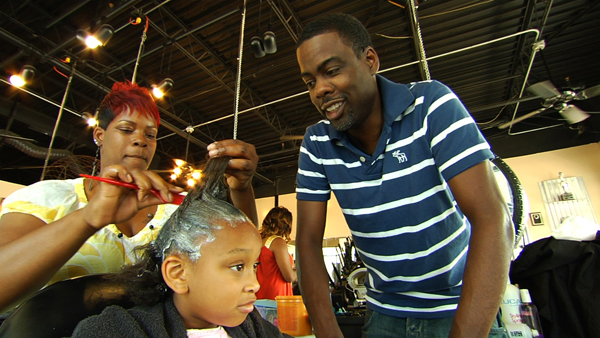
Click the image above to view the trailer for Chris Rock’s newest comedy/documentary Good Hair. Here’s a snippet from the synopsis:
When Chris Rock’s daughter, Lola, came up to him crying and asked, Daddy, how come I dont have good hair? the bewildered comic committed himself to search the ends of the earth and the depths of black culture to find out who had put that question into his little girl’s head!
The film is directed by Jeff Stilson and features interviews with Paul Mooney, Ice T and Maya Angelou, amongst others. From the trailer, it seems like this one’s going to be a winner…in fact, it already won a Special Jury Prize for U.S. Documentary at this year’s Sundance Festival. Good Hair will open Oct. 9 in select cities and Oct. 23 nationwide.