Nature’s Calling
Of everyone, artists seem to be the ones to grasp onto the “work to live” mantra, as opposed to “live to work.” Recession schmrecession, when it gets right down to it, artists create for the sake of creating, and most inherently become a fighting force for their community while they’re at it. But to be able to do both, to be able to create, support your community and simultaneously earn a living from being artistic—well, that is a luxury few are talented enough to afford.
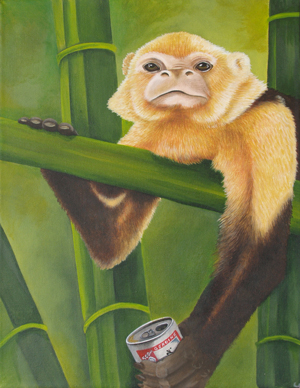
Enter Sacramento native Char Hall. An accomplished artist at an early age, Hall was “raised by the wild plains of her imagination.” Following a self-described “panic attack” after high school that disenchanted her into thinking she needed to be “in the real world and join the job force,” she found herself on a whirlwind path that led her to her spot today, as Sacramento’s premier tattoo artist and one of the capitol’s most sought-after fine artists. Her visual art, and oftentimes her tattoos, hover around broad themes including nature, fauna and flora.
“I love doing flowers,” Hall says, with an affectionate concern that we take flowers like the azalea bush for granted when we walk by, without fully appreciating the extent of their beauty.
That soft spot for the natural world more than likely stemmed from the books she devoured as a youngster. “I read every single Black Stallion book that was out there,” she says, while also becoming a devotee of “sci-fi and fantasy stuff.” In fact, she counts Jim Henson and Brian Froud as two of her heroes. “My ultimate job would be to do art with those guys,” she says with that kind of gush that can only be applied to fantasizing about working alongside those you’ve idolized. “I would love to do creature creation and make monsters for a living.”
But for now, Hall’s winning bread as Sacramento’s premier tattoo artist—which, she admits with candor, allows her to earn money while still practicing art. Tattooing “pushed me back into art,” she says, creating a continuous cycle wherein these two worlds of tattoo artistry and fine art play against each other. Becoming better at one form guides her into becoming better at the other, she reflects. The two media, however, are “very, very different,” she says. “I paint for myself. I tattoo for others.”
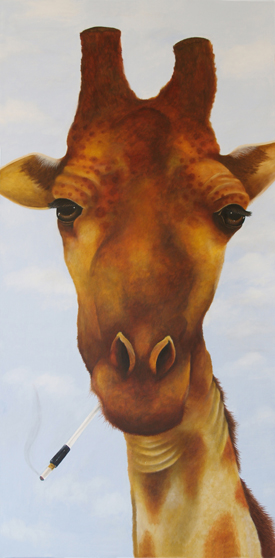
Her shop/gallery, Side Show Studios, co-owned with artist Cy Wylie and located at 5635 Freeport Blvd., Suite 6, in Sacramento, is a meticulous, flash-free spot where local artists stop by on any given day. “You can’t walk in and say, ‘I’ll have a Number 46 with a side of spider webs’ here,” she says.
This week, Hall is in Orlando, Fla. attending the invitation-only “Marked for Life” Female Tattoo Artist Expo. The honor to mingle among key players in the industry is well deserved for this multiple-Best of Sacramento top honors winner. But the almost immediacy of it is not lost on Hall, who half-jokes that her tattoo artist training began four years ago with a good friend giving her “a 30-second rundown on how not to kill someone” and sending her on her journey to learn for herself. Being self-taught has made her “very nervous” to attend; in fact, she won’t even look up fellow attendees before she goes. “It’s crazy to me,” she says. “In my mind, I’m still that same person [before the awards]. There are guys that I aspire to be like; I’m nowhere near that yet. Maybe in 10-15 years I’ll be able to compete with those guys and really be the best of Sacramento.”
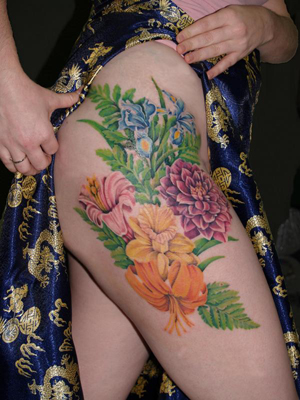
Here’s just a quick rundown of the eclectic, incredibly colorful gallery of Char Hall’s tattoo art: A full back tattoo of a sprawling tree with butterflies alighting; fanciful, multi-hued hot air balloons that look as though they’ll float right off the wearer’s skin; a sketch of the Mad Tea Party scene straight from the original Alice’s Adventures in Wonderland, which inspired another piece with the Cheshire Cat for someone else.

“One of my most favorite tattoos in the world,” she says, is one of her own: a beautiful, sprawling, orange octopus that was only supposed to take three hours—until she learned the art was meant to wrap around the owner’s ankles. After assessing the difficulty of keeping the tracing paper in such a precarious place while applying the tattoo, she decided to wing it and draw the octopus freehand. “I had a good time drawing it on,” she says with a proud reflection. But she didn’t stop there. Once the form took shape, the swell of possibilities in applying her studies in color theory took over, and she calmly and confidently convinced her client to let her carry her creation to the end. Ten hours later, Hall had completed her lifelike masterpiece; and no doubt developed a relationship with her customer, as well (she only charged for the three hours she initially thought it would take).
This story of the octopus seems to be a fitting example when explaining the feeling one gets from simply viewing Hall’s fine art or tattoo galleries, or even the shop’s MySpace page. There’s a feeling of mindful concern and compassion that stems from the human-like faces and mannerisms on her sketched animals (“if you make them human, it’s harder to kill them,” she says), to the “who I’d like to meet” section on Side Show’s MySpace bio (“people who believe in being active and supportive of their communities”), to the subject matter she chose for her three prints showcased in the fourth annual Aves: A Celebration of Birds art show.
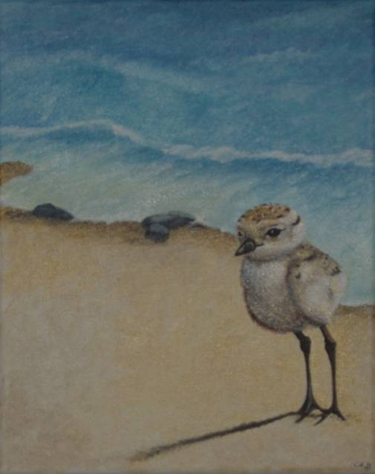
Those three prints are an homage to the endangered Snowy Plover, a sparrow-like shorebird that she loves to watch “skip around on the sand” when she visits her favorite beach in Santa Cruz. The show coincided with National Bird Day and benefited Born Free USA and the Animal Protection Institute.
“Everything we do in life affects someone,” she coolly asserts, when asked about this mindfulness that exudes from her, her work and her environment. When someone walks into the shop, “I could take their money and kick them in the pants,” she muses. But for Hall, there’s no reason to get worked up about the little annoyances in life. And why would she? “I have the best job in the world,” she says. “I get to draw on people all day.”
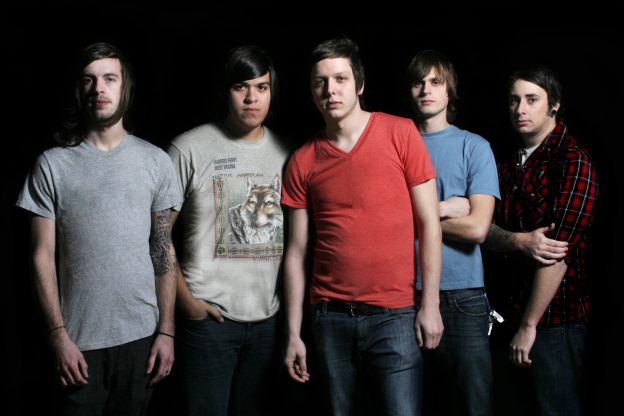
When success implodes a band, it’s a tough pill to swallow for everyone involved. Climbing the rungs of regional notoriety can be fun if accomplished over time; but if you’re Mozart Season, and the ladder was as slippery a slope as it was in the band’s formative year, you can almost hear the thud before the fall. After catapulting their traditional NorCal screamo into an arc of sold-out shows in the greater Sacramento area, opening for national headlining acts, and parading their verve for an increasingly rabid mass, the bottom fell out and left the group tattered somewhere in El Paso, Texas, on their first tour. Splintered and salvaged, Mozart Season has endured more lineup changes than they’d care to mention, and more false-starts than Liu Xiang at the Beijing Olympics. But there’s hope around every corner, and thus Mozart Season has chalked up their losses, and finally focused on making up for lost time. The band will release their first recording since 2006 with the Apotheosis EP, an invasive, though somewhat innovative, new disc that swelters under the pangs of drooling metal, with only hints of the melodic underwriting of their previous efforts.
The band will be back in shape, new lineup in tow, Saturday, Jan. 17 at the Boardwalk, playing alongside Dance Gavin Dance and Consider the Thief. Vocalist Nate and bassist Troy were kind enough to give Submerge an update on their new EP, their past and their future.
What was the impetus for the band to reunite after the breakup?
Nate: It all started with wanting to play a reunion show for fun. Once we all started jamming again, we really began to realize just how much we missed playing music. We wrote a new song after about two weeks or so of playing together again and decided that we wanted to get back together. A year later, we’ve got an EP done, the most solid lineup we’ve ever had, and are working at proving ourselves to anyone who has ever doubted us
How supportive has the scene in Sacramento been with regard to you making the decision to reform?
Nate: Well, the two shows that we’ve played have been awesome! But that’s only two shows. I think we still have a lot of work to do to gain back what we had going for us. We were all very humbled by the breakup, and we’ve been thrilled with the response to our new music. We just hope that we can keep playing music for a long time and constantly get better.
Troy: The reception of our new music has been incredible. New fans, old fans and even people who formerly disliked us have now embraced our new sound and it’s been amazing. This is only the beginning for us, though; we want to make our mark in Sacramento and then on an even bigger level.
Explain the consistent lineup changes in the band. What might you point out as the reasons for the constant shift in personnel over the years?
Nate: For some it’s been commitment issues, and for others it’s been because of wanting to better their lives in other ways than music like college, careers or other bands. The band now is stronger than ever. We’re seriously attached at the hip. We are friends before we are band mates, so it works out way better. We respect each other and work well together. When we all started to play together, the chemistry was there. It’s by far the strongest and most solid lineup we have had and none of us are going anywhere.
Do you feel like your almost immediate regional success has helped or hindered the band?
Nate: It’s definitely helped the band. We weren’t expecting such a quick response to everything we’ve been working on and we have so much momentum from it that we’re not going to let anything stop us. We plan on touring the West Coast as soon as possible and playing regionally so we can push this new album.
Troy: We haven’t let anything go to our heads. Although we do have a lot of regional success, we are pushing ourselves constantly to get better and better.
What would you say is the band’s new modus operandi? Or what would be your new philosophy for the continued evolution of the band?
Nate: “Party Hard, Work harder.” We realized that this takes a lot work, and we’re going to prove ourselves in ’09 and for the years after.
What sort of artistic resonance does the title of your new album, Apotheosis, have for the band? Is it a metaphor for the resurgence of the group?
Nate: It’s definitely a metaphor for the resurgence of the group. Mozart Season has been to hell and back, and we don’t have much to show for it anymore because we disappeared for a year. Some of us realized a year after we broke up that it was the biggest mistake of our lives. We felt discouraged, beat down, like no one would ever take us seriously again. We knew if we got back together, it was going to have to be different. We had to be doing it for the right reasons and we had to be writing music that we would want to listen to in our cars, or on our computers or wherever. We have just been taking every challenge and bump in the road head on and as fast as we can.
Troy: We took the name Apotheosis from a part of “the hero’s journey” [an excerpt from Joseph Campbell’s The Hero with a Thousand Faces] I remember learning all about it in high school and it seemed appropriate for our situation. As we had heard it defined, the Apotheosis is where the hero’s ego is disintegrated in a breakthrough expansion of consciousness. Quite frequently the hero’s idea of reality is changed; the hero may find an ability to do new things or to see a larger point of view. And that is exactly where we found ourselves while writing this new album. The band had broken up for a year and come back with a new idea of reality and what we wanted to be doing musically and that’s portrayed through our new sound.
In what direction did you attempt to push your musical spectrum on your new album?
Nate: We didn’t go into it with any direction or idea of what the album was going to sound like. That was our problem in the past. We were always trying to fit the screamo mold because that’s what people seemed to love. We had all sorts of issues trying to get this album done and those feelings of frustration I think definitely shaped the outcome of this EP. Losing Joel [vocalist], we lost our old sound completely, so this EP is just a mixture of what everyone new to the band and the veterans brought to the table during the writing process.
Troy: When we started to write this album, we had no set plan as to what our sound was going to be. While it’s nearly impossible to be “original,” we wanted to stray away from fitting into any specific “sounds like” category. We wanted to break away from the old sound and produce a more mature album, and I think we did just that. The old music was written nearly three years ago; our skill as musicians and songwriters has gotten far better since then and I think that shows.
Timeless & Timely
North America in the late ’60s and early ’70s was a dangerous and magical place. War, as well as social and economic upheaval, spun the U.S. and much of the world in a dizzying—albeit groovy—downward spiral. The fabric of human existence was rolled up like good dope and smoked all the way down to the roach. Still, no matter how bad things got, people could still get by as long as they didn’t forget to laugh (and take plenty of drugs); and luckily for them, they had Cheech & Chong.
One part Mexican-American, one part half-Asian and Canadian, the members of the legendary comedy/musical duo met as a result of the tumultuous times. Cheech Marin ventured north from Los Angeles to Vancouver, B.C. in order to escape the draft. There, he met Tommy Chong”¦ And you probably know the rest.
“It was really magical,” Chong says of Vancouver in the late ’60s, “because we were all on acid at the time.”
Whether it was the work of hallucinogens or not, the two comedians overcame their humble beginnings and struck a chord with an entire generation. Through touring, film and albums, Cheech & Chong sang and joked about drugs and the counterculture well into the ’80s; however, they were unable to overcome their own differences. A reunion seemed unlikely, but now the legendary twosome is once again on the road after more than 25 years apart.
Submerge recently had the opportunity to speak with both Cheech Marin and Tommy Chong about their past, present and future—if only they could think that far ahead.
How is the tour going so far?
Cheech Marin: It’s just going great. We’re having so much fun, and we’re playing to great audiences who love us and shower us with baggies of dope.
How about you, Tommy? Are you enjoying yourself also?
Tommy Chong: Well, I’m a little paranoid. Every time someone gives me something, I think it’s the feds trying to bust me again.
CM: I have to take it for him.
Has your time in prison changed your lifestyle?
TC: Absolutely. I can have anal sex with my wife now.
CM: [Laughs]
TC: And it’s a bitch trying to find a strap on that’s big enough.
CM: Yeah, without it she tends to fall in, you know?
TC: We’re getting better. I’m getting a tattoo on my back so she can have reading material.
You’re thinking about getting a tramp stamp?
CM: [Laughs]
TC: Is that what they call them? This one girl had a tattoo of a seashell on her inner thigh. She said that if you put your ear to it, you could smell the ocean.
A lot of people have compared this time in American history to the Vietnam War era. Since you were active in the counterculture of that time, do you think those comparisons are valid?
CM: The political and economic landscapes are the same. We had a very unpopular president—Nixon—a very unpopular war—Vietnam. The economy was in shambles like it is now. The only difference was the draft. There’s no draft now. That’s what really mobilized the youth in one camp against the war.
TC: You had no choice back then. Now you got a choice. What they do now is dangle those citizenship papers, “You want to get a green card, go get your ass shot at in Afghanistan.” That would make a great recruiting poster.
CM: In today’s economy, it’s a viable job option, you know? A lot of people are going for it.
I’d read an article in Rolling Stone recently that said comedy is like music or anything else; it goes in and out of fashion. But your comedy seems to have a timeless quality. Do you think there are some things that are always funny?
CM: Yeah, I do. I think it’s obvious from the reaction we get to our stage show now. They’re classic bits, and they’re timely at the same time. It’s amazing how they go with each other.
TC: They’re timeless and timely at the same time.
What was it like for you guys to start writing again after being separated for so long?
CM: We don’t so much as sit down and formally write as just the show evolves night after night. We both throw something new in. “Oh, let’s try this or let’s try that.” He’ll say something and I’ll react to it on stage, and vice versa. People who have seen our show when we first started the tour would say, “Oh, they’ve got a bunch of new jokes,” but we hardly notice them, because the show evolves under our feet the whole time.
TC: We use a technique called “Shoot the Rehearsal.” We don’t waste anything. If we’re going to expend energy being funny, then we want to either record, or have someone there to see it; that way, we don’t waste it.
CM: Comedy is a terrible thing to waste. We recycle comedy. That’s what we’re doing. Our act is going evergreen.
Well, that is very timely.
TC: We are very green comics, aren’t we?
CM: We don’t waste them, we don’t use the jokes we can’t use”¦
TC: And we smoke all the green that gets thrown up on stage. We recycle the pot.
CM: Through our lungs”¦
And then back out into the audience”¦
TC: It comes out in the form of jokes.
Just recently, you two played your first show together in more than 25 years, but when I was doing research for this interview, I saw that you were working on a script around the time Tommy was arrested, is that correct?
TC: Yeah”¦I think the universe stepped in and said, “That movie’s not going to work. Let’s get Tommy arrested.” It was for New Line pictures, and thank God we didn’t end up with them. But what it did”¦well, we weren’t ready. It was a money thing and neither one of us were committed to doing it. It was one of those, “Well, if the money’s there, then OK.” But in the end, it had to come from us. We had to make the decisions.
So there were a lot of stops and starts with you guys trying to get back together again”¦
CM: Yeah, there was a lot of that. Something interfered, and it was just not cosmically right, I guess.
TC: The cops call it “hesitation marks.” When you’re going to slit your wrists, there are two or three hesitation marks, and then the big slash. So with us, it was hesitation marks before we finally made the big jump. And now here we are.
Do you guys think this is going to be a regular thing, or do you think this tour is a one-shot deal?
CM: I don’t know. It’s getting to feel like it’s pretty regular [laughs].
TC: It’s like a series on television, you know? You can usually begin to tell a year before it ends that, “Uh-oh, we’re getting to the end.” Because everyone starts losing interest: the audience loses interest, you lose interest, but right now we’re at the beginning of it. The tour and everything else feels really exciting. It’s like people are dying to see us. It’s like Cher or Barbara Streisand’s first comeback tour.
CM: We’re going to do seven or eight comeback tours.
You guys could alternate breakup and comeback tours every other year or so.
CM: Yeah, there you go. It’s all how you market the brand.
Considering your rocky relationship and all your history together, do you think you guys will ever be rid of one another?
CM: Apparently not. It’s like when you have a tattoo, and you go to get it lasered off, you have a scar that’s in the shape of the tattoo. It’s not going to go away.
TC: I did a Shakespeare play with Tom Hanks for a charity thing, and when I got off stage after doing Shakespeare, I had a guy come up to me and had me sign Cheech and Chong albums.
CM: It’s an indelible mark.

20,000 Breaks into the Sacramento Music Scene
Comprised of locals David Mohr and girlfriend Meg Larkin, the band 20,000 is relatively new to the Sacramento music scene—but with their youthful energy and down to earth attitudes, it’s no wonder that fans are quickly tuning in. “By default, I usually just say it’s dance music with guy/girl vocals and synthesizers,” Larkin says about their style. Even if you’re not typically a fan of dance music, there is no doubt that the upbeat tempo and catchy lyrics of 20,000 will have you up and out of your seat in no time.
It started as a dream—literally. Mohr says, “I had a dream a while ago that we had a band and we named it 20,000.” Both Mohr and Larkin are adamant that if you dream it, you must do it, and thus 20,000 was born. “If you do what you do in your dreams in real life, then it’s almost like you’re predicting the future,” Mohr says.
“Yeah, it’s true,” Larkin adds. “If you dream that you’re wearing red socks, you have to buy a pair of red socks and wear them.”
About two years ago, sparks started flying, musically, that is. Mohr began writing music on his computer, and then he and Larkin started adding vocals. Mohr says, “When I was writing the songs for the album, I was listening to music that has a lot of synths in it, but not necessarily electronic music.” They cite musicians such as Prince, Talking Heads and Hot Chip as being very influential during that time period. Larkin says, “Up until a couple of years ago I never really listened to dance music, but it’s some of my favorite music now.”
The goal for their music is simple: create songs with a good beat that people will want to party and dance to. Mohr says, “While we were recording the album, I was thinking it would be cool to just have a good CD for people to listen to in their houses at parties.” He writes all of their songs, and is no stranger to the music world. He played with some of his high school buddies in a band called Didley Squat for about six years, and when that gig dissolved, he naturally transitioned into forming 20,000.
While they had been diligently practicing and recording songs at home for many months, their first live performance happened this past August, at Old Ironsides. “We were apparently really visibly nervous,” Larkin remembers. “I was wearing short shorts and this crop top, just trying to be funny, but it was the most intimidating outfit to wear in front of people as a joke.” While their first show was definitely nerve-wracking, a lot of their friends came out to show support and it was a fun experience that paved the way for future shows. Other than Old Ironsides, they’ve played at Javalounge, Luigi’s Fun Garden and Blue Lamp.
When transitioning to live performances, Mohr says that one of the biggest challenges is figuring out how to make everything sound right in such a drastically different environment. After spending two years perfecting their songs in their apartment with only a tiny set of computer speakers—and trying to keep the noise level down so as not to disturb the neighbors—they now had to create a seamless performance in a real venue.
For Larkin, there was the added challenge of being brand-new to the music scene. She had been involved with musicals during high school but had no prior experience with playing an instrument. “When we decided to start playing live shows, I learned how to play rudimentary keyboard,” she says. This was completely terrifying at first, and she remembers being nervous for six or seven hours before a show, to the point where she could barely eat or drink. But as time went on and performing became more commonplace, her nervous energy eventually went away, and now she loves the thrill of shows. “When we have a show and there’s people responding to it and everyone is nice it’s like, yes! We’re the best band ever! Let’s do this every night!”
Both members play keyboards and sing, and their drumbeats are on an iPod. This means that they can carry all of their instruments to a show and set everything up on their own—no roadies required. “It’s super easy for us to set up,” Larkin explains, adding that it literally takes about four minutes. “Just put the keyboards on the stand, plug it in, turn the iPod on and we’re set.”
Although perhaps they hadn’t planned to “make it big” in the music business, the Sacramento music scene has been good to 20,000. Larkin is surprised at how easy it has been to get shows that they really enjoy. Their friends have also been extremely encouraging in this new venture. Larkin says, “It’s definitely been cool to see how supportive our friends have been, getting them to come out and pay for shows over and over and over again.”
20,000 will likely become a common name in the Sacramento area as time progresses. The couple is ecstatic about their 2009 New Year’s Eve show at Blue Lamp, which has been the biggest show they’ve played so far.
You can check them out on Myspace: www.myspace.com/20000music.

Cuesta Drive’s Dane Drewis Plays Favorites
Sacramento’s own rock/pop/funk outfit Cuesta Drive is gearing up for the release of their sophomore album, Distractions. The diverse 15-track record is surely something to be proud of and lead singer/guitarist Dane Drewis confessed it was tough to choose his favorite track. “I have to admit, we have had a really hard time picking our single,” Drewis recently shared with Submerge.
“So, we decided to let the fans decide,” he continued. “We want them to listen and e-mail, Myspace or text us with their favorite choice.”
So, Sacramento, here is your chance to put your two cents in and let your voice be heard. Cuesta Drive will officially release Distractions on Saturday Dec. 27 at Marilyn’s on K. The show starts at 9:30 p.m. and the $15 cover charge includes a copy of the new record. After you cure your hangover the next morning from a fun-filled party night, listen to the CD in its entirety, choose your favorite track and let the band know! You might just hear your choice on local radio stations and think to yourself, “I chose that one!”
Despite his busy schedule getting ready for the release show, Submerge recently caught up with Drewis to talk about some of his favorite (and least favorite) things in life. Be sure to check out www.cuestadrive.com for more details about the band, tour dates and links to buy their music.
Favorite records of all time:
1. The Beatles: I’m not going to narrow it down to a single album, that’s not fair.
2. Songs in the Key of Life – Stevie (the 8th) Wonder of the World: His genius and talent drop my jaw on a daily basis. I still can’t believe someone can have so many incredible pieces of music.
3. Thriller – Michael Jackson: In today’s world we lose track of the art of “albums,” myself included, because of MP3s and song downloading etc., so you rarely sit down and listen to an entire album from front to back. Thriller is amazing; even today’s generation would think that it’s a “best of” compilation, but it’s not. That album was and still is that strong.
Favorite concerts you’ve attended:
1. Steely Dan: Holy jeez, some of the most ridiculous musicians I’ve ever heard/seen in my life. I think it’s cool as hell that the old guys still throw it down.
2. Tower of Power: My dad raised me on East Bay Grease, among other things. But seeing Tower play live, from a musician’s standpoint, it doesn’t get any better than that. They are what every band’s chops should strive to be.
3. Amos Lee: I just recently started getting into him. I do have to admit Mike [Camilleri, Cuesta Drive guitarist] introduced me to his music over a year ago, but I wasn’t quite ready yet for some reason. I went recently to see him at the Fillmore and he blew my mind. His songwriting and vocals are so strong; I don’t think I blinked, just stood there mesmerized for the entire show.
Least favorite concerts you’ve attended:
1. I don’t think I’ve never been to a concert that I severely disliked. If that happens, I usually find a way to distract myself. I’m pretty picky when it comes to choosing concerts, and even if it is not what I was hoping for, I always can focus on something else like the sound engineers, lighting, stage crew etc; that stuff always interests me.
Favorite shows you played in ’08:
1. Crawdad’s on the River on Memorial Day weekend: This is our second year in a row doing it, and the crowd is wild. The show is always great because everyone is feeling good and ready to party, all we have to do is plug in.
2. Our bass player was out of town for a couple weeks this summer, so we had a string of about five gigs with my dad on bass. He’s a guitar player by trade, so bass was relatively new to him, but he did an incredible job. Jamming on stage with my dad for those shows was something I will never forget.
3. Marylin’s on K, Thanksgiving weekend: This was our “pre-CD release show” and it turned out great. Tons of people came out to support and it was the first big show for our new drummer Jason Weed. We had been on a little hiatus while finishing up the new album, so it felt really good to get back on stage and turn up. I’m pretty sure the crowd enjoyed it as much as we did.
Favorites things to write songs about:
1. Love or lack thereof: Someone the other day told me we are like Romantic Funk Rock (haha), which made me finally realize that most of our songs are based on females. At first I thought that was a bad thing, and that we needed to start focusing on other topics. But you can only write about what you’re feeling at the moment, you have to capture the “now” inspiration, and for both Mike and I, that’s what comes out.
2. Miscommunication.
3. The trials and tribulations of getting through everyday life: That may sound cliché, but it’s the truth. Give the album a listen and you can decide for yourself.
Favorite things to do in and around Sac:
1. Playing shows is our favorite thing to do by far. I don’t think there is anything else we would rather be doing. I like to get out and play/jam every night if possible. I try to invade local open mics and sit in with people whenever they let me.
2. Drink profusely. Is that bad?
3. Barbecue in the summer: Nothing like sitting around on a lazy Sunday with friends, not having a care in the world. We definitely did a lot of that in San Luis Obispo, and if things go right, we’ll never stop.
4. I love to golf, but haven’t found enough time lately.
Favorite local watering hole:
1. The Dirty Bird, baby: I used to live about 50 yards from Club Raven. Big ups to Jimmy and Brad!
2. 2me is my new watering hole. Can never go wrong there.
3. Old Ironsides: I love going to open mic night with Lare Crawley and listening to him entertain the crowd. Good times.
Favorite movies:
1. Dumb and Dumber: Comedic genius. Anyone who is friends with us on Myspace knows I quote it regularly.
2. The new Batman: Awesome”¦.except when he talks.
3. Forgetting Sarah Marshall: I wish Aldous Snow was real.
Favorite TV shows:
1. Entourage: But I don’t have cable so I’ve watched season one on DVD about 20 times.
2. 30 Rock: Genius.
3. I know Mike wants me to say It’s Always Sunny in Philadelphia, and he’s right, that shit is funny.
4. Flight of the Conchords: It’s business time.
Favorite gifts you’ve gotten for Christmas:
1. Uggs: Say what you will about a guy in Uggs. Just know this: It’s like foot sex.
2. My 1982 Gibson 335: My dad bought it the year I was born. It has yet to be showcased at a live show. I want to make sure I’m worthy of it before I bust it out. That guitar is an absolute masterpiece, sonically and aesthetically.
3. My Vintage pre-CBS Fender Vibrolux amp: My dad held on to it for a long time and gave it to me last Christmas. I’m afraid to play it, because it sounds so good and everything inside is original. I’m kind of afraid to wear out the original tubes you know? You can hear it all over Distractions, it’s pretty much on every song somewhere.
2Me Adapts to Any Situation
Life can undo the best made plans. However, those who stay open-minded are able to shift gears without much problem, and often find a change in direction a breath of fresh air. Sacramento’s ever-morphing folk-rock group 2Me seems to thrive under this ethos.
Here’s one example of 2Me’s willingness to go with the flow: When Submerge spoke with 2Me’s drummer and co-founding member Reid Foster, he was standing outside the Rogue Ale’s Public House in snowy Portland, Ore. He and his band—currently consisting of guitarist/bassist Mark Gonzalez and second founding member, singer/guitarist Christopher Twomey—were slated to play a show in either Oregon or Washingon. We asked Foster if they had the situation sorted out. He responded, “No, we didn’t actually. But we’ve got a friend who plays in a Jerry Garcia cover band, and they’re doing a party here tonight, so we’re just going to hang out with them and sit in between their sets.”
Since forming in August 2003, 2Me has seen many musicians come and go. Twomey and Foster have been the band’s only two consistent members. Foster acknowledges that the many comings and goings have made life in 2Me rather challenging, but it has also kept things interesting.
“I think it keeps it pretty exciting, but it also keeps it challenging for us to—you know, you’ve got people learning the songs here and there, or not learning them and winging it,” he explains. “It’s always like we’ve got to keep on our toes with stuff like that, but it’s really fun. There are a lot of times when we’ll hear something we didn’t think we’d hear, and all of us will get that same glimmer in our eyes when we’re on stage like, ‘Damn, that just happened!’ It’s cool.”
Other than Twomey and Foster, the only other constant for 2Me has been momentum. Foster describes their growing fan base as “an ever-growing community of people who’d maybe just met, or maybe known each other for years.”
This community has a chance to grow even larger this holiday season. 2Me is planning on releasing a new album, Chasing Silhouettes the day after Christmas.
You’ve had a lot of members, but 2Me has always been you and Chris, since the beginning.
Yeah, it’s always been at least Chris and myself. We had a couple of guys who were with us the first three years, and they ended up going their separate ways; ever since then it’s been Chris and myself and who ever else is down to play with us. We had a mandolin player named Ken Burnett, who’s toured with us here and there the past couple years. He’s a pretty regular fixture, but he had to take this weekend off and stay home.
Most bands kind of shut down this time of year, but I saw you guys were squeezing in three dates right before Christmas.
That was kind of a random whim. We’d been talking about when to do it, and we were at the Blue Lamp in Sacramento, and the owner was right there and he said, “How about the day after Christmas? It’ll be a great day and blah blah blah”¦” So we figure it’ll be real great for the people who are in town and real bad for the people who aren’t [laughs].
I’d read in your bio that you guys clocked 30,000 miles last year. So I’d imagine you guys play out a lot.
Yeah, we did most of that in one trip. Well, most of it. It was two big trips, but one really, really retardedly big trip. We were just talking about that with someone last night, and Chris was like, “I’d never want to do that again,” and I was like, “Yeah, well, me neither, but it was good—in its own unique way.”
How long were you on the road in those two trips?
Just under five months for the first chunk, and then just a few weeks for the second chunk.
What was that experience like?
It was intense in a lot of ways. It was pretty excessive most of the time; a little mellow some of the time, but you get to a new town and stay there for a couple of days, and if you’re lucky, you have a family for that couple of days that you’ve never met before. We had some really good hangs like that, just staying with people we knew, friends of friends, or sometimes who we just met that night at the bar we were playing. We made some lifelong friends on that trip. It’s really come back around for us full circle already. It was amazing.
Can you think of a specific case where it has come around for you full circle?
Some people we met at a bar in Mizzoula [Mont.] came up to us between sets. It was just Chris and myself, and we’d never been there before, and it was freezing that night. It was kind of a slow night, and these guys tore into the bar and came up to us and said, “We’re doing shots!” So we took a set break and did some shots, and when we finished, we met with them at the bar around the corner and ended up crashing with them for a couple of days. Two of those people have driven through Sacramento a couple of times and crashed at our house. We just saw them a couple of weeks ago, and it turned out that Gonzo [Mark Gonzalez] knew them in some weird random way. It’s really nuts. It’s ridiculous how the dots have connected on that type of level.
The more you go out in the world, the more you realize how small it really is, I would imagine.
That’s for sure. That is a fact if I’ve ever heard one.
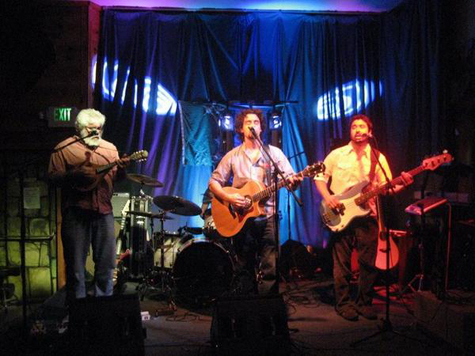
Practically speaking, when you were on the road back in 2007, gas prices were around twice as much as they are now. How were you able to handle that?
We definitely had some conversations lately about how we wished we were doing that [touring the country] right now. It wasn’t even a thing. Gas prices had been going up gradually for the last few years. It was like, “Well these are the gas prices. That’s what we’re going to have to pay if we want to go on tour.”
Now that they’ve come down, do you think you’ll hit the road again?
Well, I don’t think we’re going to hit the road that big—or for that long—any time again soon. We’re trying to pull in the reigns and let ourselves get back home and rest every once and a while. But we’ve got some two- and three-week runs just scattered through 2009—just mapping out where we’re going to be and how long we’re going to be. I think it will be less hectic; the excitement will be jam-packed, but we’ll have some breathers here and there instead of just coasting the entire time.
It sounds like that will be a lot healthier.
I think so—on a lot of levels [laughs].
I know I’m jumping all over the place, but how did you and Chris meet up?
One of his younger brothers was a drinking buddy of mine just out of high school. Chris was kind of like the older brother who played guitar, and we’d see him whenever we saw him, and a lot of times it would be at 4 in the morning when all of us were like 30 beers deep… well, that’s an exaggeration, but, you know, at 4 in the morning. We never really knew each other all that well, but we were out at the bar one night, and he was like, “Let’s start a band,” and sure enough it happened a few weeks later. It happened real naturally, and it’s been quite a trip ever since.
What was it like when you first started playing together? Did you think it was going to go anywhere, or were you just doing it for fun at the time?
It was a little bit of both. I was seeing big from day one, and Chris was seeing big too. He was like, “Woah, it would be crazy if that happened,” and I was more like, “Let’s make it happen!” It’s been really interesting to see how realistic those dreams were in some ways, and how unrealistic the were in others, because we had no idea what we were doing when we first started playing. We always were seeing big, at the very least, and looking at the way things have gone, and it’s been a pretty cool journey.
What were you thinking that turned out to be unrealistic?
I think maybe it was unrealistic, I think we just didn’t collectively know what it took to realize the things that we wanted to be doing. There’s a lot of work that goes into it, and sometimes it takes a while to figure out how to do it—not to mention what that work actually is [laughs].
Sacramento’s Far Comes Home
By Mark Lore | Photos by Jeff Gros
They say you always want to go out on top. If that’s the case, then Sacramento’s Far did everything right. In the mid-’90s Sacramento was on the radar as bands like Cake and Deftones were signing to majors (remember those days?), while post-hardcore was bubbling underneath the city’s surface.
Far soon followed. After a pair of indie releases (1992’s Listening Game and Quick in ’94), the band signed with Epic/Immortal and released Tin Cans With Strings to You in 1996, in the process amassing a dedicated following. Hell, you know the story. Far released its best record in 1998—Water & Solutions—an album that harnessed punk, post-hardcore and even pop (?!) into 41 flawless minutes”¦then called it quits.
“I’m happy we stopped after Water”¦,” says vocalist/guitarist Jonah Matranga. “It was a good balance of all of our personalities.”
Those personalities have fueled various projects over the years—Matranga with his own project, Onelinedrawing, and bands like New End Original and Gratitude. Guitarist Shaun Lopez fronted The Revolution Smile. Drummer Chris Robyn and bassist John Gutenberger went on to form the more pop-oriented Milwaukee, while Gutenberger later formed Two Sheds with his wife, Caitlin.
But it always comes back to Water & Solutions—an album that a decade’s-worth of bands would nefariously hold close to their pained little hearts. In fact, Far might be one of the few bands that actually gained popularity after it broke up.
While it was surprising to hear that in November Far, after a decade apart, was planning on playing a few shows in the U.K., it’s been no surprise that the band’s recent reformation has been met with such unadulterated glee. But the members of Far have kept it loose and stress-free—they re-emerged under the moniker Hot Little Pony, recorded a cover of Ginuwine’s 1996 hit “Pony” (yes, Ginuwine), and are now gearing up for their homecoming show at the Empire on Jan. 15.
Submerge caught up with Matranga and Lopez, who filled us in on the not-so-elaborate Hot Little Pony marketing scheme, what the future holds, and why they don’t want to be blamed for Fall Out Boy.
The music climate has changed quite a bit in the last 10 years. Is that a good thing or a bad thing?
Shaun Lopez: It’s good for us, because we’re in a unique position in being able to go out on tour and be self-sufficient, and be able to make a little money on top of that. I feel for new bands starting up right now because it is tough out there. Record deals being offered to young new bands are not so great; they’re almost better off doing it on their own. For us it’s been OK. Luckily we’re in a position that we do have fans that are pretty dedicated—it’s something we’re very thankful for and very surprised.
Whose idea was it to start playing together again?
SL: It came close when we did the re-release of Water & Solutions [in 2004]. It never came to, and I think in all honesty it probably wasn’t the right time and it wasn’t for the right reasons. Chris [Robyn] and I had been talking about it off and on and then Jonah called me about a year ago and brought the idea of just showing up at a club and playing. I liked the idea of playing again, but I wanted to do it more professionally and go out on a tour.
Jonah Matranga: He always tries to be more professional than me; I’m always the guy that wants to go out and just bang it out. And he’s like, “No dude, gotta rehearse; make it good.” So we balance each other out that way.
There was this semi-elaborate scheme with the Hot Little Pony concept. Whose idea was that? And who decided to record a Ginuwine song?
JM: What looks complex from the outside is just us fucking around on the inside. We wanted to play a couple of shows, and I just really wanted to take the hype away from it because a) I don’t like it, and b) I wanted us to be as unstressed as possible. I think our friend Jeff jokingly thought of the name Hot Little Pony. And we just all laughed when he said it and thought, “Ah that would be really fucking funny.” “Pony” is a tune that we’d always play before shows back in the day. And it’s just a simple song, and so Shaun and Chris laid it down [in Los Angeles] and I came down and sang it. Shaun added his magic dust to it. I don’t know, it just came out; it was a fun, very quick thing.
Now you have your homecoming show in Sacramento. Is that going to be a gauge of whether this continues?
JM: I think it’s all a gauge. There’s nothing official on the books, but there’s a lot being talked about. I think we’re all just trying to take it as it comes. The first two Hot Little Pony shows were like, “OK, can we do this well?” Because it was really important to all of us to not go up there and suck. And then we did the L.A. shows and thought we pretty much ripped it. Then we thought, “OK, can we tour together? Can we not drive each other insane?” The whole “Pony” thing has definitely thrown it into a different gear. We’ve never had any sort of radio play like this so we’ll sort of look at that and see what that means, if anything.
Any shows beyond Sacramento?
JM: Just Sacto. We’re very excited about that. It’s a big enough show where I think it will be fun and exciting, but it still feels like home. We got some friends’ bands on there. I feel pretty sure that more shows will happen, but we have nothing on the books. And then we’re looking at trying to do a little recording together, see what happens with that. My particular take is just trying to do a couple of covers that suggest where we came from as a band. I’m very reticent to do original songs. I don’t want to do an original song just to have a new song, and have it not be as good as the old shit. Because all of our favorite old bands do that and it blows.
Water & Solutions has been touted as your masterpiece. Does that put more pressure on you to record?
SL: I realize that no matter what we do, people are always going to love that record. That’s going to be the record.
JM: Yeah, but some people, frankly, like Tin Cans“¦ more, which I don’t understand. That’s the thing with putting out records”¦I don’t get to control what other people think. But for me, there’s no pressure with people, there’s just pressure for me… I just want to know it kicks ass. We could put something out as good as Nevermind, and people will still be like, “Yeah, you know, I kinda like ‘Bury White.'” But I would just want to feel in myself that it came from an inspired place, and that I could go out with confidence and play it live and feel as strong as I do playing “Bury White” or “Mother Mary” or “Man Overboard.” Those songs, I just feel good playing them. And I don’t feel good playing them because I’m used to them; I feel good because they’re good, and they’re good 10 years later.
Far has influenced a style of music that is looked down on, although you sound nothing like those bands. Do you guys think about that?
JM: I’ve been asked that question a gazillion times in interviews, and my stock answer that sort of makes me laugh, that I totally believe is: I don’t blame Led Zeppelin for Whitesnake and I don’t want to be blamed for Fall Out Boy. We just came around trying to play rock ‘n’ roll that was less dressed up and more human, and mixing heavy shit and more anthemic shit we liked from big rock with this sort of humble, straight in-your-face element of punk. A lot of bands at the time were doing that. And as it happened, when that sort of caught on, there were a lot of bands that traded in their leopard jeans and whatever else the fuck for horn rims and tight pants. They took all the cheap parts and tried to make money off of it, and forgot the important part, which was the humanness of it.
You’ve all changed as people in the last 10 years. How is Far different today than it was in ’98?
JM: The funny thing is that we’ve all changed as people, but the personality balance still to me is working out relatively similarly. I think Shaun and I are better at recognizing that we’re different people, and talking it through, which rules.
SL: Yeah, the communication is much better. In the past a lot of the problem was that when shit would piss people off, they wouldn’t say anything.
JM: It feels good now to come in with a little more time to breathe. And I do think we’ve all, through our individual experiences, learned a little about how important it is to clear the air before shit gets crazy.
Being in a band is like being in a relationship “¦
JM: I liken it to a relationship where the sex is really good, but everything else is weird [laughs]. To me that’s the closest analogy I could come up with without sounding creepy.

Style Network Sends Hip, Local Stylist to Small Town
By Michaela Pommells
The city of Sacramento is laying its claim to “style fame” on the Style Network. This month the trendy Spanish Fly Hair Garage (on 17th and J) will be featured on Split Ends, a hip show that swaps stylists from big-city and small-town salons. Each participant gets two days to live and work in an environment completely opposite from what they are used to. It often starts out as an uneasy, sometimes pretentious ordeal, and usually ends as a humbling, warm experience. But no matter what, this show delivers on drama, humor, shock and suspense.
Spanish Fly’s episode centers, of course, on the stylist swap. Stylist Jake Desrochier was sent off to the tiny town of Bristol, Va. (pop. 17,593), while Spanish Fly’s Anthony Paganelli opened the salon’s doors to small-town stylist Amy Bland. The pressure was on immediately.

“At Spanish Fly, the stylists are required to constantly educate themselves on the newest trends and styles,” Paganelli tells us. Spanish Fly’s stylists are back and forth from New York City to attend Bumble & Bumble education classes, which keep them as fashion forward as you can get in the world of hair. So when Miss Rural U.S.A. arrived in Sacramento, let’s just say she was hit a little broadside. Anthony says she was an eager participant but undoubtedly a fish out of water, which leads up to a slight twist in the expected outcome. You’ll have to grab a spot in front of the tube to see if she can stack up to the level of some of Sacramento’s flyest hair stylists.
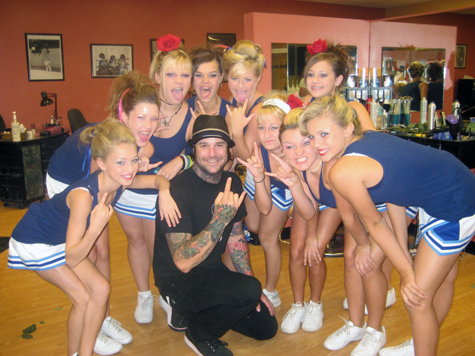
Desrochier was also in for a culture shock. He deserves kudos for trekking across the country and confronting a salon that’s a far cry from the cool J Street establishment he is used to. The first day consists of Jake getting the hang of the new salon’s rules and routines. The second day, he gets a chance to show off his chops to a faithful client. This is always the best part of every show, especially when you have the big city stylist freeing a little old lady from her Velcro rollers and hair dryer cocoon and transitioning to a modern style. Anthony hints at how Jake’s “offbeat” look may play a huge role in how he is received in a town of ladies who probably think style vanguard is a mixture of stirrups, tie-dye and a pair of mules!
Anyone who snickers at the idea of Sacramento being a hip fashion forward city is going to be embarrassingly surprised after watching this episode of Split Ends. As it turns out, Sacramento has more to offer in the world of follicle fashion than most people think. The edgy contemporary décor and the eclectic stylists inside Spanish Fly are your first hints at their trend-setting status.
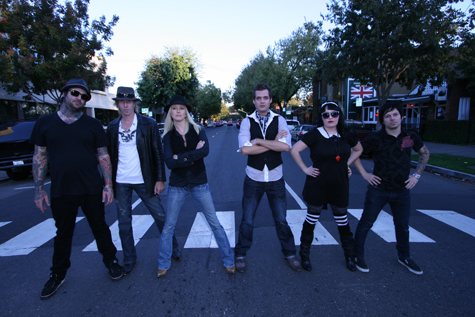
Spanish Fly team
If you’re a local fashionista, style lover or beauty connoisseur you’ll be proud to check out this episode and see how well your city is represented. [Episode aired Dec. 20, 2008]
Sweetwater
5641 J St. | Sacramento
Most people utilize Sunday as a day of rest, or a day to catch up on laundry, yard work, or other things with the word -work attached to the end of it. For myself, it’s a day of false optimism, but usually fun false optimism, centered around one meal: brunch. And not just brunch, champagne brunch, preferably the type that is preceded by the word “bottomless.” My logic goes, if I’m going to have to do laundry, I might as well be drunk. As a 49er die hard who actually believes every week we have a chance, if I’m going to have to watch them get torched, I might as well be torched myself. The idea of champagne brunch is never a bad one, and while other responsibilities and/or emotions can be displaced by the libations, it does make for one awesome Sunday.
What’s funny to me about champagne brunch is that I don’t really like champagne. The first couple sips are always painful, similar to the reaction some get when drinking whiskey or tequila, but like they say, it just takes persistence. In a sense, it’s probably a good thing that I don’t like champagne, mostly because I don’t care if it’s good or bad. For the most part it’s all the same to me. Naturally for any champagne brunch, it’s not about the quality but the quantity of which you can consume in one sitting before the last morsel of food enters your mouth.
After being spoiled by college town brunches that catered to a similarly minded crowd, it took a while for me to find a restaurant that was on the same page in Sacramento. To no surprise, I had to ask a college student to the get the low down. I should have prefaced this earlier by saying that typically a champagne brunch doesn’t mean a good meal, because it’s really not about the food. However, upon finding Sweetwater Restaurant and Bar, that philosophy has been poured down the drain.
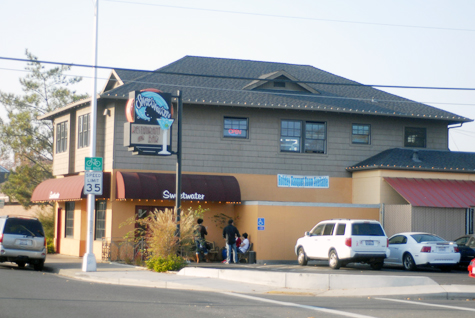
Located at 5641 J St. (conveniently across the street from last issue’s feature, Opa! Opa!) Sweetwater is a dynamite find. The restaurant itself is pretty big, with three separate dining areas including a patio (we’ll get to that later). The decor is modern and clean; it’s nothing over the top and a tacky theme hasn’t been utilized to establish an identity as either a family or fine dining spot. On Sunday, the large flat screen TVs have football on, with bar seating giving you a front row seat to the action and the pours. The staff is always on point; they give you time to order (and enjoy champagne) and let you eat while you snail through your meal (and enjoy champagne).
What makes Sweetwater the ultimate champagne destination, aside from the great food and generous pours, is the patio. On any given Sunday, rain or shine, you can enjoy fresh air under the protection of a canopy and relax to the sounds of their waterfall. It makes for an experience, an outing for friends or couples to hang out in a cool atmosphere with good food and drink. I’ve written 500 words, and we haven’t even gotten to the food yet….
Aww, the food. While I’ve never eaten another meal at Sweetwater, their menu does look impressive. From Hawaiian tuna in a mustard crust, to veal saltimbocca, they got you. But it’s the brunch we are concerned with, and just as the aforementioned items elude to, it’s not your run of the mill brunch menu. I always start with the crispy Monterrey calamari, which is breaded and mixed alongside jalapeños and onions. So bomb, and again, allows extra time for some pours. As far as entrees go, they range from your typical egg, bacon, potato breakfast, to steak and eggs and a vegetarian crepe. My personal favorite is the not-so-unusual, but oh-so-awesome BLTA served on a croissant with an herb mayonnaise. My girl goes back and forth between the California Benedict, also served on a croissant, and a breakfast burrito (which no longer appears to be on the menu) and never complained once.
All in all, it’s safe to assume that at Sweetwater you’ll get what you’re looking for in terms of champagne and the brunch rivals any of the other places that don’t serve champagne. Like the Black Sheep said, “the choice is your’s.”
Shut Up and Dance
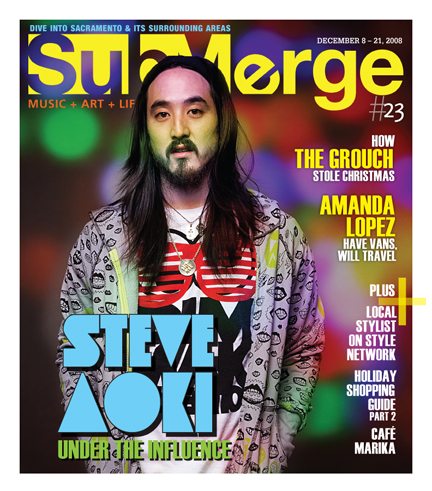
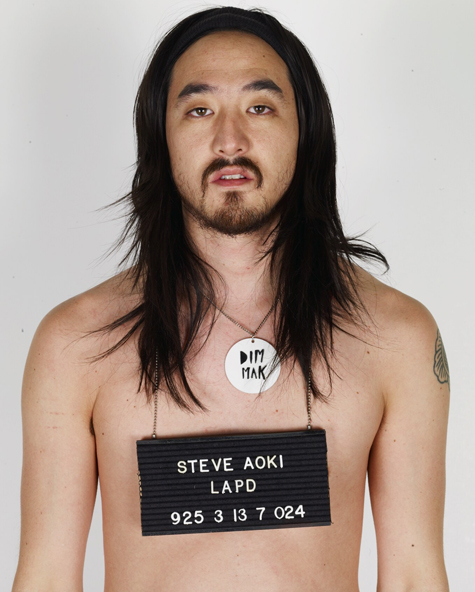
Clicking through pictures on The Cobrasnake, Los Angelean photographer Mark Hunter’s Web site that documents the revelry of his friends and acquaintances, it would seem that, even though much of the world is mired in an economic crunch, excess is still alive and well. At a cursory glance, it would seem that Hunter’s world is full of designer clothes, designer people and designer drugs. And if Hunter is the man who catalogs the flamboyant sights of the Los Angeles (and worldwide) party scene, then it’s DJ Steve Aoki who provides the sounds.
However, to just write Aoki off as the hipster Pied Piper would be a mistake. Born into money (his father, Hiroaki “Rocky” Aoki, recently deceased, was the founder of the Benihana chain of restaurants), Aoki didn’t let his station dissuade him from forging his own path. While pursuing a B.A. in women’s studies and sociology at UC Santa Barbara, Aoki started producing records and hosting underground shows out of his apartment, forging the foundation of what would become long-running L.A.-based music/fashion boutique label Dim Mak, which, unlike many others in the record industry, is thriving in the niche it has carved out for itself.
“You just always have to throw away the old model,” Aoki says of his 12-year-old label. “You have to move with what the new signs of the times are. There are different ways of selling records and making money, creating revenue streams with music. It’s not just record sales. Sometimes we’ll give away one of our singles, just to promote our artist, and find ways to make money around that.”
Aoki’s pursuits do not end at his label, however. He also designs clothes for KR3W Apparel and Supra Footwear; has produced remixes for Lenny Kravitz, Chester French and Robin Thick (and had just turned in one for All American Rejects at the time of this interview); released his first solo mix album, Pillowface and His Airplane Chronicles, in January of this year [2008]; and, following in his father’s footsteps, opened up a restaurant in L.A. called Shin with a few of his celebrity friends. All that, of course, is in addition to performing as a DJ, which has kept him booked solid “25 dates every month” in 2008. Submerge spoke with Aoki during a break from working the studio, a night before he was set to begin a string of DJing dates starting in Porto Alegre, Brazil.
I’d read in an interview that you were hoping to tour less in the future.
Exactly. I’ve just opened a restaurant in L.A. I bought a house here. I’m producing a lot more tracks. All my businesses are running out of L.A. I just love being in L.A. And I just love doing nothing sometimes.
You do have a lot of different ventures. When you go on the road, do you think they suffer without your attention?
You know, Dim Mak records, we’ve been doing that for 12 years. This year, I’ve been, like, gone a lot, right? I’ve been gone 25 dates every month, and the label has just grown exponentially even while I’ve been gone. I just have the right team. I feel like I have the right people around me to run all the different things for me. The clothing line is growing fast and doing really well. I have deadlines that I work with for all the different companies I design—you know, I develop lines for three or four different companies—so I have my own deadlines that I have to handle with these different companies, which is a pain in the ass because everyone has their own seasonal deadlines. The fashion side of things keeps me really fluidly working. I’m constantly working on different stuff. The production, I’ll be in the studio for 12 hours straight and pumping out remixes. I don’t do it every day; I just do it when it needs to get done. There are certain things that take up a bulk of my time, and some things that are, like, constant.
You’ve played some exotic locations; and in December, you’ll be playing The Park Lounge in Sacramento. You’ve been here before. What are your impressions of Sacramento?
I DJ’d at The Park, so it wasn’t a good representation of the nightlife culture there. I’m going back there to play, but this time, I’m not going to play any fucking hip-hop. I’m going to play my dance set and see what people think about that.
Do you feel out the crowd when it comes to what you’re going to play?
I want to be democratic. I don’t want to be a complete snob. I want people to have a good time. It’s not just about educating people about new songs, it’s about having fun, having a fun dance party, you know? You can’t force-feed people music. A good DJ knows how to present music in the right way.
Do you consider yourself a good DJ? Is that something that matters to you?
You mean technically?
Yeah, technically.
Yeah, I mean, it’s just like the A-plus student, the guy who has everything. He’s the Tony Hawk of DJing—he’s technically great, he’s got great song selection, he plays new music, he’s able to educate people, he’s able to be really democratic with the crowd, he’s able to please everyone—all that shit matters. The skills aren’t the only factor. If you asked me the question, “What’s more important: skill or taste?” I’d tell you taste. If a guy’s really skillful, but his tracks are just horrid, I don’t care to listen to his skill. Yngwie Malmsteem can play guitar solos for fucking 30 minutes, but I’m not going to dance to it. I really don’t care about hearing Steve Vai playing his guitar solo, or Eddie Van Halen playing his guitar solo.
Here’s the difference between Steve Vai and Eddie Van Halen: Eddie Van Halen is like, “Fuck it; I’m going to be in a rock band and write songs like ‘Panama’ and ‘Jump’ and fucking huge rock ballads that everyone knows, and everyone’s going to be dancing and having a good time, while I just kill it on the solos.” And then there’s Steve Vai who’s like, “Fuck that shit. I’m just going to be super prog and write solos all day long, and I’m only going to have a core base of like metal-head, techie, fucking dudes—and no girls.” I’m all about Eddie Van Halen.