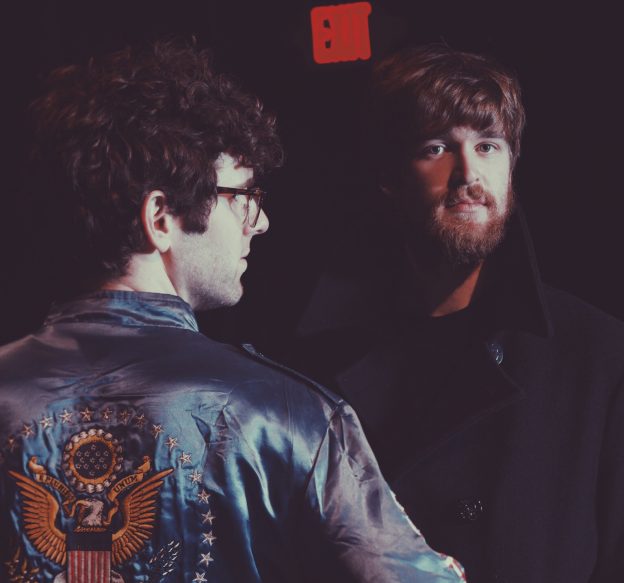
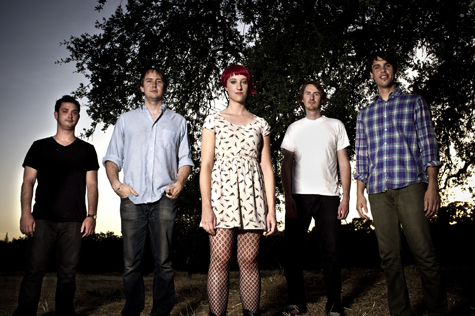
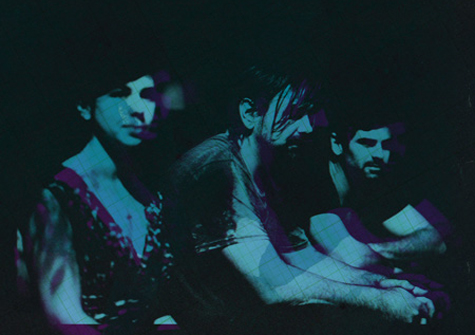
Local experimental electronic band Petaluma will be celebrating the release of their new self-titled LP with two shows in Sacramento this month. Following a show at The Press Club on Saturday, May 13, 2017, with Death Party at the Beach and Sunhaze, Petaluma’s official album-release party will be a free show on Tuesday, May 23, 2017, at LowBrau with Ben Browning of Cut Copy. Petaluma started in 2013 as a two-piece music production duo made up of multi-instrumentalists Rob Habel and Pat Sweeney, but the group has grown since then and they are now a five-piece band. Petaluma’s first release is a combination of dark alternative electronica, psychedelic pop and ambient chillwave. Come out to either of these shows and prepare for a unique live music experience that combines calming and mesmerizing electronic riffs with on-the-spot improvisation. The show at The Press Club on May 13 starts at 6 p.m. and is for ages 21 and over. Tickets can be purchased at the door. The album release show at LowBrau on May 23, 2017, starts at 9 p.m. and you must be 21 or older to attend. Entry is free. Stream Petaluma’s album via the Bandcamp player below.
**The write-up above first appeared in print on page 8 of issue #239 (May 8 – 22, 2017)**
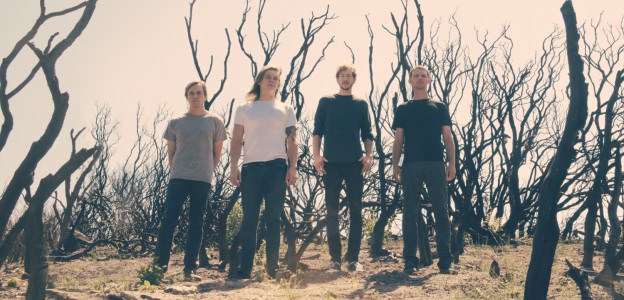
Like a wrecked ship caught halfway in the transition from steel construct to living reef, Pinnacles achieves harmony through clashing processes. They often characterize their music as “prog” or “math” rock, but their work is not overly indulgent in the byzantine excesses of the former or the regimented oblivion of the latter. Instead, they are a varied landscape unto themselves, with tight, earthbound rhythms and sky-borne melodies that rise and fall gracefully like birds of prey pulled aloft by thermal gusts.
Indeed, one has a hard time listening to songs like “Sinking vs. Sourcing,” a highlight off of their last album Convolve and Reflect, without imagining a soaring birds-eye view of dramatic, forested mountains. It is only after a few listens that the second side of Pinnacles—one of intricate, carefully designed technical wizardry and layered production, becomes readily evident.
This background machinery is mostly the realm of the band’s two guitarists/vocalists, Justin Hunt and Robbie Landsburg. After an intense collaborative songwriting and recording process with bassist Jesse Kinseth and drummer Zach Peach, who both weave a maze of mutating (but surprisingly naturalistic) time signatures, the former two can spend months fine-tuning the results, capitalizing on their introverted natures and retreating to a world-within-a-world where endless experimentation for its own sake eventually crystallizes into a record. One gets the sense that they could continue indefinitely—and their shifting, engrossing songs reflect this, almost striving to expand ever outward, refusing to be fully contained by the boundaries of an album. This is the environment from which Convolve and Reflect emerges.
The environment from which Pinnacles emerged about two years back is likewise fertile, in more ways than one. The Nevada City/Grass Valley area, where the band members grew up, has long been a hotbed for creativity, especially in music. The band members cite a supportive local scene, along with the solitude afforded by the lack of sprawl and proximity of the nearby forest, as producing favorable conditions for their exploration into the boundaries of melodic art rock.
At times aggressive or purposefully delicate, precisely arranged or freely drifting, Pinnacles are now at the top of their game and have only bigger and brighter things ahead. While gearing up for an extensive regional tour and considering how they might diverge stylistically in the future, Hunt and Landsburg were able to chat and lend more insight on their genre-bending nature, the unique locale they hail from and the virtues of having countless guitar pedals.
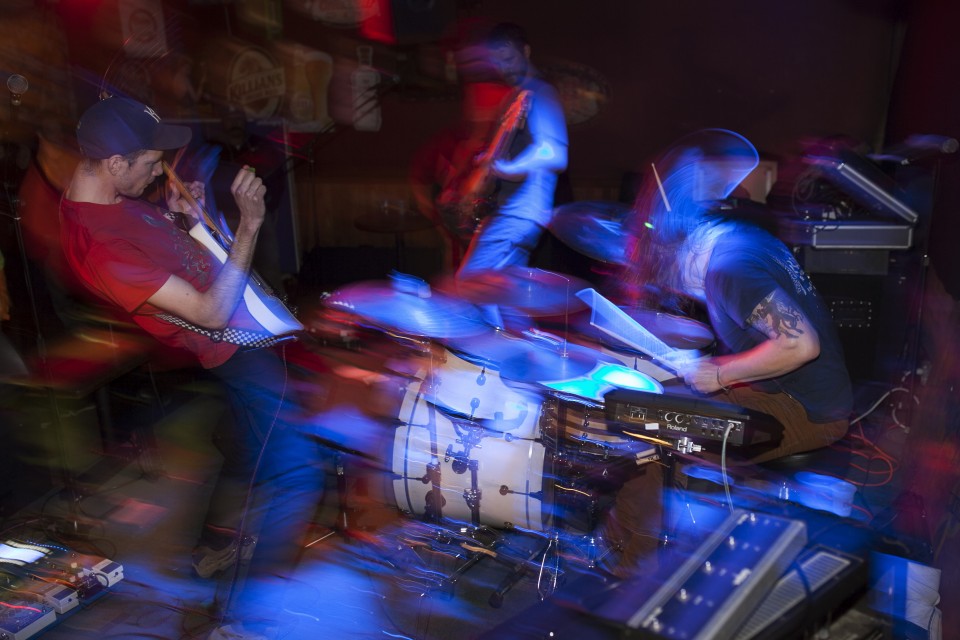
Photo by Jobi Otso
Does the name “Pinnacles” refer to anything in particular?
Justin Hunt: There was actually a long list of potential names that we were crossing off a wall, and “Pinnacles” ended up being the one least offensive for all of us. I’ve always liked the way the name sounded, the imagery that it conjures, just as a knee-jerk reaction.
Robbie Landsburg: Also, there’s a lot of builds in our music, a lot of high points—that’s sort of a connection, there.
JH: Hmm … I never thought about that [laughs].
What about the latest album title, Convolve and Reflect?
JH: That one wasn’t quite as arbitrary—there’s something very onomatopoetic about those two words together. Convolution and reflection are terms used to describe reverberation, or reverb. There’s the reverb that we were using on the record and in our recording spaces. If there was a theme to the record, though, it would be empathy or the lack thereof these days—people not being emotionally connected to each other, just kind of broad-stroke themes like that. So convolving and reflecting is kind of about people coming together, bouncing off one another and existing in the same space. It was a very loose idea that I liked.
RL: Our previous album, Automaton—that name was a reference to automation, which is also something you use when you’re in the studio. Our band is like a merge of digital and analog worlds. On the vocals sometimes we’ll have weird, harmonizer effects that are kind of robotic, blended with natural acoustic instruments. There’s a mixing of the digital and analog, as well as the emotional and emotionless.
Are your natural surroundings a big influence on your music?
JH: I’d say yes, but mostly subconsciously. It’s a beautiful place—there’s not nearly as many distractions as in a big city.
RL: For me, living in this small town in the foothills, surrounded by nature, and yet I’ve always been a very computer-oriented person as well, I appreciate the outdoors just as much as I appreciate nerding out on computers. There’s always that duality, and it’s something I’ve always been fascinated by.
Was there a particular style or sound you hand in mind for this project from the beginning, and is it the same as what it is today?
JH: I don’t know if we had any particular ideas, to be honest. I don’t know if there were any preconceived notions of what we wanted it to be, which is part of the fun, at least for me.
RL: Yeah, totally. I think we all played to our strengths, like I do a lot of guitar tapping, and then Justin tends to write in some really weird time signatures—it’s never really in 7, never really in 9, it’s shifting throughout. And Zach, our drummer was in a really prog-y band before this, and he’s a really straight-ahead rock drummer that can also do some really cool stuff in odd time signatures. We each play to our own strengths, and I think we kind of took that as far as we could with that last album. I’ve been talking about branching out and getting a little less rock ‘n’ roll and guitars on our next endeavor. I think Convolve and Reflect is our “mastery” of what we initially started with.
Were you always a fan of progressive/math/post rock? When did you first discover these genres?
JH: I don’t know. I’d say I’ve become more of a fan of that kind of music of late, but I don’t know how much it informs the songwriting process of our band. I didn’t grow up listening to a lot of traditional “prog” bands of the ‘70s like Yes and Rush, but I knew those bands, and I liked them. The genre wasn’t something that was terribly influential for me, as a guitar player or songwriter. The weird, odd meters is just something that happens naturally, more just what comes out when we get in a room and start messing around. And after a while, it feeds on itself and becomes what we do regularly.
RL: Justin and I are both huge fans of the guitar and drum sound on Siamese Dream [by Smashing Pumpkins]. Our bassist Jesse is a huge Tool fan, and I think we’re all huge Tool fans, Aenima and Lateralus were influential as we were growing up.
JH: I think the idea is to use odd time signatures, but not make them sound incredibly complicated. Maybe because we’re all neurotic and want to keep it interesting for us, but at the same time, we don’t want to sound too pretentious.
The influences you mentioned seem to all have special attention to loud/quiet, heavy/delicate dynamics.
JH: I think, at least Robbie and I, we’re huge fans of a lot of ‘90s rock music, which did that extremely well—especially that Tool/Smashing Pumpkins kind of flavor. I started playing guitar in that era, and there’s a lot of that dynamic in the music from that time. Another thing that was influential on me was the prettier soundscapes and then heavier sections, trying to blend those together.
RL: I love every type of music out there, but it can get kind of tiresome in a band doing nothing but heavy or quiet stuff exclusively. It sort of desensitizes you as a listener. I like to keep a contrast, keep the listener on their toes and also present a journey or cinematic experience.
JH: Also, we get to play with more pedals! The more sounds we mess with, the more pedals we get to justify buying.
Speaking of messing with sound, you’re both credited as producers on your last two releases. What is your approach to production?
JH: Just as a financial decision, we’ve always valued the DIY aesthetic in this band, and it has become something that defines us. When we set out to make our first record we just wanted to do a demo on a lark, and it sounded reasonably good, so we decided to do everything else by ourselves as well. To do things on your own as a band—for one, it’s a lot cheaper. It’s a small investment of money and a large investment of time. I like keeping things under our control. A lot of it was Robbie and I just sitting in there, tweaking the music bit by bit.
RL: If this record had been made in the ‘90s, on a studio budget, it would have been like $500,000. The amount of time we spent on it, just going down the rabbit hole, exploring options, coming up with harmonies, we completely re-amped all our guitars, sending it through the interface of our computer, and through the pedals, and back out of the amps—that way, we could do live pedal performances with our hands instead of stomping on them. Just going down the rabbit hole of soundscapes and ambiances, and not always to a tasteful effects either [both laugh].
What’s your take on Nevada City’s unusually rich music scene as a small town?
JH: Yeah, there’s a disproportionate amount of talent that comes out of here, considering its size. My take is that, there was an era where there was a lot of hippies who left the cities and moved up here to raise their families, and those same hippies became parents who really fostered the arts with their children. Thinking about that question, that’s the best answer I can come up with. It’s a peaceful, quiet community, with a lot of parents who are very supportive of their children who have become this generation of musicians who at least had opportunities to flourish.
RL: And I think there’s a compounding effect as well, when you see other people who are a bit older than you who are performing, and you know some of them, or their siblings, it makes it seem that much more attainable to attempt it yourself.
Pinnacles kick off their West Coast tour March 17, 2016 in Grass Valley at Center for the Arts’ Off Center Stage. On March 23 they’ll play The Press Club in Sacramento. To listen to and/or purchase Pinnacles’ latest album Convolve and Reflect, go to Pinnacles.bandcamp.com. Trust us, you’ll be glad you did.
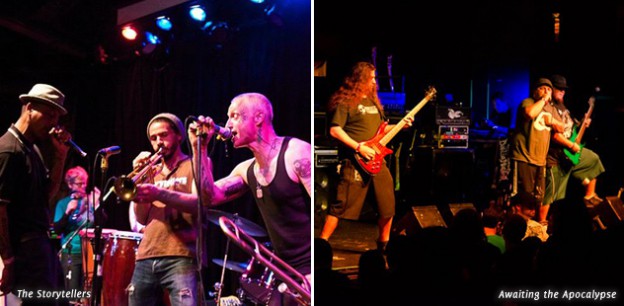
Within the next month, The Press Club will host two separate major milestone shows for two prominent local bands. First up, on Sunday, Jan. 25, 2015, The Sacto Storytellers are playing their 15-Year Anniversary show! Joining them for the matinee gig (kicks off at 5 p.m., so get there early) will be The Flower Vato and Ky of the group Recorded Freedom. The Storytellers are a collective of incredibly talented local roots/reggae/ska musicians, and they are easily one of the most underrated bands in town. Seriously, check out their 2013 album V.A.S.O.S. at Soundcloud.com/sactostorytellers, or pick up a copy at a show. Undeniable grooves, super catchy melodies from the horn section, complementing male/female vocals, it’s no wonder the group has withstood the test of time, they’re just that good. You can also find them at Facebook.com/sacstorytellers.
{Photo by Dan McGlade}
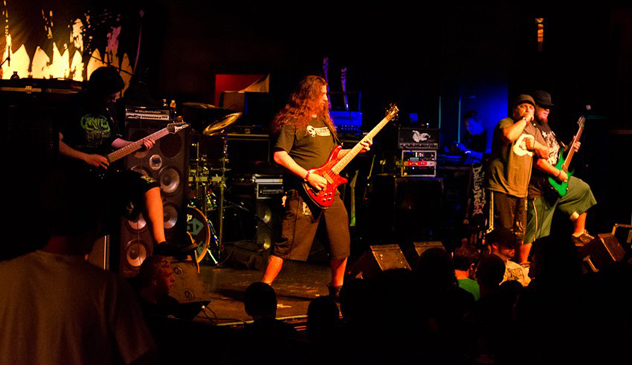
The second milestone show at Press will be for a band that couldn’t possibly be any more different from The Storytellers, but that’s part of what makes Sacto so great, its musical diversity. On Tuesday, Feb. 3, Awaiting the Apocalypse will play their 10-Year Anniversary show and joining them will be Catharsus from Visalia, California, and locals Removal of a Tenth. If you aren’t familiar, Awaiting the Apocalypse is a brutal death metal band that has been pulverizing California’s heavy music scene since 2004 with their intense rhythms and breakdowns, guttural growls and face-melting guitar riffs. Their 2011 album At War With the Dead is streamable on Spotify and is solid front to back. ATA should be (hopefully) releasing a new album this year. Find them at Facebook.com/awaitingtheapocalypse or Reverbnation.com/awaitingtheapocalypse.
Heartsounds Gets Less Metal, More Melodic
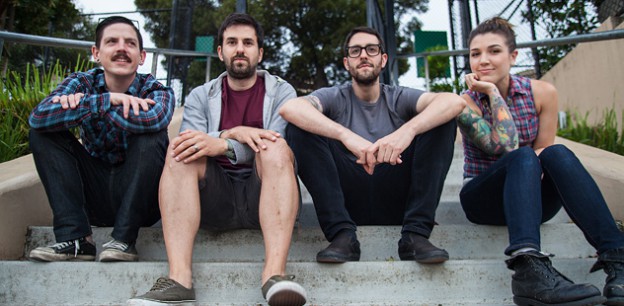
The passive music listener can easily recognize punk music. Quick, driving rhythms, an undertone of chaos, and above all, a lot of fast emotional expression. The sound is as distinct as harmonica and lapsteel crooning out an old country tune or the synth-y blips bouncing out of electronica. But it takes an active music listener to take the next step and begin to differentiate between the sounds within a genre like punk, and find what makes each group unique. Groups like Fugazi, Minor Threat and Bad Religion all brought punk to the larger audience in the ‘80s and ‘90s, followed by more mainstream sensations like Green Day, and helped listeners begin to differentiate between styles like hardcore, pop-punk, post-punk and emo. It’s a strong community, full of diverse sounds and talented musicians like the Bay Area’s Heartsounds.
So, how do you describe Heartsounds’…sound?
“It’s faster and a little bit more going on than the punk you hear on the radio,” said Ben Murray, one of the guitarists and vocalists of Heartsounds.
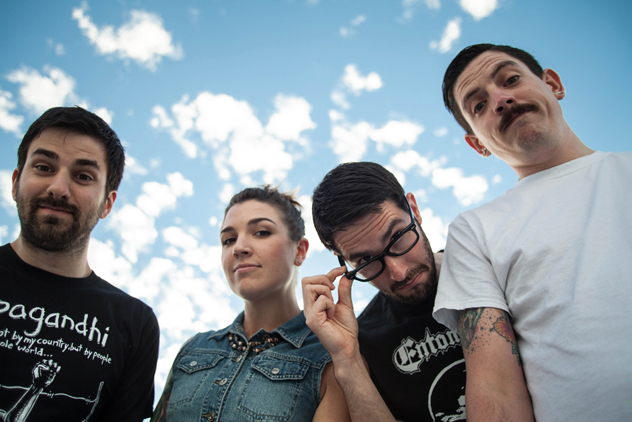
The band started in 2009, with Ben Murray and Laura Nichol as the sole members. The duo wrote the first album, Until We Surrender, in Murray’s apartment. They began playing the material live, and shortly thereafter through the circuit of live shows and the punk community they met their future drummer Trey Derbes and bassist Kyle Camarillo (later replaced by Bobby Taul). Once formed as a full band, the foursome began touring frequently and started to gain momentum, which eventually led to being signed to Epitaph, who re-released the first album in 2010, along with their follow-up, Drifter, in 2011.The group gained popularity fast with their blend of metal-influenced technique and punk buoyant tempos, with both Murray and Nichol switching off singing lead; the sound of tight-knit electric guitar riffs seemingly scratching grooves in the airwaves for Murray and Nichol’s voices to flow evenly through.
“We’re a fast band… We play pretty fast, faster than most, [based on] ideas of punk bands you’d hear on the radio,” Murray said. “It’s faster and has the male and female vocal tradeoff. I feel it’s unique to us. Laura and I have a heavy metal background so there’s also a bit of technical precision focused riffs.”
The band has spent the last four years gaining a fanbase worldwide. Touring with bands like Strung Out, Heartsounds has made their way through Japan, Mexico, Europe and the United Kingdom and most recently Australia. Throughout the continents the audience response has varied, but remained positive.
“It’s definitely vastly different from one to another,” Murray said. “Some people are just more expressive than others. You play in Mexico City they go absolutely apeshit because they don’t get a lot of punk bands down there from the U.S., and Japan’s kind of the same way, but I feel like in Europe and the U.S. it’s a little more tame reactions.”
In the past, Heartsounds has received a lot of comparisons to ‘80s/’90s/early ‘00s punk icons like Hot Water Music and Bad Religion.
“Brett [Gurewitz] from Epitaph helped produce vocals for Drifter. There’s definitely a lot of Bad Religion influence; I love that band,” Murray said. “I’d compare it more to bands like Strung Out, bands that do a bit faster stuff that’s still really melodic.”
As the band has progressed and grown, the project still seems to be led with Murray at the helm.
“All the actual music writing is usually just done by me in my apartment,” Murray laughed.
Murray crafts the songs, then works the instrumental arrangements with Derbes, and the vocals with Nichol.
In the past, albums like Drifter had a much more distinct metal direction within the sound. For their newest release, Internal Eyes, the group tried to streamline the sound a bit and put more energy into simplified melodies.
“We tried to step it back for this one and concentrate more on the chord progressions and not having so many technical parts,” Murray said. “It’s just as emotional as the last two in terms of the lyrics and content, but this one I feel is a little more lighthearted.”
For Internal Eyes, the instrumental precision from the earlier material is still present, but there seems to be more space in the sound. The guitar riffs sound less linear and more melodic without losing their impressive quickness. Derbes’ drums still keep high adrenaline rhythm, but with more slight pauses that give the listener more time to catch up, and give the songs a more recognizable body.
Another conscious change Heartsounds made for the record was putting more emphasis on bringing the main vocals to the forefront of the songs, and equalling out the male/female vocal leads.
“We were more concerned with how the vocal melodies could be more dynamic and compelling. The one thing we did way differently on this record was the tradeoff between mine and Laura’s voices is a lot more frequent. In every song we’re pretty 50/50 on that.”
The band chose to release Internal Eyes through Murray’s own label, Creator-Destructor. Murray started the label as a side project, a way to release Heartsounds’ material and help friends out as well.
“It’s kind of just a fun project for me,” Murray said. “But it’s cool to be able to sustain it and keep putting out records, and putting out your own record is really nice… It’s kind of a labor of love.”
Murray does his part to help out the punk scene as a lot of other musicians do within the community, which is full of “a lot of tight knit bands,” Murray said.
“It’s cool because [the punk scene] doesn’t feel very judgmental or clique-y. I think a lot of bands get along with each other because they’re just punk bands, they can respect one another and be cool to each other. There’s not a lot of division within punk, which is super cool,” Murray said. “There’s no one gunning for massive success… They’re just doing their thing.”

Heartsounds will be playing the third annual Punch and Pie Fest (Aug. 14–17, 2014), kicking off the event on Aug. 14 at The Press Club with The Civil War Rust, The Shell Corporation and D-Cent Jerks, who’ve made the trek from Puerto Rico. For a full list of bands and venues, check out Punchandpiefest.com. Internal Eyes can be purchased through Creator-destructor.com.
Rocklin Band Wife and Son Release Their Debut Album
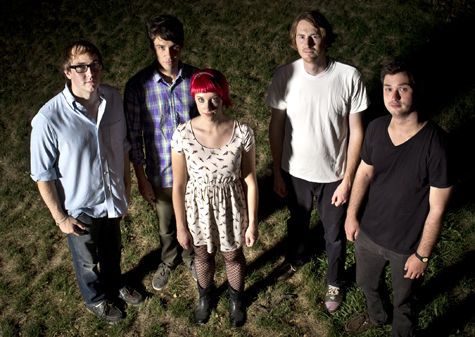
Rocklin-based indie pop band Wife and Son is a shining example of why you shouldn’t take yourself too seriously. Formed in 2009, the now five-piece group was originally the brainchild of guitarist/vocalists Richie Smith and Robert Brundage. They had been making music together for a while in a series of what they refer to as “joke bands,” until they started taking music more seriously under the moniker of Wife and Son. This That and the Other, the band’s debut album was released digitally in April but it is now ready for its official physical release.
Smith and Brundage have been friends for about eight years, Smith says, and were introduced through his little sister Alexis. Smith, a Grass Valley native, and Brundage, born in Monterey, Calif., but raised in Folsom, played in a variety of bands before entering into Wife and Son. These early bands included The Outrights and Polar Bear Filth. These outfits garnered some coffee house gigs, but Smith says that they were strictly just for fun. However, though they say that none of the songs on This That and the Other find their origins in the Polar Bear Filth catalog, those formative years of goofing around with music have played some part in where they’re at today.
“I feel like the joking around allowed me to not take anything seriously,” Brundage says. “That way, you’re not afraid to try some crazy harmony that’s kind of flashy or too pop-y–just being willing to try anything, even if it might sound like something that you told yourself you’d never write.”
Funny enough, Wife and Son also started out as a joke but quickly morphed into something much more. With Smith’s wife Mars Wheeler (synthesizer/vocals) rounding out the original lineup, the group immediately started demoing songs.
“We started writing songs, and we really liked them, so we decided to actually try and do it,” Brundage explains.
“The goal was to be as original as possible,” Smith says of the band’s early writing sessions. “We all are big fans of pop music and good pop songwriting, like the Beatles as one of the best examples, but we also wanted to forego the classic pop song formula. We wanted to write freely and not necessarily go with the typical verse-chorus-verse format. Those are the things we would talk about a little bit, and we just wrote these song poems, almost, and put them together.”
Those demos stuck, however. Brundage says that all but one of the songs from the band’s original demo have found their way to This That and the Other, though they have evolved considerably since thanks to playing and gigging them a lot. The additions of bass player Josh Quimby and drummer Luke Arredondo also had a huge role in the songs’ maturation process.
“How we wrote the album was we wrote all the parts,” Smith says. “We composed the bass lines and we composed the drum parts as well. We’re not drummers. We can play a little bit, but we composed in our minds what kind of beat patterns we wanted to go with the songs. We presented them to Luke, and he would make it make sense.”
“He’d make them actual drum parts,” Brundage adds.
This That and the Other was produced and recorded almost entirely by the band. Other than the drums, which were tracked at One Eleven Recording and Music Studio in Roseville with the help of Kevin Prince, the album was recorded in Smith’s apartment using Logic and Brundage’s Macbook. It was an arduous task, but the band is happy with the result.
“We worked on the record over the course of a year, off and on,” Smith says. “It was a long process. There was a lot of stuff we had tracked that we ended up retracking. Honestly, we’re glad to be done with that process. We learned a ton on this first record.”
This being their first album, a lot of trial and error went into the process. Brundage says that some of the songs were recorded up to eight times.
“I was basically learning how to record while we were recording, and we were all learning about production too,” Brundage says. “It was like this huge music school on how to make a record.”
You’d probably never realize the meticulous nature of its recording by listening to This That and the Other. Opening track “Sea Salt” sets the tone with its carefree structure and generous use of reverb. The song feels loose, but in a good way–in a way that speaks of a band just having fun with the music and not coming off as guarded.
“Sea Salt,” one of the first songs the band demoed, was written in a very free-wheeling manner.
“We just hit record and Mars and I started singing,” Brundage says. “We just started freestyling, and we liked what we had to say.”
“Rob and I were just jamming on guitar parts,” Smith says of the song. “We wrote the guitar, bass line and drum part all in one sitting, in about an hour, then Mars woke up from a nap to lay down the vocal.”
Other songs came from a more structured writing process. The Brundage-penned “Little Baby Hurricane” had more intent behind it.
“I just sat down one day, and I just wanted to make a tribute to ‘50s doo-wop,” he says. “I sat down and pretty much wrote the whole thing and brought it to Richie and Mars, and they put in their two cents. Richie added this great guitar solo at the end.”
In this way, Wife and Son mix up their approach to writing. Smith, Brundage and Wheeler all split songwriting duties (as they do with vocals), sometimes writing separately and presenting the songs to the rest of the group, and other times writing together in the same room. The different approaches may have been a reason why This That and the Other, aptly titled, has such a fresh and varied sound.
Though the album is only just recently completed, Smith, Brundage and company have their sights set on the future of the band. Smith says that the band already has enough material on tap for a second album, which they also hope to produce themselves.
“We like the creative control,” Smith says. “The fact that we learned so much on the first record, we’re actually excited to work on the songs for the second record.”
Smith says that the lessons learned will make Wife and Son’s recording process faster next time around. He says the band will set deadlines for itself and work on being more efficient. It almost sounds like they’re taking themselves seriously. If Wife and Son’s exciting debut is any indication, that’s definitely not a bad thing.
This That and The Other’s release show will take place at The Press Club in Sacramento on June 28, 2012. In addition to Wife and Son, The Tambo Rays and Sicfus will also perform. If you’d like to listen to the album before you buy it, go to Wifeandson.bandcamp.com and of course, you can keep up with their latest happenings by liking them on Facebook (Facebook.com/wifeandson).
Sizzling Sirens teach Sacramento how to shake it
Silky bustiers, black feather boas, strings of pearls and a random pair of motorcycle handlebars made of PVC pipe are painted silver and lay on the floor. A gold vintage sofa rests near two racks lined with handmade costumes, including bras stitched with imitation cash and coins. Beneath a clutter of buttons, jewelry and a tower of sewing knick-knacks appears to be a desk–a typical day at the office, if you’re a Siren. This is the headquarters of Sacramento’s only active burlesque troupe, the Sizzling Sirens, a team of 10 women ranging in ages 19 to 43 years old, each radiating with a flare that is uniquely her own.
A little vaudeville filled with theatrical satire and brought to life with provocative striptease and choreographed dance numbers defines burlesque entertainment in the simplest terms. But when Jay Siren founded the company in March 2008, she envisioned this classic genre of performance art with a couple modern alterations. Siren started teaching her first round of classes at The Press Club later that year, eventually gaining more students and at the same time finding some of the first members of Sizzling Sirens.
Since its infancy in 2008, the Sirens have built a reputation within the local music scene and around town by performing alongside bands like Agent Ribbons and Goodness Gracious Me in addition to corporate parties and events. What’s more, the gals now have a regular live show each month at Harlow’s centered around a theme, and if they ever need a live band, they turn to the veteran jazz musicians of the Harley White Jr. Orchestra for support.

“I think the greatest misconception about burlesque that we run into all the time is, ‘Where’s the pole?’” explains Jay, her off-the-shoulder black T-shirt revealing tattooed leaves spreading down her right shoulder. “For us, burlesque is burlesque-fusion. The way that we do it is a little bit different than the way that you see most burlesque presented nowadays. We take elements of everything that we love about the culture, genre and history and make it our own, mixing past and future ideas. A striptease is part of it, but in the sense of using your costume as a tool to engage your audience as though it were a prop.”
Since moving the Sizzling Sirens troupe into a gray, Victorian building on J Street last April, an idea to form a Performance Series of classes, catering to those interested in learning the art of burlesque with the opportunity to perform alongside the Sirens, was created.
Indiana Bones, Georgia Fire and Sass Herass are all present during this afternoon’s Burlesque 101 class, a one-hour introduction course into the Sirens’ world of burlesque-fusion open to the public. Each woman planted on the wooden floor of the small dance studio routinely stretches her legs and arms before claiming her space, waiting to warm up with the day’s basics.
“Alright Sass, teach us some class,” says Jay clapping her hands together like an athlete ready for the next play.
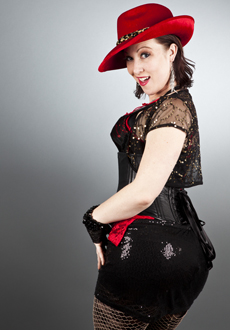
Herass, wearing hot pink spanks that read, “Dance all night,” across her bum, complete with black fishnets, tall black boots and a tilted fedora, is the instructor leading the workshop this week.
Ginuwine’s “Pony” blares from the studio’s sound system and the Sirens begin loosening their hips in a circular motion to the music. Each woman follows Herass’ lead as she keeps time out loud through the steps of the warm up. Now with Etta James’ “W.O.M.A.N” changing the mood of the workshop within the small Midtown space, the four slowly bend forward to stroke the frames of their shapely legs with both hands before gracefully lifting their arms in the air like ballerinas. Using one hand, the Sirens trace the outlines of their faces, then across their chests and eventually following the curves of their bodies. Every move the same, yet differently interpreted through the personality of each Siren.
The newest member to the troupe, Fire, watches her moves in the mirror, her limbs naturally following the flow of the lesson as Bones practices pinup faces while dancing, her short red hair ornamented with a big, white bow. Jay’s once straight black locks begin to curl as the warm-up progresses, sweat glistens down her throat as she attacks each move full out. Herass, who has taught dance over five years, emanates hip-hop in each move she teaches.
“One of our biggest things that we try to reiterate is to honor your spirit and your character,” Herass says. “It’s something that I think is really important, especially with women, we are made to feel like we are supposed to fit one cookie cutter mold and burlesque is about taking what you have and accentuating it. We’re not trying to hide, or diminish anything, just being proud of who you are and what your body is and just adoring yourself. And, that’s something that I’d really like to share with everybody else.”
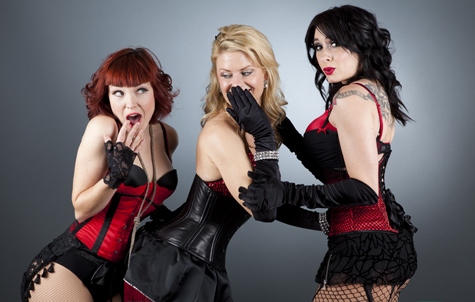
Through the classes Sizzling Sirens hold every week, whether its Burlesque 101, Cardio Burlesque (which is exactly how it sounds), or the Performance Series, the Sirens believe any and everyone, with the right instructor, can learn everything from how to properly shimmy to how to incorporate props into the steps, adding a personal tease to the routine.
“I would like to stress that most people come in with absolutely no theater or dance experience and they have a blast. You seriously do not have to have any dance experience to enjoy the classes. Literally, everything is all-levels. You can walk in, gain an understanding and find a challenge and enjoy it. Truly, you can enjoy this without ever having done it before,” explains Jay, fanning herself at the close of class.
And it’s true according to Fanny Coquette, a 43-year-old Siren joining the cast last August, who took her first class with Sizzling Sirens on a dare from her husband and looks forward to February’s “Good, Clean, Dirty Fun”-themed performance at Harlow’s.
“It’s just fun. It’s fun to step outside of who I am and be 100 percent who I am,” explains Coquette. “When you get older and have a family and have a regular job, there aren’t very many venues to push that line of ‘I don’t care what you think of me.’ So, it’s a great venue to relax and have fun and not worry about what other people think.”
Together Sizzling Sirens witnessed members from the first cast come and go, but have continued to grow in numbers as well as expand their reputation outside of Sacramento, performing at the DNA Lounge in San Francisco during its monthly Hubba Hubba Revue series, named one of the Top 10 Burlesque Shows to see around the world by the Travel Channel.
“I’ve never seen a group of 10 women get along and support each other creatively and emotionally,” says Jay. “Through the process of burlesquing together and learning how to create together, we’ve all become friends.”
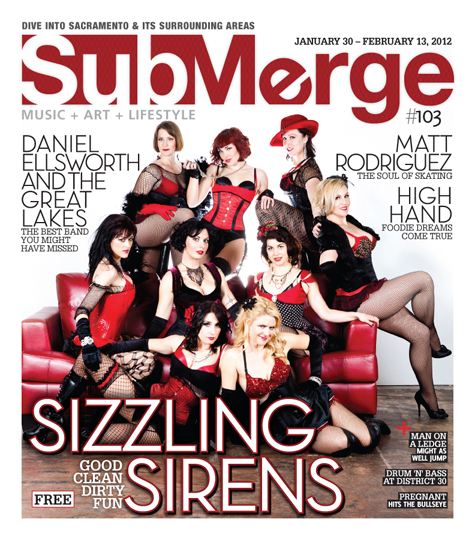
Sizzling Sirens Burlesque is located at 2419 1/ 2 J Street. Hour-long Burlesque 101 and Peel and Reveal classes are taught on Sundays (at 1 and 2:30 p.m. respectively). Cardio Burlesque is taught Tuesdays from 5:45 to 6:45 p.m. For more info on their Performance Series Workshop, go to Sizzlingsirensburlesque.com. If you prefer to watch the girls in action, check them out at Harlow’s for their “Good, Clean, Dirty Fun”-themed performance on Feb. 16 at 9 p.m. Tickets are $12 in advance and $15 at the door. 21-and-over only. You can also catch the Sirens the first Friday of every month for Fishnet Fridays at Dive Bar.
Ricky Reed infiltrates pop music as Wallpaper
Anyone who’s ever started a band knows that the music business can be a tough and arduous road–even if you don’t have any aspirations beyond playing a few gigs and getting paid in free beer. If you stick with it, though, the rewards can be pretty awesome. Free beer, for one, is always good, but you could become a bona fide super star–or you could find yourself on any number of the rungs on the ladder of success in-between. If you’re looking for an example of sticking with it, look no further than Ricky Reed, the man behind Wallpaper, an Oakland-based electro-pop act. Reed started the project in 2005 as a sort of satirical look at pop music. Ironically enough, he now may be poised for some level of pop stardom in spite of himself.
With the release of Wallpaper’s latest album, #Stupidfacedd, Reed got the attention of MTV and even had the album’s single, the title track, played on the premier episode of this season’s The Jersey Shore. Maybe not the most auspicious venue to get his music heard, but it certainly opened some doors.
“Obviously, you have to be willing to deal with massive amounts of rejection. You have to be able to handle that,” Reed told Submerge over the phone from Los Angeles. “But when all these things came up, they were big and they felt good, but everything feels big and good the first time.”
Before his most recent breakthroughs, however, it was the small victories that kept Reed going.
“The first time that I played at The Press Club in Sacramento and had three to four attractive girls in the crowd, I thought I was winning,” he said. “The first time that I sold out Rickshaw Stop in San Francisco, I thought, ‘Wow, I’m doing it now.’ That’s the great thing about being a musician. As long as you work hard, in theory, things will get better, and every little milestone just feels a little bit better than the last one did.”
Reed’s recent successes have made him something of a sought-after commodity in the pop music world. Recently, he collaborated with Weezer’s Rivers Cuomo to write Cee-Lo Green’s new single “Anyway.”
“We took one shot at it, then took another shot at it, and the second shot knocked it out of the park,” Reed said. “Working with Rivers is crazy. I grew up listening to Weezer, and he’s a really special dude for sure.
“[Cuomo] came with an idea, and we just sort of built it outwards and it turned out great. He’s a class act. That’s the term to describe Rivers.”
When Submerge caught up with Reed, he was in Los Angeles, one night before heading to Las Vegas to play a show at Haze Night Club at Aria with Far East Movement. In Los Angeles, he was diligently working in the studio writing and producing. While he couldn’t divulge all that he was working on, Reed did tell us that he was putting the finishing touches on a new Wallpaper track. He shared some of the details on that and favored us with other words of wisdom in the following interview.
I saw that yesterday on your Facebook page you posted that you’re leaking a new Wallpaper song in a week or two. What’s that track about?
I can say that it’s sports related–jock jams. That’s all I can say about that.
Do you have an all-time favorite jock jam?
Oh dude, all-time favorite jock jam. There are so many good ones–from Gary Glitter… I really like whoa oh-oh-oh-oh whoa oh-oh-oh-whoa-oh-oh-oh whoa oh-oh-oh-oh… Whatever that one is [the aptly titled “Whoa Oh Oh” by Zombie Nation]. That’s a good one. You know what else is a good one? I’m pretty sure they put it on one of the Mortal Kombat themes, you know, “Gonna Make You Sweat” by C+C Music Factory. That was a weird time in music when pop house music was on the radio. Imagine being at a fucking Oakland Raiders game with all your tough cholo bros, and it’s like [singing], “Why waste your time? You know you’re gonna be mine.” The fucking ‘90s, bro. It was fucking unbelievable.
The ‘90s had all kinds of crazy things you’d never hear on the radio now. Like, Soundgarden was a pop band in the ‘90s.
Oh, I know, dude. You’re not going to hear “Spoonman” unless Dr. Luke produces it. I’d love to hear a Dr. Luke remix of “Spoonman.”
So on the scale of jock jams, would you say the song you’re working on is closer to C+C Music Factory or “We Are the Champions” by Queen?
Oh wow, I would say if you could merge those and sprinkle in a “Whoomp! There It Is” kind of flavor. That kind of “Whoomp! There It Is” energy I try to bring to all my records. I would say that “#Stupidfacedd” and “Fucking Best Song Everrr” definitely have a good dose of “Whoomp! There It Is” woven into them.
You’ve got the live show coming up at Ace of Spades in Sacramento. I was reading that your live show has two drummers and at least two other vocalists. Is that something you’d like to incorporate into the studio–having a bigger band?
In the studio, I just try to make the best songs however they want to be made. The live show, we’re trying to produce something special for people in that environment. There’s not a lot of carryover.
We’re going to do something even bigger and crazier for the Sac show. It’s going to be the debut of a new Wallpaper live set. It’s something nobody’s seen yet. We’re doing it that night and on New Year’s Eve with Kreayshawn in San Francisco.
Are you keeping that under wraps?
I want to keep that somewhat of a secret, but I will say that our live act is usually a four-piece setup, but the Sacramento show will be our first performance as a five-piece for those shows.
I listened to your album a couple of times through, and the first time, I definitely picked up on the beats and the energy, but the second time around, I was paying attention to the lyrics, I picked up on some really good lines in there, especially in “#Stupidfacedd” with that bit about the awkward silence. Is that something you throw in just to see if anyone’s paying attention?
You could definitely say that. I think my lyrical philosophy is just try to get people to pay attention to anything, you know what I mean? Like, hear something and realize you just heard it. Pop music is wallpaper. If you ask somebody what was the patterns or the colors on the walls of the rooms they’d been in today, of course they wouldn’t know what that is. They wouldn’t be able to answer you. That’s what pop largely feels like to me. People just run around with their thumbs up their butts, not paying attention to anything.
You say that, but Wallpaper’s music is obviously in that pop vein too. Is this one of those instances where you can be more rebellious inside the system than you can be outside the system?
I think you can stand on the outside and hurl rocks at it, or you can be the Trojan horse. I’ll leave it at that.
I wanted to ask you about the song you did with K Flay. I’d seen her play at a random club a while back. It was one of those instances where you go out and you don’t even know who’s playing and end up really enjoying it. I was wondering how that song came together and if you wrote it with her in mind.
Yeah, well I knew that K Flay was as broke as me… [laughs]. I wrote that record, and I knew it needed something. I think I met her just before that, and it was just the right timing. I thought, “This is perfect, why don’t you get on this?” She did a great job representing herself on that record, but she contributes to the song in such a great way. She’s just super talented and has also become a really good friend of mine.
Like you said, when you’re coming up you have to deal with a lot of rejection, but I’m sure that now that you’re making some headway, some of those nos are probably turning into yeses. How does that feel when that starts happening? Is it off-putting at first?
That was definitely the case. This sensation I feel pretty often is that I’m putting one over on people, you know? I know that my shit is dope, and I stand behind it, but also with how the rest of this stuff is, the rest of this stuff that you guys are signing off on–the powers that be–do you really think that you want to sign me? Are you really sure? Because I’m going to be a big problem for you guys.
Grimey: Death Grips
Tuesday June 7, 2011
Townhouse Lounge, Sacramento, California
On Tuesday, June 7, DJ Whores booked dubstep DJs from distant lands like New York City and France. But when the downstairs cleared for an upstairs Death Grips set, for once Sacramento showed some goddamned pride.
Death Grips bears the rumblings of a strange new era for hip-hop–if the genre is even appropriate. Between Death Grips and the teenage riot of Los Angeles’ Odd Future Wolf Gang Kill Them All (OFWGKTA) crew, hip-hop seems to be embracing a DIY and punk mentality that hasn’t been prevalent in the genre since Fab Five Freddie was kicking it with Debbie Harry in the Lower East Side. Devoid of heavy-handed derivatives, Death Grips respectfully appeals to Sacramento and the indie world-at-large’s iTunes playlist without losing an ounce of visceral gnarl. The Ex-Military mixtape is the group’s call to arms through heavy bass warbles, juke break beats and vintage psych-samples from Link Wray and The Castaways. Critics jumped the gun when they hailed New York-based MC Waka Flocka Flame as the first metal god of rap. No one could have predicted Death Grips’ Stefan Burnett, a Kimbo Slice-looking dude from Oak Park, was lurking in the trenches with a deeper-seated metal intent with lyrics, “Dismiss this life/Worship death/Cold blood night of serpent’s breath/Exhaled like spells from the endlessness/In the bottomless wells of emptiness,” over the thunder of Zach Hill’s drums.
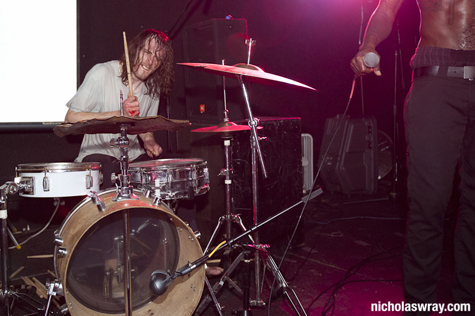
The Sunday prior to the Grimey set, Death Grips played a secret show at Press Club, a set that made its way to YouTube in record time. The Grimey announcement was as last-minute as it gets, with most of the curious anticipating a Davis house show as the unveiling of the mysterious Zach Hill project. The cloak was off entirely, as was frontman Stefan Burnett’s shirt as he stalked the stage, like any moment he might snap and start cracking skulls. No one was injured during the set, nor did a full-on mosh pit ever break out. The surprise was the rush to be on top of Death Grips without taking the stage–an instant embrace virtually unheard of for a local act. Burnett’s coined grunt of “Yuh” was mimicked on cue and other times in brief quiet moments, affirming his bark as the group’s battle cry. Sacramento is excited for its locally raised rap beast–enough to shed the cool, shed the cynicism, shed the apathy and get buck for 40 minutes in ToHo. It caught me off guard so much that I’m reluctant to mention it for fear it might backfire and curse the unabashed enthusiasm.

Whether we sustain our buzz in the home front or not, Death Grips is in takeover mode with or without us. This week (June 15), the group performs L.A.’s Low End Theory, a weekly melding of art and music held every Wednesday at The Airliner, a stage that made the careers of DJ Gaslamp Killer and producer/musician Flying Lotus. In the end, if Death Grips maintains an indifference to hype present within the music, it will always have a home in Sacramento. The nihilistic candor on tracks like “I Want It I Need It (Death Heated)” and “Spread Eagle Across the Block” boasts a lifestyle prevalent in Midtown yet to be captured sonically. I, for one, hope this is the beginning of many voice-shot nights shouting “Yuh” to come.
Sacramento’s CUF returns strong with new album
Words by Adam Saake
On the first try to get Nate Curry, aka N8 the Gr8, of Sacramento’s legendary local hip-hop group the CUF on the phone for an interview with Submerge, he was tied up with some music business.
“I’m at Western Union wiring Gift of Gab some money right now for a verse. Can you call me back in five minutes?”
Curry is a busy man. Besides being one of five members of the CUF, he’s also a producer for up-and-coming R&B singer Marryann Hunter, hip-hop group Lost Tribe and his cousin, rapper MAK. His head has been immersed in those projects, and it wasn’t until recently that his focus turned once again to making music with the CUF.
“Truthfully, in the last year, we were kind of losing our motivation a little bit. I ventured off into some other stuff,” says Curry.
There’s no behind-the-music story, no band beef or silly drama. It’s just that the group has seen so many opportunities over the years come and go that delusions of grandeur were hardly taking shape.
“We’ve had so many different labels and so many different things that we’ve dealt with and it’s always just turned into shit. So none of us really expected anything,” explains Curry.
But the journey’s been a good one.
In 1993, a hugely important year in hip-hop that saw the release of such albums as Souls of Mischief’s 93 Til Infinity, Wu Tang’s 36 Chambers, Snoop Dogg’s Doggystyle, KRS-One’s Return of the Boom Bap and so many more (seriously, Google it), the young MCs known as the CUF were beginning what would become an 18-year-long musical career. Sacramento, sadly, was a lot like it is now in respects to clubs and music venues having little interest or tolerance for hip-hop or rap music. As Curry explains, there’s been no shortage of a few knuckleheads ruining it for us all with “plenty of people getting shot and killed at clubby club shows.” This was working against them, but a greater force was and has been ever-present; a strong Sacramento music community. Can’t book a hip-hop show? Well then play with a rock or a ska band.
“We got in with Filibuster, Steady-Ups, Diseptikons, Storytellers and those guys…and we’d get into venues that they’d have never let us play at,” recalls Curry.
These mix-and-match shows were part of one of the most active times in Sacramento’s local music scene. Venues like Old Ironsides, The Distillery, The Press Club and the original Capitol Garage all played host to the CUF, but now rarely if at all welcome hip-hop shows. Listeners who may have never stepped foot in a hip-hop club were now exposed to the sounds of the CUF playing alongside some of their other favorite groups. Well aware of this fact, Curry and fellow MCs Crush, Brotha RJ and Pete (Lil N8, aka Taktics, would come later) sharpened and fine-tuned their lyrics and beats to make sure their sound was clean and their voices be heard.
“We perfected our stage show because we knew that no one knew our music,” says Curry. “We made it to where we’d speak clear on the mic and the beats weren’t super cluttery and jumbled.”
Crowds were quickly won over; seeing the CUF on a bill without a single other hip-hop act was pretty commonplace. Plus, it didn’t hurt that the group had an anthem track appropriately titled “Sacramento” that listeners quickly memorized the lyrics to and would frequently request at live shows.
It wasn’t always difficult for hip-hop in the River City. There were all-ages venues throughout the years, most of which are no longer around, that were instrumental in keeping the scene alive and well. The Washington Neighborhood Center on 16th Street hosted frequent hip-hop shows, as did the now defunct and legendary venue Joe’s Style Shop. The upstairs art space and basement music venue on J Street was regularly throwing some of the most amazing shows that continued the theme of mixing and matching the artist community. Dub DJs like Wokstar opening for Filibuster with the CUF rounding out the bill was commonplace, and Sacramento was there in full effect, supporting the diversity and loving it. Later, Scratch 8 in Old Sacramento played host to such acts as Zion I, Crown City Rockers, The Grouch and many others. Again, the CUF was there laying down their signature sound and remaining an integral presence in the waxing and waning hip-hop scene of the late ‘90s and early ‘00s.

As other bands have throughout the years, the CUF also found homes for its hip-hop sound in other cities in the Bay Area and Southern California. A monthly club being thrown in Oakland called Unsigned Hype was a showcase for independent hip-hop talent making waves, as well as up-and-coming acts like the CUF. Bills would often include artists like Saafir of Hobo Junction or Souls of Mischief of Hieroglyphics. A fateful evening at the club paired the CUF and an unknown Mystik Journeymen from another large hip-hop group called the Living Legends as openers for A-Plus. The club that night was treated to impressive sets from both opening acts that left the crowd speechless–literally.
“It was weird because we put on an awesome show and everyone just stared and looked at us. I don’t think they were ready,” remembers Curry. “RJ and Sunspot [Jonz] chopped it up, we linked up and ended up going over to their loft and the rest was history.”
That history would include multiple tours with the Living Legends up and down the West Coast as well as guest appearances on each other’s albums. But even with the taste of scenes in other cities that had thriving hip-hop communities, the CUF could never leave Sacramento behind. It’s always been their identity.
“Sacramento is our home;” says Curry proudly. “That’s the reason our music sounds the way it does; it’s the reason that we are who we are.”
For residents of the 916 who aren’t familiar with the CUF, who over the past few years have kept a low profile, their chance to discover a hip-hop gem hasn’t passed. With a new album just released on April 26, 2011 titled CUF Caviar Vol. 1, the CUF is, to put it frankly, back and better than ever. A truly funky record with intelligent production from Curry, who has been responsible for 90 percent of the beats on CUF records, CUF Caviar is just plain fun to listen to. The album took two years to complete and the production value certainly shows patience. Songs like “Don’t Ask No ?’s” plays heavily with a punchy funk drum sample, a Ceelo-esque hook and auto tune vocals… It works, and frankly I wish the crap on the radio that employed similar techniques sounded half as good. CUF Caviar is a more refined, more polished version of what the group has been all along. It’s rare nowadays to find musicians who define a sound for themselves and are able to gracefully age and mature it without compromising the original ideas. The CUF has done just that.
“A lot of the stuff we did before was just us vibing out. We’d write a 16, the beat’s dope, let’s jump on it and find a hook and make it fat,” Curry explains. “[Now] it’s on a totally bigger scale.”
The title of the album, CUF Caviar, is the perfect reflection of this new “scale.” Curry says that when naming the album, the CUF wanted to stick with the fish theme that has always been their logo as well as the incorporation of the band name in the title. Past records have included CUF Daddy, CUF Baby and CUFilation as well as the earlier tapes Federal Expressions and Cuffish that are collectors’ items among diehard fans.
“We basically were thinking that caviar are fish eggs. They’re fish babies, but they’re more refined. It’s something that you’d want if you had an ear that’s more refined. It’s not no little kiddie hip-hop. It’s something for grown folks; sophisticated ears,” jokes Curry.
One of the more humorous things about the maturation of the CUF is the actual acronym itself. Commonly referred to as California Underground Funk or Californians Under Frustration, the guys have become family men now and a new meaning has come to pass: Cousins Uncles and Fathers.
The rejuvenated CUF will be taking CUF Caviar on the road, playing spot shows with Z-Man, Equipto and Mike Marshal. May 12 at Harlow’s will be the CD release show and Curry says that there may even be a Blackalicious and CUF tour on the horizon as well. If you’re not a CUF fan or if you’ve always been, make sure you cop the new album and hear what the fellas have been up to.
Dusty Brown Rides the Buzz of This City Is Killing Me Toward a New Album
Stolen gear, finicky crowds at shows and an anxiety toward giving his music to anyone he doesn’t call “friend” are just a few of the reasons Dusty Brown feels like this city is killing him. If the local scene is the cause of his suffering, why can’t Dusty Brown abandon Sacramento?
His insularity could be his greatest downfall, but in that apprehension to be seen or be the scene, he’s surrounded himself with friends within music who will gladly step in to exalt his art. After turning over a little five-song EP to his friend and electronic-colleague Scott “Tycho” Hansen, Dusty Brown was uncertain of his friend’s intentions. Hansen’s artistic talents stretch beyond his propensity for finely crafted down tempo IDM. Hansen fashioned the This City Is Killing Me with artwork based on photos by Raoul Ortega and put it on his ISO50 blog for free download.
Hansen was not bashful in introducing Brown to his fan base, as the post was accompanied by a three-paragraph salute to Brown. Hansen wrote, “I’ve learned more about music from Dusty than anyone else; his production style and methods are truly awe inspiring.”
Brown’s career arc illuminates the thought process behind naming a collection of songs This City Is Killing Me. After the dissolution of the electronica scene, Dusty’s band, consisting of his sister Jessica and cousin Zac, had its live equipment stolen in 2007. To recoup the losses, the band put out its Hope You’re Happy LP. “It succeeded in getting my money back to the dot,” he said. “I put a post out thanking everyone and the sales literally dropped flat, which was…great.” Since that record, the group limited itself to the studio and the occasional gig at The Press Club or The Hub.
Brown spoke as though he’s a man out of his proper time. He married at 18 years of age and now has four children with one more on the way. Brown said he understood the music business some in the ‘90s–the tour and make connections plan–but as a family man with hermetic impulses, he never thought that giving his music out for free would put a buzz into the band again. “Twenty-five hundred people downloaded it within three days, when before I was lucky to get one or two people to hit my Web site in that time,” he said.
With one stamp of approval blog post from Tycho, the band Dusty Brown went from strictly known in Northern California to receiving coverage from national music Web sites like XLR8R, Pitchfork Media and Yourstru.ly.
“It was a pretty incredible feeling that week,” Brown said. “Coming from a Sacramento guy, who nobody literally knows who we are outside of Sacramento, to have people donate from the Dominican Republic is crazy. The fact that it reached so many people so quickly, shows the old model of touring for months for people to hear your music is completely gone.”
The instant gratification benefited Dusty’s creativity, as he’s eager to finish a new full-length that’s nearly completed. And with the couple-hundred donated by downloaders of the EP, he’s toying with the idea of pressing This City Is Killing Me on vinyl.
Dusty Brown might be riding a high wave this month, but he’s grounded enough to recognize he still lives in Sacramento, a city that from his perspective is still trying to kill him. He played a capacity night with Tycho at the first annual Sacramento Electronica Music Festival in January, only to play again a week later to three people. “This month the NBA Finals will be the reason no one comes out,” he said. “But, I’ll end up playing for a random hippie that doesn’t care about sports.”
He went on to say, “I feel like there’s a superficial love for live music [here]. The minute you feel like it’s authentic you realize it’s not.”
It’s those one-off nights of capacity crowds, that lone hippie appreciator and the seclusion of Sacramento, where his family lives, that keeps Dusty Brown among us. He said that for all the depressive tones his music can take, he often describes it as “melancholy electronica.” “I’m not a very emotional person, so when it comes to music I kind of let it go a little bit,” Brown said. “I’m sad, then I’m pretty happy about the fact that I got over I was sad.”
This City Is Killing Me is Dusty’s passive aggressive bout with the naysayers that have hurt his feelings. But it’s when his sister Jessica takes cues from his sounds and applies them to her experiences that the Dusty Brown music finds its plateaus of euphoria. “I wouldn’t say we’re completely connected, but I think she listens to the frustrations I have,” he said.
At five songs the EP is concise, overlapping tones and instrumentation; but for every brooding moment, the band releases the tension with bursting chorus lines on “How’s That” or the glimmers of hope in the refrain of “Back to Back” as Jessica sings, “As we remember the light in our dark past.”
With the small window of hype surrounding This City Is Killing Me, Dusty said he’s ready to push ahead with the mountain of music he’s been keeping in the vaults. Dusty once employed a writing method in which he wrote three to four new songs for every live set, instilling a prolific work ethic. My phone call interrupted a recording session with Steve Borth of CHLLNGR, who uses Dusty’s home studio whenever he’s in town. In his three years of recording silence, Dusty produced a hefty chunk of the upcoming Who Cares record and prepared several EPs with Jacob Golden under the group moniker Little Foxes. “That EP was just a precursor to a full-length album,” he said. “I’ve got mass amounts of music I need to get out before the end of the summer because I’ve got a baby coming.”
Brown framed the buzz around his EP as “not much” in comparison to what most artists receive, shaming himself for strictly showing his music to people he deems “friends.” I jokingly asked if, after this surge of releases, it would be another three years before we hear from Dusty Brown again. He followed up with an anecdote about a night in the studio with Who Cares: “I was playing them some of the music I’d written over the last 10 years. I didn’t realize two hours went by. I wasn’t even halfway done. I’m starting to think I should create another name just to release all this lo-fi drum ‘n’ bass and hip-hop I wrote.”
Why not?
Catch Dusty Brown with Paper Pistols at Capital Garage on Saturday, June 26. Or you’ll be able to see them at their EP Release show Saturday, July 17 at the Townhouse.
Click to download Dusty Brown’s This City Is Killing Me