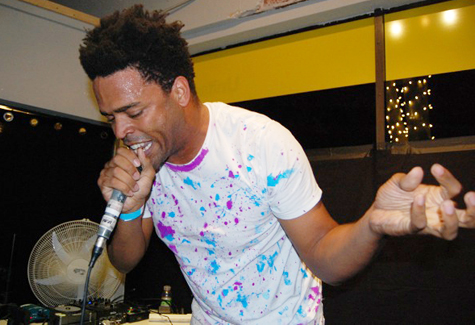
Toronto’s Keys N Krates aren’t easily classified, and that’s fine by them
The members of Keys N Krates like to take it easy before they perform. Sometimes they do a little yoga, sometimes they nosh on salads and on occasion they even indulge in half of a Red Bull. “We don’t do prayer circles or anything like that,” says Adam Tune, drummer of KNK. While all is calm behind the scenes, as soon as these guys hit the stage, they are known to make a dance floor spontaneously combust into chaos and booty shaking with their live electronic compositions.
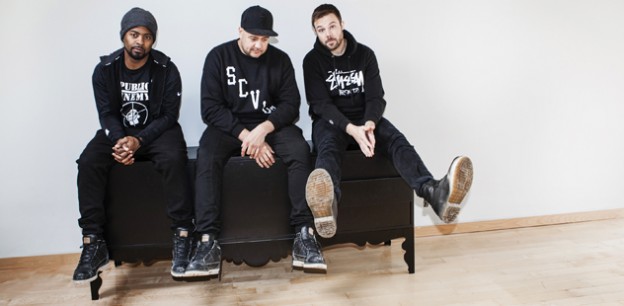
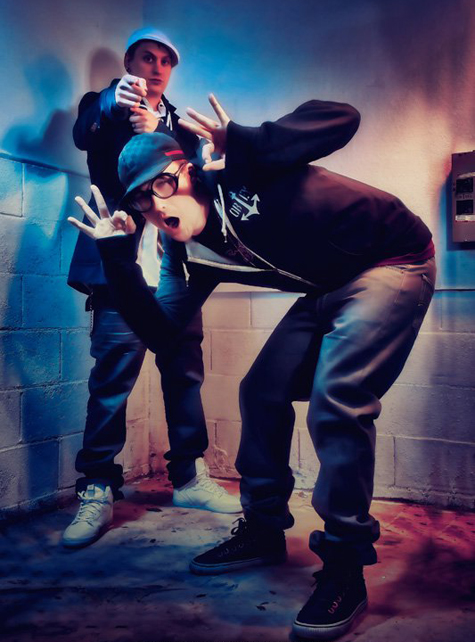
Keys N Krates is an electronic/hip-hop trio consisting of Tune, David Matisse (synths and keys) and Jr. Flo (turntables). All of the guys hail from Toronto, where they grew up and performed separately before eventually finding one another in 2008. They were connected by their strong desire to bring live remixes and drums to audiences in an intense dance-party setting. Their ability to showcase a wide range of blends, combined with heavy hip-hop aesthetics, puts Keys N Krates in the electronic genre spotlight.
While some would describe Keys N Krates as trap music, they don’t necessarily agree with that label—but they won’t put it down or deny it, either.
“We are not hung up on labels one bit,” said Tune. “But the issue with labeling certain music as ‘trap’ is that the meaning of ‘trap’ has become so diluted. You have kids now who never really grew up listening to true hip-hop, but only recognizing the beats they hear and associating it with something like trap rather than realizing that it is classic hip-hop. Sometimes the whole idea of trap music gives some producers, who are trying to do something unique, gag reflex. That’s why you have to be careful with how you try to present your work.”
Trap came to fruition in the South in the early 2000s and uses aggressive beats, heavy layered synths and thick bass. According to Runthetrap.com, the latest incarnation of the genre that emerged around 2010 can be simplified into equal parts hip-hop, dance music and dub. Some might classify it as party music that’s moody and sometimes dark. There are trap characteristics obviously present in KNK’s music, but it also has a nasty dose of grime, electronica and heavy-handed hip-hop.
“We draw from so many different styles, predominantly hip-hop and electronic,” Tune says. “We appreciate and embrace the fans we have that are trap music lovers…but we also like to look at music and genres from a broader angle.” He points out that no matter what direction their music takes them, hip-hop seems to always serve as their ground base.
The trio first saw success on a large scale after the release of their first EP, SOLOW, in 2013 under Steve Aoki’s Dim Mak record label. The two singles “Treat Me Right” and “Dum Dee Dum” were released with critical acclaim. “Dum Dee Dum” is a flat-out dance club, new-age rave type hit that will serve as the trio’s golden child for years to come.
The video for Dum Dee Dum even reached its own level of creative notoriety. Directed by Amos LeBlanc, the video shows the music of KNK being introduced to a Mennonite community. Some are disgusted, some are intrigued, eventually some let loose and manage to let the music move them. At the end, young women are hiking up their dresses to get on the back of a motorcycle, or letting the wind run wild through their hair while popping out of a sunroof.
The group’s live dynamic is probably their most prized endeavor. According to their official site, “Perhaps what truly separates Keys N Krates from the mass of Electronic and hip-hop producers out there is the unique show they create by performing their bassy beats as a band, completely live. When you go to a KNK show, you will see their music and the music of others morphed and turned on its head using only drums, keys, turntables and live sampling. This unique style creates not only a crazy dance party, but an experience and vibe like no other.” Soon, the group hopes to experiment a bit more and morph vocals and rapping into their performances.
Live performances from KNK are mesmerizing and spontaneous: no song sounds the same during live mixing. “The energy at our shows is what keeps us going,” Tune says. “We used to drink a lot in the beginning to get us pumped, but we have realized that the crowd will electrocute you and give you all of the energy you were seeking.”
Adam also speaks on the weird phenomenon of mosh pits erupting at electronic shows lately, perhaps the only negative thing he has been experiencing at live shows. “They are not safe, and they are distracting. We see so many female fans getting pushed and shoved and it’s just uncool,” he says. “It doesn’t happen often, but we have been seeing it and it’s just weird. A pit of people moshing will suddenly appear and the whole action seems really displaced.”
On Sept. 23, the band will release their new EP, Every Nite. Their first song released from the album, “Are We Faded,” is a surprisingly sad and dizzyingly sexy song about a heartbroken person needing to self-medicate to keep their mind off of their lost lover. “The response we have been getting thus far with this song has been really astounding. If it is any indicator as to how the album’s release will go, that has me incredibly excited,” said Adam.
Keys N Krates just completed a summer festival tour and will embark on a three-month-long bus tour this month. One of their last shows was in Chicago, where they say their music first started to gain momentum in the states. “We just happened to play the right shows and venues in Chicago,” Tune says. “We suddenly had a huge fan base there, and they helped us hit the ground running. We have been fortunate to go from playing slots in the day and taking what we can get, to being a headlining act. We have so many people who come to shows just to see us.” Keys N Krates will be joining other prominent acts at Sacramento’s own TBD Fest Oct. 3 to 5.
“We are so excited to be coming to Sacramento and playing TBD. Some words of advice for Sacramentans: Bring some water to hydrate, and bring a towel to dry yourself off…you’ll need it once we get done with you.”
The Toronto trio is bringing their live magic to the TBD stage on Sunday, Oct. 5. For various ticket packages or more info on TBD Fest, visit Tbdfest.com. Visit Keysnkrates.com to check out their latest video from the Every Nite EP.
Equipto may be calling it quits on a solo career, but he has a busy future ahead
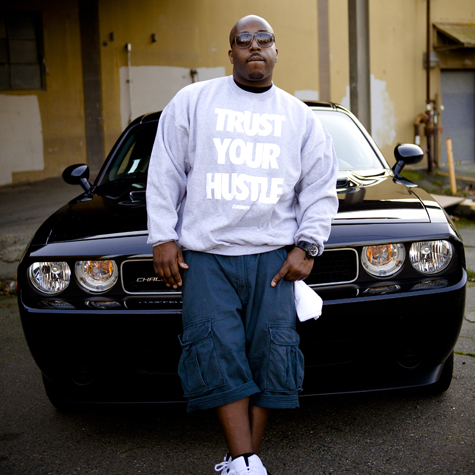
A wise man once told me never to use the word “unique” when describing music or a musician, because surely there was something similar. He is right to an extent, but I can say with much confidence there is no equivalent to Equipto. Born and raised in San Francisco to a Japanese mother and Colombian father, Equipto started rapping in the early ‘90s, first making his mark in 1995 with his group Bored Stiff. A champion of the underground, his career has spanned nearly two decades including nine solo albums, five group albums with Bored Stiff, four as a duo with Andre Nickatina, two with Mike Marshall and a handful of other one off collaborative albums. The quantity of the releases was always matched with quality, and the scope of subjects was just as vast.
From the beginning it was clear Equipto had something to say. He spoke with maturity and rhymed with integrity, aware of the impact of his words and what he was bringing to the culture. Citing inspiration from Gil Scott-Heron and RBL Posse, Equipto’s music has always been a perfect blend of socially aware and street. Perhaps his most distinguishing trait is his honesty. In a genre masked in fantasy, Equipto never hid who he was or what he stood for, speaking on his strengths and citing his short comings alike, basically admitting to being human. Listeners identified with his words, and to sum up a career in a sentence, allowing him to thrive as a world recognized independent artist for nearly two decades.
In late 2011 he released his most comprehensive solo album to date, Illych (his name by birth), and about a year later, he announced he was going to retire. Rappers typically don’t retire, but again, Equipto isn’t the typical rapper. His upcoming Stress Free tour with Z-Man, Lucky I Am, Otayo Dub, Mike Marshall and L’Roneous will be his last. Selfishly, this is hard to accept, but as he detailed in our conversation below, this is a life decision, and one that will not completely relinquish him into obscurity in the rap world.
A few months back you announced your retirement. What prompted this decision?
When you’re trying to do music and reach release dates and hit the road like 50 percent of the year, you miss out on a lot. Everybody is different in their own way, but for me, I want to be a part of helping my niece and nephew read, pick them up from school and stuff like that. My momma is getting older, so I want to enjoy time with her. I want to get my label, Solidarity, in good position, and get my studio right too. Things like that are what I want to focus on.
I can’t imagine you not making music, so how are you defining this retirement?
It’s from performing, and more or less solo projects. If Bored Stiff wanted to do something, it’s not like I’d say, “No.” I want to be more of a project coordinator now. I want to be behind the scenes. I want to help young artists live out their dreams and do things that people didn’t do for us. In order for that to happen, I need to take the backseat as an artist. I’m not trying to be a manager but more of a motivator. It’s like the corny shit people say like, “Stop and smell the flowers.” I need to do that and enjoy things. Basically, I will be taking a step back. I have so much material though so it’s not even going to be like a retirement, I’m just not going to be out pushing it.
You’re such a staple in San Francisco. Do you think it will be hard going forward to separate yourself from Equipto the MC? I accept who I am and who I became. The city means so much to me. I would never be the person who I am, and the opportunities I was given to be who Equipto is. A Japanese/Colombian out of San Francisco…in a lot of places I wouldn’t have been able to survive the way I did, or do the things I’ve done. I owe a lot to the city and my environment. I’ll always accept who I am and what I did. I am Equipto, but that’s who I am on that microphone. Everything is from the heart. It’s not as gratifying if you can’t connect with the people. You want to know who appreciates you at the same time. You don’t want to keep going just to go, like treading water. I want to know who my fans are, who know my lyrics from songs that weren’t heavily released. I can’t get back to them if I’m always pushing.
I get the feeling that this isn’t about falling out of love with music, but more what the game has turned into. Is that fair to say?
The love for the music is always there. If I hear a beat, I’m going to nod my head naturally. I came from a different era and it’s not me being stubborn, but it’s different now like with the whole pay to play to advance your career. I understand why things are, and respect it, but at the same time I can bow out gracefully, and people should respect that. I respect people’s hustles, it’s just not who I am. Bored Stiff and myself, we’ve built our legacy on not giving a fuck. It’s almost defeating the purpose if I keep trying to push and go further and do a song with this guy when I’m not even friends with him, or pay to get on a bill. Those kind of moves are mandatory in the game now, like people look down if you keep with your same recipe. It’s tiring, and I don’t want to be a part of it.
With the politics of today, what kept you going?
It came in stages through stages. At times it was like I was retiring because I was tired of everything, but I reached a point where I am content and proud of the work I’ve done. I’ve played my part, whether I was an inspiration or whatever. I feel like our generation planted a good seed in hip-hop. Everyone looks at the Golden Era of hip-hop, but years down the line, I think this era will be looked at as special like that. The underground is strong, there is a lot of dope music out there, you’ve just got to search. Just like how we love Marvin Gaye and Curtis Mayfield, but there were cats on the under too, and you wonder how they weren’t millionaires like Marvin Gaye, but those are the underground cats. The music that I’m involved with, and the people I’m involved with, we are going to be those rare finds, those gems for youngsters to find. I take pride in being a part of that.
See Equipto when his Stress Free tour hits Blue Lamp in Sacramento on March 14, 2013. The show gets underway at 9 p.m. and tickets start at $8. For more info, go to Bluelamp.com.
Ozomatli unites cultures far and wide, and people young and old
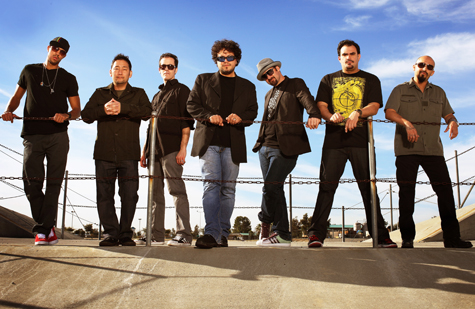
Multi-tasking. It’s an ungodly buzz word that has more or less come to define our modern existence. Job titles now seem to be a never-ending string of hyphens or slashes; Web browsers allow for infinite tabs; that little waterfall thing in the upper-right corner of your Facebook page lets you know when one of your friends likes a photo of someone you’ve never even met. You’re busy. We know. So is Ulises Bella of Los Angeles-based band Ozomatli. When Submerge caught up with him, he and the band were hard at work on a variety of things.
“We’re not very good at multi-tasking,” Bella says with a big laugh. “We’re trying our hardest, though, to multi-task up in here.”
Bella reveals that the band has just started making demos and setting into motion a new Ozomatli LP, which would be the band’s first studio album since 2010’s relentlessly groovy Fire Away, an aptly named album that boasts an arsenal of sounds both exotic and domestic in flavor. However, at the moment, Bella (who contributes his talents on saxophone, keyboards and other instruments) and company are working on a project with a younger audience in mind. In between their rigorous touring schedule, which sees them on the road most weekends, at the very least, Ozomatli has been working on their first children’s record under the moniker Ozokidz. This isn’t a radically new idea for Ozo. Bella says that the band has “always been down for playing for kids and interacting with kids,” but as members of the band had their own children, making an album for kids seemed to make sense.
“Our fans are getting older, so a lot of them have kids, and what really put it over the edge was when we were the super music friends for a couple live shows of Yo Gabba Gabba,” he says. “That really made us say, ‘We have to make an album,’ because a lot of our music already kids relate to a little bit.”
Reminiscing about the music he grew up on, the stuff that he gravitated toward when he was a child, Bella speaks of a rich personal musical tradition. As could be inferred from Ozomatli’s music–a blend of, well, just about anything: Afro-Cuban and tropical rhythms, reggae, hip-hop, pop, good ol’ rock ‘n’ roll all deftly woven together with positivity and a purpose–Bella’s musical upbringing was quite diverse. Through his father, he learned to gain appreciation for the great composers, such as Bach and Vivaldi.
“A lot of baroque music really stuck with me,” he says.
Beyond that, the music of his parents’ heritage and popular music also played significant roles.
“My dad was from Spain and my mother was from Mexico, so my mom was super into Trio Los Panchos, a lot of Beatles, obviously, a lot of Beach Boys,” Bella says. “There’s this party music from Spain called rumba flamenca. The only thing I can compare it to is the same beat as The Gypsy Kings, but less commercial-y, but it’s very much party music. So all that kind of stuff was in me. Also, my friends at the time, the kids I was growing up with, were very much into breakdancing and break dance music, so a lot of that electro hip-hop sound, kind of Kraftwerk vibe type stuff, really resonated with me, and to this day I’m into that stuff.”
This sort of diversity, as well as the varying backgrounds of Ozomatli’s six other regular members, plays a huge part in the band’s songwriting process, which Bella describes as pure experimentation as to what styles will blend the best.
“When we were in each other’s presence, the band was almost like a musical conservatory,” he says. “Everybody came from these different traditions, and there were a lot of things each of us didn’t know about. So, whereas one guy probably listened to reggae all his life, he probably didn’t know shit about cumbia. But then another guy probably knew a lot about cumbia and tropical music, but didn’t know much about reggae. In between that, there was kind of one of those things where a guy was playing a cumbia, but to him it sounds like a mutated reggae song, so he’s playing a reggae bass line over it, and in a weird way it shouldn’t fit, but it fits.”
And Ozomatli never stops gaining new influences. As they live, grow and experience so too does the band’s music.
“A lot of it also has to do with what people are into at the moment,” Bella explains. “Obviously when we first started on the first album, we were super influenced by Afro-Cuban music, and the hip-hop influence was huge because of Chali 2na and Cut Chemist, the world music vibe of putting in tablas and all that stuff. And through our travels, especially through the country and through the world, you start picking up different things, slowly those influences start going into the music too.”
Bella says the Ozokidz album is about 95 percent done, but still doesn’t have a firm release date, but it will be released on Hornblow Recordings/Megaforce/RED, which has also released They Might Be Giants’ children’s albums. In the following interview, Bella talks about some of Ozomatli’s interesting experiences working as U.S. State Department Cultural Ambassadors.
Speaking of your travels, you guys visited Nepal a while back. I’ve always wanted to visit there, and I’m not sure why. I think it was because of Raiders of the Lost Ark. What was that like, and were you exposed to any of the local music there?
Totally, and the crazy thing about Nepal is that it was one of our first trips as cultural ambassadors, right? We show up in Nepal, and it was completely coincidence, the day we get there is the day this huge religious festival called Shivaratri, which is all about Shiva and millions of motherfuckers from all over India and all over Nepal come to this temple to do offerings. The lines that go into these temples are miles long. Now the other thing that distinguishes this festival is that all kinds of cannabis use is legal for that day, so you see all these kids rolling up these monster spliffs, and you’re like, “Whoa, what’s going on here?”
And then, trip out on this. This is like some National Geographic shit. We were like, “Whoa, what a party!” It’s really psychedelic because there are all these speakers blaring these chants. It’s fucking bananas. Then we end up in this courtyard that the government set up for the sadhus, who are Hindu holy men. Now these cats basically renounce all material items and shit–loin cloths and dread locks, bro. They reserved this square strictly for them just to get high. You walk in there, and you’re tripping out, and they’re asking you to come in there and smoke. They’re like, “No, please, sit down.” They have these huge bowls of weed… It was quite a scene.
And when we were there, there was a cease fire between the Maoists and the government. I guess every other day in Nepal there are general strikes. We were really tripped out, like this is really an electric environment.
When we played the show, you know how there’s the railing between the crowd and the stage?
Yeah, where the photographers sometimes stand.
Exactly. Dude. The gate was about 100 feet away from the fucking stage. We were like, “Why is it so far away? How are we supposed to connect with this audience?” Then the dudes who are breaking it down are like, “Look, if for any reason the crowd doesn’t like you, or you have technical difficulties and you can’t get your shit together, they’re just going to start throwing rocks at you.”
I’d just gotten food poisoning, so at this point, I’m sick as a dog. I’m like, well, fuck it. Even if they throw shit at us, we’ve got to bring this barrier closer to us. This is just ridiculous. I think we got it 50 or 60 feet away from the stage, played the show, and it’s estimated over 10,000 people were at this show, and it was one of the largest congregations of people outside of strikes and politics and all that kind of shit that was going on. It went off really really well. It was old people, young people, all kinds of people.
The thing is, going into Nepal, I knew that maybe 10, 15 people tops knew who we were [laughs]… But it’s an amazing litmus test to see if your music stands on its own and can just communicate, because we just played, and people dug the music and reacted to it immediately. So it wasn’t the hype of Ozo, or our legacy or our reputation didn’t precede us.
How did you get involved with the cultural ambassadorship, because that’s a government appointment, isn’t it?
Basically what happened was this woman hit us up about it to renew it, and it was at first a big point of debate with us, because obviously there was a government connection, and we were still in the middle of the Bush administration, and it was like, how do we want the world to perceive us and how do we want the world to react to us? Will they think that we’re peddling bullshit, you know? So a big thing with us was that we were really sensitive about how we were portrayed, and we were really sensitive about local interests. A good example with that was Nepal, there was one person there who was like, “They’re always striking here. They’re shutting down their country. Maybe you can talk to the kids about how it’s not such a good idea.” Actually, I was kind of jealous of them, because they can hold the reins of power and immediately take control of society. I don’t even think that there’s been a general strike here in Los Angeles. There have been times when demonstrations have shut down the city, but I was of the mind that I envy these kids, that they’re able to organize like that and shut things down.
Well, you guys formed at a labor demonstration too, didn’t you?
Right. That was the other thing. We were like, “Are you sure you want this band to do this kind of work?” For me it was about creating our own story and creating our own connections. As much as we have stereotypes about these countries, they have stereotypes about Americans too, and why not break down these stereotypes and show we’re more the same than we are different–especially when it comes down to common people, working class people. The same shit some guy has to deal with in Egypt is probably the same shit some dude in the Midwest has to deal with.
It’s true. There are little differences, but the big things are the same. Everyone has to pay rent and make sure there’s food on the table for the kids and stuff like that.
Exactly. There are tons of things that divide us, whether it’s our governments, our religions, our outlooks on society, but when it comes down to it, everybody needs a place to stay, clean water, clean food, education. And that’s the thing in the United States that we take for granted.
Are you still in the position now?
It’s kind of died down. We did a lot of work for a while. We visited a lot of countries that a lot of bands have never been to, and I think we were just like, “We did this work, but now we’ve got to focus on some other shit real quick.”
Ozomatli will play Ace of Spades in Sacramento on April 6. Doors open at 7 p.m. and tickets are $20. They can be purchased through http://www.aceofspadessac.com/. For more info on all things Ozo, go to http://ozomatli.com/
Mean Doe Green (aka Doey Rock) has tasted success, but it hasn’t sated his appetite
It’s a quiet Saturday night in New Era Park. Smack in the middle of this seemingly lifeless block between D and E streets is the firehouse, a distinct two-story brick building with ghostly white faces engraved above the front entry. This is the home of SoundCap Audio, the tracking and mixing studio that has produced albums by some of Sacramento’s top hip-hop artists. I’m here to meet with Sacramento’s veteran MC Mean Doe Green. You may also know him as Doey Rock.
Born Kahallie Oden, Jon Doe was the first moniker Green chose for himself when he started rapping. That soon evolved into Doey Rock. Incidentally he dropped “Mean Doe Green” in a rhyme, and as someone who adopts different personas in his music, he has embraced Mean Doe Green as an alter ego ever since.
“It was a way to reintroduce myself to people,” he later explains. “But I’m never afraid of Doey Rock, because he did a lot for me, too, alter ego-wise.”
Back at SoundCap Audio, engineer Pete Rodriguez answers the door and leads the way past the sound booth to the mixing room. The place is dimly lit and quiet. We shoot the breeze while we wait for Green to arrive. The young kids, some of them as young as 17, are the ones really tearing it up in the local hip-hop scene, he tells me.
Minutes later Green strolls in and makes his way to the black leather couch across from Rodriguez. His voice booms, loud and lucid, but he’s all jokes and smiles. This place is a safe haven for his music, he says, where he feels comfortable enough being himself while recording.
He and Rodriguez have been a team since Green began recording at Sound Cap more than two years ago. Green’s 2010 release Mind Candy Re-wrapped, as well as mixtapes Black Suits and Shovels and Hard Hats and Hand Grenades, both released last July, were recorded here. Now the two are working on the final touches of Shade Proof, Green’s upcoming LP, which is scheduled for release on Feb. 21.
It has been a three- to four-month project that has resulted in a very aggressive, “in-your-face” approach, Green later discloses, which he says will likely make listeners either love or hate him. Teaser tracks “Be Great” and “Thankful” are already posted online, both of which have attracted attention in the hip-hop blogosphere.
Though it features the likes of R&B artists Hello World, Raekwon, Tommy Nova and Arty Fresha, Shade Proof is meant to highlight his capabilities as an MC, front and center, Green says.
“I felt like I should put more of myself [into it], because I think a lot of albums that come out just have too many features,” he explains. “Hip-hop albums these days are just about who you have on the album, as opposed to the artist that’s presenting the album.”
Green only exposed Submerge to four select tracks from Shade Proof.
“I’m picky as fuck about my music being played for people,” he says.
But in those tracks alone, which include “Be Great,” Green opens up over grimy beats. And there’s a lot to open up about. He had a neglectful father. He grew up in the hood and has seen his share of “wild shit.” He watched family members fall victim to drug abuse. He watched someone get killed in his driveway.
At the end of the day he’s a street dude, he says. But that’s how he met Raekwon of Wu Tang Clan at age 17, before anyone knew who Wu Tang Clan was. That’s how he got introduced to the game of hip-hop, and he’s been at it ever since.
“I’ve been feeding kids off hip-hop, and I’m proud of that,” he reminds.
Mid-conversation, Green asks Rodriguez to bust out the weed. Rodriguez pulls out a massive nug the length of a pen, and the two get to business rolling a joint.
“Welcome to the city of trees, God dammit,” Green says.
Soon enough they’re getting ripped, and Green is answering my questions with more and more ease. Next thing I know he’s getting stuff off his chest, stuff about the commercialization of hip-hop and about the passion that fuels his songs. The following gives a taste of the conversation.
When do you think [Shade Proof] will be done?
It’ll be out on the 21st, because that’s the date we set, and I don’t have a choice. And when it’s out I’ll be happy with it, because I work well in pressured situations for some odd reason. But I’ve been MCing for so long at this point finding comfort zones is different now, because quite frankly I’m not in the same hunger state that I was in four years ago.
What do you mean?
Yo, MCing is about hunger. This shit was created because people didn’t have shit to do when they was starving and they wanted to put their talents on display. That’s what MCing is about, “I have something to say, hear my voice.” The greatest artists were hungry artists, if you think about whether it’s Tupac and Big, or go back further, Run DMC or Raekwon or Afrika Bambaataa, or whoever. They was starving, not only for attention, but: “Yo, I have a talent to put on display, I have a message. This is my style.” Hip-hop is about your style and your energy as a person. So me doing this for so long, and doing it successfully, you have to find hunger, you have to have a reason. Driven… I have pockets of, “Well I don’t even like rhymes,” because I don’t have shit to say. I done fuckin’ made it to the suburbs. That nigga from Elder Creek? Where I’m living at? Damn! I’m so realistic with my music, I don’t have anything to cry about or complain about, so it’s hard for me to find pockets of hunger. But let an MC think he’s better than me. Those are my driving forces now. It’s different driving forces as a real MC, because I’m not going to write no fabricated shit. I’m not going to rap about binges and mansions and luxuries, this, that and the other. Now I’ve got to find pockets of, “Oh, I feel hungry,” or “Oh, I heard a Chuuwee song, damn that little mothafucka tight! I gotta do that.” But it’s healthy competition, not like I’m hating on him, but that inspires me now.
What were you thinking about when you wrote [“Merlot Murder”]? I felt like there was some anger in that song.
Anger toward hip-hop, right?
Mhmm.
You know what? As much as I felt like I gave to hip-hop, and I tried to stay true to it, I felt like it kind of stabbed me in the back in ways. I feel like it didn’t afford me opportunities that it should have. I don’t know if it was being from Sacramento, I don’t know what it was, but I feel like honestly, as true as I stay to this sport, look at what hip-hop is right now. You got a lot of pop bullshit out, you know, it’s just so watered down.
What’s the ultimate example of watered-down hip hop to you?
When you want a better life for your family and where you come from, I don’t blame people for doing what they do to make money. I guess I’m just so personal with hip-hop that I hate that it comes at the expense of hip-hop. So, watered down to me would be–and it’s a thin line when I say this and it’s a slippery slope–anything that goes commercial to the point that you know what you’re broadcasting is not from the heart. The problem with saying names is you don’t know what their family situation was, and I always am careful about that… See it’s a lot of driving forces as to why we do what we do in this game. The problem is, look what hip-hop has become because of the money and because of the bling-bling era. I guess I would lay the blame there, the bling-bling era of hip-hop fucked it all up. Anytime you give people with nothing a vision of people that didn’t have nothing and now they got something, anytime you broadcast that too much, it becomes, now the people with nothing are rapping about shit they don’t have because they want to look like that. And it just misconstrued every damn thing.
Why do you think you weren’t [rapping about personal stuff] before?
I just wasn’t. I was just on the MC shit, let’s focus on the art and this and that. We’re not going to talk about the street. I didn’t want my gimmick to be street shit or gangsta shit, I don’t claim to be a gangsta in the first place… I’m not doing it for any specific reason. I guess at this point I just feel like I should get it off my chest.
Doey Rock will celebrate the release of Shade Proof (out March 13) on March 16, 2012 at Harlow’s. You can listen and download the the album at Audiomack.com/artist/doey-rock. The show starts at 10 p.m. and will cost $10. To order tickets in advance, go to Harlows.com.
Thursday, Nov. 3, 2011 is a great day to be hanging out on the campus of Sacramento State, whether you’re a student or not. First, check out the closing reception for the art show CTRL/DELETE: Paintings by Digital Natives, featuring recent work by James Angello, David Mohr and Daniel Taylor at Witt Gallery (located in Kadema Hall) from 6 to 8 p.m. Mohr, who is in the local band FAVORS, recently told Submerge that he and Angello thought up the idea for the show. “We are both interested in what it means to paint and draw in a world dominated by computer technology, so we decided to put together a show that would discuss that concept,” he said. They were familiar with Taylor’s work (“We have all had art classes together,” Mohr said–the three are now seniors at Sacramento State), so they reached out to him and it became a three-person show. “All of our work is very different,” Mohr elaborated. “My work mostly focuses on abstract geometric forms, but I try to use familihttps://submergemag.com/wp-admin/media-upload.php?post_id=4726&type=image&TB_iframe=1ar shapes to reflect on the experiences and methods of interaction shared between humans and evolving electronic technologies.” If you miss the reception on Nov. 3 you’ll have to rush to see the work, as it is only viewable until Friday, Nov. 4, 2011.
After you check out the art show on campus, head over the Union Ballroom and check out one of the hottest hip-hop shows all year, featuring Aesop Rock, Rob Sonic and DJ Big Wiz. The concert also features special opening guests Jel and Who Cares. Show starts at 7:30 p.m., is $15 for students and $20 for general public.
Renown Sacramento Producer Raleigh Moncrief Steps Out from Behind the Boards for His New Solo Album
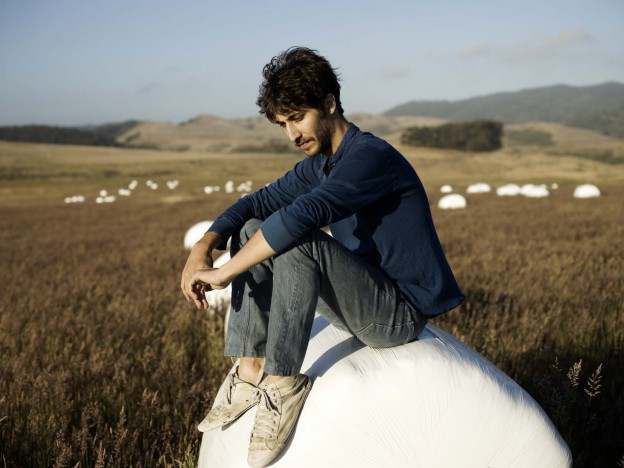
A fine piece of apothegm to live by is, “you’re only as good as the company you keep.” Look at Ringo Starr. He got by with a little help from his friends, who happened to be the greatest musical minds of his time. A relevant and localized example is producer Raleigh Moncrief, who’s collaborated with Zach Hill, toured in Marnie Stern’s band and co-produced/engineered one of the most unanimously lauded albums on a national scale in the past two years.
If he lived in Brooklyn, he would get accosted by hipster vermin at every DIY show he attended. Living in Sacramento means relative anonymity, even indifference to an extent, which allows unlimited hideout time to craft a solo record while producing for the budding local bands. A hermit’s life is how creative-types get things done, and for Moncrief it means recording in his kitchen with an acoustic guitar and laptop at odd hours between sessions with Ganglians and Teddy Briggs of Appetite.
Moncrief is one of the few “behind-the-scenes” guys that has his name shouted out in press releases and in print. Contributing to Dirty Projectors’ Bitte Orca record plays a significant role in that, but this year alone he’s recorded a Ganglians record, the Appetite record and an EP with Cuckoo Chaos–those are just the ones released. Last year he sporadically released free digital beat tape EPs and remixed a few local rap artists. Without hearing Moncrief’s solo debut Watered Lawn, one might assume he’s scatterbrained or has A.D.H.D. when it comes to music, but over the phone he cleared the air with, “I like to work fast and get it out of my face or my mind.”
Listening to the advance of the Anticon debut, the many faces of Moncrief begin to blur. Even my iTunes player struggled with defining Watered Lawn, by anointing it “New Age”–the dishwater of music genres. When I shared this curiosity with Moncrief, he replied through laughter, “How the fuck did that happen?”
Defining Moncrief’s music can be quizzical; a task he sidestepped by casually stating, “That’s not my job,” but the record is not beyond comprehension. The title itself suggests a project well tended and cared for, which is properly delivered in the 38-minute duration. Written in the three-month span of December through March, Watered Lawn is the amalgamation of Moncrief’s flighty interests in mainstream hip-hop production, a bit of leftover 8-bit intrigue and his various indie collaborations whittled down into 11 songs. Last year’s Carpal Tunnels beat tape introduced Moncrief as a hip-hop producer, but as time wore on the sound began leaning toward chillwave and beat music associated with the Los Angeles scene. In our interview, he offered a slightly alternative progression.
“In my mind I owe more to mainstream hip-hop,” he said. “It’s kind of weird because I don’t really listen to that beat music so much. There are elements of it I really like. It’s really about the low end. That’s something I took away from that [scene]. But I think that T.I. was more inspiring than the beat scene.”
By March he leaked “Lament for Morning” to the blogs, which ushered in the first glimpse of a newly discovered identity. The track made sense in fluidity of past work, but the release of “I Just Saw” in late August broke his vocal silence and hinted at a friendly influence. On the track, Moncrief is twitterpated by a female vision, stretched to a joy of singing without concern to his voice’s limitations. It is a singing style often attributed to David Longstreth of Dirty Projectors.
“I can’t help but be influenced by everyone I’ve worked with,” Moncrief said. “The main thing I took away specifically from working with Dave was exploring those outer limits. Being someone who’s not afraid to go to a place that is uncomfortable for yourself. Being brave and having the courage to try something that you’re not going to be confident in is valuable.”
Tracing back to his days in instrumental post-rock bands What’s Up? and Who’s Your Favorite Son, God?, Moncrief was the silent axe man, which continued into his project with Zach Hill and playing alongside Marnie Stern. While recording his debut he described the urge to sing as something growing in his mind, a new challenge to go along with his newly discovered production style. “I’ve written things and had other people sing them,” he said. “It reached a point where it felt like doing it myself was something I needed to prove I was capable of.”
“Lament for Morning” was the first leak, but the track that was his breakthrough was “Cast Out for Days,” which achieves a balance of the organic instruments (guitar and vocals) alongside warping glitches, flickering synths and programmed drums. “To me, [“Lament for Morning”] still sticks out like a sore thumb on the record,” he said. “Originally it was a guitar piece that was instrumental, but I didn’t know if it fit. So I just changed the guitar parts to vocals. That was my vain attempt at making it fit contextually.”
With new discovery can come bothersome uncertainty, but relating back to ol’ Ringo, one gets by with help from their friends. Moncrief had his share of butterflies. He sent his music out to the hodge-podge of contacts and friends he accumulated in the industry, including label heads at Anticon who initially balked at his beats. “I’d send them out to friends and say, ‘How does this make you feel?’
“I was looking for reinforcement because when you’re isolated like that it’s hard to have perspective,” he said. “Which is something good about the isolation as well. I got a lot of good feedback that helped build confidence in pursuing the change, because it’s a pretty big departure from most everything I’ve done previous.”
Oddly enough, it took a blog post instead of a personal e-mail to get Anticon’s attention. The label head contacted Moncrief and offered him a record deal. The label even sent Watered Lawn to Los Angeles to be mastered by Daddy Kev, owner of Alpha Pup Records and founder of Low End Theory, a weekly club night featuring experimental hip-hop–ask any Low End theorist or resident and they’ll say it’s an honor to receive his visionary stamp of approval. Raleigh could only say in approval, “He made it loud. Good work, Daddy Kev.”
The record awaits an Oct. 25 release date, but Moncrief is not taking a breather from issuing personal challenges. He has a few California tour dates, mostly coastal, scheduled sooner than he’d probably prefer. It will be his first opportunity to debut his songs, as well as perform with a four-piece band, which was lacking completion at the time of our interview. “It’s short notice,” he said. “It’s coming together well, but there’s still a lot to be done before I’d feel confident performing, which is funny because I think there’s a show in two weeks? Three weeks?”
As sketchy as he said he felt, it also seemed as though the pieces would fall into place regardless. Moncrief lamented it was tough to find people to play, but perhaps he will call in a few more friendly favors.
Look for Watered Lawns from Anticon Records on Oct. 25, 2011.
Task1ne, State Worker by Day, Rapper by Night, Unites Sacramento Hip-Hop Scene with His New Album
Superheroes assume secret identities that symbolize the life of the common man to protect themselves and the lives of those around them. The secret identity keeps the gifted rooted in reality. Following superhero archetypes, Task1ne is a rapper who protects his passion for music by doing accounting work for the state under the name Corey Lake Pruitt.
Pruitt takes the light rail to work and sits in the back. At the state office, he processes documents while quietly rapping to himself, which draws ire from his hard-nosed boss. He’s well known at the comic stores and strictly wears comic book T-shirts. At home, he has two cats that are disinterested in him unless it’s feeding time. He enjoys comics (a lot) and reviewing films. “I’ve seen Captain America 12 times,” he said. “It’s as good as a Captain America movie could have been. Is it the best comic book movie? Hell no. But, they captured Captain America, unlike Green Lantern, which was the worst piece of shit I’ve ever seen in my life.”
But, when the clubs open and the mics are plugged in, he transforms into Task1ne, a loud-mouthed, nerdcore rapper that speaks street Wookie and reps a crew called Skynet. He’s also poised to join the elite local ranks. “I’m extremely slept on,” he said. “I feel like I’m the underdog of Sacramento because I started out when everyone was already established.”
Like most superheroes, he had to polish his special powers in order to shed his colt legs. Remember Spider-Man’s first attempts with his webbing? Bad things happen to heroes not quite accustomed to their powers. Bad things like getting humiliated in a rap battle against Mahtie Bush. “I completely lost my lyrics,” Task1ne said. “It was three years ago, but to this day people call me ‘the guy that lost to Mahtie.’ It’s like what do I have to do to get people off of that?”
Determined to never lose a rhyme again, Task1ne took to mastering the art of freestyling. He freestyled at work. He kept instrumental CDs in his car to rhyme over. If a mic was offered at an onstage cipher, he seized it, until his skills off-the-dome became notorious.
“I stepped my freestyle game up,” he said. “I’m a geek, so my brain is going different places. I try to rhyme crazy things, like one time I rhymed about Pirates of Dark Water, the old cartoon. Or I said, ‘I swing from tree tops like I’m an Ewok.’ It’s in my brain. That’s what I do.”
But freestyles and a mixtape compiling a year’s worth of guest verses titled Task1ne Verses the World were not enough to earn him the Sammie nomination he sought, or a shot at a Submerge cover for that matter. Task1ne had to prove he could join the ranks of Random Abiladeze, C-Plus and Lostribe by dropping an album in 2011. “I did a lot of work last year,” he said. “I went from being in a group to being solo. I changed my style up a little bit and people started really liking it. So I started getting thrown on other people’s songs [including DLRN’s “Trill Cosby” with C-Plus]. Didn’t get nominated. That kind of hit me.”
Task1ne began working on District 916 a year and a half ago at Sound Cap Audio. He took a neutral stance for his solo record in order to work with whoever would send a beat his way. The only criteria was the producers had to be from Sacramento, which earned Task1ne beats from Lee Bannon, Adam Bomb, Nicatyne, Rufio and Jon Reyes, among others. “The whole album I wanted it to represent Sacramento,” he said. “One of my favorite movies is District 9. I feel like we as hip-hop here in Sac are kind of like that. In the movie the aliens are trapped there, and they feel like they have no way out. I kind of feel that way. But at the end one of them finally escapes out. I’m trying to be the one that escapes out.”
Task1ne has unbridled pride for the local scene, which filters into his philosophy on collaboration. He’s dieting, but his natural presence offers a well-sized frame to put the city on his shoulders. District 916 is a melting pot of crews that included working with Nicatyne and Yae of Fly High in Natomas. “Nobody really messes with them,” he said. “They do their own thing. There are a couple of groups they work with, but for the most part no one really does stuff with them. I wanted to. Got a beat from Nicatyne, which became the track ‘Villian’ featuring Yae–another Fly High member. Yae hit me up about doing a song about us being super villains. I said, ‘Here’s the beat. Start!’ That’s probably my favorite song on the album.”
The album is a balance of nerdcore references prepped for the battle circuit and everyman storytelling. The track “Bounce” breaks down the true story of Task1ne’s first groupie experience, in which he reacts like any normal dude with a state job and raps on the side might–mistake fleeting groupie love for the real thing. “I jumped to all these conclusions, thinking about a relationship, but she’s trying to leave. And I was just left like ‘Where are you going?’ So I tell my boys about it and they were like yeah, those are groupies.”
His daily routine of riding light rail inspired him to write “Back of the Bus,” a song pondering why young black men still sit in the back of the bus despite the privileges Rosa Parks made possible. “We’re a new generation. We can’t really relate to that. There’s no real answer to why I sit in the back. It’s just an automatic thing that I do.”
On “Introducing the Greatest,” Task1ne ponders what it takes to get a Sammie. And while the answer is power-bombing social networks with self-promotion, he needn’t wonder any longer–his name was included in the Best Emcee list of 2011. “I got it this year, thank God,” he said.
Implementing a no-days-off policy, he is planning his next project to be a free EP produced entirely by Adam Bomb, who produced three tracks on District 916. Task1ne maintains his secret identity beyond the common traits of superheroes. He holds his state job as a reminder to not give up his quest to be one of Sacramento’s greatest rappers. “I’m glad I work there because I see what I don’t want.”
In District 9 the alien that escapes takes the spaceship with the intentions of returning to those left behind and bettering their situation. Task1ne intends to do the same with a fall tour along the West Coast. In October he’ll play shows in Portland, Seattle, San Diego and Los Angeles. “I’m actually scared; I’m not going to lie,” he said. “Most rappers act cool about it, but naw, I’ve never done this before. I’ve never been to Seattle or Portland. A lot of people feel like it’s hard to find a way out, even though there are ways out. A lot of people feel trapped here and can’t branch out.
“I want to go up there and establish the Sacramento name, so the next time I come I can bring people with me. Like in the movie, the guy left and he’s going to come back to get his people.”
The District 916 CD release party will take place at The Blue Lamp in Sacramento on Sept. 15. Performing will be Digital Martyrs, JRas of SouLifted, Dregs1, Sleeprockers and of course Task1ne. For up to the minute info, follow Task1ne on Twitter @TASK1ne.
Lostribe’s JustLuv on nurturing the rap group’s latest album Sophie
Six years ago is a different lifetime as the body approaches 30 years of age. Marinate that sentiment with hip-hop’s culture in motion and an artist could risk making music on the wrong side of retro. Grass Valley’s Lostribe could have stuck to its 2005 script, but with personal growth comes valued artistic growth and even rebirth.
Lostribe began as a crew consisting of three producers and one MC. Its debut could be considered rapper/producer Agustus ThElefant’s solo Sole Expressions in 2005, which featured production from Lostribe producers JustLuv and MLB. The group went through a series of tribulations after that record, but still managed to bounce back with a video game soundtrack deal in 2007.
Members JustLuv and Agustus were asked to score the Namco Bandai video game Afro Samurai, featuring Samuel L. Jackson and RZA. The duo scored 10 tracks on the game. Meanwhile, JustLuv remained busy by breaking into the Bay Area rap scene to produce tracks for Andre Nikatina, Mac Dre, San Quinn and Mr. FAB. The growth would prove invaluable to Agustus and JustLuv, even if it distracted them from following up on their personal efforts. MLB is on hiatus from Lostribe crew, only making an appearance on one track on Sophie, the band’s latest album, which will be released on Aug. 23. But JustLuv assured me he had good reason for the absence, “He recently had a baby.
“So he’s focused on being a father and building that life,” JustLuv said. “He’s got a lot on his plate right now. I made it a point to include him on at least one track. He has a hard time getting out to the studio, living in Grass Valley and we recorded everything in Sacramento. He’s working, trying to get that money for his family.”
With Lostribe down to two core members, JustLuv manned the boards for Sophie, a record that meshes the lyrical dexterity of underground hip-hop in the early Aughts with the modern warble of dubstep’s woofer-blasting sound. Musicians out for the dollar and the relevancy can’t afford to take a five-year hiatus, but JustLuv talked of the extended process as a necessity that earned Sophie its coveted title.
Why the long hiatus between records?
A lot of life and shit happened. Agustus got married and moved away to Santa Cruz with his wife. They were down there for about a year and a half. He ended up getting a divorce shortly and moved back up [to Grass Valley]. I was going through a breakup at the same time, in between houses, and living situations were not very stable. I was like a gypsy living out of my car for a minute.
Life happened and we had to regroup. Then, in 2007 we started working on the video game, going through negotiations with those dudes. It took up a lot of our creative focus. So around 2009 we got our focus back with Agustus moving here. But again, it took time because we were going over material that was really old and we had some new material, so there was gaps between the sound quality and progression of the sound. We kept evaluating shit to try and refine our style. This last winter was when it finally came together.
The sound is definitely caught up to speed with its dubstep influence, while maintaining an organic feel closely associated with hip-hop.
That’s become my thing. Around 2006 that fool Agustus brought me to Burning Man and introduced me to dubstep. I was kind of into electronic music, and I used to break dance when I was a teenager, so that sound to me felt like the missing element into the synthesis of hip-hop and electronic music.
With the absence of MLB, you produced nearly the entirety of Sophie. How did you approach the opportunity to have full creative control over the sound?
That’s kind of how this project started out. I was making these new beats and my homie in Oakland heard them and said I’d kind of arrived, so it was time to put some shit out with this sound. So originally the focus was a solo project.
When it came down to me making this project and N8 [the Gr8 from The Cuf] started plugging these beats and Agustus heard it and said the shit was dope. We just decided to do a Lostribe album. It was a lot of hard work, but at the same time it was the most fulfilling and creative thing I’ve done. I tried to make a couple anthems. Try to make some shit that gets stuck in your head.
Why did you name the record Sophie? Because the first thing that comes to my mind is the old Jaz record with Jay-Z called “Hawaiian Sophie.”
I’m almost 30 years old. A large percentage of my friends are getting married or having kids or tied down in committed relationships. I don’t really have none of that shit. So, Sophie is the name I’d have given a daughter. So this is my firstborn. That’s why I named it Sophie.
You hear a lot of musicians talk about their records as their babies. That’s cool that you took that concept to a literal sense.
You know, I was kind of laying in bed the other day and realized everything I’ve done from making money, places I’ve lived, friendships to an extent… Everything I’ve done to gain momentum in my life for the last 10 years has been out of this music. So I’ve put my entire grown ass adult life and heart and soul into this album. So really I couldn’t call it anything else.
You went to boarding school as a youth. And recently you had a nephew get into some trouble, which prompted you to write the song “Live Like a Rebel.” I was wondering if he’s heard the record and if it had an impact on him?
No. I’ve not played it for him yet. He is more into rock music. He gives me a teenager response to everything, which is, “That’s cool.” He’s still 16. I can only live by example and try to show him what’s what. At the same time it is hard for me, because I still do young shit like go to the bar and get drunk. It’s kind of a paradox. I had a really deep conversation with the kid three or four months ago and then the next day he told his dad he figured it out and he got it. Then, the next day went out with his friends and did hella crazy shit. I can’t be mad though. The shit I was doing when I was his age was way worse.
Lostribe’s Sophie is available now in stores and through iTunes, Amazon and other online retailers. The album features guest appearances from Gift of Gab, The Grouch, Talib Kweli and others. Lostribe will perform at Sol Collective on Friday, Sept. 9 with Los Rakas, Danked Out and more. Hosting the event will be Mic Jordan. For more info, go to Lostribeproductions.com
J*Ras of SouLifted strikes out on his own with City of Trees
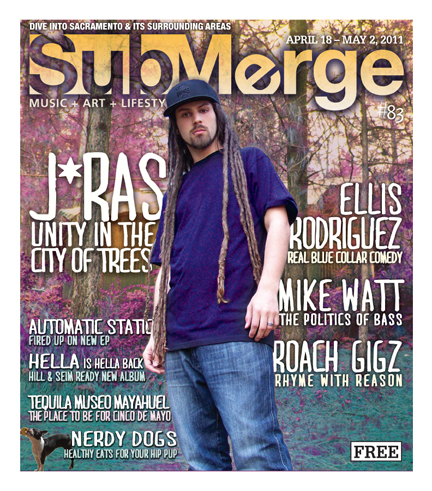
At first glance, J*Ras is a tall, friendly and relaxed looking guy with long brown dreadlocks. But after meeting him, you quickly learn he is a hardworking musician who takes on the roles of DJ, singer, rapper, multi-instrumentalist, producer, songwriter, husband and father. The hip-hop and reggae lover from SouLifted who has been in the music industry for more than a decade is ready to unleash his first solo album, City of Trees.
Unlike some mainstream hip-hop and reggae artist, J*Ras wants his music to serve as a call of awareness and individualism to people of all ages in the community.
“You can hear in a lot of the songs the message to be your own individual and keep going against the grain, doing your own thing,” said J*Ras, sitting on a chair in the green music lesson room at the ZuhG Life Store. “But that can also help to give them inspiration to get through things in life.”
When the Sacramento State alum travels and performs, he likes to bring the whole family with him, including his wife, Lady Grace from SouLifted and his two children. Even though his children might be considered youngsters they are already starting to follow in their dad’s footsteps. His 10-year-old son, Chase, is a songwriter and rapper and, according to his father, “tears it up” while performing on stage. His daughter Jossalin is only 2 years old but has to be given her own mini microphone at the live shows or else she will attempt to grab a mic from mom and dad.
“She was singing Bob Marley at a show the other day,” J*Ras said with a smile. “It’s just natural to her.”
On top of traveling with his family, J*Ras is active in the Auburn Hip-hop Congress, a local organization that provides youth with the opportunity and tools to help make a change in their society. At the nonprofit organization, J*Ras acts as the Artist Development Coordinator and works with and teaches young kids creative writing and the history of hip-hop.
“[We’re] working with the kids, giving them what we didn’t have when I was growing up in Auburn and that community, which is an outlet to express your creativity,” J*Ras explained.
Meeting up with him downtown at the ZuhG Life Store seemed like the perfect place to get to know J*Ras, since we were surrounded by music and art by local artists.
Your new album is City of Trees. I’m guessing that it’s about Sacramento?
Yeah, it’s a reference to Sacramento. That’s one of the tracks on the album… It just has to do with Sacramento kind of being overlooked and it’s really a good place to be. I don’t live in Sac right now. I moved to Grass Valley up in the hills. But I was born in Sac, went to Sacramento State, and I got to show love for Sacramento.
You are a very talented guy: a vocalist, a DJ, rapper, producer, basically everything. Did you have all of those roles with your new album?
Yeah, in the new album, I produced the whole album and I play the majority of instruments. There are guests from SouLifted: Brian Fleshman helped to produce some of the tunes, Steven Leonard played some of the guitar and bass. So, we did add some those elements from SouLifted. But I played pretty much everything on all of the tunes, even turntables. [I] do a lot of the vocals, besides some of the backing vocals. And there are some other guests on the album, including Prezident Brown, who is one of my favorite reggae artists, Soulmedic and Jahworks the Revolutionary. We do have a few guests on there but mainly this is just something that I’ve been working on for the last couple of years.
Do you have a certain theme that you are going for in the album, a certain meaning behind the lyrics?
We’ve always carried a positive message in the music. And with SouLifted, we’ve always had the music to lift you up. It’s conscious music with a message. It’s not just about the things that you normally hear in hip-hop music or even reggae. It’s things that you’re going through and how we struggle and how we overcome those things. One of the songs is called “Champ for Life,” and it’s really just a reflection of life and what’s got me here now. It kind of tells a story of where I’m at now. I guess the theme still would be conscious music that does have a message, a positive message for the people.
Do you have a target audience?
What I’ve always liked is that at our shows we always get people dancing. Whether they’re little kids that are 2 years old or the 80-year-old grandmas. And that’s what it’s all about, is getting the people involved. I work with the Auburn Hip-hop Congress as well, and it’s all about trying to help with the youth and giving the youth positive music that they can listen to. Not just the hip-hop that they’re hearing on the radio or the things that are out there easily accessible for them. It’s about giving them something with a message. Mainly our majority of listeners and my majority of listeners are college aged, a little bit of older. But the music is for everyone for sure.
What were some of the challenges working on your solo album–going from a big band to just you?
One of the main challenges is doing it myself and being so critical of my own music. Instead of being able to have that input from everybody to make it that collected thing. But that’s also given me the freedom to make it exactly how I want it. So some of those challenges also become strengths of the album. Mixing and mastering, just some of those fine tuning things, were probably the hardest challenges. It was so hard for me to be happy for where the album was, making it perfect.
What made you want to work on your own album?
I’ve played in multiple bands from Heart Life and Soul to SouLifted. I’ve always written my own music, and I have so many songs that haven’t been recorded because I focus so much energy on the band… I love that collective energy of the people when we unite. It’s just stronger and I love it, so really just kind of realizing where I am now and seeing what I need to put some energy into this solo album so I could really get it out there. I’ve been doing a lot more solo shows myself touring more and just trying to get the music out there. I knew that this was the next logical step in the progression. And having the ability to work with some of these reggae artists and other artists that I aspire to work with on my solo stuff [has] kind helped me push it and get the album out.
Do you see more solo work for your future?
Absolutely, we have a lot of projects going on, which is great and we are doing a lot of collaborations. Right now, I’m working on an album with Soulmedic and a lot of music with him. He is a great reggae artist out of the Nevada City area and Hawaii–he is kind of half and half. I’m also doing a tour with some of the artists from Thizz Nation, which is kind of funny, because it’s totally anti what our music is about. But they’re trying to bring that consciousness and educate some of the people and their audience. We got to try and reach every target audience we can. So, I’ll definitely be pretty busy doing some solo work, but I also hope to include some more SouLifted shows. And doing a lot of collaborations with artists, a lot of hip-hop artists in Sacramento and working with the Auburn Hip-Hop Congress right now a lot too.
I’ve read that you have been performing since 1999… over 10 years!
Yeah, that’s when I actually threw my first show. I was 15 years old and I got approached because we had been doing parties, where we just pull out in the woods and set up our turntables and generator. And so the word got out. We had a little hip-hop crew when I was still in high school and one of the local bars actually asked us to throw a show and that was in May in 1999. That was the first show that I threw myself, made the flier and all that, cutting stuff out, old school. It’s come a long way since then and we put a lot into it. I’m real happy with where I’m at now and where it’s moving along.
What is the best part of performing live?
The energy from the people. Just the feeling that I get from performing, it’s not like anything else. I know I’m meant to be doing that when I’m up there… And I love getting the people involved and the energy and getting that love back from all of the love that you put into the music.
J*Ras will celebrate the release of his solo album City of Trees at Sol Collective on April 29, 2011. Lady Grace, Task1ne and many others will also be on-hand. Expect special guests and some big surprises. The show is all-ages and gets underway at 8 p.m.
Friday, June 11, 2010
United State Boutique, Sacramento, CA
Busdriver introduced himself to his Sacramento faithful by stating his name and the fact that he “makes hip-hop the wrong way.” Immediately I began to wonder who this slight jab was directed toward, considering the door charge was $13, and he filled out the boutique rather well.
It depends on where you are raised on hip-hop, I guess. A graduate of South Central Los Angeles’ Project Blowed community, Busdriver is expected to be technically flawless and remarkable in his weirdness. Had he lacked these qualities, the faithful in that district would have politely asked him to “pass the mic” long ago. But eight albums deep (two of which were released on Epitaph) and touring schedules to foreign lands make it difficult to determine how he is incorrectly making hip-hop.
I will admit, I own zero Busdriver records and have often expressed befuddlement in the allure of his music–fast rap never did it for me. I learned about Busdriver the live performer years ago, though. It was an experience that altered my perception of his work. For the right price, I will attend a Busdriver show, as should any hip-hop connoisseur.
Aspiring rappers, aka the opening acts, take note of the level of expertise you must wield in order to rock a crowd bigger than your closest Facebook friends. Busdriver is easily one of the most compelling performers in the business, which is heightened by his lack of a posse or DJ. If Busdriver is on the bill, Busdriver is all you’ll see. One man with lungs like hot air balloons, bursting rhythmic tangents of tossed word salad–and somehow, his fans find enough connection to sing along. Sweet mercy, I saw people singing along, while local fledgling talent Chuuwee was in ear shot of me, wide-eyed and excited, telling his crew “I don’t know what he’s saying, but it’s hella fast.” Take notice, young pup.
I am comfortable with never comprehending the crossword puzzle of darts spewing forth from Busdriver’s mouth. His machine-gun delivery is the most impressive display of MCing I’ve seen in person. Sampling Mozart’s Sonata in A Major, “Me-Time… (With the Pulmonary Palimpsest)” was delivered with hairpin precision. Even if Busdriver faltered slightly, he casually filled the space with off-the-dome rhymes, until he regained his cue. I’ve witnessed some impressive Chicago MCs flex that ‘90s “do or die” style, rolling the Rs and bouncing to a “pibbitty-pibbitty” flow, but there’s a practiced routine employed. The chopping up of styles is a Project Blowed staple dating back before Freestyle Fellowship, but Busdriver is a master, while others are mere apprentices.
Most hip-hop heads, myself included, are still not ready for Busdriver. Although, judging by the audience–keying in on the all-ages element–traditional hip-hop heads were the minority that night. It would seem Busdriver is embraced by the young and the obnoxiously hip. Hip-hop is still in denial of its nerdier side–as if DJs weren’t the most reclusive oddballs ever–making Busdriver the talisman of art rap. Until being uncool replaces an undying obsession with being the most gangster, Busdriver will be sarcastically criticizing his art with jokes about “doing it wrong.” Although, those willing to open their minds to the complexities of his style shall be exposed to a format cursed to be called “ahead of its time” in the ensuing decades.