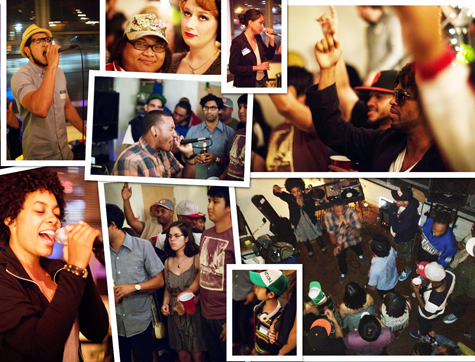
At Home with the Regulars
Where there once was a bar, hidden in a seemingly abandoned basement corridor of the downtown mall, there now exists a crater under construction. The Pre-Flite Lounge was a 40-year-old time capsule, a quaint bar untouched by time, that perhaps lingered because it was forgotten. The Pre-Flite Lounge was lukewarm domestic beer served in frosted mugs to offset the tap temperature. A heavy hand poured no-nonsense cocktails like whiskey-water, gin-tonic and vodka-soda. When the craft-craze of artisanal beer and cocktails swept through Sacramento, the Pre-Flite didn’t balk and no one seemed to mind. Former regulars look back and their memories are unified by signifiers like “unpretentious” and “classic.” Everyone remembers their first time and becomes protective of who they tell out of respect for the bar.
That was the legacy of the original before it was demolished last year to build a new cathedral for our NBA franchise we fought desperately to keep. And even though owner Jason Yee purchased the establishment in 2010, he remained committed to its continuation by opening a new home mere blocks away in Jazz Alley.
“My goal was to take over and run it another 20 or 30 years,” Yee said regarding his acquisition of the bar. There were no arena talks in 2010 threatening Pre-Flite, only the impending sale by Heather Parisi, owner since 1982. When she vetted Yee on the purchase, it was done the old fashioned way, he recalls. He ran a yogurt cafe in the mall called Yummy Yogurt. Upon learning about the chance to purchase, he regularly patroned the bar for a few months, expressing interest in conversation. One afternoon the bartender casually slipped him a napkin with a phone number on it.
“He kinda slid it over to me and said, ‘hey, the owner wants to talk to you.’”
Yee drove to Parisi’s home in Carmichael soon after. They talked for four hours over whiskey-waters about everything except the bar, mostly “her family, [my] family, and life” he said. Eventually she disclosed that while she had many suitors eager to purchase, she liked him and trusted his intentions with the bar. That vote of confidence only goes so far, though. Yee still had to earn the trust of the regulars.
“As soon as I was taking over, a lot of the regulars were concerned I would change everything up,” he said. “I had always loved the Pre-Flite, so I wanted to keep it the same.”
That desire to not disrupt the natural order is inherent in a Pre-Flite regular. I never became one myself, but I respected the sanctity. It was never about exclusivity, just that cryptic “don’t ruin the bar” mentality.
My guide one night in 2009 was a former writer for this magazine, Vincent Girimonte, who deemed me worthy of entering the hallowed ground of the original Pre-Flite Lounge. That night we rode our bikes to a section of L Street that felt deserted at 7 p.m. It struck me as almost impossible to stumble in without guidance. Entering Pre-Flite for the first time was like past-life deja vu or checking into the Hotel California. Everything felt unchanged since before you were born, from the carpeted floors and the wood-paneled walls to the neon-lit jukebox in the back corner.
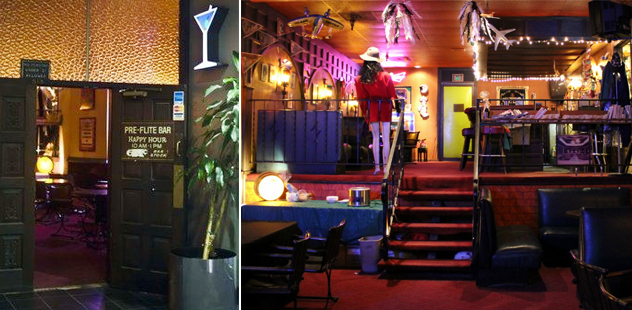
{Old Pre-Flite Lounge location}
You even wondered if the patrons bellied up to the bar had been there for a few hours or a few decades. With repeat visits you learned names, like Russ behind the bar, and which day there’s free bean dip. You meet the dogs, too: the Jack Russell Terrier Louie that trots around with disinterest in attention unless food is involved, and the large white sheep dog named Babs that can stand with its paws on the bar like any other regular.
My experience is not unique. There are many who considered Pre-Flite Lounge their home or home-away-from-home. As a regular only to be referred to as Kevin told me, “A lot of people have lived and died there.”
Kevin started coming in 2011 after Yee took over, learning of the bar through a newspaper article. He called the old location “the perfect man cave.” He goes to the new location as well. It’s here around 4 p.m. he brings up the historical hearsay of past owners. Legend has it Parisi was mentioned in the will of original owner, Larry Bowa. After he died, his girlfriend ran the bar for a year before she passed away as well. It was then discovered that Parisi was in the will to purchase Pre-Flite. Any further insight as to what her relationship to Bowa might have been was taken to another lifetime upon her passing in November 2013.
Pete is a regular who still frequents the new Pre-Flite as well. His first trip to Pre-Flite was in 2008, in need of a pint on the way to a Rivercats baseball game. To Pete it’s that classic, unpretentious quality that allowed Pre-Flite to remain undisrupted.
“It calms down the atmosphere,” he said. “People came in regardless of their background, took in the ambiance and everyone got on the same wavelength.”
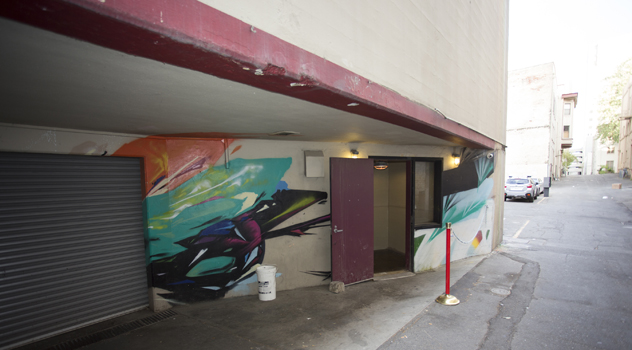
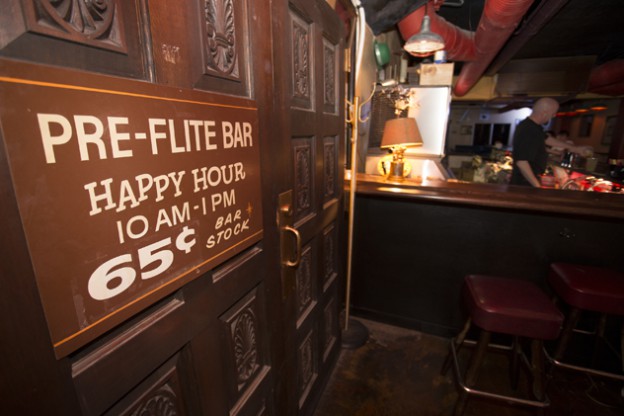
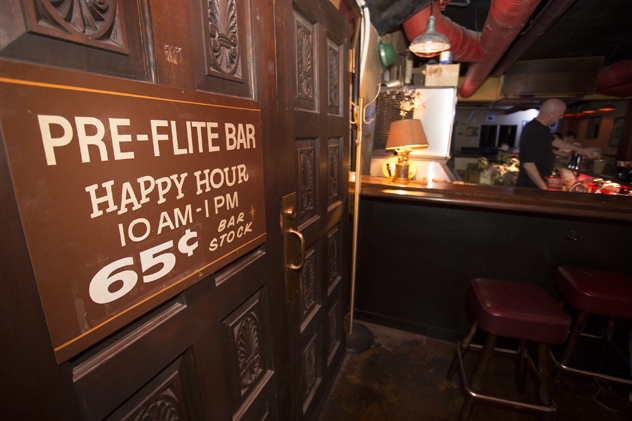
When Yee sought a new location, he pursued real estate much like the former—hidden and precarious. There is no signage, only a velvet rope to an open doorway in an alley. That door leads to a bank vault and within the vault are the faithful patrons of Pre-Flite Lounge 2.0 (as he calls it) carrying on the legacy. The jukebox is there, still functional and loaded with vintage tracks, some growing increasingly obscure with time. Yee salvaged the old doors with the outdated sign of “Happy Hour 10 a.m. – 1 p.m.: 65 cents.” Alice the comically busty mannequin is there as well. But like any new chapter, there are missing pieces that will fade into the history books.
“There’s stuff we have in storage we thought about bringing out,” Yee said. “But now that we’re here, we want our clients now and our friends to bring new stuff in to make it their own.”
The move has its growing pains. Bartender Bridget Lopez says Louie the terrier is uncomfortable with the cement floors and she tries to make him feel relaxed by bundling up sweaters on the floor. Some regulars like Larry and his dog Babs have yet to come by the new location. But, Pre-Flite 2.0 has neighbors like photographer Nicholas Wray, Omar Salazar’s skate collective Doom Sayers, and hundreds of industry servers and cooks in need of a secluded watering hole for a post-shift (or, more apropos) pre-shift drink. The afternoon I’m there interviewing regulars, Adam Pechal, local chef in flux, is there doing just that, raising awareness to his industry friends that a semi-hidden bar exists. His only complaint is that he no longer has storage space in the building from his former restaurant Thir13en.
“I wish it was here two years ago when I was in and out next door all the time,” he says. “I could pick up some catering equipment, stop in for quick beverage and move along with my day. I could have been drinking [Jason’s] booze instead of my booze.”
Epilogue:
Jazz Alley between 10th and 11th downtown has no folklore nor history to the coinage. There was no infamous juke joint or speakeasy where Charles Mingus or Duke Ellington once played, therefore earning the title. Jazz Alley is Jazz Alley by mandate of the city. We had no say, much like we are at the mercy of K Street becoming The Kay, knowing that only tourists call it that. As much as developers and city planners might think you can invent districts, invent history, you can’t. History is earned.
Pre-Flite Lounge 2.0 cannot salvage the crock naming of Jazz Alley, just like Pre-Flite Lounge 2.0 will never fully recapture the essence of the original. But regulars like Kevin, Pete and Pechal agree that the spiritual calm that made the original a haven is not lost entirely. Pre-Flite is not the first bar in Sacramento to move and maintain its mythos. This is not a city deeply concerned with the historical protection of olive toothpicks. But steadfast are its barflies, relaying the oral history to the stool adjacent.
11 Sacramento area bars where beer rules all
Intro by Jonathan Carabba
If there is one thing that’s for sure about Sacramento, it’s that we love our beer! The last few years have been an exciting time for regional hop-heads. New breweries and taprooms are opening left and right, it’s becoming the norm for restaurants and bars to up their beer list game, and our palate as a whole is growing with the rising popularity of sours, farmhouse ales and other interesting/experimental brews. Another thing that’s for sure is there is no lack of great bars to enjoy craft beer in the Sacramento region. Throw a rock in any direction and you’re bound to hit a spot with a killer beer list. With the return of Sacramento Beer Week, which runs from Feb. 26 to March 8, 2015, we figured it would be a perfect time to highlight a few of our favorite downtown-area beer bars. This is by no means a “best of” list, it’s simply an attempt to shine some light on bars in or near the heart of the city whose focus is on beer 365 days a year. Honorable mentions could of course include traditional pubs like Fox and Goose, Bonn Lair, and de Vere’s; or other downtown hot spots like Alley Katz, Burgers and Brew and The Rind; brewery taprooms like Track 7, Bike Dog and Berryessa; or even outlying spots like Sam Horne’s and Final Gravity, but then this list would never end… Read on to learn about 11 of Submerge’s favorite beer-focused downtown-area establishments and to get a hint of what to expect for their Beer Week events and offerings.
The Shack
5201 Folsom Boulevard | Sacramento
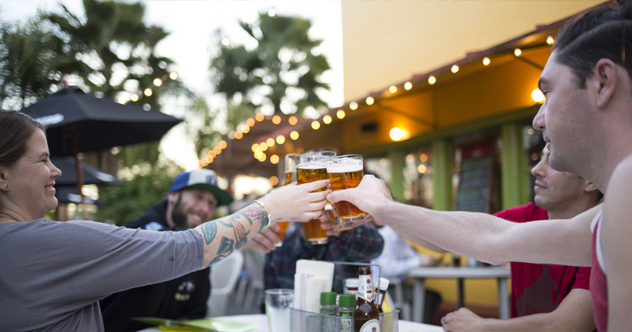
Humphrey Bogart once said, “The problem with the world is that everyone is a few drinks behind.” The Shack is there to catch you up, East Sac. The Shack location originally opened in 1931 as one of the first drive-ins turned drive-thrus in our area. It was home to the nickel hot dog and dubbed “The root beer king.” Owners Gary and Jen Slaeppy claim that “The Governor of California ‘Sunny Jim’ Rolph was said to have had his first beer after prohibition in our beer garden, which is now the kitchen.” Today, The Shack remains a prime destination for US-made craft beers as well as Belgian ales/sours/lambics with over 100 options on draft and in bottle. The bright green hut used to serve up some of the best breakfast in town, but sadly, they recently discontinued it because it was exhausting the dining quarters. However, their award-winning burgers are still available to devour with a nice Knee Deep IPA, or a malty Belgian dubbel. If you are into the more exciting, foreign beers, they’ve got you covered with trappist specialties, diverse Belgians (from unfiltered whites to heavy quads) and even a couple of sour options. During Beer Week, the location will host the ticketed event, “Shack Fest,” an East Sac rager in celebration of all that is beer and food. In proper homage to their roots, “Shack Fest” (Sunday, March 1, 2015) is an event full of unlimited tastings and an abundance of food as a continuous middle finger to prohibition all these years later.
-Words by Alia Cruz | Photo by Evan E. Duran
Hot City Pizza
5642 J Street | Sacramento
Hot City Pizza is the tiny pizza joint inconspicuously cuddled between a few businesses in a strip mall in deep East Sac. While the Hot City location is visually unimpressive and void of decor, their food and drinks confidently make up for it. Owner Colby Pettenger opened the place more than seven years ago, with the dream of bringing this town the least boring pizza around. It quickly evolved into the natural marriage of good beer with good pizza. Their pizza and beer is literally so good, they can completely rely on it to keep customers loyal and plenty.
The pizza itself is damn good. Notable spicy options, like the spicy veggie and the angry pig pizza, will make a ‘za lover sweat. Also, their vegetarian options are plentiful, and they are generous with toppings. The variety of pizzas gives you the feeling that its creator was somewhat of an evil genius, being completely liberated by the access of toppings and the power to execute them into what he’s always dreamt of.
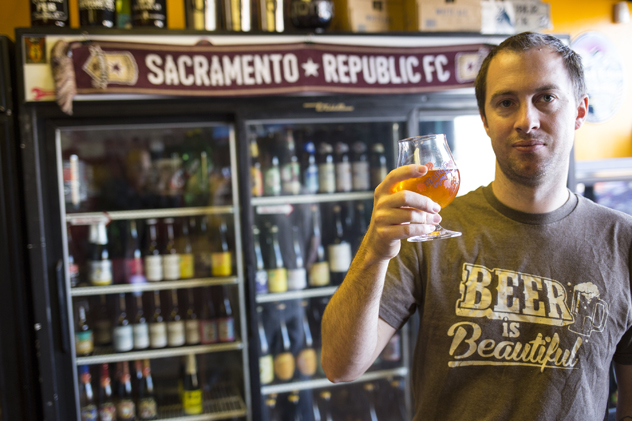
An experience at this place is always full of unexpected delights. This small, laid-back pizza joint has some of the best beer options in town. The little 7-Up branded fridge in the main dining area has a beer selection that even the town’s most ritzy bottle shops can’t get a hold of. Yes, there are plenty of local offerings like Knee Deep IPAs, but they also have an exciting and unique option from more specialty breweries too. For example, they are bound to have something great from Mikkeller, Prairie Artisan Ales, and you never know who else. This place is the epitome of a hidden gem.
Aside from the bottle choices, they have 14 beers on tap that consistently rotate and keep options fresh and exciting. Spicy meats and peppers on certain pizzas will find a friend in a dank IPA, and a fresh veggie pizza can shine with a pairing of a farmhouse ale or blossoming saison. I think that while pizza has rarely been seen as something culinarily complicated, the pairing of unique beers with pies is a no brainer. If you break down all of the ingredients of a pizza, and think about all of the spices and elements, certain beers can actually help accentuate those things. Hot City Pizza has such a variety of funky and unique brews, that with each bottle you pop or beer you have poured, there are so many flavors waiting to work together to give you a whole new experience.
While Pettenger says he has yet to plan anything for Beer Week, rest assured you can always find something here that consistently respects the craft of the draft.
-Words by Alia Cruz | Photo by Evan E. Duran
University of Beer
1510 16th Street, Suite 300 | Sacramento
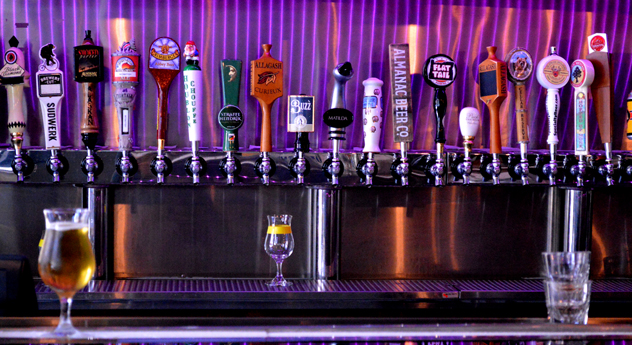
The original University of Beer in Davis rose to popularity with a 60-tap system, the sort of beer list undertaking few dare brave. For its Midtown location, University of Beer expanded its curriculum, installing a 100-tap system. We do not advise a latenight cram session of studying the beer list. With campus roots, the ambience follows suit, mixed with the hyperstimulation of a sports bar—seemingly as many flat screens as there are taps. Accommodation is supreme at U of B. The hundred taps are not squandered on appeasing the domestic big brothers of beer. Even the bottle list is home to specialty brews and manufactured in limited runs. Eleven of the taps are locals only, with the remaining flavor profile spanning Belgians, sours, nitros, pales and ciders. For Beer Week, U of B will have its Rare Beer Night on Sunday March 1 (the list still under lock and key), and Tuesday is hosted by Saint Archer Cellar Manager Greg Peters, serving flights and fielding your beer nerd and homebrewer inquiries.
-Words by Blake Gillespie | Photo by Jenny Price
Capitol Beer and Tap Room
2222 Fair Oaks Boulevard | Sacramento
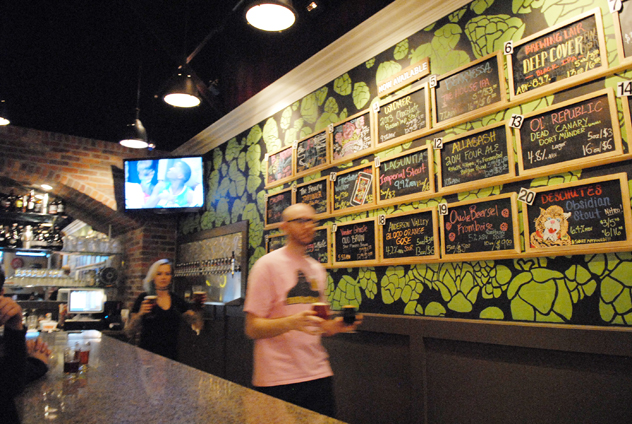
The dogwoods are in bloom in the courtyard adjacent to Capitol Beer and Tap Room’s secluded patio, a picturesque setting for a post-shift pint. Tucked away from the commuter traffic of Howe Avenue and Fair Oaks Boulevard, Capitol Beer exists as a quaint and folksy retreat. Strip malls tend to stifle character (think four corners of taupe), but this nestled neighborhood watering hole created a lived-in look by building a brick arch behind the bar and mounting 20 chalk boards against a hop-print, painted backdrop to display its rotating taps. The 20 boards are for the 20 taps that are ever-rotating with an emphasis on Pacific breweries, but a serious soft-spot for national breweries like Clown Shoes in Massachusetts. The beer rotation is highly curated, but also democratic. Got an elusive brew in mind? Place it on the beer wish list and they’ll do the leg work.
With Beer Week days dedicated to locals only and the surrounding regions like the Bay Area, Oregon and San Diego, Capitol Beer has an inclusive mentality in its schedule. Friday, March 6 is of note though as Hops To Table magazine, a local brewer’s rag, will celebrate its second anniversary. “It’s not only a celebration of the magazine, but it’s a rare beer night,” bar manager Eric Newell said. “The idea [for the magazine] started here, talking about it one day about a love for Sacramento and its beer scene.”
-Words by Blake Gillespie | Photo by Melissa Welliver
Dad’s Kitchen
2968 Freeport Boulevard | Sacramento
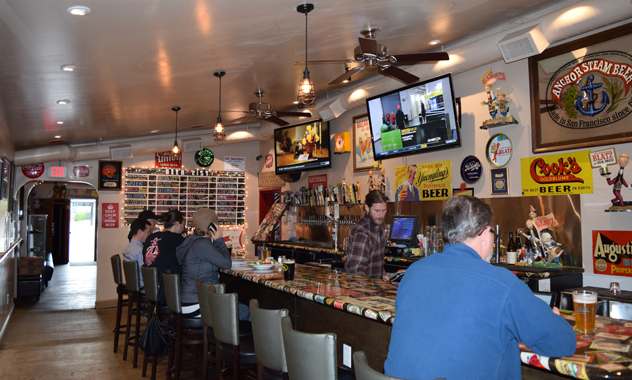
Dad’s Kitchen is known for their commitment to showcasing mostly California beers. They designate their 27-draft lineup to these state-proud brews, especially those created here in Sacramento. What makes Dad’s so awesome is that it is a laid-back, totally unpretentious place with a knowledgeable and down to earth staff. This place is beaming with local pride and a reformed surfer dude feel. Year-round beer coordinator Tyson Herzog (who also runs Sac Brew Bus tours) completely submerges himself in the local beer culture, and that definitely reflects in the Dad’s draft list. Yes, they offer brews from local hard-hitters like Track 7 and Bike Dog, but this place also gives the spotlight to smaller breweries like Yolo Brewing Co., Auburn Alehouse and Mraz. One thing that is acceptable here, as should be in most professional beer places, is the right to taste. A place that lets you take a swig of something you are unsure about before you commit is highly appreciated. Not only does this allow you to ensure you like what you get, but it opens up the possibility for beer conversation and enhances the overall drinking experience. This year, Dad’s anticipates a packed Beer Week schedule. They will pay homage to Sacramento beers on Saturday, Feb 28. Other events for the week will include a Lagunitas brunch and Drake’s tap takeover. The one unmissable event is on Wednesday, March 4. This location will be hosting a local IPA tasting competition. Breweries will have guests drink up to determine who has the more superior hopped concoction.
Words by Alia Cruz | Photo by Mallory Moullay
Lowbrau
1050 20th Street | Sacramento
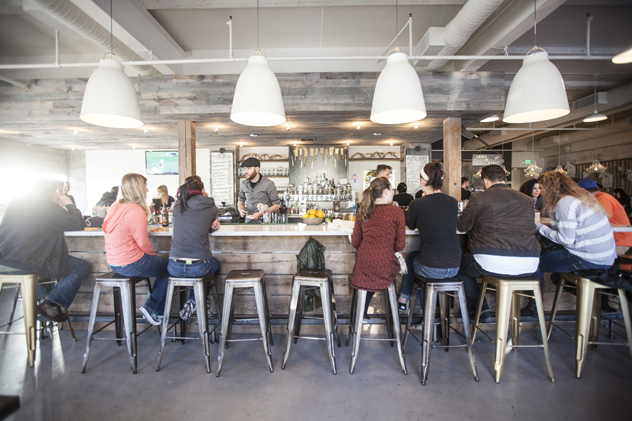
Much like craft beer wasn’t synonymous with Sacramento until the past five years, the Northwest corner of 20th and K was not perceived as a destination stop in Midtown. That is until it transformed in 2012 with the opening of Lowbrau Bierhall, widely regarded as one of the most popular hangouts in town—no matter the day of the week. Pioneered by Clay Nutting and Michael Hargis, the traditional name is not an affront. The bier menu at Lowbrau will challenge your comfort with the German language, always pouring Trappists, Dunkels, Doppelbocks and Hefeweissbiers. Tradition is cool, but this is California. To wit, Lowbrau keeps a steady rotation of experimental breweries both regional and worldwide. While a debut of a barrel-aged, peanut butter infused variation on Ballast Point’s Victory At Sea cannot be missed on Friday February 27, Thursday is Heretic For Homebrewers night, a chance for homebatch hopefuls to pick the brain of Heretic head brewer Jamil Zainasheff.
-Words by Blake Gillespie | Photo by Nicholas Wray
Der Biergarten
2332 K Street | Sacramento
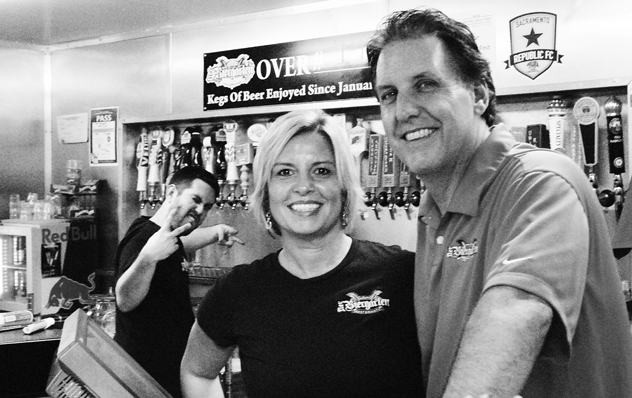
Der Biergarten has some prime offerings in deep pours and a ping pong table, so naturally, I am a fan. Biergarten owner Sean Derfield was one of the first people in our area to put a business in a cargo unit, “an idea that was initially meant to make it so we can literally pick the whole place up and move it to different locations every few weeks,” he said. This idea was immediately shot down by the city, but that’s cool, because Midtown has made Sean feel more than welcome in his little lot on the corner of 23rd and K. Derfield came from a proud German heritage and wanted to give Sacramento a feel for a more casual outdoor environment where one can drink heavy pours of quality German beers and other ales. He wanted to bring the bar (and its patrons) out into the fresh air. “When looking for what to serve, I’m constantly tasting, doing research and listening to beer lovers,” said Derfield. “I’m always talking to beer reps and religiously on Beer Advocate. Being educated in beers seems to be key.” Initially, he came from a traditional bar background (he also owns The River City Saloon in Old Sac), where he says beer was not quite in the spotlight. Then, he became intrigued by the laid-back nature of the traditional biergarten and the beer boom. “I was aiming for a place to feel completely casual and fun, with the quality product to back it up. I want people to drink and be merry.”
The Biergarten is void of TVs, music and antics. Instead, they have corn hole, foosball, ping pong and community tables to meet new friends. Beer also helps with that latter part. In fact, these community tables were even shipped here from the owner’s German relatives to support those hefty steins of beer. The cargo-unit kitchen also serves up some light German grub like sausages, pretzels and salads. The few times that Sacramento’s weather is unsavory is when the business hours for Der Biergarten become murky. If it is raining, they have no choice but to be closed. If it is too hot, business tends to be slow. Sean has been tirelessly working on ways to keep patrons more comfortable in changing conditions. “We are putting in awesome misters for the summer and looking at electric heaters for the winter. We are also looking forward to possibly extending our hours through midnight.” Der Biergarten is a completely unpretentious, fun place to get your money’s worth for quality German beers and beyond. They implement an idea that community is built through drinking beer, as the Germans have religiously believed for years and years. Every week truly is Beer Week at Der Biergarten…. Well, weather permitting.
Words by Alia Cruz | Photo by Melissa Welliver
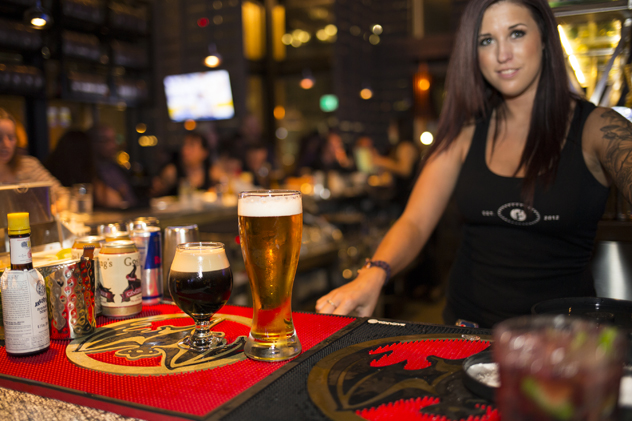
Firestone Public House
1132 16th Street | Sacramento
Firestone is a great option for the more casual craft beer drinker. It is loud, it is busy, it is haunted with televisions for sports enthusiasts (exactly their targeted audience), but it also has almost 60 draft beers to stumble through with uniquely large-sized pour options on considerably high-alcohol ales. Before Firestone was a restaurant, it was the huge tire company sticking out on the bustling corner of 16th and L streets. When I was a kid, I remember driving with my dad to the Downtown Plaza and always turning my head to watch the Firestone guys rolling and bouncing tires on the grease-stained pavement. About five years ago, The Firestone Tire Co. was gutted and made into the Firestone Restaurant. The restaurant retained the moniker as homage to its shared roots with the Firestone empire. A consistent draft list of everything from IPAs to heavy stouts and refreshing ciders is an option, along with about six handles that are constantly being rehydrated with a fresh option. If you are a hop head, I suggest the IPA flight, which usually includes five four-ounce pours of California style IPA varieties. Though they have very little planned as official Beer Week festivities, they do have a keg of 805 Firestone to offer around that time. Words by Alia Cruz | Photo by Evan E. Duran
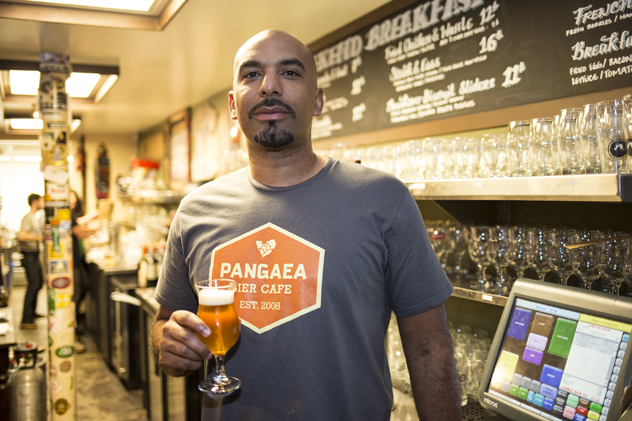
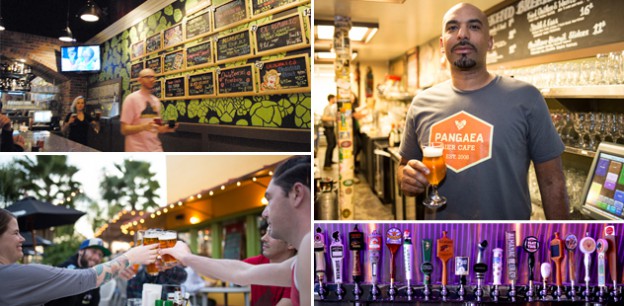
Pangaea Bier Cafe
2743 Franklin Boulevard | Sacramento
Rob Archie recognizes that a craft beer cafe is an imperfect business model. As the owner of Pangaea Cafe on the Northeast corner of Franklin Boulevard and 3rd Avenue, he is aware the American way of business is control and consistency; the customer expects experiential repetition and a business is at the mercy of their needs. The American way of service, that “customer is always right” adage, does not translate to craft beer. The customer is at liberty to participate, explore, and if all goes well, enjoy at Pangaea Cafe.
“What’s humbling about beer is you practice a lot of impermanence,” Archie says. His statement applies to the challenge of replicating a recipe with consistency, the ever-looming possibility of a beloved brewery shuttering, and shortages, be it ingredients or competitive batch availability. “One day you have it [on tap], the next day it’s gone,” he says.
We are on the shaded patio at the Curtis Park location on an uncharacteristically warm February afternoon. It’s 4 p.m. and the patronage is steady from retirees with little better to do and businessmen enjoying a late liquid lunch, or perhaps an early day out of the office. Once an unassuming cafe for coffee and beer experts alike, it is now a pillar in the connoisseurial community of beer lovers. Tastings, judgings, and club meetings are a regular occurrence. Now in its sixth, nearly seventh, year of business the Pangaea identity is defined, unified like the supercontinent origin, and like the prehistoric Pangaea it was here before Sacramento became a craft beer city.
Back then, Archie was simply an ex European-basketball player who’d gotten a whiff of the Belgian beers and started plotting ways to bring them back to California. It began with five taps, pouring Birra Moretti (first tasted while playing in Italy), Affligem Blonde, St. Bernardus Belgian Quad, Lagunitas IPA and Blanche De Bruxelles. Bare bones compared to the 20 options now that include a sour-specific section.
“I tell brewers and people that open, to be a part of the culture you have to ask yourself ‘what am I bringing to the culture?’” he says. “In any small business it should be sharing your story and having a soul behind whatever it is you’re doing.”
Archie’s identity is education. First came his own. From traveling as a professional athlete, and then going back to learn more, he got his entry into Belgian beers. As the West Coast movement began to blossom, his travel distance shortened to the outlying brewers of Northern California, brief visits and bottle trades, just to absorb as much as possible. In opening Pangaea, Archie employed his knowledge to accrue customers who became regulars. First comes the flavored hook: “the first time they taste a Belgian quad and they think there’s fruit in there.” He’s got your interest and he counters with “then you tell them it’s all yeast and you get to talking about the magic of yeast.” From there he’s got you deep into the nuances of the process; some brewers refer to yeast as a woman, other brewers discount yeast as merely a fermenting agent and focus on hops, and on and on.
Craft brewing is still an emerging market; the craze is real, and yet, this is its cowboys and pioneers phase. Archie notes Bud Light alone out-sells craft beer. He sees it as millions of people yet to be converted that don’t drink good beer out of being domesticated on flavorless beer. “The people that are in it right now are still pioneers in the grand scheme of enjoying better beer. I just think that riding this wave from 13 percent to 21 percent to 30 percent will be insane. By then it’s like Pliny [the Elder] on tap at your house.”
Archie recalls the early days when most distributors didn’t know their stock beyond the Budweisers, Millers, Coronas and Heinekens.
“We’d have to call them and say ‘there’s this beer, I know you guys have it. It’s in your catalog,” Archie says. “They’d have to send a supervisor out here and it’d become this huge ordeal.” Companies like DBI grew alongside Pangaea, “simply because they were on the forefront of being a craft beer distribution and we were buying up the supply. What’s cool is you see the same thing in customers right now. They’re going out and they are chasing the way we did years back.”
For those deep in the chase, Pangaea’s Beer Week events will include a stouts and oysters day with a specialty Imperial Porter brewed in collaboration with his wife and the wives of Track 7 Brewing; a collaboration with Knee Deep and Altamont called “Hella Deep” and a special visit by David Walker of Firestone Walker Brewing Co. to hand-deliver a special batch sour keg.
“I like the collaborative thing,” Archie says. “Right now, you have to be appreciative of what’s out there. We have really good beers that are readily available that are right here. Everyone is looking for the newest thing, but the newest thing isn’t always the best thing.”
-Words by Blake Gillespie | Photo by Evan E. Duran
Kupros Craft House
1217 21st Street | Sacramento
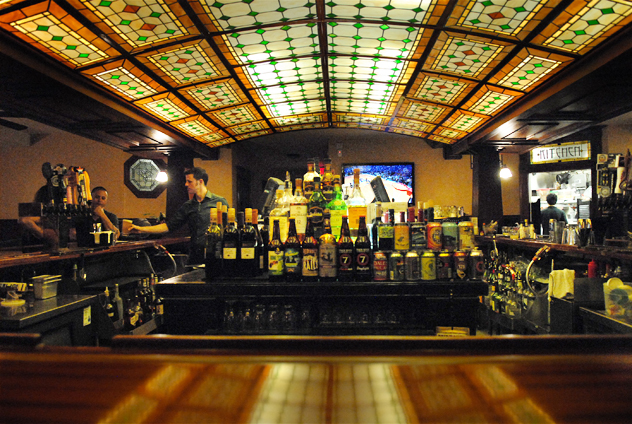
Kupros Craft House is located in the renovated Victorian house that used to be Cheap Thrills. The restaurant environment feels like the casual dining quarters of a luxury cruise ship, or maybe dinner at your fancy aunt’s house. I always feel like I am in such a different place. Its full bar is absolutely gorgeous because of the signature stained glass ceiling, and the cool second story patio is top-notch to perch and people watch. Kupros often has a diverse draft list, usually consisting of Sculpin, Allagash and Anderson Valley as a few staples, and every now and then they will catch a rare keg. One amazing thing that must absolutely be highlighted here is a little thing called Can Roulette. Can Roulette is when you pay $2.50 for a can of beer that the server randomly and blindly picks out of an ice chest. Craft beer out of a can almost always tastes better and you can fill up on beer for really, really cheap. For Beer Week, Kupros will be hosting many events, including a Drake’s Brewing kickoff party on Friday, Feb. 27 with rare releases and classics on draft. The restaurant will also host breweries from San Diego and Oregon (the home of the country’s more well-known craft beer breweries) in a weekend-long battle to see who blows their kegs quicker. Winner gets bragging rights!
Words by Alia Cruz | Photo by Melissa Welliver
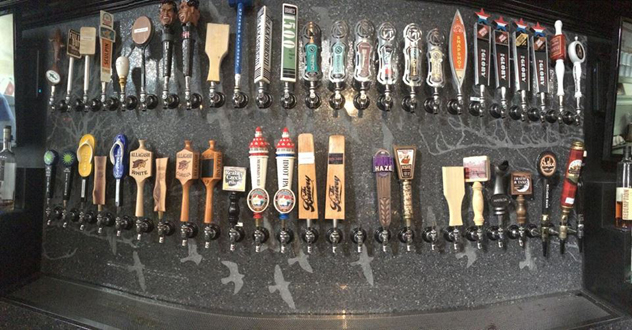
Blackbird Kitchen + Beer Gallery
1015 9th Street | Sacramento
Based downtown, Blackbird Kitchen + Beer Gallery has an urbanite cool, slightly posh feel, acting as an art gallery, but not above the Portlandia-esque irony of “Put a bird on it.” Marginally upscale, yes, but Blackbird is not stuffy or bougie. Just like Budweiser would like you to believe craft beer drinkers are hipster caricatures, do not mistake Blackbird as too chic for the real and rugged of the craft community. The list is extensive and intelligently grouped by house-coined flavor profiles like “utmost drinkability,” “devilishly dark,” “pucker up,” “pales in comparison” and our favorite, “barley there.” For Beer Week, Blackbird is keeping it minimal with a locals night featuring Mraz, Bike Dog and Device on Tuesday, March 3. The following night is dedicated to barrel-aged brews and Thursday is a competition between Socal, Ninkasi, and Green Flash. The winner will be chosen by attendees, so be there, and be heard.
-Words by Blake Gillespie
Though he makes his home in Copenhagen, Steven Jess Borth II’s electronica project CHLLNGR has deep Sacramento roots
The Red Bull Studios Copenhagen website is written entirely in Danish, but search “CHLLNGR” and you’ll likely land on a video mostly spoken in English, aside from a few locals in a bread store. The video features CHLLNGR (stylized, vowel-less Challenger), an experimental dub music project masterminded by Steven Jess Borth II, laying down tracks in the Red Bull Studio for its sophomore record, Form of Release. The documentary mostly depicts scenery from Copenhagen and the studio, recording artists in indigenous garb from New York City and rappers from the United Kingdom, but in the midst of this global project is Sacramento. Oddly, our city has played a pivotal role in Borth’s project since its inception in 2010.
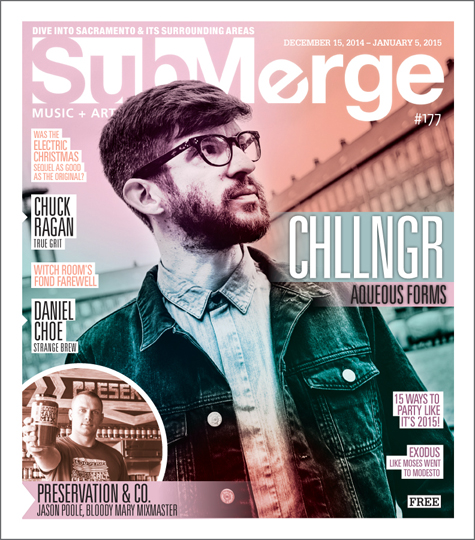
CHLLNGR performed at the Submerge 50th Issue Party in 2010, having graced the magazine cover in anticipation of his then-untitled debut album. At the time CHLLNGR was in a larval state, still largely faithful to dub music traditions of instrumental reworkings of recordings that slug along at a reggae beat stripped to its “riddims,” which translates to bass and drums. It’s a genre pioneered by artists like Lee “Scratch” Perry, Errol Thompson and King Tubby.
In those days CHLLNGR consisted of Borth, Andrew “Young Aundee” Southard and Dan “DJ Whores” Osterhoff in the live setup. But behind the scenes, the project relied on a troupe of local collaborators who continue to be influential cogs four years later on Form of Release, namely Dusty Brown and Justin “Dr. Echo” DeHart.
Much like British outfit Unkle, CHLLNGR defies simplistic classification because Borth seemingly doesn’t have “no” in his vocabulary. It loosely takes the form of a collective, rather than a solo project, as each release hosts a revolving cast both credited as guest features and buried in the fine print of liner notes. The only consistency across CHLLNGR’s two LPs (Form of Release and 2011’s debut Haven), outtakes release Hidden Tracks, and the Datter EP are Borth and the mastering finesse of Dr. Echo. Well, perhaps one other: Sacramento.
For example, Haven’s closer “Dusty” features vocals from Jessica Brown, a long-time contributor to her brother’s eponymous project Dusty Brown. The lyrics to “Dusty” were written by Young Aundee, while the title of the song is assumed to be a reference to Dusty, who opened his studio to Borth to create early Haven demos.
“Dusty gave me access to all his vintage gear,” Borth said. “In that period Young Aundee was there in Dusty’s studio most of the time and he played a really big part. He did most of the arrangements for [“Dusty”], also he did the lead synth on ‘Ask For’ and quite a bit more.”
In the initial Submerge interview, Borth mentioned a few particularly noisy recording sessions with Zach Hill of Death Grips, although it is unknown if they were utilized for Haven—given its nocturnal, downtempo qualities I’m inclined to think not. But in those early sessions Borth’s mindset was hinged upon experimentation. Whereas on Form of Release, CHLLNGR has evolved into a wish list come true of vocalists and co-producers.
“Form of Release, I really wanted to have a vocal album,” he said. “I was comfortable with some instrumentals, but I definitely wanted something that was not necessarily traditional pop songs, but a weird pop music.”
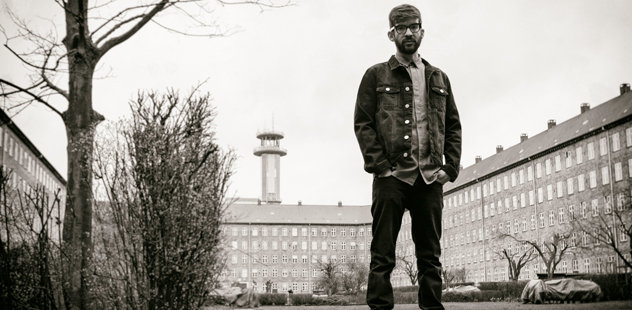
The detraction from having Red Bull’s insoluble budget was that Borth got his wish in the form of a curse. The album features JOSIAHWISE IS THE SERPENTWITHFEET from New York City, Dels from the United Kingdom, Grace Hall of Skin Town from Los Angeles, Blaqstarr from Maryland, and no possibility of uniting this group for a live set, particularly JOSIAHWISE, who contributes to five tracks.
“It’s pretty much just been me,” Borth said. “I’ll sing the songs in their place. With JOSIAH’s songs it’s very tough because he’s an insanely talented vocalist and writes complicated melodies I can’t exactly pull off.”
When I ask about his live setup for his New Year’s Eve performance at this year’s TBD’s New Year’s Eve Block Pary, Borth laughs at the thought as he mentions he’ll have to rely on Sacramento once again. “I need to start sending some emails around because I need to borrow some equipment,” he said. “But I want some old friends to join me on stage as well.”
If Borth is the captain of CHLLNGR, Dr. Echo is his first mate. Through emails he wrote that he and Borth never met properly in Sacramento, though he theorizes they were “probably in the same place at the same time on numerous occasions.” Though his connection to Sacramento has faded, Dr. Echo began as a drummer in dub band The Defendants with former !!! member Tyler Pope, and later ran Soundlab Studios in various Midtown locations before moving to Los Angeles in 2002. Having mixed “98 percent” of CHLLNGR’s output, Dr. Echo was flown out from his current home in Anaheim to Copenhagen on Red Bull’s dollar at Borth’s request. Dusty Brown was also flown to the studio in the last week for the task of “filling in the gaps,” according to Borth.
“Dusty was crucial,” Borth said. “It’s always been in the back of my head to collaborate more with him. I just have a lot of respect for him, his stylings, how quick he is and how he can really bring his ideas to the table and they can be very well thought-out. He has so many years of experience with electronic music that he can just get in there and finish up any ideas that I had started. He tied up the loose ends in a huge way.”
Borth is the captain of CHLLNGR, there’s no questioning it. In a Skype call we discussed the process of recording in the Red Bull Studio and he notes that the majority of the songwriting was done on his laptop with a micro-Korg and spring reverb prior to their three-week recording stint. He said the documentary just captures the focused grind of piecing an album together in three weeks.
“Most of it was doing really nerdy stuff,” he said. “Just running the sounds I’d already made and having the other collaborators record their vocal parts. Dels came out and JOSIAH came out. Justin [Dr. Echo] was there pretty much the whole time with me.”
As first mate, Dr. Echo has witnessed the evolution of CHLLNGR from dub homage to a spacious nocturnal metamorphosis on Haven, and into the Form of Release sessions, which reveal CHLLNGR at its most pop-y and universally catered state. He attributes the early alterations to Borth’s love of R&B as a heavy influence on the distinct sound, particularly in the melodies and harmonies, and the more recent growth to his prolific mind for collaboration.
“I think it should be evident that dub music from the ‘70s to ‘80s is a major influence on his sound,” Dr. Echo wrote. “However, ‘dub’ can be a vague term these days. Qualities such as spaciousness, sonic subversiveness and otherworldliness seem to remain appropriate to CHLLNGR’s sound throughout the years… I really think CHLLNGR’s music truly exists in the cracks of today’s genres.”
Ring in the New Year with CHLLNGR and an A-list lineup at this TBD’s New Year’s Eve Block Party, which will take place Dec. 31, 2014 (duh) on 20th Street between J and K streets. A-Trak, Sister Crayon and Gigamesh (among others) will also perform. Tickets start at $45. Check out Tbdnye.com for more info. NOTE: #TBDNYE IS ALMOST SOLD OUT! LIMITED AMOUNT OF “LAST MINUTE” TIX ARE STILL AVAILABLE, BUT THEY WON’T BE FOR LONG! ACT NOW IF YOU WANT TO GO!
Could G. Green Become Sacramento’s Most Loved Band?
G. Green was once the most unpopular band in Sacramento. Originally Andrew Henderson’s bedroom recordings moniker, his solo shows in Sacramento garnered anathema of clandestine ridicule and indifference. There was a time I loathed seeing the name listed on every Hub show and house party, and I wasn’t alone. It was fun to smear G. Green in 2009 and it was excruciating to see them on the verge of amateurish implosion in 2011. Most of you probably still assume G. Green is locked into a static identity as Midtown brats, drunk on youth, and too drunk to do much besides be obnoxiously loud. While we were laughing, when we stopped caring and stopped looking, G. Green quietly became a serviceable indie band, writing songs destined to shed the onus of snotnosed bush leaguers.
Before she became G. Green’s drummer, Liz Liles described the first G. Green show (a one-off lineup consisting of Henderson on guitar and promoter Rick Ele on drums) as horrible and a disservice to the former KDVS DJ’s sterling reputation.
“I thought ‘why is DJ Rick playing with this idiot,’” she said. “Me and whoever I was with, we watched one song and then went into the alley to smoke cigarettes.”
In the greenhorn years of the band, Henderson was the perpetual opener; the sort that would clear a venue, living room or DIY space except for his steadfast cheerleader, DJ Rick.
“I put him in front of audiences, and the awkwardness, the house slippers on his feet, and the most piercing moments of singing were initially a big turnoff to people,” Ele said. “But Andrew seemed totally impervious to disapproval.”
*****
They’re all laughing at you, aka the infamous Capital Bowl show
Mt. St. Mtn. founder and former Mayyors member Mark Kaiser put out G. Green’s first record, Crap Culture, in 2012, but it took time for him to become a backer. In gathering stories of infamous G. Green failures, Kaiser and Liles invoked the West Sacramento Capital Bowl show in 2008 without hesitation. In those days, bands would rent out the events room to play, and according to Kaiser, “trash.” The bill was geared toward trashing the place with Mayyors and Eat Skull (a notoriously self-destructive Portland band), while the G. Green solo set was the black sheep. Liles said she and her friends openly ridiculed the G. Green set. While Kaiser likened the clumsy solo performance as arriving “too late for that mid-’90s Olympia-wrought ‘any art is good art’ vibe.” Henderson was not going to be the next Calvin Johnson.
“Andrew was really young, and looked really drunk and really nervous,” Kaiser said. “He let loose, and I cringed. The show was fun, drunken chaos, all the bands on the bills were renowned for being a wasted mess, but this was excruciating.”
*****
Laughing: from ‘at’ to ‘with’
Liles might have mocked Henderson at first, but one evening he showed up at her Midtown home, then known as the Funcastle, expecting a Thee Oh Sees show. Liles had moved the show to another venue, but the encounter with Henderson sparked a quick friendship. At the time Liles was a—quote, unquote—drummer for experimental groups Sucks and Fatty Acid. Untrained and illiterate to tempo, she began telling Henderson she was G. Green’s new drummer.
Henderson obliged after booking a house show with Kurt Vile, Eat Skull and Ganglians. He had two months to put together an opening band; Liles was the first piece. The remaining guitar parts were filled out by Julian Elorduy (drummer for Mayyors in those days) and Dylan Craver. Two months proved enough and sustained the approval of scene-dad DJ Rick.
“I didn’t really know if the band would continue after that one show,” Henderson said. “Rick loved us and threw us on all these shows and put us on [Operation Restore Maximum Freedom]. Pretty much the reason Liz and I still play music together is because Rick threw us into the whirlwind of the Sacramento music scene at that time.”
Kaiser recalls being at the full lineup’s debut, despite purposely steering clear of solo sets since the bowling alley incident.
“The second time I saw Andrew play it was with this first incarnation of a live band and it was a world of difference,” he said. “It was sloppy and chaotic, but it was fun and there were lots of ‘whoa, if they keep doing that’ moments that had me intrigued.”
Henderson and Liles cherish the times with that early incarnation, but also knew it could never last. Elorduy quit the band after Liles broke up with him for Hella drummer Zach Hill, and was replaced by Brittney Gray on bass. Henderson and Craver were the best of friends and also prone to volatile feuds. Every show and practice was a fun, drunken gathering that flirted with implosion.
“We were so close as friends that none of it mattered if people liked us,” Henderson said. “We were just getting drunk and having fun. Me and Dylan were good friends and then we’d hate each other. He probably quit the band infinity times.”
Before the final nail was put in the original lineup, G. Green enlisted Andy Morin, long before his stint in Death Grips, to record their debut, Crap Culture. A shambolic and lo-fi collection of mad-dash punk songs, Crap Culture captured G. Green at the time—unruly and unpolished, but beneath the caterwaul existed nuggets of pop punk gold. Kaiser compared the record to Superchunk’s No Pocky For Kitty, lauding G. Green for maintaining their live energy on record.
“‘Pool Of Blood’ was the song that made me offer them a record,” he said. “That song was a sign they had something and were capable of growing past the kiddish fun-punk into something bigger.”
Crap Culture arrived late to the cultural trend of low-budget to no-budget albums, home-recorded on junkable equipment. It was recorded in 2010, but did not see release until August 2012. By then contemporaries like Wavves had ditched the intelligible scuzz for pop-punk polished for MTV. Also, by the release of Crap Culture on Mt. St. Mtn., G. Green featured a lineup far superior to the rag-tag group that winged it through the debut.
With replacements Simi Sohota on bass and Mike Morales on guitar, G. Green returned to the studio, paying Robby Moncrieff to record a follow-up at the Hangar. Besides being a friend of the band, Moncrieff was a popular choice having recorded Dirty Projector’s critically praised Bitte Orca and fellow Sacramento band Ganglians’ Still Living. Unfortunately Henderson said the band made the mistake of requesting Moncrieff “make it sound like Woodhouse,” meaning Chris Woodhouse, the Hangar engineer responsible for seminal linchpins like all eight Thee Oh Sees records and the A Frames.
Henderson said, “We didn’t use Robby as he should be used as an engineer. He did the best he could, but it’s not the way Robby works. There was no unifying theme with it. It was just a smathering of shit and it didn’t sound very good.”
The record was scrapped, except for two songs which became the “Funny Insurance” b/w “Sounds Famous” 7-inch. Liles corroborated their poor performance, attributing it less to Moncrieff, and more to the band for it sucking. They entered the studio with songs written by all the members with no vision for the band’s identity.
Liles said, “we’ve had really bad luck recording full records… until now.”

*****
New lineup, new lease…
On June 10, 2013 I drove my then girlfriend’s Altima to Davis to see Parquet Courts, a burgeoning Brooklyn band, and Fine Steps, a new project by Julian Elorduy. G. Green was also on the bill, so I planned to arrive late, still pegging G. Green as the perpetual opener. To my surprise Fine Steps was on when I arrived at the Davis Bike Collective. I caught their last two songs. I grew despondent realizing a full G. Green set stood in the path to Parquet Courts. Who agreed to this bat shit order of operation?
With no beer to drink and no cigarettes to smoke outside, I remained inside conceding that despite my efforts I’d been hoodwinked into a G. Green set. Now, I don’t recall particular songs from the set in that blazing, claustrophobic bike shop, but I do know that’s the night I stopped laughing at G. Green. The additions of Sohota and Morales gave them chops previously lacking in the dynamic. Liles had become a force, and Henderson’s once pubescent screech had caked enough nicotine on his vocal cords for a second lease on his balls dropping. There’s plenty to love about a band bent on belligerence, but when that same band backs it up with the skills to earn that abandon, they stop being local brats and graduate into a menace worthy of unleashing on the country at large.
This year on the porch of Kupros I confess to the founding members the Parquet Courts show is when I started believing in G. Green. Henderson states it was his birthday that night, while Liles mentions that Parquet Courts opened for them when they played Brooklyn’s storied 285 Kent venue. Both are unphased that I once detested their band. I was never the only one and I wasn’t the only convert either.
Liles said, “A lot of people probably haven’t been taking the time to see us lately because they saw us so many times three years ago and have decided there’s no way we’ve actually progressed.”
Henderson added, “There’s an image that probably still exists in a lot of people’s minds of these weird shitty kids that are drunk all the time and looking for the next party. We’re convincing people who’ve seen it from the beginning that we’re a great band now.”
Liles and Henderson turned 25 this year. Neither member wanted to be pigeonholed to perceptions developed when they were still teenagers. The upcoming Area Codes album was honed on tour, the band delegating a set it would play nightly until the songs were ingrained in their muscle memory. The decision to be professional and treat their live set with care translates to the album, which was recorded by Woodhouse, whose specialty is live tracking, room sound and mic placement. Even a late night of binging on spirits and karaoke at the Distillery couldn’t sandbag their comfort with the songs.
“We finally developed a sound that cut any bullshit,” Henderson said. “We didn’t really know how to make a band sound. In recording with Chris, he just documents what we’re doing.”
But is their scene-dad Rick Ele a proud papa?
“So many Chris Woodhouse productions have that unmistakable Woodhouse touch,” Ele said. “He becomes the fifth Beatle to so many bands, but in the case of Area Codes, I think he really just used his magic to maximize the G. Greenness of this record.”
Kaiser was equally impressed, keeping the band on his Mt. St. Mtn. roster for a second go-round, calling their current incarnation a “quick progression.”
“The new lineup came about and they tightened up both their live presence and song writing. I kept telling Andrew to just pony up the money and record with Woodhouse. He’s the wizard, he knows their sound and knows how to make them sound more like themselves. That’s what they did and this new recording is a huge step forward.”
The night at Kupros we drank enough short-n-talls of Coors Light and Jameson to carry the festivities to the former Funcastle, now also the home of Henderson. I apparently needed to try “tangler,” a moonshine-like infusion engineered by Liz’s boyfriend. Once there it was filmed and failed beer shotguns for the tour promo video, messy blueberry pancakes, and Guided By Voices’ Alien Lanes on the record player. As both made more of a mess than a mouthful in shotgunning the PBRs, I wondered how they ever got the stigma of a party band. Earlier that night Liles insisted they were misunderstood. “We’re not a party punk band, we’re a weird band,” she said. “The record only mentions pizza once!”
“We’re a straight up indie rock band now,” she said.
Most importantly are these last words from Ele, their cheerleader since day one. Watching a solo project from an awkward kid from Folsom become a band after making friends with the girl who laughed at his sets.
“Andrew’s always the heart and soul of the band as voice and chief songwriter, but through these lineup issues, Liz really stepped up to become the band’s leading co-star. They could change lineups 100 more times, and from now on, I’ll always think of Andrew and Liz as G. Green.”
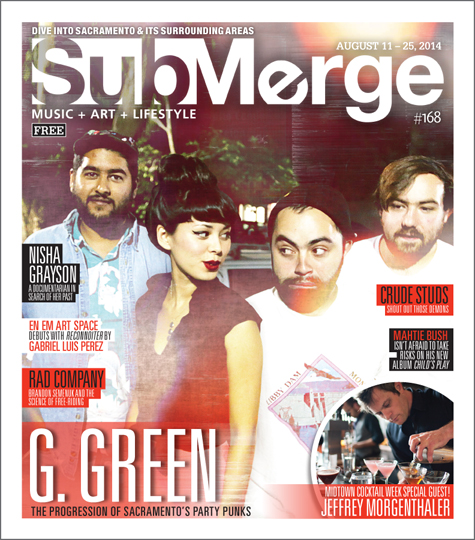
Celebrate the release of Area Codes Saturday, Aug. 30, 2014 at Witch Room (1815 19th St.) with G. Green, Rat Columns, Violent Change and more. The 18-and-over show starts at 8 p.m. and tickets are just $5. Check out
Facebook.com/ggreenband for more info.
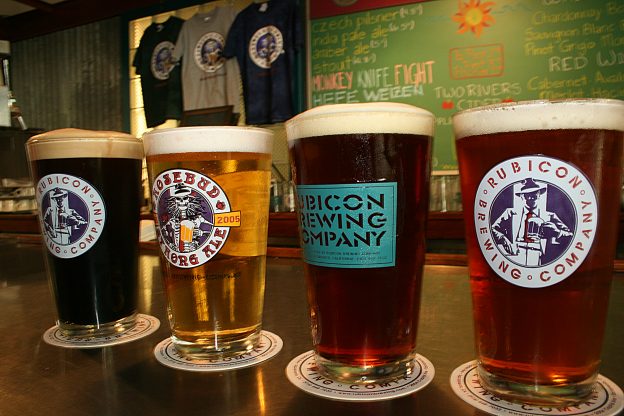
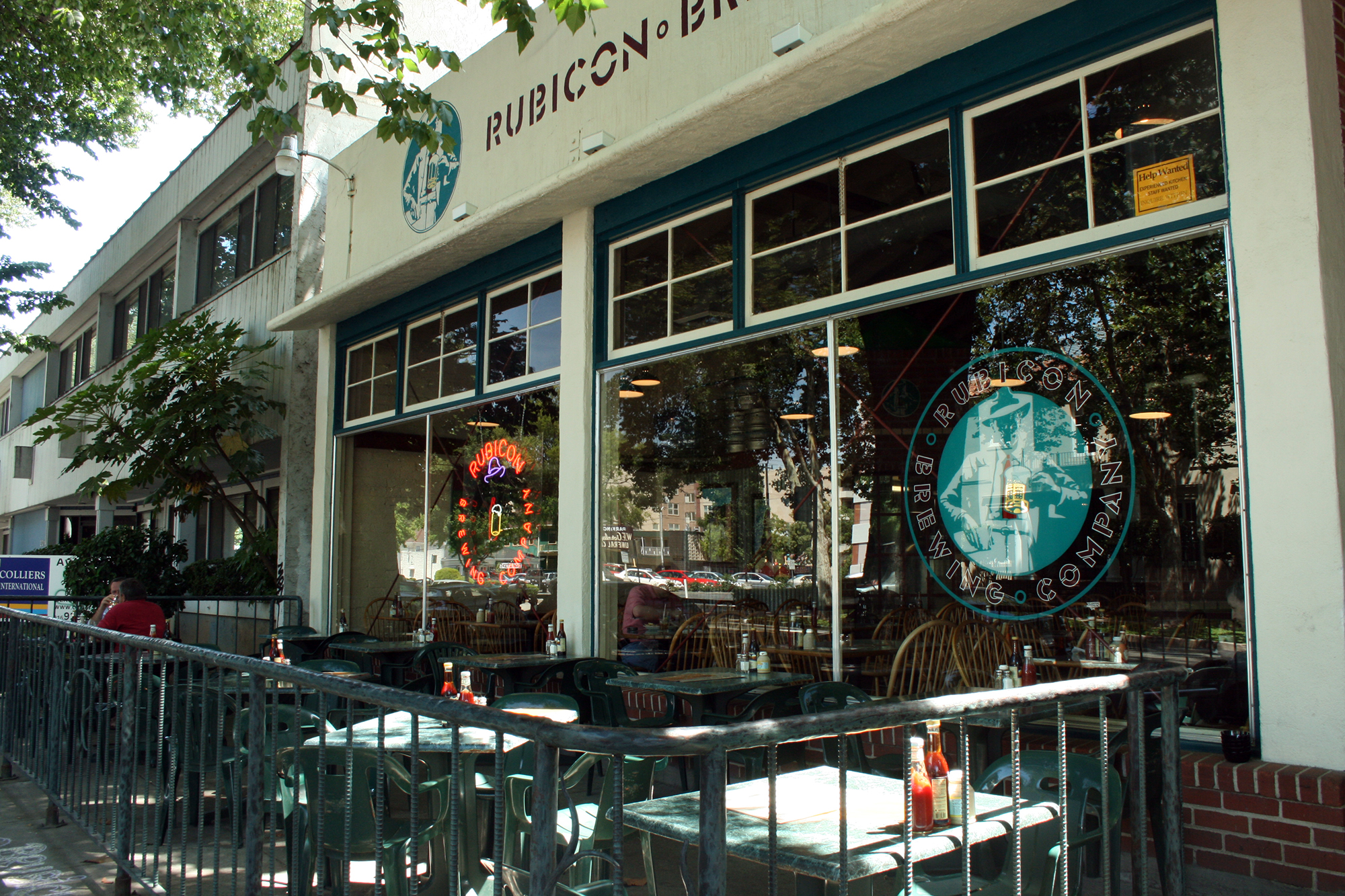
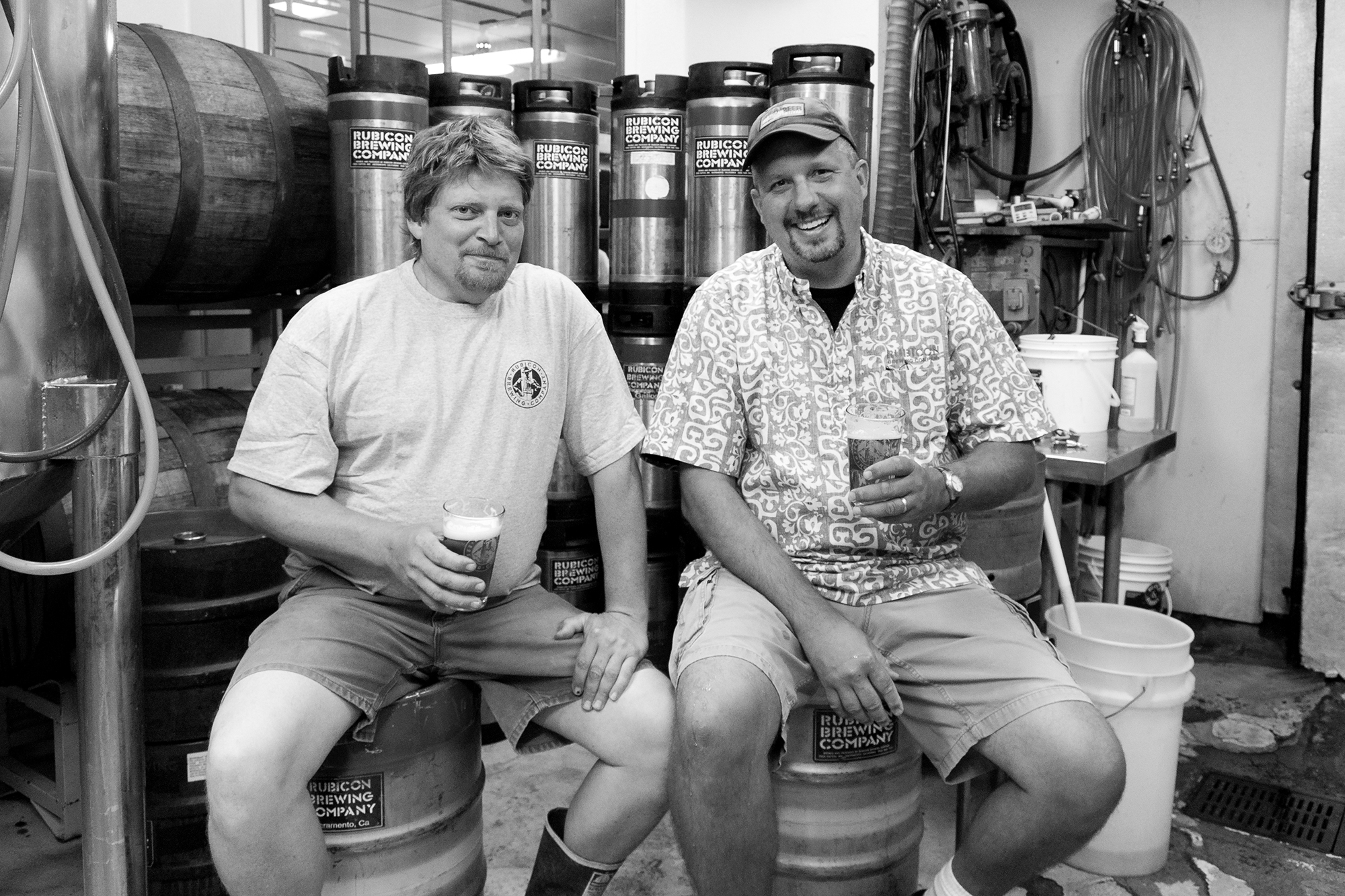
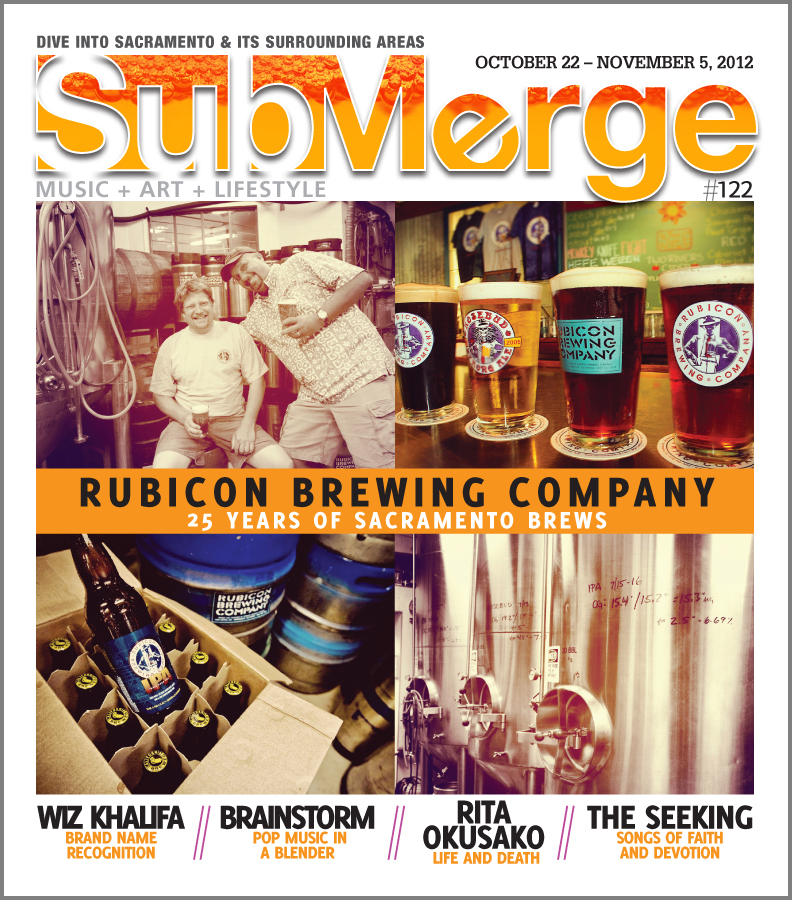
I swung by Rubicon on Capitol and 20th around 3 p.m. to shoot the breeze with Scott Cramlet, brewmaster since 1990. Not quite happy hour, not quite the lunch rush, the patio remained lively as were the tables inside. The bartender Summer Quinn offered water or coffee. I must have looked like I needed freshening up. Two glasses of water deep when Scott sat down at the bar with me, an unspoken short pour of IPA was placed in front of him as he asked if I wanted a pint. I graciously accepted, requesting a Rosebud and used my choice as a transition into a curiosity I’d had since I first tasted the hoppy red ale, “Is the name a Citizen Kane reference?”
“It has nothing to do with sleds or strike anywhere matches,” Cramlet said.
Rosebud Red Ale was born on Aug. 9, 1995, a day that causes great sadness among Grateful Deadheads. Cramlet was in the brewery with the task of brewing a style he cannot recall. He got the news of Jerry’s passing and got inspired to improvise a brew. Named after one of Jerry’s guitars with a mother of pearl inlay, drink a Rosebud with this knowledge and taste the divine tribute. “It’s a little bit different every year,” Cramlet said. “The recipe changes, but it’s good. The little tweaks; the analogy I make is much like the Grateful Dead they have their repertoire of songs and yet you recognize that song you’ve heard before, but they’ll play it a little bit different this time.” It should also be noted that Summer the bartender painted the replica guitar neck tap handle.
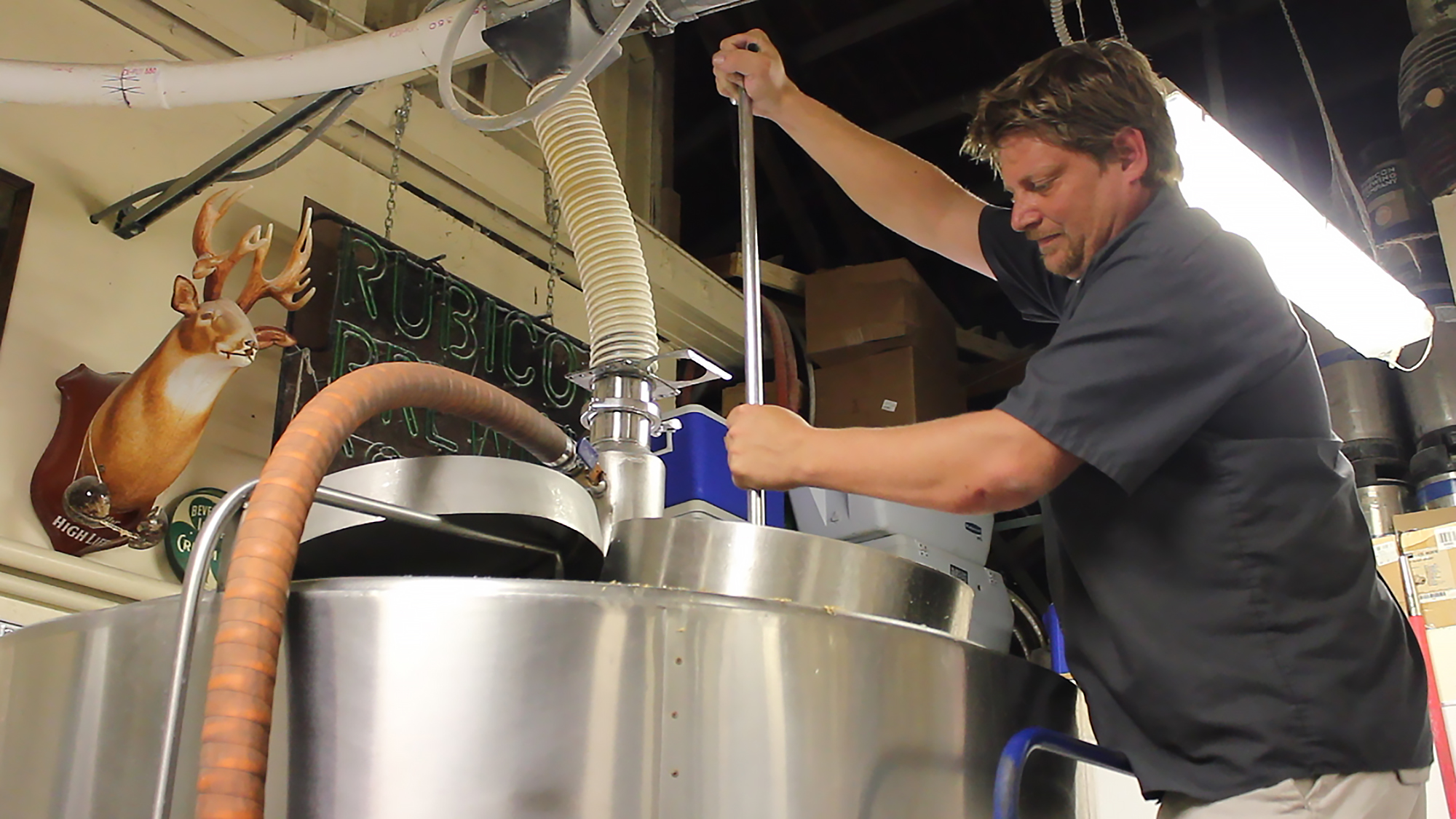
When Rubicon opened on Nov. 1, 1987 one other brewery existed in Midtown–Hog’s Head, which opened July 1986. Cramlet was graduating high school. Do the math in years and it’s puzzling how Cramlet got the job with the brewery without being legally allowed to drink.
“I was one of those guys that started home brewing before I legally should have,” he said. “You can buy malt and hop, combine it with water. You can buy a book on home brewing and teach yourself how to do it, despite your parent’s wishes or the government’s admonishments not to do it.”
He gained the company of the Local Home Brew Club and original Rubicon brewer Phil Moeller took a liking to Cramlet at a camp getaway. A week later, at the age of 22, Cramlet became Moeller’s understudy. “I wasn’t looking for the job,” he said. “I literally got the angel’s tap on the shoulder.”
Beyond its taste and after-effects, Cramlet began brewing for its combination of art and science. “There’s a lot of creativity and artistic input for making beer,” he said. “But there’s also the science behind it, the microbiology and chemistry that make it happen.”
Moeller’s legacy though rests on the full body blending called wheatwine. The conceit was a barleywine with enough wheat to push the flavor without compromising the ABV (alcohol by volume). The Winter Wheatwine won gold at the Great American Beer Festival in 2006. Many of the signature brews were in place before Cramlet came on; think of his job as a guard of a holy grail. “I inherited the legacy,” he said. “Even though the brewery was only open for three and a half years. I inherited the foundation and we really haven’t messed with it. I’m the caretaker from what was started.”
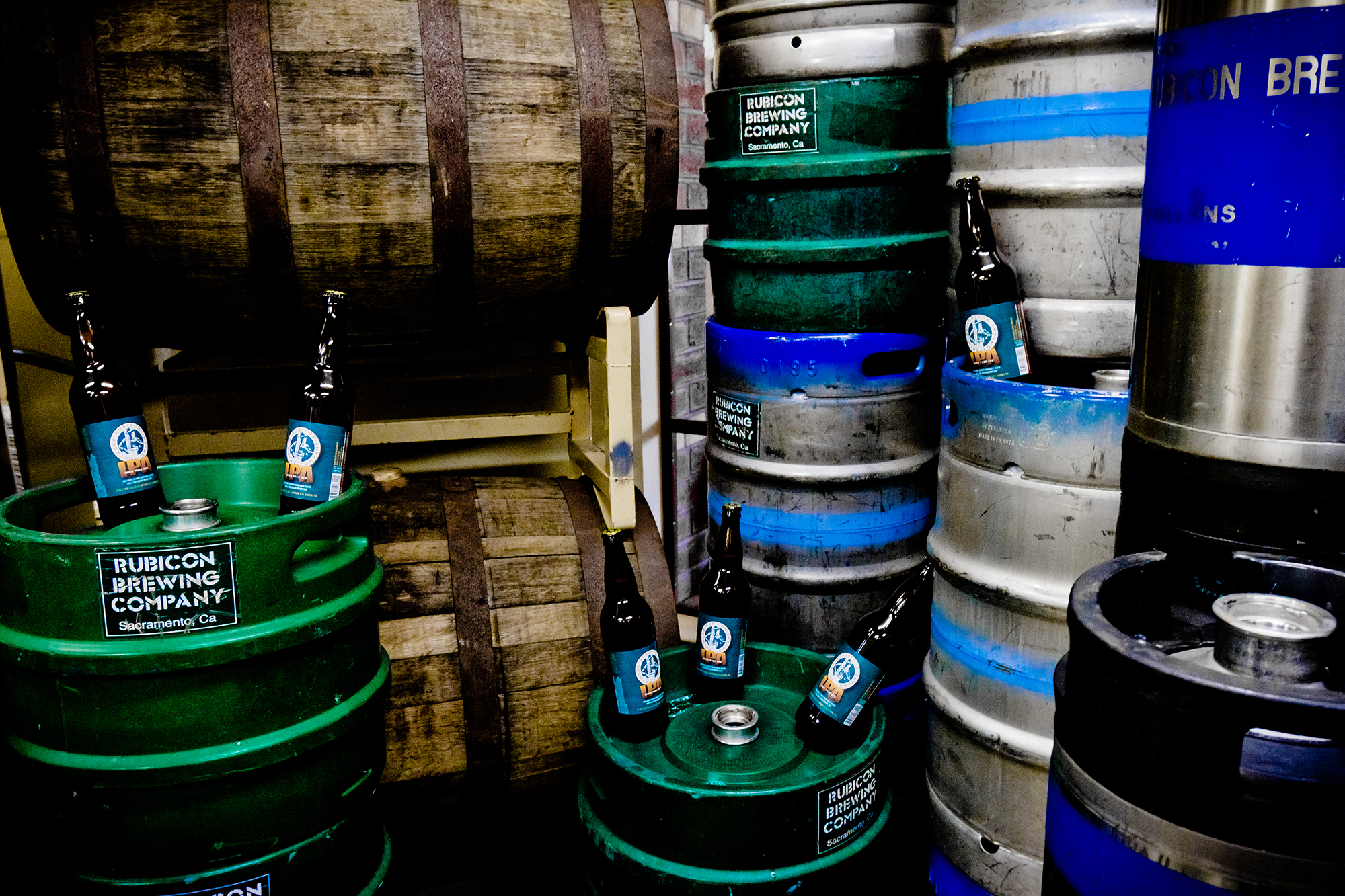
Cramlet’s first batch to call his own was a Scotch ale he called Scott’s Ale, so people would know it was his. A few years later, it was a German Alt Beer he dubbed Scottmeister Alt. When he took over, he quit putting his name on his batches. With several brewers under his liege, he does not stifle their creativity. The Capricorn Black currently on the menu is a homebrew from Al Griffin they’ve added to their repertoire. Cramlet said, “You guard the legend, but it doesn’t mean you don’t carve your initials underneath where no one can see. All my brewers have had a chance to put their thumb into the equation and contribute.”
The Monkey Knife Fight Pale Ale is one of Rubicon’s most widely distributed additions to the family, despite only having brewed 250 batches to date. Cramlet refers to it as the new pretty boy in the bar. There was only one disappointment when discussing the Monkey Knife Fight: there have been no monkey knife fights in the brewery, not in the back of the house nor the front of the house. “There was a reference in an episode of The Simpsons when Homer was out on a ship,” he said. “He was betting on monkey knife fights. Classic cartoon comedy. I don’t know exactly how we grabbed that name, it’s just funny sounding.”
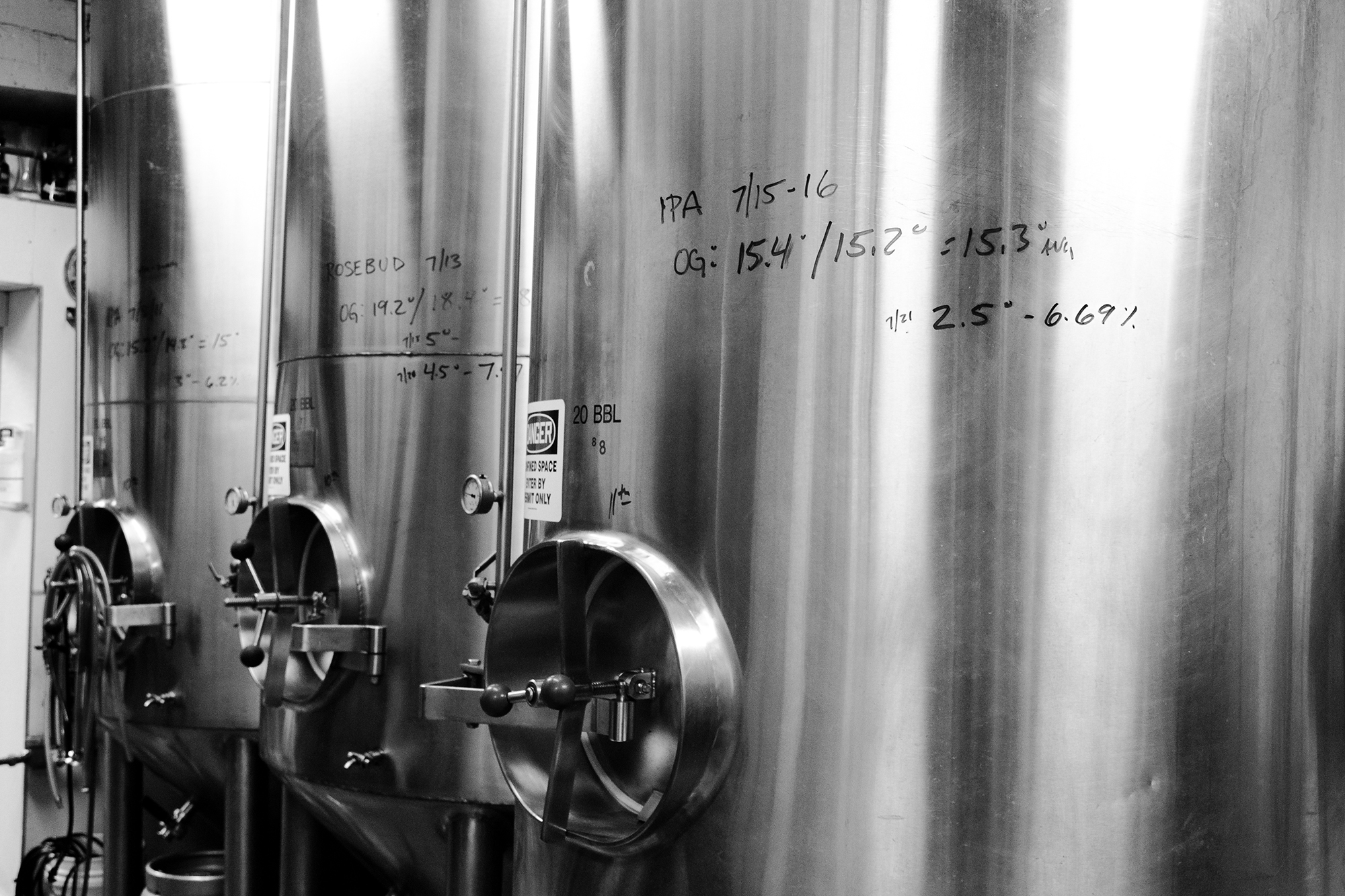
The workhorse in the bar is the IPA, brewed since 1988 and in its 1500th batch (one batch is 310 gallons or 2,400 pints). For Cramlet, brewing beer is the result of practice, and he’s had plenty of it. Their beer logs consist of 13 binders, three inches thick of hand written notes. Scott said they will brew their 3,000th batch as soon as the logs come up on 3,000 pages deep. “I’m not any smarter or any better than a lot of [home brewers],” he said. “But when it comes to brewing Rubicon beer…yeah, I got that.”
Giving craft beer lovers a balanced and consistent brew, satisfying in hops without risking alienation, won Rubicon a prize more valuable than gold and silver medals–regulars. An institution on Tuesday nights is Ground Chuck, who Cramlet joked was there even before they opened in 1997. “I think Ground Chuck started coming in 1790,” he said. “He’s been reborn several times. Who knows when the spirit of Ground Chuck first came through?”
Call it a hunch, but I think Ground Chuck will be at Grateful Dead Night on the debut evening of Rubicon’s 25th anniversary week parties. The night is in honor of an early tradition at the brewery. Every Monday night, they would turn the lights lower and patrons would bring their Dead tapes to play on a cassette player behind the bar. Whoever brought in the best bootleg show earned a free pint. The original Monday night bartender, Vincent Stern, a big Deadhead and owner of Two Rivers Hard Cider, will be guest bartending his old shift, although no one has a cassette player anymore. “We’re going to find a way to spin some Dead tunes…go a little retro,” Cramlet said. “We’ll see how loud we can turn the music up.”
Cramlet is nearly ready to debut the Rubicon 25th Anniversary Ale as well. It is a single malt, single hop IPA, being that the IPA is the beer that got them to 25 years. “Let’s just make an IPA featuring cascade hops,” he said. “Keep the hops featured by using a two-row barley malt, not a lot of body to the beer, the malt character is relatively light so the hops can shine through, and 7.3 alcohol to make it bigger for celebration. We didn’t want a head-crusher. Light in character but screaming with cascade flavor and aroma. I just had a taste of it this morning, and it’s coming along. Something special but something simple.”
SONY DSC
Along with a big week of celebrating, Rubicon announced plans to expand the manufacturing and distribution side of the company to fix the dilemma of not being able to make enough. They purchased a facility in West Sacramento strictly for production–sorry, no tasting–in brewing, bottling and kegging. It will give Cramlet space for 13 more binders of beer logs.
“Capitol Avenue is a vibrant corner now, but at the time it was just Java City down the street,” he said. “It used to be dive bars down here and us. In the early days it was kind of pioneering. Now there’s excitement again. Small breweries coming in like nano breweries and tasting rooms. It’s a very exciting time.”
Rubicon’s 25th anniversary week-long celebration kicks off Monday, Oct. 29, 2012 with Grateful Dead night with events continuing throughout the week. Go to http://www.rubiconbrewing.com/ to get the full rundown!
Not many bands sport a badge of longevity inching toward eight years, but plenty of musicians can include their names in the pages of Be Brave Bold Robot’s local history. With roughly 23 former players fondly dubbed “Forever Members,” BBBR is a staple in the folk scene for good reason. If mad scientist, Dean Haakenson, hears you can play an instrument and likes you as a person, you can write your way into his project…forever.
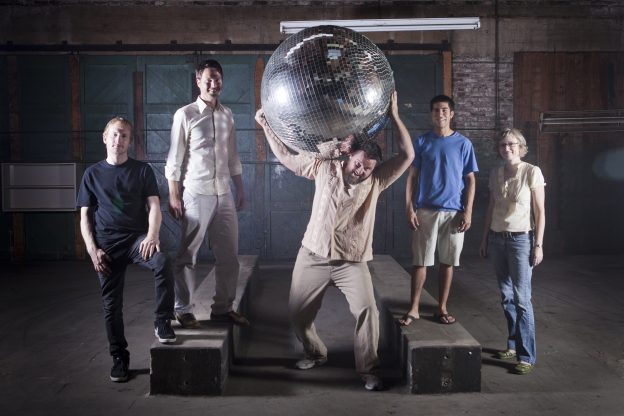
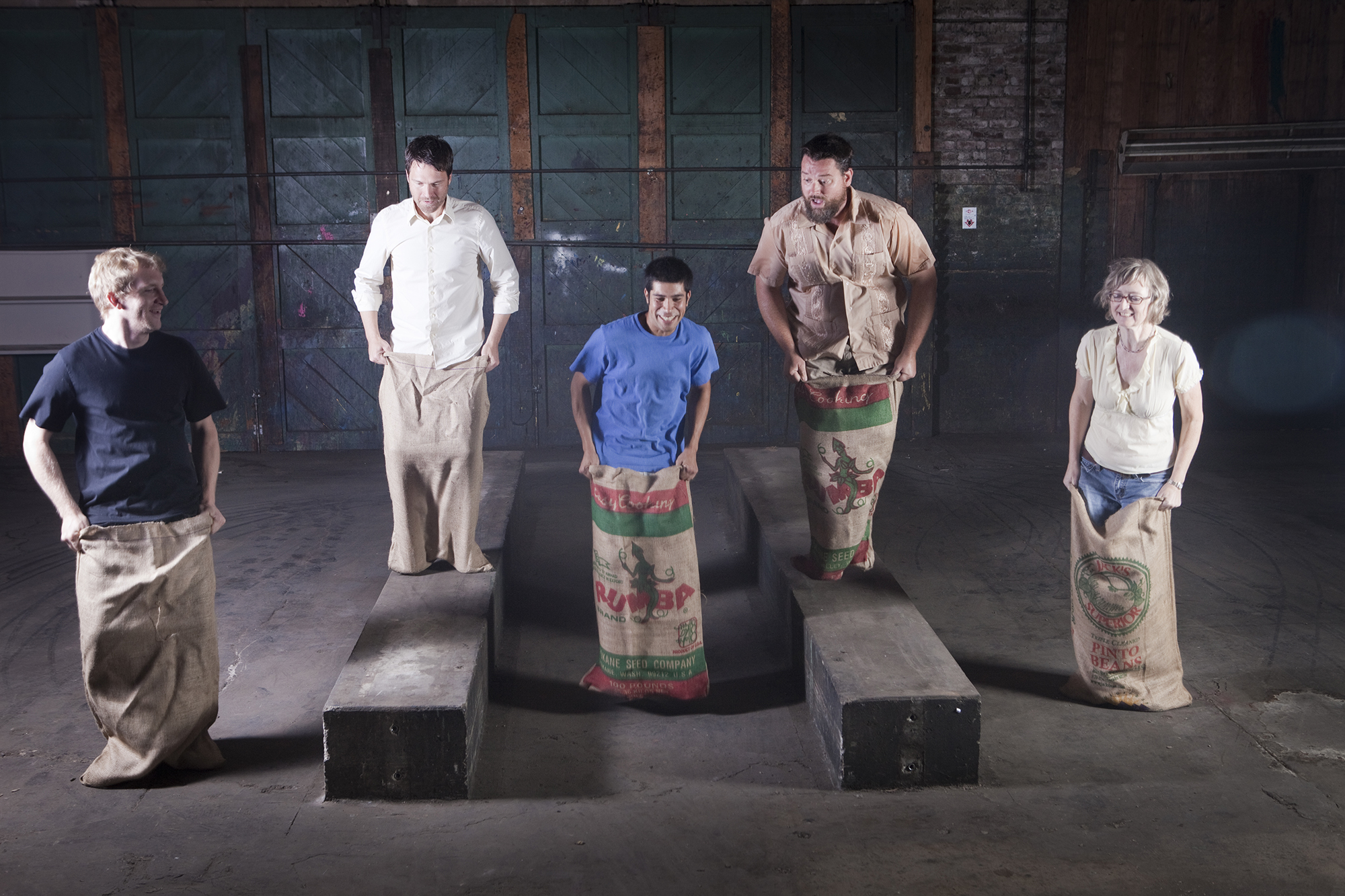
My night with Be Brave Bold Robot did not begin with an unsettling ride to West Sacramento in Haakenson’s Technicolor Volkswagen Bug, but a few points of interest are worth a mention prior to him offering a lift in his shrunken, two-seater Partridge Family bus of a VW. As follows: I snuck into an empty warehouse along with the band and a photographer for a photo shoot. Cut my hand lifting a giant disco ball. There was a potato sack race. Haakenson sweated through two shirts. No one discovered us. No one was handcuffed or fined for trespassing. No vandalism occurred. My palm only bled for a minute.
But in Haakenson’s gutted and rusted VW, I sat shotgun to a man who rolled down the driver side window with a pair of pliers and casually talked of how his car, a present from his mom, stalled regularly as we took the Highway 50 on-ramp headed toward West Sacramento. I thought of the band’s moniker as he shimmied the VW into traffic and it strained its way to the speed limit. Be brave.
We arrived safely to Haakenson’s home, and I was ready for a beer, for there is no finer way to gain a stranger’s trust or settle one’s nerves after relinquishing your own fate into his hands. Haakenson and his drummer Michael Ruiz claimed two of the four mysterious wheelchairs on the back patio–why does one man have so many? The rest of us (bassist Matty Gerken, viola player Catie Turner and saxophonist Jacob Gleason) sat in metal chairs or benches with microbrews in hand. Like all interviews, the awkward phase deteriorated and stories were flung freely, which led to how one becomes one of those Forever Members listed on Facebook. Over the years Haakenson developed a simple criterion: play four shows. It may take four consecutive shows, or it could take eight years, but until you’ve played four you are not an official Forever Member.
“It’s a credit to Sacramento to have so many people I’ve met over a number of years join me,” he said and he was right.
To my left sat Jacob Gleason, soft spoken most of the night, but he was first to share his admiration for Dean that led to joining Be Brave Bold Robot. It began with loving the first self-titled record and led to Gleason “[bugging] Dean enough that he finally started letting me play with him.” Going around the table, Catie Turner joined after seeing BBBR live and striking up a post-set conversation with Haakenson, who upon learning she played viola gave her a recording and let her write herself into the music. She’s been a member since.
“He was like, ‘You should play on my record,’ and I said, ‘You’ve never even heard me play,’” she recalled.
“It’s a Dean thing,” she said. “He’s so hands off. He didn’t know me, didn’t know my playing. It was unlike any experience I’ve ever had with an organized band.”
Matty Gerken offered an anecdote on the BBBR’s rotating cast: “One time we played a show at Sac State and in order to play that show we needed to have one Sac State student in the band. So we brought in Chuck; good student, he’s from Iowa, like me. He had enough parts in the songs to get us qualified to play. He was a member for one show.”
Gerken saw Be Brave Bold Robot play based on the name. He caught a Fox and Goose show, went to an after party with the band, which resulted in him mastering the first record. “I sort of learned all the songs from listening to them over and over while mixing them,” Gerken said. “When Tommy [Minnick] the former bass player decided he didn’t want to play anymore, I said, ‘Well, I know all the songs incidentally.’”
Haakenson’s lackadaisical approach stems from understanding his friends and band mates have their own lives and careers. Without the pressures of commitment, being in a band can always be as fun as it sounds. No one’s government job is at risk, no one’s missing PTA meetings and no one’s on heroin to deal with the pressure of stardom. Members come and go and come back again when they have time or miss the fun of being in BBBR.
“It changed my life here,” Turner said, who hadn’t played in a band since leaving San Francisco.
Haakenson exudes gratefulness beyond his once a member, always a member attitude. The tape recorder clicked; side A was over. With everyone in good spirits, we agreed to call it and begin band practice. While guitars were tuned and more beers were emptied into mason jars, Haakenson handed me a copy of 2010’s Take a Deep Breath. He directed me to the living room where the original artwork of Kyle Larsen hung; he had two of Larsen’s pieces. Local writer Josh Fernandez probably doesn’t know it, but he is a cherub muse for BBBR, coining intoxicating limericks that echo through Haakenson’s mind. The new album’s title was partially lifted from Fernandez’s 2008 review, which was recited to me nearly verbatim during our hang out. Fernandez referred to Haakenson as “under a thin sheet of madness,” it led to the title of the band’s upcoming album Under a Thin Veil of Madness.
Under a Thin Veil of Madness began with sessions at Expression College for Digital Arts in Emeryville. “They offer free recordings to bands in exchange for being guinea pigs for their audio recording classes,” Haakenson said. “We went in there for an eight-hour session and got four songs done that are new to this album, and had plenty of time left to record four other songs.”
Going in there was concern of the album being in the hands of pupils, but by the end of their session the band was so close with the students that a kid named Willie Ramsey is doing the Under a Thin Veil of Madness artwork, expanding Dean’s collection of art and adding an honorary band member once again. “I was concerned that we were getting learned on,” Gerken said. “They had an experienced instructor there and it was clear that guy was all business.”
In the eight years of having one of the most recognizable band names in Sacramento, the true source of the moniker eludes Haakenson. He loves that about his band. Before it was his band it was his ‘zine. Prior to the ‘zine it was a graffiti tag by a girl in Arcata, Calif., who claims she saw it done by a San Francisco artist. Some theorize it was lifted from the Isaac Asimov’s science fiction series I, Robot. “I’ll put out a call right now,” Haakenson said. “I’ll pay $100 for the documented source.”
May it always be obscured and tucked in mystery to preserve the legend of Be Brave Bold Robot. It’s apropos to a band that tucks mementos to childhood in its song lyrics and sneaks away from families and responsibilities into a West Sacramento living room to drink, chat and practice like a discovered teenage Never-Never Land.
“I have a child-like way about me, which I think is maybe what makes me endearing to the people I meet on a regular basis,” Haakenson said. “I think I’m OK with confrontation, but I’d much rather make people happy.”
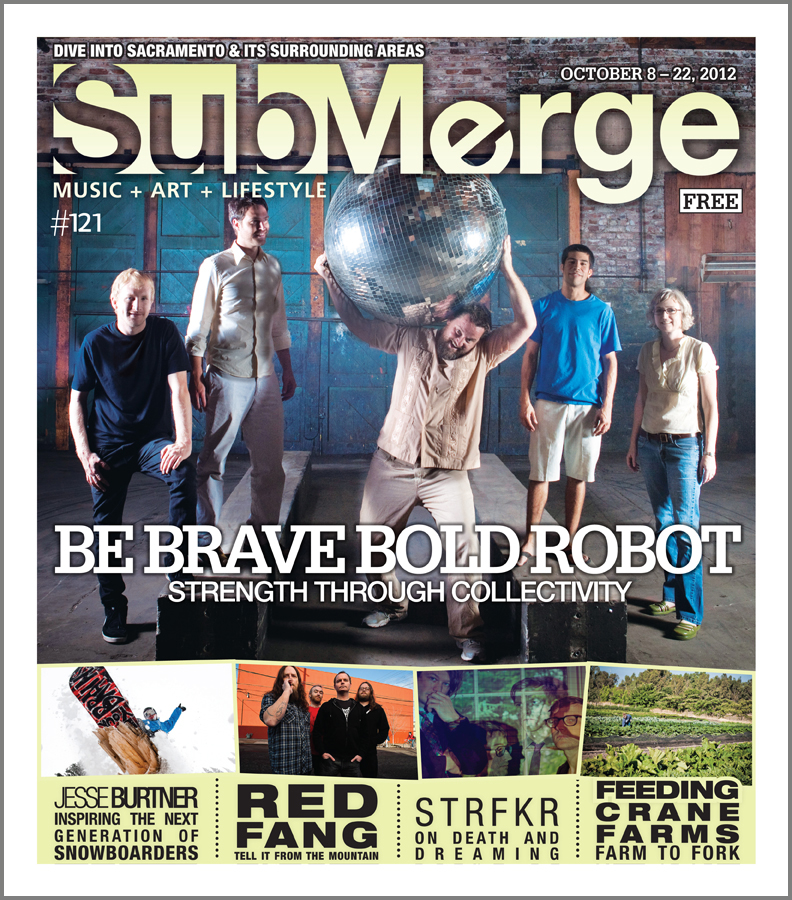
Catch Be Brave Bold Robot when they play Beatnik Studios in Sacramento on Oct. 26, 2012 and celebrate the release of Under a Thin Veil of Madness. Also playing will be Appetite, Cold Eskimo and Buzzmutt. The music for this Final Friday show gets underway at 9 p.m. and there is a $5 to $10 suggested donation.
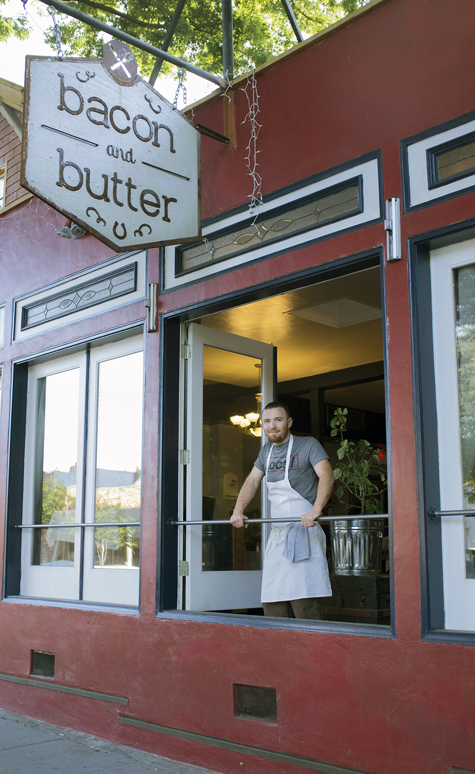
Bacon & Butter
1119 21st Street – Sacramento
Our parents were always quick to emphasize taking our time when they were nurturing us. Chew your food. Walk don’t run. But the age old axiom to stop and smell the roses seems lost in our modern culture of efficiency and impatience with download speeds, commuter traffic and restaurant ticket times. Local chef Billy Zoellin’s new breakfast and lunch restaurant Bacon & Butter is a friendly reminder to take our time, because even slowing down is valuable.
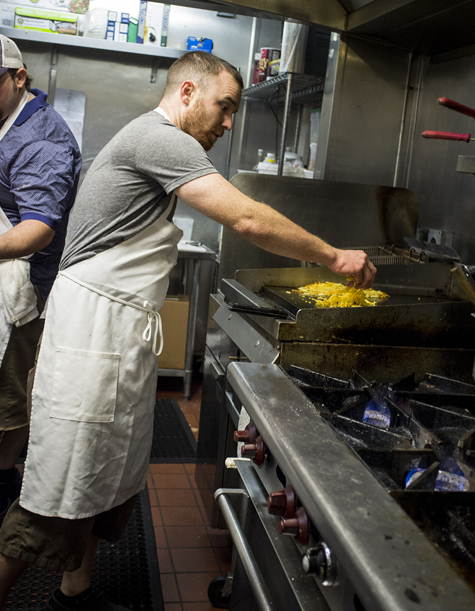
At 28, Zoellin has climbed the ranks of local artisan cooks at an impressive speed. He began as a busser at BIBA and Andiamo, while still in high school. When he wasn’t keeping the tabletops orderly, he helped with prep work out of a natural curiosity with the kitchen, which he claims is in his blood.
“My grandma used me as a kid for catering,” Zoellin said. “It went from being a busser and enjoying cooking to having a kid and needing a full-time job. So, I quit baseball and started cooking.”
His fast rise in status continued with his education at the American River Culinary School. After enrolling as a student, he quickly became a TA. From there it was prep cook at Mulvaney’s. It was only his third job in a kitchen. When he took over the head chef job at Golden Bear last year, his menu caught the attention of Food Network’s Diners, Drive-ins and Dives. “Everywhere I’ve gone, I’ve never been satisfied,” he said. “It’s part of my personality, I’m very meticulous with how I like things. If I see something I like, I will follow until I can go off on my own path with it.”
With 18-and-over nightclub Bar Fly, formerly and ironically called Club 21, in need of a liquor license, Zoellin was asked if he was interested in opening his own restaurant in the front of the building.
“This place is a club at night,” he said. “For liquor licenses you typically need food. Instead of working for other people and signing off on my menus that I create, the items I put my heart and soul into, I decided to do it for myself. It was time to roll the dice a little bit.”
On such a fast track with his career, Bacon & Butter appeals to a need for Zoellin to slow down in order to adapt to the learning curve of running his own business. Early criticisms of Bacon & Butter (located on 21st Street between K and L streets) mostly leaned on an annoyance with the wait, either for a table or the ticket time. It was an issue not lost on Zoellin and his staff.
“Our biggest issue has been time,” he said. “But I challenge any one of those critics to open a restaurant and serve top quality food in a timely fashion to 500 people on a weekend and see how it goes. See how many weeks it takes to get that ticket time down and have everyone feel good about their meal.”
It was said not out of frustration, but as a matter of fact. It’s the sort of challenge that would make for a great new Food Network competition show. Zoellin hopes his patrons will come to Bacon & Butter to enjoy the simple pleasures of a well-prepared meal with many appealing environmental guarantees. At Bacon & Butter the meat is all grass-fed; the bacon is nitrate-free; the vegetables are sustainable, seasonal and local fare; the bread comes in daily; and the coffee is from Old Soul.
“We’re not a greasy spoon. We have a commitment to local and seasonal fare,” Zoellin said. “Breakfast places will cut corners because prep time is at a minimum. Here you won’t find a lot of boxes and bags in the back. You won’t find a freezer. We want to make things from scratch like grandma would or mom would.”
Was it not always worth it to wait for grandma’s made-from-scratch cooking?
The morning I visited Bacon & Butter, I cleared my schedule and allotted myself a rare chance on a weekday to eat breakfast–a ritual usually limited to a pot of coffee or Cheerios. Mayor Kevin Johnson held a business brunch of 30 that same morning. The meeting was scheduled to begin at 8 and end at 9 a.m. I arrived at 9:10 a.m. to two empty tables littered with discarded napkins, used utensils and plates with only sauce stains remaining. It’s unwise and unfair to criticize a new restaurant’s ticket times, especially when it’s an owner not named Paragary, but given the efficiency apparent from that morning’s remains, Bacon & Butter have worked out the kinks.
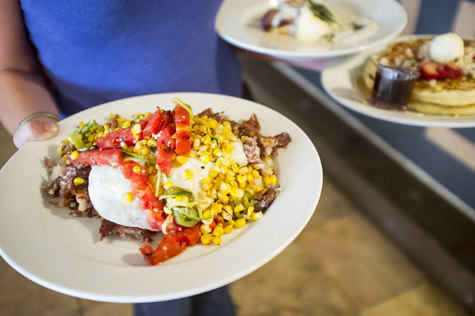
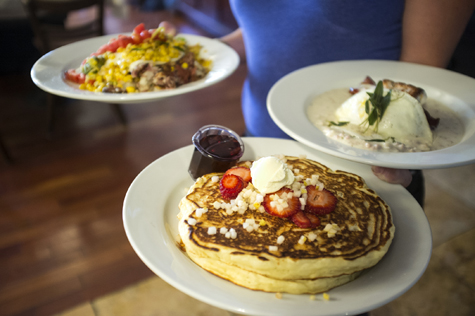
My mountain range of country potatoes, hash and eggs over easy, topped with corn salsa was well worth the wait and a larger portion than I expected for the price. The hash needed no salt, while the corn salsa had just enough jalapeños to give it a subtle kick in spice. The server ribbed me that I barely put a dent in it, but it felt as though even if it was only a rolling hill spread, I’d eaten my fill. The menu at Bacon & Butter is crafted for the adventurous or even the average Joe or Jane. If biscuits and gravy or flapjacks are all you need, your desires will not be compromised.
“I’ve cooked a lot of dinner in my career,” Zoellin said. “It became a challenge of how do I apply what I know to breakfast and make it acceptable. You put fried sage on things and have your whimsical takes on fare, while staying within the guidelines of local, sustainable and always seasonal.”
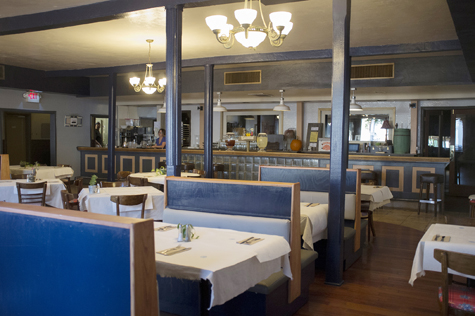
As I sat post-meal near the bay window alternating sips of Old Soul coffee, a mason jar of water, and a mason jar of Greyhound, I took in my surroundings. Chef Zoellin told me for their refurbished interior, they had a picture in mind. It was of a sharply dressed man in the Depression era going out for a job interview. The idea was to create a place that man might have stopped into for coffee. The interior is of simpler times, when items were handcrafted and plastic was barely existent. Above the community table is an old wash bin, hung upside down from the ceiling, with a clock that never quite ticks on time attached to the bottom. Small light bulbs hang from the bin to light the table. It is both a piece of history and a piece of modern art. Along the outer walls are plywood-framed photos of cowboys (frames built by Zoellin), and shelves hosting trinkets that Zoellin found in antique stores.
“It fits my personality,” he said. “It fits what we do, putting a sustainable practice to recycled and refurbished products. We are modern post-Depression era, that’s where we are.”
As Zoellin and I sat with the community table within an arm’s length, I had to know, “Why do you think people fear the community table?” After a good laugh and a shared confusion, he offered, “Don’t be afraid to sit next to a neighbor.”
“Start a conversation with someone,” he went on. “Ask them ‘how’s the hash?’ Maybe their review will help you decide what to have next time.” He’s not giving up on his experiment to get his customers to relax and say hello to their fellow neighbors. He hopes that someday the community table will be the place to sit, rather than a compromise. For now, his regular, Dave, sits there most mornings, reading the paper and making small talk with the service staff. Strike up a conversation with Dave sometime.
Yelp is an outlet for blowing off steam. If you want to read a review of Bacon & Butter, flip through the encyclopedia pages in your check booklet that’s dropped off at the end of the meal, an idea Zoellin stole from Mulvaney’s. In it, you’ll read short and sweet thank you signatures of people who hope their favorite items never leave the menu and who can’t get enough of those pancake shots (a treat I intend to try on my next visit). These are the messages from people who took the time to hand-write their appreciation in ink, rather than blog bullet points in haste.

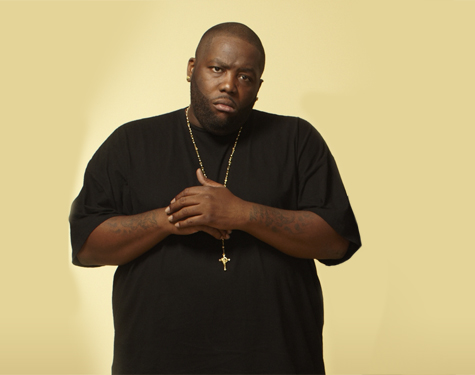
Killer Mike Speaks without a Net
As rumors circulated that Ronald Reagan’s hologram would deliver a speech at the Republican National Convention, the significance of Killer Mike’s “Reagan” magnified to the level of, “If you hear one song this year…” Reagan remained dead, leaving us with one last enemy in the cross hairs: his legacy.
With the future of the Dungeon Family, an Atlanta-based collective comprised of Outkast, Cee-Lo and Goodie Mob, in limbo Killer Mike emerged from its shadows this year with R.A.P. Music. His collaborative album (also featuring T.I., Bun B and others) is one of the most talked about records of the year, garnering a comparison from Pitchfork Media to Ice Cube’s classic AmeriKKKa’s Most Wanted, thanks to Bomb Squad production meets doom-heavy space funk beats from El-P. Killer Mike holds no punches on R.A.P. Music. We discussed his sneaky left over the phone; Mike stating “When I write I try not to put parameters on myself. There will be things that feel like they need to be said.”
The album is an eardrum assault, but on “Reagan” the tension is ripe for El-P’s cinematic builds that culminate to Killer Mike’s grand proclamation, “I’m glad Reagan dead.” The statement perks the ears as the beat drops out entirely to alert all in earshot of Mike’s definitive four words. It’s bigger than politics or hip-hop, though. There’s far more to take from “Reagan” than a battle-cry against the idealized Great Communicator as Mike calls out hip-hop for being part of the problem. The problem being puppets with corporate-interest hands stuck in their backs. To Mike there’s little difference between a talking head reading teleprompters and a rapper glorifying gang life and the consumption of liquor brands. The rapper is just a man with a fancy chain and the president is just a man in a chair.
The track “Reagan” deals a lot with the breaking down of ideologies, particularly addressing how Reagan was an actor-in-chief but it goes beyond him. Is there a rap equivalent, either a figure or ideal that you’d like to see dispelled?
When I’m talking about Reagan being dismantled it’s less about the human being that was Ronald Reagan. Because he didn’t have power, the corporations held the power. It’s the Reagan ideology of being a puppet to a puppeteer that is corporate interest over human interest. So for me, the Reagan in hip-hop that I’d like to see destroyed is the value of corporation’s favor. As MCs, we should not be pandering to these corporations. We should seek the people we rap to and we rap for.
When I rap my interest is pleasing the people I rap for and not pleasing a corporation, who may or may not give me money. That doesn’t mean I don’t take corporate money. Corporations like Pitchfork [Media] and YouTube are the reasons I’m entitled to that. But they came under the understanding that we want you to make the video that merits this music. A television corporation gave me the freedom to make a rap album I’ve always wanted without interest of how to get it on the radio.
It’s about valuing the freedom over the corporations. Reagan was just a corporate spokesman. What I would like to see is the destruction of the rapper as a corporate spokesman.
Have you followed the statements Kendrick Lamar made regarding his disinterest in voting in November?
Yeah, I heard about it. Kendrick is in his early twenties. That’s how you feel.
My personal philosophy, even when I was in my teens, is… well, my grandparents were from segregated communities. So for me, voting is a blood oath. I knew the people that suffered blood at the hands of dogs and police forces. I vote as a blood oath. I vote for the same reason Jews hold true to Israel. There’s a blood oath that’s born out of a suffering that’s unimaginable. It’s not saying I agree with any policies there or anything like that. I understand a nation’s adoration and allegiance born out of a suffering called the Holocaust. So for me, I take voting with that sincerity because what happens to the African on the continent of the Americas has been truly a holocaust. Voting represents some measure of victory in reclaiming your humanity through that. It is a moral issue. It is a social issue. I will always vote.
So if and when real revolution ever has to happen, I’ve exercised the right. If that no longer works for me, then I have the right in this country to bear arms and fight for my freedom to the very death. That’s how strongly I feel.
Your music videos from the R.A.P. Music record have been very cinematic. Is this a lead up to you looking at movie roles?
I’d like to. I don’t know the realities of doing movies, but I’ve seen a lot of big black guy parts I know I can nail and even do better. I’ve done a few indie movies on the street side. It’s been a cool experience I’ve met a few black actors that have encouraged me to try something. At some point I’m giving it a try.
I’d gotten bored with videos in the rap genre. I wanted to bring cinema to my videos, so hopefully it’s something I will continue to do. It costs a little more. I think rap deserves it though.
Are there plans for a third video from R.A.P. Music?
“Reagan” is already done and “JoJo’s Chillin’” is the next one we’re shooting. Expect a video for “Butane” too. I’m going to finance another video too. I haven’t decided which one yet. I want to shoot “Don’t Die,” but you’re talking at least 30 grand for that. We’ll get it figured out.
You’ve mentioned that you and El-P are back working together. How’s that coming along?
El told me after the last record that this is just the beginning. These beats were just the ones he knew we were going to do. The next beats, the ones we’re going in on and the ones he’s playing for me, the ideas he’s coming with are pushing the limits of what we just did. I’m telling people don’t expect to hear me without El for the rest of my career.
I definitely want the anticipation and giddiness to always be there, but less in a “wonder what’s going to happen” kind of way and more of a, “I know what happens with Snoop and Dre” kind of way. I know what happens when Just Blaze and Hova [Jay-Z] get together. You know what happens when [Ice] Cube gets together with Bomb Squad, that’s my thing. When [Scar]Face gets together with Mr. Lee. For me, after every record I try to destroy that guy and be a better version of myself. Me and El are going to kill what we just did.
There was also talk that one of the albums will be you and El-P sharing the rapping responsibilities. Is that still happening?
Exactly. That’s the next thing. The EP of me and him going back to back. Then, we’ll work on the album. I want to do a R.A.P. Music 2 and I’ve got to get a Pledge 4 [mixtape] going. Then, I’m going to do Elegant Elephant. That’s three solos for me. A lot of music in the next two to three years is what I’m anticipating.
Since you’re touring with GZA, what song of his are you looking forward to hearing him perform live every night?
He’s going on tour to do the Liquid Swords album. I don’t think it’s appropriate to try to pull any one track out of that. I’m going to be one of the first people on Earth, probably since his promo tour to watch him do that album. That’s what I’m stoked about. I pray that Killer Priest joins us at some point because “Basic Instructions Before Leaving Earth” is going to be incredible. I’m going to smoke weed every night and stand in the crowd to hear that album.
Being someone who can articulate the difference between being a sexist at times and a full-blown misogynist, what measures do you take when you write to keep that concern for public perception in your songs?
A lot of times you’ll say bitch unnecessarily. You can go back and you can fix that so that a clean version doesn’t need to be made. And it will sound doper or slicker.
It’s instinctive. It’s like pornography. You can’t really define what it is; you just know when you see it. You know when certain lines come to your head and it’s like, no that’s too far. My approach is I don’t belittle. I give opinions. I’m not here to degrade you. I’m not here to be over you. I’m not here to rule you. I can’t readily say what’s sexist or misogynistic. There’s a very thin line. I might fall into the sexist pail, as a man I may step there, but I don’t see women as less than or incapable of. I don’t tread that path.
And I say this as I look at “The Birthday Song” video by Tity Boi. [Sings] All I want on my birthday is a big booty ho.
Killer Mike will open for GZA, who will be performing his legendary Liquid Swords album, at Ace of Spades in Sacramento on Sept. 26, 2012. This is a hip-hop show you won’t want to miss. Go to http://www.aceofspadessac.com/ for more info and to purchase tickets.
Sculptor, installation artist and Sacramento City College professor Mitra Fabian turned an obsession with tape into an enlightened path toward a full-time life in the arts. The answer was on her desk, stuck to her fingers and keeping her chip bags sealed.
Mitra Fabian uses tape a lot and not just in her art. She admitted in one interview that she tapes chip bags shut when she’s finished. In her twenties she subtly incorporated tape into her art, which mostly utilized wood and metal, as an adhesive for hand-made paper, flower petals, leaves and bee’s wax. By graduate school she created an entire thesis on tape. “And not just any tape,” she joked. “But satin finish Scotch tape. No, I don’t get paid to say that.”
If her month-long installation at Bows and Arrows, near 19th and S streets, entitled Signs of Growth, is a continuation of her most recent works, be mindful of the crystal and slime-like growths around the collective. Fabian’s work with tape and office supplies reduces the inanimate to an unrecognizable state and arranges it in a manner that returns it to an organic growth or infestation. She has an uncanny ability to make hardened glue globules look like hatched insect eggs, wound tape becomes icy crystals, and neatly folded blinds look like a giant fungus. She’s listed as a sculptor but could double as a scientist or worse yet, a mad scientist.
“I definitely have apocalyptic, science fiction notions running through my brain,” she said. “As the line between natural and artificial becomes ever more difficult to discern, I dream of new organisms generating from these bizarre marriages.”
Open-Ended Series II, plastic film, acrylic, glue, 2010
How did you arrive at this format?
At the time I was looking for a material that was translucent with which I could build easily. I tried resin, various kinds of fabric and paper. None of these worked; resin was too time-consuming and toxic, fabric would not hold shape. I wanted something more immediate. And I realized that the answer was right in front of me–something I used and have a strange obsession with–tape! And that is what started the office product trend.
Were you by chance working in an office around these supplies?
Yes, sort of. I worked as a production manager for a furniture company in Los Angeles. Half my day was spent overseeing the people who refinished and upholstered the furniture and the other half was spent at the showroom–behind a desk, processing orders, filing. These systems of order and the products that facilitate the process became a curiosity to me.
As you began tinkering with items, it appears as though your discovery led to a manipulation that renewed the item to its organic state or linked it to something more organic, like crystals or the drip effects in caves. Can you elaborate on these phenomena within your work?
I equate my process to that of child’s play. Not in the sense that it is easy, but rather that I spend time with the material, playing with it. Pulling it, pushing it, taking it apart. I want to discover its limits of manipulation while hoping that it does something interesting. I want it to undergo a transformation; in my own naïve way I am playing scientist. I like the idea of taking something manufactured and forcing it through a metamorphosis to become something that looks natural. I enjoy those kinds of ironies because I am fascinated with the persistence of humans tampering with nature.
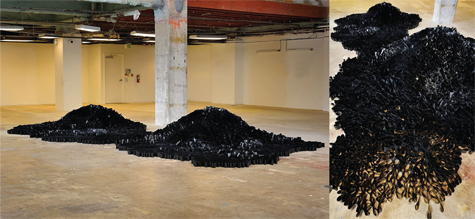
5,500 Into the Deep, black tape, 2011-2012
I don’t think many artists find the idea of viewing themselves as scientists all that appealing, since artists are usually pursuing the creative over the concrete. Did you ever want to be a scientist?
When I was young, I did not want to be a scientist. I was not a strong science student, so I never thought I had enough smarts to pursue something like that. But when I think about how I played as a child, I was playing in the mud, creating worlds with natural materials and watching insects with rapt fascination. Now in my adult life I recognize my interest in science, but I still don’t think I have the brains to contend with things like chemistry. I am much happier watching anything David Attenborough hosts! I did study anthropology in college, and my husband is a professor of anthropology and archaeology, so I often feel my social science background definitely plays a role.
I get this feeling like your work is making a statement on humans tampering with nature. What’s your opinion on our role and interference?
I think it’s inevitable and maybe necessary that we tamper. It’s human nature. And I think that very often people are trying to improve upon something. For instance, I recently heard about a genetically modified mosquito that is bred to produce offspring that will die. Considering how I just got eaten alive in rural France for the month of July, I thought, Hooray! That sounds fantastic! But the skeptic in me then thinks, how do we know that this won’t go terribly wrong? That the mosquitoes won’t somehow build up a resistance to it?
Sometimes we tamper to save things, like animals on the endangered species list. But if you think about it, that is kind of a bizarre endeavor. I am usually not of this opinion, but sometimes I wonder if something is meant to go extinct. The repercussions of keeping it around artificially may somehow be worse.
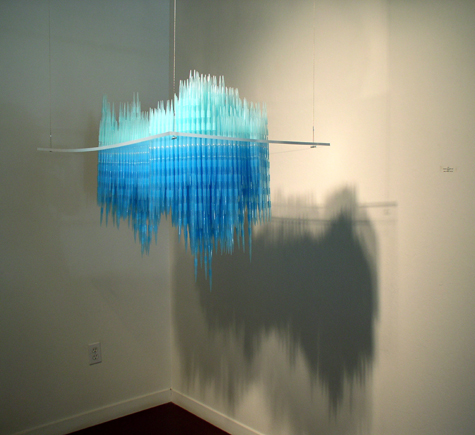
B9, plastic pipette tips, acrylic, 2010
Some of your work has a grotesque or abomination feeling to it, as though the natural is rebelling or in conflict to its surroundings. Is this from our tampering or do you view it as an evolutionary necessity?
Both. I think humans constantly underestimate the intelligence and power of nature. Going back to the mosquito example–how do we know that it won’t over time adapt to circumvent the modification and become more fertile?
Besides the sculptures themselves, the lighting and photography of the piece seems to play a vital role. Would you agree?
Absolutely. I am naturally drawn to materials that emit or reflect light in enticing ways. So ensuring that the light shows off these assets effectively is very important. That makes the photography challenging sometimes. I either hire a professional or spend lots of time correcting in Photoshop.
Is the use of shadow intentional?
The shadow is a direct counterpart to the light, so yes, it does become important. As far as what it conveys… I am not sure. In many cases a sense of drama.
Have you picked up little tricks to gather up a large amount of materials at an economical price? Even free?
I often collaborate with local manufacturers in using their “garbage.” But I also have a few sources that sell these cast-off materials for reasonable prices. And if it’s a household product, I will put the word out, and I will get free donations. At one point, I had all my neighbors setting aside their black plastic.

Whorl III, plastic film, acrylic, glue, LED’s, 2012
Signs of Growth will be on display at Bows and Arrows in Sacramento from Sept. 7 through Oct. 3, 2012. An opening reception will take place from 6 to 9 p.m. on Sept. 7. Check http://www.bowscollective.com/ and to learn more about Mitra Fabian, check out Mitrafabian.com.
DLRN: Awakenings Listening Party
Saturday, Aug. 4, 2012
“Play a throwback,” someone yelled from the balcony, to which DLRN rapper 5th Ave coyly responded that tonight wasn’t about that. The loft space behind Naked Lounge on 15th and Q streets was well-beyond fire department approved capacity. Attendees squeezing in on kitchen countertops, staircases, overflowing onto the back patio and leaning over balconies to sought space to see DLRN perform its new record. My thought: Shush, it’s a listening party.
Saturday Aug. 4, 2012 marked a dual celebration for Sacramento hip-hop group DLRN. At midnight 5th Ave, born Sean LaMarr, turned 28 and played his new album, Awakenings, in front of friends and industry acquaintances for the first time alongside producer Jon Reyes and vocalist Iman Malika. Now a trio, Malika joined DLRN officially this year after making guest appearances on the group’s 2010 record, The Bridge.
The final record in the DLRN trilogy, Awakenings delivers on the promises made at the end of the previous EP The Bridge. Observe the titles in succession (No More Heroes, The Bridge, Awakenings) to understand DLRN’s intentions over three years. 5th Ave mentioned a clue to be discovered in “The Promise,” during our 2010 interview in Submerge, but it was not until I listened to the track tonight that I unlocked the message in, “Somebody pinch me / Because I ain’t never been so close to my dreams,” as a hint to Awakenings.
To commemorate The Bridge, DLRN threw a party at Beatnik Studios with tequila tasting, free sushi and kegs of Miller High Life. The Awakenings listening party was an intimate, invite-only affair, but those in attendance–dressed to the nines and a gorgeous crowd–were left to their own vices and devices to mix drinks in the kitchen, plunge hands into snack bowls and pilfer beers and sodas from the coolers, all on the house.
A toast is appropriate. DLRN are skilled in the art of party, putting their creative noggins together to give us a good time beyond the release show formula of door charges, security pat-downs and over-priced libations. Three Cheers.
While, it’s faux pas to request a hit at a listening party, it’s excusable since Sacramento rarely throws such events. Among friends though, 5th Ave entertained the request in the name of good vibes, performing “Trill Cosby” and “Dear Langston,” which he apologized for forgetting the words to. It spoke of where DLRN is at these days, looking ahead rather than letting the past carry them. “Dear Langston” has aged well, but Awakenings is ripe.
Post-set I was pulled aside to be interviewed by 5th Ave’s wife Glenda LaMarr’s son on camera. The little man who was in charge of donations (and did a fine job), asked me to sum up the DLRN album in three words, to which I replied, “Moody yet uplifting,” or something to that effect. WhiIe I mingled and tossed back complimentary booze, in the back of my head, I questioned if my quick assessment had merit. The listening party triggered a few reminders from my home sessions, and I hoped I’d spoken with justice to DLRN’s body of work.
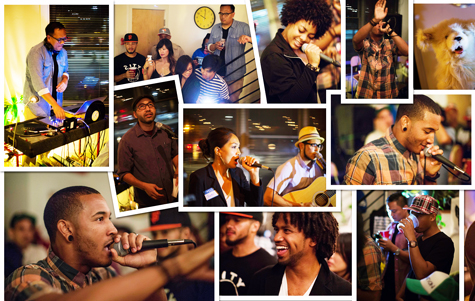
On “Fear and Loathing” (featuring Stevie Nadir), Reyes’ production places noir-electronic-pop synths atop thundering drum breaks, a binding thread heard throughout Awakenings. Malika sings, “We’re living that night life, watch it all fall down,” until Nadir chimes in with, “Everything was beautiful / nothing ever hurt at all,” a reference to either Kurt Vonnegut’s Slaughthouse-Five or Christian rock band Breakfast With Amy’s debut album. Without slipping into goth chambers or inching too close to a reimagining of the Drive Motion Picture Soundtrack, Awakenings is an evening’s quest to greet the soft break of day. The daybreak comes in the album’s closer “Open Letter.” Over an ethereal beat, the vocals are at first chopped and screwed into a boozy grumble, but Iman comes in to lend the clarity, as Reyes’ production begins to rise from a clutter of red cups, blunt ash and streamers.
The album explores universal hang-ups among 20-somethings, the dedication made on “Homecoming,” but at the crux of the record rests a deeply personal song called “Good Company.” While performing “Good Company,” 5th Ave took a moment to make his wife, Glenda, blush front and center while she hugged her son. He got close, making eye contact and smiled at her through his verse. The track, clearly dedicated to her, bears a minor sonic kinship to Outkast’s “SpottieOttieDopealcious” as 5th Ave vibes out on the mic with refrains of, “Let the beat ride,” while Iman croons “baby baby”s to a space age funk track that could extend past the 10-minute mark and not seem indulgent. On “House of Matches,” 5th Ave hands over the keys to Iman and rides shotgun, a humble display for an MC. It speaks to DLRN being truly a group and not just rap bros who let a lady hang out and sing when needed.
Awakenings as an album in a Saturday night listening party environment with free liquor is a difficult sell. Awakenings is apropos for a Saturday night alone, drinking at first out of spite, and then falling deep into the music until you get a 4 a.m. urge to transfer it to your iPod and go for a walk to a vista to greet the sun to the build of “Open Letter.” 5th Ave might have found happiness, might feel closer to bringing his dreams to his waking life than ever before, but he’s not deserting the lost boys and girls. As the group explores label interest and management in Los Angeles, giving the record to Sacramento is DLRN’s first and foremost interest, as it always has been.