Flip AM team member Louie Lopez is on the up
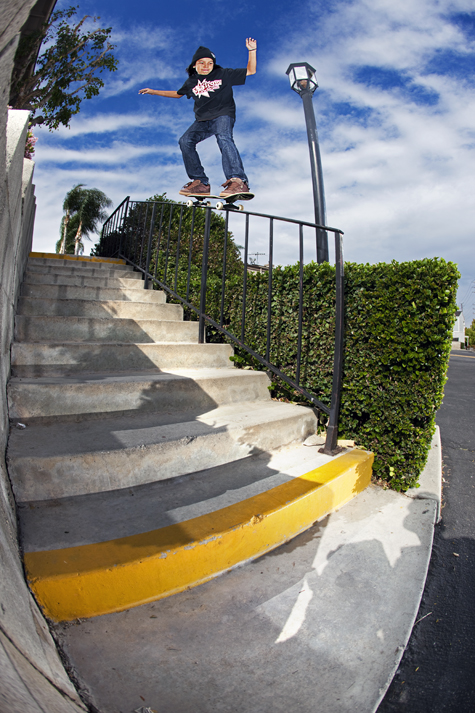
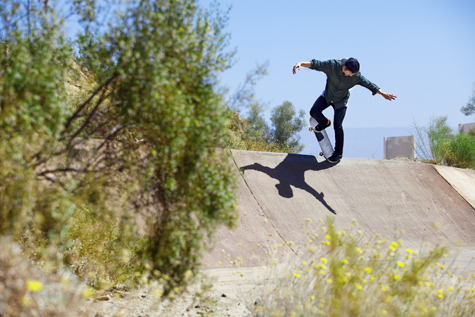
Amateur Flip Team skater and big air-grabbing 16-year-old Louie Lopez is one rad little grom on the board. So gnarly, he and his Flip buddy Curren Caples take trick requests via text message. Sporting a regular stance, Lopez is stands under 5-feet, with a mane of black hair that trails behind him like a super hero’s cape when he is on the move.
Days before Lopez’ buttery-ass 16th birthday, because there’s nothing sweet about skating, he will be tearing up B Street Skate Park with Geoff Rowley and others as the Flip West Coast Represent Tour hits Sacramento.
Lopez came up in Hawthorne, Calif., honing his skills at the local skate park he fondly refers to as “The Dirty.” After being discovered by Lance Mountain of Flip Skateboarding, in a kind of creepy manner (keep reading on), Lopez signed on with the AM team. Besides being a member of the Flip team, he’s secured endorsements with Volcom Clothing, Globe Shoes, Fury Trucks and Madrid Fly Paper. The kid is bringing the ruckus, so to speak, to skating at an exceptionally young age. Two years ago he took sixth at the Dam Am in Costa Mesa and at this year’s Amsterdam Am he took second to Alec Majerus. He’s been on Fuel TV as part of its New Pollution series, Thrasher Magazine videos and has a role in Flip’s Extremely Sorry.
I was struck by Lopez’s favorite music to throw on his iPod when he’s out grinding; a 16-year-old who listens to Wu-Tang Clan? Enter the Wu-tang: 36 Chambers came out a year before he was born.

What is your favorite Wu-Tang song?
My favorite Wu-Tang song would have to be either “C.R.E.A.M.” or “Protect Ya Neck.”
Wow, selecting two off the first album.
I haven’t been listening to Wu-Tang for too long, maybe like two years or something. A lot of my friends used to listen to it. I started listening to it and I liked it.
How did you get on the Flip team?
It was through Lance Mountain. I used to skate with him at this skate park called Vance Park in Orange County. He called the owner [of Flip Skateboards] to go watch me skate. I didn’t even know who he was. It was really crazy, because he didn’t look like a skater. He was just watching me skate. Wherever I’d skate, he’d appear. It was just like, what’s going on? Then he asked me to join Flip.
Were you creeped out by him at first?
Not really creeped out. I just didn’t know what was going on.
So you’re on the Flip AM team right now. What’s it going to take for you to advance to the pro squad?
To be a pro, I guess you have to keep skating, put in your work and when your sponsors think you’re ready to go pro they make the move, I guess. I’ve been skating for Flip since I was 11 or 12. I’m about to turn 16 now, on Nov. 26.
You’ve skated Steve Berra and Eric Koston’s skate park, the Berrics. What’s your favorite part of that indoor park?
They have the best flat bar ever. It’s really long and circular. It’s the funnest thing there.
You made it into the Sorry video series. Did you ever think you’d see a claymation version of yourself?
No. I would never have thought that. I was extremely happy to know about them and be in the video. I didn’t have any idea what it was going to look like. When you don’t have any idea, you’re antsy to see it and nervous because you don’t know what to expect.
Being a skater and having braces, are your parents concerned about their investment in keeping your teeth straight?
Actually I just got my braces [taken] off like three weeks ago. It feels weird. You keep playing with your teeth with your tongue. At first you feel like you have the biggest lips because they flap over more on your teeth. I don’t think [my parents] are concerned, though. If it happens, it happens, I guess.
You were able to pull off grinds on some pretty lengthy stairs. Have you ever challenged Geoff Rowley or any of the Flip team to a stairs-off?
No. I’ve never done that. They’d probably take me. They’ve tried to ollie 20 stairs and stuff. The most I’ve ollied is probably 14.
Is there a chance that when you come to Sacramento on the tour that you could lay down a buttery-ass heel flip and give a shout out to Submerge?
Yeah. I’ll try to do one, but I don’t know how buttery it will be. I won’t pop high off the ground, that’s for sure. But, I’ll try one.
Appetite’s Teddy Briggs foregoes waiting for a label and releases his latest album on his own
In the least dramatic of interpretations possible, Teddy Briggs would rather devote his time to creative outlets over the necessary habit of satisfying his stomach. While all your friends are becoming foodies, getting off on the exhilarating release of flavor, Briggs is busy denying himself sustenance while writing songs about being over food.
Appetite is the solo project of Teddy Briggs, drummer of What’s Up?. He totally understands the irony of his moniker, but it’s not deliberate. It just came together the way things do sometimes, much like the title of his new record, Scattered. Smothered. Covered. The inspiration for the title lies in Southern slang for how you like your hash brown potatoes. “I feel those words represent different ways I feel,” he said. “Covered, not meaning covered up, but meaning I’m covered, like, ‘You’re good.’ Feeling scattered and feeling smothered, but also feeling like you’ve got everything together is more or less the same thing. Those emotions are happening so often for me at the same time. It just spoke to me.”
Briggs discovered the slang while out to breakfast with a friend from the south in San Francisco. He told her during that meal his next album would bear the name. “Instead of trying to rethink it when the album was made, I stuck to that thought,” he said. “I think it’s very applicable to the record.”
One listen will confirm the applicability of the title, as Appetite drifts from the tropicalia vibes of “Warn Me, Right,” that might gather comparisons to the trend toward prep school-afrobeat, to the American-born indie stomp of “Tussy.” Appetite could get critical nod to contemporaries such as Sufjan Stevens, Vampire Weekend and Andrew Bird, but is by no means eating from their silver plates and sampling their wines. Scattered. Smothered. Covered. is far too mature and calculated for such novice missteps.
The first Appetite record, called The Ambiguous Garment, was released on Obstructive Vibrations, a local label run by Briggs’ band mate from What’s Up?, Robby Moncrieff. Unfortunately the label is in hibernation, as Moncrieff is engulfed in a multitude of projects, letting the website remain dormant. It’s excusable, considering Moncrieff recorded Briggs’ record, provided guidance in the studio and shopped it to a few labels who heard the record, but didn’t bite.
Briggs said he’s gotten positive feedback from people he said “don’t really owe me anything” and friends alike. He admitted to not pushing hard due to a lack of industry contacts, so for now it’s the DIY route. “I’m sick of not having anything at shows for people to take home,” he said, which is why Briggs is self-releasing Scattered. Smothered. Covered. on Bandcamp.com the day of his release show and bringing along CD-Rs to sell. “If someone wanted to do an actual release on a label, that’d be great,” he said. “But I’m not going to wait.”
Briggs considers Obstructive Vibrations more of a stepping stone for musicians than a label that is interested in career-building. It’s a fitting analogy, as his debut in comparison to Scattered. Smothered. Covered. is a weirdo introduction that garnered enough interest for Briggs to take the project seriously and tighten up the sound to a more mature level than freak-folk songs about crack for hippies. “All that old shit was pretty ambition-less,” he said. “It was just what I’d do for fun. At that point it was never a project that I really wanted to perform.”
Briggs is a drummer by trade, a trait that is denied in his work as Appetite. Briggs felt complimented when I expressed that the record did not sound as though it was made by a drummer–not trying to dis, but you won’t mistake Appetite for a Zach Hill side project. Briggs plays all the instruments on the record (recorded in five days at Hangar Studios), save for a few. “[Robby] was inspired by what I was doing live, which is super stripped-down,” Briggs said. “We left out the sound bytes and weird recordings. He was the one that kept me from putting in a fifth vocal track and said, ‘This is fine.’”
Now that Appetite is becoming a band meant for live interpretation, Briggs is coping with the adjustment of hearing someone else play his songs, kind of like a toned-down Brian Wilson mania. “Since I played everything, I have a very specific thought and sound I want it to be in my head,” he said. “That is just not going to happen with other people playing. I’m not saying they wouldn’t do their jobs and bring their own thing to the table, but it’s still an awkward feeling.” As serious as Briggs is taking Appetite, he’s not at a point of pressuring band mates to sign on in blood or even have the “are you in or are you out” conversation. “I think that’s better for everybody,” he said.
“Over Food” is the parting ballad on the album, which ties into the unplanned, yet undeniably heavy-handedness of Appetite’s food theme, a frustration that Briggs is quick to point out himself. “I have a weird relationship with food,” he said. “I enjoy food. I like the way it tastes. I also find eating to be a chore. You have to eat in order to continue being productive. Eating is fuel. I eat fast and get it done.”
Geoff Rowley on Skateboarding…Mostly
If you know anything about skating, you don’t say “who” when Geoff Rowley’s name is mentioned, nor do you casually agree to an interview with him. The proper reaction should be similar to the yells and panty tossing that boy bands typically receive… or a cavalier, but cool reply of “gnarly.”
Rowley was Thrasher magazine’s Skater of the Year in 2000 and one of the few blokes lucky enough to have a trick named after him, the Rowley Darkslide, a variation of a trick created by the great Rodney Mullen. Rowley’s legendary video parts showed him going huge since 1994, back in Liverpool before he jumped the pond.
Now of the old guard, he’s bringing his tour to Sacramento, tearing up B-Street Skate Park on the Flip West Coast Represent Tour. The tour features pros and amateurs of the Flip team, including Curren Caples, Andrew Langi, Lance Mountain, Luan Oliveira, David Gonzalez, Ben Nordberg, Rune Glifberg and Louie Lopez (also featured interviewed).
Rowley’s name rings in the urban jungle and in the actual jungle. In fact, a hobby of his is to track big game in the wild. This juxtaposition of interests was the source of my intrigue, thus it was my first question for Mr. Rowley.
When did your fascination with wild beasts start?
I probably couldn’t put an age to it, but just before my teen years my friend, who I skated with, was friends with the chief game warden up north of England. I’d been skating with that guy so much, and he’d been skating since 1972, so he was a lot older than me. But I had fun skating with him, got on a roll with him. We were into all the same skaters–shit like that. So I ended up hanging out with him outside of skating. We went up into the north country of England one time and just enjoyed it–basically stalking deer. That’s kind of where it started. I’ve been doing it for over 20 years since then.
Do you have any stories of you hunting/stalking trips going awry?
No. I wouldn’t say anything’s been that close. I’ve had friends who have been in some bad situations. This is about skateboarding; what’s going on here?
Have you ever skated in Sacramento? What’s your favorite spot here?
Hundreds of times, all over the city, even way up in Placerville. I know the area really well. John Cardiel and Omar Salazar are from out that way. I’ve skated with those guys many times.
I wouldn’t say I have one favorite spot. There was this one rad car park with…barriers on the top, but they took it out. It was pretty rad and unique. A lot of the stuff downtown when I was first going to Sacramento, you can’t skate anymore. Downtown isn’t really skateable.
There’s good stuff in Davis. All over the place. It’s a big suburban area with a lot of skate parks. So there’s plenty of good stuff to skate with a good scene as well.
Do you have any plans to continue the Sorry series?
We just finished the third video last year, which was Extremely Sorry. It was only kind of intended to be a trilogy. So I would say we’re moving forward now as far as any other videos we’re working on in the future. They’re going to be new and fresh. It’s important to evolve. We had fun with that and that was a chapter of our company, but it’s reinvigorating to have a new start. Change is good. Unless we’re talking about Obama, then change doesn’t appear to be that good so far.
Do you want to make this a political discussion?
No I don’t.
Would you care to say a few kind words about Louie Lopez, since he’s joining you in Sacramento?
You can’t say anything but good things about that kid. He’s rad and super progressive. The raddest thing about Louie is that he smiles. He loves it and that’s going to take him to the end of the earth. If I could have one young kid riding for Flip as an amateur, it would be Louie Lopez.
He’s constantly learning new tricks and out skating all the time. He lives in Hawthorne, Calif., so he’s around a pretty good scene. There are a lot of kids that skate. A lot of kids don’t have a lot of money in that area so they’re a little more humble. He’s just around good people, down-to-earth people. It shows in his skating.
There’s a guy who taught his dog to skate. Considering you’re a man fascinated with animals, what animal would you teach to skate?
It would have to be a full-size, maybe 6-foot-long weasel. That’s the only thing that could go fast enough, I would say. It would be the only thing that would have the same kind of control on a skateboard.
Last question. You’re at the Pearly Gates and St. Peter demands you do one trick to get into Skatepark Heaven. What do you pull?
Probably turn around and go fakie.
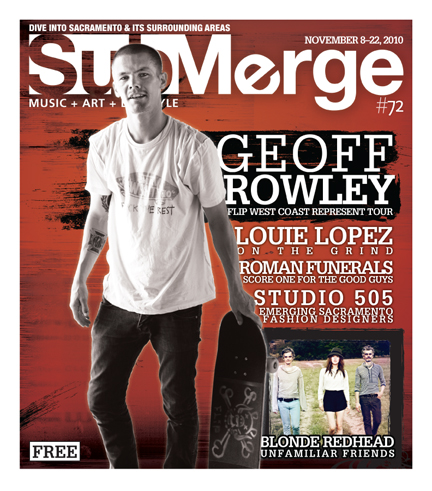
Nicatyne MidDay Marauder
The femme-bot voice from A Tribe Called Quest’s classic album Midnight Marauders taught me that seven times out of 10, we listen to our music at night and that “marauder” means someone who loots. Tribe was marauding for listeners. Sacramento’s Nicatyne is out for the remaining 30 percent with MidDay Marauders.
At 21 years old, the Natomas producer-on-the-mic has produced two solo albums, a collaboration album with JoEL and two records with Illecism–both of whom are members of Fly High crew. In a sense, MidDay Marauders is Nicatyne’s sixth record, which is an impressive resume at such a young age. His flow is not as swagged-out as E-40’s braggadocio, but Nicatyne bears some style similarities that make MidDay Marauder feel like shark bites (as in the faux pas of “biting”) on the Bay Area. As Nicatyne states on “12s,” a dedication to 12-inch speakers, there’s only one reason his music has that bass for your trunk: “I knock because I got–12s.”
The album title will feel deceiving, given the young rap community’s recent insistence on reinterpreting the golden age classics (i.e. Fashawn’s Ode to Illmatic). MidDay Marauder is not one of those records.
Nicatyne, like many producers who rhyme, is better at one of his trades–the reason the term “producer-on-the-mic” was coined. Opener “One Morning” is abstract and minimalist with its plumber-banging-on-pipes percussion and dog bark samples, while the East Indian bounce of “Dhalsim” (featuring JoEl) has anthem potential with its “My cash stretch like Dhalsim” chorus chant. Nicatyne’s soft-spoken and nasally flow on “My Way” meshes well with his crawling production that rides a pixie-like vocal sample. Five songs deep into the record, Nicatyne is on a creative tear, but “The Man” disrupts the momentum to a point that the album never recovers its swagger.
Nicatyne lags into whatever rappers are calling the clubby-hyphy style songs these days. Slap? Blap? Someone call it. No matter the slang, I am not ready to accept the track “Deaf Star” and its Comic-Con-meets-night-club format.
MidDay Marauder closes strong with “It’s a Wrap,” which features Illecism, and the barbershop-slap of “Real Banter” is another minimalist banger built around a phrase that might replace “real talk.” The not quite chillwave, not quite R&B production on “Forever” is a close call between lapsing into the corny side of The Dream or the trendy side of Nite Jewel–either way I’ll be answering for that comparison in hell.
I’m still waiting for a Sacramento record that feels as though it was conceived strictly with a Sac-Proper state of mind. An identity crisis is spreading like a plague on the scene. It’s time for a sound to be identified as pure, instead of pandered toward the greater Northern California region.
The Shack
5201 Folsom Boulevard Sacramento, CA
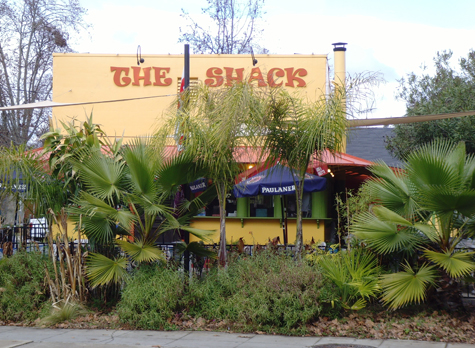
The first step in acquiring a new restaurant location is to look at what was left from the previous owner and decide whether or not it is of use. The Shack, located on 52nd Street and Folsom Boulevard, made several executive decisions that won my heart and tummy over, but electing to paint over the word “Sub” on the sign to give the establishment its desired name made me an instant fan. Sure, there’s a noticeable space between “The” and “Shack,” but it’s got low-budget charm.
Not yet a year old, The Shack sits across the street from SoCal Tavern in East Sacramento. The exotic overgrown shrubbery shields patrons from scorching sunrays, but the sandwich joint is still easy to spot with its bright orange, yellow and lime green color scheme. Patrons have the option of either the indoor diner and wooden booth tavern-style seating or the wraparound patio with an assortment of umbrella-guarded tables, wicker chairs and picnic benches. Do not let the name “Shack” fool you; it’s a quaint venue, but not a shoebox like, say, Jim Denny’s. I took to the patio, finding a comfortable table without much dilemma during the lunch rush.
I ordered a 1/3-pound. Shack Burger, absorbing the venue into my short list of local business burgers to try, adding cheddar for 75 cents. Mushrooms, jalapenos and grilled onions are also available extras for 75 cents apiece, while avocado, bacon and pastrami are all $1.50–industry standard. The Shack did not appear to have a signature sandwich as the menu sticks to the basics: BLT, patty melt, club, Philly-style steak sandwich and, of course, the Reuben. The burger came pre-loaded with lettuce, tomato and onions, so do not assume privilege to apply as needed, with a fat pickle slice and a side of fries. The Shack makes its burgers medium to perfection, retaining all the juicy bites that are greasy enough to dribble a little down your chin, but not clog an artery on site.
The Shack rises above the norm with its beer selection. Of the 13 beers on tap, only Pabst Blue Ribbon and Stella Artois were not of the craft brew ilk. This spot is listed as one of the admired and patronized spots of the Hop Heads of Sacramento Beer Lovers Union–if this crew is digging your brews, then you’re clearly not fucking around.
I paired my burger with a Leffe Blonde, one of my all-time Belgian favorites. Buried at the bottom of the list for domestic bottles were Budweiser, Bud Light and Coors, while the libations list spanned three pages that categorized the extensive list to include German, Belgian and Dopplebocks, among others. Had I not been on assignment, I’d have indulged in a bottle of Chimay to wash down my hearty burger and finished the Sacramento Bee’s crossword or marginally challenged the New York Times’.
Deadlines aside, the only further drawback to The Shack is that its off-the-grid location made it a safe haven for young yuppies in training. It bemused and amused me equally to be in their company, eavesdropping on 4th of July barbecue plans and regaled stories of secretly pounding fifths of vodka at River Cats games–how rad is alcohol-poisoning, bro?
I’ll chalk this setback up to the Friday lunch crowd on an impending holiday weekend. The Shack is still a great place to patron. The sliced pickle that came with my burger was huge and crunchy. Tuesdays are beer tasting nights; week one, for example, is Belgian beers. And with the brunch scene in Midtown already ablaze, I might sneak away to The Shack one weekend for a Huevos Del Shacko (two eggs, corn tortillas, ham and house-made ranchero sauce, served with potatoes) and $10 liters of mimosa.
Busdriver
Friday, June 11, 2010
United State Boutique, Sacramento, CA
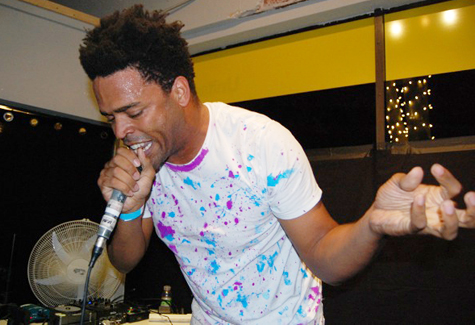
Busdriver introduced himself to his Sacramento faithful by stating his name and the fact that he “makes hip-hop the wrong way.” Immediately I began to wonder who this slight jab was directed toward, considering the door charge was $13, and he filled out the boutique rather well.
It depends on where you are raised on hip-hop, I guess. A graduate of South Central Los Angeles’ Project Blowed community, Busdriver is expected to be technically flawless and remarkable in his weirdness. Had he lacked these qualities, the faithful in that district would have politely asked him to “pass the mic” long ago. But eight albums deep (two of which were released on Epitaph) and touring schedules to foreign lands make it difficult to determine how he is incorrectly making hip-hop.
I will admit, I own zero Busdriver records and have often expressed befuddlement in the allure of his music–fast rap never did it for me. I learned about Busdriver the live performer years ago, though. It was an experience that altered my perception of his work. For the right price, I will attend a Busdriver show, as should any hip-hop connoisseur.
Aspiring rappers, aka the opening acts, take note of the level of expertise you must wield in order to rock a crowd bigger than your closest Facebook friends. Busdriver is easily one of the most compelling performers in the business, which is heightened by his lack of a posse or DJ. If Busdriver is on the bill, Busdriver is all you’ll see. One man with lungs like hot air balloons, bursting rhythmic tangents of tossed word salad–and somehow, his fans find enough connection to sing along. Sweet mercy, I saw people singing along, while local fledgling talent Chuuwee was in ear shot of me, wide-eyed and excited, telling his crew “I don’t know what he’s saying, but it’s hella fast.” Take notice, young pup.
I am comfortable with never comprehending the crossword puzzle of darts spewing forth from Busdriver’s mouth. His machine-gun delivery is the most impressive display of MCing I’ve seen in person. Sampling Mozart’s Sonata in A Major, “Me-Time… (With the Pulmonary Palimpsest)” was delivered with hairpin precision. Even if Busdriver faltered slightly, he casually filled the space with off-the-dome rhymes, until he regained his cue. I’ve witnessed some impressive Chicago MCs flex that ‘90s “do or die” style, rolling the Rs and bouncing to a “pibbitty-pibbitty” flow, but there’s a practiced routine employed. The chopping up of styles is a Project Blowed staple dating back before Freestyle Fellowship, but Busdriver is a master, while others are mere apprentices.
Most hip-hop heads, myself included, are still not ready for Busdriver. Although, judging by the audience–keying in on the all-ages element–traditional hip-hop heads were the minority that night. It would seem Busdriver is embraced by the young and the obnoxiously hip. Hip-hop is still in denial of its nerdier side–as if DJs weren’t the most reclusive oddballs ever–making Busdriver the talisman of art rap. Until being uncool replaces an undying obsession with being the most gangster, Busdriver will be sarcastically criticizing his art with jokes about “doing it wrong.” Although, those willing to open their minds to the complexities of his style shall be exposed to a format cursed to be called “ahead of its time” in the ensuing decades.
DLRN keeps their latest release, and those to come, close to the vest
It’s coming back around. Young artists are expecting more from their culture. Take the art of Kehinde Wiley, for example: He paints the stereotypical street hustler in gentlemanly poses against backdrops of elegant tapestries, juxtaposing the ghetto with the affluent. Sacramento’s DLRN is analogous to Wiley’s vision of celebrating the complexity of hip-hop culture.
Hip-hop has reached a reputable age, and decades deep it has its own version of royalty. As of late though, it has become less of a culture, less of an art form and more of an economic commodity. Sean La Marr, under the nom de plume 5th Ave, sees a potential for change without leaving the sleepy city of Sacramento. La Marr’s video for the song “Dear Langston” is a testament to his hometown pride, as it used Wiley’s art as inspiration–showcasing the city’s talented inhabitants mimicking the regal poses of the elite–the same poses present in Wiley’s portraits.
It’s clear La Marr loves Sacramento hip-hop with the sincerest of hearts. Our interview was intended to discuss the new record his group, DLRN, is dropping this week. Yet, it was during our post-interview hangout session that he revealed his passion for the local scene.
Last year DLRN dropped its No More Heroes record with the intention of introducing new heroes to the hip-hop canon and creating an alternate narrative not traditionally found within the genre. “From an MC standpoint, I was very disillusioned with it,” 5th Ave said. “I came to the realization that a lot of the faces of hip-hop these days I do not relate to. I don’t see them as role models or the influential voices that they once were.”
DLRN, formerly known as Delorean, consists of MC 5th Ave, born Sean La Marr, and producer Jon Reyes. DLRN is retro-fashioned and reactionary, operating in a space that is not quite conscious rap and not quite club rap either. “We’re a product of different time periods and different people, that’s part of how we came up with the name Delorean,” Reyes said.
Unfortunately, a Spanish trance-pop had already claimed the Delorean moniker.
“Our tastes are more eclectic than most acts you’ll hear,” La Marr said, which means they were aware of a possible conflict in their future if they kept the name. By dropping the vowels to DLRN, the group hoped to dodge any cease and desist suits or mistaken-identity tour dates.
“It’s funny because we knew about them when we decided to go with the name,” La Marr said. “We just decided we better blow up before they do. But, then they were on ABC, they had a national tour and became Pitchfork darlings.”
La Marr continued with an anecdote, “We almost didn’t get booked at a show in Seattle because they played at the same venue two weeks prior. We’ll have stuff posted on our Facebook page about events that they’re doing and vice versa.”
Reyes added, “We can’t really hate it, because they’re a really talented band.”
The duo is excited about the switch, citing MGMT and MSTRKRFT as other successful bands that dropped the vowels. Sacramento is now tallied at two non-vowel band names (the other being CHLLNGR) with potential to join the celebrated ranks.
The topic evolved into a discussion over the ethereal trends in cycle of kindred band name themes–such as bands named “wolf-something” or rappers named Lil’. Apparently, there was a birth explosion of Deloreans around the early Naughties. “We thought about adding a word to make it Delorean Brown,” La Marr said. Reyes interjected, “A good reference to one of the greatest wrestlers of the modern era, D’Lo Brown. “ La Marr continued, “But, it turns out there was a Delorean Brown already in Sacramento. Here I think we’re being clever.”
With a new name, DLRN sought out to craft its followup to No More Heroes. The Bridge was recorded at Pinnacle College in Rancho Cordova, which La Marr described as a “sterile” environment in comparison to Omina Labs, where No More Heroes was recorded. It took time, but DLRN enlisted the help of its student body to help them settle into the new digs. “It’s good working with people that you’re friends with outside of the music,” Reyes said. “It makes for very chill sessions.”
Reyes described the recording process for The Bridge, out July 20, 2010 as a free download, as a humbling and surreal experience. The students that volunteered were mostly fans of DLRN prior to the sessions. “Those are the people you’re making it for and they are sitting right next to you,” he said.
Accessing the privilege to hear the new record has been kept to limited company–possibly on a “nothing leaves the studio” policy. The reasoning is DLRN has a purpose with its messages. It’s encoded in the video for “Dear Langston” and on The Bridge. The two releases reference one another, and provide insight into the already planned third album. When I asked the name of the next record, I was met with stoicism and a round-about answer. “There is a hint in the last song,” La Marr said. “I hate to not tell it to you, but when you hear the next DLRN project it will make sense.”
I did not hear the hint in my exclusive The Bridge listening session. But I did hear a reason alongside the Cloud City record to be excited about local hip-hop in July. The Bridge’s first video features Prometheus Brown of Blue Scholars, while the record has further appearances by Hopie Spitshard, Illecism and Chuuwee. That’s all I am allowed to disclose.
DLRN has major plans to kick off August by celebrating the release of The Bridge in what La Marr hopes will be the biggest hip-hop event of the summer. After hearing the words “tequila tasting,” “kegs of free Miller High Life,” “free sushi” and “the Miller High Life girls,” I am not opposed to declaring it the event of the summer either. “I’ve been to a lot of hip-hop shows and I’d hate for this to be just another hip-hop show,” he said. The release party is Aug. 6, 2010 at Beatnik Studios.
In my brief tenure with Submerge, I’ve met a lot of local rappers, most of which have this ambition, rooted in frustration, to overcome their surroundings. It is a career plan that includes reaching or leaving for the Bay Area and Los Angeles markets. La Marr never once spoke with a belittling tone toward his hometown. Instead, we sat for an extra half-hour talking about our favorite Sacramento rappers, putting me on to a great local joint by Blee featuring Doey Rock. “You know what, come to the show and I’ll have a mixtape for you of all my favorite Sacramento shit,” La Marr said. I left thinking, it’s that kind of dedication to the scene that makes someone the founder of a collective such as the Neighborhood Watch. He’s got our best interests at heart.
Go to Beatnik Studios on Aug. 6 for DLRN’s The Bridge record release party. Free Tequila tasting and beer for those 21-and-over will be available. There will also be VIP wrist band bottle service. Come dressed as Alice in Wonderland and get in free. Prize awarded for best costume.
Lee Bannon and Chuuwee look to make a mark among local hip-hop connoisseurs
With the recent death of legendary MC Guru of Gang Starr, nostalgia is running strong in hip-hop for the golden era sound. Gang Starr’s simplistic formula of Guru lending his commanding voice only to DJ Premier’s gritty boom bap production was a staple of an era that would be followed by meandering albums with a gang of producers tugging the sound in all directions.
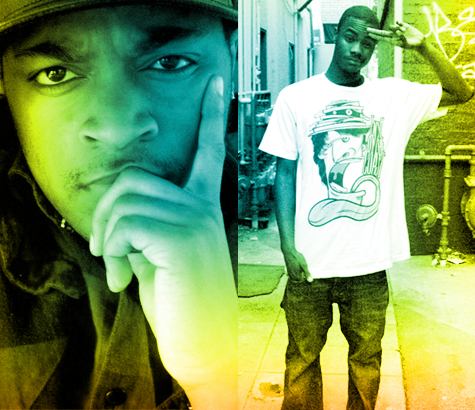
So it goes, with every death there is a birth. Local rapper Chuuwee wasn’t born yesterday, but he was barely an infant when Gang Starr’s Step Into the Arena first hit the streets. Out to get a rep, Chuuwee is only 19, but his mind is old. Case in point: I never expected the first influence he mentioned to be Big L, another late great-just like I never expected Chuuwee to be underage when I inadvertently invited him to meet me at a pub. “Am I allowed in here?” he asked sheepishly, but I shrugged it off and guided the kid to the beer garden-he looks old enough.
On “6 Feet Deep,” a track Chuuwee played for me, he harks back to the Nas lyric, “I keep falling, but never falling 6 feet deep,” like he grew up on Illmatic. With the right influences in place, Chuuwee just needed his Premier, his Large Professor, hell, even his DJ Jazzy Jeff, to provide the proper backdrop to his voice. He found his complement in Lee Bannon, who is three years his elder. “There’s been duos throughout time and usually the producer is older,” Bannon said. “I look at it like we’re part of that tradition-the classic way of doing it.”
Bannon is neither a household name, nor a certified buzz name on the streets or blogs. Such credentials are inconsequential since it’s only a matter of time until the honors are added to his résumé. Bannon has lent his sound to Inspectah Deck of the Wu-Tang Clan, Talib Kweli, the Bay Area’s The Jacka and Los Angeles’ U-N-I. He has also produced numerous solo instrumental records. Like most producers, his sound can carry further than the name. Too often we appreciate the voice, but neglect to look to the maestro assisting the voice. As we continued to listen to music, Bannon would name drop producers like DJ Muggs and Madlib as styles he aimed to mimic.
Typically, when a producer does this, I nod politely, but consider the comparisons a stretch. But, as Bannon played beats to an upcoming project, it actually had DJ Muggs qualities, like an off-kilter bounce and the sharp chop of cacophonic samples.
The two met by chance at a local beat battle. Bannon took the initiative, reaching out to Chuuwee before the battle and giving him a beat to perform over. Initially, Chuuwee wanted a single beat from Bannon, but Bannon challenged the young pup to write a record. “I got a call from him unexpectedly,” Chuuwee said. “We started kicking it at a homegirl’s house and he got inspired by a pizza box. It all started falling into place from there.” Titled Hot ‘n’ Ready, the collaborative album has taken a wildly creative turn with a unique limited run in packaging. Forty pizza boxes filled with T-shirts designed by 12ftdwende, stickers and the CD will be available at urban boutiques like Havoc and United State, as well as other Midtown/downtown locations. “It will be a scavenger hunt-type thing,” he said. “If you seriously want the project in the collector’s box, you have to search for it. It’s a really cool idea. I ain’t never had nothing like that before, so I’m pretty excited about it.”
Bannon’s creative marketing strategy, matched with Chuuwee’s infatuation with concocting well thought out projects (a sensitivity sparked by his Obsessive Compulsive Disorder), make Hot ‘n’ Ready a unique project. The marketability of CDs is a dying art with the shift to digital formats. Bannon intends to intrigue new and old fans alike by presenting his music as a collector’s item before it’s even out of print and up for high-dollar auctions. “I’m trying to push the envelope with every project I go into concept-wise,” he said.
The pizza theme is not limited to the packaging, as Chuuwee said the concept loosely runs through the album, as evidenced by the closing track, “Last Slice.” “I wrote it in three-and-a-half weeks,” he said. “I don’t want it to seem like I rushed it. I’ve got extreme OCD, so my projects are always overly thought out. I only wrote it fast because [Bannon’s] beats were so inspiring. It just flows out.”
Chuuwee said he’s been stuck in the ‘90s since he started rapping. For the project, he requested that Bannon cater the beats to that style. “I’ve heard his first mixtape and it had a huge range,” Bannon said. “He did stuff over Neptunes, Dr. Dre and Common beats. It was a big spectrum of taste, so I knew I couldn’t make it all ‘90s boom bap, but a lot of it is that style.”
Bannon is more than a producer when it comes to conducting his business. A PR team is hardly necessary. His inspired approach with Chuuwee is just one of many projects with intricately thought out publicity plans. He is in talks of possibly having unplugged Chuuwee sets at local pizza parlors-although it’s a mystery as to how hip-hop can go unplugged. “What’s the biggest thing you’ve seen come out of Sacramento in the last five years?” Bannon asked, to which I could only reply Brother Lynch Hung. “It’s been a minute, and I think we can get into the masses like that. With his talent and my resources, I’m hoping to duplicate the past success I’ve had except through his words, instead of just my production.”
Comedian Mike E. Winfield stands ready to command a larger audience
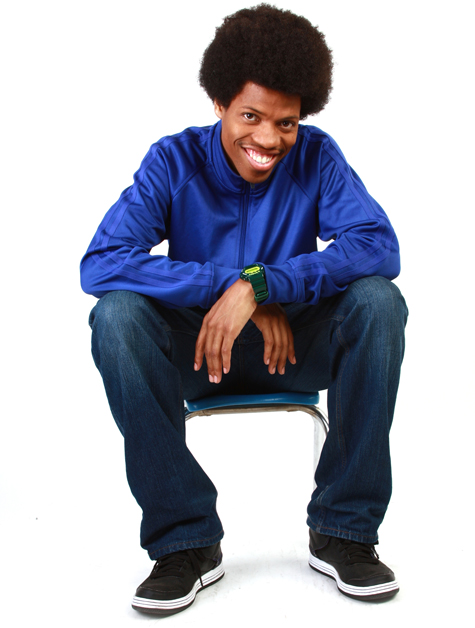
With a performance on The Late Show with David Letterman airing in the near future, Mike E. Winfield has succeeded in dropping the “local” prefix from his title of comedian. In fact, the local label has been absent for some time, given Winfield’s appearances on Last Comic Standing, Comedy Central’s Live at Gotham, and various comedy festivals and competitions.
After eight years deep in comedy, 2010 could be his breakout year–Mike officially quit his day jobs to pursue comedy full-time. He attributes his success to a dedication to the craft and inspiration from New York Times bestseller Outliers and its 10,000 Hours Rule, which states that greatness in a specific field requires 20 hours of work per week over 10 years. “Certain people aren’t successful just on talent,” he said. “It’s the people who mix talent with opportunity. When I do shows, if it’s in my power, I stretch it to make an hour show an hour-and-15-minute show. It’s an art. That’s what it is. I’m working on this artistic form all the time. Putting it out there and getting a Facebook request a day.”
So far, he’s stayed busy. He touched down in Sacramento the day we arranged an interview, fresh off a flight from Nebraska–“yes, Nebraska, Nebraska,” he confirmed. Two months prior to his stint in Cornhusker land, he did a U.S.O. show in Okinawa, Japan. This month, he’s treating his hometown to a headlining show at the Punchline. “This one has the most buildup,” he said. “It’s from an accumulation of being on stuff. More people recognize me now.”
So I read on your blog that you went snowboarding once, and it’s going to be the only time. What happened that was so traumatizing?
I hit a little kid, man. I was dumb. I forgot to learn how to brake before I went to the more advanced slopes. I was doing full speed and this kid was coming horizontally. I see the kid from far away coming toward this perfect intersection.
I kept thinking, “No, this is not about to happen;” that poor little girl, man. She had on pink and her skis ended up stuck straight up in the snow. I played like I was hurt so I wouldn’t look like a dick. Her dad yelled at me. My friend, who I will never hang out with again, he was like, “You should probably apologize.”
It was fun up until that point. I didn’t even have the right attire. I just put on a whole bunch of clothes. I had Vaseline on my face because I heard it would keep me warm.
I feel like somebody played a joke on you with the Vaseline thing. You also just got back from Japan?
Yeah, I was in Okinawa for a military show. There are troops stationed out there. You want to talk about people who appreciated a show. You didn’t want to leave. There are some bad situations out there. You feel for the troops. They are working hard. A lot of them don’t want to be there. There’s nothing to do. All their outlets are alcohol and clubs, just drinking, waiting for their time to pass.
That was my first one, and I’m down to do more. It felt like I was giving. I am doing what I’m supposed to be doing in life for the right reasons finally.
Are there any weird cultural experiences you had?
The fact that all the vehicles were the same things we had, but smaller versions of them. That struck me first.
Did you earn your stripes in Sacramento?
Yeah, I think I first got on stage at Laughs Unlimited. My first work, I did a weekend at the Punchline, then the following weekend I was booked at Laughs Unlimited. So like my first week of work was two back-to-back weeks. It just didn’t stop. I felt like a new person because I was getting a lot of work. I think it was because I was really clean. It’s opened up a lot of doors.
Would you still consider your material to be clean?
I have my times. Lately I’m on being whoever I am. I just want to be myself and have people say, “Yeah, I’m going to see this guy because he’s funny,” not because, “He does dances and then a flip at the end.” I just want them to go because they think Mike E. Winfield is a funny dude.
I read that you consider your college speech class your start at comedy. Is there truth to that?
As soon as I’d walk in front of the class they’d just start laughing. I would talk about how to make a Whopper. I didn’t have any intellectual speeches. I’d get grades on the delivery, but the content would get Ds. The professor said to just try [standup].
It was fun. I wish I could take another speech class to make up for what I did back in the day.
Whatever happened with the pilot you did with Bobby Lee of MadTV? I take it that didn’t get picked up? Are you trying to break into television and film?
That was like two and a half years ago. It just didn’t get picked up. I’ve been in some other stuff. I’ve decided this is my goal: I’m just going to do standup until I’m happy with the product I have from it. When I’m ready to pitch my own show, I’ll already have my sitcom ideas. If somebody gives me an offer, I’ll do it. I’m just not going to audition for some crap I don’t want to be in anyway.
You look at the greats. They came up with their own product. They had a fan base from standup or whatever else, and they pushed their own stuff. I enjoy standup too much anyway.
Why is it important we include the E. when printing your name?
Right now, it sticks out. The E. has a ring to it–just a little. That’s going to be my thing. Remember when Puff Daddy changed his name? When I get big I’m going to drop the E. That’s how you’ll know. I’ll even throw a press conference.
Dusty Brown Rides the Buzz of This City Is Killing Me Toward a New Album
Stolen gear, finicky crowds at shows and an anxiety toward giving his music to anyone he doesn’t call “friend” are just a few of the reasons Dusty Brown feels like this city is killing him. If the local scene is the cause of his suffering, why can’t Dusty Brown abandon Sacramento?
His insularity could be his greatest downfall, but in that apprehension to be seen or be the scene, he’s surrounded himself with friends within music who will gladly step in to exalt his art. After turning over a little five-song EP to his friend and electronic-colleague Scott “Tycho” Hansen, Dusty Brown was uncertain of his friend’s intentions. Hansen’s artistic talents stretch beyond his propensity for finely crafted down tempo IDM. Hansen fashioned the This City Is Killing Me with artwork based on photos by Raoul Ortega and put it on his ISO50 blog for free download.
Hansen was not bashful in introducing Brown to his fan base, as the post was accompanied by a three-paragraph salute to Brown. Hansen wrote, “I’ve learned more about music from Dusty than anyone else; his production style and methods are truly awe inspiring.”
Brown’s career arc illuminates the thought process behind naming a collection of songs This City Is Killing Me. After the dissolution of the electronica scene, Dusty’s band, consisting of his sister Jessica and cousin Zac, had its live equipment stolen in 2007. To recoup the losses, the band put out its Hope You’re Happy LP. “It succeeded in getting my money back to the dot,” he said. “I put a post out thanking everyone and the sales literally dropped flat, which was…great.” Since that record, the group limited itself to the studio and the occasional gig at The Press Club or The Hub.
Brown spoke as though he’s a man out of his proper time. He married at 18 years of age and now has four children with one more on the way. Brown said he understood the music business some in the ‘90s–the tour and make connections plan–but as a family man with hermetic impulses, he never thought that giving his music out for free would put a buzz into the band again. “Twenty-five hundred people downloaded it within three days, when before I was lucky to get one or two people to hit my Web site in that time,” he said.
With one stamp of approval blog post from Tycho, the band Dusty Brown went from strictly known in Northern California to receiving coverage from national music Web sites like XLR8R, Pitchfork Media and Yourstru.ly.
“It was a pretty incredible feeling that week,” Brown said. “Coming from a Sacramento guy, who nobody literally knows who we are outside of Sacramento, to have people donate from the Dominican Republic is crazy. The fact that it reached so many people so quickly, shows the old model of touring for months for people to hear your music is completely gone.”
The instant gratification benefited Dusty’s creativity, as he’s eager to finish a new full-length that’s nearly completed. And with the couple-hundred donated by downloaders of the EP, he’s toying with the idea of pressing This City Is Killing Me on vinyl.
Dusty Brown might be riding a high wave this month, but he’s grounded enough to recognize he still lives in Sacramento, a city that from his perspective is still trying to kill him. He played a capacity night with Tycho at the first annual Sacramento Electronica Music Festival in January, only to play again a week later to three people. “This month the NBA Finals will be the reason no one comes out,” he said. “But, I’ll end up playing for a random hippie that doesn’t care about sports.”
He went on to say, “I feel like there’s a superficial love for live music [here]. The minute you feel like it’s authentic you realize it’s not.”
It’s those one-off nights of capacity crowds, that lone hippie appreciator and the seclusion of Sacramento, where his family lives, that keeps Dusty Brown among us. He said that for all the depressive tones his music can take, he often describes it as “melancholy electronica.” “I’m not a very emotional person, so when it comes to music I kind of let it go a little bit,” Brown said. “I’m sad, then I’m pretty happy about the fact that I got over I was sad.”
This City Is Killing Me is Dusty’s passive aggressive bout with the naysayers that have hurt his feelings. But it’s when his sister Jessica takes cues from his sounds and applies them to her experiences that the Dusty Brown music finds its plateaus of euphoria. “I wouldn’t say we’re completely connected, but I think she listens to the frustrations I have,” he said.
At five songs the EP is concise, overlapping tones and instrumentation; but for every brooding moment, the band releases the tension with bursting chorus lines on “How’s That” or the glimmers of hope in the refrain of “Back to Back” as Jessica sings, “As we remember the light in our dark past.”
With the small window of hype surrounding This City Is Killing Me, Dusty said he’s ready to push ahead with the mountain of music he’s been keeping in the vaults. Dusty once employed a writing method in which he wrote three to four new songs for every live set, instilling a prolific work ethic. My phone call interrupted a recording session with Steve Borth of CHLLNGR, who uses Dusty’s home studio whenever he’s in town. In his three years of recording silence, Dusty produced a hefty chunk of the upcoming Who Cares record and prepared several EPs with Jacob Golden under the group moniker Little Foxes. “That EP was just a precursor to a full-length album,” he said. “I’ve got mass amounts of music I need to get out before the end of the summer because I’ve got a baby coming.”
Brown framed the buzz around his EP as “not much” in comparison to what most artists receive, shaming himself for strictly showing his music to people he deems “friends.” I jokingly asked if, after this surge of releases, it would be another three years before we hear from Dusty Brown again. He followed up with an anecdote about a night in the studio with Who Cares: “I was playing them some of the music I’d written over the last 10 years. I didn’t realize two hours went by. I wasn’t even halfway done. I’m starting to think I should create another name just to release all this lo-fi drum ‘n’ bass and hip-hop I wrote.”
Why not?
Catch Dusty Brown with Paper Pistols at Capital Garage on Saturday, June 26. Or you’ll be able to see them at their EP Release show Saturday, July 17 at the Townhouse.
Click to download Dusty Brown’s This City Is Killing Me