The Art of Being Fluid
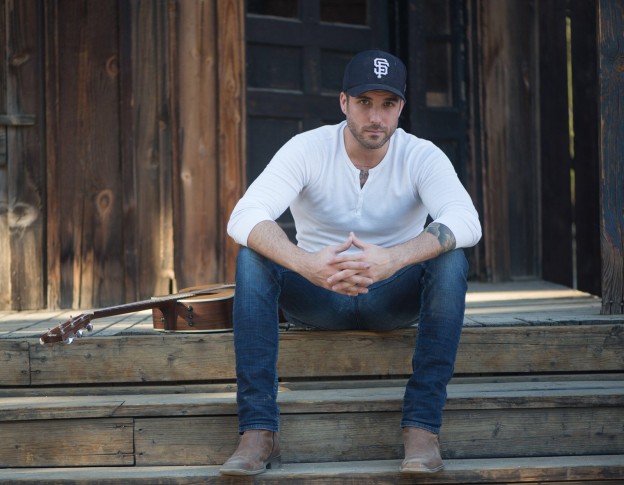
While skateboarders across the world might regard him as a living legend, San Francisco native Tommy Guerrero doesn’t want that label for himself just yet.
“I hate that the term is thrown around so loosely,” he says over the phone. “And secondly, it’s usually used when people pass on. It’s like, ‘Fuck, I’m still here!’”
Instead, Guerrero—now a 49-year-old father of one—prefers to keep rolling with what he’s always known best: skating and music.
During his tenure as a professional rider and competitor for Powell Peralta’s Bones Brigade skate team in the ‘80s, Guerrero says he would always make time to come home and play his bass “for hours on end.” Although Guerrero currently serves as an art director for Krooked skateboards, as well as a member (but mostly an ambassador, he says) of the Converse CONS pro skate team, he’s also grown into a multi-instrumentalist who plays guitar, keys and percussion, in addition to bass.
Music, he explains, was a childhood passion that he began taking seriously as early as 1978, when the Ramones came and put on a show in front of San Francisco’s City Hall.
“It changed my life,” Guerrero says. “Being a skateboarder was already kind of an outlaw, rebel thing to do. And the punk ethos went hand-in-hand with skating … So me and my brother instantly were just enamored.”
Skating by day and rehearsing by night, Guerrero ended up forming a few different punk bands throughout the ‘80s—Free Beer perhaps being the most well-known. As a new decade trickled in, however, Guerrero says his band-playing days slowly came to an end while his skating career soldiered on. But that didn’t mean he was done with music.
Investing in a drum machine and a 4-track recorder—the very first Portastudio, as he recalls—Guerrero continued recording his own tunes, until eventually he got featured on a jazz compilation album in 1995.
Around the same time, Guerrero also provided the soundtrack for a skate video in promotion of a clothing company he had started called Forties, which caught the attention of Galaxia and Mo’ Wax Records. Guerrero produced three projects under those two labels at first, and then a slew of others throughout the 2000s and 2010s—he now has 11 albums in the bank, according to his website.
His latest release, 2015’s Perpetual, is an extension of sorts to the album prior, No Man’s Land, which he characterizes as a “break-beat spaghetti-western noir.” Both albums stem from desert rock and world music influences, including Tinariwen, Bombino, Gabor Szabo and John Zorn, among others.
Now, about six months after Perpetual dropped, Guerrero is embarking on a very brief tour up north to Oregon and back down again to San Francisco: a “run,” he calls it.
“This is just to go and play some music,” he says, “just to go do something, really.”
Before he stops off at the Shady Lady Saloon later this month with drummer Chuck Treece and bassist Josh Lippi, Submerge was able to chat with Guerrero about music, skateboarding and his surprising ties to Sacramento.
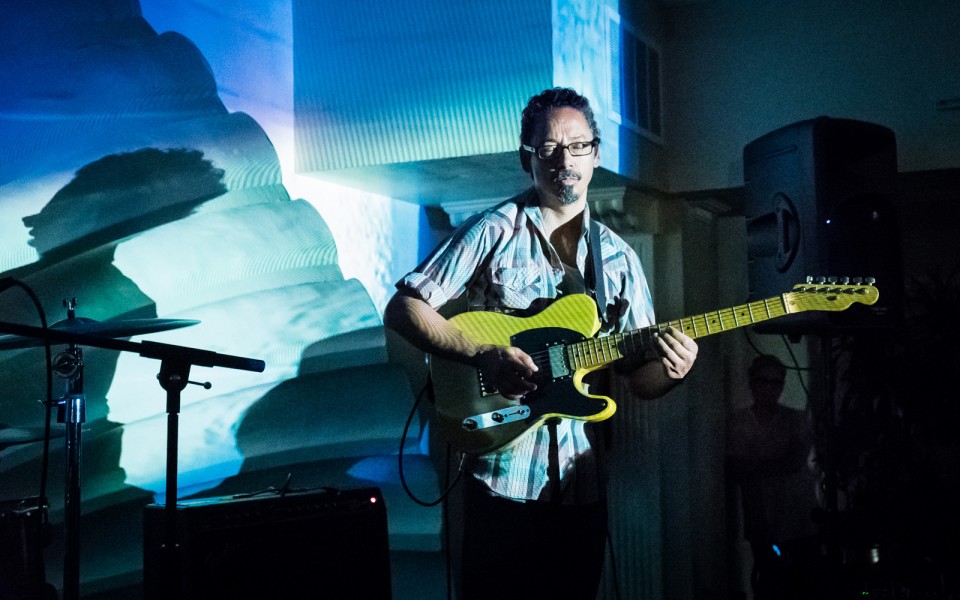
Photo by Claudine Gossett
Would you consider your music to be tailored toward skateboarders, or that specific culture at all? Or is it just music for a general audience?
Music is for anyone, just as anything is. And I really can’t stand the way people need to pigeonhole you so they can market you in a specific way. That’s what so many people try to do in the music world … which I don’t agree with. It’s either art, or not. And it’s either good or bad, you know, depending on your taste … And, you know, I get a lot of support from the skate and art and surf community, which is great. I love it, that’s my family. But I would hate to be limited to such things, because I’ve met people anywhere from, literally, 5 [years old] to 65 who dig my music. It’s for everyone and anyone.
Would you say that your musical style is along the same lines as your skateboarding style? Your music, to me, has somewhat of a laid-back, free-form feel to it. And your skate style also seems very free and loose, but fast-paced at the same time.
I think the correlation is more about being in the moment. The thing about street skating … everything is in the moment. It’s very off-the-cuff; you’re improvising as you go down. You see a curb, you hit it. You see a stairwell, you see a driveway, you see a bench. Whatever it is, you’re hitting it along the way. And none of this is pre-planned. So music is kind of like that for me … I just want everything to be fluid and seemingly organic and seemingly natural—not forced. And that’s kind of how I approach everything. But I think that’s kind of the thread within skating.
I’m curious to know if you ever wish you were as well-known or famous for your musical prowess as opposed to your skateboarding career.
No. I identify myself, if I have to, as a skateboarder. And that’s just fine. The music thing for me—I’m not looking for accolades from that world. I don’t even really orbit in that world or have anything to do with the music industry. I’m removed from it, which is fine.
Is there anything you wish you could change about the music industry as a whole? Other than the blanket labeling and branding, I mean.
My only thing, truly, with the business end of music is that it would be nice if the people who are trying to run the industry would understand that without the artists, there is no art. So by not paying them what they deserve for their art, or their product or whatever people want to call it, it’s doing a huge disservice to the community. Even [for] people who have my music and dig it. You know, I’ve had people tell me, “Oh, I love your stuff. I just downloaded it from blah blah blah.” And it’s like, “Cool. I’m glad you dig it. It would be nice if you supported me financially.” Just because of the cost of making a record … The cost of me recording, the mixing, the mastering, the art and design and then the final production of the CD or vinyl and/or a digital release [is high]. There’s lawyer fees, publishing fees—it all adds up. I mean, I can’t get away with making a record for less than $10,000 … It’s always difficult to get people to understand that in this day and age, with technology being what it is. Everyone just thinks that music comes out of the ether into their computer somehow, or into their phone. And they don’t even think about the creation of it … So that’s just my thing—trying to get people to be aware of supporting these artists.
I wanted to ask about Sacramento a little bit. Why was Sacramento included on this run? And also, what are some memories you have of Sacramento, if any?
Well, of course I’ve been to Sacramento—many, many, many times. But the idea as we’re coming back [to California]—because we’re gonna hit Bend [Oregon] first, then Portland and then Medford—was to have sort of a stopping point. And since Josh is from Sacramento … why not just play [there]? I’ve never properly played a gig in Sac, and I thought it would be fun. And I know so many skaters there—just so many people—that it just made sense. I grew up in San Francisco, and so we knew a lot of skaters from Sac. We’d actually go up there and skate all the time.
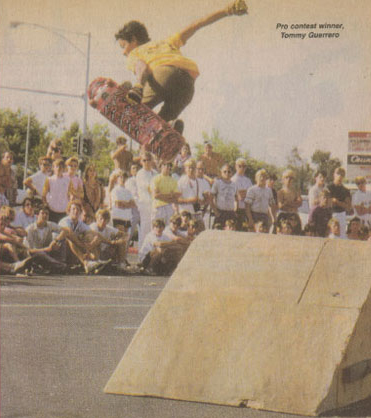
{Photo courtesy of Thrasher Magazine, July 1985}
Wow, really? Any specific spots you’d skate back then?
Not specifically. There were some curbs, some banks. I forget the names of them. But in 1985, Sacramento held a street-style skate contest … I think it was my third street contest ever. And I turned pro there. And that was sort of the launching pad to everything I do with skateboarding. So I turned pro in ’85 in the Tower Records parking lot [off of Watt Avenue]. And what’s interesting is that they just did the Tower documentary … So that was super cool to be part of that, kind of coming full circle. I have a photo of me in 1985 standing in Tower Records next to a stack of Thrasher magazines.
That’s amazing! So you’re saying that contest in Sac was the turning point in your skate career?
Yeah, it was. Because I won the contest and turned pro. And then the next year my [Powell Peralta] board came out and everything happened. So yeah, I know a lot of cats up in Sac, all the old skaters.
See Tommy Guerrero live when he and his band play the Shady Lady Saloon on April 22, 2016. Soak up good vibes, great drinks and copious amounts of old school skater cred. Shady Lady is located at 1409 R Street in Sacramento. For more info, go to Shadyladybar.com.
Blue Note Special
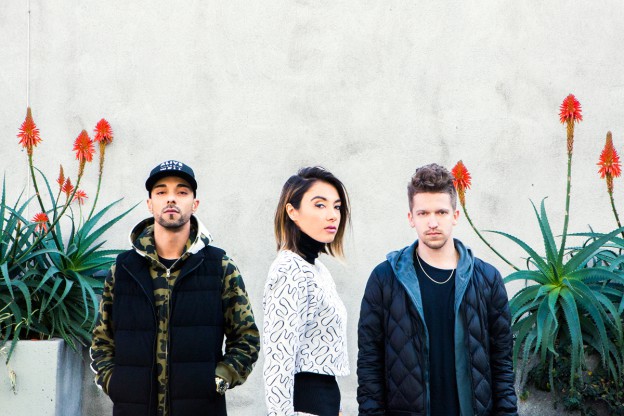
The Seattle-based three-piece band The Flavr Blue describes itself briefly on Facebook as “synthesized love notes, dreams, vices and a whole lot of Flavr!” The first of those tags proves especially true with their latest EP, and the last, without question, has held up through the span of their career.
The trio’s third release, Love Notes, which dropped this past November, stands as a testament to their ever-evolving sound and versatility in and between different genres.
Musically, The Flavr Blue sprouted from a more uptempo, almost purely electro-pop foundation on 2012’s Pisces, then expanded into a more ambient soundscape on 2013’s Bright Vices and now, almost three years later, has really settled down into perhaps the most intimate, organic R&B groove it’s ever been in.
Compared to the group’s last two collaborative endeavors—where vocal duties were oftentimes shared evenly between band members Parker Joe, Lace Cadence and standout songstress Hollis Wong-Wear—Love Notes serves as a particularly noteworthy moment, for its the bands lone female member who graces a majority of the eight-track EP as the lead singer.
It’s fitting, too, that Wong-Wear is getting a bit more spotlight within the band, seeing how she’s made the biggest splash in mainstream media as of late.
Having provided the hook for Macklemore and Ryan Lewis’ hit “White Walls” off their Grammy award-winning debut album The Heist—not to mention working production on two other videos from that record as well—Wong-Wear has probably been the most active of her Flavr Blue counterparts.
In addition to singing, songwriting and producing, she also engages her local community in a variety of capacities. From speaking publicly and performing slam poetry at conferences and conventions to serving on the Seattle Center Advisory Commission and Seattle Music Commission, among other public arts agencies, Wong-Wear certainly wears a number of hats, to say the least.
Most recently, she’s been outspoken about a controversial headline her hometown paper—the Seattle Times—wrote about her, where her achievements as both an independent and collaborative artist were downplayed and then, at the same time, coated in racial connotations that left a bad taste in just about everyone’s mouth who heard about it.
The original December headline, which has been corrected and publicly apologized for since, read: “Warmth and intimacy from The Flavr Blue with Macklemore sidekick Hollis Wong-Wear.”
As the Seattle band ventures on their latest outing around the country in promotion of Love Notes, Submerge was able to talk music, band dynamics and the aftermath of the Seattle Times bungle with The Flavr Blue in a phone interview that shed some light on where things stand with each other, the media and the future of their careers.

TBD Fest 2015 | Photos by Phill Mamula
I wanted to touch on the latest EP, Love Notes, and just kind of work our way down into other topics. I have my own ideas on the differences between this project and your last two. But I’m curious what you guys think are the main distinctions.
Lace Cadence: Bringing in more live elements to it, honestly. Because, definitely, on our first album—Pisces—it was pretty much strictly electronic-based. And on our second project, we kind of started to mold a little bit more instrumentation into it. And Love Notes is definitely kind of the opposite—just, like, more instrumentation. More live music, and way less electronic aspects.
As far as inspiration goes for writing, I’m guessing everyone is drawing from their own personal experience. Right? Or do you all lean on one person’s experience for song content, or is it just a collaboration between everyone?
LC: It’s usually intended to be a collab, but I think it leans a little bit more on Hollis—for this record especially, because she does most of the vocals. So it’s coming from all of us, but I think it’s a little bit more personally geared toward some of the things Hollis was dealing with. Because she had to a lot more of the writing on this project, so it’s going to come from her a little bit more.
Hollis, what were some of the things you were going through at the time that you leaned on for inspiration in writing a majority of this record?
Hollis Wong-Wear: I think one good realization that I had through writing this project was—obviously this project is called Love Notes. And I think romantic love is obviously like a through line for the concept of the songs. But also, it was just a reminder that the idea of love is really universal and actually transcends just a romantic or personal relationship. It can actually just kind of touch on your relationship with anything, whether that’s, like, the world or your own aspirations or your dream of being an artist. So to have heartache doesn’t necessarily mean you get your heart broken by a single person. You can have heartache from different things … So it was just a reminder for me that even though it can be channeled into the relatable kind of one-on-one relationship, that really doesn’t define your relationship with everything.
I noticed the pace of each album has gotten progressively slower and more intimate, at least that’s my take. Do you guys get that sense too, and if so, was that move deliberate?
Parker Joe: Yeah, I think that’s pretty accurate. A lot of that happened pretty naturally. Again, it’s like Lace said—just starting to work with more live instruments and rehearsing and just having a guitar around to start to doodle around on a song. We started replacing something we used to do with a synth with a guitar, and it just very naturally progressed.
Is that a trajectory you guys are trying to maintain going forward? Slowing things down a little?
PJ: Some of the songs on Love Notes—like “Supply”—we started two or two and a half years before they came out. It’s interesting, because there’s a song on there called “Oxygen” and another called “Pretty Girl.” Both of those are sort of collaborative songs that we did only, like, five or six months before the project came out. And those are much more club-y and dance-y, so we still kind of have that goal as a group and that passion for more upbeat stuff as well. But we definitely focused this project toward songs that kind of melded together in a package that felt more intimate. And that’s definitely what Love Notes became.
I wanted to ask about the dynamic of the group a little and how the media has tended to cover you guys. It seems like Hollis usually gets a lot of the exclusive interviews and sort of represents the band on her own a lot. Do you or Parker ever feel like your roles in the band are minimalized at all because of that, or like you’re not getting as much credit or coverage as either one of you deserve?
LC: That’s a good question. Um, no, not at all. We’re in this together and just because Hollis is an active, popular young lady, that would never bother me. I feel like that only comes back to benefit us. So, if there is any animosity like that going on in the band, I think it’ll just hold us back. So Hollis doing her damn thing is not a problem for me. I feel like a lot of people wonder that, and it’s not a problem for us.
Hollis, I know you wear a lot of different hats in your professional life … As your careers move along with The Flavr Blue, do you feel like one of those roles will have take precedence while the others take a back seat?
HWW: I mean, for me, I’m always somebody who enjoys working collaboratively. But The Flavr Blue is my main musical project. And it’s a project I’m passionate about bringing to light and to follow its evolution. And that’s not going to interfere with how I work with other people or do my own independent work. I’ve been a freelancer for, like, the last four or five years. So I think people perceive me as doing a bunch of different things, but it’s actually like an ecosystem of how I support myself as a working artist. So I’ll just continue to make decisions for myself that best benefit my artistic growth, including growing The Flavr Blue.
I wanted to ask about the recent Seattle Times headline that called you a sidekick. Since this all happened in December and there’s been a couple months of backlash, is it settled now, or is it still an ongoing issue?
HWW: I’m not somebody to dwell or to even make a scene of something. And my desire, obviously once the initial headline came out, wasn’t to half-wage a campaign against my hometown paper or to try to call people out. But at the same time, I have a really strong support system in my city and my community, and I felt it would be remiss of me to not publicly comment on what my experience was. And I think it speaks, to me, about my passion for equity and my passion for everybody to have dignity in media coverage. And if I were able to use the example of how I was treated to just kind of cast a light on how artists of color and communities of color are portrayed in the media—like, it’s a growing call. It’s not like I’m a spearheading a movement by any means. But I guess I’m not interested in dwelling on any one incident. But I am interested in organizing around the need for artists and historically marginalized people to be better represented, to be respectfully represented and the way we’re covered in the press.
I know the editor-in-chief eventually apologized publicly and privately. Do you feel like you need more from them for closure?
HWW: Honestly, my sights are set a little higher than engaging one-on-one with the Seattle Times. I talked to the editor-in-chief and we had a conversation, and then I left that conversation stating my hopes for them that they would take their collective education and evolve seriously. But I’m not really interested in hand-holding any one institution. I’m more interested in organizing and generating within my community and within my band and in my artistic career, rather than trying to reform another organization or institution.
Are there any similarities that you guys are aware of between Sacramento and Seattle at all? Or do any of you have any memories of Sac, or have you ever been before?
HWW: Yeah, we played TBD [Fest] in September and that was awesome. And then we also played Lowbrau last year—or maybe two years ago—in November when we did our first West Coast run. We had a really fantastic time. I don’t know, we had a really strong [showing]. A lot of people came out. People in Sacramento really enjoy independent music and have really sophisticated music taste. So every time we’ve been in Sacramento, it’s been a real pleasure for sure.
The Flavr Blue returns to Lowbrau in Sacramento on March 8, 2016. Doors open at 9 p.m., and the show is FREE. To RSVP, go to Facebook.com/letwisttuesdays. In addition to great music, there will also be drink specials. Lowbrau is located in the MARRS Building (1050 20th Street in Sacramento).
Hustle & Struggle
To the average passerby, the intersection of C and 14th streets in Sacramento might have come off as exceptionally eerie in the final few hours of Oct. 30, 2015, right before Halloween officially got underway.
Surrounded by a small, abandoned industrial park on one side with a spread of Victorian-style homes in the Mansion Flats neighborhood of downtown sitting adjacent to the other, not a single soul could be spotted in any direction as the night crept on toward the nine o’clock hour.
About 20 yards down the block, however, a barbed wire-lined gate had been pulled wide open, leaving a clear entrance to the loading dock area of one the nearby properties.
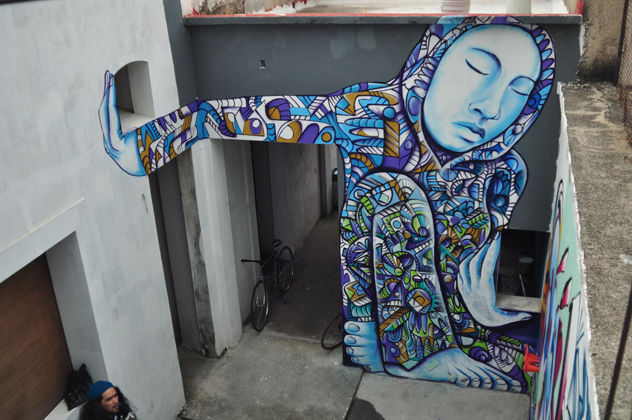
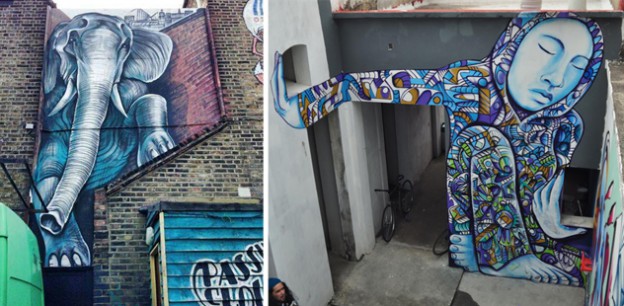
{Mural in Guadalajara, Mexico}
There were people inside, and they sure seemed busy enough to make up for the near-dead silence just outside the barricade-like wall separating them from the road.
As it turns out, two different teams had been hard at work at 1425 C Street (formerly part of Hangar Studios): one setting up a stage in the lower-level courtyard, another building a set inside the east side warehouse.
Among the dozen or so indoor crew members was local artist Shaun Burner, bustling back and forth between a jumbo-sized horse’s head and an even bigger headless horseman towering behind it—both of which were still being worked on.
Burner had been approached by TBD Fest founders Michael Hargis and Clay Nutting about a month earlier to help create the artwork for their upcoming Halloween show, slated to feature DJs Slow Magic and Com Truise.
Just one day away from its doors opening to the public, Burner appeared surprisingly at ease during a cigarette break, saying he was confident the project would be finished in time.
“I feel like we’re on pace,” Burner said, adding that he was also up against another deadline designing signage for the new B-Side bar opening on S Street. “We got the meat of the structure up; now it’s just kind of detail work. I think we’re at a good place.”
Burner said he felt he had slowly taken on the role of artistic director and project manager over past few weeks, delegating tasks to volunteers that had often fluctuated between four and ten on any given day.
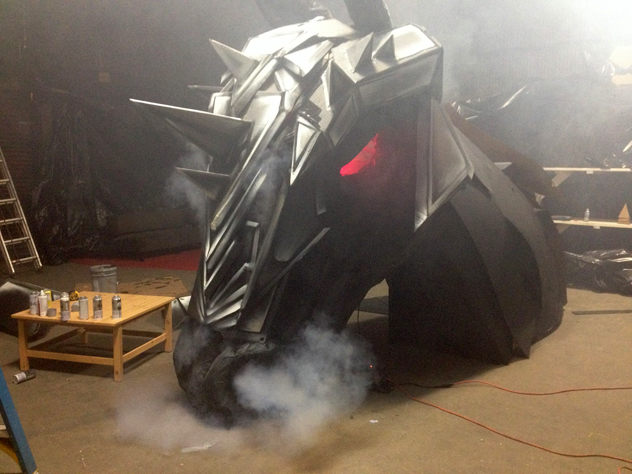
{Art for TBD Fest’s Halloween show}
While he said he and fellow artist Franceska Gamez had mostly built, chicken-wired, papier-mached and painted a lot of the main set pieces for the Sleepy Hollow-themed backdrop, others had helped bring more subtle elements of the concept to life—like the giant tree up against the north wall of the warehouse, which had gnarled branches extending throughout the ceiling.
With time running out, Burner said he was grateful for whatever help he could get.
“It’s good having other creative weirdos to kind of help make this happen,” he explained.
Growing up in Rancho Cordova and then traveling the world to spread art with different collectives through much of the ‘00s, Burner said he considered himself to be one of those creative weirdos as well—albeit one that had been working professionally almost his entire life.
After moving downtown nearly 15 years ago and being introduced to mural painting by his friend Mike Rodriguez, Burner gradually became involved in many community-based projects within the area, including one where he helped complete a mural for the Sacramento Chinese Community Service Center.
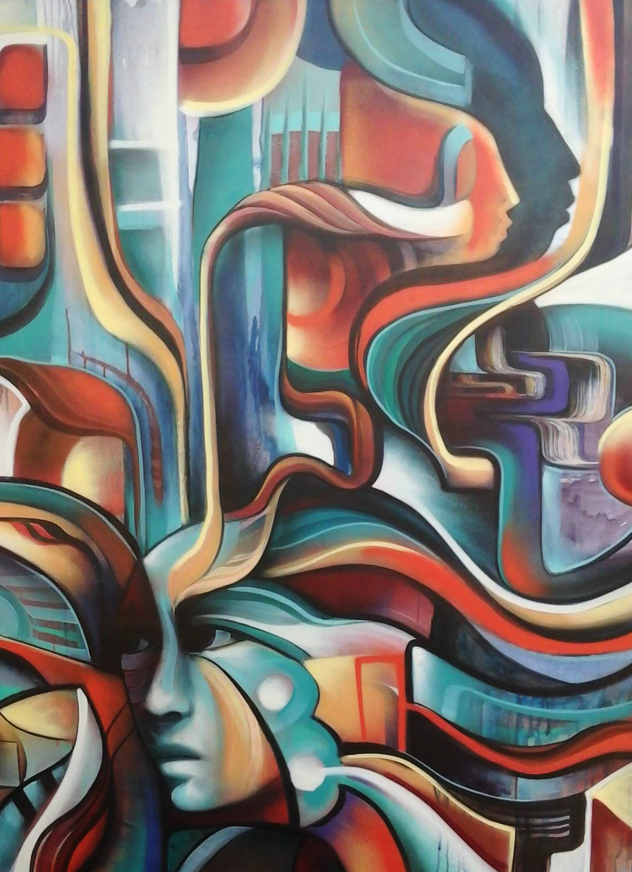
{Collaboration with Franceska Gamez}
Before long, he had joined Sacramento’s Sol Collective and was eventually invited to attend an arts tour of Puerto Rico with the group.
“We were traveling with about 30 people—musicians, poets, artists,” Burner said. “We were doing workshops; we were painting murals for the community. And that’s where I met some members of Trust Your Struggle,” an art collective based out of New York and the Bay Area.
Burner says he decided to try his hand at living amongst his East Coast collective counterparts upon returning from the Puerto Rico trip in 2005. During his three-year New York stint, he ended up working extensively in film production and set design, and even embarked on another mural campaign—only this time around the United States.
The domestic tour was dubbed “Trust Your Hustle,” Burner said, as he and fellow painters and activists traveled to Atlanta, Austin, San Francisco and New Orleans, among other cities, to help communities build “from the ground up” with artwork and, at times, actual infrastructure if needed.
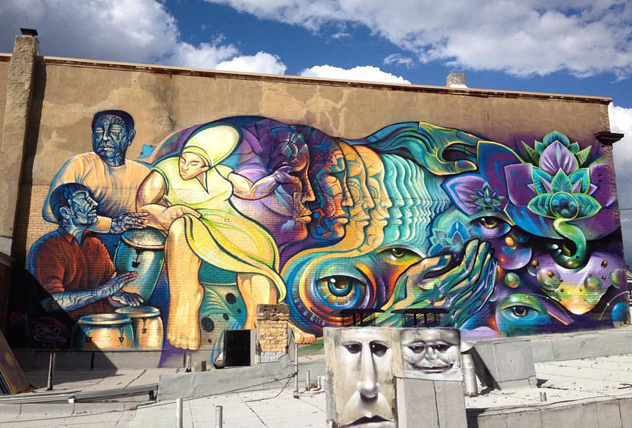
{Trust Your Struggle collaboration}
It wasn’t until he and a couple other members extended the tour to Los Angeles that Burner found himself evaluating his financial situation.
“We were super broke,” Burner said about his arrival in L.A. “At one point, we did this mural where we like traded for food … We were like trading for cheeseburgers.”
Burner stayed with family in Southern California for about two years before he started seeing more mural work coming his way regularly. After entrenching himself in the film industry in New York for so long, Burner found himself circling back to his first true love in painting.
According to his website, Burner was involved in seven separate murals in the Los Angeles area between 2008 and 2009, on top of the other 18 murals he participated in during the same time period.
His site doesn’t show any work of past 2010, which was around the time he opted to move back home to Sacramento after more than five years of being away.
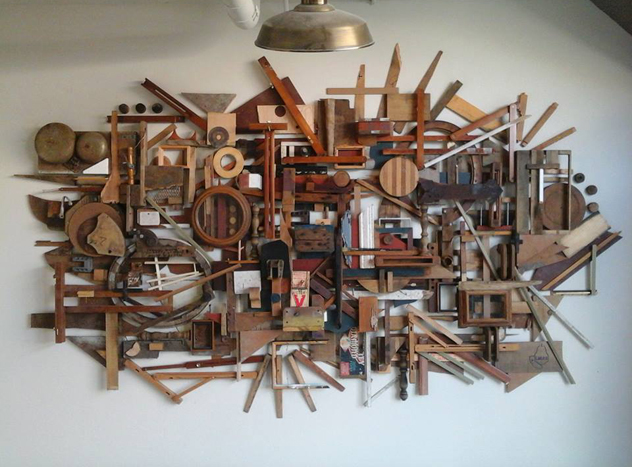
{WAL installation}
“My nieces are growing up, and I want them to know me,” Burner said, explaining one of the reasons for his move to the Capital City. “I didn’t want to be away and just be the uncle who came in every now and then. So just come and be around my fam, and then build some rad shit in this city.”
Since his return, Burner says paid commissions have sometimes been hit or miss, but that he tries to not let that discourage him.
“I mean, it’s feast or famine. You know what I mean?” Burner says. “It’s kind of a funny thing—it fluctuates. Sometimes I will have all these jobs come at once, and I have to take them on and just get them done, and I’ll be working like crazy. And then other times it thins out a little bit.”
Either way, though, money hasn’t ever stopped him from continuing to paint in Sacramento, whether he’s commissioned or not. And when the rainy season hits, he adds, and the conditions aren’t the best for mural work, “That’s a good time to leave town and go to another place where it is.”
Aside from his constant flow of mural paintings, Burner also co-manages an art gallery called 1810, located inside the Warehouse Artist Lofts off of 12th and R streets.
Open only during the first Fridays and second Saturdays of each month, Burner says he’d like to start running more regular hours once he can find someone to run the establishment on a consistent basis. The gallery, he says, has a lot of potential to showcase local talent and to possibly bring a different flavor to the art scene in Sacramento that’s possibly not getting exposure at the moment.
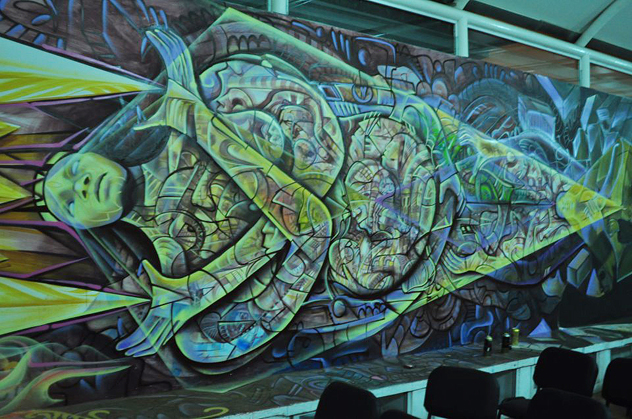
{“Wake Up!”}
“Even with that thing,” Burner points out, “selling art can be a hard gig, you know? So it’s not like we’re making money off of that. But it’s more about just doing it and just trying to bring cool stuff to Sacramento.”
In the end, that’s really all Burner really wants: bringing more art to wherever it’s needed.
“It’s such an amazing way to communicate with people and just brighten up a city and bring some culture to a city and make you feel proud about where you’re at,” he says.
“I’ve made amazing connections with people through art. I’ve painted with people that don’t even speak the same language as me. And we’ve hung out and we’ve been able to connect and make beautiful work together.”
While he says he would eventually like to see more consistent commissions so he could one day support a family just on painting alone, Burner acknowledged that he works best under pressure—time and again finding himself able to rise to the occasion when things aren’t so easy.
“I feel like you can get really comfortable sometimes and not make things happen,” Burner says. “But when push comes to shove or you’re under the gun, you can make amazing things happen.”
That’s why he enjoys work like the Halloween set that he finally finished over the next 24 hours.
“I’m like, ‘Oh yeah, we got work to do. But we’re gonna get this shit done, because we need to.’ There’s no time to second guess it.”
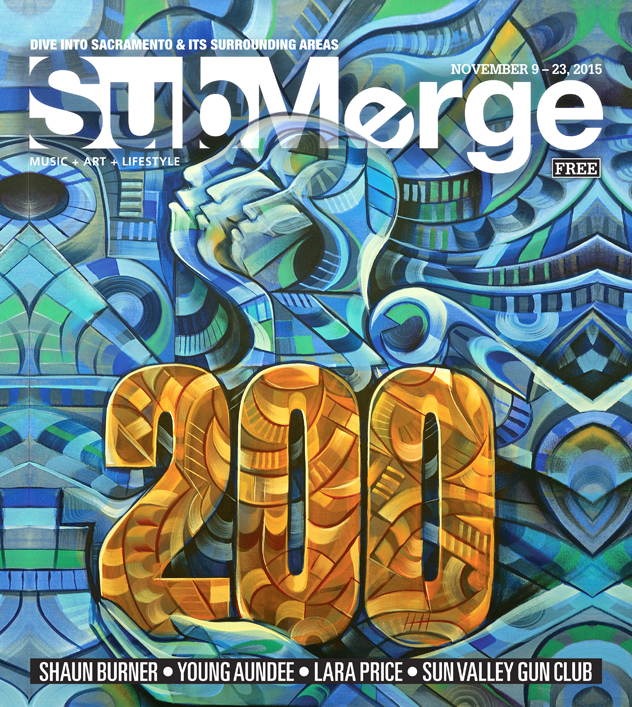
Submerge would like to thank Shaun Burner for providing his rad artwork for the cover of our 200th issue! For more on Shaun and his 1810 Gallery, check online at Facebook.com/shaunburner916, Shaunburner.wordpress.com or 1810arts.com.
For as much love as California generally gets across mainstream America’s storied music anthology—see Wikipedia’s long list of songs about the Golden State—it still seems to be surprisingly underrepresented in one genre that is so familiar here: Country.
Try and name at least four famous country singers (past or present) that you know for a fact are from California, or that at least sing and write songs portraying California. If you’re a real hardcore fan, you might have come up with Gary Allan (La Mirada), Jon Pardi (Dixon) and the Haggard family (Oildale and Bakersfield), or perhaps a few other old-timers sprinkled in the mix. Shoot, maybe you even know about Brett Young of the Orange County area, who’s fairly new on the country music circuit himself and branding his sound as California country.
Still, though, we’re clearly missing a few too many ambassadors in a state where a lot of folks—especially up here in Nor Cal—identify as country girls or boys at heart. Until now, that is.
While Jon Pardi might have Solano County covered in the California country world, a fresh voice has recently risen in Nashville, hailing from Yuba City—just a stone’s throw away from Sacramento.
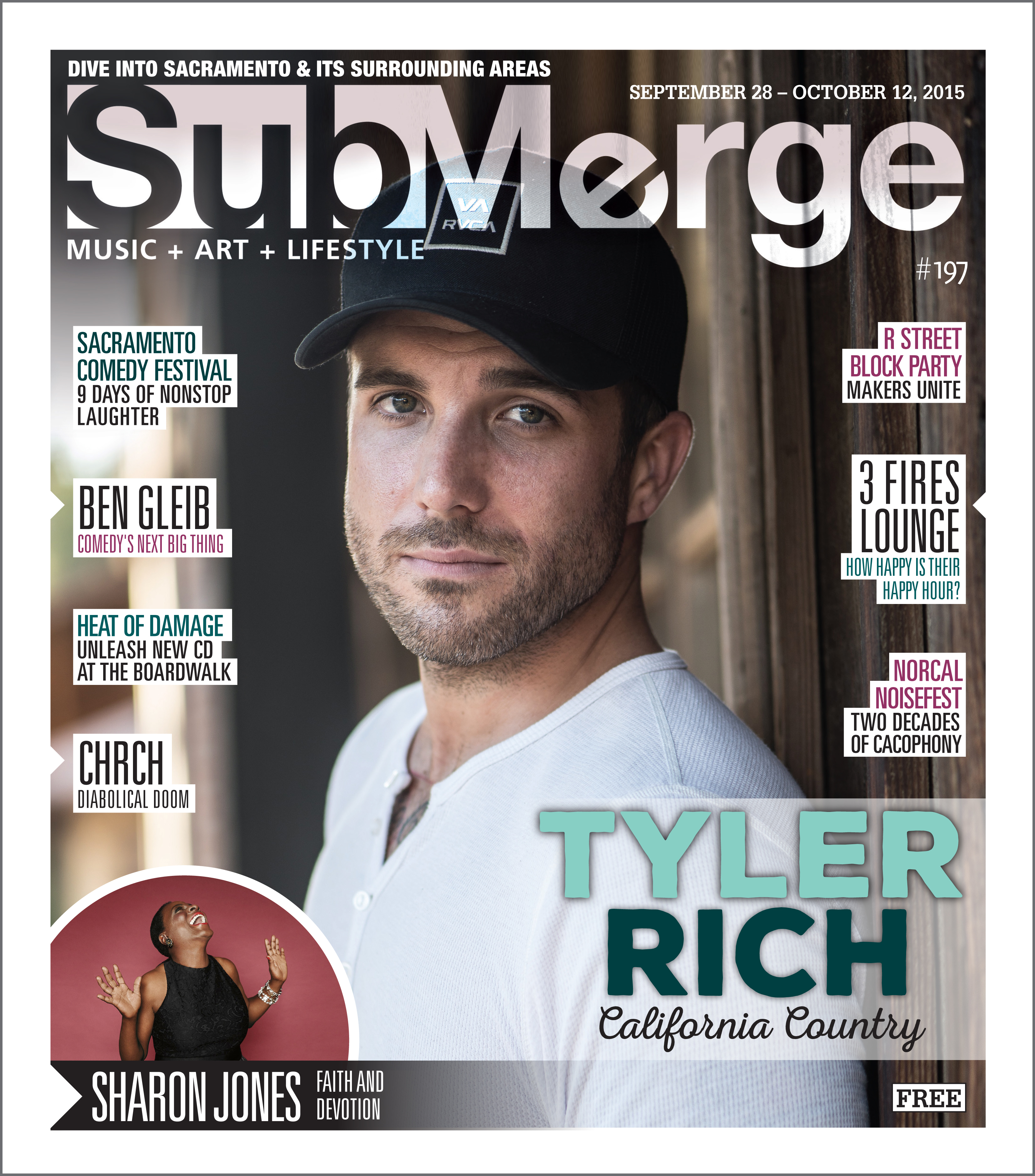
Tyler Rich, who released his first four-track EP in August to chart-topping success on iTunes, is the latest country music offering with California roots and a soft spot for his hometown stomping grounds. After making a life-changing move across the nation to Music City this past April, Rich says his career has been snowballing with unimaginable good fortune, with everything falling into place just the right way.
It was only a few weeks ago that Rich was added on as an opener for country music superstar Dustin Lynch’s national “Hell of a Night” tour, which is set to kick off Nov. 14, 2015, and extend through early the part of 2016 (more dates to be announced soon). He’s also opening for Pardi at an Ace of Spades show on Oct. 10, 2015, and plans to be making media appearances in the area on and off during the last few weeks leading up to this fall’s performance run.
We were able to catch Rich on the phone late one night and ended up talking about everything from his latest EP to his newfound success in Nashville, how social media has helped him breakthrough in a cutthroat industry and, of course, what it was like growing up country in California.
Seeing how things have been going really well for you out there in Nashville, why do you think you’ve been so successful as a breakout artist? What’s your secret?
My social media helped out a lot … from Instagram to Snapchat to Twitter and Facebook. As it was growing, I started getting booked for bigger shows. When people see that—the growing online presence—they see it, I guess, as a good thing to trust. Dustin Lynch actually discovered me a few months ago on Instagram; then he sent me to some meetings … I mean, I guess if it wasn’t for Instagram, he wouldn’t have ever found me. And I would probably still be hanging out and doing nothing.
Do you think artists that are trying to break out need to be on their social media game?
Oh, I don’t think so. I know so. I mean, I’ve sat in meetings where … I stress it to my friends in the industry like so much. One of my really good friends in Sacramento—James Cavern—he and I talk about the social media game all the time. We just talk about how important it is, because it really is … I’ve been in meetings in Nashville now where I hear publishers, managers, booking agents and other artists talking about, “Oh hey, have you checked this person out?” And they’re like, “Yeah, his stats suck. What’s next?” They move on. I swear to God, it’s within seconds. “His stats are horrible. Who else do you got?”
Kind of like ESPN analysts commenting on potential draft picks.
No, that’s what it is. And if you’re super, super, super talented and you don’t have that presence—or you’re not building—then you can have a career as a songwriter. Or luckily break through somehow independently. But I don’t know, man. It’s just crazy. Mine has grown dramatically in the past four months … It’s crazy. You get in the mentality of like, “I’ve got 38K followers. This is awesome!” But then when you actually think about it: that is 38K humans. 38K people with a story, with a life, with a job, with a family. Those are 38K individual souls that hit follow, for some reason. I don’t know why, but thank you.
I know you have a new song out called “California Grown” that’s been getting some radio play recently. Can you talk about that song a little bit?
Yeah, “Cali Grown” is actually the only song in probably a year and a half that I’ve written by myself, 100 percent. Everything else is always like co-writes and collaborations with different producers and different songwriters. And [for] “Cali Grown,” I was sitting at my house in L.A., and I had just released my single “Radio.” I don’t remember who I was talking to, but I was talking to somebody. And they were like, “Yeah, you’re from California and you seem country. It just doesn’t make any sense.” There’s a line in the song: “California is just palm trees, beaches and celebrities.” And that’s just the mentality that everybody has—and rightfully so, because that’s how it’s portrayed in pop culture. But I was saying, “People don’t understand what California really is.” I mean, I’ve driven up and down California from Sacramento to L.A. at least a hundred times. And each time it’s equally boring because you’re just driving through farms—there’s no cell service, there’s nothing. And when you turn on the radio—I was driving through the Bakersfield area—the only radio stations that were coming in were Spanish stations and country stations. And that’s when I got the idea for that second verse, talking about Bakersfield and all that. But I don’t know, it was one of fastest songs I’d ever written—it came out in about a half an hour.
I wanted to ask about your new EP, Valerie. Can you tell me what’s behind that name? Just curious.
You know, I’ve done a lot of interviews in the past like month since the CD came out, and you’re the first person to actually ask me what it is. So I’ve been waiting for this question … When I was in my early 20s, I had a guitar get broken on a flight. And United Airlines offered me a $100 travel voucher for my broken guitar. I had some shows coming up, and this was before GoFundMe or Kickstarter or anything like that was even alive; none of those companies existed … My guitar was broken, I had shows coming up that week, I had no money and I needed a guitar. So I posted online on MySpace. I was like, “Hey, you know, my guitar broke,” with a picture of it in two pieces. I was like, “I’m accepting donations from my fans. A dollar, 50 cents, five dollars, you know, whatever you can spare. I appreciate it.” And then my family and everybody started donating. I put my address, people would send checks; I used Paypal for automatic transfers and stuff. Then there was a fan of mine from the East Coast I had never met before. And I got a letter in the mail that was like a page long about how much she loved my music, and how much she wished I’d come to the East Coast and tour, and apologizing, saying that she wished it was more, and that she couldn’t send me a check sooner and had to wait until she got paid, and that she was going to try to send more the next time she got paid. She was like a 16-year-old girl in high school named Valerie, and she sent me a hundred bucks. And the guitar I went and bought the next day, I named Valerie. And it is the same Taylor acoustic that I still have. I mean, I’ve got a few now. But that guitar, Valerie, is the one I wrote all those songs on that CD with and the one I recorded the guitar with on that CD. And since it’s an acoustic—well, it’s produced a little bit—but since it’s ultimately an acoustic CD, I figured it kind of fit perfectly to call it Valerie.
That’s a helluva story.
Yeah. But the sad part, though, is that I have no idea who she is now.
So what was it like growing up in Yuba City? Was it what people would typically call country?
Yuba City is very, very country—especially the little towns outside of Yuba City, like Sutter and all that. It’s very Varsity Blues out there, if you know that reference. Football is everything, everybody’s got the big trucks. I mean, Yuba City technically is a big town; it’s a big farming city. I think there’s like 80,000 residents, but you see the same 1,000 people every day. I don’t know where all the other 79,000 are hiding. But it was like growing up in a small, country farming town that had the necessities you needed. It was like a little big town, which is a country band, and kind of cheesy to say. But that’s kind of what it is.
How often would you come down to Sacramento back when you were living there?
Musically?
Socially and musically, I guess.
Well, I mean, in high school we used to—as soon as we could drive—we’d come down to Sacramento to go to shows all the time. Punk rock shows, and just anything we could see at the Boardwalk or Arco Arena or Memorial Auditorium or anything like that. And we’d drive up to Chico and watch shows all the time, too. On Saturdays and Sundays, we’d take trips to Arden—just about an hour from each city—and just go to the mall. We’d go to Guitar Center, and we would call going to Guitar Center going to church. Like, “What’d you guys do?” “Oh, I went to church!” You know? And all the guys would start playing music with all my buddies. We’d go and sit at Guitar Center for like five hours and just play guitars … Yeah, so I mean, it was cool living in a tiny town outside of a big town like Sacramento.
Right on. Anything else you wanted to mention?
This Jon Pardi show is gonna be a freakin’ party. Come out to the Jon Pardi show on Oct. 10 to see what Nor Cal is offering country in the entertainment world. ‘Cause we’re the only two representing it in Nashville right now. So we’d love to see everybody there.
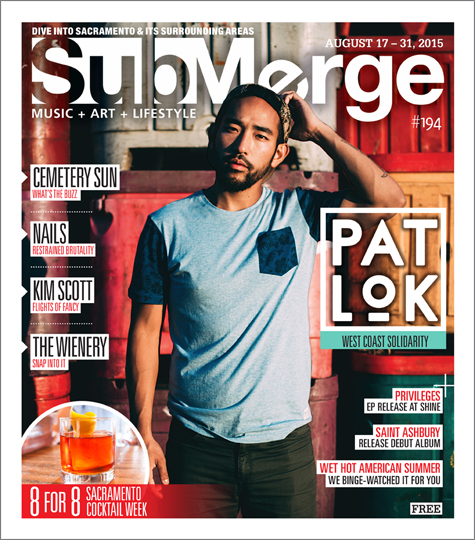
Yukon Soul
Out of all the old soul records that I used to dig deep into crates for back in my early college years, Canadian soul singer Melody Stewart had one that I’ve always kept in mind. It’s the second B-side track on her 1980 album Action Satisfaction, a song called “I Must Say Goodbye.”
It’s a fantastic cut that I recommend readers go listen to whenever possible, but that’s really beside the point. More importantly, Stewart had put me on to other great Canadian soul music that I never would have known existed if I hadn’t stumbled onto that glorious gem all those years ago. The bottom line: Canada had soul, baby. Plenty of it, too. And, to my delight, I was glad to discover that after 35 years, it’s still got some flowing today, perhaps most notably through Vancouver DJ and producer Pat Lok.
Lok is just the latest proof that traditional soul music is now ubiquitous, having transcended its original genre and now occupying an array of different styles for all listeners to enjoy, including EDM. He has grown to become a household name in both Canada and across the globe in the international house music scene. After catching a couple major breaks in 2012—his Cashmere Cat remix was used to open Washington State’s Sasquatch! Music Festival and he was the winner of DFA’s remix competition for his spin on The Rapture’s “How Deep is Your Love,” alongside producer and fellow DJ Cyclist—Lok has been slowly building his self-described Yukon Soul brand of groovy remixes and dance-friendly, deep house originals.
So far this year, Lok has released yet another one of his original tracks—only the seventh over the course of three years—called “All in My Head,” featuring vocalist Desirée Dawson, as well as a handful of new remixes for popular songs like Boxed In’s “Mystery,” Anthony and Cleopatra’s “Take Me” and the Knocks’ “Classic.”
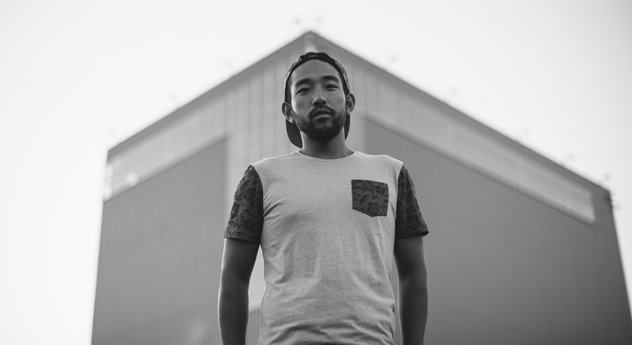
Submerge was recently able to catch Lok over Skype to talk about his distinct style of soul house music, his recent touring schedule (including his upcoming visit to Sacramento’s THIS Midtown block party in September) and how he tries to stay in touch with his local Vancouver scene.
I was listening to your stuff and it definitely has that traditional house sound to it. But it also has a lot of soul and funk undertones to it, too. Where do those influences come from?
Hopefully if someone likes house music, they’ll get down with my stuff. Because I love all that classic house, just from the origins. And I love nerding out on all the history and all that stuff, which really came from disco and which came from soul before that. So yeah, I guess I’d say I make dance music that has a lot of classic house influences and a lot of R&B soul samples. And if not samples, then just similar structures and chords and things like that. I grew up listening to the Fugees. And I got into sort of backpack hip-hop—like Primo and Tribe and De La Soul and all that stuff. So learning about all those samples and then finding out that they were using house music as well was sort of an easy jump. I think I like a lot of those influences, and hopefully they come through in my music. But then at the same time, I never set out to make sort of just super retro stuff. There’s a lot of great music coming out right now, so I’m constantly finding new music.
Do you see yourself putting out more originals regularly over time? Or do you plan to keep the same pace you have going now, where your original works are spread out and dropped every so often in between remixes?
Well, I’ve actually got a few originals that I’m really excited to share with everyone right now starting this fall, really—like over the next month or so. So yeah, I’ve been working on that, focusing on that a lot more this year, and working with different vocalists and collaborations with artists. And that’s also been a really interesting process, because not everyone works in the same way, or sometimes people aren’t in the same city or something. So I’ve got my eye more towards that. Not that I’m going to stop doing remixes or anything. But yeah, hopefully you’ll definitely expect to see more original stuff from me.
OK, so here’s a random geographical question. Since you’re from Vancouver, and since that city is so close to Seattle and Washington State, do you ever feel more ties to the States than you do Canada?
I wouldn’t quite go that far … But one thing that I would say ties into this a little bit is this West Coast thing. People will say, “Oh, you don’t sound Canadian.” But I think it’s a fairly neutral accent for most Canadians, until you get into the interior. But more than anything, it’s like a vibe. People [on the West Coast] are pretty friendly. I don’t know if it’s the warm weather or what, but a lot of the producers I identify with are from the West Coast. So there might be something there. I mean, maybe more so than feeling American. Maybe it’s a West Coast solidarity.
So 2015’s been pretty busy for you. You’ve put out a handful of new remixes as well as an original called “All In My Head.” And I guess you’re touring now, too, right?
Yeah, I just got back. I played in San Francisco and D.C. S.F. was sold out and Washington D.C. was my second time playing there. And yeah, I also did L.A. So it’s been a good summer.
Obviously you’ve been touring internationally this year. Where else have you been going besides Canada and the States?
I’ve done a bunch of gigs in Mexico. Mexico’s interesting because they do have different markets there. They have their own sort of “what’s hot” in dance music, so it’s always interesting to see. I also played in Colombia last year. I think twice I was in Bogota and Medellin. And that was a lot of fun, and super eye-opening.
How are the international crowds different than what you might come across in Canada or the States?
Well, it’s definitely—not less predictable—but I definitely do have to think about [my set] a little bit more or consider where I might be playing … Even mixing styles. Like in South America, I think DJs maybe play tracks for six, seven, eight minutes. And in North America, it’s like boom boom boom boom boom boom. That’s just been the style over the last decade or more. So once you remember that or recognize that, you’re like, “Okay. I can’t just come in and play ten tracks in 20 minutes. I’m just going to lose everyone, it’ll be weird.” They don’t even use the air horn button as much down there. But yeah, the tempo’s different. And maybe it’s because the party culture is different, obviously, in different countries. Like in [Barcelona’s] Razzmatazz, I played 4 p.m. to 6 p.m. And in Bogota, the club closed at 7 a.m. So they know they’re going to get there. There’s no rush.
So I know your show here at THIS Midtown is coming in about a month. What are you looking forward to at that event?
I know that Sacramento has a lot of sort of dance acts that go through, or at least for that block party I’ve heard some good things. I was playing with a Parisian artist named Cherokee, and he had played it earlier this summer. I don’t actually know too much, other than it’s a block party, which sounds really cool. And it seems like it’s pretty regular throughout the summer. Is that correct?
Yup. Starts in July and goes all the way through September on every second Saturday.
Yeah, that sounds rad. I mean, I just did this block party up here in Vancouver. So that sounds like a perfect kind of setting to have a really diverse crowd. But yeah, I’m really looking forward to it. I haven’t spent a lot of time there—I think I went to Sacramento when I was little. And I haven’t really been back. But again, it might be that West Coast thing. So I have an idea of what people might be into, and I guess we’ll see if my assumptions check out.
I know you’ve kind of started your own monthly block party there recently called White Noise Vancouver. Sounds like a real local musical get-together type of thing. And Sacramento actually has a real strong local connection here too. We’re all about it, actually. So can you talk about what supporting your local scene means to you personally?
I think it just goes back to community. And when you have a lot of creatives — it doesn’t matter if you’re a producer, a vocalist or a musician or just people that are sort of trying to express their voice through their creative talents—I think it’s easy to find an affinity with each other because it’s taking of a lot of risks. If you’re just trying to bite whatever’s hot or follow trends, that’ll become quite evident to everyone else really quickly. So it’s interesting that you ask about that. Because there are new producers popping up on my radar, whether on Soundcloud or just locally, all the time. It’ll be like, “Oh, this is some kid in high school here.” And it’s like, “Well, that’s awesome that that’s happening right now.” And the fact that we can sort of find out about that and help support that is pretty important. Because, I mean, it hasn’t always been as open. You go back to like ‘80s and ‘90s and in a classic studio, you needed to have all these tens of thousands of dollars for equipment and studio time and all that other stuff. Whereas now, you can literally just have some wiz in his room. I mean, these are some of my friends. They just sit in front of their laptop up to 12 hours and they’re like, “OK, here’s the finished product.” And you’re like, “Wow. This is incredible.” So who wouldn’t want to support that?
Pat Lok will close out this year’s THIS Midtown series on Sept. 12, 2015, along with Colour Vision, Joseph in the Well and CrookOne. This is a free show that will take place on 20th Street between J and K streets in Sacramento. Start time is 4 p.m. For more info, go to Facebook.com/thismidtown.
True Flavor
When it comes to food and beverage, boy, is Sacramento looking a whole lot classier lately.
As the country’s leading farm-to-fork capital, not to mention a rapidly growing Mecca for all-craft-everything brewing, it would appear we run the gamut eats-wise for all our resident foodies and palate snobs looking to culture this town up a bit.
We even have gelato, for those who didn’t know. And for those that might have never heard of such a term, it’s essentially Italian-style ice cream, only better. No, literally.
Gelato, which consists of roughly 80 percent milk and 20 percent cream compared to ice cream’s traditional 50/50 mix and regular egg addition, is about half the fat and 10-times denser than your average 3.5 oz. cup of a Baskin-Robbins treat.
In other words, gelato gives you more bang for your buck at no extra cost to your waistline. Sweet, right?
Surprisingly, Sacramento has had gelato at its disposal for a little while now, with more than 10 ice cream parlors, yogurt shops and restaurants/cafés dishing out the Italian delicacy since the early 2010s, and even a couple from the mid-2000s, according to Yelp reviews.
Out of that small handful of early-going, exclusive gelato pioneers, Miabella Gelato was one of the Sacramento area’s firsts. And now, it’s finally movin’ on up to the east side … er, southwest, actually.
Having been in business at the Fountains in Roseville since 2008, the gelateria has now opened a second location, Miabella Gelato and Coffee, in Arden Fair’s Market Square, right alongside Smash Burger, Dos Coyotes and the United Artists movie theater.
On a recent late Monday afternoon, three of Miabella’s employees—who’ve only been at Market Square for about six weeks as of this writing—explained that the family-owned gelateria brings a true taste of Italy to their customers due to the internationally imported ingredients and the remarkably simple, DIY touch owner and operator Alan Vail has incorporated into the business.
They say Vail has his gelato base shipped directly from Italy, as well as some of the flavoring to his chocolate, mint and coffee-based selections. According to its website, all of Miabella’s gelato is made in-house, with fresh batches being concocted almost daily by Vail and his staff.
Miabella’s gelato-making includes measuring out base portions, matching those with the right amount of flavoring, churning the mixture with specialized machinery, pouring that equally into serving trays and finally cooling and storing it all either at the front of the store for sale or in a freezer in the back. All in all, the process takes about 30 minutes per flavor.
“What Alan told us was that when he started the gelato business, a guy that taught him just showed him the basics and was pretty much like, ‘OK, now you do the rest,’” says Sacramento’s Miabella co-manager Colleen Rhoades. “It just takes commitment and passion, and you have to like what you’re doing. And I think that’s what he’s doing.”
With more than 50 gelato and sorbetto (sorbet) flavors on tap—while only displaying 24 to the public at any given time—Rhoades says Vail has been more than open to dessert creation ideas from his team, especially seeing how Miabella already has gelato cakes, cupcakes and paninis as part of their menu in Roseville, where Vail’s sister Brianne Vail-Smith co-owns and operates as well.
“That’s expanding all the time,” Rhoades says of their versatile bill of fare. “We started doing brownies, and we’d cut them and make them into a gelato sandwich. And now [Alan’s] talking about getting a panini press to put donuts for that. So he’s up for anything right now. Like, if any of us has an idea, we tell him and if he can make it happen, he’ll do it. So he’s pretty flexible on what goes on around here.”
“The nice thing is anything you see out here is tried and true,” adds Miabella’s second co-manager at Market Square Ryan Berg. “If a flavor doesn’t sell, we just replace with it something we know is going to sell.”
Sticking to this do-what-works philosophy has proven successful for Vail, who realized the potential of tapping into his Italian roots and kickstarting a gelato operation here in Sacramento, where he says people were deprived of the rarely seen alternative to ice cream and frozen yogurt.
“We just figured it’d be something we could put into our business: the passion that, of course, our Italian side [of the family] has for food and that our Italian side has for great food. So that’s obviously helped,” Vail says. “But we found that this market in Sacramento, and California as a whole, actually, is not really represented in gelato—we are [made up of] more ice cream and yogurt. So we wanted to bring the much more flavorful, better-for-you product to this part of the country, which on the East Coast is very common.”
Aside from his creative gelato dessert options, on top of coffee conveniently available inside, Vail says what truly makes Miabella special is the personal touch he and his employees put into their craft.
“The secret ingredient is you make it yourself,” Vail says. “Most places do not make it themselves, because they either can’t or don’t want to. And as long as you make the product true to itself—just like you do in Italy—and you make it with the passion for the flavors, it all comes out perfectly.”
His hope, he says, is that Miabella brings a little more culture to Sacramento than there already was in the form of an extended Italian cuisine some folks might not have had the pleasure of knowing.
And as far as the real difference, he says, people will have to simply come and see for themselves.
“Just come taste the difference. The freshness of the product, the flavors are top of the line, and once you have it, you really can’t substitute anything for it.”
Miabella Gelato and Coffee is now open at 1735 Arden Way. You can also still visit their location in Roseville, at 1198 Roseville Parkway. For store hours and other information, go to Miabellagelato.com.
The Odd Couple
Whenever guitarist Dan Green and drummer Matt Mandella step into a new venue to play as the two-piece rock band they’ve incidentally dwindled down to, people will often just stare at them, not exactly sure what to make of the duo.
“It’s like they don’t know what they’re looking at, or they’re not sure how they should react to us,” Green says of the almost catatonic faces they get from blank-slate crowds.
Once they set up, Green introduces the duo as Black Star Safari from South Lake Tahoe. Still, he says, the fixed gazes continue; the tension in the room builds. And, honestly, if you weren’t already familiar with what comes next, you might be inclined to stare at them too.
Green, with shaggy hair and a slim build, stands well over 6-foot-3, while Mandella—also thin, but not quite as shaggy—is well below 5-foot-9. It’s sort of like you’ve got a younger Billy Crystal and Gheorghe Muresan from the movie My Giant in front of you. And now they have instruments in their hands, and you don’t know what the hell to expect.
Will this be worthy of a scathing review, or will our minds be blown? The question lingers as Mandella taps his sticks, cueing their first song.
Even before Black Star Safari could hold audiences in bewildered suspense, they were really just a couple of up-and-coming musicians in Los Angeles—going to school, jamming with other bands and trying to make a name for themselves. Sadly, it wasn’t long after they received their certificates from the Musicians Institute that they realized Los Angeles wasn’t necessarily the best place to make a living for live music.
Residing in the heart of Hollywood and grappling with low payoffs from gigs in town, Green and Mandella decided to head north to South Lake Tahoe, where Green had grown up and established some professional connections prior to his SoCal stint.
“The first day we got back to Tahoe—I won’t ever forget—we got this house on a golf course for cheaper than our studio in L.A.,” Green says. “And just breathing the air was…just nice to catch your breath and get out of the madness for a minute.”
The move proved to be worthwhile.
Almost instantly, Black Star Safari got plugged into the Tahoe music scene and started exploring the Northern California circuit, including Sacramento. Eventually, the two got to know and play alongside Davis funk band Big Sticky Mess regularly, who generously offered to hook them up with some studio time to record their first EP Cut and Dry.
“They were like, ‘Oh, we have a studio.’ And I was like, ‘Oh man, we need to record,’” Green recounts, chuckling at the memory. “So we came down that next day, and we busted that one out that day.”
“I did the drum parts in like two hours,” Mandella adds.
Which is insane. While Cut and Dry—an effort Green and Mandella consider more of a demo than anything—does sound fairly raw on their Bandcamp page, it feels far from a one-day outing.
Yet, it was.
And so by June 2014, the two-piece was on the map with an official project out in the universe, something folks could point to and attribute to Black Star Safari. But just as Green and Mandella were beginning this new chapter in their lives—with ideas on their next album already getting underway—so, too, entered their elusive bassist Mark Mickens right around the same time.
Mickens, a fellow musician Mandella had gotten to know in Los Angeles, was “pretty funky” as Green remembers. And when they heard he was moving to the area, the Tahoe pair was more than happy to have him come aboard the safari.
With Mickens added to the roster, contributing a refreshing bassline to the group, things were looking up for the newfound trio. During that summer, they were booked for Tahoe’s annual Live at Lakeview concert series to open for Portland-based guitarist Scott Pemberton, while at the same time beginning to work on their sophomore album.
And then…poof. Mickens vanished.
As quickly as he had arrived, he had cut out even sooner, almost immediately following the band’s final recording sessions for their upcoming album.
So, what happened?
“The truth?” Green asks. “The truth is we have no idea.”
“Literally, no call, no message back. Nothing,” Mandella says. “He just completely disappeared. We went to his apartment, and he was gone.”
Naturally, Green and Mandella became genuinely concerned for their bandmate, that is until they finally heard from his roommate that he was alive and well. Mickens never personally contacted them again, however, and Black Star Safari grinded to a bit of a halt.
“I was actually calling to cancel a show,” Green says of one of their gigs at Sacramento’s Torch Club. “I was like, ‘He just… eh, I have no idea.’ And the owner of the Torch Club was like, ‘Are you fucking serious? Get down here, we don’t care. We saw you before; just come down here.’ And that was really big for us. You know? Because we were feeling pretty deflated at that moment.”
“When he left, we weren’t sure what to do,” Green continues. “But we just kept playing, and then we found that people were pretty receptive to the two-piece.”
And for good reason, too.
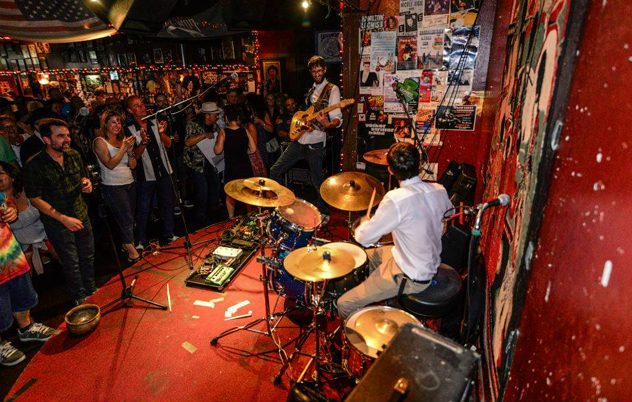
Once Mandella starts to unleash on his drum set, with Green’s electric guitar ripping through the room, the entire mood of their audience shifts, as I recently discovered at their safari-themed CD release show in South Lake Tahoe—the first of many to come this year, they say.
Whether it’s through the thunderous roar of their battle song “Signs,” or in the feel-good, open-ended track “Chapter X,” which allows for improvisation and long, inspired solos, onlookers are unanimously forced to their feet and into motion, having no choice but to surrender to the robust, rockin’ grooves of Green and Mandella’s Black Star Safari.
The band’s newer material is especially potent when played live, with standouts such as “Gold Man Sucks,” “Victims” and the strictly-instrumental “Never Again,” where Mandella races on his cymbals and snare at lightning-fast speeds, while Green strums a menacing riff over and over again before they both break out into a slow-burning, cathartic chorus.
Black Star Safari’s latest five-track EP, All In, maintains much of the same musical diversity found on Cut and Dry, but with a bit more bite to it this time around. While the album has hints of bluegrass and funk in some of the cuts, All In is undoubtedly a rock project through and through.
Despite their recent adversity, it would appear Green and Mandella have found a way to shine in their powerful live performances.
“We just have such a good energy and connection with the two of us,” Mandella says of he and Green’s rediscovered two-man dynamic.
“And I guess that’s kind of one of the perks,” Green adds. “I think that it does make us stand out. For better or for worse, [at] a lot of shows we play, people will come up to us and be like, ‘I thought you guys were gonna suck.’ And then we come and play a decent show, and I think that really catches people off guard.”
As their new album indicates, Black Star Safari is all in for their music—quite literally, it’s just the two of them running the show for now. The duo is planning a tour up and down the West Coast this summer, going as far north as Washington and, really, anywhere else they can park and set up their equipment.
“Not to give away our secret, but, you know, we bought a generator and we have my RV,” Green says. “So we were really just thinking about renegade staging, and just getting our name out there. Just playing all the time, doing festivals and just setting up in the parking lot.”
Almost like Breaking Bad.
“But making music instead,” Mandella says. “Make music, not meth.”
Green laughs out loud. “That could be a bumper sticker.”
Celebrate the release of All In at the Torch Club on June 6. Black Star Safari will perform as well as Island of Black and White. The show has a $8 cover and starts at 9 p.m. If you’d like to make a day of it, The Bathtub Gins play earlier that evening during the Torch Club’s no-cover happy hour (from 5:30 to 7:30 p.m.). For more info, go to Torchclub.net.
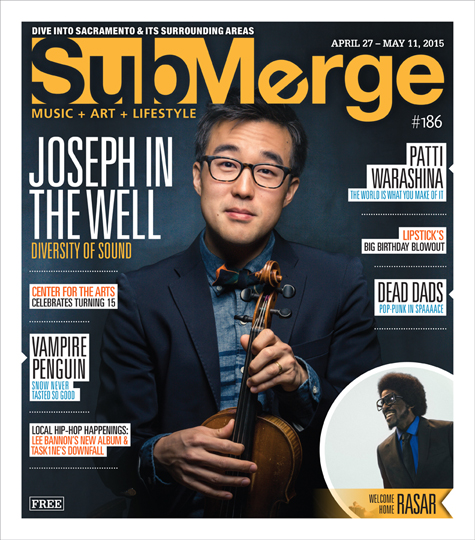
Like so many of us, Sacramento violinist-looper Joe Kye has made mistakes. In fact, he still makes mistakes, even now. And inevitably, he’ll probably mess up again, much like we’re bound to as well.
More in spirit than verbatim, this is the chorus of Kye’s fourth song “11-8” from his upcoming self-titled EP Joseph in the Well, set to drop May 9, 2015.
The optimistically poignant sound and lyrics to “11-8,” including his other five tracks, he says, help communicate a theme he’s been playing back to himself over and over again as of late: universality. As Kye puts it, universality ties into the idea that we are all one; that we’re all human; we all feel joy and pain; we all feel awkward at times, and we all feel awesome at times.
“It’s hope in shared suffering,” Kye says. “It’s like, ‘Oh, we all suffer. We all feel like crap sometimes.’ And then, through that understanding, I think that’s one of the biggest parts of humanity—the fact that we all suffer. So recognizing that, to me at least, brings a sense of hope.”
It was in this mindset of basic human connection and shared suffering that Kye set forth exclusively on his indie string pop music project, Joseph in the Well, in December 2013, after just moving to the Sacramento area six months earlier. He plays alongside local upright bassist Casey Lipka and a “cadre of drummers,” though mainly features Andres Salazar for percussion on the EP.
Kye provides the vocals, but more importantly, he also plays the violin coupled with an old, trusty looping station that he’s had since 2007—his first one, actually.
Here’s how it works in a nutshell: Kye and his band will start to play a tune and at some point he’ll push down on one of the looping station pedals to record a small part of his live violin playing (plucked or bowed). Like clockwork, he’ll push down again and play back that same recording in real time as he continues to play live, thus incorporating it into the performance and repeating the process however many times he likes.
Kye says he switches up which section he’ll loop on any given song, never able to play the same loop exactly twice.
“That’s kind of the beauty of it,” he says. “From both my perspective, it’s like, ‘Oh man, I get to create something new every time I play this song.’ And then from a listener’s standpoint, it’s like, ‘Well, I could go to this show. But this song is going to be different from next week when I hear it played somewhere else.’”
In a way, Kye has created a unique, evergreen quality to his music; it stays fresh with whatever other layers are happening right in front of us. And for such novelty, Sacramento has certainly taken notice.
Only playing with his band for little more than a year now, while also bouncing around and offering up his session violin services to any interested party, Kye was able to take home two Sacramento Area Music Awards (SAMMIES) this year: Outstanding New Artist and Artist of the Year. Yes, even without one Joseph in the Well project completely under his belt yet, Joe Kye and his well dwellers have made melodic waves here in the capital city.
The type of warm reception that he’s gotten, he says, motivates him and lets him know he’s doing something that resonates with people. That is, after all, what he’s searching for: to relate.
“That’s probably the biggest reward in a lot of ways that artists look for,” Kye says of his strong recent feedback. “It’s that moment when you feel like you’ve connected through your…whatever it is that you’ve created, that moment when you feel like you’ve connected with someone who received it.”
Kye’s journey to the SAMMIES started at a homegrown level. He performed at one of Capitol Garage’s open mic nights, a scene he suggests any up-and-coming artist in any town explore when looking for people of different talent levels and dedication levels of artistry. Big or small, they all come together at open mics—something Sacramento has more than enough of to spare as Kye soon came to learn.
He dove right in, embracing Sacramento’s creative arts scene for what it was.
“For me, communities are really important,” Kye says. “And supporting local culture is also really important to me. Of course I have favorite bands and musicians that come from all over the world. But if you care about the diversity of sound in the world, then you have to support local music and local arts.”
Kye says much of his outlook on community culture can be attributed to his own migrant past, which began in South Korea and traversed across the globe through five different elementary schools coast to coast, eventually landing in Seattle where he finished high school and went back East again to attend Yale.
In other words, Kye has moved around a lot. And through all that moving, he learned to accept his surroundings and engage his environment.
It didn’t take long for Kye to welcome Sacramento with open arms and for it to do the same. But unfortunately, he says, many local musicians don’t always do that in a small market like Sacramento.
“I think there’s a tendency to shun the Sacramento music scene,” he says. “And I think what you have to do instead of shunning and then shutting down from is you have to recognize its faults, you have to recognize the perks that it has and then invest yourself. You’re the one living in this community, right? Do you want to have to move to a completely different place every time you want to make money? No. You have to cultivate your local scene in order to create that creative diversity—the artistic diversity of the world—as well as a good life for yourself.
“The more the proximity to you, that’s where you’re most influential…You’re most influential face-to-face, person-to-person,” Kye adds. “So you gotta make that change on a very local, grassroots basis, and get out there.”
Sticking to his own advice, Kye is certainly getting out there. Having been hard at work recording his EP over the past few months, he has also started a Kickstarter campaign to help subsidize the final touches on the album as well as his national Joseph in the Well tour scheduled for the summer. Aside from stops up and down the West Coast, Kye says he plans to attend the National Association of Music Merchants (NAMM) convention in Nashville, Tennessee, where music vendors from all over the country will be in attendance, including Fishman (amps) and Boss (looping).
Kye is hoping to make some connections there, both artistically and professionally. He says if he can find someone to help promote and book shows for Joseph in the Well while performing at the convention, it’d be like killing two birds with one stone.
In these last days of his Kickstarter campaign, Kye is about $1,000 short of his $7,500 goal as of this writing. He’s confident he’ll meet it, too, saying Kickstarters are most active in the first and last 48 hours of the campaign. And with specially crafted prizes for donors—the best one possibly being a personalized one-minute loop song featuring a donor’s name performed by Kye—it seems likely he’ll succeed and then some.
All of Kye’s efforts are culminating toward an indie string pop project that has now been three years in the making, and one he says he wants to share with as many people who will listen. He says it’s a reflection of the past five years of his life, and how those experiences (many of them shared by others) have manifested into his own distinctive sound of whimsy, melancholy, peace and, ultimately, love.
“I think in a lot ways this EP is me coming to terms with myself. It’s about understanding the common humanity in myself and then sharing what I’ve learned about what connects us to other people. And it’s easily the best form of therapy that I’ve ever had the privilege of having.”
Visit Joekye.com. Joseph in the Well will celebrate the release of their EP on May 9, 2015, at Harlow’s with Rasar (also featured in this issue). Tickets are $10 in advance and can be purchased through Harlows.com.
Catching Up with Ross Hammond as He Readies the Release of His New Album, Flight
Ross Hammond stuck out like a guitar player’s sore strumming thumb sitting in front of the Old Soul coffeehouse at the Weatherstone. Wearing one of his signature golf caps and sleek black eyeglasses, with a guitar case resting up against the brick wall behind him, he was unmistakable even from a distance.
With each step I took toward him, though, the more I surveyed the scene for a blonde little girl wandering about somewhere nearby—his daughter Lola, I’ve heard, isn’t usually too far from his side. Apparently, I had just missed her. Darn it.
And with that, Hammond and I stood up and took a stroll around the blocks of 21st and I streets, spiraling outward in concentric circles as we discussed his latest solo acoustic album, Flight, his recent departure from the annual Midtown In the Flow concert series and how his family continues to be a constant source of inspiration in his music.
Since completing his collaborative quartet album Adored in 2012, Hammond recorded three other joint projects prior to Flight—due out April 14—all of which are about as free jazz and experimental as anything he’s ever done. Flight, however, is much more in the same vein as his eighth-posted album from his Bandcamp page, Music from “Cemetery Rose,” where he also used six- and 12-string guitars to evoke more of a rural, outdoorsy sentiment through traditional country-like twang and discernible folk melodies.
Much like “Cemetery Rose,” Hammond says he wanted to take Flight back to the basics of acoustic, which his teacher Jimi Butler once described to him as the bedrock of all guitar playing.
“He told me a long time ago. He said, ‘Hey man, if you can’t play on acoustic, you can’t play shit,’” Hammond says with a smirk on his face. “So, you know. I mean, I agree with that. But I’ve been wanting to do an acoustic thing for a long time now.”
Still, Hammond’s newest record truly feels like it belongs in a league of its own, if not for its rejuvenating spiritual aesthetic—where each track unpacks like a bindle with a sense of reflection and, at times, even adventure—then just for the unfiltered homegrown recipe of a man, his guitars and a portable Zoom recorder. That’s all Flight is. Nothing more, nothing less.
“It’s like, ‘How bare bones can I get? How minimalist can I get? And will it work if it’s just one instrument with no overdubs, no real processing?’” Hammond says. “I want it to sound raw like it sounds at the kitchen table.”
A recurring theme in almost all of his works, it comes as no surprise that Hammond’s family life seeps its way onto the record in some of the most endearing ways. In “When Cows Face the Same Direction,” listeners can actually hear echoes of his daughter Lola playing with her mother in the background while Hammond sits at home and records live around his loved ones.
“I’m a sentimental dude,” he says. “I like that kind of stuff.”
The song “You Are My Sunshine” is also dedicated to his daughter, standing as the only track on the album to receive a music video treatment, which portrays a fragmented day in the life of the Hammonds in super-slow motion.
“For me, the best music you’re gonna make is not because you’ve been sitting at home and practicing your scales all day, or learning all these freakin’ chords and stuff,” Hammond says. “The best music anyone’s going to make is music that resonates and music that is related to how they live. And the message that they’re trying to send, and how to channel their life through sound. To me, that’s the most important thing.”
Between being a family man, running his live music studio (Gold Lion Arts in Land Park) and trying to succeed as a full-time musician who distributes his own records, Hammond has had to let go of some of his former booking duties here in Sacramento—primarily for the In the Flow festival that he’s hosted annually since 2008, which incorporated live local music, local art, spoken word and open mics throughout different venues in Midtown and Downtown.
Hammond says practically all the responsibilities of running In the Flow were being bounced off of him in one way or another, despite having volunteers. At its busiest, In the Flow was juggling about 35 local bands over the course of five days.
“So that was a lot of fun, it was really cool. But for me, it had kind of—it was just getting to be too much work for one person,” Hammond explains. “I just felt like we did it. We said what we wanted to say and it was cool. And now, it’s like I have a space [in Gold Lion] and we can basically do something similar to In the Flow over the whole year.”
In other words, Hammond is just trying to be responsible—both to his family and to himself. Nothing wrong with that at all.
Feeling as though he’s done his fair share for the local jazz and creative music scene in Sacramento, Hammond says he’s at a point now where he wants to pull back a bit and focus more on furthering his own life and career goals, which are not necessarily tied to this town.
“I mean, at this point, I like living here. I like that I can make a living here and stuff. But after so long, I don’t really feel a responsibility,” Hammond says. “And one of these days, you know, one of these days we may just pick up and, ‘Oh, let’s go check out what Chicago’s like. Or let’s see what New York’s like.’”
Hosting the same kinds of shows and cycling through the same sorts of gigs in Sacramento, he adds, tends to create a “revolving door” effect for artists here. It’s a phenomenon he hopes to avoid by following his music down whatever path it may lead him—wherever it leads him—and, of course, taking his family along for the ride the entire way.
“It’s trying to fit everything in,” he says. “I’m trying to be a dad and trying to be a husband and trying to be a guitar player and not suck at any of those things. That’s the trick.”
In the midst of the juggle, Hammond ponders his next move.
“So the next thing? I don’t know. I mean recording-wise and then long term, who knows?” he says. “I’ve got a two-year lease on Gold Lion, and then if we renew our rent might go up like $40. So we’ll see—we’ll just see how it goes. As long as I’ve got the family happening, I’m not tied to anything.”
Ross Hammond’s Flight is available for pre-order via his website, Rosshammond.com. He’ll be celebrating the release of the album with two shows: The first will be a solo show at Gold Lion Arts (2733 Riverside Boulevard, Sacramento) at 4 p.m. on April 12, 2015. On April 13, you can catch him at Luna’s Cafe (with Alex Jenkins on percussion) as part of the Nebraska Mondays series. Go to Lunascafe.com for more info.
One Member’s Move to Oregon has ZuhG looking northward for future “Field Trips”
With the closing of the ZuhG Life Store in the Downtown Plaza last summer, Sacramento’s esteemed Hall of Fame ska-reggae-funk mashup band ZuhG has experienced a bit of a proximity shift since its lead singer and guitarist Bryan Nichols moved up to Lincoln City, Oregon. Rather than folding under the separation anxiety, however, ZuhG seems to be thriving following Nichols’ move. Their touring capacity has now easily stretched up the Oregon coast and even seeps a little bit into Washington, where they say they’d like to frequent more often.
They haven’t stopped making music, either. ZuhG is set to release their sixth studio album, Field Trip, through a CD release party at Harlow’s on March 14, 2015. They’ll also be touring starting in Sacramento and heading all the way through to Seattle.
Before they could do all that, though, ZuhG had one final mission for February: Saving Private Bryan from his Oregon beachside bliss, and bringing him back to Sacramento to put the final touches on their album via 10 hours of studio mixing and mastering—which Nichols says is about 96 percent done by now.
So the band set out on their mission. But instead of simply going to Oregon and coming right back (like most of us non-musicians would do) ZuhG took a few detours along the way and decided to embark on an unannounced, unnamed spur-of-the-moment mini tour.
“We didn’t name it because it’s so short,” Nichols says of their brief musical excursion. “Usually we’ll make a poster and give it a little name, you know?”
“The Pick-Up-Bryan Tour,” bandmate and fellow guitarist JR Halliday interjects. “We pretty much went to pick him up, we come back and then we go to the studio.”
Fresh off of stops in Eugene, Oregon and Arcata, California, ZuhG played their last show at the Powerhouse Pub in Folsom on Feb. 21, 2015, testing some of their newer songs on the dance-prone audience and even jamming out with a local violinist during their set, before having to wake up early the next morning and hit the Pus Cavern Studios for some final tweaks.
Submerge was able to catch up with Nichols and Halliday before their studio session that Sunday morning to ask them everything we possibly could about Field Trip, their upcoming tour, their newest songs and where ZuhG plans to go from here.
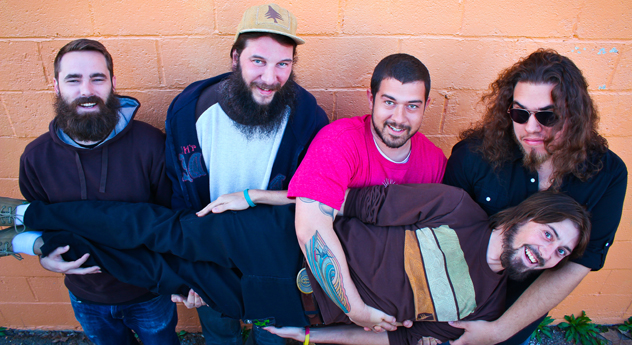
Why did you decide to name your new album Field Trip?
JR Halliday: Just going out on tour, you know? It’s like a field trip where you go to school and you get on the bus and you go off on a little adventure. It’s like little field trips. You know, it’s kind of what we do.
Bryan Nichols: I forget who said let’s make it that. But we were all like, yeah. Because like you said, we go on all our little trips and sometimes our tours are like two weeks long, so we almost don’t call them tours—we just call them trips. It’s like a field trip. Yeah, it’s very much so what we’re doing. You know what I mean? We’re like a group of friends, getting in our bus and going on a field trip. Like, “Let’s go to Eugene, let’s go to Arcata, let’s go to Seattle.”
I know you guys have a song called “The Hits” on your new album, which is about people requesting for you to play hit songs and famous covers. How did that song come about?
BN: So, I live in Oregon on the coast, you know, when we’re not touring. And I play this little restaurant gig a lot on the weekends, just in the corner of a restaurant. Like, people don’t really care I’m playing—I’m just kind of background noise, you know? But so often people will come up and to me and be like, “Hey, do you know any…” and I get the most ridiculous requests. Like Jimmy Buffett. “You know any Jimmy Buffett?” Or, “You know any AC/DC?” And some girl’s like, “You know some Bruno Mars? Or Adele?” Just ridiculous stuff that I wouldn’t sing. It’s like, “Yes, of course I’ve heard of that person before. But no, I’m not going to play an AC/DC song in this restaurant right now.” Nor do I know it… So it’s just a goofy song about that.
Bryan, how has your move to Oregon affected the band’s dynamic, if at all?
BN: I actually think this is working out better. I used to own a store in Sacramento called the ZuhG Life Store. And so after that store closed and just where I was in my life. I felt like I could finally move away and still make the band happen. You know? I would never leave until I felt like that—I mean, the members that we had and the way that we’d get down. So I saw my opportunity to move to the Oregon coast. I got a beach hut… I got lucky in a small little Oregon coastal town and I’m literally on the beach. It’s cool because now it’s opened up this whole realm of us playing in Eugene constantly and Portland and Seattle—just Oregon in general. We’ve just been tearing up Oregon lately as opposed to in the past, we were always going to San Diego and Hermosa Beach. We’re making our way up the coast a lot more, like every tour. So it’s cool because a lot of people when I was first moving there were like, ‘Aw, is the band breaking up?’ And I’m like, “No. Our band is just going to be playing more.”
So if anything, maybe the move up to Oregon has helped the band in some ways.
BN: I would say it’s broadened our reach. You know what I mean? We’re playing in other towns, and it’s nice.
I noticed from last night’s show that the band will just keep jamming sometimes, even if the original song is shorter. How much of a live set is pre-planned and how much is improvised like that?
BN: I mean, there’s definitely structure to some of the songs. Like, “Here comes Bryan singing a verse, or here comes a chorus.” But the bridges or the solos, who knows how long they’re going to be? You know? If Andre’s still shredding and he’s got his face on, we know not to go to the next part yet ‘cause he’s still in the middle of it. So yeah, there’s a lot of improv going on. But there’s also structure.
How’s it been after the ZuhG Life Store closed down? Do you miss it?
BN: I like to call it first and foremost a local music store. Like, we had a whole wall of just bands from Sacramento. So we were like a big merchant booth for that. And then it grew into music lessons and local art and shows in front of the store and local clothing companies. So local anything, you know? It was fun. I don’t regret it at all. I never thought I would own a store, and then an opportunity just kind of fell on my lap [and] I didn’t want to pass it up. It was great for the band, too. I like to think so many people in Sacramento just kind of know what ZuhG is or have heard of it because of that store… I had a lot of band members working there and helping out. It was demanding. You know, we were open damn near every day, during the mall hours we had to be open. So we only had a couple days and holidays [off]. It was super fun, and to see it go is sad, but I don’t miss owning a store. Although, I’ll drive by my Oregon coast town and see some building for rent or something. I’m always kind of like, “Hmm, I wonder how much that is.” I’m always kind of intrigued.
Is it possible that another ZuhG store could open up again, either here or in Oregon?
BN: It’s possible one day. I don’t have any plans right now, but I always think about it. And I got some friends who’d wanna do it too—like work there and sell their art and whatnot.
JH: It was very time-consuming, you know? We couldn’t just leave on tour. We had to make sure the store was covered. He was constantly on the phone talking to someone about some random thing for the store.
So, are you saying you’re happy that it closed down?
JH: I personally am. But I didn’t work there.
BN: Yeah, you didn’t do shit.
JH: I was like moral support. I’d show up, make an appearance.
Sounds like you’re more freed up to focus on your music.
BN: Yeah, it was definitely hard. Imagine going on a month-long tour and finding somebody to watch the store the whole time. It definitely frees up some time.
So what’s next for you guys? What’s your next move after this album, and where do you want to take ZuhG in the long run?
BN: Well, we’re always really excited about the festival scene. And we’ve playing a lot of festivals every time the time comes around. So we always focus on playing bigger and more festivals. That’s always it.
Do you see ZuhG going on a nationwide tour at some point?
JH: Absolutely.
BN: We have, and we’re going to again in October.
JH: Yeah, we’re going to Hawaii in August. So we just got five tickets.
Do you aim to be a touring band for the rest of your musical careers?
BN: Yeah. Bigger and better tours, always and constantly. The way I see it, for us to get bigger and go up to the next level, I want to go on tour with a band bigger than us and open for them every night. So I try to position ourselves to where we get to open for those bands, and one of these days one of those bands will be like, “Hey, I like you guys. You should come on tour with us.” I feel like that happens a lot. So that’s what I always try to do as far as getting to the next level. I try to find those opportunities for us, and hopefully it’ll work out.
Would you like ZuhG to achieve mainstream success and be radio-friendly one day?
JH: I think active would be a better word. Even if we’re making a little bit of money or no money, we’re still going to be doing it. We’ll stay play in our band and [ride] in our bus—whatever we have to get us from point A to point B.
Are you guys able to make a decent living doing music full-time?
BN: I got a beach house, man. We’re not rich, but you know.
JH: We all do our own thing, you know, our own little hustle to make ends meet as well…We don’t just rely on ZuhG to make our money and all that. At least us two.
So does ZuhG already have another project on its mind?
JH: Oh yeah. I’m already brewing up ideas upstairs. [Bryan’s] already got a bunch of songs that have been put on the table. But we gotta finish this one first. We started Field Trip before we came out with Calm and Clear.
Seriously?
BN: We had a drummer bail out. When we were recording Field Trip, one of our drummers quit. So then it just kind of turned into, “Let’s record an acoustic album with me and JR and our homegirl singer Jesi Naomi.” That’s basically all that’s on that album Calm and Clear. So we came out with that album because a drummer quit and we had all these acoustic songs.
I guess it’ll feel good to get this one out of the way then, huh?
BN: It’s been an idea for a long time, yeah.
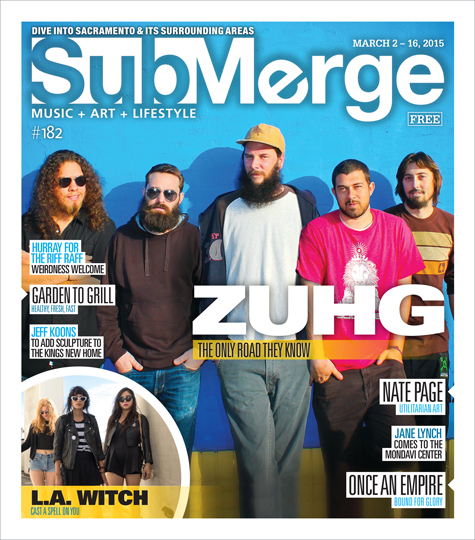
Don’t miss the release party of Field Trip at Harlow’s on Saturday, March 14, 2015. Groovincible and Dank Ocean will be joining ZuhG for the 10 p.m. show. $10 cover, 21-and-over.