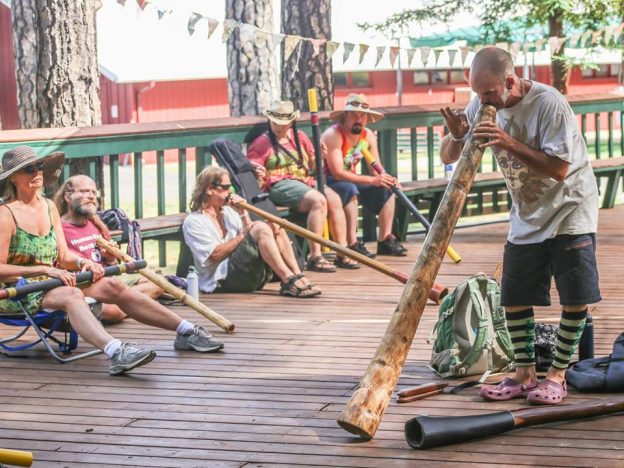
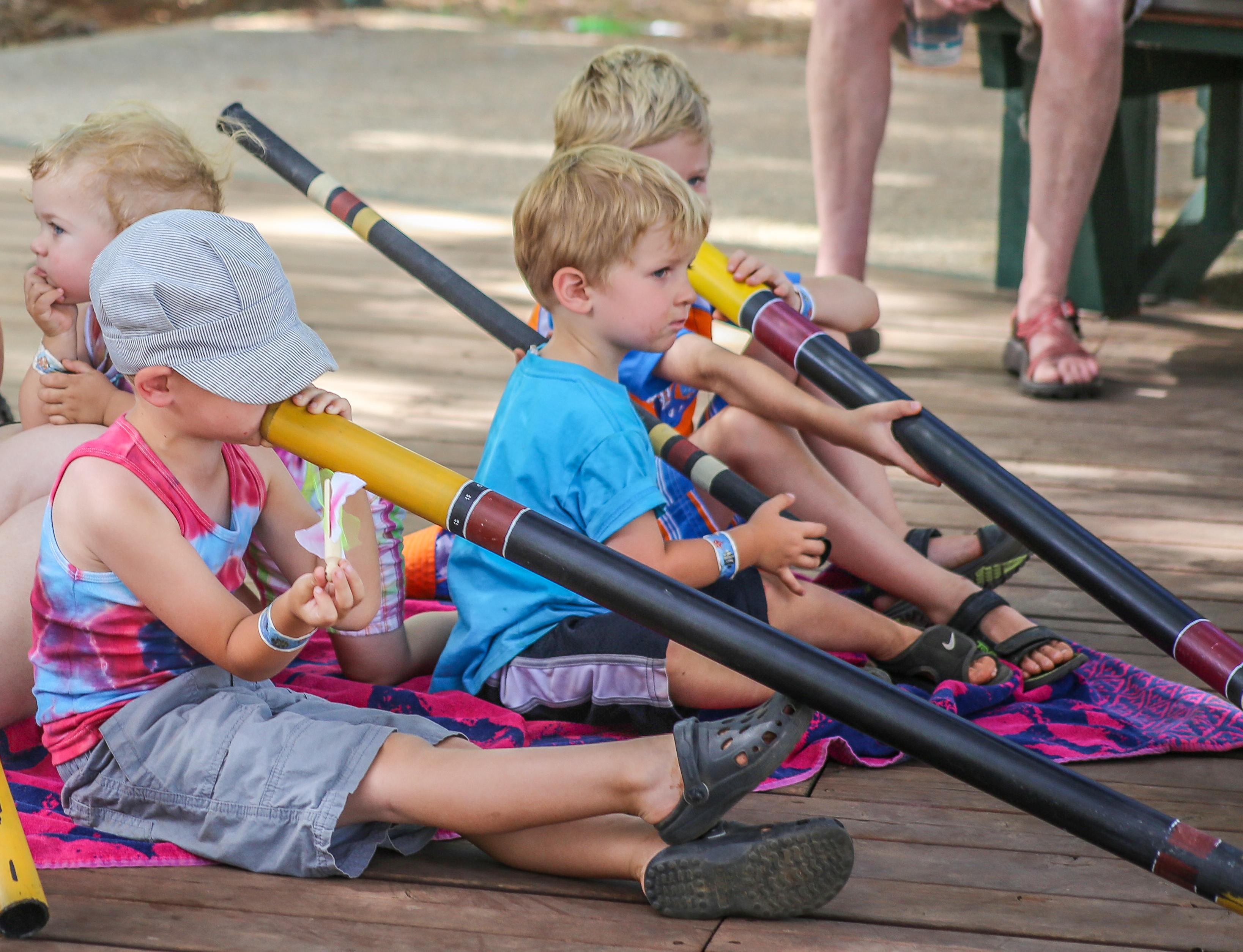
Enjoy the outdoors and introduce yourself to some new cultures at the California WorldFest, July 12–15 at the Nevada County Fairgrounds in beautiful Grass Valley. Featured are seven stages full of music, workshops and activities for the entire family. Musical acts include British-Indian sitar player and composer Anoushka Shankar (featured on page 12 of issue #269), indie-folk band Magic Giant and many more! You can also enjoy an “intimate gathering of native peoples of the world” in the Global Indigenous Peoples Village, hosted by the Nisenan Tribes of Nevada County, and have the opportunity to learn to play the ancient Australian instrument, the didjeridu, from Andjru Werderitsch, a 24-year didjeridu veteran. This is a festival that you do not want to miss, as you can center your energy and enjoy nature among like-minded friends. You can visit the WorldFest Facebook event page for active updates and to purchase tickets. This is a kid-friendly festival. The Nevada County Fairgrounds are located at 11228 McCourtney Road, Grass Valley.
**This write-up first appeared in print on page 10 of issue #269 (July 2 – 18, 2018)**
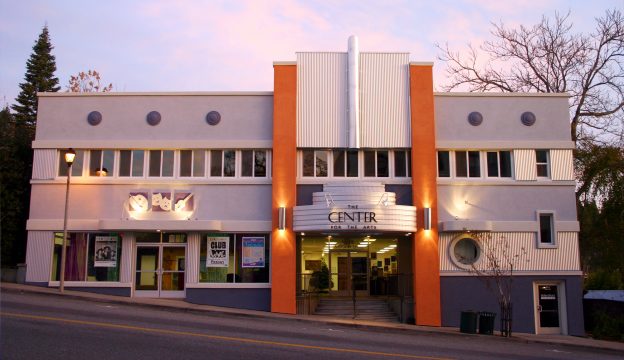
Nevada County’s premier performing arts organization, The Center for the Arts (314 W. Main St., Grass Valley), is just about a week away from breaking ground on a highly anticipated multimillion dollar renovation. On Tuesday, May 29, the venue will host a ground breaking ceremony at 10 a.m. The renovations, expected to be completed by Spring 2019, will see an entirely new Main Stage Theatre with a larger capacity and a more flexible floor plan, an expanded bar and gallery space, new bathrooms, more green rooms, a new state-of-the-art sound system, upgrades to The Center’s accessibility for those with disabilities and much more. While the work is going on, so must the show, so The Center is launching their OnTheGo series this summer where they’ll book bands and events at a number of other venues throughout the county, including the Veterans Memorial Auditorium, Grass Valley Elks Lodge, the Foothills Event Center, and the Don Baggett Theater at Nevada Union High School, among others. The OnTheGo series kicks off with country star Clint Black on June 28 at Veterans Memorial Auditorium. The folks from The Center are also busy gearing up for the 22nd annual California WorldFest, which they produce and will go down July 12 – 15 at the Nevada County Fairgrounds. Learn more about the venue’s changes and check out their upcoming OnTheGo shows at Thecenterforthearts.org/center-onthego. Check out the impressive and diverse lineup for California WorldFest at Worldfest.net.
**This write-up first appeared in print on page 6 of issue #266 (May 21 – June 4, 2018)**
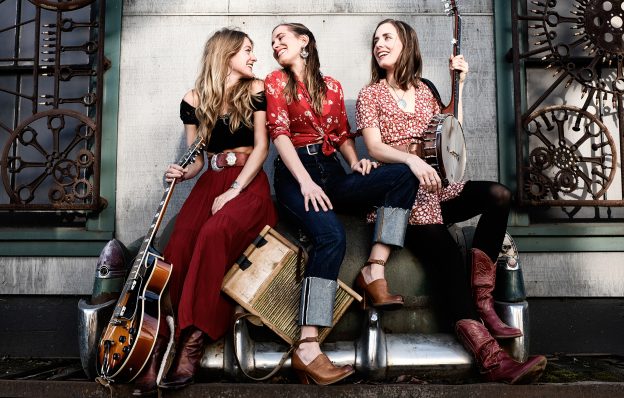
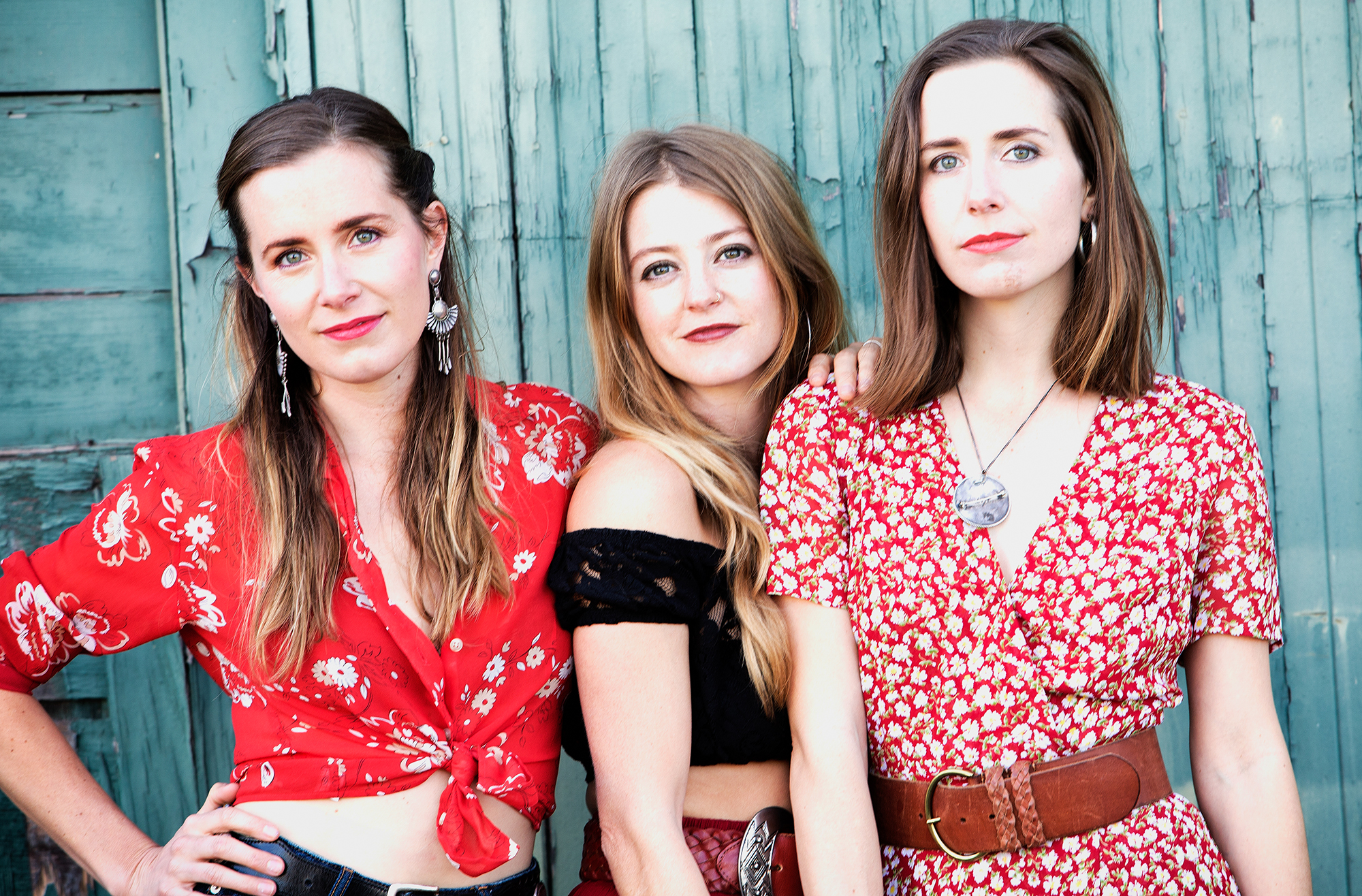
Keeping a band together can be tough, but when you find the right group, you feel nearly unstoppable. Sometimes you come together through your community, and sometimes you’re born into it, like Erika, Rachel and Chloe Tietjen, better known as the T Sisters.
When most people think of a family band, the first thing that comes to mind is air-tight harmonies, which the T Sisters don’t fall short on. Maybe there are inherent genetic similarities (Rachel and Chloe are also twins), but a lot of the connection also comes more from nurture than nature.
“One thing that’s an advantage is we were raised by the same people, we grew up hearing language similarly,” said Erika. “Our voices are definitely not the same, but we have more similarities in speaking and pronunciations than people who are not related, probably. Even though we write different types of songs, we can connect over a lot of the same music. We come together stylistically.”
The Tietjen sisters grew up in the Bay Area, where music seemed to be around from the very get-go.
“We definitely started singing together because music was such a big part of our upbringing,” Chloe said. “Our dad is a singer-songwriter and our mom grew up singing with her sisters, so there was a lot of playing and singing and listening to music in the household. As 8 to 10-year-olds is when we started getting on stage. We did a lot of musical theater around that age.”
The sisters remained in the musical theater world for a long time, eventually co-founding Chthonic Theater in Oakland. Throughout that time, they began writing and performing original songs, though most were angled more toward musical theater. The official idea of the T Sisters formed almost accidentally.
“We were playing at an open mic at the Starry Plough in Berkeley,” Chloe said. “What they’ll do is select one artist to be the featured artist at the next open mic, so the woman who was hosting the open mics at the time was like, ‘You guys are great, we’d love to have you be the featured artist, what’s your band name?’ On the spot I was just like, ‘T Sisters,’ because our last name starts with T and we’re sisters. It was a very spontaneous decision; it was sort of from that point on that we started developing our sound together. We started writing more songs that were outside of the context of a musical theater piece. At a certain point, we started getting offered gigs, and then years down the line we were getting so many gig offers that we thought, we really need to get out of the way of this progress and see what happens.”
The sisters have been on the road fairly consistently since, touring with artists like Amos Lee, Elephant Revival and ALO, simultaneously honing their sound and expanding into a full band with bass, guitar and drums. That early theatrical background feels apparent on some of their first recordings, like the slightly vaudevillian “It Was Me,” which features a French-inspired instrumentation creeping beneath three familial voices moving in swift figure-eights between harmonies and counter melodies, softly landing in staccato on prominent plucked bass, like jumping lily pads.
As time has passed, their style has taken a more distinct shift toward folk territory. Their most recent live EP, recorded at Tiny Telephone Studios in San Francisco, has an Americana thrust to it, especially on songs like “Come to Me” with its chugging snare and clean, vibrant vocal hooks.
Though the theatrical approach no longer feels as audible, it’s become more of a visual performative intention.
“We have songs with the band with choreography that we do, and that’s pretty atypical for a folk band. We play disco songs and that’s really fun,” Erika said. “It’s more fun to have dynamic stage personas and costumes and dance moves and scenery, insofar as we can create that with the means that we have. That’s something we want to continue to develop. We don’t think about our stage performance just as ‘what’s the song about? Let’s play the song now.’ We wanna make things more entertaining, and have some more of those theatrical elements.”
Another outlet for that creative energy has been creating videos for covers, like a recent one for The Ting Tings’ “That’s Not My Name.” A listener might expect a stripped-down folk ballad version, but instead, the T Sisters (along with Megan Slankard) keep its shape as a pop song, bouncing through the choruses with charisma, dressed in leopard fur coats and sparkling red bow-ties.
“It exercises some of our other creative skills. Rachel did the video editing and we did all the recording,” Chloe said. “It’s a fun way to exercise some of those creative muscles that exist just outside of the music, and cover tunes [are] a fun way to bring that in.”
Though their involvement has lessened, the sisters still work with Chthonic, where they’ve been producing an ongoing variety show for nearly a decade.
“That remains something that keeps us connected to our community of artists, because we do a lot of touring, so it’s nice to have a way to create this space for other artists to connect,” Erika said.
These days the sisters spend a majority of their time on the road. It’s a busy lifestyle, and when they’re not collaborating as the T Sisters or within the Chthonic, they’re all in the same home living together.
“It’s all very shared; sometimes it’s hard to draw those boundaries and say, ‘OK now we’re not working, we’re just having family time,’” Chloe said “I think anyone who’s been in a family business, or with their parents or partners [knows] that’s a really hard thing to do, and it does take a conscious effort to turn down the work dial and try to reconnect on those other basic levels.”
One experience that isn’t shared is the songwriting process. Each sister contributes to the song catalogue, and even with those shared familial experiences, they all approach writing uniquely. The trick is to maintain that distinction while keeping a cohesive sound.
“We all have very different songwriting voices, and in order to maintain the diversity of music in our set, we really like to keep the songwriting process separate. Then everybody can really manifest their musical vision,” Chloe said. “We come together for the arrangement process. Some songs are harder than others; sometimes those are the most fun, because that’s where we really get to stretch ourselves creatively to come up with an arrangement that works, that maybe isn’t intuitive right away. We’ve gotten more and more adept at the process of putting our heads together.”
The trio is currently sitting on a batch of new songs they’ll be bringing to Nashville to record in May. Even if they’re stemming from different inspiration, their hearts are all in the same place.
“We have a shared vision, and we’re all equally invested in the project, which I think is sometimes the hard thing about bands: keeping the band on the path together and everybody having the same amount of energy going into the project,” Chloe said “We realize that … What’s that phrase?”
“The whole is greater than the sum of the parts,” Erika interjected.
“We’re really in it together,” Chloe said.
See the T Sisters live at The Center for the Arts (314 Main St., Grass Valley) on March 16, 2018. You can purchase tickets in advance through Thecenterforthearts.org. Honey of the Heart will also perform.
**This article first appeared in print on pages 20 – 21 of issue #261 (March 12 – 26, 2018)**
For most of us, our names are something personal, something representative of our identities. For musicians, names can mean a whole different thing. A name can suddenly become a team, or at the very least, a co-writer; Bernie Taupin and Elton John both serving as Elton John, for instance.
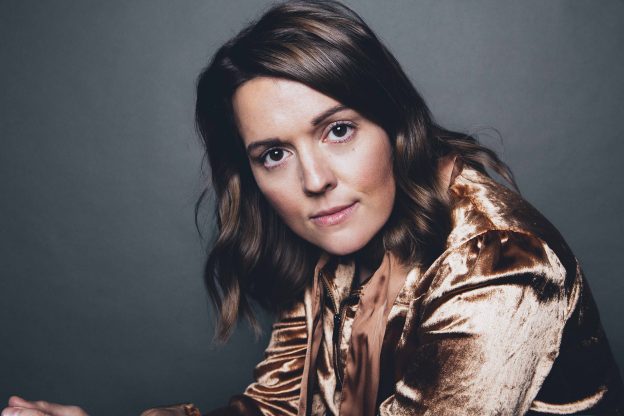
Such is the case for Brandi Carlile. Carlile came into Billboard-chart prominence with her breakthrough 2007 album, which currently boasts roughly 35 million plays on Spotify. The album’s title track starts as a soft, dreamy ballad before downshifting into a gritty pop-rock gear as Carlile’s voice rips and arcs over octaves with a thunderous delivery. Perhaps her name sounds more familiar from the plethora of hits stemming from her follow-up records, like the heavy-hitting The Firewatcher’s Daughter, with its charming opener “Wherever Your Heart Is.”
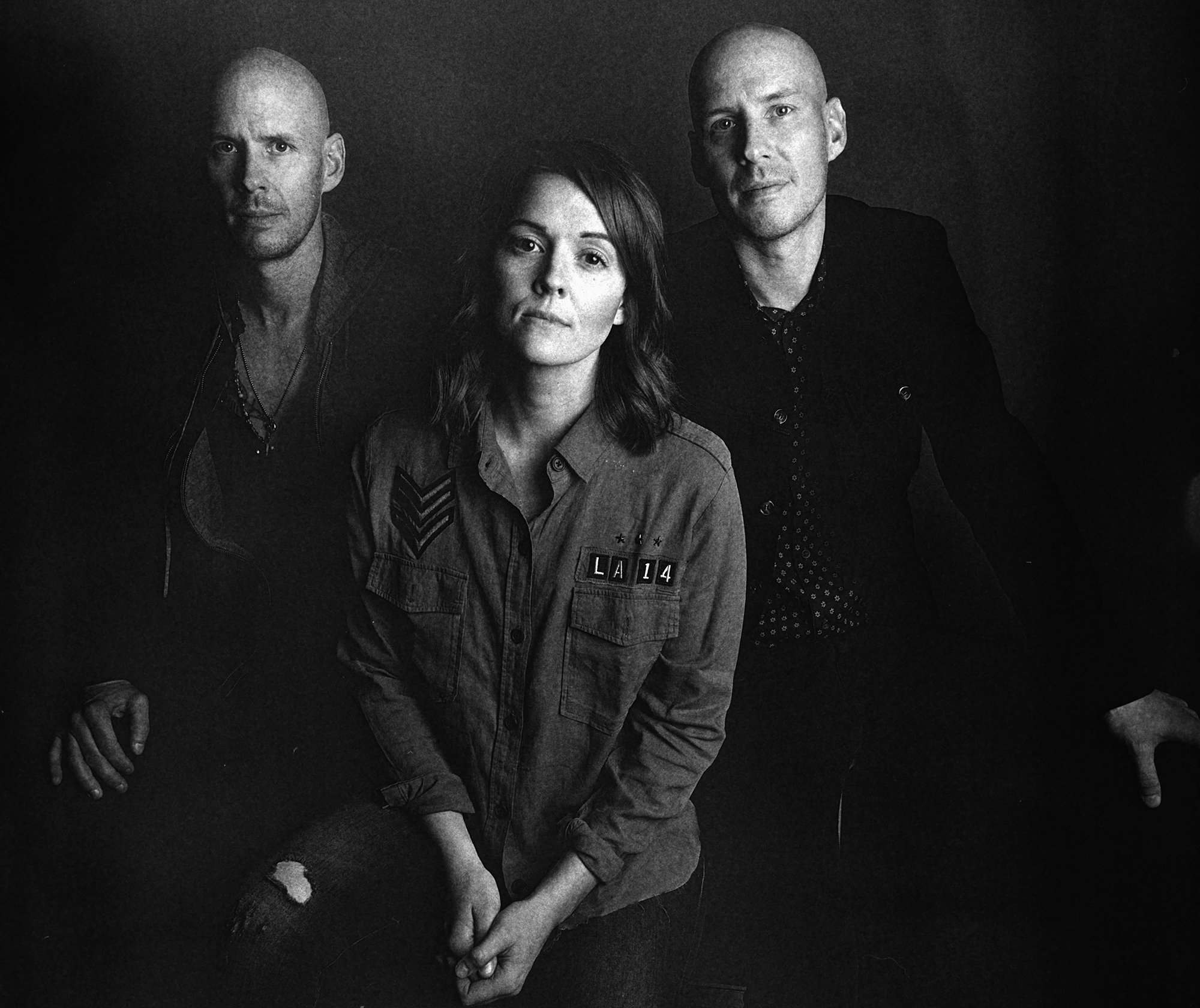
But here’s the thing: Brandi Carlile is not a solo artist, but in fact a three-piece band, consisting of Carlile herself, along with Tim and Phil Hanseroth, who are often referred to as “the twins.”
“We joke around about it being the family name all the time,” said Carlile.
Carlile herself grew up in a rural area outside of Seattle in a family steeped in love of country music. Her grandpa and grandma Carlile lived in an RV and followed bluegrass festivals around, while her mother’s side was fond of classic country-western. It didn’t take long for Carlile to develop her own affinity for it. Carlile eventually moved to Seattle and began playing around the city, where she met the twins. The three formed a band, but chose to stay under the name Brandi Carlile, which can at times still be tricky.
“It really isn’t [solo], it’s misleading,” said Carlile. “It causes me problems emotionally in my personal life, because it dilutes who I am. It makes the name that my parents gave me not me anymore; it makes it an organization. I have to check myself all the time with what I really want and what I really believe.”
Carlile and the twins have shared writing responsibilities since the start (“The Story” was written by Phil Hanseroth), and for Carlile’s newly announced upcoming album, By the Way, I Forgive You, the trio has homed in even further on their connection not only as collaborators, but family (Tim is married to Carlile’s sister).
“Over the years so much has changed. We’re all basically living in the same space, raising kids within each other’s families,” said Carlile. “As soon as someone brings a song to the table, we know exactly what it’s about, so we can add to what each other is saying without any guardedness. Because, I know what Tim is talking about; I was there, I saw it happen to him, and offering my perspective on it only helps, and vice versa.”
The album’s recently released first single “The Joke” debuted as a live video shot at RCA’s Studio A in Nashville, with Carlile flanked by the twins and backed by a modest string section, drums and keys, all flawlessly swelling as Carlile bellows choruses that give listeners the sort of rush of reaching a mountain peak. The polished piece starts with the line, “You’re feeling nervous, aren’t you, boy? With your quiet voice and impeccable style.” The verse serves as an offering for those unheard—particularly young boys.
“I think when we get into a frame of thinking that boys are men, are born privileged and starting out already ahead of everyone else, that can be really toxic,” said Carlile. “There are so many different kinds of boys—they can be trans, they can be gay, they can have an ethnicity that’s unacceptable to their peers in the place that they live. There are so many things that can make growing up difficult in general.”
The song extends to a greater political message, an anthem for those who need it most during our currently polarizing political climate.
“I don’t mean to be a reductionist about it, but the election really shook me to the core about how susceptible I was to complacency, how many things I didn’t realize about the country I was raised in,” Carlile said. “It just made me realize how many people feel disenfranchised, unloved, unrepresented and illegal in the place that I’m so proud of, the U.S.
BRANDI CARLILE
“One of the things that the election did is that it woke up a lot of people in all walks of life, and it galvanized us so everyone now has this sense of activism. I feel like ‘The Joke’ is a bit of an uplifting song for people, so we can feel powerful simply because we’re born with certain unalienable talents and rights.”
This sentiment is strong, and is made even stronger by the team surrounding By the Way, I Forgive You. The album was produced by Dave Cobb and Shooter Jennings, with string arrangements by the late Paul Buckmaster and cover art by Scott Avett of The Avett Brothers. The tone of the album is political, but also emotional. The songs for the most part explore the relationships within Carlile’s life, with her greater family and her role as a mother.
“It gives you a heightened sense of awareness of what family really is, chosen and natural,” Carlile said. “I think children are just a clearer lens. Whatever you feel, whether you feel a sudden sense of gratitude, of regret or remorse, bitterness, rejection, [having children] just heightens that awareness and really forces you to deal with it. I think that’s what this album is really about: finding a place of acceptance for the things in life that are really hard, and not complacency, but acceptance of [those things], that you can still be you and be heard, and you can find—I don’t mean to sound trite or cheesy—you can find forgiveness for yourself because that’s what makes you not have cancer, live happier.”
For Carlile, in the midst of that understanding comes even the simple things, like embracing her collaborators and all that Carlile means, while finding space for herself under her own name.
“I have to be reminded by people I love that there’s still a me that’s separate from everything else, even though we use my name to represent it,” Carlile said. “That’s a difficult thing to understand, and I’m really lucky I’m getting a handle on it when I’m young, so I don’t confuse Brandi Carlile as an organization from Brandi Carlile as a person, because I really am pretty simple.”
You’ll have two chances to see Brandi Carlile live in the Sacramento area: On Dec. 16, Brandi Carlile will play Jackson Hall at the Mondavi Center for the Arts on the campus of UC Davis. Showtime is 8 p.m., and tickets can be purchased through Mondaviarts.org. The next night (Dec. 17), check out Carlile and the twins at the Veterans Memorial Auditorium (255 S. Auburn St., Grass Valley). This show also begins at 8 p.m., and tickets are available through Thecenterforthearts.org. Singer-songwriter Savannah Conley will provide opening sets for both shows.
**This piece first appeared in print on pages 14 – 15 of issue #254 (Dec. 4 – 18, 2017)**
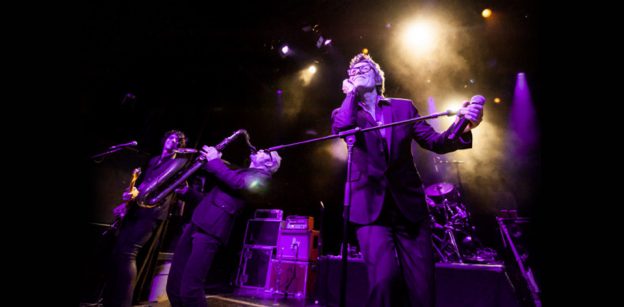
Grass Valley is a cute, old mining town in the mountains, about an hour from Sacramento. The small town has a vibrant artistic and musical community, and big name acts often make the Grass Valley area a stop on their tours. The Grass Valley Veteran’s Memorial Hall Auditorium, in particular, is a venue that has featured many famous acts in the past (it’s the largest venue in the county!). This month, the Veteran’s Hall—teamed up with Grass Valley’s Center for the Arts—will be presenting an exciting performance by legendary British rock band The Psychedelic Furs. The group will also be joined by a special guest, British singer/songwriter Robyn Hitchcock. The Psychedelic Furs are known for their multiple no. 1 singles, as well as for regularly making it into the charts in the United Kingdom, the United States, Canada and New Zealand in the 1980s. The band’s song “Pretty In Pink” inspired the 1980s John Hughes movie by the same name, which is a film that has become a classic from that time. Their music is a staple on many rock and college radio stations in the United States, and many modern alternative rock and post punk bands have been heavily influenced by this group. Don’t miss your chance to see a band that has made history! Doors open at 7 p.m. and the show starts at 8 p.m. This is an all-ages event. Tickets start at $37 for the general public and are available online at Thecenterforthearts.org.
**This write-up first appeared in print on page 8 of issue #244 (July 17 – 31, 2017)**
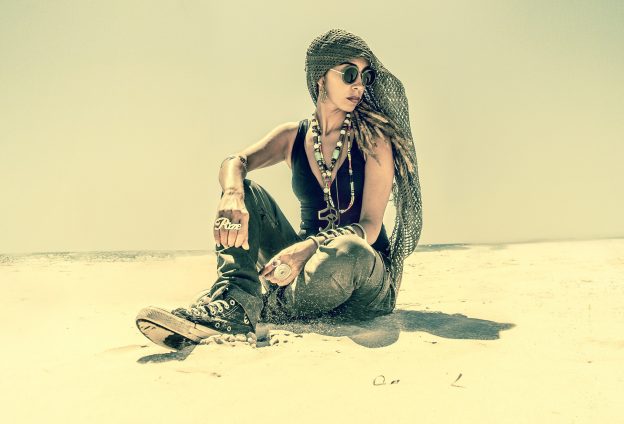
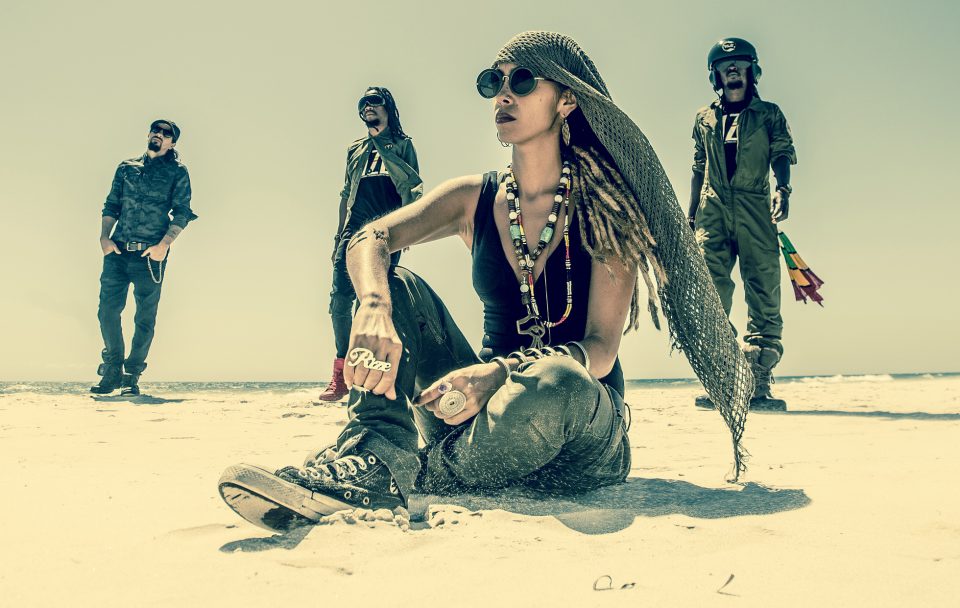
No matter the genre, change is a constant among all types of music. This is especially true for reggae. Anyone unfamiliar with the genre may assume it’s only full of Bob Marley and marijuana references. But for those die-hards, they know the messages and vibrations the style reinforces are often unfairly overlooked at a time where their subjects of injustice are significant, and especially relevant for our era. The state of reggae is going through its own evolution and women artists are paving the way for its future. Hailing from Australia, Nattali Rize is one example of a female transforming the genre.
Rize (formerly known as Natalie Pa’apa’a), created her stage name based on a couple of important symbols. She decided to spell Nattali in such a way due in part to “natta,” an American Indian word meaning “speaker.” “Rize” comes from being inspired by Bob Marley’s classic tune of empowerment, “Rise Up.”
If asked where she’s from, she’ll more than likely respond with, “all directions” for good reason. Growing up, she was influenced by various cultures across the globe and she continues to tour everywhere, jumping back and forth between Jamaica, Australia and beyond. She is largely based where the music is and got her start at a fairly young age with the guidance of her mother’s music taste and talents.
Her music career started as a street percussionist and transformed into being a part of bands such as Skin and Blue King Brown. She has toured, collaborated and opened up for well-known performers such as NOTIS, Carlos Santana, Michael Franti and Spearhead, Damian and Julian Marley, The John Butler Trio, The Cat Empire, Silverchair and Powderfinger. Since releasing New Era Frequency back in 2015, she has definitely kept busy.
While being a force in the world of reggae, she is also a passionate social activist who has spoken out on multiple issues affecting the world ranging from the environment to human rights.
We caught up with Nattali Rize recently and she spoke about her reggae roots, music career and admiration for Jamaica, while also giving us feedback on her brilliant sophomore album Rebel Frequency. She will be performing at the California WorldFest in Grass Valley on July 15, 2017.
How’s the tour going? The last year and a half you’ve really been on the move touring, from Australia, the United States, Europe, Japan and many places in between. Where are you right now?
It’s good. It’s good. I’ve got a free day today. We’re here in Pittsburgh right now, about to perform with Michael Franti and Spearhead at Carnegie Hall tomorrow night.
Michael Franti and Spearhead? That’s huge! Their live shows are great and full of high energy.
Yeah, yeah. We’ve been friends for a while now. It’s always a good time when we perform with them! They’ve been big supporters even at the start.
I’ve heard your live shows are fire and have seen a sliver of that spark from YouTube videos. What are the feelings you get from performing?
I always enjoy connecting with people in the crowd and feeling the good vibrations from everyone, especially when I hear them reflecting the lyrics to the songs right back at us in places like Europe and Japan. You wouldn’t always expect that they know all the lyrics because of the language barrier, but they do, and they’re really feeling the meaning and the messages behind them on a deep level.
Is there a specific moment on tour that stands out for you?
One time Blue King Brown opened up for Carlos Santana in Australia. I get nervous, but I was really feeling it at this one in a way where I was feeling the nervous pulses go through my body. When finally Santana went on he signaled me to go on stage with them and they gave me a guitar. I wasn’t expecting it.
Where’d you get your start in music? How were you introduced to it?
Growing up, there was always music around. Reggae, rock and soul from greats like Judy Mowatt and Aretha Franklin. My mother played the best. I was naturally obsessed with it all but also determined to learn at 13 years old. My mother was my guitar teacher and it all started from there.
What made you start really participating in the movement against global injustice? Were you always aware of the mistreatment of people around the world and concerned with helping others?
I was really conscious and aware of the injustices people faced around me. It’s been naturally a part of me from as far back as I can remember.
What was the process in making your latest album, Rebel Frequency, that released in March? What’s the meaning behind the title?
I was largely influenced by the current corruptions in the narrow world paradigm that we live in. Anyone that challenges the common restraints formed under governments led by systems such as capitalism is considered a rebel, whether it’s growing your own food or providing for yourself. Music is a way of really connecting ourselves to higher consciousness and to be thinking beyond the confines of mental slavery. To reach higher states of consciousness we have to reach higher states
of frequencies.
My favorite song on the album is “One People.” Though the album is brilliant in its blending of dub, reggae, rock and electronic elements, the track is notable because it’s simply guitar and your voice, not many other hints of electronics. Can you tell me the process in making this song specifically?
It wasn’t going to be on the album at first. I had made it a while back. NOTIS actually influenced me to put it in—that it had to be on it. I wasn’t going to release it as a single. I think it really ties the tracks together in the end because it’s stripped down with just guitars and vocals. It’s about evolving consciousness and freeing yourself from the restraints of Babylon. As we grow we are able to unify and become sovereign through love and unification.
In many interviews, you talk of the beauties in Jamaica that transcend just its appearance, such as its communities and artistry within its people. Can you tell me more about that admiration?
For me, it’s the closest example to what sovereign communities look like. Their communities take back their power by teaching, learning and growing with each other. Whether it’s being completely self-sufficient by growing their own food with no GMOs or big corporations, it’s really inspiring. There is also this artistry among the people of Jamaica with respect for each other, their ways of self-expression, and enjoying that.
Is it too early to ask if you’re already gearing up to work on new projects?
It’s not too early! We’re planning on putting out a music video for “Rebel Frequency” soon and I’m always working on songs for future projects.
California WorldFest is a four-day musical extravaganza taking place from July 13–16, 2017, at the Nevada County Fairgrounds. Also performing will be Michael Franti and Spearhead, Seun Kuti and Egypt 80, Tommy Emmanuel and Peter Yarrow with Bethany and Rufus plus many more. Nattali Rize will perform on Saturday, July 15, 2017. For more info, or to purchase tickets, go to Worldfest.net. Check out the official video for her track “One People” below.
**This interview first appeared in print on pages 28 – 29 of issue #243 (July 3 – 17, 2017)**
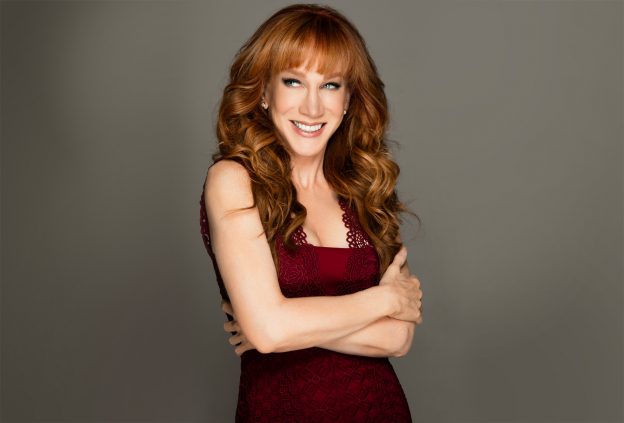
When Kathy Griffin calls me, I have a list of questions I plan to ask her—about her new tell-all book, her tour, her feelings on body image (Griffin is outspoken about her history of plastic surgeries and a near-fatal reaction she had to one of them), and even to make a joke about the fact that my middle name is “Griffin” and my sister’s name, Maggie, is the same as her mom’s (which basically make us, like, related)—but our conversation starts off immediately with something I wasn’t predicting … Donald Trump.
“I don’t know if you heard,” says Griffin, “but they just passed this fucked-up health care bill … It’s just crazy, the world we live in now.”
She gets serious before adding, “I mean, I’ve got to keep track of the Kardashians as well as the Trumps—there’s a lot of families I have to keep up with now!”
Known for her pull-no-punches approach to comedy and inability to hold back when it comes to her thoughts on celebrities, religion, politics and sexuality, Griffin has built up an impressive resume, from co-starring in the hit TV show Suddenly Susan, to her long-running reality show on Bravo, Kathy Griffin: My Life on the D-List (which landed her two Emmy awards), to recording Grammy-award-winning comedy albums, to landing on the 2013 Guinness Book of World Records for writing and starring in an unprecedented 20 televised stand-up specials, to hosting the highly-rated CNN New Year’s Eve special with Anderson Cooper since 2007. Kathy Griffin is nothing if not committed to her act.
“Do you know who my neighbors are?” She quizzes me: I admit that I’d spent the past 24 hours internet stalking her.
“Kim and Kanye!” I squeal, giddy to know the answer.
“I am such a committed artist that I moved next door to my act,” she laughs, noting how awkward it is to live next door to one of the most noted couples in pop culture. “Not a lot of comics can say that. It’s hysterical. Half the time we’re running around closing our curtains and then there’s this awkward wave … but I think they finally get it.” Kim and Kanye are used to Griffin’s comedic jabs in their general direction, and take it in stride. “But if they move, I’m moving in next to Ryan Seacrest.”
I mention Kanye’s less-than-favorable visit to Sacramento last November when the artist walked off stage after a bizarre rant that left fans scratching their heads and asking for refunds. Griffin added that she hopes to stir up a little controversy during her visit, and is hoping for a protest—but maybe just a small one.
After admitting that Grass Valley (where Griffin will perform on June 16, 2017) is more progressive and liberal versus Trump-loving-conservative, Griffin is disappointed. “You mean I’m not going to be protested by anybody? Don’t you have friends? I’m going to turn into my mother, here—what if I give you girls $2 each and you just walk around carrying signs that say, ‘Kathy Griffin is Dangerous!’ and my ticket sales go through the roof! Damnit, I want a protest!”
Griffin admits that every time she performs in Kansas, she is protested by the Westboro Baptist Church (you know, the folks famous for their “god hates fags” hate speech? Yeah, those guys). She says the first time she saw them she was legitimately scared for her life. She called her friend (who happened to be Dave Grohl of the Foo Fighters … lucky), and he told her he found them truly “sad” and harmless. He then said, “Honey, you’ve arrived.” So now she sits back and enjoys the “minor protests,” because sometimes people show up to counter-protest in a “way that is hilarious.”
Kathy Griffin wants us to protest her, laugh with her and maybe wear a “Make America Great Again” hat on top of an orange wig. Trump look-a-likes are more than welcome to come to her show at Grass Valley, but not the actual Donald Trump. I ask her if there are any other specific people that are not welcome to come to her show.
“None of the Trump family—and that includes Eddie Munster [Don Jr.] and Eric—I just call him ‘Date Rape,’” she says.
I ask her how she came up with that one.
“It’s a full name,” Griffin jokes. “First name Date, last name Rape. You know, like when Gwyneth Paltrow looked at her baby and said, ‘She’s so sweet I’m going to name her Apple?’ I just look at Eric Trump and I think, Date Rape. I don’t know if you even can print that in Submerge …” (Yeah, editors, can we? Please?) [Editor’s note: We’ll have to ask our lawyers.]
Griffin also says her mom is not invited. “She’ll probably be too drunk to get her wheelchair on stage,” she laughs and says while she makes fun of her mom, she’s proud of the fact that she knows more about pop culture than she does, and at the ripe age of almost-97, she’s still kicking with her boxed wine and Fox News, which Griffin swears is “porn for old people.”
“I think old people like when white people shout at them,” she muses. “My mom is half deaf now and I think they feel comforted by that.”
I agree.
Scientologists may also want to consider skipping (or protesting!) Griffin’s show—although she is hesitant about this one and it takes some convincing her that I am not a Scientologist (or ‘Sci-Ti’, as she calls them), nor am I speaking to her from Clearwater, Florida (look it up, trust me, it’s fascinating), and the Kardashians may want to stay away because “the material may not exactly go their way …” says Griffin.
So what can we expect from a live show? Griffin says that it’s not a typical book tour—her best-selling book, Kathy Griffin’s Celebrity Run-Ins: My A–Z Index, came out last November—and that fans willing to spend their hard-earned dollars on her book deserve two hours of brand-new material, which is what they’ll get.
“You should have a disclaimer. An evening with me is not going to be Stomp or Mama Mia or Blue Man Group,” she warns, “It’s gonna be an evening of vulgarity, negativity—and there might be some rage.”
While Celebrity Run-Ins reads like a hilarious tell-all of the sometimes bizarre and awkward interactions she’s had with people such as Woody Allen, Amanda Bynes, Bryan Cranston, Barbara Walters and yes, Donald Trump, to name a few—I ask Griffin if she has a celebrity that she’s dying to meet. Had she met them all already?
“You’re going to make fun of me, but it’s President Jimmy Carter,” her voice dips. “No one ever gets it. I know he’s like 100, but I think he was an amazing president that tried to change the world and I feel like he gets a bad rap,” she says, in all seriousness. “Or, you know, Verne Troyer.”
Bring your picket signs to Kathy Griffin’s upcoming show at the Veteran’s Memorial Auditorium in Grass Valley on June 16, 2017. Or, just buy a ticket (starting at $42 for members/$52 for the general public) by pointing your web browser toward Thecenterforthearts.org.
[Editor’s note: As of Wednesday, May 31, 2017, Kathy Griffin’s show in Grass Valley has been cancelled due to backlash over a photo that went viral of the comedian holding a fake Donald Trump head. Read an explanation from the venue at The Center for the Arts’ Facebook page.]
It can be a daunting feeling to try and understand art that feels over your head. A dense novel, an age-old opera—these experiences can be intimidating enough to avoid altogether. That’s the beauty of projects like Dangermuffin, a band that can be enjoyed from any level, whether it be for their airy, easy Americana feel, or the lyrical, more analytical examination of our very existence. Tune in however you feel.
“Folks can take from it whatever they want. I don’t think it needs to be insistent upon itself at all,” said Dangermuffin frontman Dan Lotti. “People can come out, and whether they listen to the lyrics or not, it’s of no consequence because they’re gonna take what they wanna take from it. You can look under the surface of this and find enough there to really dig deep, but if you just wanna take it at a casual level too—that’s sort of the approach we have, almost like a yin-and-yang.”
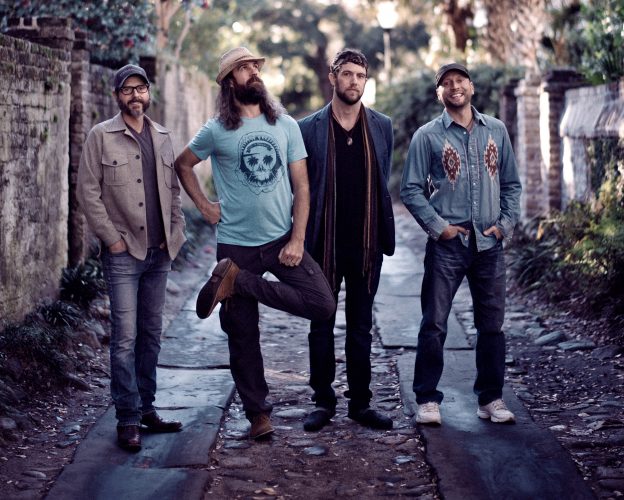
Back in 2005, Dan Lotti and Mike Sivilli began playing locally around the Folly Beach area in Charleston, South Carolina. Over the next few years, the duo picked up Steven Sandifer (and more recently Markus Helander) and formed officially under the name Dangermuffin, an odd juxtaposition chosen precisely for that reason.
“It started off as something to remind us to not take ourselves too seriously,” Lotti said. “One of the best explanations we have is there’s an old T-shirt design we have that’s sort of like the garden of Eden, Eve by the tree of knowledge, and she’s picking a muffin off the tree, so it’s kind of like the forbidden fruit, if you will.”
By 2010, Dangermuffin had begun touring nationally. Throughout the last decade, the band has recorded six albums, with their newest, Heritage, having been recently released at the end of March. Heritage delves into humanity’s collective roots, how we’re connected spiritually and how that relationship differs from a religious context.
“I think religion is more like a collectivized perspective, a one-size-fits-all sort of thing, whereas a spiritual approach would be a very individual path,” Lotti said. “With Dangermuffin’s music and what we do, it’s a very unique, independent musical expression, so it’s more along the lines of a spiritual pursuit. Less dogma, a little more open-ended, esoteric. Lyrically we use a lot of very old symbols or archetypes—it’s always about the ocean or the sun—these natural themes that everyone all over the planet has a relationship with and can connect with in their own way.”
Coincidentally, the band decided to record part of the record at the Unitarian Church in Charleston, a national historic landmark founded in 1772.
“We got into the space and immediately recognized its phenomenal energy and vibe, and acoustics,” Lotti said.
The church sits in an area of downtown Charleston that is known for being haunted, with frequent ghost tours offered to tourists. Rather than playing into the space’s spooky reputation, Dangermuffin sought out a spiritual connection with the past.
“It didn’t have an eerie feeling, but it did feel like you were tapping into the ancestry of the place,” Lotti said. “We wanted to do the lead vocals late at night with the lights off, and it definitely felt like the place was coming alive energetically, particularly for the songs ‘Ancient Family’ and ‘The Sea and the Rose;’ those two songs, when we laid down the vocals, it was very vibey in the room. It kind of became this reciprocating synergistic situation where it was imparting itself on the performance. It was really cool to do.”
On previous albums, there has been a level of electric grit in Dangermuffin’s music, a spark that would ignite more loosely formed Americana instrumental breakdowns. Though the fluidity remains, there’s a more breezy feeling to Heritage, in part because the album is completely acoustic, with more forward percussive elements.
“Dangermuffin has always been really eclectic musically. We’re running the gamut of all these different grooves and genres,” Lotti said. “We like to call it roots music, because it’s bluegrass, a little bit of reggae, some island-y vibes. The term ‘Americana’ itself is an ever-expanding sort of genre. What is the American experience? It’s all of this amazing music and influences kind of melting together in the American soundscape.”
The result is something easily enjoyed, the kind of laid-back music you’d equate with a lazy afternoon at a festival like High Sierra in Quincy, California, or the now-defunct American River Music Festival (which Dangermuffin has played). However, if you’re looking for a little more to chew on, there’s the deeper message of Dangermuffin, the one that questions where we come from, and how we each on our own relate to this planet and its past inhabitants. It explores our greater need for peaceful resolution and healing, which coincidentally could begin to be found in that laid-back sound.
“In particular, this record is about just further recognizing your roots as a human being and how much your natural surroundings are connected with you,” Lotti said. “That’s really what our heritage is—it’s realizing the truth that’s always around you, and the healing that could take place if we just get back to some of these traditions that have been sort of hanging on by a thread for quite some time. My wife for the past few years has been studying herbal medicine and now she’s a practicing herbalist, and I’m learning so much just from her growth and understanding of these older traditions that are so phenomenal when it comes to bridging the gap through plants. There’s a guy named Immanuel Velikovsky who was a brilliant psychoanalyst who made the connection between planetary trauma and the condition of humanity, and that each one of us carries around this trauma on a daily basis. The most important thing we can do in our lives is to try to heal. I think one of the greatest tools that we have to facilitate that is music.”
The beauty of layers is there’s no pressure in the choice. Whether you want to ask the hard questions or hear the light acoustic hooks, it’s all meant for the taking and for Dangermuffin, about the offering.
“Sometimes I think artists, and I’m not judging anybody, but in a lot of it the message can become insistent, like, this is how it is, we all should do A, B and C,” Lotti said. “It can turn people off. I think it’s more pure if you can approach it from a casual perspective. And a lot of people are really open to the deeper discussion, and when the time’s right to have that conversation I really value it, and we’re just getting back to continuing that conversation and connecting in this lifetime. It’s both of those things, it’s up to them.”
Get down with Dangermuffin any way you see fit at one (or more) of their three upcoming shows in the greater Sacramento area. On May 20, 2017, they play Coloma Gold Trail Grange 452 in Coloma, May 24 they’ll be at Torch Club in downtown Sacramento, and May 26 they play the Strawberry Music Festival in Grass Valley. Learn more at Dangermuffinmusic.com or Facebook.com/dangermuffin. Below you can check out the video for “Ancient Family” off their new album, Heritage.
**The article above first appeared in print on pages 18 – 19 of issue #239 (May 8 – 22, 2017)**
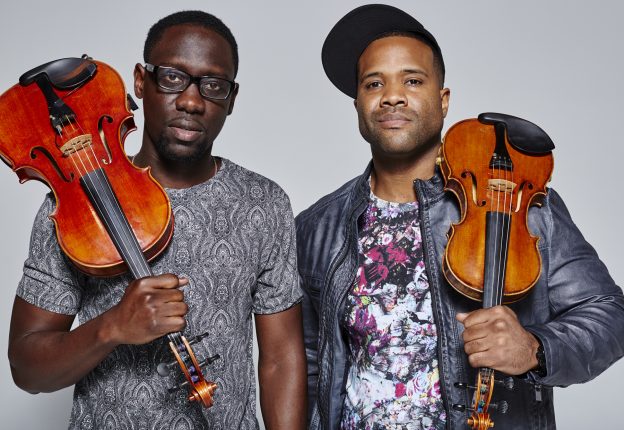
At its heart, Black Violin is an ongoing conversation between two consummate performers engaged fully in the language of their instruments while consistently bending the vocabulary. To date, their playful blend of contemporary hip-hop and classical stylings has gained them stage space alongside the likes of Alicia Keys, Aerosmith and Kanye West; won over notoriously tough audiences at the Apollo Theater in Harlem; and sent them to perform for President Obama’s second inauguration. In the meantime, their unique straddling of two musical worlds has made every show an opportunity to open minds, flip stereotypes and foster an independent musical spirit in the next generation of artists.
Wil Baptiste (viola) and Kev Marcus (violin) of Ft. Lauderdale, Florida, spent much of their youth oscillating between the music that filled their classrooms and the music that filled their headphones after class—a mind-opening series of musical discoveries set them on a path toward fusing the two. They began wowing classmates by riffing on string-sectioned rap tracks such as “Gimme Some More” by Busta Rhymes, and they were introduced to an album of borderline-soul jazz entitled Black Violin by the late Stuff Smith, a legend of the instrument. Some years after college, the pieces would all come into place as they hurriedly chose the name for their act before their first performance on Showtime at the Apollo. The name neatly summed up their concept while belying its complexity—it was bold, immediate, dismissive of barriers—and set the two performers up as torch-bearers for a unique and vital strain of American music.
Three albums later, and over a decade into their career, Black Violin have never stopped honing their craft, touring across the United States and Europe while also branching into composing for the small screen; you can hear some of their music on Fox’s The Pitch, including the extremely catchy theme song, “No Fear.” They’ve also become increasingly devoted to outreach for budding young musicians, making numerous appearances at schools and with youth orchestras around the country. Here they have a chance to impart their favorite and most valuable lesson, and one that translates just as well outside of the band room—how to think outside the box with your given talent.
For most of 2017, Baptiste and Marcus are continuing the U.S. leg of their international UNITY tour, including January stops in Arcata, Santa Rosa, Stanford University (already sold out) and Grass Valley. Their most recent album, Stereotypes (dropped late in 2015) is their debut major label release and serves as an apt introduction for new listeners, filled with fantastic guest spots from Pharaohe Monche, Melanie Fiona and complemented by Baptiste’s vocal stylings—but if you can, get a concert ticket and experience their unconventional virtuosity to the fullest.
We had the recent good fortune of speaking with Marcus to find out about the Black Violin ethos, what it’s like to compose for a show on a major network, the experience of meeting the Obamas and the joy of overturning stereotypes.
How was your 2016?
It was a great year, probably the best year of our career. We had an album on a major label for the first time; we had a great European tour supporting this wonderful band, 2Cellos; we played the Heisman Trophy presentation. I think we did over 140 shows total. It was the year we’d always dreamed of. We were realizing our truest potential. And I think 2017 is going to be even better.
What’s the idea behind the UNITY tour name?
When we do our concerts and we look out from our vantage point on the stage, we see all kinds of different people—black, white, purple, green … There’s 5-year-olds, there’s people in their 90s. We try to make our very existence a unifying thing. There are people sitting next to each other at our concert that normally wouldn’t enjoy the same things, but because of how unique it is, and how inclusive it is, I think we can unify people in a way not many artists do. We have this power to unify and to be really inclusive, and we wanted to shed some more light on that. This tour just has a great vibe. You’ll be entertained, for sure, but you’ll also be educated and inspired. If you’re older and have been listening to classical music all your life, you’ll enjoy it, but you’ll be enjoying if differently from, say, that 15-year-old sitting next to you who listens to Future and Drake all day. At the end, they’ll be able to talk to each other and have something in common.
How did you come to be involved with outreach to youth organizations?
I don’t know if that’s what we set out to do at the very beginning, like putting a violin in a kid’s hand and getting them involved. We were just into making dope music that people could dig. As time went on and we became more popular, there were more eyes on us, and we felt a growing responsibility to give back as much as we take in. At the start, we wanted to be great musicians, to be respected in the hip-hop community as well as the classical community, and as we gained that respect, we realized we had a responsibility to play to as many kids as possible, to help create the next generation of Black Violin, you know, the next generation of forward thinkers. It’s not even necessarily just about the music. Music is just our tool to think differently; the violin is just the instrument I use to express myself. Ultimately it’s about what we can do with the violin, flipping it on its head. Our challenge to kids isn’t necessarily musical. If you want to be the next Steph Curry, just find another way to shoot the jumper.
One central topic in your music is stereotypes. What is it like confounding them on a daily basis?
It’s sort of my favorite thing about doing this. I like that I can take this instrument with me wherever I want and play it, pick it up and soothe myself, because I can speak through it. Next to that, however, my favorite thing about playing the instrument is that I’m not supposed to play it, you know? I’m a 6-foot-2, 265-pound black guy with a beard, who’s a big football fan. This guy who I am is not supposed to be a classically trained violinist. Every time we get up on stage and do our thing, we change perceptions of what a violin is supposed to sound like, who’s supposed to play that violin and what a black man is capable of. Anytime we’re on stage, we convey that without even trying, because that’s who we are.
How did Black Violin by Stuff Smith change you when you first heard it?
It changed my perception of what was possible. When I went to college, the first day of class, my teacher gave me that tape and told me listen to it. I’d never heard a violin play soul before. I’d heard classical in every way possible, bluegrass, country, jazz violin, but I’d never heard soul violin. It was like hearing something that was alive—like when I first heard Jimi Hendrix play—there’s a heartbeat in it. I never thought of violin in the same way after that. I gave the album to Wil and he felt the same way. Fast-forward three to four years later, we went to do an act at the Apollo and were trying to decide what to call ourselves—the album was the first thing that came to mind.
What’s your approach to composing for television?
This is the first time we’ve ever done anything like this. We just finished the first season of The Pitch. It was definitely a different experience. My whole career since college, when we started Black Violin, has been about making music for us. Now we’re creating music for specific characters. We’re trying to create soundscapes to the work the actors are already doing. We’re contributing to a piece of art, but we’re not the sole creators of it as we are with our albums. It was a learning experience for sure, a different approach to figure out how best to be true to ourselves musically and also make the producers happy. I listen to music a lot differently now, especially in movies and television. I study them a bit more. I notice how the music is married to the images, like in the show Westworld. We try to make music that is more dense. It needs to be epic, it needs to be bigger.
What’s most exciting in music right now and who would you want to collaborate with in the near future?
I think over the last couple of years, especially in pop music, we’ve been in a really repetitive state. But there’s been some albums in the last year that give me hope that 2017 is going to be evolving more musically. Childish Gambino’s album was a masterpiece. I thought it was amazing. Anderson .Paak is another one that I really like, I think his voice is dope, and what he’s saying, his soul vibe— plus, he’s a drummer. Beyoncé, I love her; we haven’t had a chance to work with her—that’s sort of a bucket list thing. Collaboration doesn’t even have to be complicated. I just want to be involved with something that Beyoncé does. There’s Kaytranada on the electronic side, I’m really into that right now—also Flume. I’d love to work with Alicia Keys again. But my ultimate bucket list collaboration would have to be Stevie Wonder. I’d drop anything to work with him. He’s one of those rare people, I think, that never sang a note or said a word that he didn’t truly believe. Bob Marley had that quality, too, I think.
What has been your proudest moment thus far?
It would be performing for the president, I have to say. President Obama—I have to clarify that now. Playing at his second inauguration would have to be the proudest moment in my career. To meet him, Michelle, his kids, shake their hands—it’s hard to top. I’ve never had anything come close to that moment. Standing in line to meet him with Usher, it was a surreal moment, being in the midst of all these superstars. Then I got up and gave him the bro pound and a hug.
What is your advice to musicians for thinking outside the box?
I couldn’t do the things that I’m doing now without completely being dedicated to the violin. We didn’t really try to switch and integrate hip-hop into it until we were well into college, and we’d been playing 10 to 12 years at that point, classically. But I would have quit the instrument a long time ago if I wasn’t able to pick it up and make it mine, play whatever I wanted to with it, and find a way to do something that people would react to.
Don’t miss your chance to see Black Violin live at The Center for the Arts’ Main Stage Theater in Grass Valley on Jan. 29, 2017. Tickets are $52 (which includes facility fee) for non-members and $47 for members. To purchase tickets, go to Thecenterforthearts.org.
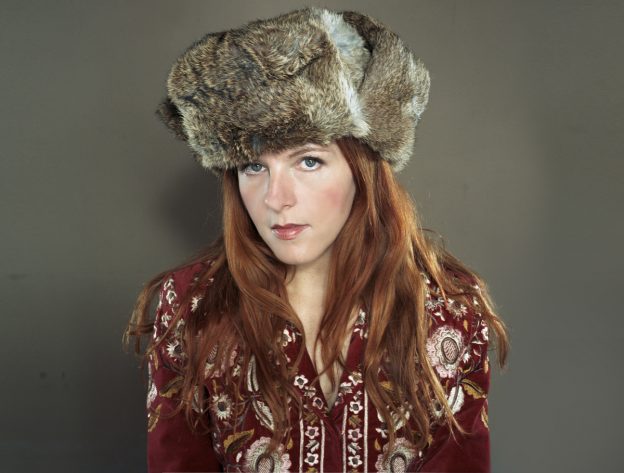
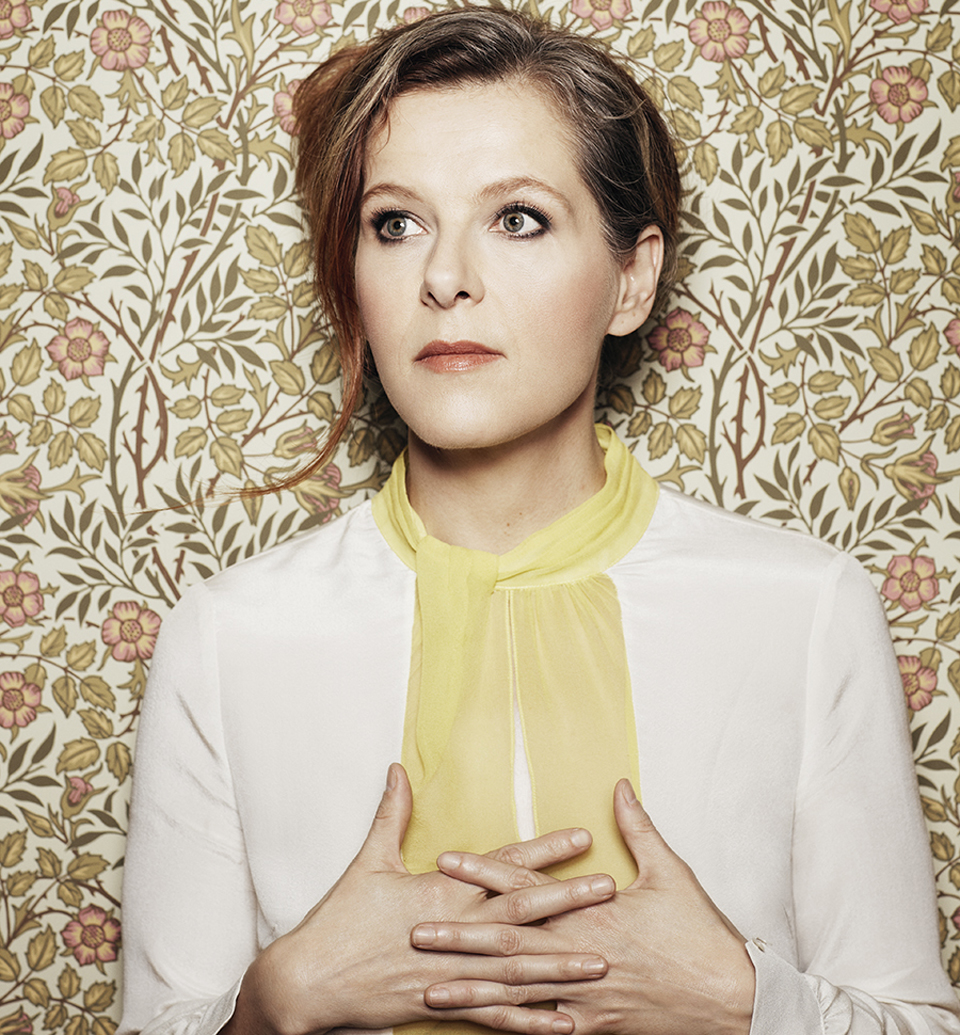
I don’t know about you, but I find it really, really hard to get to know anyone by a single phone call. So, frankly, I hate phone interviews with musicians, and I generally try to avoid them at all costs. Except when it’s Neko Case … How could I say no?
If you believe that lives have soundtracks, then I would say Neko Case has certainly been a part of mine. I remember when a coworker first introduced me to her music some 10-plus years ago—it was Furnace Room Lullaby, Case’s 2000 release. She was backed by a band referred to as Her Boyfriends; it was her second solo album. I couldn’t think of any other modern musician at that time whose voice was so powerful or soulful. It was authentically twangy and country, for sure, but not in the obnoxious sense of a Merle Haggard or Dolly Parton. (Blasphemy, I know.)
From then on, on so many nights, I remember the satisfaction of setting that sky blue disc (Case’s 2006 release Fox Confessor Brings the Flood) with her hand-drawn fox on it into my CD player just before bed, or the sheer bliss of driving down the 101 with the windows rolled down and Middle Cyclone (2009) washing through the speakers, or listening to Case’s entire discography on repeat with coworkers.
Anyway, I was recently invited to interview her over the phone as she continues her fall tour, which is a sort of celebration of her discography to-date. As that day drew near, my anxiety grew as I deliberated over what the hell I’d ask her that she hadn’t already been asked.
Within the last seven years, Case has earned three Grammy nominations for her music and reached No. 3 on the Billboard album chart. Eight solo albums deep into her musical career, she released her box set Truckdriver, Gladiator, Mule last year.
“Someone asked me why I’m releasing a box set if my career isn’t ending,” she would tell me later with a laugh.
She was asked by Rolling Stone shortly after the release, “Have you found that people think you’re quitting, now that you have a box set?”
“Yes,” she answered. “It was pointed out to me also that it’s a strange point in your career to have a box set, which I never thought about. But I want to go to my own funeral—who doesn’t?”
Alongside her solo career, she has remained an original member of renowned Canadian rock band The New Pornographers since their debut in 2000. And, this summer, she joined forces with fellow musicians k.d. Lang and Laura Veirs to promote their self-titled collaborative album case/lang/veirs, which, upon its release in June, received widespread praise. She’s been a frequent guest on NPR, and has been interviewed by just about everyone, it seems, including the New York Times, The Guardian, Pitchfork … the list goes on.
By the time we got to talking, I was experiencing a bad case of cold feet. But, the show must go on. Right before she and I spoke, her publicist informed me that Case just finished a radio interview. Case had just 15 minutes to chat with me over an incredibly patchy connection from her 100-acre farm in Vermont. It was 7 p.m. her time, and to my surprise, she was still cheery and friendly, despite having to field back-to-back interviews. (She had yet another scheduled after our chat.)
I was slightly apologetic for being part of the interview flurry.
“I love my job,” she reassured me. “I’m excited to promote the shows.”
In November, these shows will land in her hometown, Tacoma, and end in Southern California, with numerous stops along the Pacific Coast. I asked Case later in an email if there were any specific albums, songs, or works of art she was feeling especially nostalgic about, considering the anniversary of Truckdriver, Gladiator, Mule was right around the corner.
“I’m not feeling so much nostalgic as shocked that I can’t remember more about those times,” she replied. “They were SO labor intensive.
“I’m also a bit like a dog in that I’m always shocked and delighted by my next meal, as it were,” she added. “I’m always worried I’ll never have another job and so I put blinders on for the project ahead. There is not much time to reflect, but I keep hoping ‘someday.’”
Photo by Emily Shur
There is quite a history to reflect on. Washington state-bred, Case’s earliest musical beginnings began on the drums, shortly after leaving a broken home—plagued by her parents’ drunkenness and drug addictions—at age 15. She relocated to Vancouver to attend art school when she was 23, and simultaneously began drumming for and touring with punk bands like Cub and Maow. By her late 20s, Case’s interests shifted to country music, and in 1997, she released her solo debut The Virginian, backed by Her Boyfriends. It featured both originals as well as covers, like Loretta Lynn’s “Somebody Led Me Away” and the Everly Brothers’ “Bowling Green.” Four years later, in 2001, she released Blacklisted, her first album without Her Boyfriends. She has been churning out albums ever since, including: her live album The Tigers Have Spoken; the aforementioned Fox Confessor Brings the Flood, a record riddled with haunting fairy tales and dreamlike musical compositions; as well as Middle Cyclone, revealing Case’s reverence for Mother Nature and animals alike. The last of these, which she recorded at her farm home in Vermont, was nominated for two Grammys and reached No. 3 on the Billboard album chart. Her most recent release was 2013’s The Worse Things Get, the Harder I Fight, the Harder I Fight, the More I Love You.
Despite all of this, it’s understandable that Case hasn’t had much time to reflect at all. After all, she just finished touring with Lang and Veirs just over two months ago.
“I feel like it was a master class in being a musician and being an independent one who writes their own music and produces their own records,” she said. “It’s been crazy and inspiring and really fun.”
On top of that, she also just finished recording new material with The New Pornographers, which is now in the mixing process and is slated to participate in a WOMANPRODUCER panel discussion alongside female musicians Zola Jesus, Suzi Analogue, and Miho Hatori at the National Sawdust in New York City, hosted by indie pop duo The Blow.
As I said, fifteen minutes just isn’t much time for an interview.
What I can say is that within the first minute or two of speaking with Case, I recall thinking, “Wow. How nice it is to talk to someone who is just seems normal, down-to-earth, and human.”
If you ever chat with Case, read through enough of her interviews, follow her tweets, or read any of her open letters and essays that she posts on her website, you will quickly notice her sharp, often crass sense of humor, and the fact that she doesn’t hide much. She is not afraid to share her thoughts, and she can be painfully honest about her past and the ghosts that still haunt her. She has often described as having a sort of punk rock ethos, but at a more fundamental level than that, she just seems to exude a strong sense of self.
I asked her about that in our email correspondence.
“It’s not self-confidence as much as ‘what have I got to lose if I already have nothing?’” she replied. “It’s not feeling sorry for yourself so much as it is letting go and acknowledging that art and music are not a contest and despite the fact that the industry operates on and exploits that illusion, YOU, the human creator doesn’t have to.”
So, what’s not to love about Neko Case? Not only is she a self-made musician and songwriter, but back home in Vermont, she is a farmer, growing her own food, complete with chickens, a horse, dogs and cats. She is a lover of animals (she prolifically tweets adorable pictures of her beloved dogs and cats while at the farm), and she is an advocate of animal welfare, supporting nonprofits like Best Friends Animal Society.
In addition to being a musician, Case is also a visual artist, often creating her own album art, including the cover of The Tigers Have Spoken. Along with Truckdriver, Gladiator, Mule, she included an 80-page book of photography that she designed and curated herself.
“Other than the album art I don’t get enough time to work on art, but I’m hoping to change that in the next year,” she said.
I asked Case how she would describe her evolution as a musician from the earliest years up to now, reflecting on her solo work as well as her collaborations, from Maow and the New Pornographers, to, most recently, case/lang/veirs.
She shied from the question, responding, “I’m too close to it to answer this one, I’m afraid. It’s a tough one!️” She punctuated her response with a smiley face emoji.
However, to promote Truckdriver, Gladiator, Mule, Case did write an open letter to her fans last year from her farmhouse on what she described as a snowy New Years Day. In it, she mused: “Have you ever wanted to be in a band? It doesn’t end up looking like you think it will; it’s WAY more strange and interesting than you can imagine. If you are looking for glamour, however, you’ve come to the wrong job. Glamour is for dicks anyway.
“Being in a band isn’t a race to an awards platform; it is a life, a great and complicated, messy, anxious, hilarious and home-made life. I wouldn’t trade it for anything, ever. I gave up a lot of what makes people “normal,” but it was always my choice. That is a victory in itself. This is a LONG story, which I will continue later, but for now, here are some images and music to take in and wonder about. I made all this for you and me. Without you, however, the circuit does not complete. Thank you for being here with me and making music.”
After November, Case said that she will be working in Tucson full-time on her next album. Meanwhile, if you have a soul, make it a point to make Neko Case part of your life soundtrack, too.
Catch Neko Case with Eric Bachmann and Jon Rauhouse Nov. 13, 2016 at The Center for The Arts located at 314 W. Main St. in Grass Valley. Tickets for the all-ages 8 p.m. show are $48 and are available online at Thecenterforthearts.org.