As California WorldFest celebrates its 20th year, the festival has maintained its promise from the beginning to provide music that connects us all. WorldFest isn’t just an ordinary festival; there’s a strong commitment to providing a quality lineup and environment that brings about a level of palpable community, and a positivity that feels downright progressive.
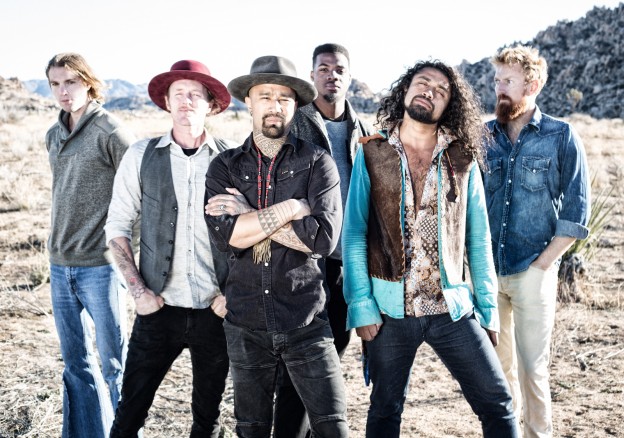
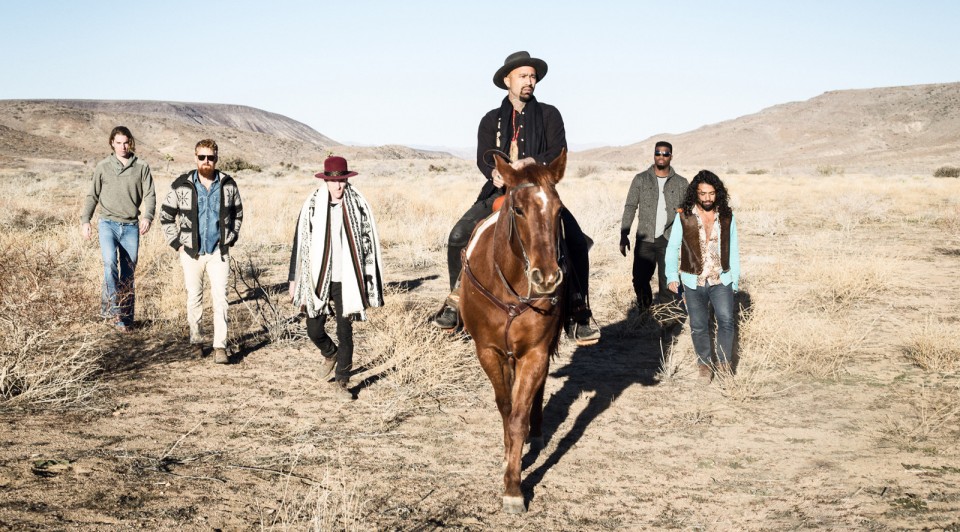
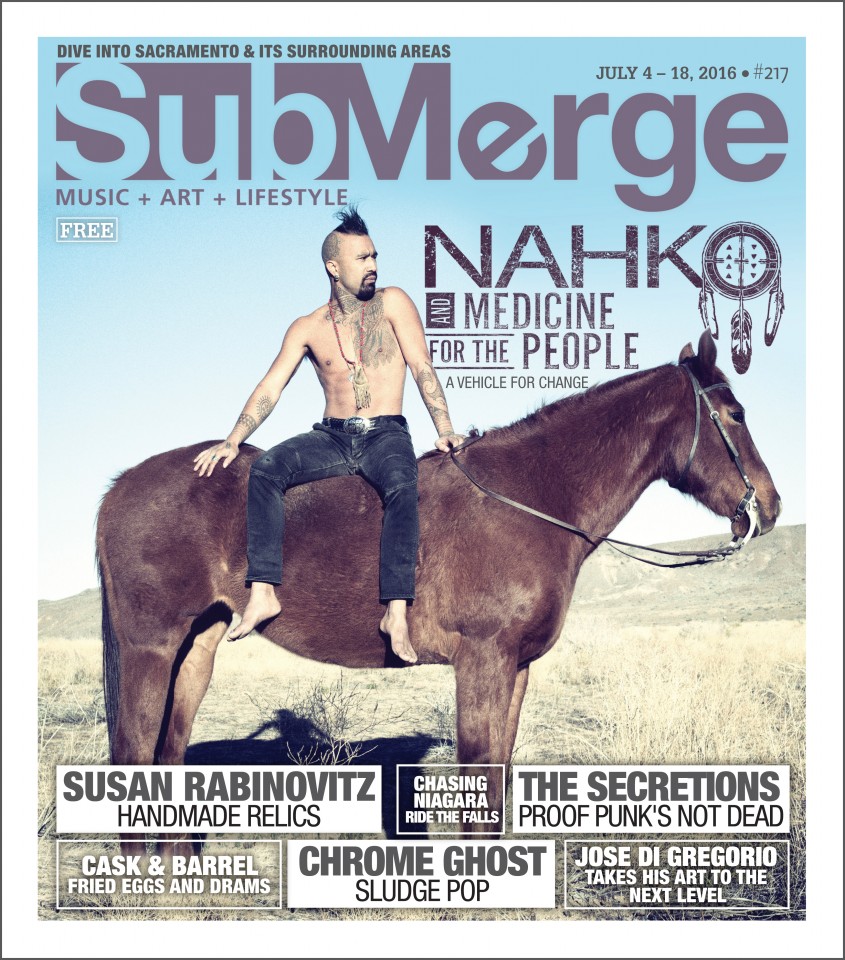
With that framework in mind, Nahko and Medicine for the People serve as a perfect addition to this year’s roster and one of the headliners to boot. The frontman and heart of the project, Nahko Bear, creates music that’s two-in-one; the bones of the songs are easy listening, a mesh of light-acoustic melodies, hip-hop vocal delivery, driving horns and peppy drums, all falling under the banner of world-fused jam-rock. But lyrically, Bear discusses everything from confronting his father’s murderer (“San Quentin”) to his mother’s subjection to human-trafficking, leading to his own birth (“So Thankful”). The two styles might seem dichotomous, but in truth the result is the creation of an open, honestly raw performance, creating a change in audiences that can lead to a visibly healing experience.
“It’s very obvious to me, I can watch people change,” Bear said. “There’s something about that exchange that continues to transform people, it’s always a different experience but there’s still weight to it.”
This wasn’t how it started though. In fact, it wasn’t something Bear had any intention to start. Bear grew up in Portland, Oregon, and moved to Los Angeles at the end of his teens, spending time in Hawaii on-and-off, with no plans to fully pursue music.
“It kind of started on it’s own,” Bear said. “I was in and out of doing some basic labor work, playing open mics, once in a while putting on my own show, sort of fine tuning. Never was there an intention to actually be a band. I like to travel, sometimes I’d travel the states and during the winter I’d come back and work on [a] farm. I began to realize the music was taking a life of its own and became a stronger calling.”
From that calling came the creation of Dark As Night, a collection of heartfelt, upbeat tunes that spread like wildfire. There seemed to be an instant audience surrounding the music, known as the “tribe.” That strong community support took Bear’s music to an international level. The album hit No. 4 on Billboard’s Top New Alternative Album Chart and No. 7 in Australia on Triple-J’s Top 10 Roots Albums of 2013. All this hype paved a whirlwind path to recognition, bringing the band to festivals and stages around the world, opening for top acts like Michael Franti and Trevor Hall.
Three years later, Nahko and Medicine for the People have followed up that success with their newest record, Hoka. The music continues to delve into a stronger signature groove; less acoustic and more full-electric throttle, deep bass-lines, ska-like driving horns and Bear dodging between quick hip-hop verse-delivery into sing-along choruses. The album pulls in guest appearances from Xavier Rudd, the Portland-based trio Joseph and Zella Day. Songs like “The Wolves Have Returned” and “It Is Written” stand out as more fleshed out, anthemic songs, footprints of The Medicine Tribe’s growth as a band. Overall, there’s something that just feels bigger. That comes not only from the instrumental high energy and group harmonies, but from the messages themselves. Lyrically, Bear continues not only to confront his own struggles, but to acknowledge greater societal struggles. The word “hoka” is a Lakota word meaning “call to action,” a cry before going into battle. Bear’s turned that sentiment into making necessary change; the drive to not only recognize a need, but do something about it.
“[Music]’s a vehicle that I use at the full throttle to do both those things,” Bear said. “It’s pretty fun.”
With the release of the single, “Make a Change” and the Make a Change Tour in spring, the band began releasing short videos of tangible ways to help the environment, one being horn player Max Ribner explaining how the band tries to minimize their waste on tour with reusable bags and cups.
“I’m a very huge supporter of activism, artists that stay at the forefront of being involved in whatever political, environmental or social aspects of work,” Bear said. “It is a lifestyle, it’s a very strong hand in this path.”
That involvement hit a more national level recently when the band opened for a Bernie Sanders rally in San Diego.
“Bernie Sanders was finally the first person to inspire so many young people including myself to actually back a politician up,” Bear said. “There’s been a lot of kindling if you will, added to the fire because of [him]. I’m constantly inspired by people, progressive movements, who continue to work the tireless hours to preserve and protect and look towards a time where justice is served.”
That justice comes from Bear going beyond his work as a musician, using a hands-on approach, and “constantly working in a very personal way to go beyond the stage,” said Bear.
“I work for a handful of different organizations in the States, some of them focus on climate change, some focus on empowerment, some focus on cultural preservation,” Bear said. “At the moment I’m working on a project in September that I’ve been facilitating with a tribe in Northern California for, I guess you would say a triathlon, to raise awareness around Northern California’s watershed and the returning of traditional salmon to those rivers.”
The tribe is the Winnemem Wintu, and the triathlon is a two-day run, two-day bike ride, two-day paddle and four-day horseback ride around Shasta Lake. Bear will be creating a documentary surrounding the event.
“I’m pretty excited about it because I’m finally getting to flex my Rolodex of activists and be able to help this particular tribe,” Bear said. “The very foundation of it is a human issue. What happens down river is a result of what happens up river. Sometimes yeah, I play music, but I’m constantly working with things on the ground.”
See Nahko and Medicine for the People Friday, July 15, 2016 at California WorldFest, which takes place July 14–17, 2016 at the Nevada County Fairgrounds, located at 11228 McCourtney Road in Grass Valley. The festival features eight stages of music, dance, workshops, food, crafts and kid’s programs. Find tickets and more info at Worldfest.net.
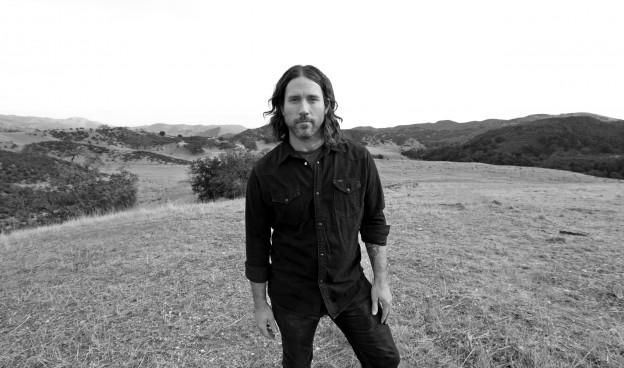
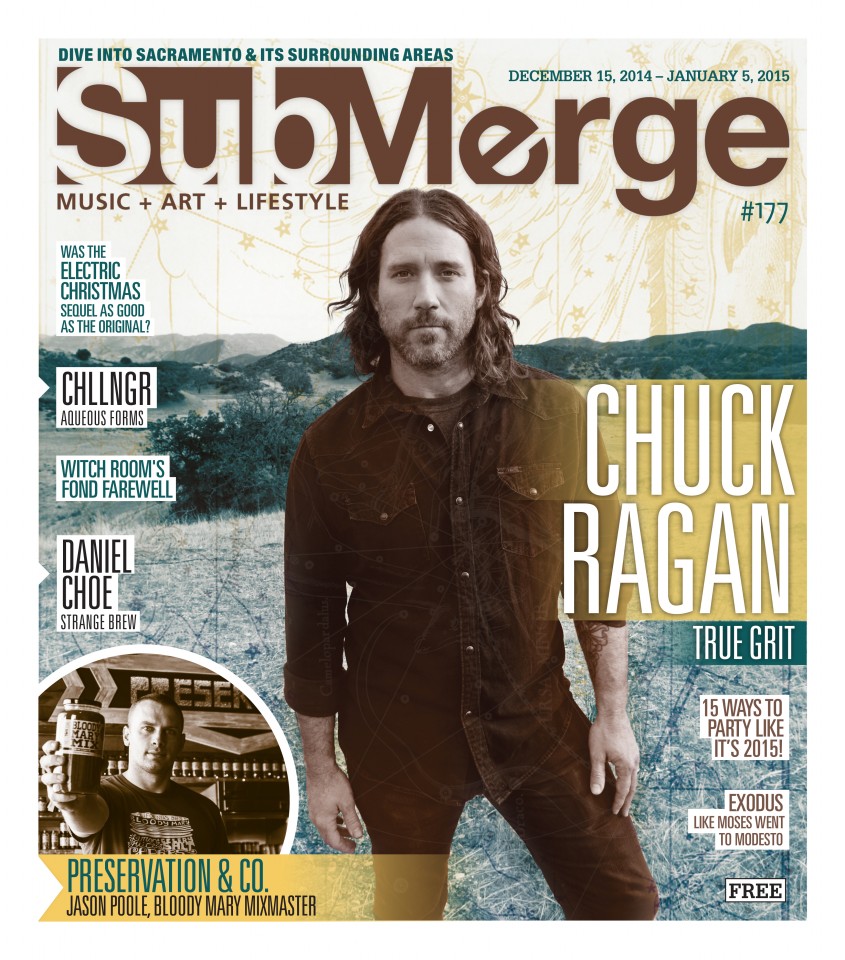
Chuck Ragan’s gravelly voice sounds like the open road.
The former lead singer for post-hardcore standard-bearers Hot Water Music turned folk rock troubadour has forged a loyal following by pounding the pavement and plying his earnest and emotionally stirring song craft in clubs and venues worldwide. He’s so in tune with the highways and byways of America and beyond that he even compiled a collection of his and various other touring musicians’ anecdotes and travel stories in The Road Most Traveled in 2012. However, for his latest album, Till Midnight (released in March 2014), Ragan took a break from his hectic touring life and immersed himself in familiar surroundings.
Till Midnight was recorded in Los Angeles, produced by Blind Melon’s Christopher Thorn, and was tested live prior to recording during a European tour, but the project really started coming together in Ragan’s home in Grass Valley, California. After releasing the aforementioned book, reuniting with Hot Water Music, working on his own solo stuff and embarking on the Revival tour, a collaborative acoustic event, Ragan was in need of a break.
“My problem is I have a lot of ideas,” he says with a laugh. “It always looks better on paper, you know what I mean? Once the calendar starts showing up, and you start committing to things and then when real life comes into play, the next thing you know you’re gone most of the time. It makes it harder for loved ones at home, for sure.”
Luckily for Ragan, where he calls home is a “beautiful” and “healing place.”
“You don’t have to go very far to be completely submerged in the outdoors,” he says. “That’s a big part of my life, being on the river fly-fishing. I take a lot of field walks with my dogs as well. We hunt and we fish, but there’s so much more to it than just harvesting game and eating food that we find. We find the peace and tranquility the outdoors have to offer. That’s what it’s all about for me, and I had a lot of time to do that.”
It was a reflective time for Ragan, but also a time to just kick back and enjoy life at a slower pace. It was out of this headspace that the songs on Till Midnight were born. It’s an uplifting collection of catchy, yet still raw and rocking songs stamped with Ragan’s indelible vocals.
“I was spending a lot of quality time with my wife and my dogs,” he says. “We were still working, but I wasn’t on the road, which was really nice to get grounded again.”
It was so nice Ragan even invited his backing band, The Camaraderie, and other collaborators to his home for pre-production. He says their days would usually start with fishing before moving into the studio, then they’d cook and sit around the fire and talk.
“We did a lot of work on the songs, but I wasn’t worried about the songs,” he says. “I knew that once we got into the studio, it would just come together. The structures were pretty much there, and those guys were so pro that everything fell into place. To me, it was more about finding that bond, just coming together.”
Ragan is closing out 2014 on the road with The Camaraderie, and will play a series of solo shows (including a stop at Sacramento’s Goldfield Trading Post) in early 2015. He’ll also be heading back into the studio, this time to record music for The Flame in the Flood, a video game developed by some of the creative minds behind Rock Band, Halo and BioShock. We opened the following interview discussing this forthcoming soundtrack.
I wanted to start off by talking about The Flame in the Flood. I checked out the trailer for this video game, and I was riveted by it. How did you get involved with this project?
Scott Sinclair has been an old friend for years. He did the majority of the artwork for the Hot Water Music releases, and he’s a part of The Molasses Flood [game developers]. Scott, along with a lot of the other folks involved, thought that my music…would be fitting for their project. They came to me and showed me some of their work and what they were shooting for, and I just fell in love with the idea and the concept. And then we just started collaborating, trading ideas and finding out what they were looking for and what they wanted to hear—just getting the overall vibe of the message they wanted to convey with this project. I started writing and sending them tunes, and they loved them.
I’m thrilled to be working on something like this. It’s exhilarating for me… I really enjoy…when people bring forth their ideas and want me more or less to translate them into music, it’s always a challenging but really exciting process to be a part of.
I’d imagine it would be a lot different than writing for an album. What did you have to go on to write the songs? Did you have clips from the game?
They sent me some clips. I asked them to send me anything they could to help me find some inspiration and find the right path. They sent me everything from clips to a breakdown of the game and the sequences and some of the experiences that the character in the game would encounter. They sent me word clouds, all kinds of stuff. It was pretty clear to me right off the bat that a lot of the points they wanted me to touch upon in the music was stuff I already write about, so that’s where we both found a strong connection.
What did you find most inspiring about the game? The title song you wrote that’s featured in the trailer is beautiful.
Thank you. Simply just the will to survive, no matter what. This is a game where a young girl and her dog are navigating through a broken world and running into situations where she gets sick, gets lost or has to build a fire, or has to find food. When all odds are against her, she has to find the will to survive. That’s where I found a lot of the inspiration.
You worked with Paige Anderson and the Fearless Kin on “The Flame in the Flood.” They’re an up-and-coming band out of Grass Valley…
Yeah, I’m thrilled with them. I love that family so much. I found them when we first moved to the area. My wife and I…were walking through the county fair and we came across this tiny little stage with hay bales out, and we looked over and saw this family. And they were young… Daisy I think was 5 years old, and Paige was 13 at the time. They were just dressed to the nines. We were like, man, I don’t know what’s about to happen here, but it looked like it was going to be good. We just sat down and fell in love with that family. We laughed, we cried. It was so cool and moving.
Ever since then, I’ve followed and supported them. I helped Paige write her first song and just did what I could to show them what I know, and what I thought they should be doing. They’re not kids anymore, but all they want to do is live and breathe music. They just put out a record called Foxes in June that I helped them out with a little bit. It’s pretty awesome to see what they’re doing and where they’re going with their music and how they believe in it.
When you started out in music, did you have someone who played a similar role for you, like someone who showed you the ropes or gave you advice?
For sure. I had a guy who showed me how to play simple chords when I was 12 years old…28 years ago [laughs]. He also told me I could do whatever I wanted to do. My grandfather was probably my biggest inspiration in those days. My father wanted me to follow sports. I was good at it, and that’s what he wanted. I loved skateboarding and everything, but he wanted me to stick with the games. When I wanted to start playing music, that was the last thing [my parents] wanted me to do. My grandfather, I’ll never forget it, I was playing a song for him. I could barely even play. Bless his heart, he was being patient listening to me fumble through a song, and he said, “Son, you love playing that thing?” I said, “yeah, granddad,” and he said, “Well then you’re a damn fool if you ever put it down, and don’t let anyone ever tell you any different—even if it’s your parents.” That just blew my mind. At that age, we always rebelled against our parents, but for some reason when granddad said something, you listened. That was a turning point in my life.
You have a solo show coming up in the New Year at Goldfield Trading Post in Sacramento. Do you arrange your set list a lot differently when you’re performing solo?
A lot of the times, I don’t even make a set list. People are always so kind to request songs, and if I can play them, I’ll play them. I play music for myself, but I’m playing shows for the folks who want to see them. I’ll be playing some new stuff and stuff from The Flame in the Flood as well as a lot of stuff off of Till Midnight, which sounds a lot different than when I’m playing alone as opposed to a full band.
See Chuck Ragan play solo at Goldfield Trading Post (1630 J Street, Sacramento) on Jan. 10, 2015. Tickets for the 9 p.m., 21-and-over show are $20 and can be purchased through Goldfieldtradingpost.com.
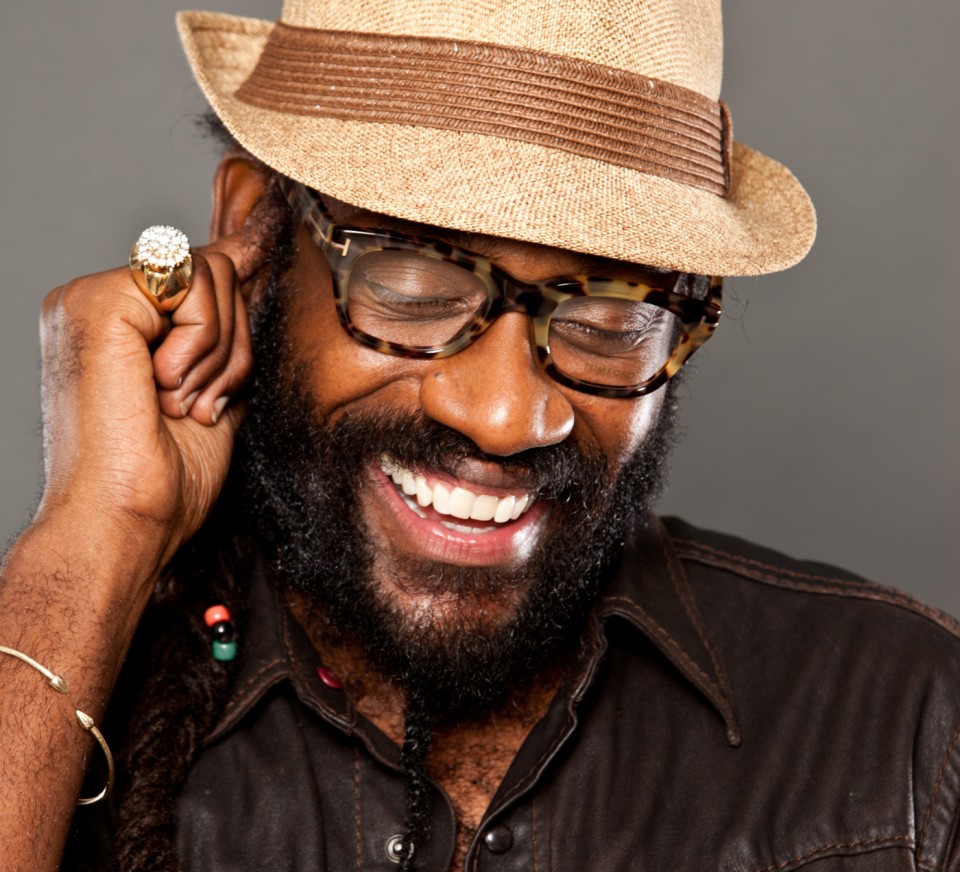
There’s a lot of father-son sayings some might like to use in describing Tarrus Riley. He’s heir to the late legendary reggae singer Jimmy Riley, who had a prolific career crooning throughout the latter half of the 20th century and well into the new millennium before passing away in March from cancer.
A chip off the old block; like father, like son; and, sure, the apple doesn’t often fall too far from the tree. While most folks would be right in presuming Tarrus has taken up the torch from his father (in some respects), you’d be wrong to assume that Tarrus is Jimmy Riley and that their music remains identical.
On the contrary, Tarrus has shown he’s his own artist. With five albums and more than 60 singles/EPs under his belt—including the international reggae hit “She’s Royal” from 2006—he has formed his own path to success in the music world, and is going strong to this day.
Still, his father’s lingering presence is hard to shake—especially now, Tarrus explains. Not just a father, but also a “best friend,” Tarrus says it hasn’t fully registered that Jimmy is gone.
“I don’t feel that my father is deceased,” he adds. “That reality has not come to me, because he was so entrenched in my life. And there’s so many things I see that show him daily, that it’s like … yeah, I don’t know.”
Despite the family tragedy, Tarrus has not refrained from going overseas to perform and test out new material among international audiences, as well as here in our own backyard in Grass Valley. Ahead of a concert at the Center for the Arts on May 26, 2016, Submerge was able to talk to Riley via phone about his reaction to his father’s death, last year’s chart success with Major Lazer and how his spiritual philosophies guide his musical message.
I understand you just came back from a string of shows in the UK. How’d that go?
It was amazing—a lot of sold out shows. So it was cool. And the different thing about it was that I could see how [people reacted to] a lot the new music that I’m doing … because I’ve never been genre-prejudiced, you know? I do a lot of different kinds of music. I do fast music, slow music. So I tested out some of the new material, and it was well received. I had fun.
So it looks like you’re performing at the Center for the Arts in Grass Valley. Have you ever performed there before? Or in Sacramento, maybe?
To be honest, thinking about it right now, I don’t know that I have. Sacramento is not a place that I’ve been [to] frequently. If I’ve been there, it was probably in transit. I don’t remember. I think Catch a Fire [Tour] brought us close to there [in 2015]. But I can’t pick up right away and say, “Yes, I’ve been there.”
If you don’t mind, I wanted to ask about your father’s passing a little bit. Seeing how it happened so recently, would you say that it’s affected your work on the road and in the studio? Clearly you’re still out performing regularly. But do you feel like you’ve needed to slow down at all?
Well, he had been sick for three years. So that’s one part of it. The second part of it is that he was always telling me to come to work. He was the one always pushing me to work [on music]. “Go and do your work, and represent our name.” So I’m honoring a contract that I have. And, like I said, he wanted me to do that. He wanted me to work, you know what I mean? I’m just doing what he said.
What about music-wise? Would you say his passing has inspired any new …
Like I said, I don’t see that [he’s passed on]. I have him as a very much alive person, definitely. I’ve never seen him compromised. Even throughout his sickness, he wouldn’t accept any kind of defeat or anything like that.
Right. But has all this inspired any new music ideas for you at all? Or change how you go about your work right now?
I don’t know, we’ll see. Let’s give it some time. My father’s birthday is this month, on the 22nd of May. And he stopped breathing on the 23rd of March. So it’s still very fresh. Let’s give it some time and see what’s happening. I’m taking it day by day.
Of course. Anyway, speaking of new music, are there any new projects on the horizon for you? I know your last album, “Love Situation,” dropped in 2014.
Yes, I’m in the studio recording a new album right now. I kind of stopped because of my dad. So I kind of took a break, but I’m definitely gonna go get my folks together and see what happens.
I wanted to ask about last year’s Major Lazer hit “Powerful,” where you were featured with Ellie Goulding on vocals. I know that song gave you your first spot on a few different Billboard charts, including the Hot 100. How does it feel knowing you’ve tasted that kind of mainstream recognition and success?
Well, you know, originally it was supposed to be me and Major Lazer alone. I didn’t know about Ellie Goulding being on the song, so that was cool. And it got me into some different avenues. I’m a very popular underground artist, you know? So in my community—in reggae music—a lot of people really love what we’re doing. But the Ellie Goulding thing is a different level. They got MTV and VH1, and it was getting a lot of prime time play on these Clear Channel radio stations. So it’s a big deal. And we want more collaborations like that, because I’m very confident in the music I make. And I believe if we get similar opportunities like that, I can make a big impact on the international stage. Because I’m a real songwriter, and I’m not trying to show off, but I believe in what I have. So if we get more chances like that, then, hey, the sky’s just a view. There’s not even a limit.
I understand you identify with Rastafari ideals. Can you explain what it means to adhere to that belief system for people who aren’t totally familiar with it?
A Rastaman is someone who’s in tune with nature, you know? He likes to eat a particular way, and he’s close to nature. He loves heat, air and water—he’s like an organic person. Everybody talking about going green; the Rastaman went green a long time ago. His heart beats to Africa, and he’s very African-minded … That’s what the Rastaman is about: knocking down boundaries and knocking down prejudice and knocking down stereotypes. And for everybody to live and love. Rastaman’s vibes are all about love and respecting each other, and unity … I mean, it’s all about love. And loving yourself and loving your body. And it’s a consciousness. And you get that through my music, you know?
So would you say that Rastafari themes always translate through your music?
It’s not every single song [where] I’m going to sing and tell you about Rastafari … Remember, before I’m a Rastaman, I’m a human being. So I bleed blood like everybody else, and I put on my pants one foot at a time like everybody else. So you can call me a musician, you can call me a Rastaman. But before they call me all of that, they have to call me just a human being … I’m living on the earth like everybody else, trying to figure it out. That’s why I don’t preach to people in music, because I’m not in any position to preach. I’m trying to figure it out every day, one step at a time. So you get those kinds of things in my music. Sometimes in a song, I’m trying to figure it out; sometimes I know. Sometimes I don’t know; sometimes I want to know … There’s a lot there for you to grasp, but that’s truth.
Is there anything else you wanted to let our readers know?
For anybody who doesn’t know about what I do, come out to the [Grass Valley] concert and get your own experience. You know what I mean? Because I do give 150 percent and more when I come with the live vibes.
Experience Tarrus Riley live in concert at Grass Valley’s Center for the Arts (314 West Main Street) on May 26, 2016. Tickets start at $24 for members/$27 for non-members. For more info, to buy tickets or to find out how you can become a member, go to Thecenterforthearts.org.
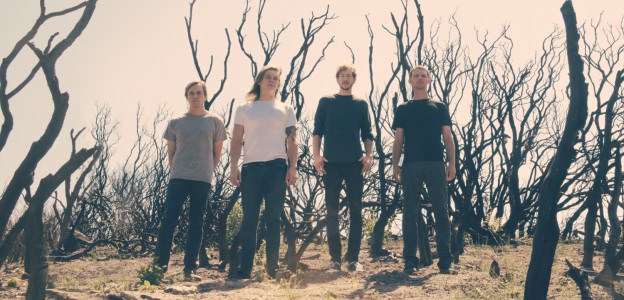
Like a wrecked ship caught halfway in the transition from steel construct to living reef, Pinnacles achieves harmony through clashing processes. They often characterize their music as “prog” or “math” rock, but their work is not overly indulgent in the byzantine excesses of the former or the regimented oblivion of the latter. Instead, they are a varied landscape unto themselves, with tight, earthbound rhythms and sky-borne melodies that rise and fall gracefully like birds of prey pulled aloft by thermal gusts.
Indeed, one has a hard time listening to songs like “Sinking vs. Sourcing,” a highlight off of their last album Convolve and Reflect, without imagining a soaring birds-eye view of dramatic, forested mountains. It is only after a few listens that the second side of Pinnacles—one of intricate, carefully designed technical wizardry and layered production, becomes readily evident.
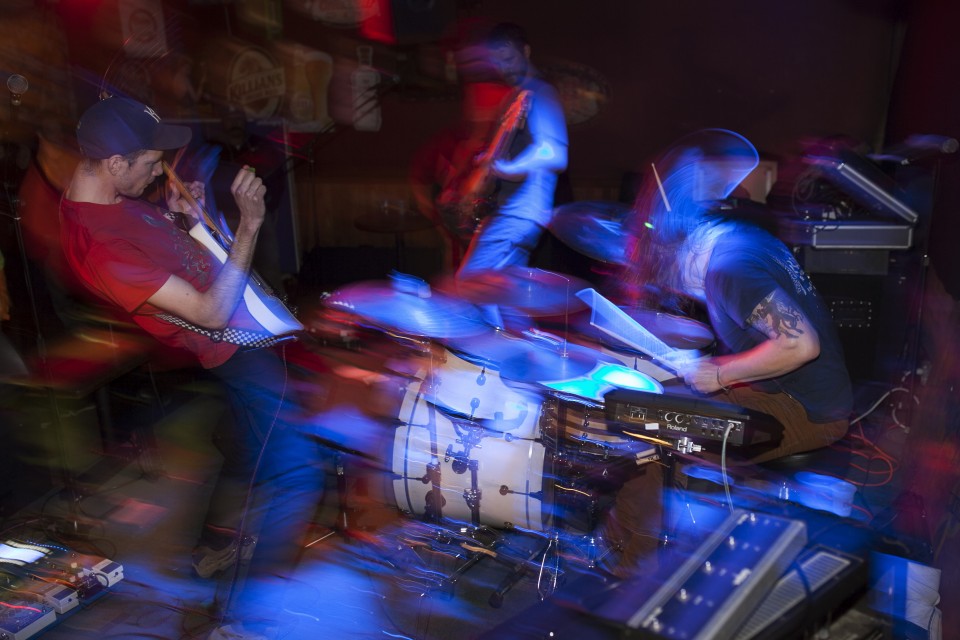
This background machinery is mostly the realm of the band’s two guitarists/vocalists, Justin Hunt and Robbie Landsburg. After an intense collaborative songwriting and recording process with bassist Jesse Kinseth and drummer Zach Peach, who both weave a maze of mutating (but surprisingly naturalistic) time signatures, the former two can spend months fine-tuning the results, capitalizing on their introverted natures and retreating to a world-within-a-world where endless experimentation for its own sake eventually crystallizes into a record. One gets the sense that they could continue indefinitely—and their shifting, engrossing songs reflect this, almost striving to expand ever outward, refusing to be fully contained by the boundaries of an album. This is the environment from which Convolve and Reflect emerges.
The environment from which Pinnacles emerged about two years back is likewise fertile, in more ways than one. The Nevada City/Grass Valley area, where the band members grew up, has long been a hotbed for creativity, especially in music. The band members cite a supportive local scene, along with the solitude afforded by the lack of sprawl and proximity of the nearby forest, as producing favorable conditions for their exploration into the boundaries of melodic art rock.
At times aggressive or purposefully delicate, precisely arranged or freely drifting, Pinnacles are now at the top of their game and have only bigger and brighter things ahead. While gearing up for an extensive regional tour and considering how they might diverge stylistically in the future, Hunt and Landsburg were able to chat and lend more insight on their genre-bending nature, the unique locale they hail from and the virtues of having countless guitar pedals.
Photo by Jobi Otso
Does the name “Pinnacles” refer to anything in particular? Justin Hunt: There was actually a long list of potential names that we were crossing off a wall, and “Pinnacles” ended up being the one least offensive for all of us. I’ve always liked the way the name sounded, the imagery that it conjures, just as a knee-jerk reaction. Robbie Landsburg: Also, there’s a lot of builds in our music, a lot of high points—that’s sort of a connection, there. JH: Hmm … I never thought about that [laughs].
What about the latest album title, Convolve and Reflect? JH: That one wasn’t quite as arbitrary—there’s something very onomatopoetic about those two words together. Convolution and reflection are terms used to describe reverberation, or reverb. There’s the reverb that we were using on the record and in our recording spaces. If there was a theme to the record, though, it would be empathy or the lack thereof these days—people not being emotionally connected to each other, just kind of broad-stroke themes like that. So convolving and reflecting is kind of about people coming together, bouncing off one another and existing in the same space. It was a very loose idea that I liked. RL: Our previous album, Automaton—that name was a reference to automation, which is also something you use when you’re in the studio. Our band is like a merge of digital and analog worlds. On the vocals sometimes we’ll have weird, harmonizer effects that are kind of robotic, blended with natural acoustic instruments. There’s a mixing of the digital and analog, as well as the emotional and emotionless.
Are your natural surroundings a big influence on your music? JH: I’d say yes, but mostly subconsciously. It’s a beautiful place—there’s not nearly as many distractions as in a big city. RL: For me, living in this small town in the foothills, surrounded by nature, and yet I’ve always been a very computer-oriented person as well, I appreciate the outdoors just as much as I appreciate nerding out on computers. There’s always that duality, and it’s something I’ve always been fascinated by.
Was there a particular style or sound you hand in mind for this project from the beginning, and is it the same as what it is today? JH: I don’t know if we had any particular ideas, to be honest. I don’t know if there were any preconceived notions of what we wanted it to be, which is part of the fun, at least for me. RL: Yeah, totally. I think we all played to our strengths, like I do a lot of guitar tapping, and then Justin tends to write in some really weird time signatures—it’s never really in 7, never really in 9, it’s shifting throughout. And Zach, our drummer was in a really prog-y band before this, and he’s a really straight-ahead rock drummer that can also do some really cool stuff in odd time signatures. We each play to our own strengths, and I think we kind of took that as far as we could with that last album. I’ve been talking about branching out and getting a little less rock ‘n’ roll and guitars on our next endeavor. I think Convolve and Reflect is our “mastery” of what we initially started with.
Were you always a fan of progressive/math/post rock? When did you first discover these genres? JH: I don’t know. I’d say I’ve become more of a fan of that kind of music of late, but I don’t know how much it informs the songwriting process of our band. I didn’t grow up listening to a lot of traditional “prog” bands of the ‘70s like Yes and Rush, but I knew those bands, and I liked them. The genre wasn’t something that was terribly influential for me, as a guitar player or songwriter. The weird, odd meters is just something that happens naturally, more just what comes out when we get in a room and start messing around. And after a while, it feeds on itself and becomes what we do regularly. RL: Justin and I are both huge fans of the guitar and drum sound on Siamese Dream [by Smashing Pumpkins]. Our bassist Jesse is a huge Tool fan, and I think we’re all huge Tool fans, Aenima and Lateralus were influential as we were growing up. JH: I think the idea is to use odd time signatures, but not make them sound incredibly complicated. Maybe because we’re all neurotic and want to keep it interesting for us, but at the same time, we don’t want to sound too pretentious.
The influences you mentioned seem to all have special attention to loud/quiet, heavy/delicate dynamics. JH: I think, at least Robbie and I, we’re huge fans of a lot of ‘90s rock music, which did that extremely well—especially that Tool/Smashing Pumpkins kind of flavor. I started playing guitar in that era, and there’s a lot of that dynamic in the music from that time. Another thing that was influential on me was the prettier soundscapes and then heavier sections, trying to blend those together. RL: I love every type of music out there, but it can get kind of tiresome in a band doing nothing but heavy or quiet stuff exclusively. It sort of desensitizes you as a listener. I like to keep a contrast, keep the listener on their toes and also present a journey or cinematic experience. JH: Also, we get to play with more pedals! The more sounds we mess with, the more pedals we get to justify buying.
Speaking of messing with sound, you’re both credited as producers on your last two releases. What is your approach to production? JH: Just as a financial decision, we’ve always valued the DIY aesthetic in this band, and it has become something that defines us. When we set out to make our first record we just wanted to do a demo on a lark, and it sounded reasonably good, so we decided to do everything else by ourselves as well. To do things on your own as a band—for one, it’s a lot cheaper. It’s a small investment of money and a large investment of time. I like keeping things under our control. A lot of it was Robbie and I just sitting in there, tweaking the music bit by bit. RL: If this record had been made in the ‘90s, on a studio budget, it would have been like $500,000. The amount of time we spent on it, just going down the rabbit hole, exploring options, coming up with harmonies, we completely re-amped all our guitars, sending it through the interface of our computer, and through the pedals, and back out of the amps—that way, we could do live pedal performances with our hands instead of stomping on them. Just going down the rabbit hole of soundscapes and ambiances, and not always to a tasteful effects either [both laugh].
What’s your take on Nevada City’s unusually rich music scene as a small town? JH: Yeah, there’s a disproportionate amount of talent that comes out of here, considering its size. My take is that, there was an era where there was a lot of hippies who left the cities and moved up here to raise their families, and those same hippies became parents who really fostered the arts with their children. Thinking about that question, that’s the best answer I can come up with. It’s a peaceful, quiet community, with a lot of parents who are very supportive of their children who have become this generation of musicians who at least had opportunities to flourish. RL: And I think there’s a compounding effect as well, when you see other people who are a bit older than you who are performing, and you know some of them, or their siblings, it makes it seem that much more attainable to attempt it yourself.
Pinnacles kick off their West Coast tour March 17, 2016 in Grass Valley at Center for the Arts’ Off Center Stage. On March 23 they’ll play The Press Club in Sacramento. To listen to and/or purchase Pinnacles’ latest album Convolve and Reflect, go to Pinnacles.bandcamp.com. Trust us, you’ll be glad you did.
The Center for the Arts in Grass Valley is producing the 19th annual California World Fest this year and the lineup is better than ever. From Beats Antique to Lucinda Williams to Richard Thompson, it would seem there is no shortage of talent.
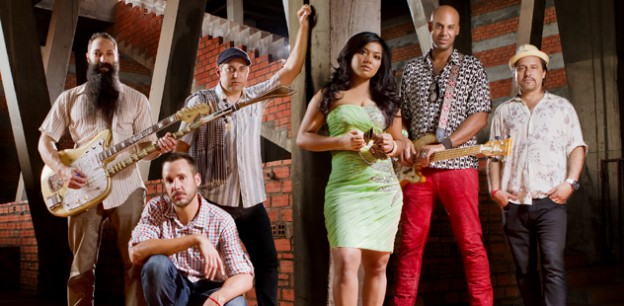
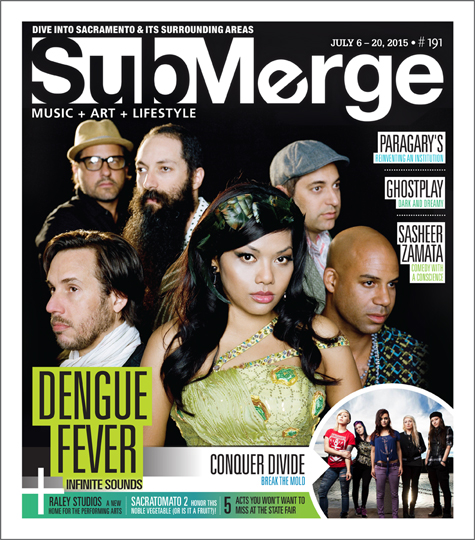
As luck would have it, Los Angeles’ Dengue Fever is one of the festival’s many featured acts. Ever since the release of their debut self-titled album in 2003, the band has been shaking up dance floors. From clubs in Southern California to shows abroad, this quirky ensemble has delivered a heady mix of Cambodian pop, garage rock and even psychedelia.
Dengue Fever’s songs are timeless and singer Chhom Nimol often sings in her native Cambodian language, Khmer, in addition to English. The band is rounded out by the talents of keyboardist Ethan Holtzman, his brother Zac (formerly of Dieselhed) on guitars, saxophonist David Ralicke (Beck and Brazzaville), drummer Paul Dreux Smith and bassist Senon Williams (Radar Brothers).
“The original idea of the band was simply doing ‘60s psychedelic rock from Cambodia but soon became something much different. When my brother and I were learning the songs initially, I was playing accordion. Later I picked up a Farfisa [organ made in the ‘60s and ‘70s] after visiting many different vintage shops,” said keyboardist Ethan.
Ethan cut his teeth first learning accordion from one of the greatest names in the industry. “I learned most of the keyboards from playing accordion at first. I studied with a teacher named Milton Mann and learned from his four different books. He was such an incredible musician and I learned a great deal from him,” he said.
Ethan soon realized that the Farfisas needed to be warmed up to work properly. He found out the hard way that the organs were extremely finicky instruments during a visit to Russia. “When we played at a festival in Russia, I brought the Farfisa, but the keys went flat and I had to use a different keyboard,” he said. “It was very challenging trying to re-learn those parts and find those sounds on the fly. I did play a second set later at a club and [the Farfisa] worked just fine.”
These days, he isn’t taking any chances on his equipment. “I ended up buying a Nord Stage keyboard, which I use when we play live now. It has all the sounds that I need and more,” he said.
Ethan’s keyboard parts, however, are not made without much thought and deliberation. “First I try to find a tone that fits the song best. One of the best things about playing keyboards is you have an infinite amount of unique sounds to pull from. I like the variety,” he said. “I just try to find a rhythm and the notes that work around the vocals or other instruments. Once we have all recorded our parts we have listening sessions then we talk about what we like, what clashes and what needs to be changed.”
Dengue Fever’s latest album, The Deepest Lake took some time to record. There was a long break of four years in between full-length albums.
“We started our own record label so that took a little bit of time to get things sorted,” Ethan explained. “Writing is one of those things that takes a little longer with us because we want to get the vocals and the music exactly as we think it should be.”
Curious listeners looking for the lost sounds of the Vietnam War era and the psychedelic sounds of the ‘60s will get lost in wonderful tracks on the new album, like the beautiful “Golden Flute,” which closes the record, and “Deepest Lake on the Planet,” which shuffles and sways with reckless aplomb.
Ethan lists the latter as one of his favorites from the new album as well. “‘The Deepest Lake’ is one of my favorite songs. It feels like we ventured in a new direction. I like the dark moody vibe that the song has and the vocals remind me of Pan Ron [one of the best female Cambodian singers from the ‘60s],” he said.
“’Tokay’ [the album’s lead track] is another song that makes me happy,” Ethan went on to say. “It’s about the Tokay gecko that we see and hear whenever we visit Cambodia. The gecko is really loud and makes funny sounds at night. At one point in the song our singer, Nimol, croaks like the Tokay.”
Whereas most bands signed to labels are saddled with time constraints and deadlines, Dengue Fever had time on their side while recording The Deepest Lake. They had no one to answer to but themselves.
“We were not rushed whatsoever and the release of the new album felt like it was a rebirth of the band,” Ethan said. “There is an excitement now around the band like when we first started to get a big buzz. At that time, we won a handful of awards and even were recognized by LA Weekly as the Best New Band of 2003.
“We were signed to many labels and released records on Real World, Concord/Fantasy Records, M 80 and Web of Mimicry,” he continued. “TUK TUK Records is now our own business and nobody can tell us what to do.”
Although The Deepest Lake was quietly released on their own TUK TUK Records label in January 2015, the album speaks loudly. It includes 10 rump-shaking songs featuring quirky keyboards, horns, shuffling drum rhythms, hypnotic bass lines and some crafty guitar work that is sure to catch fire once the songs are seen or heard live.
“We recorded the new album at our Shoebox Studio, which is owned by our bassist, Senon,” Ethan said. “We pretty much used all of our band money to buy mics, gear, compressors and other accessories to make the recording the best we could this time around.”
Since their inception, Dengue Fever have garnered many fans in the musical community, from The Kinks’ Ray Davies to Metallica’s Kirk Hammett to Peter Gabriel.
“We recorded at Peter Gabriel’s studio in Bath,” Ethan said. “It was an amazing place and he let us use any instrument we wished. One room was called the Stone Room and it was rather amazing to stand in that room and take in the architecture.”
One star-studded encounter stood out from the rest, however. “Jello Biafra [of Dead Kennedys fame] came to one of our shows and took literally one of everything from our merch table including vinyl. That was kind of awkward. He then asked if the band would cover ‘Holiday In Cambodia,’ a DK classic at the next show. We learned it for the next show and, of course, he didn’t show up,” said Ethan while laughing.
Additionally, they’ve also found some friends in the film industry. “I never would have imagined that Jim Jarmusch would use a song [of ours] in one of his films. He used ‘Ethanopium’ in his Broken Flowers movie. We also became friends with Matt Dillon who used a song in City Of Ghosts,” Ethan said.
Although very modest, he left out the fact their music was also included in Weeds (Showtime), True Blood (HBO), CSI, The Hangover 2 and many other mediums including documentaries. Similarly, the band has become quite a tour-de-force overseas and have been included on myriad festivals including Treasure Island, Roskilde (Denmark), WOMEX (Spain), Glastonbury (United Kingdom), Bumbershoot (Seattle) and Transmusicales (France), among others.
“We have been very fortunate to have played overseas in the past,” Ethan said. “We’re gearing up to go back in September and we’re playing at both clubs and festivals. In London, we’ve headlined our own shows before, but we’re not big enough yet for a full-scale tour.”
Each and every member are integral for capturing Dengue Fever’s current sound as Ethan is quick to point out.
“Everybody really contributes to the songwriting, and we’ll use ideas from everyone when they make sense. We all consider this band a very important project and put 100 percent into what we’re doing and I think you can hear it,” he said.
“We plan to keep touring and recording new music as long as we can.”
See Dengue Fever live as part of the California World Fest on Saturday, July 18, 2015, at the Nevada County Fairgrounds in Grass Valley. One-day passes are available for the four-day music fest (now in its 19th year) starting at $60. To purchase tickets, go to Worldfest.net where you can also find full line-up information.
We’ve said it before and we’ll say it again: there must be something in the water up in the foothills because good Lord there are a lot of talented musicians up there! A young bluegrass/Americana band from Grass Valley made up of four siblings (ages ranging from 13 to 20) called Paige Anderson and the Fearless Kin are the latest to completely blow our minds. Paige is the eldest sibling and songwriter of the group, also playing guitar and banjo. Aimee plays fiddle and is a master at vocal harmonies. Their younger brother Ethan plays stand-up bass; and the youngest sister, Daisy, started out on the fiddle at age 3 but nowadays plays the dobro (a particular brand of resonator guitar, sort of like a lap steel).
It’s no surprise that this group is so damn good at such young ages, as they have all been cutting their teeth touring and releasing albums with their parents under the Anderson Family Bluegrass moniker since 2004. They even played Hardly Strictly Bluegrass, Wintergrass and other reputable festivals and venues around the United States. Now, continuing on without Mom and Dad (although they still travel with the kids and occasionally hop on stage during shows), Paige Anderson and the Fearless Kin are getting ready to release their second full-length album of original material called Foxes In June on Dec. 2, 2014, and will celebrate with a dual album-release show with Halfpence and Haypenny on Dec. 7, 2014, at Main State Theater (314 W. Main Street, Grass Valley).
{Halfpence and Haypenny}
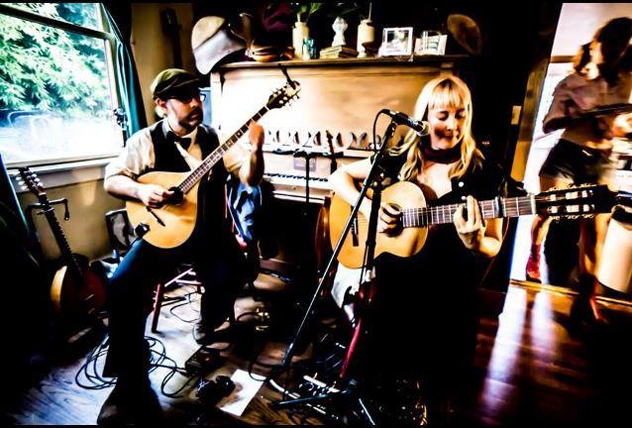
Halfpence and Haypenny are yet another wildly talented group from the foothills (Nevada City to be exact) who are getting ready to release their debut album To Hold a Candle To The Devil. H&H is made up of Eva Riihiluoma (Classical Guitar, Mandola, Vocals) and Sage Arias (Irish Bouzouki, Banjo, Mandola, Hurdy Gurdy). They have a self-described “old-world inspired folk” sound, performing both originals and unique versions of folk songs from England, Ireland, America and more. Learn more about both groups and order their new albums at Thefearlesskin.com and Halfpenceandhaypenny.com. Their dual album-release show on Dec. 7 starts at 7:30 p.m. and is $15 for Center for the Arts members and $18 for non-members. Tickets can be purchased at Thecenterforthearts.org
The foothills of Northern California are a breeding ground for creative talent. Reggae/hip-hop/dancehall artist J Ras is just one of a seemingly endless list of people churning out quality tunes from towns like Grass Valley, Auburn, Nevada City, etc. J Ras’ newest full-length album Find My Way just dropped last week and quickly started building some major hype online, making it all the way to the No. 1 spot of the “100 best selling reggae songs” chart on iTunes on Nov. 12, 2014, ahead of headlining reggae acts like Common Kings, The Movement and Iration. “Feeling so blessed and grateful for all of the support and feedback from this album,” J Ras wrote on his Facebook page (Facebook.com/JRasMusic) upon announcing the big news with a screen capture of the website Musicianwages.com, which tracks up-to-date sales on the albums released each week.
J Ras’ recent success comes as no surprise, as he spent the entire summer performing on Warped Tour, grinding hard and self-promoting every single day all across the country. J Ras is living proof of the old “hard work pays off” saying.
“It was seriously crazy but so much fun,” J Ras told Submerge of his time on Warped. “I think of it like boot camp for musicians. If you can make it through Warped Tour, you’re ready for any other tour!”
Find My Way is 10 tracks and features guest appearances from Scarub of the Living Legends hip-hop collective, Jamaican reggae artist Prezident Brown and a few others. It’s out now on iTunes and Spotify. You can see J Ras live in Tahoe City on Nov. 28, 2014 at Hacienda Del Lago (760 North Lake Boulevard No. 30) and his next Sacramento show is Dec. 26, 2014, at Capitol Garage (1500 K Street). Visit Jrasmusic.com for more information and to sample some tunes.
From clutter, artist James Mullen assembles pieces of grotesque beauty
If you are looking for art that is pretty, don’t expect it from James Mullen. This artist is not out to make art for beauty’s sake.
What is more important to him is to turn heads, in the same fashion that heads turn when people hear the sound of a car wreck, whether they want to see the carnage or not.
If he has caused the observer to ask questions like, “What was he thinking?” or, “What the heck was he up to here?” then consider the piece a success.
“To have a piece that is a bit dark and disturbing is to be that car wreck,” the Sacramento native says. “I’m not looking to hold up an object for admiration; rather, I’m looking to grab someone’s attention, grab them by the lapels and prevent them from looking away, almost to rivet them in place.”
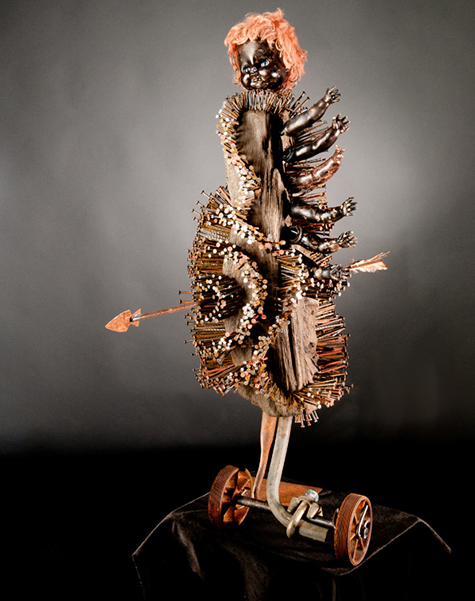
It is appropriate that he should mention rivets, considering his upcoming exhibition, Jagged Edges, at Bows and Arrows, a collection of three-dimensional nail fetish pieces that incorporate wood, nails and doll parts. This body of work, inspired by Congolese nail fetish pieces displayed in the de Young museum in San Francisco, will hopefully make people’s hair stand up, Mullen says, as it is one of his “darker” collections.
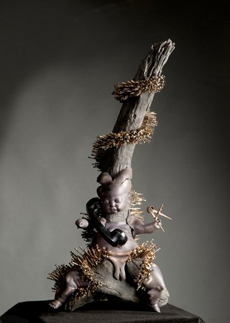
A personal favorite is Nail Fetish #8, which is almost Christmas tree-like in a grotesque way. The flayed skin of a doll is wrapped around a triangular piece of wood, a thick spiral of nails curling around it. A telephone rests on the doll’s arm, and in its opposite hand it holds a compass. The piece is whimsical and heavily influenced by Dadaism, Mullen says.
“I find it very powerful and a little disturbing, perhaps, which is what I’m going for,” he adds.
To be clear, Mullen is an abstract assemblage artist. His artistic process is very organic, he explains, in the sense that the objects he starts with will dictate his final product. He may grab one piece from the rafters in his studio, and the rest of the work comes together around it.
Nail Fetish #4
“I don’t know where [the piece] is going or where it’s going to end up, but I just start,” he says. “Starting [gets] the creative juices flowing, and the ideas start moving through my head, and the piece will grow from whatever object just comes to hand.”
As far as what comes to hand, it is an eclectic mix of items that form Mullen’s artistic palette. In this way he is also a collector of odd and interesting things. Animal skulls, for instance, pieces of wood, a rusted bike frame or a horse’s jaw are considered treasures. A goat skull he found on the side of the road was integrated into one of his nail fetish pieces. Often these are objects he finds on the Walker River alongside U.S. Route 395 near his home in Grass Valley, or on bike rides, at garage sales or junk stores.
Nail Fetish #8
Unable to see Mullen’s studio with the naked eye, Submerge asked Mullen to describe his studio in Grass Valley. He did; he also sent pictures of it.
Work surfaces and shelves disappear beneath seas of hand tools, saws, canisters, tubs and boxes. Odds and ends are piled high, while a web of doll heads, cables, tubing and a picture frame hang from the ceiling. This is where he has spent 20 to 30 hours per week creating his nail fetish pieces. From this clutter emerges Mullen’s works of art.
Each work comes together using epoxy, nails, rivets, screws, wire and pressure. The natural tarnishes of the pieces he uses are integral to the characteristic of his work, he explains. In order to preserve the rust and grit of his assemblages, he chooses not to weld, though he knows the skill.
Nail Fetish #2
“I really enjoy the patina of age that items show during a lifetime of wear and weathering and what have you, so I don’t weld,” he says. “I do wear out a lot of drills.”
Assemblage was not always Mullen’s forte. Once upon a time, he worked with clay. In fact he has worked with it on and off for 40 years, since he first began sculpting in high school.
Like a writer becomes afflicted with writer’s block, or an artist walks away from a painting, he too experienced a dry moment sometime in 2007, when he no longer wanted to work with clay. He stopped midway through a sculpture, and for four months did nothing more with it or any other clay works.
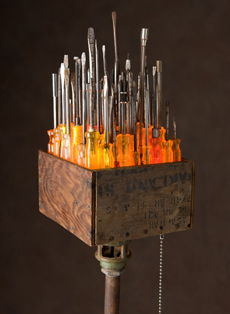
Screwdriver Nitelite
Still, he knew he wanted to create art. So, while standing in his backyard, his eyes fell upon piles of rusty fencing, wood and sheet metal, and he decided that these pieces would become his new media. He has been an assemblage artist ever since.
Whoever takes a Mullen piece home has little control over how to display it, because Mullen already has that taken care of. Often he intentionally builds a base into his pieces so he has leverage over the angle it is seen, whether they are built onto pedestals or elevated with wooden chair or table legs. This creates a towering effect.
“Once you make a piece and send it off into the world, you don’t have control anymore on how it’s going to be treated…what people are going to think of it. It’s all out of your hands,” he explains. “But by building the entire piece and including the base, I at least have some influence over the perspective of which it’s viewed.”
Practicality doesn’t always come into play in his pieces, however. As he is largely influenced by the Dada school of thought, his pieces are meant to be illogical and nonsensical.
“I don’t overintellectualize art. I try not to dissect it,” he says.
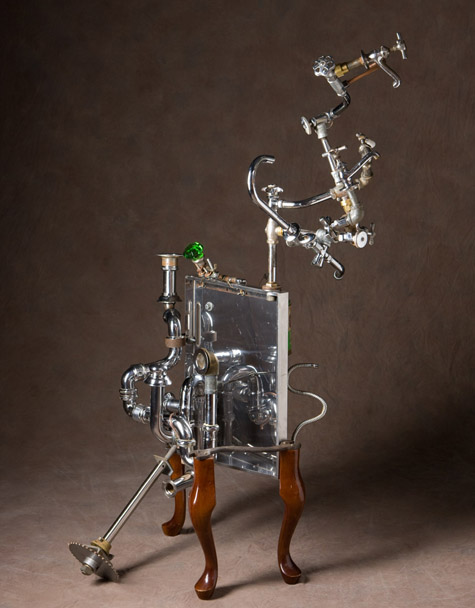
The Plumbers Daughter
Take one of his older pieces, Plumber’s Daughter, for instance. Plumbing pieces, a section of a steel grill, a doorknob and a lard bucket are arranged vertically atop cherry wooden table legs. There is no rhyme or reason to the bathtub-like creature, except that it was dedicated to Mullen’s wife, who is, in fact, a plumber’s daughter.
While it is a head turner, there is little other meaning behind it. In the same vein as Rube Goldberg, these are little steps to absolutely nothing, he says.
Bows and Arrows will host an opening reception for Jagged Edges on Friday, June 1, 2012 from 6—9 p.m. Find out more at http://bowscollective.com/. You can delve deeper into the mind and art of James Mullen at his website, http://jamesmullenartist.info/.
Lostribe’s JustLuv on nurturing the rap group’s latest album Sophie
Six years ago is a different lifetime as the body approaches 30 years of age. Marinate that sentiment with hip-hop’s culture in motion and an artist could risk making music on the wrong side of retro. Grass Valley’s Lostribe could have stuck to its 2005 script, but with personal growth comes valued artistic growth and even rebirth.
Lostribe began as a crew consisting of three producers and one MC. Its debut could be considered rapper/producer Agustus ThElefant’s solo Sole Expressions in 2005, which featured production from Lostribe producers JustLuv and MLB. The group went through a series of tribulations after that record, but still managed to bounce back with a video game soundtrack deal in 2007.
Members JustLuv and Agustus were asked to score the Namco Bandai video game Afro Samurai, featuring Samuel L. Jackson and RZA. The duo scored 10 tracks on the game. Meanwhile, JustLuv remained busy by breaking into the Bay Area rap scene to produce tracks for Andre Nikatina, Mac Dre, San Quinn and Mr. FAB. The growth would prove invaluable to Agustus and JustLuv, even if it distracted them from following up on their personal efforts. MLB is on hiatus from Lostribe crew, only making an appearance on one track on Sophie, the band’s latest album, which will be released on Aug. 23. But JustLuv assured me he had good reason for the absence, “He recently had a baby.
“So he’s focused on being a father and building that life,” JustLuv said. “He’s got a lot on his plate right now. I made it a point to include him on at least one track. He has a hard time getting out to the studio, living in Grass Valley and we recorded everything in Sacramento. He’s working, trying to get that money for his family.”
With Lostribe down to two core members, JustLuv manned the boards for Sophie, a record that meshes the lyrical dexterity of underground hip-hop in the early Aughts with the modern warble of dubstep’s woofer-blasting sound. Musicians out for the dollar and the relevancy can’t afford to take a five-year hiatus, but JustLuv talked of the extended process as a necessity that earned Sophie its coveted title.
Why the long hiatus between records?
A lot of life and shit happened. Agustus got married and moved away to Santa Cruz with his wife. They were down there for about a year and a half. He ended up getting a divorce shortly and moved back up [to Grass Valley]. I was going through a breakup at the same time, in between houses, and living situations were not very stable. I was like a gypsy living out of my car for a minute.
Life happened and we had to regroup. Then, in 2007 we started working on the video game, going through negotiations with those dudes. It took up a lot of our creative focus. So around 2009 we got our focus back with Agustus moving here. But again, it took time because we were going over material that was really old and we had some new material, so there was gaps between the sound quality and progression of the sound. We kept evaluating shit to try and refine our style. This last winter was when it finally came together.
The sound is definitely caught up to speed with its dubstep influence, while maintaining an organic feel closely associated with hip-hop.
That’s become my thing. Around 2006 that fool Agustus brought me to Burning Man and introduced me to dubstep. I was kind of into electronic music, and I used to break dance when I was a teenager, so that sound to me felt like the missing element into the synthesis of hip-hop and electronic music.
With the absence of MLB, you produced nearly the entirety of Sophie. How did you approach the opportunity to have full creative control over the sound?
That’s kind of how this project started out. I was making these new beats and my homie in Oakland heard them and said I’d kind of arrived, so it was time to put some shit out with this sound. So originally the focus was a solo project.
When it came down to me making this project and N8 [the Gr8 from The Cuf] started plugging these beats and Agustus heard it and said the shit was dope. We just decided to do a Lostribe album. It was a lot of hard work, but at the same time it was the most fulfilling and creative thing I’ve done. I tried to make a couple anthems. Try to make some shit that gets stuck in your head.
Why did you name the record Sophie? Because the first thing that comes to my mind is the old Jaz record with Jay-Z called “Hawaiian Sophie.”
I’m almost 30 years old. A large percentage of my friends are getting married or having kids or tied down in committed relationships. I don’t really have none of that shit. So, Sophie is the name I’d have given a daughter. So this is my firstborn. That’s why I named it Sophie.
You hear a lot of musicians talk about their records as their babies. That’s cool that you took that concept to a literal sense.
You know, I was kind of laying in bed the other day and realized everything I’ve done from making money, places I’ve lived, friendships to an extent… Everything I’ve done to gain momentum in my life for the last 10 years has been out of this music. So I’ve put my entire grown ass adult life and heart and soul into this album. So really I couldn’t call it anything else.
You went to boarding school as a youth. And recently you had a nephew get into some trouble, which prompted you to write the song “Live Like a Rebel.” I was wondering if he’s heard the record and if it had an impact on him?
No. I’ve not played it for him yet. He is more into rock music. He gives me a teenager response to everything, which is, “That’s cool.” He’s still 16. I can only live by example and try to show him what’s what. At the same time it is hard for me, because I still do young shit like go to the bar and get drunk. It’s kind of a paradox. I had a really deep conversation with the kid three or four months ago and then the next day he told his dad he figured it out and he got it. Then, the next day went out with his friends and did hella crazy shit. I can’t be mad though. The shit I was doing when I was his age was way worse.
Lostribe’s Sophie is available now in stores and through iTunes, Amazon and other online retailers. The album features guest appearances from Gift of Gab, The Grouch, Talib Kweli and others. Lostribe will perform at Sol Collective on Friday, Sept. 9 with Los Rakas, Danked Out and more. Hosting the event will be Mic Jordan. For more info, go to Lostribeproductions.com
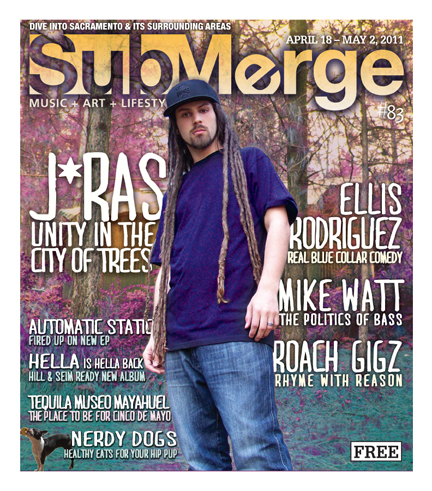
J*Ras of SouLifted strikes out on his own with City of Trees
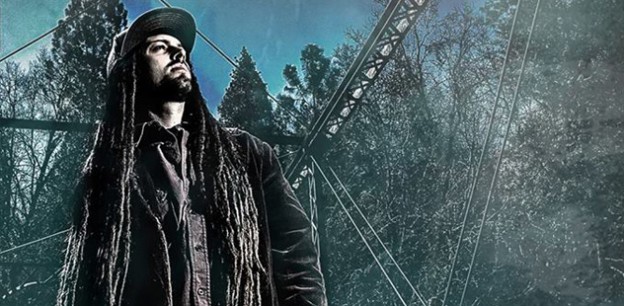
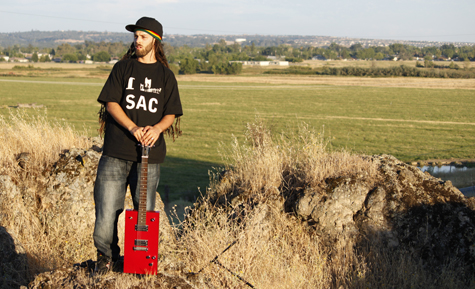
At first glance, J*Ras is a tall, friendly and relaxed looking guy with long brown dreadlocks. But after meeting him, you quickly learn he is a hardworking musician who takes on the roles of DJ, singer, rapper, multi-instrumentalist, producer, songwriter, husband and father. The hip-hop and reggae lover from SouLifted who has been in the music industry for more than a decade is ready to unleash his first solo album, City of Trees.
Unlike some mainstream hip-hop and reggae artist, J*Ras wants his music to serve as a call of awareness and individualism to people of all ages in the community.
“You can hear in a lot of the songs the message to be your own individual and keep going against the grain, doing your own thing,” said J*Ras, sitting on a chair in the green music lesson room at the ZuhG Life Store. “But that can also help to give them inspiration to get through things in life.”
When the Sacramento State alum travels and performs, he likes to bring the whole family with him, including his wife, Lady Grace from SouLifted and his two children. Even though his children might be considered youngsters they are already starting to follow in their dad’s footsteps. His 10-year-old son, Chase, is a songwriter and rapper and, according to his father, “tears it up” while performing on stage. His daughter Jossalin is only 2 years old but has to be given her own mini microphone at the live shows or else she will attempt to grab a mic from mom and dad.
“She was singing Bob Marley at a show the other day,” J*Ras said with a smile. “It’s just natural to her.”
On top of traveling with his family, J*Ras is active in the Auburn Hip-hop Congress, a local organization that provides youth with the opportunity and tools to help make a change in their society. At the nonprofit organization, J*Ras acts as the Artist Development Coordinator and works with and teaches young kids creative writing and the history of hip-hop.
“[We’re] working with the kids, giving them what we didn’t have when I was growing up in Auburn and that community, which is an outlet to express your creativity,” J*Ras explained.
Meeting up with him downtown at the ZuhG Life Store seemed like the perfect place to get to know J*Ras, since we were surrounded by music and art by local artists.
Your new album is City of Trees. I’m guessing that it’s about Sacramento?
Yeah, it’s a reference to Sacramento. That’s one of the tracks on the album… It just has to do with Sacramento kind of being overlooked and it’s really a good place to be. I don’t live in Sac right now. I moved to Grass Valley up in the hills. But I was born in Sac, went to Sacramento State, and I got to show love for Sacramento.
You are a very talented guy: a vocalist, a DJ, rapper, producer, basically everything. Did you have all of those roles with your new album?
Yeah, in the new album, I produced the whole album and I play the majority of instruments. There are guests from SouLifted: Brian Fleshman helped to produce some of the tunes, Steven Leonard played some of the guitar and bass. So, we did add some those elements from SouLifted. But I played pretty much everything on all of the tunes, even turntables. [I] do a lot of the vocals, besides some of the backing vocals. And there are some other guests on the album, including Prezident Brown, who is one of my favorite reggae artists, Soulmedic and Jahworks the Revolutionary. We do have a few guests on there but mainly this is just something that I’ve been working on for the last couple of years.
Do you have a certain theme that you are going for in the album, a certain meaning behind the lyrics?
We’ve always carried a positive message in the music. And with SouLifted, we’ve always had the music to lift you up. It’s conscious music with a message. It’s not just about the things that you normally hear in hip-hop music or even reggae. It’s things that you’re going through and how we struggle and how we overcome those things. One of the songs is called “Champ for Life,” and it’s really just a reflection of life and what’s got me here now. It kind of tells a story of where I’m at now. I guess the theme still would be conscious music that does have a message, a positive message for the people.
Do you have a target audience?
What I’ve always liked is that at our shows we always get people dancing. Whether they’re little kids that are 2 years old or the 80-year-old grandmas. And that’s what it’s all about, is getting the people involved. I work with the Auburn Hip-hop Congress as well, and it’s all about trying to help with the youth and giving the youth positive music that they can listen to. Not just the hip-hop that they’re hearing on the radio or the things that are out there easily accessible for them. It’s about giving them something with a message. Mainly our majority of listeners and my majority of listeners are college aged, a little bit of older. But the music is for everyone for sure.
What were some of the challenges working on your solo album–going from a big band to just you?
One of the main challenges is doing it myself and being so critical of my own music. Instead of being able to have that input from everybody to make it that collected thing. But that’s also given me the freedom to make it exactly how I want it. So some of those challenges also become strengths of the album. Mixing and mastering, just some of those fine tuning things, were probably the hardest challenges. It was so hard for me to be happy for where the album was, making it perfect.
What made you want to work on your own album?
I’ve played in multiple bands from Heart Life and Soul to SouLifted. I’ve always written my own music, and I have so many songs that haven’t been recorded because I focus so much energy on the band… I love that collective energy of the people when we unite. It’s just stronger and I love it, so really just kind of realizing where I am now and seeing what I need to put some energy into this solo album so I could really get it out there. I’ve been doing a lot more solo shows myself touring more and just trying to get the music out there. I knew that this was the next logical step in the progression. And having the ability to work with some of these reggae artists and other artists that I aspire to work with on my solo stuff [has] kind helped me push it and get the album out.
Do you see more solo work for your future?
Absolutely, we have a lot of projects going on, which is great and we are doing a lot of collaborations. Right now, I’m working on an album with Soulmedic and a lot of music with him. He is a great reggae artist out of the Nevada City area and Hawaii–he is kind of half and half. I’m also doing a tour with some of the artists from Thizz Nation, which is kind of funny, because it’s totally anti what our music is about. But they’re trying to bring that consciousness and educate some of the people and their audience. We got to try and reach every target audience we can. So, I’ll definitely be pretty busy doing some solo work, but I also hope to include some more SouLifted shows. And doing a lot of collaborations with artists, a lot of hip-hop artists in Sacramento and working with the Auburn Hip-Hop Congress right now a lot too.
I’ve read that you have been performing since 1999… over 10 years!
Yeah, that’s when I actually threw my first show. I was 15 years old and I got approached because we had been doing parties, where we just pull out in the woods and set up our turntables and generator. And so the word got out. We had a little hip-hop crew when I was still in high school and one of the local bars actually asked us to throw a show and that was in May in 1999. That was the first show that I threw myself, made the flier and all that, cutting stuff out, old school. It’s come a long way since then and we put a lot into it. I’m real happy with where I’m at now and where it’s moving along.
What is the best part of performing live?
The energy from the people. Just the feeling that I get from performing, it’s not like anything else. I know I’m meant to be doing that when I’m up there… And I love getting the people involved and the energy and getting that love back from all of the love that you put into the music.
J*Ras will celebrate the release of his solo album City of Trees at Sol Collective on April 29, 2011. Lady Grace, Task1ne and many others will also be on-hand. Expect special guests and some big surprises. The show is all-ages and gets underway at 8 p.m.