Keep on Spinning
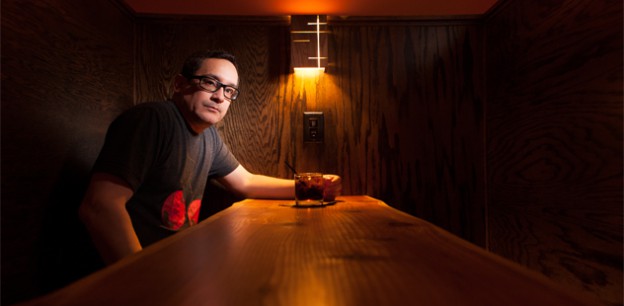
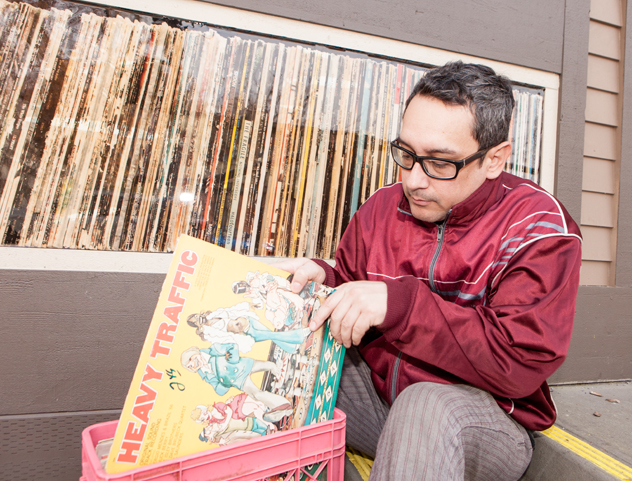
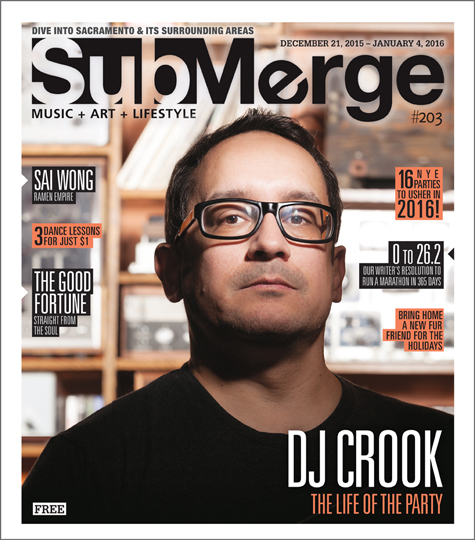
John “DJ Crook” Molina, aka CrookOne, has been a staple Sacramento DJ for nearly 15 years. The Los Angeles native came to Sac in the mid-’90s, and we have claimed him as our own ever since. “My first official gig was at the Monkey Bar in 2002. That kind of got the ball rolling for me. Years later, and I’ve DJed at most places that will allow it in this town,” says Crook.
DJ Crook has been known to bring his funky music palette to countless party epicenters in our area. You may have experienced his work at the Golden Bear, where he has held a residency for more than a decade every Friday night and Second Saturday, or for his randomly occurring (soon-to-be-resurrected) FFFreak dance party at The Press Club to name just a few.
He is also one of those DJs who can seamlessly go from a late-night bar/dance party setting to providing backing sets for full rock bands. When he wasn’t manning turntables at nightclubs and bars, he was working with bands like Team Sleep, Decibel Devils and Deftones, where he would intertwine his work with the likes of Chino Moreno and Zach Hill.
As a new year approaches, Crook has a whole fleet of projects on hand to fill it. He met with me for a beer to discuss the current state of his DJing endeavors, and to prove that he’s not slowing down as the years pass. Not only is his band, Team Sleep, working on new material, but his weekly DJ nights are expanding to include at least one regular slot at the new B-Side vinyl bar. His work at B-Side will be experimental at first, and as Crook told me, “a lot of different crowds have come and gone … What I was playing back then is a little different from now, but I also have to adjust to mixing the old with the new. It’s all a matter of keeping up with it all. I am grateful to be doing this.”
How did you get yourself into DJing?
I’m gonna age myself now … It started way back in the ‘80s when I was in high school and trying to do the whole break/graffiti thing. I would listen to this radio station in L.A. called KDAY, and they had live DJ mix shows. It was probably around 1985 … and I thought it was pretty interesting and something I would love to do. I would just listen to the different guys DJing and study their techniques.
Then, I moved from L.A. to Whittier and met some guys who were DJs there. I hung around them and from there, got my own turntables. I was about 15 or 16 at the time. We were all just a bunch of kids, but they were all so good at what they did. I would watch them and then go home and sit in my room and create my own stuff.
What sort of records captivated you at that time?
At that time, I would say the Planet Rocks, Egyptian Lover, Run DMC and stuff like that. Early hip-hop and mid-’80s electro were my thing. At the time, I still didn’t even have a job, or was barely in the process of getting one, so I didn’t have any records. I would go into my dad’s or stepmom’s records and try to mix anything I could get my hands on; I would take something like a Madonna and mix it with something of my own.
How did you end up in Sacramento?
My friend, Frank Delgado, and a couple of other friends of mine, moved down here. Frank got a DJing gig and actually ended up meeting the guys from Deftones and eventually joined the band as a DJ. He would always tell me to come up, so I found myself visiting really frequently … pretty much just going home to work. The year 2000 is when I decided to make the move to Sac. I saw that I had opportunities here.
You eventually worked with Deftones when you moved to Sac. Tell me how that relationship blossomed.
It was 1996 when I first met those guys, and they were beginning to get really big at that time because their first record was just getting ready to come out. So the singer [Chino Moreno] played me the record and I played him a hip-hop demo tape, and he listened to the whole thing. Back then, it was cassettes. When I moved up here, they had put out their third record. My friend Frank Delgado really connected me with those guys, and I’ve collaborated on a couple of songs and projects ever since. Chino and I are both in the band Team Sleep.
Is Team Sleep alive and well?
We did a show last October in Woodstock, New York, and that record came out in July. We are working on the DVD part of the performance now. Currently, we are working on new material. Zach Hill has been super busy with Death Grips, so he hasn’t been involved this time around, but I’ll text him every now and then (mostly when I’ve been drinking), to talk about projects and catch up. He’s always working on a bunch of different things. We have Gil Sharone working with us on drums right now. He came with us to Woodstock last year, which wasn’t supposed to initially happen, but I am happy it did. He was originally scheduled to go on tour with Marilyn Manson at that time, but that somehow got delayed so he ended up with us. We are definitely working on some new things and will be chipping away at a new album for the coming year with a few shows in the works too.
How did you become connected with B-Side?
I know the owners. I’ve known Jason Boggs and Garrett Van Vleck for years, and actually Garrett used to be the door guy at Monkey Bar many years ago when I was a DJ there. Jason kind of told me what his vision for that bar was, and it was really exciting. I was just waiting and waiting for it to open, I was really anxious to just get in there.
It is really great. It’s so new, and I have only had a couple of nights there, but the environment and the way it looks is awesome. It has this old school ‘70s feel. They did such a good job with the interior. When I had my night there, we did the all-vinyl thing, and there was good energy and a good turnout. Me and a couple of guys are going to try different themed nights and see what really sticks.
What are your nights there like?
Thursday I am going to be DJing with my friend Ben [Johnson], of Delta Breeze Records in West Sac. We are focusing on modern funk. Also, on the first Saturday of every month, when he isn’t busy touring with Deftones, Frank Delgado and I will be trying to collaborate. Years back, Frank and I actually had a night at Monkey Bar we would put on called “Heavy Duty,” and we are looking to revive that concept; it has a really open format.
What sort of things are you looking forward to in 2016?
I am hosting a New Year’s Eve party at Press Club called “New Jack Fling.” I usually host it a few times a year. It’s more of a late ‘80s/early ‘90s new jack swing dance party, kinda like Tony! Toni! Toné! Also, same-era hip-hop and R&B will be included. It’s always such a fun night.
I will also be continuing to do my night at the Golden Bear. January will mark my 10-year anniversary of DJing there. Sometimes I forget how long I’ve been doing this.
Don your favorite pair of stonewashed jeans and swing down to The Press Club to see DJ Crook and others spin late ‘80s and early ‘90s hip-hop and R&B at their New Year’s Eve celebration, New Jack Fling, on Dec. 31 (duh). The party starts at 9 p.m. and the cover is just $7. Decade-appropriate attire is not mandatory, but it is encouraged. The Press Club is located at 2030 P Street in Sacramento.
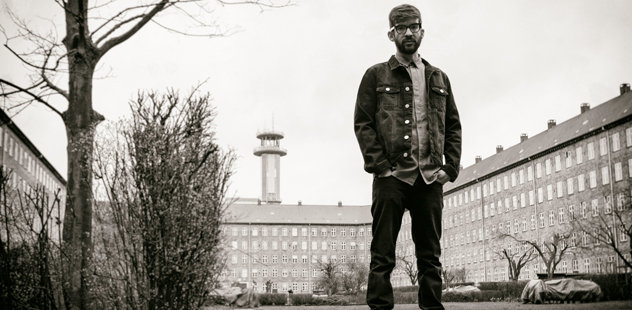
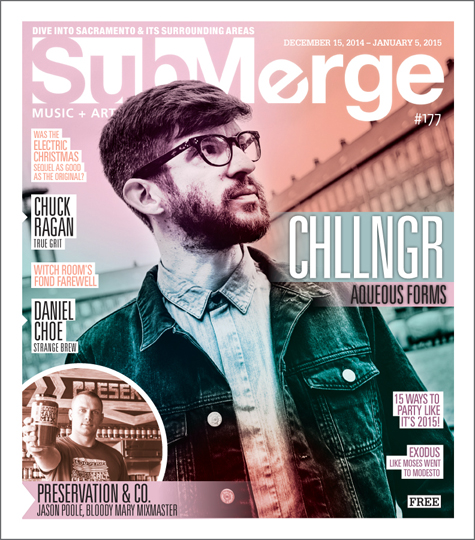
Though he makes his home in Copenhagen, Steven Jess Borth II’s electronica project CHLLNGR has deep Sacramento roots
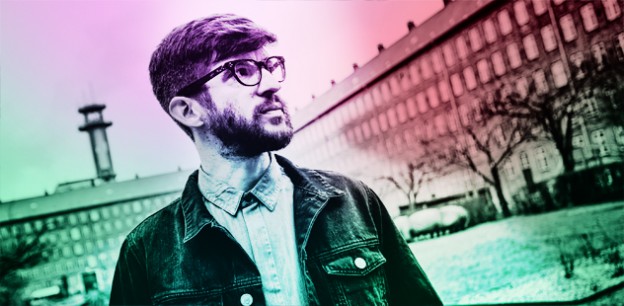
The Red Bull Studios Copenhagen website is written entirely in Danish, but search “CHLLNGR” and you’ll likely land on a video mostly spoken in English, aside from a few locals in a bread store. The video features CHLLNGR (stylized, vowel-less Challenger), an experimental dub music project masterminded by Steven Jess Borth II, laying down tracks in the Red Bull Studio for its sophomore record, Form of Release. The documentary mostly depicts scenery from Copenhagen and the studio, recording artists in indigenous garb from New York City and rappers from the United Kingdom, but in the midst of this global project is Sacramento. Oddly, our city has played a pivotal role in Borth’s project since its inception in 2010.
CHLLNGR performed at the Submerge 50th Issue Party in 2010, having graced the magazine cover in anticipation of his then-untitled debut album. At the time CHLLNGR was in a larval state, still largely faithful to dub music traditions of instrumental reworkings of recordings that slug along at a reggae beat stripped to its “riddims,” which translates to bass and drums. It’s a genre pioneered by artists like Lee “Scratch” Perry, Errol Thompson and King Tubby.
In those days CHLLNGR consisted of Borth, Andrew “Young Aundee” Southard and Dan “DJ Whores” Osterhoff in the live setup. But behind the scenes, the project relied on a troupe of local collaborators who continue to be influential cogs four years later on Form of Release, namely Dusty Brown and Justin “Dr. Echo” DeHart.
Much like British outfit Unkle, CHLLNGR defies simplistic classification because Borth seemingly doesn’t have “no” in his vocabulary. It loosely takes the form of a collective, rather than a solo project, as each release hosts a revolving cast both credited as guest features and buried in the fine print of liner notes. The only consistency across CHLLNGR’s two LPs (Form of Release and 2011’s debut Haven), outtakes release Hidden Tracks, and the Datter EP are Borth and the mastering finesse of Dr. Echo. Well, perhaps one other: Sacramento.
For example, Haven’s closer “Dusty” features vocals from Jessica Brown, a long-time contributor to her brother’s eponymous project Dusty Brown. The lyrics to “Dusty” were written by Young Aundee, while the title of the song is assumed to be a reference to Dusty, who opened his studio to Borth to create early Haven demos.
“Dusty gave me access to all his vintage gear,” Borth said. “In that period Young Aundee was there in Dusty’s studio most of the time and he played a really big part. He did most of the arrangements for [“Dusty”], also he did the lead synth on ‘Ask For’ and quite a bit more.”
In the initial Submerge interview, Borth mentioned a few particularly noisy recording sessions with Zach Hill of Death Grips, although it is unknown if they were utilized for Haven—given its nocturnal, downtempo qualities I’m inclined to think not. But in those early sessions Borth’s mindset was hinged upon experimentation. Whereas on Form of Release, CHLLNGR has evolved into a wish list come true of vocalists and co-producers.
“Form of Release, I really wanted to have a vocal album,” he said. “I was comfortable with some instrumentals, but I definitely wanted something that was not necessarily traditional pop songs, but a weird pop music.”
The detraction from having Red Bull’s insoluble budget was that Borth got his wish in the form of a curse. The album features JOSIAHWISE IS THE SERPENTWITHFEET from New York City, Dels from the United Kingdom, Grace Hall of Skin Town from Los Angeles, Blaqstarr from Maryland, and no possibility of uniting this group for a live set, particularly JOSIAHWISE, who contributes to five tracks.
“It’s pretty much just been me,” Borth said. “I’ll sing the songs in their place. With JOSIAH’s songs it’s very tough because he’s an insanely talented vocalist and writes complicated melodies I can’t exactly pull off.”
When I ask about his live setup for his New Year’s Eve performance at this year’s TBD’s New Year’s Eve Block Pary, Borth laughs at the thought as he mentions he’ll have to rely on Sacramento once again. “I need to start sending some emails around because I need to borrow some equipment,” he said. “But I want some old friends to join me on stage as well.”
If Borth is the captain of CHLLNGR, Dr. Echo is his first mate. Through emails he wrote that he and Borth never met properly in Sacramento, though he theorizes they were “probably in the same place at the same time on numerous occasions.” Though his connection to Sacramento has faded, Dr. Echo began as a drummer in dub band The Defendants with former !!! member Tyler Pope, and later ran Soundlab Studios in various Midtown locations before moving to Los Angeles in 2002. Having mixed “98 percent” of CHLLNGR’s output, Dr. Echo was flown out from his current home in Anaheim to Copenhagen on Red Bull’s dollar at Borth’s request. Dusty Brown was also flown to the studio in the last week for the task of “filling in the gaps,” according to Borth.
“Dusty was crucial,” Borth said. “It’s always been in the back of my head to collaborate more with him. I just have a lot of respect for him, his stylings, how quick he is and how he can really bring his ideas to the table and they can be very well thought-out. He has so many years of experience with electronic music that he can just get in there and finish up any ideas that I had started. He tied up the loose ends in a huge way.”
Borth is the captain of CHLLNGR, there’s no questioning it. In a Skype call we discussed the process of recording in the Red Bull Studio and he notes that the majority of the songwriting was done on his laptop with a micro-Korg and spring reverb prior to their three-week recording stint. He said the documentary just captures the focused grind of piecing an album together in three weeks.
“Most of it was doing really nerdy stuff,” he said. “Just running the sounds I’d already made and having the other collaborators record their vocal parts. Dels came out and JOSIAH came out. Justin [Dr. Echo] was there pretty much the whole time with me.”
As first mate, Dr. Echo has witnessed the evolution of CHLLNGR from dub homage to a spacious nocturnal metamorphosis on Haven, and into the Form of Release sessions, which reveal CHLLNGR at its most pop-y and universally catered state. He attributes the early alterations to Borth’s love of R&B as a heavy influence on the distinct sound, particularly in the melodies and harmonies, and the more recent growth to his prolific mind for collaboration.
“I think it should be evident that dub music from the ‘70s to ‘80s is a major influence on his sound,” Dr. Echo wrote. “However, ‘dub’ can be a vague term these days. Qualities such as spaciousness, sonic subversiveness and otherworldliness seem to remain appropriate to CHLLNGR’s sound throughout the years… I really think CHLLNGR’s music truly exists in the cracks of today’s genres.”
Ring in the New Year with CHLLNGR and an A-list lineup at this TBD’s New Year’s Eve Block Party, which will take place Dec. 31, 2014 (duh) on 20th Street between J and K streets. A-Trak, Sister Crayon and Gigamesh (among others) will also perform. Tickets start at $45. Check out Tbdnye.com for more info. NOTE: #TBDNYE IS ALMOST SOLD OUT! LIMITED AMOUNT OF “LAST MINUTE” TIX ARE STILL AVAILABLE, BUT THEY WON’T BE FOR LONG! ACT NOW IF YOU WANT TO GO!
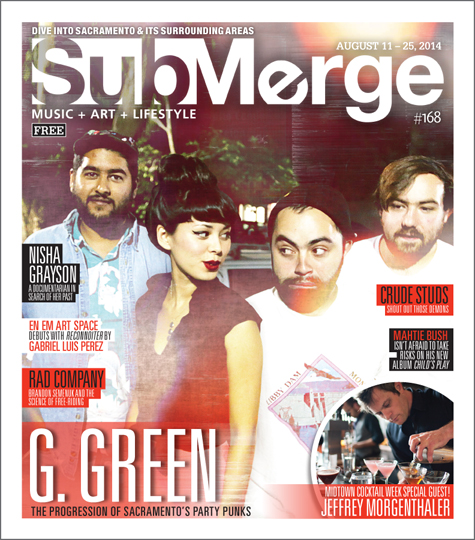
Could G. Green Become Sacramento’s Most Loved Band?
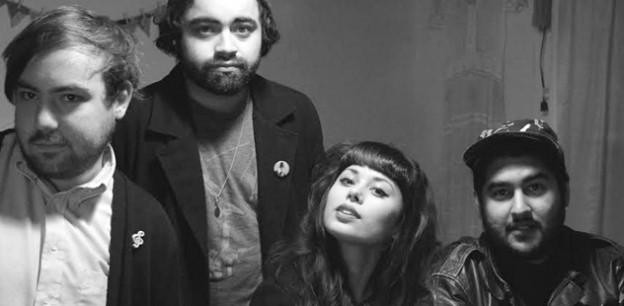
G. Green was once the most unpopular band in Sacramento. Originally Andrew Henderson’s bedroom recordings moniker, his solo shows in Sacramento garnered anathema of clandestine ridicule and indifference. There was a time I loathed seeing the name listed on every Hub show and house party, and I wasn’t alone. It was fun to smear G. Green in 2009 and it was excruciating to see them on the verge of amateurish implosion in 2011. Most of you probably still assume G. Green is locked into a static identity as Midtown brats, drunk on youth, and too drunk to do much besides be obnoxiously loud. While we were laughing, when we stopped caring and stopped looking, G. Green quietly became a serviceable indie band, writing songs destined to shed the onus of snotnosed bush leaguers.
Before she became G. Green’s drummer, Liz Liles described the first G. Green show (a one-off lineup consisting of Henderson on guitar and promoter Rick Ele on drums) as horrible and a disservice to the former KDVS DJ’s sterling reputation.
“I thought ‘why is DJ Rick playing with this idiot,’” she said. “Me and whoever I was with, we watched one song and then went into the alley to smoke cigarettes.”
In the greenhorn years of the band, Henderson was the perpetual opener; the sort that would clear a venue, living room or DIY space except for his steadfast cheerleader, DJ Rick.
“I put him in front of audiences, and the awkwardness, the house slippers on his feet, and the most piercing moments of singing were initially a big turnoff to people,” Ele said. “But Andrew seemed totally impervious to disapproval.”
*****
They’re all laughing at you, aka the infamous Capital Bowl show
Mt. St. Mtn. founder and former Mayyors member Mark Kaiser put out G. Green’s first record, Crap Culture, in 2012, but it took time for him to become a backer. In gathering stories of infamous G. Green failures, Kaiser and Liles invoked the West Sacramento Capital Bowl show in 2008 without hesitation. In those days, bands would rent out the events room to play, and according to Kaiser, “trash.” The bill was geared toward trashing the place with Mayyors and Eat Skull (a notoriously self-destructive Portland band), while the G. Green solo set was the black sheep. Liles said she and her friends openly ridiculed the G. Green set. While Kaiser likened the clumsy solo performance as arriving “too late for that mid-’90s Olympia-wrought ‘any art is good art’ vibe.” Henderson was not going to be the next Calvin Johnson.
“Andrew was really young, and looked really drunk and really nervous,” Kaiser said. “He let loose, and I cringed. The show was fun, drunken chaos, all the bands on the bills were renowned for being a wasted mess, but this was excruciating.”
*****
Laughing: from ‘at’ to ‘with’
Liles might have mocked Henderson at first, but one evening he showed up at her Midtown home, then known as the Funcastle, expecting a Thee Oh Sees show. Liles had moved the show to another venue, but the encounter with Henderson sparked a quick friendship. At the time Liles was a—quote, unquote—drummer for experimental groups Sucks and Fatty Acid. Untrained and illiterate to tempo, she began telling Henderson she was G. Green’s new drummer.
Henderson obliged after booking a house show with Kurt Vile, Eat Skull and Ganglians. He had two months to put together an opening band; Liles was the first piece. The remaining guitar parts were filled out by Julian Elorduy (drummer for Mayyors in those days) and Dylan Craver. Two months proved enough and sustained the approval of scene-dad DJ Rick.
“I didn’t really know if the band would continue after that one show,” Henderson said. “Rick loved us and threw us on all these shows and put us on [Operation Restore Maximum Freedom]. Pretty much the reason Liz and I still play music together is because Rick threw us into the whirlwind of the Sacramento music scene at that time.”
Kaiser recalls being at the full lineup’s debut, despite purposely steering clear of solo sets since the bowling alley incident.
“The second time I saw Andrew play it was with this first incarnation of a live band and it was a world of difference,” he said. “It was sloppy and chaotic, but it was fun and there were lots of ‘whoa, if they keep doing that’ moments that had me intrigued.”
Henderson and Liles cherish the times with that early incarnation, but also knew it could never last. Elorduy quit the band after Liles broke up with him for Hella drummer Zach Hill, and was replaced by Brittney Gray on bass. Henderson and Craver were the best of friends and also prone to volatile feuds. Every show and practice was a fun, drunken gathering that flirted with implosion.
“We were so close as friends that none of it mattered if people liked us,” Henderson said. “We were just getting drunk and having fun. Me and Dylan were good friends and then we’d hate each other. He probably quit the band infinity times.”
Before the final nail was put in the original lineup, G. Green enlisted Andy Morin, long before his stint in Death Grips, to record their debut, Crap Culture. A shambolic and lo-fi collection of mad-dash punk songs, Crap Culture captured G. Green at the time—unruly and unpolished, but beneath the caterwaul existed nuggets of pop punk gold. Kaiser compared the record to Superchunk’s No Pocky For Kitty, lauding G. Green for maintaining their live energy on record.
“‘Pool Of Blood’ was the song that made me offer them a record,” he said. “That song was a sign they had something and were capable of growing past the kiddish fun-punk into something bigger.”
Crap Culture arrived late to the cultural trend of low-budget to no-budget albums, home-recorded on junkable equipment. It was recorded in 2010, but did not see release until August 2012. By then contemporaries like Wavves had ditched the intelligible scuzz for pop-punk polished for MTV. Also, by the release of Crap Culture on Mt. St. Mtn., G. Green featured a lineup far superior to the rag-tag group that winged it through the debut.
With replacements Simi Sohota on bass and Mike Morales on guitar, G. Green returned to the studio, paying Robby Moncrieff to record a follow-up at the Hangar. Besides being a friend of the band, Moncrieff was a popular choice having recorded Dirty Projector’s critically praised Bitte Orca and fellow Sacramento band Ganglians’ Still Living. Unfortunately Henderson said the band made the mistake of requesting Moncrieff “make it sound like Woodhouse,” meaning Chris Woodhouse, the Hangar engineer responsible for seminal linchpins like all eight Thee Oh Sees records and the A Frames.
Henderson said, “We didn’t use Robby as he should be used as an engineer. He did the best he could, but it’s not the way Robby works. There was no unifying theme with it. It was just a smathering of shit and it didn’t sound very good.”
The record was scrapped, except for two songs which became the “Funny Insurance” b/w “Sounds Famous” 7-inch. Liles corroborated their poor performance, attributing it less to Moncrieff, and more to the band for it sucking. They entered the studio with songs written by all the members with no vision for the band’s identity.
Liles said, “we’ve had really bad luck recording full records… until now.”

*****
New lineup, new lease…
On June 10, 2013 I drove my then girlfriend’s Altima to Davis to see Parquet Courts, a burgeoning Brooklyn band, and Fine Steps, a new project by Julian Elorduy. G. Green was also on the bill, so I planned to arrive late, still pegging G. Green as the perpetual opener. To my surprise Fine Steps was on when I arrived at the Davis Bike Collective. I caught their last two songs. I grew despondent realizing a full G. Green set stood in the path to Parquet Courts. Who agreed to this bat shit order of operation?
With no beer to drink and no cigarettes to smoke outside, I remained inside conceding that despite my efforts I’d been hoodwinked into a G. Green set. Now, I don’t recall particular songs from the set in that blazing, claustrophobic bike shop, but I do know that’s the night I stopped laughing at G. Green. The additions of Sohota and Morales gave them chops previously lacking in the dynamic. Liles had become a force, and Henderson’s once pubescent screech had caked enough nicotine on his vocal cords for a second lease on his balls dropping. There’s plenty to love about a band bent on belligerence, but when that same band backs it up with the skills to earn that abandon, they stop being local brats and graduate into a menace worthy of unleashing on the country at large.
This year on the porch of Kupros I confess to the founding members the Parquet Courts show is when I started believing in G. Green. Henderson states it was his birthday that night, while Liles mentions that Parquet Courts opened for them when they played Brooklyn’s storied 285 Kent venue. Both are unphased that I once detested their band. I was never the only one and I wasn’t the only convert either.
Liles said, “A lot of people probably haven’t been taking the time to see us lately because they saw us so many times three years ago and have decided there’s no way we’ve actually progressed.”
Henderson added, “There’s an image that probably still exists in a lot of people’s minds of these weird shitty kids that are drunk all the time and looking for the next party. We’re convincing people who’ve seen it from the beginning that we’re a great band now.”
Liles and Henderson turned 25 this year. Neither member wanted to be pigeonholed to perceptions developed when they were still teenagers. The upcoming Area Codes album was honed on tour, the band delegating a set it would play nightly until the songs were ingrained in their muscle memory. The decision to be professional and treat their live set with care translates to the album, which was recorded by Woodhouse, whose specialty is live tracking, room sound and mic placement. Even a late night of binging on spirits and karaoke at the Distillery couldn’t sandbag their comfort with the songs.
“We finally developed a sound that cut any bullshit,” Henderson said. “We didn’t really know how to make a band sound. In recording with Chris, he just documents what we’re doing.”
But is their scene-dad Rick Ele a proud papa?
“So many Chris Woodhouse productions have that unmistakable Woodhouse touch,” Ele said. “He becomes the fifth Beatle to so many bands, but in the case of Area Codes, I think he really just used his magic to maximize the G. Greenness of this record.”
Kaiser was equally impressed, keeping the band on his Mt. St. Mtn. roster for a second go-round, calling their current incarnation a “quick progression.”
“The new lineup came about and they tightened up both their live presence and song writing. I kept telling Andrew to just pony up the money and record with Woodhouse. He’s the wizard, he knows their sound and knows how to make them sound more like themselves. That’s what they did and this new recording is a huge step forward.”
The night at Kupros we drank enough short-n-talls of Coors Light and Jameson to carry the festivities to the former Funcastle, now also the home of Henderson. I apparently needed to try “tangler,” a moonshine-like infusion engineered by Liz’s boyfriend. Once there it was filmed and failed beer shotguns for the tour promo video, messy blueberry pancakes, and Guided By Voices’ Alien Lanes on the record player. As both made more of a mess than a mouthful in shotgunning the PBRs, I wondered how they ever got the stigma of a party band. Earlier that night Liles insisted they were misunderstood. “We’re not a party punk band, we’re a weird band,” she said. “The record only mentions pizza once!”
“We’re a straight up indie rock band now,” she said.
Most importantly are these last words from Ele, their cheerleader since day one. Watching a solo project from an awkward kid from Folsom become a band after making friends with the girl who laughed at his sets.
“Andrew’s always the heart and soul of the band as voice and chief songwriter, but through these lineup issues, Liz really stepped up to become the band’s leading co-star. They could change lineups 100 more times, and from now on, I’ll always think of Andrew and Liz as G. Green.”
Celebrate the release of Area Codes Saturday, Aug. 30, 2014 at Witch Room (1815 19th St.) with G. Green, Rat Columns, Violent Change and more. The 18-and-over show starts at 8 p.m. and tickets are just $5. Check out
Facebook.com/ggreenband for more info.
Though Family Life Has Softened Pinback’s Rob Crow, His Drive to Create Has Never Been Stronger
When I was 14, in 1995, the Internet was still in its fetal stage, especially regards to music distribution. Because I lived in a small town in Montana, as soon as the Internet started to become a realistic means of acquiring digital music, I was on board. A friend of mine had told me about a Website called Interjuke.com, which disappeared as fast as it appeared. During the time of its existence, I spent an ungodly amount of time digesting every band on their play list–bands I had never even imagined existed, like Braniac, New Radiant Storm King and early Sublime.
Of all these albums, the one that stood out the most to my friends and I was a band called Heavy Vegetable. The name alone was just weird enough to get my attention. The music had ADD; experimental and bizarre…and I devoured every track.
Now back to the present. The frontman for the aforementioned Heavy Vegetable–Rob Crow, aka Robertdale Rulon “Rob” Crow, Jr–has long since put that band in the past. He now fronts Pinback with Zach Smith, aka Armistead Burwell Smith IV, who is also the leader of the band Three Mile Pilot. Crow’s resume has steadily grown since those early days, working on a wide range of projects such as Thingy (his project that most resembles Heavy Vegetable), Optiganally Yours, The Ladies, Other Men, Goblin Cock and Nervous Cop. However, of all of his projects, by far Pinback has had the largest impact on the current music world.
As a veteran of such a long roster of current and former projects, Crow has learned how to maximize his touring experience. During a phone interview, which I had to conduct twice due to my neglecting to record the first session, we discussed what a Pinback tour is like today. To start, you won’t be seeing Pinback on a house tour anytime soon.
“There was once or twice in the early days when we were supposed to play a house show or house party,” explained Crow. “We would show up and Zach didn’t know it was going to be a house party, and he would be like, ‘I’m going to go sleep in the car,’ and I would end up doing the show by myself.”
However, when Pinback does book their shows at professional venues, they have a couple of simple requests:
“I like there to only be blue or green lights, never red…and no swirly stuff,” Crow says. “Every venue has a light guy, for some reason, and there’s this old adage where the sound guy will set up the lights and walk away while everything goes to hell, and the light guy will stay there while everyone gets blinded and they think they’re at a techno show. The opposite should be the case. We obviously have our own sound guy, but there’s always a light guy that thinks, ‘This is my opportunity to show the world that I can blink stuff on and off really fast.’ It’s not a disco. The whole idea of playing a show is that I like to connect with everyone, I like to be able to see everyone and I like them to be able to see me, or what’s going on, and not to be distracted by a bunch of crazy things.
“Another rule I have is no DJs. You’d be surprised how many venues all over the world just throw a surprise DJ at you while you’re trying to set up or break down, and again, you’re trying to create a human atmosphere, and suddenly you’re ‘boom-da-boom-da-boom-da-boom.’ It takes everyone immediately away from everything.”
Listening to Crow’s comments about venues, it’s not hard to see he is growing up. If you go on YouTube, it doesn’t take an extensive search to find old interviews with him, young, generally inebriated and full of piss and vinegar. These days, Crow is still drinking a few beers and having youthful fun, but he is also a devoted husband and proud father. Whenever possible, he would love to have his family with him on tour.
“It’s cool! They get to travel all over the place, and learn about a bunch of different kinds of places,” says Crow. “In the early days me and my wife would be able to take care of them, so at sound check they would be at a park somewhere, and then we would all hang out after and go to the show until they got tired and went to be in the bunk [on the bus]. Then, with the third kid, it seems illogical. With the second kid, he’s only been out once or twice. Once I got my friend to be the nanny for my oldest, because I was going to be out of town on his birthday, and I would never recover emotionally from missing one of my kids’ birthdays.”
How soon might we be seeing his kids on tour themselves as musicians? A lot sooner than you might think.
“For a while [my oldest] had his own Myspace page, back in Myspace times, for his band. He has two songs…they were good. His little brother did a version of ‘The Robots’ [by Kraftwerk] that was pretty cool.”
Crow, however, is cautious about putting too much emphasis on his children entering the realm of musicianship.
“I’m proud of them for whatever they do,” he explains, “but I also don’t want to push them to do anything they don’t want to do; I don’t want to be that guy. However, if they do show an interest, I will be there to facilitate whatever it is as much as I can. I’m afraid there might be too much pressure. The dream would be for me to travel and play with them all the time, but there are going to be days when they aren’t going to want to hang out with daddy.”
Still, he has enjoyed the adventure of fatherhood and partnership with his spouse and looks forward to the travels that still lie ahead. With much more left from Pinback, many albums yet to be released from Thingy, Goblin Cock (and he is still holding out hope for another one from The Ladies…hint, hint Zach Hill), Crow finds a way to balance it all.
“I’m only bummed that it took me so long,” Crow says. “Of course, I had to do it just the right way…I had to make sure that I found the right woman to settle down with, to make sure that she was the perfect person for me–and she is. People just dive into things like marriage and children, and don’t really think about it a lot, it seems, anyway. I never want to have a reason to be divorced. I made sure that my partner was also my best friend…so, that took a lifetime.”
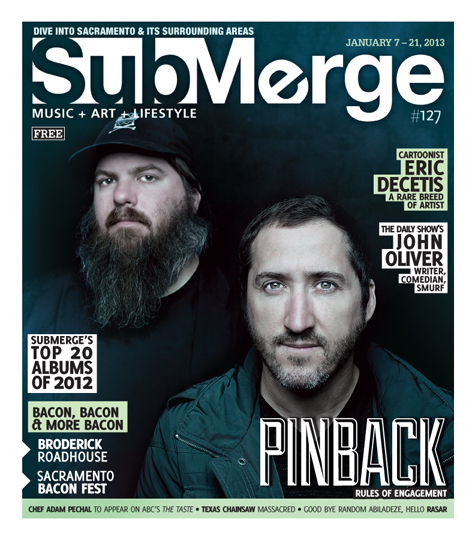
Pinback will play Sacramento on Jan. 20, 2013 with a stop at Harlow’s. To buy tickets ($20 in advance), go to Harlows.com, and for more on the band, check out http://pinback.com/.
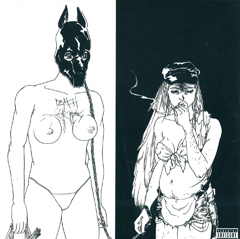
Sacramento-based controversial rap-punk trio Death Grips again caused a shit storm last week when they leaked its new album NO LOVE DEEP WEB on the Internet after their label (Epic Records) apparently told the group they couldn’t confirm a release date. “The label wouldn’t confirm a release date for NO LOVE DEEP WEB ‘till next year sometime,’” Death Grips tweeted, followed by, “The label will be hearing the album for the first time with you.” True to its word, the next day the group released the album along with its graphic album art (a hairy, erect penis with the album title sloppily written on it in black marker) for free on a number of file sharing websites including their own, Thirdworlds.net, which was later shut down (the band claimed their label did it). What nobody can figure out for sure, although every music blog under the sun is trying, is if Epic was in on the whole thing all along, making for the most brilliant PR move ever, or if Death Grips really are crazy-as-fuck and doing whatever they want with an album that was paid for by Epic. Either way, the damage is done, the new album is out, tens of thousands have downloaded it and the band has since stated (again via social media) that they “have no idea when the new album will be physical or if it ever will be.” Sonically NO LOVE DEEP WEB is tough to wrap your head around. It’s far darker and (for me at least) much harder to get into than the more pop-y (I use that term loosely) The Money Store, which Epic actually legitimately released earlier this year. After a few listens through it’s growing on me, although I will admit it’s a bit awkward when an erect dick pops up on my phone every time I click on a track. See and hear for yourself at Thirdworlds.net, as of press time the website was back up and was still offering the album as a free download.
SOLOS’ Spencer Seim on His and Aaron Ross’ Excellent New Project
The seeds of SOLOS were sewn around 2007. That was the year Nevada City freak-folk troubadour Aaron Ross rounded out an unlikely five-man partnership for Hella’s fourth full-length, There’s No 666 in Outer Space, providing vocals to a band internationally known for its aversion to much beyond breakneck time-signature gymnastics, sizzlingly technical guitar-and-drum patterns and explosive live shows. And while Hella’s been on a hiatus of sorts after its last LP, Tripper, was released in 2011–much of that having to do with drummer Zach Hill’s quiver of spectrum-spanning projects, such as the hugely popular Death Grips–guitarist Spencer Seim sought a crisp creative direction to aspire toward. There was only one person he considered to fill the half of that whole he was looking for.
“There’s just something about what Aaron does that I’m really into,” says Seim. “I’ve seen him play around town for years and there’s never been a single time I’ve seen him where he’s up there playing at a coffee shop or a local venue that I haven’t gotten goose bumps many times. I don’t know many other musicians that I get that with that consistently.”
So began the process of sussing out SOLOS, a new collaboration between Ross and Seim that’s already yielded probably the best, most imaginative and most sonically ballsy album of 2012 in their debut, Beast of Both Worlds (set to be released Sept. 11, 2012 via Joyful Noise Recordings). As hyperbolic as it felt to type that, it’s a rare occasion to verbalize a reaction to an album with repeated, “Holy fucking shit”s while kneeling in front of a Netbook for the entirety of the record. But Beast… is really that good. It’s brimming with enormous power-psych hooks, thick drums and the kind of sonic alchemy that seems totally unfair to other bands trying to make noise with instruments. Albums that sound this great, of course, take a lot of time to put together.
“It’s the way things work in the music world unless you fully plan everything and know exactly when things are happening,” says Seim of the year-and-a-half-long process to release the record. “But this was by the seat of our pants–kind of a more punk way of doing it. We just did everything on a budget and had a lot of people helping us and loaning us gear.”
Seim and Ross began writing together about two years ago, hoping to forge a unique hybrid wherein Seim’s progressive drumming would complement Ross’ seismic melodies, powerful guitar and witty, weird lyricisms. They performed around Nevada City and Sacramento under the working title Amaranth to demo songs in a live setting and dial them in a bit.
“The songs just needed a little boost I guess,” explains Seim. “Sometimes you write stuff and it comes out kicking ass in exactly the way you want it, but sometimes all the ideas are there and it needs some more working through. Playing it live in front of an audience, in my experience, changes songs quite a bit. Usually for the better.”
As Amaranth, Ross and Seim composed the songs that would reside on Beast… in about a month-and-a-half, and after playing out for a few months, they began the arduous task of talking with labels. But the duo didn’t get many responses to their work. Frustrated, Seim showed local producer Josh Henry their demos, who then passed them on to sought-after Abbey Road Studios engineer Guy Massey (Radiohead, Spiritualized, Depeche Mode) in England. Massey was immediately impressed by the group, who were now going by SOLOS, and invited them to travel overseas to make the record.
Seim was initially hesitant to work with a big-time engineer or producer, especially since without label support the duo were financing the record entirely themselves. On the strength of the demos, though, SOLOS seemed to already have their first number-one fan in Massey.
“Josh and Guy weren’t just hired to do this and try to make it sound as good as possible; they both did it for no money, just for the fun of the project,” says Seim. “They both had amazing ideas that we both really respected and enjoyed. There was no ego or anything involved, it was just all of us trying to make the best record we could in 21 days. It was different than I had expected, but way better because it wasn’t this big time producer telling us what to do. [Guy] was this super level-headed dude with rad ideas, sitting Indian style on the floor surrounded by guitar effects dialing stuff while [Aaron] played, blasting stuff through amps and basically trying to get weird sounds that none of us had ever heard before.”
Considering Seim’s instrumental pedigree with Hella–as well as with Nintendo-core crew The Advantage–getting weird sounds he hadn’t heard before would seem a pretty daunting task. But after hearing Ross’ mystical guitar progressions, and the overall haunted funhouse vibe of opener “Jung at Heart,” the Zeppelin-ish follow-up “All My Tribulations” and the excellent closing cover of Michael Jackson’s “They Don’t Care About Us,” you begin to understand just how far down the rabbit hole SOLOS was willing to travel.
For Seim, it was about channeling his musical sensibilities outside of the chaotic math-noise of his other projects, and allowing room for Ross’ songwriting talents to hold equal footing on Beast… After all, for Seim, two heads have always been better than one. Or three, or four or five for the most part.
“I’ve really enjoyed working on projects with just one other person in the past,” says Seim, “just because it’s two minds, and the way they fit together can make something really cool, especially if they’re very different. Even though Zach and I were making a very specific type of music in Hella, we’re both very different and have very different ideas about music. It was much more of a rhythmic connection we had there. With Aaron, we have more of a melodic connection.”
Seim and Ross were also careful to strike a true balance between their seemingly disparate styles for SOLOS.
“We had both just come from a band [Hella] that was very technical and was really trying to innovate in time signature and the way songs are arranged,” explains Seim. “With this project, we’re really just trying to do something new, something we haven’t heard before. But obviously, we don’t want to overplay in areas that aren’t necessary. We just want the beats or guitar parts to be interesting on their own and not have to be interesting because they’re fast or they’re in a strange time signature.
“We want it to be one entity and want you to be able to hear both of us in it, but not sound like us playing separately together, if that makes any sense.”
SOLOS began work on an even newer album six months ago, adding fellow Nevada City denizen Jeff Schmidt into the fold, officially making the band a trio. The timing of this addition is fortunate for the band, considering the instrumentation they included on Beast of Both Worlds and its impossibility to transfer live with just two people. Schmidt is taking on a kind of bass/keys hybrid with baritone guitar in helping compose the band’s new tracks, as well as during live performances.
SOLOS is only just now dusting off the soot of all that recording. They’re booking local shows in and around Sacramento, San Francisco and Nevada City for now, and are mulling over fall and spring touring options, though nothing has still been announced. But with another record 90 percent finished, perhaps the best is still to come.
“We’re just starting to get back into live band mode,” says Seim. “We’ve been in record mode for basically a year now. This is our first album, and we really plan to get out there and make a lot more.”
Beast of Both Worlds will was released Sept. 11, 2012. For more information and for touring and live performance updates about SOLOS, visit http://www.facebook.com/solosband, or http://www.joyfulnoiserecordings.com/artists/solos.
Death Grips
The Money Store
The capital of California, which few could pick out on a map will be the talk of the industry with the release of experimental hip-hop group Death Grips’ Epic debut, The Money Store. Sacramento will faintly appear in every major online and print music publication. It will travel to Ireland and the United Kingdom and stand out awkwardly amongst write-ups in French and German. The strangest of times lie ahead.
Last year’s Ex-Military mixtape unveiled a top-secret project of a highly classified nature, kept in the confines of Oak Park. Death Grips was not a local favorite that got its big break after years of cold shoulders. It was a phenomenon that rattled our cages and left us scratching our heads as to where the fuck it came from. Every announcement surrounding the band is bigger than the last; Coachella dates, All Tomorrow’s Parties appearance, signing to Epic, two albums in 2012 and a European tour. The warp speed of its success is as terrifying and mind-blowing as the music.
Ratchet man Andy Morin, aka Flatlander, and Zach Hill are the Reanimators of the group, who possibly stumbled upon the breakthroughs that led to Death Grips on Hill’s last solo album, Face Tat. The track “Jackers,” with its stem-warps, revving blips and manic drumming, sounds like the birthplace of Death Grips. The two mad scientists were just missing a vessel, which they discovered in Stefan Burnett, aka MC Ride.
The Death Grips sound is a break beat science that experiments with hip-hop echoism, EDM machinations and the wonky warble of (groan) dub-step. The double helix is constructed with a precisionist’s care, only to have a deadly virus unleashed as though Hyde sought to sabotage Jekyll’s work.
As much as we want to seek derivatives for Death Grips, none of them will satisfy; because as you listen to the first five tracks on The Money Store, it’s undeniable that they are without contemporaries or purebred lineage. Sample-based music was a stagnant art form until now; evolving into the digital catalog of stems. Death Grips collect, record and warp them like diggers obsess over vinyl. But Death Grips’ source material is infinite since it ranges from borrowed drum breaks sent through heavy filter or a looped guttural roar from Ride. The Black Google zip file, which included every stem, a capella and instrumental from Ex-Military, wasn’t just for us to tinker and remix, but a glimpse into the creative process. The same goes for the 109 GIFs currently obliterating computer speakers on the Third Worlds website. Ride is a threat without the assistance of effects, but Death Grips is all the more menacing when the track screeches and caterwauls much like horror films allow black cats to jump across cameras and serial killers to stand directly behind terrified damsels–the quick shock hits keep us on our toes.
Small traces of influence, or intention, trickle through The Money Store; Salt N’ Pepa’s “Push It” as performed by 2 Live Crew on “I’ve Seen Footage” is the most blatant, while “Hacker” bears striking resemblance to the outside-the-club sounds in the opening minutes of Daft Punk’s “Revolution 909,” except standing on the fringes of the hopeful patron line is Ride, plotting on whose car is getting jacked once they go inside.
The Money Store pushes Death Grips’ unique sound into a darker realm than the explorations found on Ex-Military, despite the mixtape crippling our senses and causing a cesspool of miscalculated pedigree. It’s inspired and moving faster than we can compute, which is frustrating since it’s only starting to sink in without the nuisance of definition beyond simply calling it Death Grips. In a year’s time, zero copycat bands or established groups attempted to mimic Death Grips as recognition of a new wave. Death Grips stand unchallenged. As MC Ride puts it on “Hacker,” “The table’s flipped, now we got all the coconuts, bitch!”
Much of the intoxicating danger and aggro-rap histrionics in Ex-Military have undergone mutation and the progression suggests that by No Love, the band’s second 2012 record, we’ll have little trace of bread crumbs leading back to introductory tracks like “Guillotine” and “Known For It.” In 23 songs between two records, Death Grips’ movement rivals the intensity of a warpath or rampage with no looking back. It has led them to the kung-fu chamber to face their greatest adversary, themselves, in order to become masters. All that’s left in gauging the impact of The Money Store is the passage of time, but that’s for the canonical talkers, which Death Grips have no time for.
See Death Grips live at Harlow’s on May 5, 2012 as part of Sacramento Electronic Music Festival.
Renown Sacramento Producer Raleigh Moncrief Steps Out from Behind the Boards for His New Solo Album
A fine piece of apothegm to live by is, “you’re only as good as the company you keep.” Look at Ringo Starr. He got by with a little help from his friends, who happened to be the greatest musical minds of his time. A relevant and localized example is producer Raleigh Moncrief, who’s collaborated with Zach Hill, toured in Marnie Stern’s band and co-produced/engineered one of the most unanimously lauded albums on a national scale in the past two years.
If he lived in Brooklyn, he would get accosted by hipster vermin at every DIY show he attended. Living in Sacramento means relative anonymity, even indifference to an extent, which allows unlimited hideout time to craft a solo record while producing for the budding local bands. A hermit’s life is how creative-types get things done, and for Moncrief it means recording in his kitchen with an acoustic guitar and laptop at odd hours between sessions with Ganglians and Teddy Briggs of Appetite.
Moncrief is one of the few “behind-the-scenes” guys that has his name shouted out in press releases and in print. Contributing to Dirty Projectors’ Bitte Orca record plays a significant role in that, but this year alone he’s recorded a Ganglians record, the Appetite record and an EP with Cuckoo Chaos–those are just the ones released. Last year he sporadically released free digital beat tape EPs and remixed a few local rap artists. Without hearing Moncrief’s solo debut Watered Lawn, one might assume he’s scatterbrained or has A.D.H.D. when it comes to music, but over the phone he cleared the air with, “I like to work fast and get it out of my face or my mind.”
Listening to the advance of the Anticon debut, the many faces of Moncrief begin to blur. Even my iTunes player struggled with defining Watered Lawn, by anointing it “New Age”–the dishwater of music genres. When I shared this curiosity with Moncrief, he replied through laughter, “How the fuck did that happen?”
Defining Moncrief’s music can be quizzical; a task he sidestepped by casually stating, “That’s not my job,” but the record is not beyond comprehension. The title itself suggests a project well tended and cared for, which is properly delivered in the 38-minute duration. Written in the three-month span of December through March, Watered Lawn is the amalgamation of Moncrief’s flighty interests in mainstream hip-hop production, a bit of leftover 8-bit intrigue and his various indie collaborations whittled down into 11 songs. Last year’s Carpal Tunnels beat tape introduced Moncrief as a hip-hop producer, but as time wore on the sound began leaning toward chillwave and beat music associated with the Los Angeles scene. In our interview, he offered a slightly alternative progression.
“In my mind I owe more to mainstream hip-hop,” he said. “It’s kind of weird because I don’t really listen to that beat music so much. There are elements of it I really like. It’s really about the low end. That’s something I took away from that [scene]. But I think that T.I. was more inspiring than the beat scene.”
By March he leaked “Lament for Morning” to the blogs, which ushered in the first glimpse of a newly discovered identity. The track made sense in fluidity of past work, but the release of “I Just Saw” in late August broke his vocal silence and hinted at a friendly influence. On the track, Moncrief is twitterpated by a female vision, stretched to a joy of singing without concern to his voice’s limitations. It is a singing style often attributed to David Longstreth of Dirty Projectors.
“I can’t help but be influenced by everyone I’ve worked with,” Moncrief said. “The main thing I took away specifically from working with Dave was exploring those outer limits. Being someone who’s not afraid to go to a place that is uncomfortable for yourself. Being brave and having the courage to try something that you’re not going to be confident in is valuable.”
Tracing back to his days in instrumental post-rock bands What’s Up? and Who’s Your Favorite Son, God?, Moncrief was the silent axe man, which continued into his project with Zach Hill and playing alongside Marnie Stern. While recording his debut he described the urge to sing as something growing in his mind, a new challenge to go along with his newly discovered production style. “I’ve written things and had other people sing them,” he said. “It reached a point where it felt like doing it myself was something I needed to prove I was capable of.”
“Lament for Morning” was the first leak, but the track that was his breakthrough was “Cast Out for Days,” which achieves a balance of the organic instruments (guitar and vocals) alongside warping glitches, flickering synths and programmed drums. “To me, [“Lament for Morning”] still sticks out like a sore thumb on the record,” he said. “Originally it was a guitar piece that was instrumental, but I didn’t know if it fit. So I just changed the guitar parts to vocals. That was my vain attempt at making it fit contextually.”
With new discovery can come bothersome uncertainty, but relating back to ol’ Ringo, one gets by with help from their friends. Moncrief had his share of butterflies. He sent his music out to the hodge-podge of contacts and friends he accumulated in the industry, including label heads at Anticon who initially balked at his beats. “I’d send them out to friends and say, ‘How does this make you feel?’
“I was looking for reinforcement because when you’re isolated like that it’s hard to have perspective,” he said. “Which is something good about the isolation as well. I got a lot of good feedback that helped build confidence in pursuing the change, because it’s a pretty big departure from most everything I’ve done previous.”
Oddly enough, it took a blog post instead of a personal e-mail to get Anticon’s attention. The label head contacted Moncrief and offered him a record deal. The label even sent Watered Lawn to Los Angeles to be mastered by Daddy Kev, owner of Alpha Pup Records and founder of Low End Theory, a weekly club night featuring experimental hip-hop–ask any Low End theorist or resident and they’ll say it’s an honor to receive his visionary stamp of approval. Raleigh could only say in approval, “He made it loud. Good work, Daddy Kev.”
The record awaits an Oct. 25 release date, but Moncrief is not taking a breather from issuing personal challenges. He has a few California tour dates, mostly coastal, scheduled sooner than he’d probably prefer. It will be his first opportunity to debut his songs, as well as perform with a four-piece band, which was lacking completion at the time of our interview. “It’s short notice,” he said. “It’s coming together well, but there’s still a lot to be done before I’d feel confident performing, which is funny because I think there’s a show in two weeks? Three weeks?”
As sketchy as he said he felt, it also seemed as though the pieces would fall into place regardless. Moncrief lamented it was tough to find people to play, but perhaps he will call in a few more friendly favors.

Look for Watered Lawns from Anticon Records on Oct. 25, 2011.
Grimey: Death Grips
Tuesday June 7, 2011
Townhouse Lounge, Sacramento, California
On Tuesday, June 7, DJ Whores booked dubstep DJs from distant lands like New York City and France. But when the downstairs cleared for an upstairs Death Grips set, for once Sacramento showed some goddamned pride.
Death Grips bears the rumblings of a strange new era for hip-hop–if the genre is even appropriate. Between Death Grips and the teenage riot of Los Angeles’ Odd Future Wolf Gang Kill Them All (OFWGKTA) crew, hip-hop seems to be embracing a DIY and punk mentality that hasn’t been prevalent in the genre since Fab Five Freddie was kicking it with Debbie Harry in the Lower East Side. Devoid of heavy-handed derivatives, Death Grips respectfully appeals to Sacramento and the indie world-at-large’s iTunes playlist without losing an ounce of visceral gnarl. The Ex-Military mixtape is the group’s call to arms through heavy bass warbles, juke break beats and vintage psych-samples from Link Wray and The Castaways. Critics jumped the gun when they hailed New York-based MC Waka Flocka Flame as the first metal god of rap. No one could have predicted Death Grips’ Stefan Burnett, a Kimbo Slice-looking dude from Oak Park, was lurking in the trenches with a deeper-seated metal intent with lyrics, “Dismiss this life/Worship death/Cold blood night of serpent’s breath/Exhaled like spells from the endlessness/In the bottomless wells of emptiness,” over the thunder of Zach Hill’s drums.
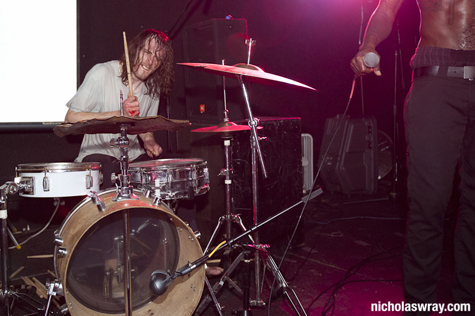
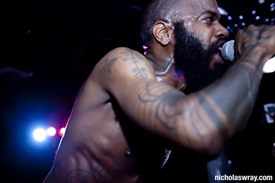
The Sunday prior to the Grimey set, Death Grips played a secret show at Press Club, a set that made its way to YouTube in record time. The Grimey announcement was as last-minute as it gets, with most of the curious anticipating a Davis house show as the unveiling of the mysterious Zach Hill project. The cloak was off entirely, as was frontman Stefan Burnett’s shirt as he stalked the stage, like any moment he might snap and start cracking skulls. No one was injured during the set, nor did a full-on mosh pit ever break out. The surprise was the rush to be on top of Death Grips without taking the stage–an instant embrace virtually unheard of for a local act. Burnett’s coined grunt of “Yuh” was mimicked on cue and other times in brief quiet moments, affirming his bark as the group’s battle cry. Sacramento is excited for its locally raised rap beast–enough to shed the cool, shed the cynicism, shed the apathy and get buck for 40 minutes in ToHo. It caught me off guard so much that I’m reluctant to mention it for fear it might backfire and curse the unabashed enthusiasm.

Whether we sustain our buzz in the home front or not, Death Grips is in takeover mode with or without us. This week (June 15), the group performs L.A.’s Low End Theory, a weekly melding of art and music held every Wednesday at The Airliner, a stage that made the careers of DJ Gaslamp Killer and producer/musician Flying Lotus. In the end, if Death Grips maintains an indifference to hype present within the music, it will always have a home in Sacramento. The nihilistic candor on tracks like “I Want It I Need It (Death Heated)” and “Spread Eagle Across the Block” boasts a lifestyle prevalent in Midtown yet to be captured sonically. I, for one, hope this is the beginning of many voice-shot nights shouting “Yuh” to come.
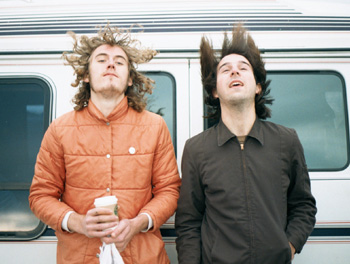
When Sacramento drummer Zach Hill recently posted on his Facebook page, “Finished the new Hella album,” it caused a shit storm of excitement amongst his fans. As of press time for this issue, the post had a monstrous 359 “likes” and nearly 100 comments. Jose Sanchez said, “Woooooo OMG that shits gonna be on replay for months on end, I love you Zach Hill.” Richie Saldivar chimed in with, “Fuck yeah! I can’t wait to hear it!” and Heath Sousa took it to a whole other sexual-yet-sort-of-disturbing level by saying, “Just cummed my pants.” Yes, it’s clear that Hella fans near and far are excited at the news of the instrumental spaz-rock band’s return. So is Submerge. We caught up with Hill last week to pick his brain about the new album, which is still yet to be titled, and he had this to say: “We recorded the album in Oak Park with Andy Morin. He recorded it and we all mixed it together. It’s pretty raw and just two of us again. Primarily drums and guitar but Spencer [Seim, guitar] also played bass on every track. It’s instrumental and loud. It’s like a very raging band practice that was recorded and played very well.” Hill mentioned that they are looking at two possible release dates, July 26 or Aug. 2 and that it will be released via Sargent House.
-J. Carabba