
Local rock band The Bell Boys are made up of three brothers: Erik (guitar/drums/vocals), Elijah (drums/vocals/keys) and Jacob (bass/vocals) Bell. Get it? “It’s a functional, no gimmicks name,” their bio says, and indeed it is. The Bell Boys’ new release, The Jean Hagen EP, is set to drop on Wednesday, Nov. 23, 2011 at Luigi’s Fundgarden (1050 20th Street). These dudes are obviously all about family; not only are they three talented brothers in a band together, they even named their new EP after their mom. “Jean is my mom’s middle name and Hagen is her maiden name,” Elijah recently told Submerge. Their mother, Donna Bell, even gets credit for the EP’s album art. Elijah mentioned that it was a piece she created a long time ago, back in 1978, he thought, but that she just recently found in an attic. “It was a trip. She created that a long time ago, and it just worked,” he said. For the recording process of The Jean Hagen EP, the brothers enlisted the help of Lucas Thompson as well as Art Padilla (of local band Hero’s Last Mission), who engineered, mixed and produced the record. The song “Black Shoes White Cars” can be streamed at Facebook.com/bellboysmusic. The EP release show will also feature openers James Cavern and Hero’s Last Mission. All ages are welcome, doors open at 8 p.m. and the show is just $5
Tag Archives: Sacramento

THE BELL BOYS RELEASE NEW EP
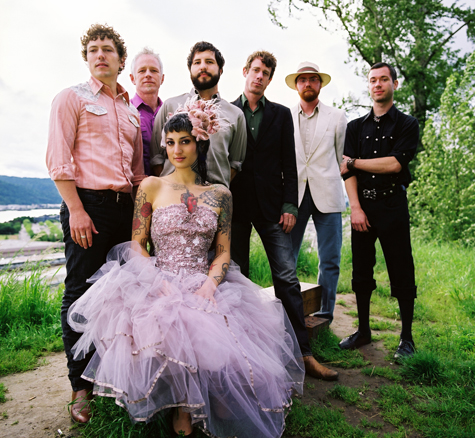
And Be Present, Y La Bamba
Y La Bamba’s Luz Elena Mendoza Moves Forward
All sound is building. That doesn’t mean music can’t be original, it just means influence is a given. It’s how you interpret that influence that makes something original. Take Y La Bamba, for instance. The sound–self-proclaimed gypsy-pop, press-reputed art folk–embodies a certain sacredness. The meld of dreamy percussion, staccato swells of accordion, guitar licks evoking traditional Mexican songs, all move as one, almost with a ritualistic sense. The most enchanting part is the voice of Luz Elena Mendoza; her loose webs of harmony and vocal flutterings tapping notes all over the register. She seems in a trance, like she’s merely a medium, channeling these noises. In some ways, it’s true: She’s a medium for her influences. Mendoza grew up spending summers in Northern California orchards with her family and a larger Mexican community. There were a lot of parties with many musicians, during which Mendoza would see her father perform freely.
“He would be the only one in the family to have that musical drive,” Mendoza said. “I saw him kind of be out of his body, and for me to be little and grow up and see that, I guess I was just trying to tap into that, naturally that kind of stuff just finds you.”
Those early summers were the basis of Mendoza’s musical foundation, of seeing “the passion, the rawness, the expression,” she said.
As an adult, Mendoza relocated to Portland, Ore., her current home base, along with her cat, Bamba, who unintentionally became the reason for her band’s name.
“I made up a moniker, Y La Bamba, me not being present, and the cat,” Mendoza said.
The band has now grown into a six-piece group, with Mendoza still writing the skeletons of each song, filled into full-body sounds by her band mates. The group is currently on a West Coast tour, recently having made their first stop in Seattle, where Mendoza takes a minute to answer all these questions and reflect on her Northwest home.
“Since I’ve been living in Portland, I’ve just been becoming my own, and definitely have my roots within my core,” Mendoza said. “Everything I do with music, I see the image of my father and my mother and my ancestors. But because I live up in Portland it’s been hard in the last few years of my adult life to be connected to my ethnicity, the traditions my family had.”
Despite the distance from her early roots, Mendoza’s been lucky to fall into the arms of the growing musical body of Portland, that beautiful Northwest hub of artists in a forest. Soon after she began playing music around the area, Mendoza was lucky enough to have her first album, Lupon, produced by The Decemberists’ guitarist Chris Funk, and released by the quickly budding Portland-based label, Tender Loving Empire.
That northwestern tip of Oregon is quickly becoming a strong presence on the country’s map of music, thanks to some talented heavyweights like Modest Mouse’s Isaac Brock, The Decemberists’ Colin Meloy, M. Ward and others.
“Portland’s really cool like that, there are so many musicians, a lot of people that have made a name for themselves outside of Portland,” Mendoza said.
However, it’s not just the bigger successes who give Portland its sonic reputation, it’s the community itself. Artists actually supporting other artists.
“Because Portland is such a music Mecca, it’s not hard to go out and play a song at a local pub and have people support you, and all of the sudden people supporting your vision, it just naturally happens,” Mendoza said.
Not to be misled, Portland may be becoming the land of milk and honey, but not in a lucrative sense, more in the way of ample human resources, most importantly, support.
“It’s not like we’re all making a whole shit-ton of money,” Mendoza said. “It’s not like something you seek out, it’s like dinner’s ready, just sit down and eat.”
After the success of Y La Bamba’s first record, Lupon, many things began to come to light about Mendoza’s past, one being an excruciating period of her life when she contracted amoebic dysentery and giardia while traveling at a young age. The illnesses took a gigantic toll on her overall health and resulted in substantial weight loss and depression. The repercussions of that experience are very much present in Lupon. However, despite their being at the lyrical forefront, they’re still tender wounds for Mendoza.
“I know you could sit there and talk about it like, ‘We need those things, they’re allies in later life,’ but for me they really stick in my spine,” Mendoza said.
When she first arrived in Portland, Mendoza was still very much suffering from her sicknesses, which bled into a lot of her interviews and musical demeanor.
“All of those things are part of my quilt,” Mendoza said. “Anything that creates a chip on my shoulder is going to be more prolific for me to explore.”
But now, Mendoza is ready to lay those things aside and grow from them. The newest Y La Bamba installation, Court and Spark, set to come out early next year, is produced this time by the recent Portland transplant, Steve Berlin, band member of Los Lobos.
This album devotes a larger chunk to her roots, with more tracks sung in Spanish.
“There’s way more songs in Spanish. It’s not like I was trying to go for that, it just kind of naturally happened,” Mendoza said.
Despite its subconscious appearance, keeping that presence in the Y La Bamba sound is something that’ll be protected.
“Writing in Spanish is something I don’t ever want to forget; I feel like I’m speaking from my ancestors,” Mendoza said.
Beyond her past, Mendoza is ready for forward action, to keep ties to her influences and what’s essentially made her present, and move on.
“For those who are totally hungry for growth, everyone has their own interpretation, but my intention when I wrote those songs was to simplify my mind, and if that’s healing to others, I just want the audience to know that’s there,” Mendoza said.

Y La Bamba will play Luigi’s Fungarden in Sacramento on Friday, Nov. 18, 2011. Also performing will be Death Songs and Armando Rivera. Show starts at 8:30. Look for Y La Bamba’s forthcoming new album early next year.
All Killer, No Filler
Ernesto’s Mexican Food
1901 16th Street – Sacramento
Ernesto’s Mexican Food is celebrating its 20th year on the corner of 16th and S streets, which is a mighty feat in local dining and deserving of our deepest apologies. Last Thursday, three staff members took their maiden steps into the cantina. To our delight, the overdue visit resulted in fulfillment and a desirable balance of spice and spirits in our breath.
The stylish yellow tint and stucco exterior place Ernesto’s at the higher end of Mexican dining, but the menu prices are reasonable. The interior is neither heavy-handed nor kitschy in providing an authentic Mexican experience. Ernesto’s has class, but no room for pomp. Seating is balanced between the communal and the intimate. On a busy night, it must feel like a jumping and cramped party. Where does the mariachi band even fit? But, on a Thursday afternoon it’s casual and discrete.
My only sustenance the day of our lunch date with Ernesto’s was three cups of coffee, a multi-vitamin and a glass of water. I was in a state of considerable hunger, feeling the pangs in the mid-region, and the scents lingering inside Ernesto’s did not help my cause. The complimentary chips arrived fast with an extra mild salsa and bean dip. Despite a predilection to avoid beans, I decided to be a professional and sample it. It led to four more sample scoops to be certain I truly enjoyed beans for the first time in ages.
The salsa is mild to a point of just being finely diced wet vegetables. The chefs keep a hotter salsa in the back of the house for themselves, but the servers will gladly bring some upon request–if only we knew this during the meal. It’s not unusual for the kitchen to have its personal stash, often too dangerous for the dining patron. Chefs and cooks pride themselves on their special concoctions unfit for the weak of stomach. Ernesto’s willingness to share their stash is a favorable quirk to the menu–it plays to our eagerness to be “on the inside” of the business or the regular-syndrome that compels people to order off the menu and give the server the secret wink that they are “in the know.”
The Cadillac Margarita is billed as being “voted ‘The Perfect Margarita in Midtown’ by SN&R.” Compelled to judge the claim further, I ordered one only to have the pucker of lime mixed with the potency of Agave Blanco tequila send me kicking the booth boards in approval. The rocks pour is served in a tall glass with a salted rim and lime slice to temper the tequila’s zing. Ernesto’s doesn’t bother with extravagant presentation or bait you into multiple orders with a slim tequila pour drowned in lime juice. It’s got a kick and no-nonsense pour that warrants the vote of confidence.
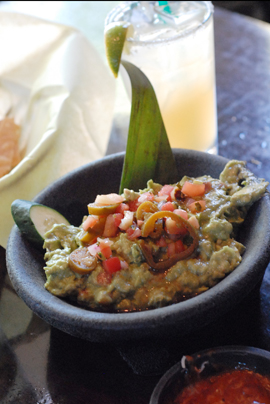
The drink situation properly handled, we ordered a large bowl of fresh guacamole, which was a constant at the tables there before us. If it is not made fresh, why bother? That’s my firm stance on guacamole, and I admire Ernesto’s like-mindedness. It was a delicate blend of chunky and whipped, with enough jalapenos to give the zest a kick.
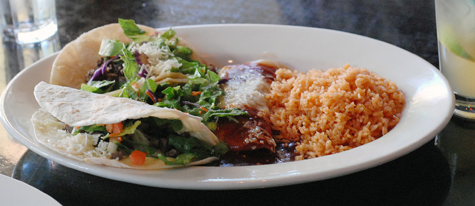
We ordered from the lunch menu and had I not involuntarily fasted, I would have left with a heavy to-go box. Ernesto’s proved its legitimacy and legacy with a lunch portion worthy of my hunger, but not unconquerable in girth. The signature combinations section is priced fairly at a flat rate of $9.99 and a hefty plate of three samples of Mexican dishes will arrive with the option of chicken, steak or carnitas. The steak combination is a taco, enchilada and quesadilla with a side of traditional Mexican rice, beans and salad garnish. There was little uncertainty in the server as to whether or not I was finished when he removed a plate that only left the salad garnish. I briefly considered spreading the leftover mole sauce from the enchilada on the garnish and finishing it off, but thought better of it.
One might surmise that promptly following this exercise in gluttony that I retired home and took a siesta on my chaise-lounge sofa. The glory of good Mexican is substituting quality ingredients with hefty filler. The enchilada was the only item drowned in sauce and cheese, but the tacos and rice serving were light. I did not feel engorged or sluggish. I was filled properly with plenty of tortilla absorbing the tequila in my gut.
Ernesto’s 20th Anniversary Party is Friday, Nov. 18, 2011 with live music, cake cutting and food and drink specials.
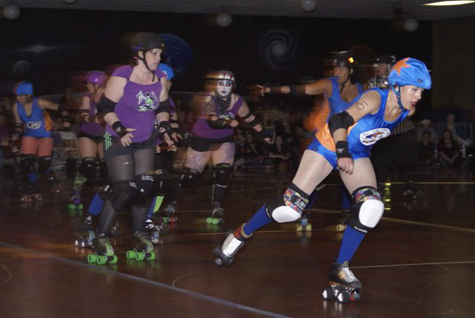
Folsom Prison Bruisers vs High Country Hell Cats Nov. 19
The Sac City Rollers recently changed venues from Foothill Skate Inn to NorCal Indoor Sports Center in Woodland (located at 1460 Tanforan Avenue), so mark your calendars for their next high-energy, action-packed bout on Saturday, Nov. 19, 2011 when the Folsom Prison Bruisers will take on the High Country Hell Cats from Sonora. Doors open at 6 p.m., junior derby kicks off at 6:30 and the full bout starts at 8:15 Snag tickets in advance for $10 at Cruz Skate Shop, Dimple Records and The Beat or get them online at Brownpapertickets.com. Also be sure to check out the fifth annual Sac City Rollers Burlesque Show on Satuday, Nov. 26, 2011 at Blue Lamp. Hit up Saccityrollers.com for more information.

Robot Birds from Brooklyn
Artist Chico MacMurtrie Brings Inflatable Robot Technology to Davis
Rambling somewhere around the axis of where sculpture, engineering, robotics and puppetry collide lays the malleable artworks of Brooklyn-based visionary Chico MacMurtrie. For the past 20 years, MacMurtrie’s anthropomorphic mechanisms have taken on many forms, stimulating commentary on the meaning of movement, of life and of the ways in which viewers are allowed to interact with art, while at the same time examining how art interacts with the world at large.
For reference, take MacMurtrie’s large-scale installation, Birds–showing at the Richard L. Nelson Gallery at the UC Davis campus through Dec. 11, 2011Birds brings together a fleet of elegant bird-like creations, hung in a procession above snaking floor lights meant to represent a river. The installation utilizes some complicated mechanics, computers, a revolutionary inflatable architecture technology created by MacMurtrie himself, and very subtle robotics to produce an interactive demonstration. The inflatable technology, made of a light fabric, essentially allows the avian forms, though loaded with mechanical actuators and machines for movement, to approximate seamless, non-rigid organisms. The “bird” sculptures react to environmental sensors–triggered by the people in the room–by coming to life from a deflated form, to begin beating their wing-like appendages as if flying. Portraying qualities consistent with actual living systems, should a viewer get too close to the sculptures, or spend too much time ogling, they begin to devolve, or die, eventually crumbling back into their stasis one by one.
In short, it’s a provocative commentary on environmentalism, over-population, urban sprawl and more…with robots!
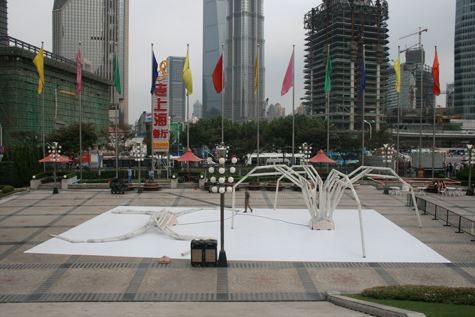
Inflatable Archit Growth Photo: Chico MacMurtrie / ARW
To give an accurate synopsis of MacMurtrie’s robotic sculpture work is nearly impossible, given that the more tangible elements of contemporary art remain satisfyingly absent in his work. Instead, MacMurtrie’s muse is derived from the examination of amorphic shape shifting, using robotics to bring to life geometrically abstract creations–most of them very big–to titillate viewers, and to bring a sense of symbiosis to the art-viewing ritual.
MacMurtrie’s sense of reinvention began during his undergrad college days at the University of Arizona. As a painter, MacMurtrie, 50, says he felt confined by the starkness of the canvas.
“My paintings got more physical, and ultimately I began literally throwing my body into my paintings, using my body as a brush,” explains MacMurtrie. “Ultimately, what I was after was the resulting effect of the paint on my body.”
When the paint had dried on him, the result left a kind of skin. MacMurtrie had an epiphany to move away from painting toward creating transformational performance pieces utilizing body skins. It wasn’t until he took the skins off that the seeds of what MacMurtrie now grows would be sown.

Inner Space - Photo: Chico MacMurtrie / ARW
“Once I emerged out of the skins, I noticed that the skins had a life of their own that was even more interesting and more powerful, in my opinion,” says MacMurtrie. “I began to figure out how to put sub-structures into these skins to animate them.”
MacMurtrie taught himself robotics, and began to see the world in mechanical systems. His new muse was to break down movements mechanically, while utilizing his background in sculpture to form a hybrid of the two. This process began with MacMurtrie’s creation of interactive robotic humanoids in the early ‘90s, collaborating with computer engineers and programmers, and has moved into his innovative work with inflatable robotic architecture. In order for him to progress, MacMurtrie literally had to reinvent the way the processes of construction and implementation were approached for his work–to move beyond robotic automation, and into abstract robotic sculpture.
Simply put, he’s not an engineer. But that doesn’t bother him.
“If I would have gone to engineering school, it would have inhibited [me],” says MacMurtrie. “Often, I’m doing things that are extremely difficult and challenging. People who have a practical understanding of engineering wouldn’t take those things on. I end up creating more work for myself because I’m not an engineer, but it’s more of a genuine process, I think.”
With lots of funding help, due in no small part to five grants from the National Endowment for the Arts, as well as funding from national, local and international granting agencies and 30 corporate sponsors, MacMurtrie and his collaborative group of artists, technicians and programmers–Amorphic Robot Works, founded in 1991–have created more than 250 mechanical sculptures that assume anthropomorphic and abstract forms that have been shown all over the world.

Totemobile - Photo: Chico MacMurtrie / ARW
Totemobile - Photo: Chico MacMurtrie / ARW

Totemobile - Photo: Chico MacMurtrie / ARW
Big examples of this work include Totemobile–a robotic sculpture that in its settled form appears as a life-sized representation of a 1965 Citroën DS automobile. During the performance process, the sculpture is disassembled robotically, growing slowly from the inside out to finally bloom into an organic 60-foot-tall totem pole. The result–which utilizes the inflatable technology–is a stunning pseudo-Transformers study of pop culture idolization and the inner-workings of organic labor that any construct of man was forced to endure.
With Birds, MacMurtrie tried to create an in-between point from Totemobile, and his early humanoid robots.
“[The birds] could be legs, they could be cones. They are certainly abstractions of birds,” explains MacMurtrie. “People see them as birds because they appear to have wings, and they appear to live and die, and they appear to take flight. They also have a pattern of becoming unified, then falling out of order. It resembles nature. It’s not so important that they are literally birds to me, as much as [viewers] get a sense of: they’re organizing the way nature organizes. They fall apart the same way that nature tends to fall apart.”
MacMurtrie says that the birds have received different reactions the world over. And while the abstractness of his work is true in a geometric sense, his hope is that it inspires people to think beyond the mechanics of his creations.
“The most important thing is that it’s alive, it has a life force, it’s trying to organize itself and trying to find its structure,” says MacMurtrie. “There’s a lot of social commentary [in Birds], but it’s extremely subtle. The birds work pretty much the same way we do. The difference is they’re fueled by air, and if we can’t breathe, we don’t live, and if we don’t eat fuel, we certainly don’t live. In this case, their air is fueled by electricity. It’s similar or parallel to our living.”
Birds shows at the Richard L. Nelson Gallery at Nelson Hall at UC Davis through December 11, 2011. Gallery hours are Monday through Thursday, Saturday and Sunday 11:00 a.m.—5:00 p.m. and by appointment Fridays. Call (530) 752-8500 for more information. For more about Chico MacMurtrie, visit Amorphicrobotworks.org.
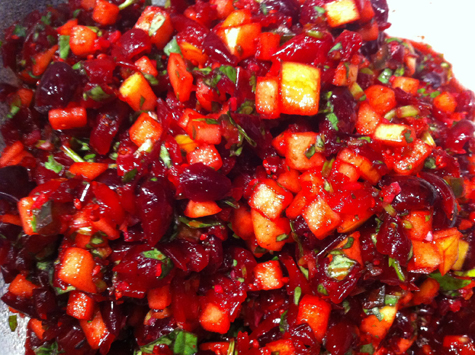
Cranberry Apple Salsa at Bows and Arrows
During our recent patio visit to Bows and Arrows whilst enjoying a bottle of wine, Submerge was surprised with a sneak-taste of their new cranberry apple salsa and it was impressive. In the words of our fine publisher, Melissa-Dubs, “Honestly, it’s the best shit I’ve ever tasted.” It’s sweet, obviously because there’s fruit involved, but it still has those traditional salsa elements like cilantro, Tabasco, etc. Spicy and sweet, the best combination! Bows and Arrows is located at 1815 19th Street, Sacramento and the food portion of their operation is run by Fat Face Cafes Jaymes Luu. Music, art, retail, tasty food and a well-chosen beer/wine selection make it hard to leave this place, not to mention they have easily one of the best patios in town. See for yourself!
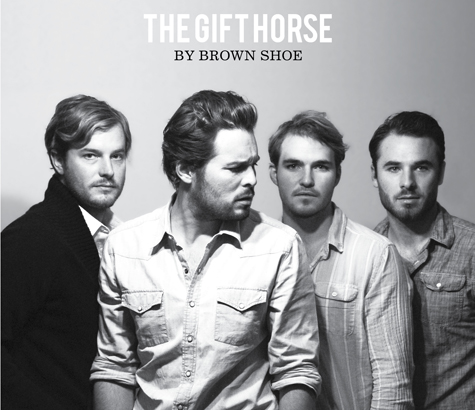
The Gift Horse by Brown Shoe
Folsom band Brown Shoe has released one hell of a record in The Gift Horse. Comprising four brothers–Aaron, Bryson, Ryan and Landon Baggaley as well as Chandler Clemons (who the band claims might as well be a brother), Brown Shoe isn’t new to creating sprawling, epic albums. The Gift Horse is their fourth offering and third recorded with Joe Johnston at Pus Cavern Studios in Sacramento. As cliché as it is to say, there really is a little something for everyone on this album, from California sun-tinged indie pop and whisper-quiet singer/songwriter moments to blistering dynamic swells and sing-along worthy choruses. If you dig bands like Bon Iver, Band of Horses, Kings of Leon, Fleet Foxes, Explosions in the Sky, Sigur Ros and others of that ilk, you’re going to feel right at home listening to The Gift Horse. Learn more at Brownshoemusic.com or at Facebook.com/BrownShoeMusic
Good Grief That’s Good!
A Submerge guide to pumpkin libations
Words by Adam Saake – Photos by Nicholas Wray
Hey look! It’s fall. Oh, there it goes. Living in Sacramento, you know that fall makes a quick appearance yet there are so many ways to indulge. Having your checklist done early, your Halloween costume pre-ordered and a trip to Apple Hill in permanent marker on the calendar is a good start, but there are still a few things that fly by under the radar. Pumpkin beer is one of them and if you’re not quick to grab a six-pack off the end cap, you might miss out on some limited edition suds that can be quite delicious. What once seemed like a novelty has now become a tradition for some serious beer drinkers and the choices have multiplied. Ales, lagers and even ciders are popping up on the shelves and each offer unique takes on the flavors that this iconic orange squash has to offer.
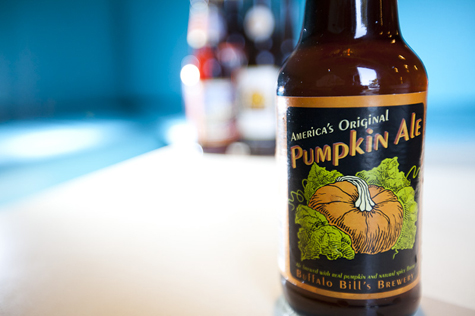
America’s Original Pumpkin Ale
Buffalo Bill’s Brewery, Hayward, Calif.
Buffalo Bill’s Brewery offers a quality pumpkin ale that is firmly centered on drinkability and not necessarily pumpkin overload. Not to say that pumpkin isn’t the focus here, but on a scale of Linus to Return to Oz, this is somewhere in the Silver Bend Pumpkin Patch. The first initial sips yield the pumpkin and then the luster slightly fades, but still very refreshing. Clocking in at a little over 5 percent alcohol and 11 IBUs (international bittering unit), even grandma might have one with you to celebrate the holidays.
The Hayward, Calif.-based brewery who are also known for their Alimony Ale and Orange Blossom Cream Ale have had their feet in the microbrew market since 1983. These guys definitely know what they’re doing with their pumpkin beer, so you’re safe to grab a six-pack and enjoy.

Blue Moon Harvest Pumpkin Ale
Blue Moon Brewing Co., Golden, Colo.
Surely the most recognizable name we’ll mention here in our Pumpkin Beer spotlight, and either you love it or you hate it. Blue Moon, a Miller/Coors product, hit the scene around 1995 at The Sandlot Brewery in Boulder, Colo. (then just owned by Coors) and it didn’t take long before it had made its way into many watering holes around the country.
Originally launched in 2006, the Harvest Pumpkin Ale has had a facelift this year and according to Miller/Coors has been “re-launched and reformulated this year.” What does that mean? Well instead of brewing the beer with just pumpkin and cloves, they add nutmeg and allspice as well. That and the label become a little less artsy and lot more branded. What you get is a quite enjoyable beer with a good body, smooth finish and great balance between the hops, pumpkin and spices. Coming in at 5.7 percent alcohol, Harvest Pumpkin Ale is a step up in intensity but not overpowering and certainly a beer you can enjoy more than one of.

Pumpkin Lager Beer
Lakefront Brewery Inc., Milwaukee, Wisc.
Located on the Milwaukee River in Milwaukee, Wisc.–pronounced mealy-walk-ay if you’re Alice Cooper–Lakefront Brewery has been crafting quality microbrews since 1987. The brewery itself is a huge tourist attraction to the point where sold-out brewery tours gave way to online ticket sales. Still independently owned and cranking out large volumes of beer, boasting over 20 different selections, Lakefront is testament to the little guy doing big things.
Their Pumpkin Lager Beer, apparently inspired by a Thomas Jefferson recipe that brewery owner Russ Klisch stumbled upon, is as close to pumpkin pie in a beer form that you might find. Pour one into a glass and you’ll immediately notice that the nose jumps out; heavy with pumpkin, cinnamon and clove aromas. The mouth feel echoes the nose; rich yet goes down easy and the use of Caramel and Munich malts lend to the texture and depth of this fun drinking beer. Slightly copper in color and 6 percent alcohol, you might spill a few family secrets after a few of these.
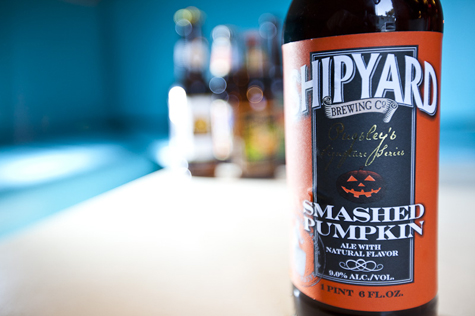
Pugsley’s Signature Series: Smashed Pumpkin Ale
Shipyard Brewing Co., Portland, Maine
Caution: double entendre approaching! Shipyard Brewing Company’s co-founder and Master Brewer Alan Pugsley has outdone himself with this Smashed Pumpkin Ale. Not only will you be “smashed” after a few of these, but your head will feel like Gallagher took his sledgehammer to it in the morning. Packed with so much spice, pumpkin, hops and malts and 9 percent alcohol, this pumpkin beer is truly a trick and a treat. Submerge asked local beer guru Mark Neuhauser of Pangaea Two Brews Cafe what he thought and he called it “very sweet…pumpkin pie in a bottle.” Pugsley uses three different malts including Pale Ale, Wheat and Light Munich along with two different kinds of hops; Willamette and Hallertau. The high alcohol gives it the backbone and bite, making this beer perfect for any of your spice filled holiday foods.
Of course, it’s no surprise that Shipyard would blow the stem off the pumpkin beer category. These guys are known for amazing craft beers that they’ve been perfecting since 1992. They’re Maine’s largest brewery that also makes Capt’n Eli’s Soda, a craft soda that comes in seven different flavors and are the 19th largest craft brewery in the country. All that from little ol’ Maine, go figure. On top of that, Pugsley is kind of a rock star in the East Coast microbrew world. Back in the ‘80s he bounced around and helped establish quite a number of breweries as well helped design and build breweries in the United Kingdom.
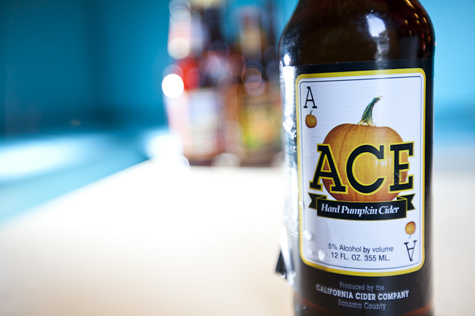
Hard Pumpkin Cider
Ace Cider: The California Cider Company, Sebastopol, Calif.
Alright, here’s your wild card. Ace Cider based out of Sebastopol, Calif., has been making cider for 15 years. Before there were really cider options, there was Ace and over the years they’ve stayed amongst the companies making really high quality, gluten free and delicious ciders. This year is the first year that the company has released their Hard Pumpkin Cider, an apple-based cider that is blended with pumpkin and allspice. Jeffrey House, owner and master cider maker, says that he made 10,000 gallons this year and it’s already all gone.
“People are racing to drink it,” says House.
With the popularity of the product, House says they’ll more than likely double or even triple production next year to meet the demand. The cider is quite a unique product that doesn’t scream pumpkin but merely suggests it. The allspice is subtle and you pick up the apple on the finish along with an interesting aftertaste reminiscent of pear candy. This cider is 5 percent alcohol and quite low in sugar content, 9 grams per 12-ounce bottle. If you’re really aiming for pumpkin, I’m not sure if this is for you but overall a tasty cider that fits in perfectly with their existing line.
These beers and ciders can be found at Total Wine, Whole Foods, Corti Bros and other select specialty markets. Call ahead because they are seasonal and will disappear quick.
Still thirsty for more pumpkin beer? Pangaea Two Brews Café has Dogfish Head’s Punkin Ale on draft. Pangaea was lucky enough to acquire three of the six kegs allocated to the entire Sacramento area, so get it while it’s here. Or, head over Alley Katz and try a Double Pumpkin Ale on draft from Sam Adams.

Dirty Work • DJ Whores Keeps the Grimey Party Live at Townhouse
[Editor’s note: We here at Submerge were devastated to hear of Daniel’s passing on April 8, 2017. His impact on Sacramento’s music and art communities will never be forgotten. Rest easy, old friend.]
The P and 21st block is a sleepy pocket in Midtown. Tucked away from the white noise of the freeways, littered with parking lots and office buildings and a tattoo parlor, it’s low-profile–unless it happens to be a dance night at Press Club or The Townhouse.
Both clubs are infamous alternatives to the posh world of dress codes and bottle service. At Townhouse, or Toho as some call it, the beer’s cheap, the drinks are stiff, the tagged-up bathrooms are claustrophobic and the entire interior is low-lit to obscure seedy behavior. It’s the only spot in town suitable for a dubstep and bass night called Grimey. Being coined by a local DJ who goes by Whores is just another notch in its anti-glamour esteem.
On his birth certificate, Whores is Daniel Osterhoff. He’s Dan to those who knew him before he was Whores. We met at his apartment on the north side of Midtown a few hours prior to Grimey. He does not live in a high-rise loft or a gutted warehouse that doubles as a skate park. He lives like the rest of us, in a modest complex with carpeted floors and enough space to stretch. Two fellow DJs, one of which was Jubilee just flown in from Miami, and Grimey resident photographer Eric Two Percent were hanging out. The walls were like those you’d find at any graf-writer/graphic designer’s abode; dozens of pieces from abstract to lowbrow with the exception being a giant rusted-red W mounted on the wall.
“Russell Solomon of Tower told me the letters were lying around on the roof of Tower Cafe,” Whores said. “So one night I climbed up there and took the W.”
While grabbing me a Red Bull from the fridge he apologized for the hair on the kitchen floor. A stylist friend that was hanging out had sharpened Whores’ close-cut before my arrival.
We stepped outside for a cigarette and chopped it up. It was not long before James Blake’s controversial quotes to the Boston Phoenix that caused a stir in dubstep were discussed. An uber-popular British electro-soul and dubstep artist, Blake railed the genre’s burgeoning “frat-boy market,” which is being labeled “bro-step.” His rant was widely publicized for statements like, “It’s a million miles away from where dubstep started,” and “It’s been influenced so much by electro and rave, into who can make the dirtiest, filthiest bass sound, almost like a pissing competition, and that’s not really necessary. And I just think that largely that is not going to appeal to women.” Periodically throughout the night, Whores and his fellow DJs coolly reminded me that it’s neither their taste nor in step with the identity of Grimey.
The success of the night is owed to the attention to taste, which can be misperceived as snobbery, but should not be construed as such. Even when resident DJ Jay Two approached Whores with the idea of a dubstep night, Whores was interested but hesitant due to a feeling that dubstep had reached its high water mark.
An attendee of Grimey is not given the opportunity to gripe “not this damn song again,” because its resident DJs (Whores, Jay Two and Crescendo) are intent on remaining ahead of the curve by playing records acquired on advance or playing the newest tracks they think need to be heard. It’s a dedication to the cutting edge that is scarce in the local clubs that rely on Top 40 or are just held down by stubborn old dogs disinterested in new tricks.
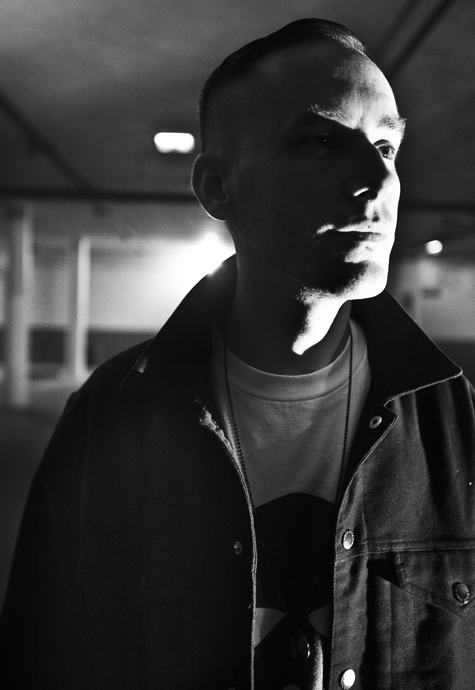
“I just hold steady with playing what I think people would like,” Whores said. “I’ve attended a lot of different dance nights everywhere from New York to Los Angeles, Seattle, Portland, San Francisco and Oakland. From the most underground to the most mainstream clubs, and I’ve taken little elements from each. But once you get the word out there, the word kind of does it itself.”
Much like fellow local veteran DJ, Shaun Slaughter, Whores is well traveled. He started DJing in 1997 as part of 916 Junglist before moving away in 2000 to Portland. Each move, he connected with different crews in Portland and Seattle before moving back to Sacramento in 2005. “Most people don’t know that about me,” he said. “They just think I came on the scene or think I’m from Portland, but I’m born and raised in Northern California.”
I reconvened with Whores outside of the Townhouse around 9:30 p.m. He was talking with Matt B of Bass Science, who had arrived in a rental from Tahoe. Whores was quick to share his knowledge on Bass Science, practically orating a short bio. “He started the whole glitch hop scene basically,” Whores said. “When Glitch Mob was starting out and Lazer Sword, he was right there. This guy’s got quite a big history in the newer EDM alternative craze.”
All professions have a language and despite my familiarity with Grimey and its music, talking to the actual artists involved meant brief interruptions to ask if they were saying “IDM” (intelligent dance music) funny, only to learn that EDM translates to electronic dance music–the domain in which the sub-genres operate. The confusion then sparked the two DJs into weighing the blurring sciences between EDM and IDM. “Some of it is [IDM] though nowadays,” Whores said. “Some of the juke stuff. Machinedrum’s new album.”
“The Lazer Sword,” Matt B added. “It’s intelligent footwork basically.”
“EDM is basically a very blanketed term,” Whores continued. “Nowadays everybody plays a little bit of everything because people’s attention spans are about this small [makes his index and thumb nearly touch]. So if you play one genre of music, you’re pretty much pigeonholing yourself and boring the shit out of the crowd.”
Whores stepped into the booth at 10 p.m. The bar was filling out and overflowing onto the dance floor with more than just gangly dudes having acid flashbacks from the Jungle club days. Whether it’s the Whores hype, the distancing from “bro-step” and “filthy bass” or just a misnomer, Grimey is never short on female attendees. By 10:30 p.m. the dance floor was gaining steam with a few girls entertaining each other, but come 11 p.m. to 2 a.m. the floor was a grinding, thrusting hot box of sweaty bodies–sweet, sweet uninhibited decadence.
Whores neither bores the crowd nor himself when he DJs. He keeps a folder of over 10,000 tracks on his computer at all times and does not practice a strict set. “It’s a lot more fun freestyling sets,” he said. “Sometimes when I record the sets and go back to listen to them, it’s like, ‘Man, that mix really worked.’ Others it really didn’t work, but what it comes down to is if you’re a professional, you can treat it like a jazz musician and play out of it. It’s all what you do with an error. Some DJs don’t know how to bounce back, they flop or they panic and that shows. That’s the difference between me and some DJ who took it up two years ago.”
Back outside we resumed our interview session in hopes of a quieter haven, but Grimey is the dance night with just as many attendees milling about the roped-off outdoor smoking section and back parking lot as there will be jammed into the dank of The Toho.
Whores clearly enjoys the popularity of Grimey, but he lamented that its success led to the compromise of his HUMP night on Wednesdays opposite Grimey. Originally called Warpaint Wednesdays with Terra Lopez, Whores came on to assist with the DJing and teach her techniques. Once Lopez began Sister Crayon, she forked over the night to Whores who renamed it HUMP.
“It used to be a popular night,” he said. “When Grimey came around it took the spotlight. I’ve been bringing around a lot of relative and instrumental electronic artists and musicians to try to bring it back.”
It was none of my business, but Whores willingly broke down the financial losses he’s incurred in the past two months that’s led to HUMP’s demise. DJs that are not conveniently touring the West Coast are flown into Sacramento and given hotel accommodations on Whores’ dollar. If no one shows, it means he bites the bullet.
San Francisco electronic artist EPROM and Frite Nite’s Salva, two rising beacons in the West Coast, are booked for HUMP at the Press Club this week. After that it’s the anniversary party with locals only in November, including Dusty Brown’s Little Foxes project, which is quite possibly also HUMP’s night of eulogy.
With Fuck Fridays dissolved, the Toho was in need of a new Friday night event, and Shaun Slaughter was back on the market for work. Rather than compete for the local crown, Whores and Slaughter teamed up to create Heater, an exclusive once-a-month party that combines glitter and gutter. “It’s more like HUMP with an open format,” Whores said. “We can play anything from house to electro to Baltimore to indie to dubstep and bass n’ breaks, whatever. It’s just straight party.”
The party debuted last month with the two DJs performing separately, and then trading off tracks for the last hour. “There’s always been an odd tension between us, but we’ve always been super-friendly with each other. I’ve been super-supportive of his nights and he’s been super-supportive of mine. The odd tension was because it’s a small town and he’s held the crown for quite a while. I think we’d really benefit if we did more stuff together, which is why we’re only doing it as a monthly.”
Our vibrations are in good hands with the Grimey residents. It’s a rare event where making requests is the greatest faux pas. “I don’t think it’s common knowledge that people know it’s rude,” he said. “Believe it or not, I have one job and one job only and that’s keep the vibe going. As soon as I stop to talk to someone and they go into detail about what they want to hear and why they want to hear it, all of a sudden they take me out of the groove I’m in, which takes away from the vibe. The next mix I do will be less involved and the crowd will notice, believe it or not. They won’t necessarily think about it like, ‘That mix sucked,’ but just have a moment to consider going out for a smoke.” Put your trust in Whores, kids.
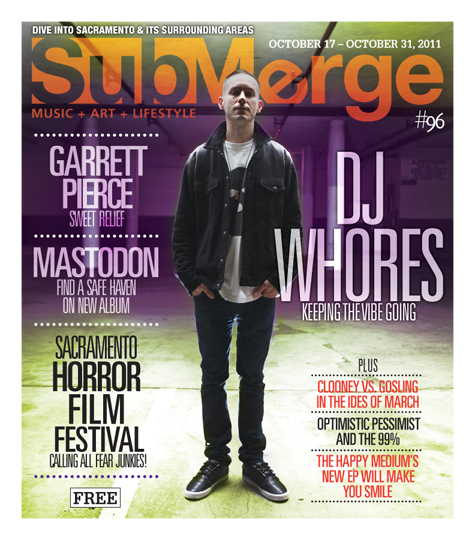
Grimey gets down at the Townhouse every other Tuesday night at 9 p.m. ($10 cover). DJ Whores and Shaun Slaughter’s Heater happens one Friday per month, also at the Townhouse. It’s free to get in before 10 p.m. with an RSVP. You can also catch DJ Whores at the Golden Bear on Saturday nights.

Sweet Release, Reggie Ginn
Reggie Ginn’s third album puts her passion in perspective
Back in high school, Reggie Ginn decided she wanted to learn how to play the piano. But unlike most students she tossed the Basics of Piano book behind her and ditched the formal instructor that would watch her every move. All she needed was a little help from Tori Amos.
“Since I knew her songs so well, I would just sit down and learn every note. It’s like she was my teacher. I learned from an actual artist,” Ginn said. “I already knew the songs and then [I would] make them my own way. I saw how I would position my hands. It just made sense.” Since she knew all of Amos’ songs by heart, learning the keys just came naturally to Ginn. After she became comfortable behind the piano, her next goal in high school was to complete her senior year project. She decided to put her skills to the test and organize a concert for her friends and family, where she sang her original songs in front of an audience for the first time. And she managed to put it together “pretty darn well.”
“My dad said, ‘When you told me you wanted to do that for your project, I honestly didn’t think you could do it. But you really surprised me,’” Ginn said with a smile. “So that’s when I knew, alright I think I should do this.”
Since then Ginn has claimed herself as an indie alternative rocker, released two albums, performed on Good Day Sacramento, won a Modesto Area Music Award for best unplugged artist, and was nominated for a 2011 Sammie award for best singer/songwriter. Now at the age of 27, she is ready to kick off her third album, Passion in Perspective, with powerful vocals, moving lyrics and soft piano keys. Unlike her first two albums, she will be rocking live with a full band including guitarist Brandon Dickinson, bassist Ian Maclachlan, drummer Mikey Koons and cellist Alison Sharkey.
“I’m excited for everyone to hear this. I hope people come out to the shows and get to see what my band can do. It’s going to be a beautiful thing,” Ginn said.
This solo, “do it yourself artist,” decided to start a campaign on Kickstarter, a website that funds creative projects through donations, to gain money for printing and studio costs for the new CD and succeeded in raising over $1,000. “I’m ever grateful that all these people are so generous enough to give anything. It’s really awesome,” she said.
When I caught up with the grateful musician on an early but sunny Saturday, her outgoing personality made it seem like we had already knew one another and were just catching up on each other’s lives. As we sat on a table outside of the Sacramento Comedy Spot, we chatted about her new music, learning piano and the importance of human connections.
What’s the title of your new album, Passion in Perspective, mean?
It’s one of those names that can be read in its own way. When I decided to call it that I asked different people, “What does that mean to you?” and a lot of people had different answers. I thought, that’s perfect because that’s exactly what I want to get out of this album, to get different responses and for people to take songs in different ways. When somebody listens to this album I want them to take themselves out of the shoes they are in and see the songs and the world in a different way, that’s the perspective point. For instance, one of the songs, called “Bathsheba,” is written from the point of view from King David. Two of the songs are written through animals’ eyes. So it’s just the art of having a song evolve either through the way you are listening to it, when you’re listening to it, or who you are. So I hope that everybody takes something different from each song.
On your website it says that you want the audience to “not feel alone” through your music. How do you try to do that?
My last album was Sing for the Voiceless, that’s what I like to say, because it’s kind of the vagueness of the song and how everyone can relate to it in their own way. Even though I wrote it from my own point of view and own experience. When you relate with anyone it causes some comfort because you know you are not alone in whatever you are going through. Multiple times I have had people come up to me and say, “Your music means so much to me. That’s exactly what I’ve been trying to say but have never been able to say it before.” I find it a very big gift to be able to put into words what other people are feeling and it helps them release.
Was it difficult not to have a formal teacher when you were learning piano?
No, it was easier, I think. I tried several times with several different teachers when I was younger. I just didn’t have the attention span. It’s something your parents say, “Oh, go do this.” You don’t really want to, so I didn’t. When I was a junior in high school, I knew I wanted to be a singer. I was writing poetry, and I wanted to express myself in some way. I couldn’t depend on someone playing guitar or accompanying me. So I said, “I’ve got to do this by myself.” Piano just really spoke to me, and like the title of the CD, it was the “passion” that drove it. That’s why I got it. It really just came to me naturally. It’s really amazing because I know a lot of people struggle [to learn piano]. It’s not an easy instrument. But for some reason I think it comes naturally to me.
Who are your musical inspirations?
Tori Amos is really one of the artists that spoke to me most… She really taught me how to express my feelings and how to learn play. I love [an] artist that can be different in a way that’s raw. For instance, PJ Harvey is one of my favorites, because she doesn’t censor herself or worry about how she’s sounding. She doesn’t have to be perfectly on key or just beautiful all the time. She just wants it to be raw, empowering and in your face.
What do you think of the Sacramento music scene?
I really love it here, actually. I went to Los Angeles for a year, to try out things. I wasn’t ready for it, but I did it anyway. It was so cutthroat. I came running back to Sacramento and realized I really needed to establish myself and needed my own town first before going off to somewhere big. Everybody is just so tight-knit here. Once you are in, you’re in. It’s great and there are some super talented musicians that I’m honored to be in the same town as.
What do you do before a show to get yourself pumped?
What I usually do is I talk to the people. I like for people to feel comfortable when they are going to see me perform. People who don’t even necessarily know who I am or they’re there for someone else, I like to bring them in, so they have a reason to stay. Like, “Oh, this girl was nice to me, she’s also a performer? Alright I’ll stay for her set, even though I was going to leave.” Because it’s really important to draw in your audience, whether it’s when you’re on stage or off stage. It’s important to have a connection and let them know they are appreciated because that’s why I’m doing my music, is to have people hear it.

The release of Passion in Perspective will be celebrated at Luigi’s Fungarden in Sacramento on Nov. 12, 2011. The show will start at 8 p.m. and will also feature The Kelps and Fierce Creatures in support. The all-ages show will cost just $5 to attend. For more info to Reggieginn.com.