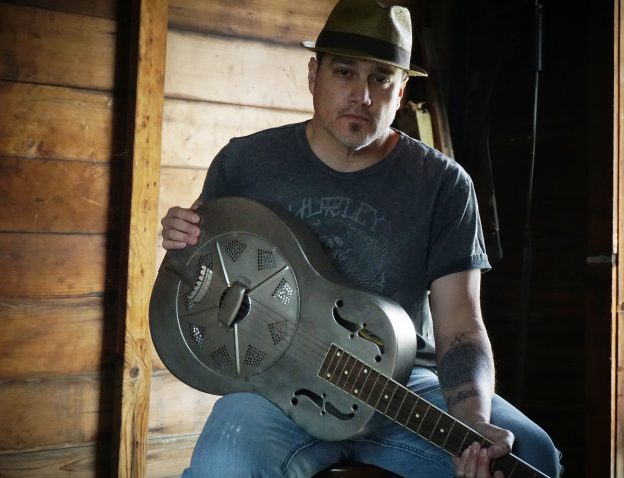
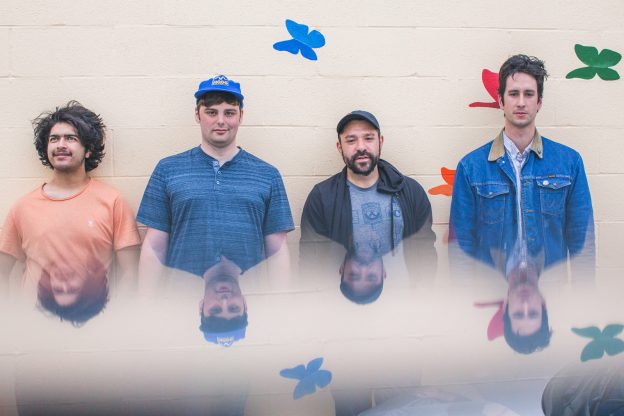
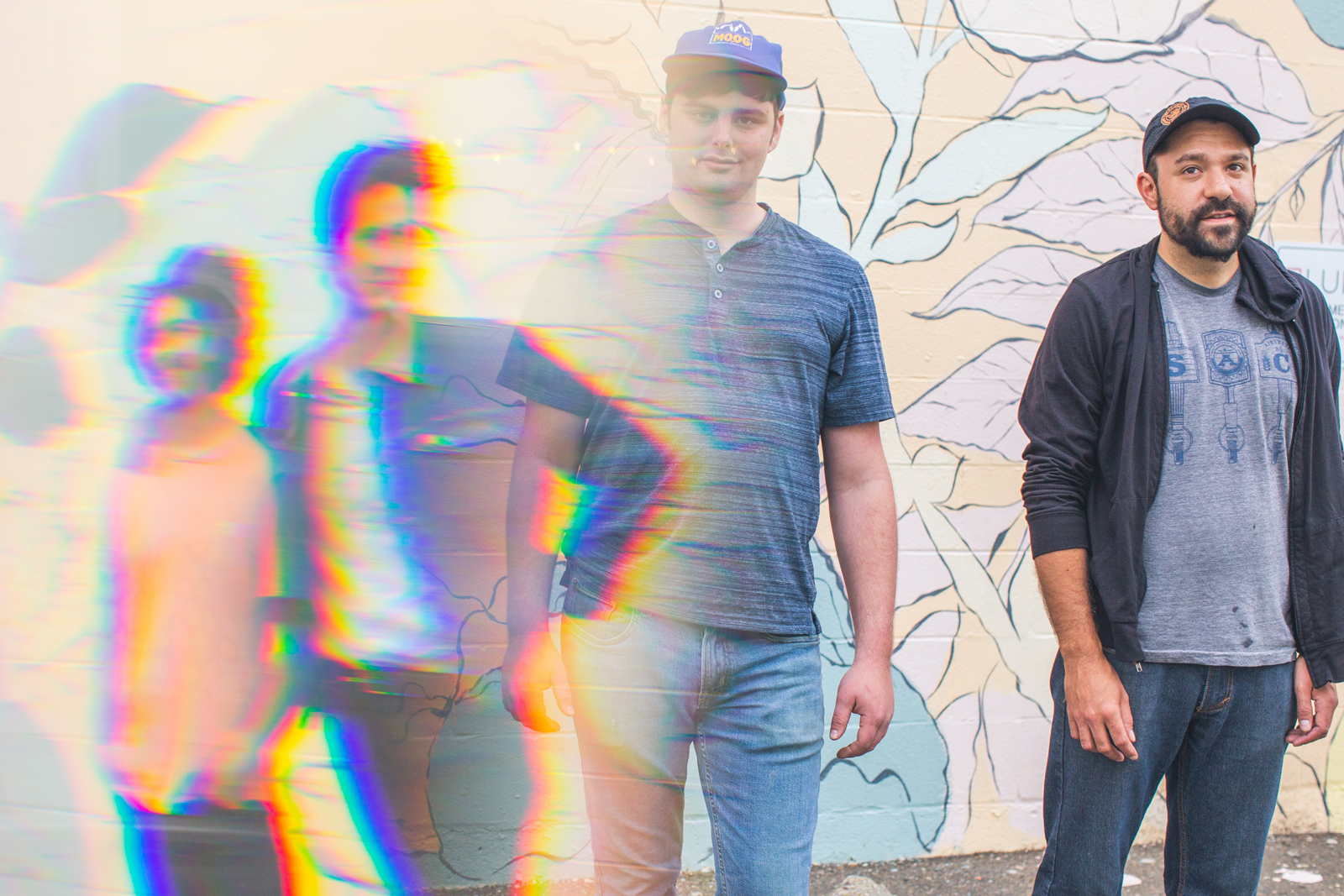
When Vinnie Guidera sets out to write a song, the end goal exists beyond those few minutes of music. He’s creating one piece of a larger whole—a companion both sonically and thematically to a collection of other songs. These aren’t short stories; they’re chapters in a book.
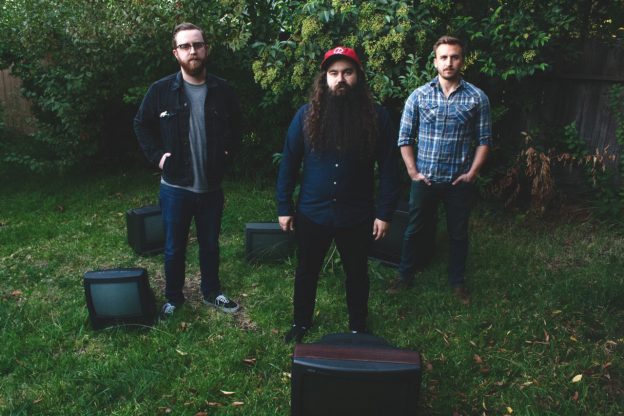
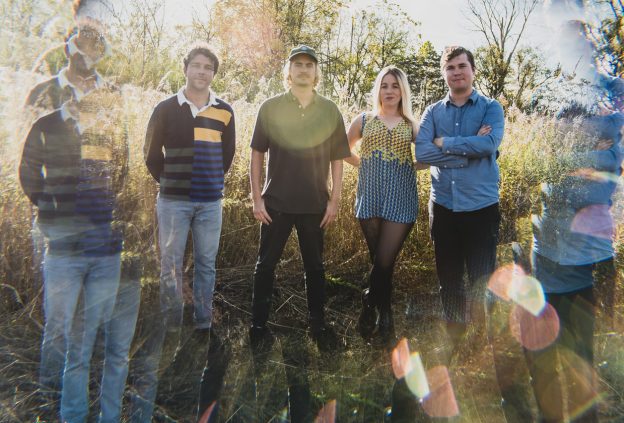
The book in this case is Shedding, the sophomore LP by his band, Vinnie Guidera and the Dead Birds. Guidera and fellow band members Kevin Hayes (bass) and Ian McDonald (drums) hail from Sacramento and have established themselves as a mainstay on the local indie music scene since the release of their debut album, Lows, back in 2015.
The songs on Lows were largely built from music Guidera had been writing before the band formally came together. On Shedding, the whole band was involved from the outset, and you can hear it. The highs rise higher and the lows dip lower, the breakdowns are intricate and dynamic, and three of the songs are purely instrumental.
That’s not what you might expect from a three-piece indie band whose frontman wields an acoustic guitar, but to project assumptions on Vinnie Guidera and the Dead Birds would steer you wrong. Guidera grew up on classic rock, learned to play guitar via thrash metal as a teenager and has since gravitated toward an indie-rock space populated by bands like Pedro the Lion and Neutral Milk Hotel. You can hear all of those influences folding together on Shedding, along with the lulls and crescendos of early 2000s Mogwai, especially on the instrumental tracks.
The band launched a Kickstarter campaign this summer to get the album made, hitting their goal in the first week. They self-recorded the whole thing in their own space so that the Kickstarter funds could be used to press the record (on clear lavender vinyl) and get it packaged.
Not only is Shedding a cohesive collection of songs, but it even picks up the thread of their previous album as it explores loss and grief, only now from a new vantage point.
The album kicks off with the tight palm-muting of “Wraith in Pages,” a catchy and anthemic opener that rides a tight groove for about two minutes before all three instruments take over and meander through the final 35 seconds, a glimpse into what can be expected over the next nine tracks. “Stasis” is the first of the instrumental songs and an absolutely hypnotic early-morning stroll through the woods. The back half of the album is anchored by “Part of the Act” and “Vacation White,” two singles that are currently available on their Bandcamp page for those looking to dip their toes in the water.
Submerge caught up with Guidera by phone to talk about the new album, which the band will play in full at their release show at the Blue Lamp on Nov. 17, 2018, with support from Shotgun Sawyer and Eugene Ugly.
How did Vinnie Guidera and the Dead Birds form?
It started out as a solo project. Kevin, Ian and I have been playing in bands together since I was a teenager and then I did a solo thing as kind of a side project. Maybe six years ago, we decided to do a one-off full-band show and it was a lot of fun. [After that] it became a permanent arrangement. The first songs were mostly solo songs that we built up as a band.
When did you start making music?
I’ve been playing guitar since I was 12 or 13. I taught myself to play listening to Metallica records. I remember being in junior high and wanting a classic white Flying V and long hair. I’ve played lead guitar for as long as I can remember and it’s nice to be able to work those elements into our material. Those end up being my favorite parts of the songs. I like the builds and the payoffs, where everything gets bigger and there are dynamic opportunities.
How would you describe Shedding, thematically?
The first record was mostly about low points and loss and grief. This one deals with a lot of the same things but from a new perspective, with a little bit more ownership of those feelings—from a perspective of being at fault and not being slighted by circumstance. Maybe the first one was a little naive and this is sort of shaking that naiveté and growing, not necessarily out of positivity, but out of necessity. You take ownership and look at your same experiences through a different lens.
Were the instrumental songs a deliberate choice from the outset?
Writing lyrics is kind of weird for me because I can’t do it unless I really have something to say from the start. To build out the song and arbitrarily write some lyrics over it feels unnatural for me. When we realized that the songwriting process was going to be different for this one, we started doing some jamming with nothing in mind—recording iPhone memos and using those as a point of reference, just writing as organically as possible. If you ever see a set list written out live, it’ll probably say “Jam 1” and “Jam 2” rather than “Shedding” and “Pushback” [two of the three instrumental tracks on the album].
How do you get that sound out of your guitar?
I first started playing through an amp because I can’t stand the way an acoustic sounds through a DI box. At first I had a practice amp with some built-in reverb, but as we started playing with the full band, I plugged into my Marshall and started experimenting with the different channels. And between the last record and this one I’ve started working with some pedals from back in the day when I was playing electric.
What drove the decision to self-record?
I’m a big fan of physical media and the physical presentation of a record. We already had to do a Kickstarter to fund [pressing the record]. We saved every dollar from every show and that softens the blow, but three years of gigging would not have covered the cost of making the record. That’s the life of a local musician.
What went into the cover art for this album?
It was stressful. I borrowed one camera from Ian’s girlfriend and one from my roommate and tried to take a picture of a TV screen that didn’t look like garbage. It’s the same spot in my backyard [as the cover for Lows]. The TV idea came to me when we did a band photo shoot maybe two years ago with our friend, Denae Davis, a visual artist who works with TVs and static. It worked thematically with the music I was writing; there’s often a loud, abrasive discomfort to understanding as it relates to the self. A lulling narrative is easy to adopt, but that doesn’t keep you safe from self-doubt. This album is a topical follow-up to Lows, so it felt natural that the visuals would follow suit.
What’s next for Vinnie Guidera and the Dead Birds?
We’ve been talking about it a long time, but we’d really like to play some shows up and down the West Coast, up to Seattle and down to San Diego.
What can people expect at the release show?
There’s a running joke we’ve got with Shotgun Sawyer that we play every show together that we can. Our next three local shows are with them, and the other band, Eugene Ugly, is a band we’ve played with for years. These are some of my favorite bands.
What’s Sacramento’s music scene like for a band like yours?
I’m really proud of what we have as a music community. Not every city has it, so it’s something I’m grateful for and want to participate in so that it continues to thrive. I like how much collaboration there is—bands working together to put together shows that are more of an event than just your average gig.
Join in the celebratory vibes during Vinnie Guidera and the Dead Birds’ official record release show for Shedding on Saturday, Nov. 17, 2018, at Blue Lamp (1400 Alhambra Blvd.). The band will have CDs, vinyl and T-shirts for sale, so bring some extra cash! Opening are Shotgun Sawyer and Eugene Ugly. Show is at 8 p.m., admission is $10 and for those 21 and over. Visit Facebook.com/vinnieguideramusic for more info.
**This piece first appeared in print on pages 18 – 19 of issue #278 (Nov. 7 – 21, 2018)**
Metal musicians seem to take two extremes when it comes to how seriously they take their music. Either their new material they’ve been working on for the past decade will completely revolutionize the metal scene (and, in turn, society as a whole) or they use a picture of their own feces as an album cover and describe their sound as “hard as shit.”
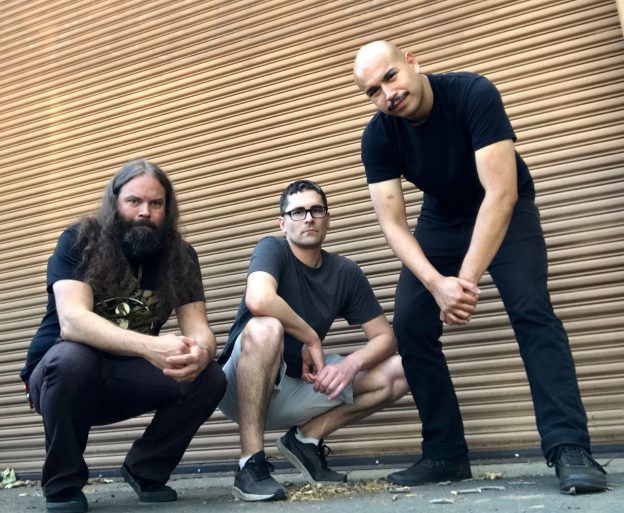
Lucky for all of us, instrumental progressive metal outfit Modern Man gracefully falls somewhere in the middle—being able to bring together competing time signatures in a mind-bending way while naming that same song “Small Nuts, Big Sack” will do that to you.
“I mean, that’s just funny,” drummer Alfonso Portela says in regard to the band’s previously mentioned track. “It’s like a coin purse with 35 cents in it.”
Guitarists Jeremy Clemmons and Biaggio D’Anna share a laugh until they are composed enough to give their say. It should be said that Portela is also a stand-up comedian who frequents the local comedy scene.
“It’s funny, we were just talking today like, ‘Should we be more serious with our song titles?’” Clemmons says.
“You don’t want to get too pretentious about it,” Portela chimes in. “Like, ‘This song is a reflection on the human condition as it is in South Oak Park.’”
According to Clemmons, some fans thought the title of the track was the band’s statement about Sacramento’s current growth and those in power not “being ballsy enough” to make the right decisions to benefit the community.
“That’s actually why I wanted to call that song that,” D’Anna jokes.
The trio riff off of each other in conversation just like they would in band practice. They have an uncommon chemistry that they stumbled upon.
Clemmons and D’Anna had known each other for a few years having previously played together in a band called Competing. As that project began to wind down, the two had material that they didn’t want to hang out to dry.
Around the same time, D’Anna met Portela while they both worked at Insight Coffee. Portela, being a metal fan and having experience with drumming, suggested that they all just jam together.
“It was a perfect fit. Like, right away,” D’Anna says.
“Pretty weirdly, too,” Clemmons adds.
Portela’s style of drumming was not what Clemmons and D’Anna had expected for their music. Instead of traditional drumming that comes from most metal bands, Portela has a largely jazz and funk background. It’d been at least six years since he’d played any metal when he met D’Anna.
“I wasn’t in ‘shred shape’ at all,” Portela says. “I actually joined Modern Man to forgo a gym membership.”
All jokes aside, Modern Man takes all of this as serious as they can. Their music comes with defined intent and structure that isn’t always expected from a band with a song titled, “All Weenie, No Balls.” The band, however, still leaves room for experimentation.
D’Anna was on tour with one of his previous bands a few years back when he played a show with a couple of instrumental acts. He was “floored” by the other bands’ sets and knew he wanted to try his hand at keeping vocals out of the equation.
“There’s just so much you can do without vocals,” D’Anna says.
As he waded through projects, eventually linking up with Clemmons before they formed Modern Man, it wasn’t hard for D’Anna to convince band members that having a vocalist wasn’t necessary.
“It’s really hard to find a vocalist that doesn’t stick to one genre,” Clemmons says. “It’s like you get put into that category and we’re trying not to be in one particular category. We like being hybrid.”
“Without vocals, it’s like it took the walls off the box,” D’Anna says. “Instead of being in the box, we’re out of the box and we can pretty much do whatever we want.”
This doesn’t mean that there won’t be a Modern Man song without a voice on the track in the future since it’s all about being able to do whatever the hell these three want with their music. Besides, Portela says that he’s constantly singing and screaming as he’s playing.
The band’s new album is a long time coming for these three as individuals. It’s more than a first record for the band.
“This CD is the first professionally done CD I’ve ever been on in my life and I’m super proud of it,” Clemmons says.
It’s also something the band has been waiting to put out there. According to the liner notes, the album was recorded in 2016 and it’s just now seeing its wide release.
Modern Man is also playing their album release show at Blue Lamp on June 8 with Behold … the Arctopus, a band they hold in high regard.
As independent as they are, Modern Man still owes plenty to support and help from friends. They don’t have a bassist proper, but their friend Carson McWhirter played bass on their album. If it wasn’t for Elias Kuhlmann, the band wouldn’t even have a logo.
As with any band, each member has their role. The guys in Modern Man know their roles and they understand how those pieces form the puzzle.
As Clemmons puts it, D’Anna is the one who got him to start experimenting with different songwriting styles and genres. That influence pushed Clemmons to strive toward bringing in more creativity. Then, once Portela joined, Clemmons and D’Anna began to focus on structure and technique because that’s the part of music that comes naturally to Portela.
They all have their elements they bring into play that form the three-piece you’ve been reading about. It’s rather lazy to say that a band has chemistry, but that’s what is at Modern Man’s core: a chemistry that allows for them to experiment and go off the beaten path with their music, but still allows them to refine and control what happens on that path.
Celebrate the release of Modern Man’s debut CD at Blue Lamp (1400 Alhambra Blvd., Sacramento) on June 8 at 8 p.m. Also performing will be Behold … the Arctopus from New York, featuring Colin Marston of Dysrhythmia, Krallice and Gorguts. Tickets for this 21-and-over show are $10 in advance. For more info, go to Bluelampsacramento.com.
**This article first appeared in print on page 12 of issue #266 (May 21 – June 4, 2018)**
Drinks are being poured, laughter is in the air, and well-known melodies fill the bar. Many of us are familiar with the excitement and hilarity of karaoke, but on March 9, Blue Lamp (1400 Alhambra Blvd., Sacramento) is taking the interactive Japanese game to the next level. Instead of simply singing along to a backing track, participants have the opportunity to sing their favorite punk songs along with a live band, which happens to be made up of punk rock legends. If you get up to sing, you can expect to be sharing the stage with musicians that are members of punk bands such as The Adolescents, NOFX, Goldfinger, Bad Religion, Circle Jerks, Sum 41, Dickies, D.I. and Agent Orange. In addition to Punk Rock Karaoke, there will also be performances by Los Angeles punk band Anti-Social and Sacramento punk/industrial band Kill the Precedent. Get there early to catch the music and to get on the sign-up sheet! The show starts at 8 p.m., and is for ages 21 and over. Tickets are available online at Bluelampsacramento.com for the advance ticket price of $11, or you can purchase tickets for $15 at the door.
**This write-up first appeared in print on page 15 of issue #260 (Feb. 26 – March 12, 2018)**
For those unfamiliar, The Philharmonik is a pretty big name in music around Sacramento. His real name is Christian Gates and at 24-years-old, he’s already a multitalented producer, versatile instrumentalist and ambitious vocalist, and at the moment, his creativity knows no bounds. His music is a breath of fresh air in an overly saturated hip-hop mainstream where his deeply personal accounts articulate not only the injustice he sees around him, but also his optimism. Gates finds a way to make the nostalgic traits of each of his songs feel brand new.
On his 2016 rap project, Good People, the beats and content were reminiscent of an Outkast album, but with a Sacramento perspective. Now he’s back to take you on a soul-filled funk quest through his new self-titled album that will be released on March 1. Sonically, it includes R&B, electronic and even folk elements, but listeners may also notice that Gates wants to instill people with genuine hope and bravery.
Gates has been featured on stages at Concerts in the Park and GATHER, and has performed on Good Day Sac, Sofar Sacramento and headlined the James Cavern-hosted Basement Sessions. He has also been featured on websites like AfroPunk.
Gates is working ambitiously to branch out toward something bigger than music, under Sol Collective’s Sol Life record label, he wants to use his platform to help underprivileged communities and make Sacramento truly inclusive.
In recent news, Gates has been in the media for his boycott of Sacramento News and Review’s Sammies, the publication’s annual music awards show. Gates was nominated along with other Sac musicians like Hobo Johnson and Tel Cairo. The show was canceled this year after artists and nominees planned to boycott the event in response to SN&R’s profile of former Sacramento police officer John Tennis, who fatally shot a black man in 2016. Local musicians and activists plan to hold a series of Anti-Sammies events on March 14 and 15 at Blue Lamp, but Gates will not be performing. You can however catch him live at his album release show at Sol Collective on March 3.
Submerge had the opportunity to chat with Gates about his new album, society and his thoughts concerning his Sammies boycott.
We’re excited about the new album release, how long did it take you to get the project together?
I’ve been working on it since July 2016. What’s funny is that I’m always working on music, so by the time my first mixtape [Good People] came out I already had drafts for a couple records that were potentials for this album, but I wasn’t sure. The finished project took about a year-and-a half to two years.
Can you talk about the major differences between Good People and this new self-titled album?
Well Good People was [specifically] a rap album. I feel like that was where I was at [when I made it] … With this album [The Philharmonik] something just came over me where I was going back to my roots with artists I grew up with like Stevie Wonder. All the funk people were in my brain and I couldn’t get it out.
You have a playlist on Spotify titled “My Biggest Inspirations.” I heard Earth, Wind and Fire, and J.Cole among others. But of all the artists on your playlist, Stevie Wonder is on it the most. What is it about Stevie Wonder that resonates with you as a huge inspiration?
He’s just the greatest. His voice is perfect. And the fact that he doesn’t see at all makes it seem like he’s more in tune with the music. He’s just so captivating. He’s just like my biggest inspiration, hands down. All-time favorite.
You open the album with the mellow “Underdog.” But I’m a bit confused on whether the tune is about a single underdog or multiple characters. Can you explain?
It’s everybody. I think everyone has felt like an underdog in a certain way, shape or in life. For me this is how I’ve felt like an underdog. In school I used to get made fun of hella. Just all day getting picked on. I was that guy that would get the most picked on.
On “Pay Me,” your big message is the importance of not being taken advantage of. It seems like you’re saying, “Pay me, recognize me and give me the acknowledgment I deserve.” Is there more to the song?
It’s also my way of saying how much I hate capitalism. I was thinking about having to chase money all the time and the people at the top who have the whole world for them to devour. Is it too much to ask to make enough for me to live on? Like fuck you.
Do you have aspirations other than being a musician?
I want to make a change in this city. Not just like for the music aspect, but just for the community aspect. Because [Sol Collective] they’re doing so much, I want to also pour into that.
Back to the album, is “Momma’s House” [featuring Hobo Johnson] about getting out there on your own?
It’s hella depressing. It’s like at the end of the day, I was a privileged kid. I had a roof over my head and enough food to eat. The only thing was I couldn’t go out much and I had to watch my sister a lot. My mom was single and she had to do the work … The transition into adulthood is very hard. Everybody is getting into debt. The jobs aren’t equating. So on “Momma’s House,” I was like responding to all that by saying, “How the hell do I get out of this?”
“Good Day” is a less upbeat song yet a beautifully piano-driven representation of the challenges you’ve gone through emotionally. You struggle with depression correct?
Anxiety. Yeah, so I wrote that shit at like four in the morning. I couldn’t sleep. I was super fucking depressed. I just wanted to have a good day. Like over the years it felt like it was getting progressively worse especially after moving out. Isolation is almost unbearable.
On “Energy” you tap into your sultry, sexy, and romantic side. Where does that come from?
Incredibly, it came from a platonic place. It’s funny. I just wanted to talk more about just the connection and for me like there are people that inspire that song. Like experiences that I’ve had and I’ve been like wow the energy is really nice here. If you can sit at a bar at Motown Mondays and hold a conversation for the whole duration, that’s a good energy there.
What I get from “Let Freedom Ring” is your experience with racism and injustice from your daily life, or things you see happen to other people, but you sound really confident that there will be better days.
There will be. I wanted it to express how everybody feels ever since Donald Trump has been in office. The racists have definitely come out of the woodwork. So if they are going to come out of the woodwork, I’m definitely going to be more vocal about that shit. I don’t really care who it offends. Like if you have a platform where your voice can inspire people, it’s like your obligation—your responsibility to make sure that the people that are oppressed have some type of liberation in what they hear.
Were you the first to boycott the Sammies this year? Did you know other artists in the community were going to follow?
That shit’s been going on for a while. I’m not [the first]. I just had a big enough platform for people to notice [in the media]. People have been doing that shit [boycotting SN&R and The Sammies] for years … Honestly, a lot of people of color have been boycotting it and were voicing it and have been voicing it. But to be honest most of the white artists that have been doing it [boycotting the Sammies] wouldn’t have done it unless someone really came out the woodwork and really said something about it. And I do feel that way.
So you think it’s a “bandwagon” mentality for certain artists?
I definitely do. I definitely do think it’s a bandwagon. I mean there comes a place where I think racism is wrong, but there’s also a place where now that everybody is on board with this, they are on board, too, because of that. I didn’t give a fuck about any of it. I was like, yo, this is the right thing to do, and if you’re not going to do that it’s fine. But like Shane from Tel Cairo was very authentic [when he boycotted the Sammies]. Like he was ready, he was with me and there were other people that were with me. I felt some of the backlash from it to back down. But I’m not going to back down from it, and I do think we’re going into a good direction. But I think that shit is going to be temporary and I think they [SN&R] are going to revert back to their old ways. At this point I just feel like everything that they do, like the apologies in SN&R have been unacceptable because they haven’t really been apologies.
What do you want to see happen as a result of this boycott?
I want to see that black lives matter, and I want to see black lives inspired. I want to see more inclusivity of black and brown people within artist ranks and I want to see them get more money for it. I want them to be recognized. I want them to be seen. There’s just too much use of the word “diversity” without really having diversity, so that’s my message. You know like, yo, start putting your feelings to action.
Are you performing at the Anti-Sammies?
I’ll be at SXSW during that time. The Sammies got canceled. I guess that’s a start in the right direction. But I’m skeptical and think things will go back to the way they were.
Make sure to check out The Philharmonik’s self-titled album, which will be released on March 1 on Spotify, SoundCloud, Tidal and Apple Music. You can celebrate its release at Sol Collective (2574 21st St., Sacramento), on March 3. Tickets are $12, and Jmsey and Sunmonks will also perform. You can also catch The Philharmonik live on March 9 for an intimate show at Gold Standard Sounds recording studio, or on April 13 at Harlow’s (2708 J St., Sacramento) when he opens for Bilal. For more info, go to Facebook.com/thephilharmonik.
**This interview first appeared in print on pages 22 – 23 of issue #260 (Feb. 26 – Mar. 12, 2018)**
Purposefully ugly art is nothing new. It’s usually meant to weed out the people who can’t look beyond the unattractive aesthetic to find the deeper meaning and beauty in what’s presented. Dearth, a new blackened death metal band from Oakland that has some roots closer to Sacramento, has taken this idea as their mission statement.
“We’re using tons of tri-tone and minor second chords,” said guitarist and vocalist for Dearth, Connor Allen. “It just sounds way uglier, for lack of a better term.”
Dearth came about following the breakup of the more traditional black metal outfit Torture Chamber, which three of the four members of Dearth were part of. Allen and Dearth bassist Zack Gilliam wanted a change in the music they were playing.
“There are parts of Dearth songs where we never repeat riffs at all; we’ll play a riff once and that’s it,” said Allen. “Which is very atypical for this type of music.”
Allen notes that bands that tend to lean toward black and death metal tend to keep a more repeated, rhythmical structure when writing songs. But anything goes when it comes to Dearth songs. Allen and Gilliam took an approach to song structure and chord choice that Allen describes as “awkward” and a “nails on the chalkboard” sound. Allen says that while this may be hard to listen to for some, it’s the exact sound that he and his band want with their music.
These descriptors make it sound as if a Dearth track is recorded anarchy, but the band’s first demos are a study in controlled chaos.
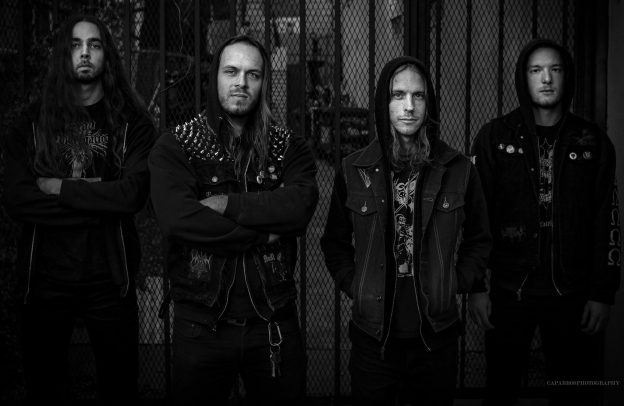
Of Martyrdom and Polluted Faith, which features only Allen and Gilliam, takes to the songs like a science. Those “awkward” chords and “ugly” are put together in such a way that ends up becoming brutal harmony. Guitarist Damien Thorn, who was also a member of Torture Chamber, joined soon after Martyrdom was released. Same goes for drummer Justin Divver, who is also a member of Oakland’s Funeral Chant and who mixed the album.
“We’re going for a very dissonant and ugly sound,” said Allen, “something that’s not necessarily difficult to listen to, but definitely makes the hairs on the back of your neck stand up.”
Dearth’s subject matter is another part of their sound that some may consider atypical. The usual black metal fare will often have songs about overt Satanism and fantastical gore. Allen says that isn’t as frightening as certain parts of reality.
“I try to stay away from the black and death metal clichés,” said Allen. “I think with this band we tried to be more rooted in reality. Our lyrics have a lot to do with religious fervor, people who follow demagoguery, people who are so obsessed with materialism that it becomes a prison for them. I think it’s even more frightening that these actually do exist.”
The band was almost simply called Drought, but once the guys found out that there was a band from New Mexico with that same name, they took it in another direction but kept it in the same vein.
“Dearth literally means the lack of something, drought, famine,” said Allen. “It could also mean the lack of warmth. The lack of anything nice, which we felt was a good band name.”
No matter the genre, being able to vibe with your band members is key. Thanks to three quarters of the band having been involved in other projects together before, and the Bay Area metal community being tight-knit, Dearth isn’t lacking in chemistry.
That previous experience has come in handy since the quartet only just played their first show in December at Independent Brewing Co. in Oakland.
Allen said that there were some minor hiccups, but the band was able to easily move forward with the rest of their set.
Martyrdom and Dearth’s first live performance have been well-received and the band has a fanbase that is growing. The release isn’t only getting attention from fans; it will soon be available on cassette from Oakland’s Transylvanian Tapes label.
However, that isn’t necessarily the goal for the guys in Dearth. Playing any type of “extreme” music comes about because the musician has a real desire to play this type of music. Whether it be the message, the community or the sound, every metal musician has his or her reason for getting into this subgenre.
“I like playing blackened death metal because, for me, it’s challenging to play,” said Allen. “A challenge is always interesting. You know, you like what you like. I really like heavy music. It’s just raw and kind of ugly.”
The attraction to the ugliness that music can be is part of why Dearth makes the music it makes. Of Martyrdom and Polluted Faith wasn’t made to please others and start attracting labels at a whim; it’s music that was made for the four people in the band, which you can see for yourself at Blue Lamp on Sunday, Feb. 18, 2018.
Allen and crew like the filthy darkness of the music they make. It sends the message they want to send. It’s not made for a mainstream audience; it’s for those who can revel in the filth right along with Dearth and find the meaning underneath it all.
Check out Dearth live at Blue Lamp (1400 Alhambra Blvd., Sacramento) on Feb. 18 at 8 p.m. Also performing will be Gloriam Draconis, Xenotaph and Barren Altar. For more info or to purchase tickets in advance, go to Bluelampsacramento.com.
At the dawn of the decade—a blink of an eye ago, and yet seemingly a bygone era—South Florida’s Surfer Blood seized the indie blog zeitgeist with their brand of perpetually sunny, reverb-drenched power-pop, spearheaded by singles like “Swim” and “Floating Vibes,” the choruses of which are still echoing in fan sing-alongs, TV and video game soundtracks.
Since then, however, the tide has turned in on itself time and again, almost on a yearly basis. From being dropped by Warner Brothers Records following their sophomore album Pythons, to lead guitarist Thomas Fekete’s re-diagnosis and succumbing to cancer between their last two releases, Surfer Blood’s trajectory has been constantly re-routing since it first began. On the music front, they’ve faced a similar situation to other bands of an “endless summer” outlook that debuted around the same time (Best Coast, Wavves, etc.), who have had to contend with the storm clouds of the increasingly divergent and sometimes grim-faced modes indie rock has taken.
All of this says more about the capricious whims of the novelty-hungry hype machine than the artistic evolution of the band. The past few years has seen Surfer Blood regroup to produce some of their most interesting, well-crafted statements. It may be a gentler, more reflective, fine-tuned beast than the one encountered in the brazen wash of their first two albums, but the Surfer Blood of 2017 (two original members, John Paul Pitts and Tyler Schwarz plus two new additions, high school friends Lindsey Mills and Mike McCleary) has managed to stake out a new swath of territory to explore, with their most ambitious songwriting to date.
Whatever clouds may have hung over the release of their fourth album, Snowdonia, back in February, the result was a faithfully balmy, yet more melodically complex installment in an oeuvre marked by insuppressible optimism. Aside from a decidedly psychedelic flavor on tracks like “Instant Doppelgängers” and the title track (their longest song at nearly eight minutes), the clearest indication of a change in artistic latitude is the stark, understated Antarctic photography that serves as the album’s artwork. If the group has come to a similar place of icy stillness and reflection, then it is only on the route to warmer climes.
In October, they issued their latest release, an album of cover songs fittingly titled Covers, which showcases every facet of Surfer Blood’s sensibility, and confirms their efforts to embody a mood rather than a genre—the coy romanticism of New Zealand indie band The Verlaines, the unkempt rock exhibitionism of Mudhoney, the hyper-pop surge of Outkast’s “Hey Ya!,” the nostalgic chug of Polaris’ “Hey Sandy” and the latent unconventional inclusions by Pavement and Cream.
On Jan. 20, 2018, a string of West Coast tour dates will bring Surfer Blood (once again) to Blue Lamp in Midtown. In preparation, we recently dropped a line to John Paul Pitts to talk about the role of the band’s far-flung influences, finding solace in a time of tragedy and transformation for the band, and settling into the creative long-run.
I wanted to talk about influences, because the most recent release from Surfer Blood is a covers album. What do these songs mean to you? Had you always planned to do a covers release at some point?
I’d say they’re artists who a lot of them were around during my formative years as a young musician, like The Verlaines and all the Flying Nun Records bands that I got into. Some of the songs we’d already recorded for fun, like “I Melt With You” by Modern English, and over the course of six years or so, they start to pile up, and we realized we had enough material for an LP. Mike [McCleary] the guitarist has a studio space—many of them we had done in band practice before. All of the songs sound really different, recorded at different times in different spaces, with different equipment, with different band members—just sort of all over the place. If nothing else, it’s a nice trip down memory lane.
You’ve said you went to a more arts-oriented high school. Would you say you were introduced to “indie” or “underground music” at an early age? Did you have any older siblings that influenced your music taste?
I think I was into what most kids around me at the time were into—At the Drive In, a lot of emo and some older punk stuff, a lot of the DC hardcore stuff. I was messing around, playing a little bit of guitar. I didn’t have any older siblings, but I did have an older friend who was very influential. He gave me a copy of You’re Living All Over Me by Dinosaur Jr. when I was in ninth grade, and it was like the mother lode, because it still had the same sort of edginess as the contemporary stuff I was into at the time, but it was also sensitive, and the singing was softer. The guitar solos were very melodic and emotional, and I really connected with that. I just started writing songs in that vein. You know, sincere and a little bit sappy, lots of layers of buzzy guitar, fast tempos. This was when all of the pieces connected for me as a songwriter, so I’m very grateful to my older friend for introducing me to such great music. I started taking it all in, and here I am, 15 years later.
There’s more of a psychedelic bent to Surfer Blood’s latest work. What influenced this change?
I’m always being exposed to new music. When Thomas [Fekete] was alive, I was very lucky to have somebody who was seemingly a bottomless well of knowledge. He could talk with authority about most forms of musical genres and movements. Most of it is just being around people who are smart and have really good taste, and aren’t afraid to tell you what their opinions are. I guess for Snowdonia, I was listening to a lot of Can, which was one of Thomas’ favorite bands. I admire their level of improvisation, which is something I’ve tried to cultivate with this band in the past few years, turning the live show into something more extended, jammier and dynamic.
I think [on Snowdonia] there was a deliberate focus on not coming up with an idea and automatically assuming that it had to be a straightforward pop song, and I’m really happy with the result. When you’re brainstorming, I think it’s probably a good thing to not have too many preconceived plans or notions about the ideas that are coming to you.
The time period of Snowdonia’s recording and release was heavily affected by Thomas’ passing.
It’s definitely put everything into perspective, that life is so short and fragile. You can only take all of this so seriously. At the end of the day, the music has to be fun, and it has to be enjoyable … Now, it’s so clear that everything happens for a reason. If I hadn’t met Thomas, I might still be in Florida working at a restaurant or doing some other job. This was always my passion to be writing and recording music and touring. You know, we got to spend the golden years of our lives traveling around the world with our best friends and playing music together. In hindsight, all the work was its own reward. And I’m really grateful to have gotten the opportunity to be on the level that we’ve been able to.
You’ve said that the idea for “Snowdonia” came from a dream where a muse-like figure—a wintry snow-woman—came to visit you. Why do you think she came to you?
Probably just because I needed to be comforted by something at the time … I was making demos for this album, Thomas had left the band months before for health reasons, and Kevin, who had been in the band for years and who I had known since we were kids, was leaving the band and moving away to have a more stable adult life. I was back in my apartment again writing these weirder songs, wondering if it was a huge mistake, or if I was on the right path. There was something about that dream that tried to help me get the ball rolling, and this long, winding song, “Snowdonia,” came out of it. The character represents the solace, and ironically, the warmth of committing to something again.
What was it like writing songs alone for the first time?
It was extremely hard because, I guess like a lot of millennials, I like to get affirmation super quick as soon as I get an idea, and there was just crickets, you know? But I’ve been trying to stop being so much of a perfectionist and work and rework the same songs over and over, and unfortunately that’s my nature.
After eight years and four albums, what’s the most important thing you’ve learned about yourself/being in a band?
If there’s one thing I learned about this, it’s that maybe I don’t do too well under pressure. When we were on a major label, working with really notable, talented people with lots of experience, I don’t know if that’s great for me, actually. But now, even though this record was challenging, I think things started coming my way. As I get older, I realize I’m more private and introverted than I thought I was when I was younger. Going from 2010, just being a community college student to someone traveling the world and constantly being interviewed, it was more shocking than I thought it would be. I’d been a bit optimistic in thinking I could bite off more than I could chew. The whole thing was a learning experience.
Would you say the current iteration of Surfer Blood has found its footing? Has your approach to music changed?
For one, I’m much older, and probably much wiser than I was when I was young. I can say that now. I try not to set expectations anymore. I think setting expectations is what caused us to sign to a huge label that we had no business being on so early in our career. Now we’re in a zone that’s comfortable, and that’s not a terrible thing. We’re on a label that really appreciates us, has tons of good ideas and is super supportive and helpful—just a great overall place, and I’m sure we’ll continue making music with them. We’re touring in a way where we don’t get too burnt out or homesick, or where it gets too uncomfortable to be fun, and without spending too much money. Right now my bandmates are the easiest people to be with eight to 10 hours a day, I know them all well, they’re super easy-going, they’re not dramatic, and all the stars are aligned to keep doing this in a sustainable way where we’ll be healthy and keep chugging along.
What’s changed in indie rock or music in general since you started out near the turn of the decade?
It’s hard for me to tell. I mean, obviously, the elephant in the room is that record labels won’t stay in business forever. People were complaining about that when our first record came out, and a decade before that. Most people are just trying to make their way in this crazy world where people are over-stimulated with all the content falling in and out of their lives. I know things change, but at the same time, nothing changes.
Finally, what music should I listen to this week that’ll change my life?
There’s this guy named Tony Molina who lives in Oakland who I have gotten really into the past six or seven months. He used to play in this band called Ovens. You can find the album online—it has a black and white cover, all the songs are like 20 seconds long. If you hear it, you’ll definitely understand why someone in Surfer Blood would like a band like that.
See Surfer Blood live at Blue Lamp (1400 Alhambra Blvd., Sacramento) on Jan. 20, 2018, at 9 p.m. Tickets are $14 in advance and can be purchased through Abstractpresents.com. Terry Malts and Honyock will also be performing.
**This interview first appeared in print on pages 16 – 17 of issue #256 (Jan. 1 – 15, 2018)**
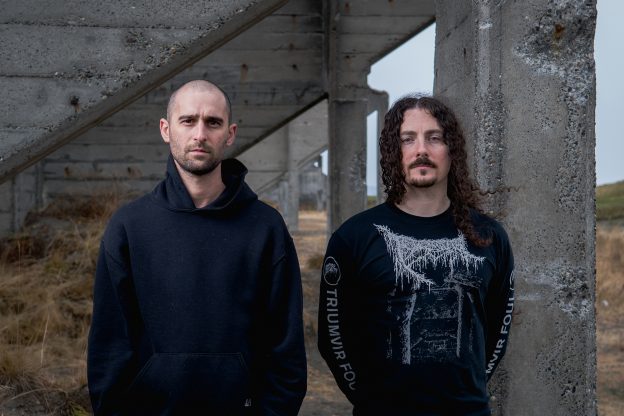
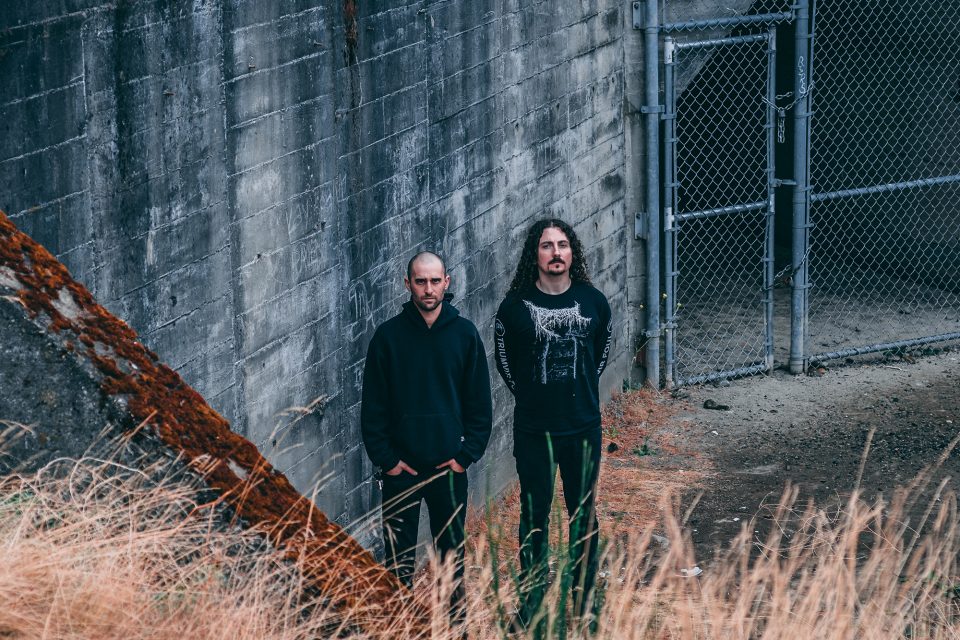
Seattle duo Bell Witch resides in a city known for its dark and gloomy months accompanied by heavy rainfall for days on end. While listening to their music, one can’t help but wonder if their surroundings play a role in their brooding, doom-y sound. But climate alone doesn’t paint the only picture for to their sound and struggle. In May 2016, original drummer/vocalist Adrian Guerra passed away. And though co-founder Dylan Desmond (bass/vocals) was stunned and shocked at the news of his friend and bandmate’s passing, he knew the legacy of Bell Witch should remain and that his work as a creator wasn’t finished.
Desmond didn’t have to look far for a new bandmate. His then roommate and good friend Jesse Shreibman served as a natural fit, not only due to close proximity and familiarity, but due to the fact that he is a stellar drummer and multi-instrumentalist was able and willing to step in. “Adrian and I started parting ways in 2015 after Four Phantoms was released,” said Desmond. “The three of us were already good friends, so Jesse was in essence already part of the family.
“I was previously in a band called Samothrace originally from Lawrence, Kansas,” Desmond continued. Most of us were approaching our mid-20s and felt like we were getting too old for the college town and wanted to get out.”
Since 2015, Bell Witch has written and recorded two full-length albums—Four Phantoms, and the brand new epic Mirror Reaper, which is a single-track masterpiece that spans nearly an hour and a half in length.
Amidst the tail end of a month-long tour, Desmond elaborated upon his abstract lyrical themes, such as ghost narratives, the structural formations of songs and his experiences of recording with the legendary Billy Anderson.
Where did Bell Witch get its start?
We had a lot of friends that had moved to Seattle over the years, so we gravitated towards there. After playing in Samothrace, Adrian [Guerra] and I were previously in a band together called Lethe. Our guitarist moved away and a friend asked us to play a one off as a two-piece in Seattle. We pulled off a couple songs at the show and had so much fun that we decided to keep playing and writing new material, which became our first demo.
What were some advantages of residing in a modern rock mecca like Seattle?
I actually do booking at a venue in Seattle called Highline, so we were essentially able to hand pick some shows we were on, which made it easier to play often with similar, like minded-bands.
How did the transition with adding Jesse [Shreibman] come to be?
During the writing and recording process of a new record, Adrian suddenly passed away. Initially, Jesse and I were taken aback and didn’t know what to do. After a healing period, we pushed ourselves harder and knew we had to do a special record honoring Adrian and ourselves at the same time.
Jesse is an incredible musician and quick learner. He incorporated his instincts well and began expanding on earlier ideas with the inclusion of playing an organ module with his left foot that transfers to a MIDI controller foot pedal, which adds another texture and fills out our sound.
The new album Mirror Reaper clocks in at a lengthy 83 minutes. How did the writing and recording process go?
The original idea was to do two separate tracks as part of one larger movement and theme. As the song progressed, we had the music mapped out to fit into seven tracks, paralleling the idea of seven points of the Hermetic Code bearing polar opposites. Once we were finalizing the song, it seemed like an injustice to divide it. There are several parts that go from full-on big distorted riffs to near silence quickly. It was suggested that those would be good areas for song breaks, but we saw it as intentional dynamic shifts for a drop in mood to occur. We proposed one single track to the record label, anticipating backlash, but instead they said, “I like weird shit.”
This was our second time working with Billy Anderson, who has incredible visions in the studio. His brain works faster than anyone I’ve ever met. Billy works magic with reverb and delay effects, and pushes the boundaries with low end by putting a contact microphone on an 8-by-10 bass cabinet. He’ll add a ton of reverb on a distorted bass track, which will make it sound more like a synthesizer droning on. It’s almost like spreading butter on toast and covering the entire area. At his house, he has a bunch of cool achievement pieces from over the years. One item is a 7-inch vinyl record from the band Tad. On the cover in Sharpie pen it says, “Billy, you are alchemy. – Tad.” That quote seems like the perfect summarization of Billy because of his creative genius. I can’t fathom not working with him again.
Can you speak to some of the themes of on Mirror Reaper?
All of the songs are written from the perspective of being stuck in a purgatory place in between life and death. The whole album is written with one voice of a ghost that isn’t dead or alive, somewhere in the gray area. We were originally starting off with the concept of having two different sides to the record, “As Above” and “So Below,” being a reflection of one another. As the lyrics came along, the “mirror reaper” phrases were being repeated, and conceptually it seemed less generic and better encompassed the lyrical content as a title. As a mirror reaper, it implies an Ouroboros—without the object in itself there’s nothing to reflect and the reaper implication makes it destroying itself all the while.
Where do your influences come from?
When Bell Witch started out, we listened to a lot of funeral doom and death-doom bands like Warship, Skepticism and diSEMBOWELMENT. Musically, we weren’t pulling from the bands that play fast music with double-kick drums, but the death metal song structures appealed to us with using a lot of half-steps as opposed to big open major chords and progressions.
How has the new material been received by show attendees on the road?
The shows have been killer, and turnouts have been solid every night—so far so good. We’re currently in Virginia and have toured through these regions over the past few years supporting our previous records. The management and promotion teams have done well spreading the word and it seems like there have been a fair amount of reviews of the new album, which helps.
What’s next for you guys after this tour?
We have nearly 30 minutes of recorded material from our last studio sessions that we’ll likely expand on for a new album. Though we’ve considered taking the next record in more of a death-metal direction rather than funeral-doom. There’s a chance we may go for an angrier, faster vibe, but we’ll just have to see where the wind takes us.
See Bell Witch live when they play Blue Lamp (1400 Alhambra Blvd., Sacramento) on Dec. 5, 2017, at 8 p.m. Also performing will be Monarch! and Chrch. Tickets are just $10 in advance, a small price to pay for so much metal, and can be purchased through Bluelampsacramento.com. This is a 21-and-over show.
**This interview first appeared in print on pages 20 – 21 of issue #253 (Nov. 20 – Dec. 4, 2017)**
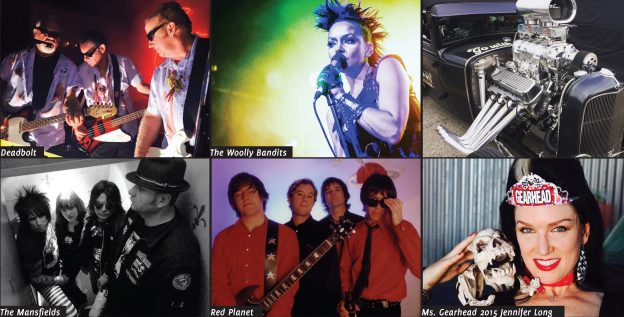
Since 1993, Gearhead has been catering to “rockers, rebels and weirdos” via their record label, clothing and accessories lines and even a magazine, and their annual Gearfest is a celebration of hot rods and rock ‘n’ roll. Beginning at 3 p.m. at the Red Lion Midtown (1319 30th St., Sacramento), Gearfest will get underway as a car show, featuring pre-1973 hot rods, customs and muscle cars. Spectators of all ages may attend this part of the festival for free, and prizes will be awarded for Best Hot Rod and Best Traditional (as judged by The Swanx Car Club), as well as Most Weird, which will be crowned by the folks at Gearhead. After checking out some sick rides, those of you who are 21-and-over can swing down to the nearby Blue Lamp for a stacked lineup loaded with enough rockabilly, punk and garage rock to keep your adrenaline pumping. Performers include Deadbolt, The Woolly Bandits, The Mansfields, Red Planet and Control Freaks. Also, one lucky lady will be crowned this year’s Ms. Gearhead. Look, there will be a lot to see, hear and do, so plan on a full day of high-octane fun and excitement, all for just $10 in advance. Purchase tickets, register your car or throw your hat into the ring for Ms. Gearhead (this year’s theme is Rosie the Riveter) at Gearheadhq.com/gearfest. You can also learn more about the Gearhead brand, based right here in Sacramento, at Facebook.com/gearhead.brand. Proceeds from this year’s car show will go to benefit Friends of the River.
**This write-up first appeared in print on page 10 of issue #249 (Sept. 25 – Oct. 9, 2017)**
Fans of roots music and songs that feature honest, vibrant storytelling are going to find a lot to like in the music of JL Espada (aka Banjo Bones). A perfect example of this can be found in a song on his upcoming third album Cowboy Dreams entitled “The Rodeo Clown,” a video for which can be viewed on Banjo Bones’ Facebook page. The song is a sinewy and gritty dirge in tribute to Sam Royster, a real life rodeo clown. “He has the kind of wisdom that is only acquired with time,” he writes of Royster on Facebook, “and he has stories that no amount of draft beer and a barstool could possibly cover.” Not only will Banjo Bones’ show at Blue Lamp on May 11, 2017, celebrate his CD release, but it will also mark the debut performance of his new full-band setup, featuring Giorgi Khokhobashvili on violin, Ron Smit on bass and Steve Gust on drums. Also performing will be Bruce Tuttle and Clay Dogs. As if all that wasn’t enough, this show is absolutely free! For more info, go to Bluelampsacramento.com.
**This write-up first appeared in print on page 10 of issue #238 (April 24 – May 8, 2017)**
“Everyone introduce yourselves, and I’ll lavish you with praise,” The Ex-Rippers’ founding member/guitarist/singer Julian Elorduy tells his three band brothers. The only thing The Ex-Rippers love more than crafting sonic slappers, is each other. Submerge recently spoke with the self proclaimed “rock ‘n’ roll sweethearts of Sacramento” about their new EP titled, Ex-Tra Natural, and their unapologetically endless affection for one another.
“Gabe is the sweetest guy you’ll ever meet. He is the Ripper!” gushes Elorduy of keys/guitarist Gabe Merriman, who retaliates with some good ol’ reverse dap.
“Julian is the man. I love the guy,” Merriman says. “He has endless energy and creative ideas.” Essentially, the entire interaction with this band consisted of the four guys encouraging and appreciating each other, with the occasional dash of Misery movie references and fanboying over other local bands.
The Ex-Rippers just finished their first EP, Ex-Tra Natural, a true labor of love that was recorded in drummer and backup vocalist Thomas Castillo’s basement in the last year.
Castillo and Elorduy have a super-retro friendship dating back to when they were just 16 years old. A little under two years ago, when Julian moved back to Sacramento from the Bay Area, he and Castillo reunited and formed what was first called The Rippers.
“The name The Rippers kind of started off as a running joke,” said Elorduy. “Every town has a band called The Rippers, so we figured we’d give Sacramento their very own.”
However, when a well-known Italian band called The Rippers (who have played with popular local bands in the past) got wind of the name doppelgänger, they called them up and said something along the lines of, “This does not please us,” causing Elorduy and Castillo to make a change. They then became the technically different—The Ex-Rippers.
Elorduy says of his drummer and longtime friend, “Thomas is literally the heartbeat of the band, so poised and solid as a rock, the glue of our band … He also lets us practice at his house.” Bassist Dwain Navarro agrees, adding, “Everyone really loves and admires Thomas’ mustache as well.”
Ex-Tra Natural plays out as a sort of romantic rock ‘n’ roll adventure set through a sepia lens. Elorduy is inspired by the classic songwriting styles of Tom Petty and the composition spirit of power pop god Dwight Twilley. The band is inspired by stuff like jazz, disco, ‘80s synth pop, Orange Juice and Screature to scratch the mere surface.
The EP is lyrically roused by the “idea of modern lovers,” and a, “personal history documented in the style of the band The Church,” says Elorduy, who writes most of the songs, and the band builds around those lyrics.
“Essentially, we would really like to be the next E Street Band in like eight years,” Castillo says only semi-joking.
The band, despite their diverse music palettes and backgrounds, come together to build a beautifully cohesive body of work. It has a dusty garage feel that is romantic and cool.
The EP opens up with the song “In This Life,” a lightweight, melancholy jammer about the reality of one’s own existence—a heavy subject that makes for pleasurable listening. The songs starts with, “Do you ever wonder what it’d be like to be someone else?/You know you don’t have to be yourself.” It gives the song a cinematic feel, evoking a scene in which a person is walking to some prolific, meaningful song and reflecting on their life as they wander through some sort of beautiful landscape.
There is even a great music video for “In This Life,” in which band friend Zack Raske is walking down Franklin Boulevard in sweltering 100-plus degree heat while wearing a head-to-toe, scary-ass dog costume; finally taking off the dog head to enjoy a milkshake from Scott’s Burger Shack. The video was shot in 8MM format by Julian in what he calls, “Sex, Lies and Videotape style.”
The delightfully pop-y and deceivingly sad love song, “Misery,” is a direct reference to the movie of the same name starring Kathy Bates and James Caan. The band says it is about how the ones that treat you the best and admire you the most tend to hurt you the worst. The most defining lyrics being, “Don’t get caught up in your love/No, no, no,” and, “Have you seen Misery? Do you know what I mean?/Kathy Bates taking shots at someone she loves.”
The lyrics are looped over some tight, cascading guitar riffs and illuminating drum beats. “Misery” is a personal favorite of bassist Navarro, because, he says, “I like the the musical changes in it and I think that Julian’s lyrics pair with the music perfect and provide great mental imagery.” It should be noted that this is the first band Navarro has ever been in, and he actually learned how to play bass from being in the band. He kills it on the EP, and holds his own in the experienced group.
Elorduy also has a mini-media empire of his own called Obsolete Media under which The Ex-Rippers are releasing Ex-Tra Natural. It’s an enterprise that does small tape runs, sets up shows, does write-ups for bands and has a little YouTube channel that features local live performances and short interviews, all shot in 8MM video format. This has made it so that the band was able to completely self-release, while simultaneously celebrating other music acts.
“I am pretty thrilled with the activity in the music scene,” says Merriman. “I love Dog Rifle and Lather Machine!”
As for the future? The Ex-Rippers already have another EP recorded and ready to release in May. They also plan on coming out with a full-length album and touring after the summer when the weather is comfortable.
“In the future, I wouldn’t mind continuing to enjoy nights on Thomas’ porch just hanging out and listening to records and dancing. I love hanging out with these guys,” says Elorduy.
Merriman seconds that comment while adding, “Also, just musically growing with each other. I have learned so much about music in the course of a year by working with this group.”
Castillo agrees, “We just want to continue to hone our sound and keep getting better at what we do. Striving to be a fun and solid unit. In exactly six years and eight months now, we should be that E Street Band.”
The Ex-Rippers will be playing their new tunes at Blue Lamp (1400 Alhambra Blvd., Sacramento) for their EP release show on April 20, 2017. Also performing will be Bachelor Paradise, Boy Romeo and the insanely good funk family band, LaTour. This show will have an $8 cover and get underway at 8 p.m. Stream their new release via the player below.