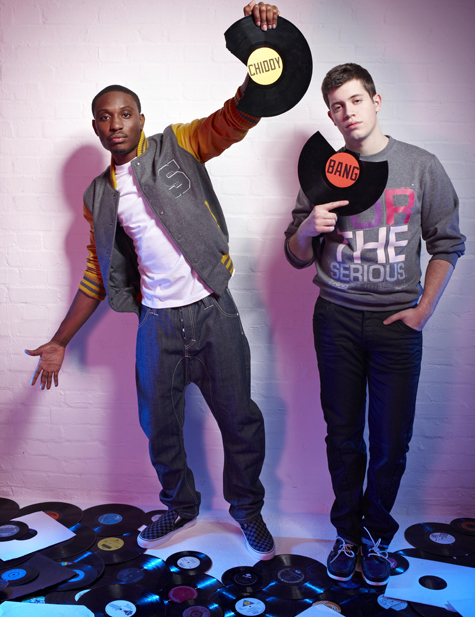
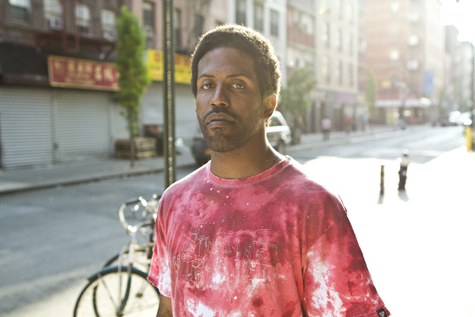
Chidera “Chiddy” Anamege of Chiddy Bang is blessed with the gift of gab
Philly hip-hop duo Chiddy Bang has all the ear-grabbing gimmicks a major label requires and the true skills in rap to not put their credibility at risk. It’s a delicate tightrope the group walks with a casual cool on its critically lauded Breakfast debut on EMI, released in February 2012.
Comprised of producer Noah Beresin, aka Xaphoon Jones, and rapper Chidera “Chiddy” Anamege, Chiddy Bang signed to EMI on the strength of their indie-rock sampling mixtape The Swelly Express. The formula is primed for major success; Xaphoon samples MGMT, Passion Pit, and Sufjan Stevens, while Chiddy plays the role of a modern Fresh Prince (see: clean fun) but it should not be considered a hipster-pandering, blog-friendly gimmick. Nor should Chiddy be treated as a pop rapper. In August of last year, Chiddy broke the Guiness World Record for Longest Freestyle by rapping for nine hours and 18 minutes at the 2011 O Music Awards.
Chiddy Bang’s summer schedule is indicative of the band’s split personality between pop and rap. Back on July 15, Chiddy bang teamed up with legendary Philadelphia pop-rocker Daryl Hall to perform a few Hall and Oates covers for Hall’s critically acclaimed Web series Live from Daryl’s House. Currently, on Wiz Khalifa and Mac Miller’s Under the Influence Tour, the group will squeeze in headlining dates that include a stop in Sacramento before jumping on a late August tour with power pop rockers Fun.
On July 19, the band released exclusively on iTunes a new EP/single, Mind Your Manners, which features a brand new track “Twisted,” and as we learned in a phone conversation with Chiddy, the group’s long-anticipated mixtape Grab a Plate may also see a release very soon. The world record-holding rapper took time from his busy schedule to answer a few of Submerge’s questions.

So you just got off stage as part of your debut on the Under the Influence Tour with Wiz Khalifa and Mac Miller. Following this tour you’ll head out with Fun. I imagine the tour experiences will be drastically different. What sort of expectations do you have?
Definitely, man. That Fun tour is going to be a different experience. This is just a strictly hip-hop atmosphere. I was just speaking with Mac a couple seconds ago and I haven’t got to run into Wiz, and I haven’t seen [tour mates] Schoolboy [Q] or Kendrick [Lamar] yet. It’s all love, man. We’re definitely going to blaze many…if we’re under the influence of music, right?
Chiddy Bang is considerably popular on college radio and campuses. You’ve done a few campus tours in the past. How did you handle the post-show invites to kick it on campus?
Those post-show invites to kick it on campus, you have to be careful. I remember one time in particular I was at this college on my birthday. I had a post-show invite to kick it at these females’ dorm. Man, I thought it was all cool. Turns out it was a freshman dorm, so everybody and their mama was in the lobby waiting for me. Everyone was staring at me, and it caused a bit of a ruckus, a bit of chaos on campus. I wouldn’t really advise kicking it on campus.
As cool as the fans are, really they are not ready to host you. If they want to host you, it can’t be on campus. I lost a phone. I lost a brother. I can’t even remember what happened that night. Never again.
You’ve almost done the entire late night TV circuit with Conan, Leno, and Fallon performances. Who was the coolest late night host you got to meet?
I would say Conan. His whole show is just filled with comedy, and it’s obvious he’s a cool ass dude.
As you guys got started a lot of the music was based on samples from modern bands. Did you have an issue with any of those bands flat out denying you the sample, either from a stance against sampling or just not liking your particular treatment?
We had one issue where there was a song that didn’t make our record, but we put it out for free. It was a song called “By Your Side.” Basically, the artist that we sampled [Cocorosie’s song by the same title] for whatever reason, they were like nope, you do not have permission to use this song. What we did was say, “OK. Well, we’re going to put it out for free anyway.” You can’t sue us for putting it out for free. It’s not a commercial release, so we’re not making any money off of it.
We’ve been pretty blessed with sampling and sample clearances. That was the only issue, and we still put it out anyway.
On the flip side of the coin, has sampling a band led to talks of collaborating more closely in the future?
We had an Ellie Goulding feature sort of on our album. It was really low-key, though. On the last hook she was just singing under some tracks. That was pretty dope, because we sampled her song “Under the Sheets” and cleared a remix out of it. There was a blog post, too, where she said “Opposite of Adults” was a song she runs to. That was really cool of her, to get on the album and sing.
[Xaphoon Jones also returned the favor to Goulding, by producing her remix cover of The Weeknd’s “High for This.”]
Have you gotten sick of the breakfast-related questions yet?
No, not really. I love breakfast. It’s my favorite meal of the day.
Do you make it a point on tour to scope out the good breakfast spots in each city?
Definitely. Noah is really good at that. He has a list of all the dope breakfast spots in New York City. He knows far more dope spots than I do. Adam Richman [of Travel Channel’s Man v. Food] is a friend of ours. He tweeted us about how much he loves our Breakfast album.
To have someone from the Food Network feeling our album is the like the ultimate for a group that named their album Breakfast. We are talking about ways to collaborate in the future. You never know, we might pop up on the show and cook some breakfast with him or something.
If you’ve got his ear, you might as well try and facilitate something, if only for the food perks.
Might as well make it worthwhile. We’ve been blessed. We’ve had a couple random people show love, like Jonah Hill showed love. He tweeted he was really into the record, and I was like, “Wow, I’m really into every movie you’ve ever made.” Fair trade.
Being on a major label brings the stigma of being more pop-minded. One publication called the record “mainstream hip-pop,” which makes me cringe pretty hard. How do you guys handle labels such as this?
I never entertained what people labeled us. At the end of the day people can never understand what it really is. They don’t know what kind of music we’ll make next. Breakfast is the first offering, the first on the menu. There’s many meals to come, and I’m not really worried about people calling it mainstream hip-pop. I think it’s very much rap. It’s very much spitting and my man Xaph is very much into producing and coming up with dope beats. We’ve just got to keep creating and vibing. Everybody else can talk since it’s their jobs to talk, right?
That’s how they get paid, right? They got to make money and put food on the table.
After breaking the freestyle record, how long of a hiatus did you take before you felt like you could freestyle again?
Man, I took like a four-month freestyle break. I was tired of doing it and everybody asked me to do it, but it was just played out. Don’t ask me to do it, and if you do, I’m just going to pass it off to Xaphoon. That’s how it’s been.
Xaphoon can freestyle well enough to take the reins?
Being around me he picked up a couple things. He got a couple tricks up his sleeve.
I read that after you broke the record, you didn’t talk for around an hour or so.
I couldn’t talk, man. My mouth was burning. I was so exhausted, not even talking all day, but rapping all day. The top of my lip was burning. After nine hours worth of rapping that will happen.
What’s the status on the Grab a Plate mixtape?
That tape, we were working on it, but then we had to take a break off of it to do the Breakfast thing. We’re back at it though, working on completing it. We’re thinking of changing the title, but it will still essentially be Grab a Plate. We’ll know within the next couple days what we’re going to do with it. We’ve got a studio on the bus to work on it.
You heard it here first. Mixtape at the end of August. Let’s do it.
That will be around the time you hit Sacramento.
Exactly. We’ll debut some new tunes. You already know.
That’s going in print, so we’re holding you to that.
Alright, brother. Appreciate it. We got you.
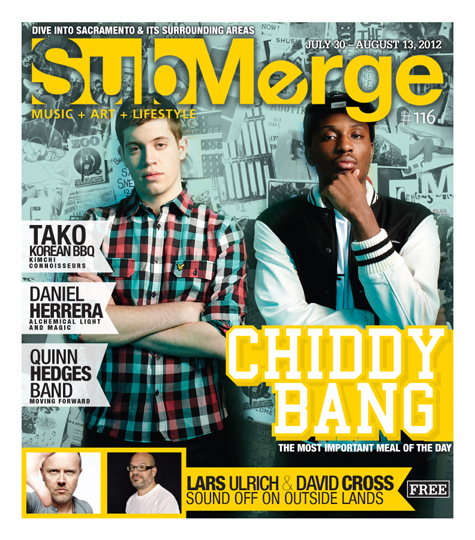
Chiddy Bang will take the stage at Ace of Spades in Sacramento on Aug. 21, 2012 and doors open at 7 p.m. K-Ottic, Brodi Nicholas and J. Sirius are also performing. Tickets are $20 and can be purchased through http://aceofspadessac.com/.
I’m Dirty Too reap the generosity of others to record their first full-length album
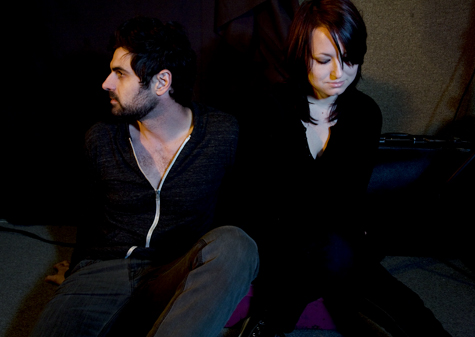
“Who do we think we are?” was the question looming over the heads of Sacramento heavy hitting two-piece I’m Dirty Too. After time spent in supporting roles in other bands, the duo’s members are stepping out of the shadows to be co-lead singers on their upcoming full-length debut, The Downhill Dive.
After being acquainted through the local scene for seven years, Zac Brown and Jess Gowrie formed I’m Dirty Too in 2009 to explore the rawer sides of rock they were unable to express in their former and current bands. Gowrie was part of The Drama and Red Host, while Brown was a performing member of Doom Bird, Dusty Brown and Tycho.
The duo jammed in a stoner rock and grunge style, but neither had ever fronted a band. When it came time to record a demo for the purpose of booking shows, they faced the music, as it were, to handle the duties themselves.
“I remember when we first started we didn’t even want to sing in front of each other,” Brown said.
“We were halfway up to Tahoe [for our first show] and I wanted to turn around and go home. I needed a Xanax I was so nervous about singing in front of people.” Gowrie chimed in, “I think after I sang my first song I moved my head away and the whole mic stand just fell over. It was a nightmare coming true.”
Booking an out of town show was part of their plan to gain confidence and receive honest feedback beyond their friends. They also played a game they called “Best Voice,” which involves singing along to radio songs. “You have to belt it out and nail it,” Brown said. “Like outside of your range.”
I’m Dirty Too sought the help of generous strangers on Kickstarter to record The Downhill Dive. They reached their goal and hit the studio in April, splitting time in The Hangar and Dusty Brown’s home studio. With the help of Kris Anaya of Doom Bird on production and Robert Cheek in the engineer’s chair, I’m Dirty Too recorded 12 new songs. When asked if any of the songs from their original demo release made onto the full-length record, Brown offered a quick and jovial, “No, that’s cheating, man!”

Why did you choose the Kickstarter route to fund your record?
Zac Brown: It’s pretty simple. We didn’t have the money to make a record on our own [laughs]. With a tool like Kickstarter out there we thought we might as well utilize it. It’s been really helpful for us.
And you reached your goal with only 39 backers.
Jess Gowrie: We had some special guests donate more than we ever imagined.
ZB: One guy in particular put quite a bit of money in. I think he first donated $100, which was very generous. Then, a few days later the guy upped the donation. It was crazy. Then, he did it again. Jess and I were like what’s going on, is this guy playing a joke on us?
We actually contacted him to say listen, you’re more than generous, and so what’s the deal? But, he just really liked the band and wanted to see the record made.
JG: Yeah, we would have had to ask parents and family members.
ZB: Or have a car wash.
[The donator was Matthew Woods Wilhoit of Prieta and Nine of Swords]
You guys went $215 over the goal amount. Do you have special plans for that extra cash or did you end up using it?
JG: We went way over budget. It just covered the recording costs. It didn’t cover the mixing and mastering.
ZB: It was a great starting point. We were under the delusion we could pay for the whole thing with it, but it didn’t happen. It ended up having to come out of pocket.
What were some of the goals you wanted to achieve with the sound that you discussed with Robert and Kris?
ZB: Well, first of all we’re a two-piece. Live, I put my signal through a bass amp and a guitar amp. I think we achieve a pretty full sound live for a two-piece. We were kind of up in the air on whether we wanted to play bass on the record. Kris basically said we should do exactly what we do live. We were both worried that it wasn’t going to have that low end, that growl a full traditional rock band four-piece gets.
We explained what we wanted to do with Robert, and he totally nailed it. I showed it to my friends and they said things like, “Oh, there’s bass on this part,” but nope, there’s just two guitars and drums. There’s one song with a Moog that my cousin Dusty Brown played. Other than that we achieved an accurate representation of what we do live. We wanted it loud but not overproduced like a lot of rock sounds now.
The grunge and stoner rock influences are there, and I even got a Beth Gibbons of Portishead vibe from a few moments within the record…
ZB: You just made Jess’s day right there. [Laughs] You honestly nailed our three biggest influences.
Is there anything within the record that I possibly missed? Some subtle influences that people might not catch upon first listen?
JG: Well, there is some hardcore country western in there [laughs]. It’s pretty cut and dry. That’s one thing I really like about our band, we stay to the point. A lot of people think there’s some Jesus and Mary Chain in there, but that’s the ‘90s, so we’ve got it covered.
Jess, how difficult is it to sing and hit those pretty notes, while playing the drums? There are drummers that sing, but it’s usually more of a punk ethos of shouting, rather than truly singing.
JG: It’s pretty difficult just because I don’t want to compromise the drums. I find that I’m concentrating way more on the vocals. You have to find that balance of hitting that note, while still playing a cool fill or whatever. I just have to get better at splitting my brain in two.
Have you considered vocal calisthenics? Like singing while running?
ZB: That might be a good idea, Jess.
JG: Yeah, when I do my aerobics in the morning I’ll sing to the EP.
ZB: I’ll film it, and we’ll throw it up on Facebook.
Zac, with being in Tycho, Doom Bird and Dusty Brown, what do you get from I’m Dirty Too that’s not present in those bands?
ZB: Well first and foremost, I finally get to rock out. I’ve not gotten to rock out playing music in a long time. I started with Dusty Brown, and his music is so full. When I first came into it the songs were written and I’d just try to do something over the top of it. There wasn’t a whole lot of room for that visceral release.
With this, I get to jam on my guitar and also it’s my music. I write in the other bands, but I’m less a part of it. I just occupy the guitar sphere. With this we collaborate. Jess has a lot of input on guitars and writes some of the riffs. We’re very hands on with everything. I’m basically creating this and if I blow a note on stage, it’s more of a release. I get to blow off a lot of steam. My playing has always been more of a feel or expression, so when I play this I get to channel that visceral and raw emotion.
I’m Dirty Too’s CD release show at The Townhouse Lounge is on Aug. 3, 2012. The show kicks off at 9 p.m., and those who donated to I’m Dirty Too’s Kickstarter campaign will be able to collect their rewards at the show.
Sacramento Electronic Music Festival 2012
Day 2: Friday, May 4, 2012
Day two was both a settling in and a tug-of-war between sub-genres. At any given moment, in the presence of any DJ booth, the vibrations tugged toward the posh club life, the trendsetting hipster cool of synthology, the dingy underground scene of warble bass drops or the distant past of trip-hop that conjured oriental delicacy. Night two was about playing the bar, hugging the stage, bro-ing down in the neon, hands up for MCA tributes and patio lounging with your shoes off to enjoy the Astroturf.

Billy Lane
On the Harlow’s stage Billy Lane treated 11 p.m. as official “kick this shit in gear” hour, demanding energy with heavy drops and buzz saw riff manipulations. Upstairs, DJ Whores and Crook One traded off selector duties, spinning a refined set fit for a Grimey night, and proved why they are two of our city’s most elite on the decks. Meanwhile, sets from Tha Fruitbat, Night Night and Seventh Swami took the vibe back to the Command Collective days from the early-Aughts.

Mux Mool
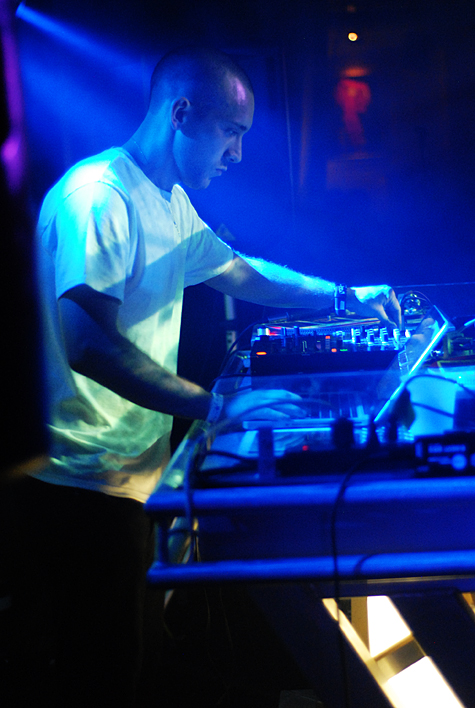
Headliner Mux Mool was a living conglomerate of the night’s mixed bag of performers. With a dash of each sound heard in the three spaces, the attendees swarmed to the main stage after midnight for head-nodding synth beats, peaking laser bursts, flourishes of 8-bit stylings and a few well-placed remixes of Method Man, Beastie Boys and The B-52s. He would slip deep into his album catalog, consisting of Skulltaste and Planet High School, but never alienated an onlooker who might have lacked familiarity. A deep cut was followed by a sample of Method Man’s gravely drawl, rapping, “We keep it movin’, yeah, we keep it movin’” and Mux mirrored his sample. As the headliner, Mux Mool had the last dedication to Adam Yauch, aka MCA of the Beastie Boys, who passed away from cancer that morning. He incorporated his drum work to a “Brass Monkey” sample and replaced the remorse with an invitation to a castle in Brooklyn where a mixture of malt liquor and orange juice is the drink of choice.
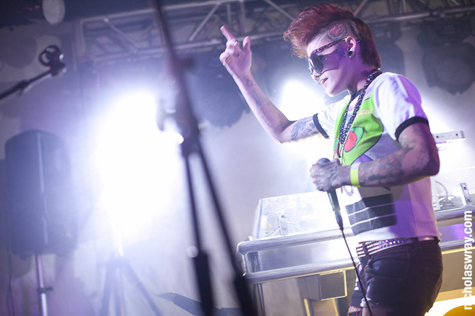
L Raq
Click to read: Sacramento Electronic Music Festival 2012 // Day 1 overview

Sacramento Electronic Music Festival 2012
Day 1: Thursday, May 3, 2012
Friday, May 4 was the official Northern California monthly installment for the alt-electronica club night Low End Theory in San Francisco, but an unofficial preview tested the booming systems of Harlow’s on Thursday, May 3 for the opening of the Sacramento Electronic Music Festival. Lorn, Dibia$e, Jonwayne and DJ Nobody are proven low end theorists, earning their stripes at the Los Angeles weekly event held at The Airliner. The four beat masters sent heady vibrations through onlookers’ sternums and the venue’s foundation, but like every year at the SEMF, local electronica talent is in grandiose display.
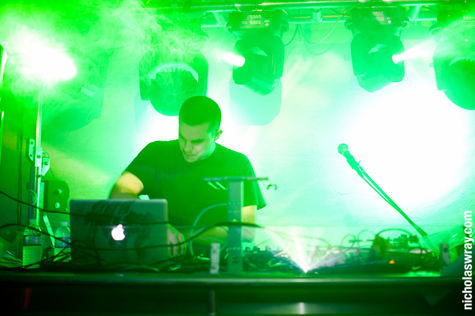
Lorn
It felt as though we were on the move at the third annual SEMF. The round robin of sets in Harlow’s, upstairs at MoMo’s, and DJ sets on the patio had me hesitant to settle in. Decisions had to be made, compromises even, but the careful selection of performers this year almost guaranteed no disappointing sets. Whatever room you occupied was the place to be at the SEMF.
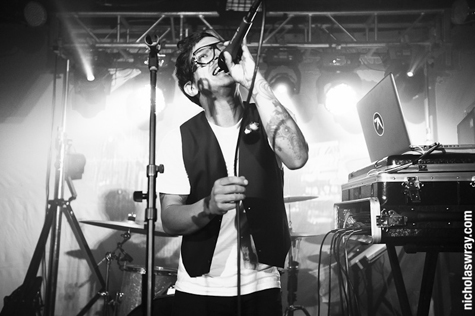
Young Aundee
Jonwayne took the stage for Dibia$e’s set, to streamline raps, while Dibia$e played selector, mutating his beats with glitch takes, warping from track to track without throwing off his rapping amigo in flip-flops. The set bled into Jonwayne’s slot, as he returned the mic to the stand, plugged in his beat machine and rattled the walls with menacing cuts that blended Southern trap rap bravado like Rick Ross’ proclaiming, “I’m treated like a king when I’m dining,” with boss level 8-bit beats and the baritone keys of a grand piano.

Dusty Brown
The Low Enders are the genuine article, but I found great pleasure in the discoveries, particularly Satellites. The presence of the wooden Pandora’s Box known as the Monome was a rare sight to behold, since I can only think of two other beat makers (Daedalus and Galapagoose) who are masters of its magical properties. He’s impossible to Google, so I still know jack shit about him. But Satellites’ push-button magic set an introductory tone for the L.A. vibes that followed.
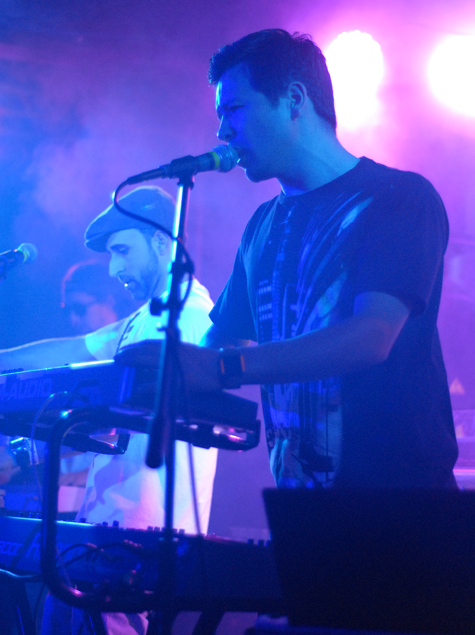
Local performers like Paper Pistols, Doom Bird and Dusty Brown instilled the 916 pride in our festival. My hope is that the out-of-towners lurked around for the Dusty Brown set and that word will spread regarding our secret weapon. Dusty Brown opened with the unveiling of two new songs before delivering cuts from his concise and captivating This City Is Killing Me EP, which is destined to be a local classic. Opening with unfamiliar material reeled me in. It’s a dangerous move, but the group is justified in its confidence in their new music. I’m more than ready for a new Dusty Brown album.
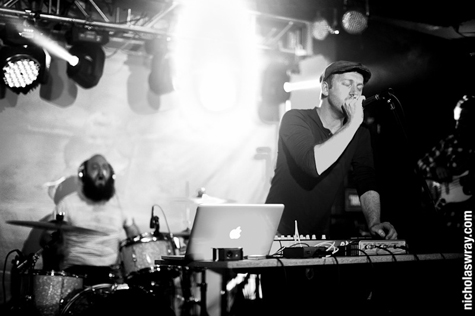
Paper Pistols
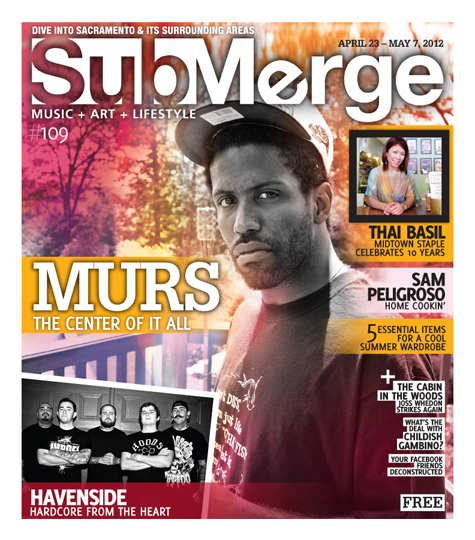
A constant collaborator, indie rapper Murs remains strongly individual
Los Angeles rapper Murs never sought to be different as an angle or platform to get his music heard. His moniker is an acronym that translates to Making Underground Raw Shit or Making the Universe Recognize and Submit. Now in his thirties, Murs is still out to make raw music, but with a grown man’s wisdom.
Murs came up in the Living Legends collective, a group of eight rappers from the Bay Area and greater L.A. area. He’s put out seven records as a solo artist, on both indie and major labels, and worked on collaborative records with Slug of Atmosphere (as Felt), 9th Wonder, Terrace Martin, and his group 3 Melancholy Gypsys. Murs related that his openness to collaborate and exclude no one from his inner circle stems from moving a lot as a kid and an adult philosophy on acceptance.
He brings this philosophy to his Paid Dues Festival, which he held last month in San Bernardino, Calif. He said he fielded some criticism from people who crusade for “positive rap” for including the L.A. collective Odd Future Wolf Gang Kill Them All on the bill.
“Just because they’re negative, doesn’t give you the right to say you’re positive, but fuck them,” he said. “As soon as you step outside of your positivity and say fuck someone else, you’re no longer being a positive person who listens to this progressive music you’re so proud of.
The same philosophy on life has to be extended to your music and the same philosophies in your music have to extend to your life. There are a lot of people who don’t do both.”
Murs’ latest album, Love and Rockets Vol. 1: The Transformation, was released in October 2011, but he’s just now beginning to work on Vol. 2. In the following interview, Murs speaks more about the Paid Dues festival as well as his slate of upcoming projects, including a collaboration EP with Fresno-based rapper Fashawn.
What I’ve enjoyed about the Paid Dues Festival you throw, is that there never seems to be exclusion or allegiance to a certain sub-genre of hip-hop. You have no problem inviting Mac Miller and Dipset, along with Boot Camp Clique and Brother Ali–people who probably would never share a bill together. What’s your mindset in curating?
It’s started with me trying to get all my friends together. I was the guy that was friends with Aesop and El-P and down with the Legends. We all knew of each other, but I was the one who’d sleep at their houses and know everyone’s wives and girlfriends and kids. That kind of stuff. So I was able to bring everybody together.
In the same groove, I did a song with Kendrick Lamar–like before Dr. Dre knew who he was. So I was in with those guys. I was at the first Odd Future Christmas show. My former assistant is now their road manager. I have a genuine connection to so many people. Growing up I realized that people aren’t all that different. I seem to be in the center of this web. Five years before the Based God was born, Lil’ B was coming to my shows at Berkeley.
I don’t have any borders in my life. So the festival has always been a reflection of me bringing my friends together.
Living Legends just rocked Paid Dues together. You guys still make music together. Not a lot of groups can say that about their careers over the passage of time. What keeps everything tight knit amongst the crew?
I don’t know, man. Everybody is who they are. We’re a group of eight individuals. The name and the crew existed, and we didn’t even think about making a record together until Almost Famous in 2001. We’d been living together and touring together for years and never even thought about it. Then, it was three or four years before we thought about making another one.
As much as people say it, it was never Wu-Tang Clan or Odd Future or Hieroglyphics. It was something different. It works for us, but the individuality for other crews may not work.
Love and Rockets Vol. I is obviously part of a series. How is Vol. 2: The Emancipation coming along?
It’s not on a deadline. I think about it every day, write little notes for it, but I don’t think it will come out until like Paid Dues [Festival] 2013.
Will it be produced by Ski Beatz again?
Umm, probably not. It could always change. I know certain things about it I’m not ready to reveal yet. It was never intended to be Murs and Ski Beatz Present Love and Rockets. There will be another book with it. I can say that. It may be an electro record for all I know. It may be a symphony. I don’t know who I might meet next. I don’t want people read this article and say, “Aww, he said it was going to be Araabmuzik producing soft jazz shit.” I don’t want that down the line.
What are you looking at releasing before that? I saw on your wiki page that you’ve got an EP in the works with Fashawn.
We’ll hopefully have that done by the summer. These two producers, K-Salaam and Beatnick, we’d talked about doing something together for a while. My solo albums, up until my last one didn’t seem to be working out, so we’d been trying to find away to work together because I’m a big fan of their music. They suggested collaboration with someone, threw out possible members of The Lox and went through all these musicians and connections we both have.
Then, he brought up Fashawn, and Fash is a kid I’ve seen around and talked to, had him on Paid Dues, but we didn’t ever vibe or kick it. I’m a fan of Fash though, like I have his album [Boy Meets World] and the Grizzly City mixtapes. But it seemed like it might make sense as an outsider option. Randomly, Fash’s manager called me just asking for advice and just update on business. I told her it was crazy she called me. But I had to ask if Fashawn was even a fan of mine. I didn’t want to assume anything.
Have you recorded any songs yet for the project?
We recorded a song that was completely funny. We have a lot of similarities. He goes through the same things I go through. I’m associated with the backpack crowd like Aesop Rock and Atmosphere. He’s associated with The Alchemist and Evidence. But, we’re in a middle ground together of rapping about inner city and at-risk youth–but we’re both non-traditional with it. Things are naturally coming together. We’ve got way more in common ground than I expected.
K-Salaam and Beatnick have this really mid-to-late ‘90s sound they’re giving us. It’s sounding like, what I hope will be the West Coast version of [Only Built 4] Cuban Linx [Raekwon’s solo debut]. That’s ambitious, but you set the bar high to shoot for the stars and land on the moon, type thing. It will be for people who genuinely love Raekwon and Ghostface and Tha Dogg Pound.
Have you and Fashawn had the opportunity to record together or is it a project that’s emailed back and forth?
Every time we’re both in L.A. we’ll hang out for four or five hours. We got the name of the album, while hanging out with Maseo of De La Soul. Maseo basically named the record.
As long as there’s an understanding or friendship between the two it works. I used to think that we have to be sitting there and looking at each other. But, the more I’d talk to people like DJ Quik and hear about how he recorded All Eyez on Me, people can tell if there’s a true connection or if it’s forced.
Have there been projects you’ve turned down from a lack of connection?
Definitely. I wouldn’t name those projects though. There’s people I’m good friends with, but we haven’t made good music together. Brother Ali and me are the best of friends, but we’ve never made a song together. We’ve toured together. That’s my homie. That’s my brother. We’ve just never recorded a song together. It’s never even come up.
There are people I’ve tried to record stuff with and we both just let it sit there and nothing happened with it.
Have you considered updating the MURS acronym?
No. I’m not doing anymore. No more of that shit.
Childish Gambino, Danny Brown
Ace of Spades, Sacramento – Wednesday, April 18, 2012
Childish Gambino’s Camp Gambino Tour sold out Ace of Spades months in advance. The line to get in stretched the length of the R Street block and wrapped down 14th, halfway to S Street. Inside it was a patient wait through one opener to see a young Hollywood actor from NBC’s Community, Donald Glover, take the stage as a rapper.
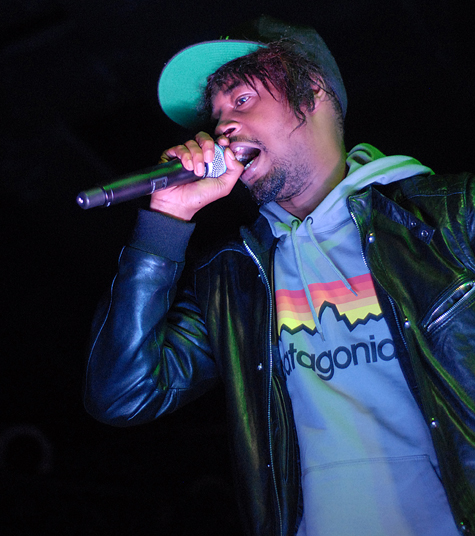
There’s no use hiding it. The opener was Detroit’s Danny Brown. A recent signee to Fool’s Gold Records and the artist I anointed as Rapper of the Year 2011 in another publication. As for Childish Gambino’s debut record Camp… I gave it a few listens in November and deemed it overrated. Glover’s Camp record is not as painful as Brian Austin Green’s One Stop Carnival album in the ‘90s, but if he’s serious about rapping over acting he’ll live in the shadow of Drake. But what the hell do I know? Danny Brown had a few pockets of fans in the first row shouting his gratuitous lines from his XXX album back at him. Childish Gambino had wall-to-wall admirers reciting every word to a song that shares its title with a TV show, canceled after 12 episodes.
It was his show for the taking and it’s easy to revel in the limelight with such positivity electrifying Ace of Spades. No songs faltered or lulled the set. It was hit, hit, hit for Gambino and even the time lapse for an encore seemed insignificant. He was impressive, but I did not leave converted.
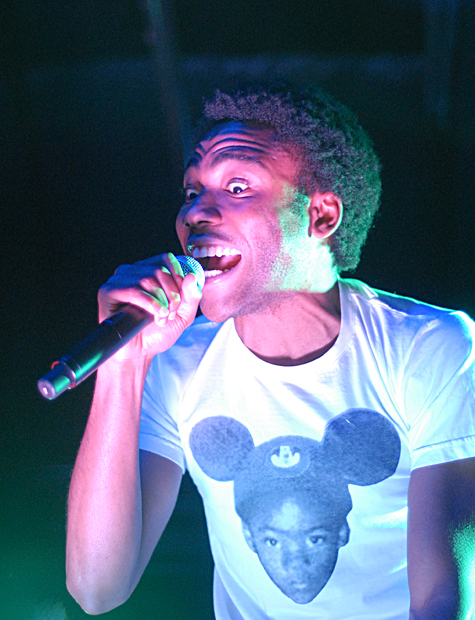
My struggle with Glover/Gambino does not stem from questioning his talent as a performer or even as a songwriter. He’s a clever rhyme writer, interspersing wit culled from his stand-up like, “I sound weird, like nigga with a hard R” and references to Invader Zim. His balance between nerding out and sneaking in sentiment testifies to his mass appeal. He tours with a talented backing band, half of which look as though they toured with Travis McCoy, while the others possibly play violin behind Justin Vernon of Bon Iver. His stage presence is not the issue, and the giant screen displaying lyrics, forest landscapes and scenes from the streets of New York City were not the issue. It lies in not knowing how to perceive his craft.
The name Childish Gambino was conceived through the use of a Wu-Tang name generator, making it difficult to assess it as genuine or satire. The campy name paired with Glover’s notoriety as a stand-up comedian, his far superior talent in my opinion, and presence on a sit-com, lean towards the notion he’s a parody. So why weren’t we all laughing? Why was everyone singing along in earnest?

There were opportunities to laugh–plenty of them. Danny Brown exposed himself as an avid participant in cunnilingus by performing “I Will” and wagging his oblong tongue between his missing front teeth. He earned a few laughs beyond the front row by letting his followers deliver punch lines from “Monopoly” like, “Stank pussy smelling like Cool Ranch Doritos.” Childish Gambino is not short on humor either. He and Brown are contemporaries in rap humor as both love bragging about their sexual virility and their haters’ lack thereof. Guess which line is Danny Brown’s and which Childish Gambino’s is:
“I fuck bad bitches to Stacy Lattisaw, while y’all niggas got blue balls like an Avatar.”
“My dick is like an accent mark, it’s all about the over Es.”
The first quote is Brown on “Adderall Admiral.” The second is Gambino on “Bonfire.” Did you get it correct? I could split fine hairs like this for paragraphs and end up with an even part resembling the top of Crispin Glover’s head, but what’s the use? Danny Brown doesn’t have a television presence, which is still more powerful and influential than being critically lauded on the Internet.
Glover’s an act worth the price of admission. Place him in the recent crest of celebrities like Zooey Deschanel and Scarlett Johansson, who’ve earned successful recording careers. The trend could be gruesome and transparent, were the named figures less talented. It’s undeniable that their recording triumphs are assisted by their TV and film notoriety. Glover is privileged, but his closing statement on “Bonfire” (“Man why does every black actor gotta rap some?/ I don’t know, all I know is I’m the best one.”) hints that he’s aware. It could be worse. The actor/artists could cover Celine Dion instead of Tom Waits, perform alongside Sugar Ray instead of M. Ward, and bring Mac Miller on tour instead of Danny Brown. They should always be commended for their fine taste.
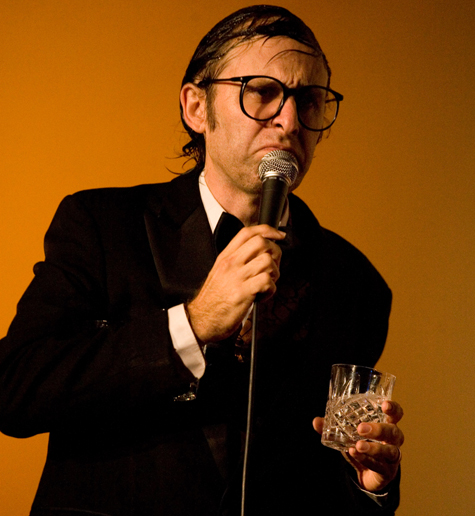
Neil Hamburger takes on Shakespeare, prank calls and hecklers with panache…
more or less
Neil Hamburger might seem as though he was freed from a cryogenic crypt. His classic vaudeville act is both archaic and a fittingly appropriate counterstrike to modern humor. In late March he returns to the Sacramento Comedy Spot. If you saw him previously and it was over your head, this article is for you. If you’ve never seen him perform and have tickets, this article is for you too.
Those old enough to remember Tony Clifton wreaking havoc on late-night television and concert stages in the ‘70s should think of Neil Hamburger as being cut from the same washed-up, beer- and sweat-stained tuxedo cloth. He’s an anti-hero with celebrity worship in the crosshairs. If at any point during his set you find it difficult to accept his reality, take comfort in knowing he’s not entirely real. Unlike Clifton, though, Hamburger is on our side rather than out to sully our evening on the town. On the phone he expressed aspirations to reach the same heights as Abbott and Costello or Laurel and Hardy, which is why he does 399 shows (allegedly) a year.
“Certainly would like to get the point of the same recognition as those guys,” he said. “It was a good situation for Abbott and Costello. What wasn’t so good was when they passed away. That was a problem for them. Fortunately, they’d done quite a few things before that we’ll always treasure.”
On stage, Hamburger is a glum, middle-aged, tuxedo-clad man, with greasy comb-over hair, awkwardly sized glasses and a rasp magnified by a ghost lodging in his throat he perpetually pauses to clear–as if he’s working up a world record-tying loogie. As real as he appears, he’s an act finely tuned over a nearly 20-year span. Before there was Hamburger, there was Gregg Turkington, a punk rocker and label head from Australia. He’s practically dead these days, consumed by the Hamburger persona; so dead, I insisted clarification on precisely who I would be speaking with–Neil or Gregg–before accepting the assignment.
Talking to Neil, I wanted to ask, “Is Gregg there? Is he somewhere in there? Can Gregg come out?” like I was a psychiatrist coaxing a multi-personality disorder patient to let me speak to the host. I didn’t though, because talking with Neil was too much fun. He was professional and just as uncertain about expectations as I was. When we wrapped our interview his parting words were:
“Good luck. I hope I was able to give you the answers you were looking for. You never know what people need. I do hope this leads to some sort of prize or some sort of award for you. I do appreciate the time.”
It was unexpected, considering Hamburger is notoriously cranky. If an audience member doesn’t respond to his inquiry, they are dubbed a “zipper lips.” If an unruly heckler dares challenge Hamburger, relentless throat-clearing sounds drown out their end, until Neil is ready to fire his snarling comeback. On his show Poolside Chats, call-ins are futile and mostly result in Hamburger shouting obscenities at a phone and slamming the receiver. But, the afternoon of our chat, Hamburger was pleasant, since he considered me to be “a nice polite and reasonable person with some good questions.”
In a lot of the clips I watched leading up to this interview you seemed to be quite cranky. I was somewhat nervous about this interview, considering how you respond to phone calls on Poolside Chats.
Well I think it depends on what you get. If you get someone throwing old frozen waffles at you and yelling out your punch lines, well the crankiness will set in. It also depends on the time of day. It’s certainly easier to be cranky late at night or early in the morning. During the daytime when I’m just driving from show to show, it’s a pretty pleasant day out…so I would say no, I’m not cranky right now.
You seem to thrive off the shouts from hecklers. I feel as though your style baits them some. Deep down do you love it?
I wouldn’t say I encourage, but I’m prepared for them. Honestly some of these hecklers are just so witless and plain annoying that there’s no reason to encourage that. Some of these people are committing the equivalent of crapping on the floor of the nightclub, you know? Somebody has something clever to say that’s a whole other story, but that’s not always what you get.
Plus what a comedian finds clever and the average audience member finds clever probably greatly differs.
Well, let’s put it this way. When you get guys that come out and they go on YouTube and they see the show from the night before and they come out to yell the punch lines ahead of time. That’s not really heckling. That’s just shitty. Nobody cares for that. So those are the sorts of folks I’m talking about that we have no use for.
Do you have any new comedy records coming out?
We just did one with Jack White, you know? It just came out last month. There’s a couple 7-inch singles as well. So yeah, lot of new records.
What was it like working with Jack White?
The man is a true professional and knows what he wants. He knows how to put on a great event. We recorded it live, and he’s got a studio there in Nashville. We did the show and it came out as a record in a very quick turnaround. Just an all-around pleasure. I wish there were more folks in the business like this, but as you know a lot of them aren’t. You get your Britney Spears and this sort of garbage. It’s not always so nice.
You’ve got a couple film roles coming up. You’re in Hamlet A.D.D. What was it like working with Shakespearean material?
It’s a strange film. I haven’t seen it, but it’s an animated film with live actors. I guess, they do it with this modern technology and you’re interacting with cartoon characters. It’s hard to say. It was fun to be a part of it. We were in front of a green screen. Certainly, I was not actually interacting with these cartoons, but I will be when it comes out. That’s something to look forward to.
You got your start doing prank phone calls. Do you ever do them now for nostalgia’s sake?
You know, sometimes I’ll get on the phone and do an interview or order a pizza or something. Nowadays, you get the death penalty for making prank calls, so you really can’t do that anymore. They changed the rule. It’s instant death.
I was unaware of that.
Oh yeah, check the news. You’ll see. I guess they prosecuted the first couple people and started the executions. There are some human rights activists and things that say it’s a bit extreme punishment, but you know, unless it goes to the Supreme Court and is overturned, that’s what we’re stuck with.
What celebrities are in your crosshairs these days?
Well, they all are really. Most of these folks are not the best people you may come across in your travels. A lot of these people are really quite unpleasant, quite overpaid and overexposed. Some of these movies really break your heart, if you get a look at this junk. To see these people thriving off poisoning our children with their bad films and their bad everything, that will break your heart again. Some of the bad music, I don’t know if you’ve heard some of this music they’ve got… It sounds like somebody crapping into a porcelain bowl. You know, they put a techno beat over it and that’s the new hit single. I’m sorry, that’s not my idea of a good song.
Neil Hamburger will play the Sacramento Comedy Spot on Friday, March 30, 2012. Tickets are $15 and can be purchased through http://saccomedyspot.com/. If you go (and you should), do yourself a favor, and leave the jokes to the professional.
World Hood ready new EP and prep SxSW showcase
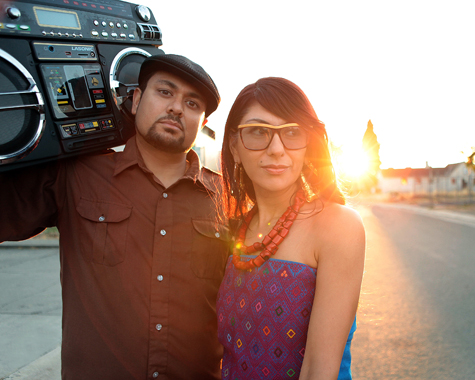
It feels as though it was only a matter of time before Sol Collective made an impact beyond its community activism and support for the local arts and music scene. Collective founders Estella Sanchez and Anand Parmar added recording artists to their resume last year with their debut as World Hood, a project that developed in the wee hours of the night in the gallery.
A nonprofit organization and art gallery located on 2574 21st Street, Sol Collective hosts beat battles and touring psych-rock bands and runs a world music series titled Global Hood, which brings artists that operate in the meshing of tropicalia bass, break-beat, electronica and Cumbia genres to Sacramento. There are B-boy workshops and practices in the back rooms and music production classes for high school students. It is a meeting hall for activist groups to discuss community empowerment and youth development. The gallery is a hub of creativity bound to rub off on its founders.
Nights at the collective rarely ended with a band’s last song for Sanchez and Parmar. After the venue cleared, the couple would hole up in the gallery’s recording studio and work off the excitement from watching the performers. “It was definitely convenient to record at Sol after a show,” Parmar said. “We already had things set up and could put in a few extra hours to get a song in. All of the acts we have brought to Sol, specifically through the Global Hood series, were inspiring in one way or another. They have been groups whose music we believe in and were committed to promote either because of their message or because of the cultural influence in their music.”
Anand Parmar was born in Africa and is of Indian descent, while his partner Sanchez is of Mexican descent. Anand said when he started to shape the World Hood sound, he always tried mixing different cultural elements into the production, but collaborating with Sanchez and incorporating her culture and language was a natural progression. “It’s a mix of what we heard on the radio growing up in Northern Cali in the ‘80s and a mix of what we’d hear at home, be it what our uncles or cousins were playing,” Sanchez said. “Even in the studio I go back and forth in elements I want to add that are familiar to us.”
A DJ and producer for roughly eight years, Parmar would play beats for his partner, mostly culled from blending Latin dub and tropicalia with West Coast bass and hip-hop. Sanchez would sing over his tracks alternating between Spanish and English, sprinkling in slang and spiritual incantation. Sanchez sang mostly for the release, not considering the possibility of the songs going further than the studio walls.
In April of last year, Parmar collected 12 of the recordings and uploaded them to Soundcloud, an online audio distribution platform, and then moved them to a similar site called Bandcamp. He designed an album cover and called their group World Hood, a name that speaks to their globalized sound and grassroots activism. By May the duo was being interviewed by the MTV’s Iggy blog and later appeared on NPR’s Alt.Latino station. The coverage swelled further with Hype Machine, Mad Decent Blog, Dutty Artz and National Geographic’s music blog (yes, they have one) taking notice. “It was a little bit of a surprise for us,” Sanchez said. “We had been working on music for a while. Anand wanted to just put it out there and let people hear it. We didn’t expect the coverage.”
The hype moved at a pace bigger than the band as the phone rang and the inbox received requests to tour and perform. It was an invitation the group had yet to consider. “We definitely got invited to play and tour before we even put our live set together,” Sanchez said between laughs. It’s almost a year since they posted the album and she is still in disbelief that she’s juggling a time-consuming nonprofit–a master’s thesis that became her life’s passion–a family, and a burgeoning band. “It’s not stress, but we’re trying to find a way to balance it and do it well,” she said. “I love what I do at Sol Collective and Anand is a big part of it as the music director there. We’ve been finding ways to complement it.”
Being true to their moniker, Parmar and Sanchez use the band as an opportunity to travel and promote Sol Collective. It began with their first show. The duo was invited to the Aborigine Music Festival in Winnipeg, Manitoba, Canada. The high tide in the local scene has sent artists like Sister Crayon and Death Grips to the festival circuit, but a debut performance at a festival is unheard of. “It went really well,” Sanchez said. “It’s a lot easier to perform when you’re in another country. I figured if it all goes bad, I’m on a plane tomorrow and that’s that.”
It did not go bad, though. Radio stations played their music prior to the festival, which meant the duo were welcomed to the festival with excitement and familiarity. World Hood performed as part of the Pow Wow party at the Pyramid Cabaret in Winnipeg. The group played alongside A Tribe Called Red, a collective of native Canadian DJs, which Sanchez and Parmar were fans of. “We got some feedback from them,” she said. “They really loved what we were doing in creating beats and native thinking and mixing up the languages. It encouraged us to keep on that path.”
Sanchez said she hopes to bring A Tribe Called Red to perform and participate in workshops at the center. Sol Collective also approached them to be a part of its #ArtCultureActivism SxSW showcase in March, but conflicting tour dates in Canada hindered their availability.
Sanchez and Parmar view the SxSW showcase as another opportunity to not only promote their collective and its community garden build project, but to showcase Sacramento artists and encourage musicians to tour here. The showcase features World Hood, along with local hip-hop act DLRN and producer/DJ Defeye, among several national acts. “When we travel and do things, it’s to bring folks back to Sol Collective,” Sanchez said. “We also have press passes this year, which they gave us… we’ll have the opportunity to go to workshops and events to approach artists we want to promote and bring back to Sacramento.”
In January, World Hood posted the song “Mundo Libre,” which translates to free world, to their Bandcamp page with the description “Single from the upcoming EP. Dropping soon.” The song is the title track to the EP. Sanchez said she and Parmar would work on finishing the EP that night. The goal is to release the five-song EP in late February/early March for free download prior to their SxSW showcase. A full-length will follow in the summer, most likely remaining DIY. “Nothing concrete at this point,” Sanchez said. “We’ve had some interest [from labels]. We had people ask us to send them our stuff. But we’re still trying to figure out what we’re trying to do and how much we’re putting into this project.”
“Mundo Libre” is on par with the group’s pre-existing material of Afro-Latin dub, with hints of Reggaeton in the arpeggiated vocals. Now that World Hood is aware they have an audience, it’s altered the process a bit. Sanchez said her partner Anand is a meticulous worker in the studio and that his work ethic rubbed off on her in the new sessions. “We paid more attention to the message,” Sanchez said. “Now that people are interested in listening to us, we’re more conscious and aware of what we’re putting out. With the first one I didn’t think anyone was going to hear it, so I didn’t care. The first one was freestyle, where this time I actually stopped and said, ‘wait let’s record that again,’ instead of just saying ‘oh that was fun, I’m going to sleep now.’”
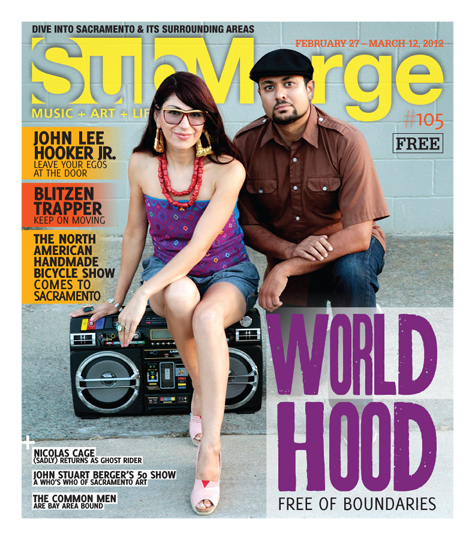
World Hood will be releasing a new EP soon. In the meantime, check out “Mundo Libre” at http://worldhoodmusic.bandcamp.com/. For more information on Sol Collective, go to Solcollective.org.
Ross Hammond discusses his new album with The Ross Hammond Quartet and His New Muse
Interviewing Ross Hammond on a Friday afternoon while his wife was out of town meant a secondary task of taking his 18-month old daughter, Lola, for a stroll around the 17th and L block of Midtown.
Lola led the way, while Hammond and I discussed his upcoming Ross Hammond Quartet record due this month. As we strolled and pointed out flowers, dogs and trucks (Lola loves trucks and buses), it became apparent the little blondie was responsible for changes and inspiration in her father she’ll not understand for years. The record, Adored, and Hammond’s artistic growth displayed on the album would not be possible without her.
Our walk began in the alley outside Old Soul Coffee. We did roughly three laps of the block and if we stopped the question was posed, “Lola walk?” In answering, Lola formed her first contribution to the interview tape “Lola walk.” Many of Hammond’s responses were fractured with quick “stay close” requests, but we eventually got down to brass tacks. The immediate information to hash out: Who are the players in the Ross Hammond Quartet?
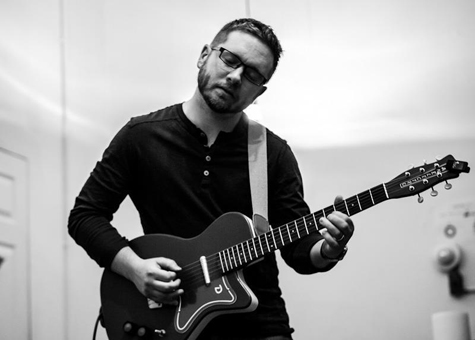
The ensemble came together mostly through the intricate web of the jazz scene involving booking, travel and of course, collaboration, although Hammond first came to know each member from owning their albums. Whether on stage or in the studio, he said he had several surreal moments that left him pondering, “How did I get here?” The Quartet comprises Hammond on guitar, Vinny Golia on saxophone, Steuart Liebig on contrabass guitar and Alex Cline on percussion. Hammond said he’d known Golia from booking him a gig at the Cool Cat Gallery on 24th–back when it existed–and Cline in a similar fashion. Cline is the twin brother of legendary guitarist Nels Cline, who’s currently playing lead guitar in Wilco. “It’s freaky, dude,” Hammond said regarding the Cline brothers. “They’re identical and both really tall.”
As for Liebig, “I don’t know how I met, Steuart… I guess through the scene.”
He played three to four gigs, including the In the Flow Festival in Sacramento last year, with the members, planting the seed for the quartet. After he’d enlisted the three musicians for a studio session in Los Angeles, the makings of an official ensemble came to fruition.
When it came time to name the project, Hammond was surprised by the other members’ suggestion of naming the quartet after him. At 34, Hammond is the youngest member of the group while the rest were born as far back as the ‘40s. It is a humble and impressive gesture coming from three renowned L.A. jazz musicians who have each had ensembles bearing their namesakes.
“For lack of anything better that’s what it is,” Hammond said. “I’ve never had a quartet before. I also feel like I couldn’t replace any of those guys and still call it the same thing.”
Recorded at Newzone Studio and engineered by Wayne Peet, the album was tracked in six hours with only a few songs needing alternate takes. It’s a feat that speaks to the veteran musicianship of Hammond’s quartet. Hammond would play the riff he had in mind for a song and the ensemble would offer a nod or “OK”–no further tutelage required. He said after each track, it was understood that it felt good and they would move on to the next song.
“Playing with these guys it’s just about staying on the wave,” he said. “You don’t have to give them much instruction at all. I think one of the instructions I gave Vinny was, ‘OK, as soon as this song starts you have to come in like an elephant,’ and that’s what he did.”
Adored is carved from a foundation of folk songs with the title track being a lullaby Hammond sings to Lola at bedtime. Hammond said three of the songs are lullabies he sings. After she’d go to sleep he would figure out the notes and write out the lullaby. The writing is at its most encrypted on “Maribel’s Code,” in which the melody is an intervocalic code built from Lola’s initials: LMH.
“Most of the stuff I write has either a dedication or an idea, be it political or romantic,” Hammond said. “I’m never just like, “oh this is a cool riff, I’ll call it…’”
Three years ago when I first interviewed Hammond, he shared a similar sentiment. The inspiration behind the album title An Effective Use of Space came from a saying his wife frequently used. He said it’s one she still uses to this day. Hammond listed his wife as still his deepest muse, but the birth of his daughter is the primary source of inspiration behind Adored.
The immediacy of the recording is palpable, but it’s done in maturity. Hammond said the difficult task in preparing the music was giving the songs a collected feel, but without being united to the point of bleeding the songs together. Adored roars in, spastic and angry, with “Adored” but as “Sesquipedalian” mellows out it introduces the soft lullaby of “She’s My Little Girl.” Consider the album to be much like Hammond’s day-to-day with Lola; awake at 6 a.m. and full of energy, a settling in period, a mid-day walk with small fits of exuberance and crankiness, a lullaby for a nap or the night’s tuck-in. It is all lovingly expressed in the sea changes of Adored.
“Alex [Cline] told me he doesn’t think you mature as a musician until after you’ve been a dad,” Hammond said. “The gist of it was you stop trying to impress people and focus on filtering this feeling you have and this beautiful thing and turn it into a song. Your muse is different. The goofy songs aren’t there anymore. Having a kid forces you to grow up and you grow up in everything. If anything it’s more purposeful now.”
With the particulars of the album discussed and rocks and leaves in our pockets courtesy of the tyke, Hammond asked Lola, “Wanna go swing? Lola swing?” She offered her second sentence of the afternoon; a sharp “Lola swing.” With that, they strapped into a bicycle and road off to the park.
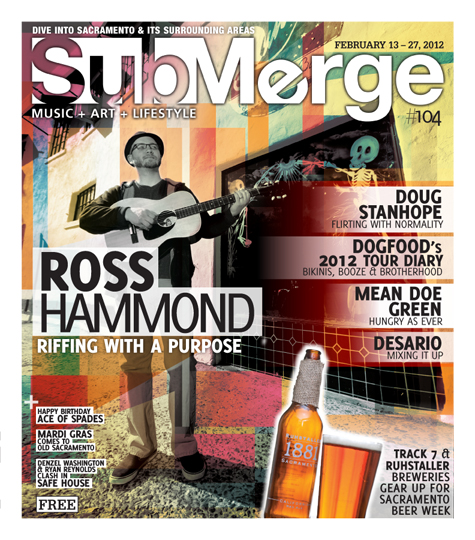
Adored by The Ross Hammond Quartet will be available Feb. 27, 2012. You can preorder it now at Rosshammond.bandcamp.com/album/adored and also listen to the title track. Hammond and co. will throw a CD release party on the very day of its release at Luna’s Café in Sacramento.
The Features tap into the sounds they grew up on
Bands that have released albums dating back to 1997 are not expected to catch the eye when scanning The Twilight Saga: Breaking Dawn soundtrack artist listing–you know, because your friend or teenage sister or jejune girlfriend owns it.
The Features’ timeline is weird in that regard. The band formed in Sparta and Murfreesboro, Tenn.–a couple small/college towns southeast of Nashville–in 1994, which is only a few years before most of the purchasers of The Twilight Saga soundtrack were born. But the compilers of the soundtrack were taking open submissions. Singer/guitarist Matt Pelham described the submission as whimsical and with little expectation. “We had a couple of extra songs from the record and they were taking submissions,” he said. “It’s been pretty crazy. It’s now our most popular song and it’s not a song we wanted to put on a record.”
The Features won’t find out whether “From Now On” will alter the attendance of their shows until the band embarks upon its winter tour through the Southwest and up the coast toward Sacramento. As it stands, the band is pleased with its fan base. Last July, The Features released The Wilderness on the Kings of Leon-run label Serpents and Snakes. Pelham discussed the record’s conceptualization and reception, while driving around Murfreesboro, the band’s current home base.
The Wilderness is described as an amalgamation of genres such as krautrock, indie and classic rock, but I feel as though classic rock and blues are the dominant influences at work. These are also the genres you grew up on. Was there an intention to revisit the music that you first learned to play?
I guess it’s always sort of stuck with us. We all grew up with different influences, which I feel helps us out as a band with everyone writing their own parts. Roger [Dabbs] and I grew up listening to a lot of classic rock, and when I went to college and from that point for another eight to 10 years I got away from it. Only just recently I’ve been going back to it in the past three or four years.
I don’t know if I’m just getting more nostalgic toward it or what it is. It is hard for me to get away from. It’s such a strong influence. On a subconscious level it winds up being what I lean toward when I write.
Were there any records in specific that crept back in to your rotation that played a role in The Wilderness?
No. It’s just one of those things like back in high school I wore out those Led Zeppelin cassettes and then just got so sick of them by college. I started college in 1993, so it was prime time when it came to the music scene changing dramatically. From my junior year of high school to my first year of college it was pretty nuts, the amount of music and variety of music that was out there.
I went from listening to Led Zeppelin, Pink Floyd and Lynyrd Skynyrd all the time, to hearing stuff like Pavement. It was refreshing. I imagine I’ll end up going back to Pavement someday too. But now I’m just revisiting Creedence and stuff I grew up with, which is nice.
Being you grew up in a time of dramatic shift, how do you feel about the current climate of music? You’ve expressed that your band walks the line between mainstream and hipster.
I’ve always had a hard time knowing where we fall in conversation. It’s one of those things I’d love to know. It’s always been this way: you either like punk rock and that’s it. You can’t like punk rock and R&B. But none of us have ever been like that.
It seems like most of the people we end up talking to at our shows, getting to know and who’ve listened to us for a while, seemed to be similar to us in the sense that they just like music. It’s not so much about what kind of music it is or what style. I like that about the people at our shows. They just love music and it’s not so much about a trend.
I really don’t know where we fall in the context or big picture as a band.
You worked with producer Brian Carter and engineer Craig Alvin on The Wilderness. I was curious about their involvement in the recording process. You manage to pack a very big sound into a live tracked record. Where are their fingerprints on this record?
We’ve recorded with Brian in the past. He’s a good friend of ours. We’d always record at his house, which was very comfortable. It was one of the reasons we wanted to work with him again. 1) He’s good. 2) It’s an extremely comfortable environment.
We brought Craig in, who’s originally from Portland [Ore.] and living in Nashville now. We heard he was really good and he really is. He brought a lot to it. We wanted everything to sound big, but almost as if we were playing a house party in a living room. Craig and Brian both, I feel like, they executed it nicely.
Did you record everything live as a full band and jam through or was it tracking and overdubbing the pieces?
It was all done live. There were some overdubs, just added bells and whistles and the vocals were overdubbed, but the basic track is united. It seems to be the only way we can record really. We’ve tried track by track and we sound awful. I like records that are done track by track. They have a nice homemade quality to them. Like [Paul] McCartney’s first record or [David] Bowie records to me sound really neat. They’re stiff, but it just has a… I don’t know… ‘70s sound I like. But we just can’t do that. We sound awful.
With the presence of “Big Mama Gonna Whip Us Good” and “GMF” on the previous record, how important to you is it to slip in a political or environmentally conscious song into your records?
I never intend to put a message out. I’ll start writing a song and nine times out of 10 the lyrics will mumble themselves into place. If I end up getting a line like, “Big mama gonna whip us good,” I’ll think about where I’m going to go with that for months before I actually come up with something. That’s just where that song ended up going. I do feel strongly about it, but the songs write themselves in a sense. I don’t have a lot of control over it and those are my favorite ones because they come out easy.
Maybe it sounds like that? Maybe it kind of sucks because the lyrics are too easy? To me, those are my favorite lyrics, the ones that sort of just happen. I do pay attention to those issues, so it just ends up coming out in a ridiculous way. It’s hard for me to write about stuff like that unless it has a humor to it, otherwise I feel like I’m being someone I’m not.
The Wilderness is about six months old. Will you be working new songs into your set, since you’ve said you’re a band that typically spends its rehearsal time writing new music?
Just before The Wilderness was released we recorded another record. So in the last four or five months of touring we’ve been trying to put some of that into the set to keep ourselves from being bored. We’re trying not to play it too much, since we know eventually we’ll have to play it a lot and we’ll get bored too quickly.
Have you begun talking about the release of that next record?
No. I have no idea what’s going to happen with that. We’re going to continue to tour behind Wilderness and see where we stand in the next three or four months.
I imagine being on a label, they’ve got expectations on releasing singles and stretching out the promotion of a record that’s not reached a year in age.
They’re pretty hands off. There’s not really expectation at all. A lot of it is left up to us, which is really nice. Most of the decisions have been our call as far as how we want to release stuff and when.
The Features timeline has met obstacles like unreleased albums, lineup changes and other setbacks bands experience. Where does your resilience come from to carry on as a band?
I don’t know if any of us would have any good ideas on what we’d want to do or what else we’d be able to do for that matter. We’ve done this for so long it just feels like what we should be doing. It keeps us happy and comfortable. When we’re writing and actually able to practice or be on tour, I feel like it’s when everyone is at their happiest. It keeps us going to have that outlet.
The Features will play Harlow’s on Feb. 3, 2012. The show will get underway at 7 p.m. and tickets are just $10. To purchase them in advance, go to Harlows.com.