Trent Liddicoat Connects Art and Literature in His New Exhibit
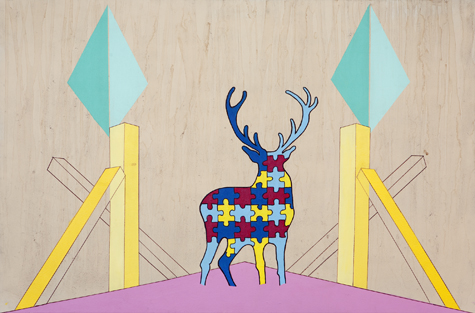
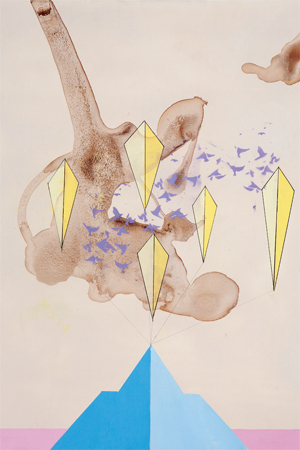
Given the healthy abundance of trees and recent infestation of raccoons and opossums, Midtown is in a delicate balance of the natural functioning alongside an urban civilization built atop it. Local artist Trent Liddicoat is plugged into the duality of Midtown, finding a sense of his inner struggle in it. He wrestles with these struggles and the stresses placed upon communities in death in his art show at Sol Collective.
Titled …and I’m whistling as beautifully as I can, Liddicoat’s work is predominantly conceived with the use of acrylics, coffee and spray paint. Dissatisfied with wine spills, he got the inspiration to use coffee after seeing a fellow artist Richard St. Ofle use the dark brew on canvas. Before Liddicoat, age 23, would head out for work in the mornings, he splashed the remains of his morning French press across the canvas to dry throughout the afternoon. In time he was able to manipulate the spills to his liking. “It’s cheap,” he said. “At first it was very intimidating, but now I’ve got a few techniques.”
The show title’s full quote, first penned by the late (so it goes) Kurt Vonnegut, is “All the other species are dying and so will we. I’m whistling as I walk past the graveyard…whistling as beautifully as I can.” Liddicoat wrote the quote in a journal years ago. While seeking a muse to direct his body of work, he rediscovered the saved prose. “I read that and was thinking how it was connected with being a new artist,” he said. “I don’t have an education with my art, so I’m taking this full force to be an honest portrayal of the best that I can do.”
The words relate to Liddicoat’s perception of death as well–a prevalent theme in his collection. He said the show is not a focus on death, but life’s curtain call acted as the steppingstone of inspiration for the series. “I wanted to find the positive light in it,” he said. “A friend pointed out once, that rather than focusing on the grieving, I’m focusing on the tail end of life. So now the show is more about life and experience. ”
Death as an adhesive for communities might be too pretty of a bow for Liddicoat’s intention, but with death as the foundation, it kept inspiring friends to offer their insights to his work. A few of his paintings feature images of deer, one of which was donated to the UC Davis Mind Institute for Autism Research. There are a number of reasons Liddicoat could have selected deer to unite his work, but it would be his small community of artists that guided him. “My friend Estella [Sanchez] from the Sol Collective actually pointed out to me that the deer is a symbol of death in Mayan culture,” he said.
A native of Rio Linda, Liddicoat is no stranger to the outdoors and its wildlife. He said his grandparents once owned acres of land. It is that upbringing pitted against his adjustment to urban living that seeps into his art. “I try to take the personal problems that I have or the issues with certain things and I think about something conceptually and then find a way to make it universal for others. That led me to the idea of how a sense of community helps loss.”
For Liddicoat, the task of internalizing is far deeper than the chore of conceptualizing. He offered a brief mention of a family situation concerning his grandfather’s health–a topic that felt addressable strictly due to his valued interest in art focused on death. He began questioning how his grandfather’s current health issues would alter the mindsets and how the family will process the impending change.
The situation lacks answers until the threshold is met, but it is in those dire moments that bonds are strengthened. The young artist spoke graciously of his friends and pocket of fellow artists and musicians, all of which provide motivation for his art. Liddicoat’s art show will feature a 7-foot installation inspired by the Free Life Center, a touring art house that he admires. Jesse Phillips of Ellie Fortune helped Liddicoat with the homage installation, which is made from recycled wood taken from a long dormant house near his mom’s property in Rio Linda. “They moved out years ago,” he said. “Basically this wood was part of what looked like meth shacks. We just hopped the fence, pulled off all the materials and brought it to the Sol Collective.” Strong communities should also be resourceful.
Trent Liddicoat’s …and I’m whistling as beautifully as I can can be viewed at the Sol Collective from Dec. 17, 2012 – Jan. 28, 2012. The closing reception will start at 7 p.m. and feature music performances from Fine Steps, Peggy Benks and Matthew Maxwell. For more info on Sol Collective, check out Solcollective.org. You can also follow Liddicoat on Tumblr at Trentliddicoatart.tumblr.com.
Live Manikins conquer distractions to focus on new album, Full Canvas
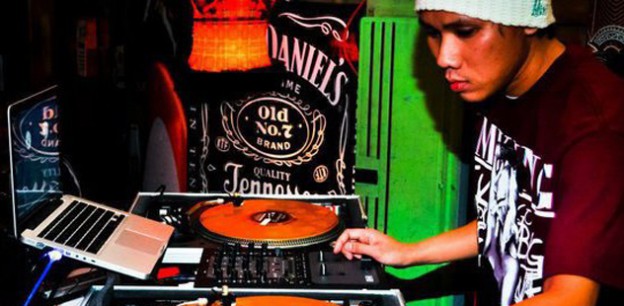
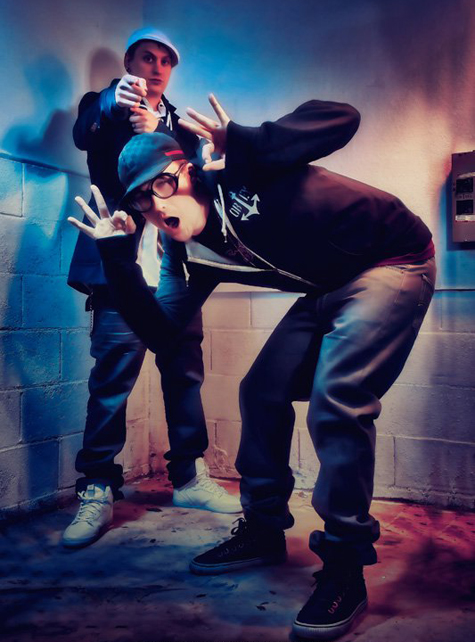
As DJ Rated R put the scratch to his crewmates’ reflections on the intro to Live Manikins’ Full Canvas record, the rappers speak with disbelief about their three-year lapse between albums. “I’m sitting here looking at the credits and the album cover and there’s a lot of growing up,” he said. If the hip-hop group’s first record, Still Life, was merely a snapshot or Polaroid, Full Canvas is the result of three years spent revising the portrait in the midst of what one of the group’s members, Self, calls real life shit.
In its earlier days, Live Manikins was a mainstay at Second Saturday events at Revive, The Body Shop and United State boutique, at which they were one of the first hip-hop crews to host events without drawing suspicions from Sacramento’s law enforcement. “We always coordinated with local businesses,” rapper J-RockIT said. “We threw shows right outside with DJs. When Second Saturday finally started blowing, it would just get packed.”
Self said the crew found sanctity in a specialized wording of the event, so that it never got shut down. “There was once a time we couldn’t even perform because we were hip-hop,” he said. “We’d bill it as spoken word artists with a funk rock background. That was our work around. But we also brought hella different bands just to fool the police.”
Live Manikins’ debut Still Life earned the crew numerous accolades and local bragging rights, but the Manikins put an immediate follow-up record aside to pursue solo projects. Linguistics, who goes by Mr. Lingo these days, dropped Anybody Want a Peanut? in 2010, which earned him a Sammie nomination. Self split time between Sacramento and Los Angeles recording his solo record. J-RockIT and Runt Rock formed Live Audible Soul, later renaming the group DefRockIT, and took their EP as far as the Philippines.
While Rated R won DJ contests, toured the West Coast with Random Abiladeze, formed a DJ crew called Sleeprockers and started a DJ night at Capitol Garage called Joints and Jams. For Rated R, the experiences came in such a whirlwind that Self kept reminding his DJ of the events, to which he replied, “Wow… I forgot already.”
The good-ole-days summation reads like a storybook: three years of continued success, but each storyline was eventually mired in tribulations that led each member back to the group project–well, except for one. After the release of Anybody Want a Peanut?, Mr. Lingo brought his own peanut into the world. As Live Manikins began to regroup for a follow-up record, Lingo chose to remain an auxiliary member to focus on his family. “We understand especially since it’s their first kid,” J-RockIT said. “It’s happened with a couple of our friends in the past who’ve done music. And then they come back when they’re ready.”
Self did record portions of his solo record (due in the spring) in Los Angeles, but he also lost his job at Hewlett-Packard and made vague mentions of an incident with the law in Seattle, while listing his trials. “After I lost my job at HP, mentally I wasn’t strong enough,” he said. “I’d never had to go through the loss of a job, losing investments…shit, I lost a lot. I had to get over it and find myself once again.”
Touring the Philippines in 2009 should have been a golden opportunity for J-RockIT, Runt Rock and DJ Rated R, but a car accident nearly claimed the group’s lives. The brakes gave out on their vehicle. sending Rated R, who was in the backseat, through a window. He sustained major head and spinal injuries as well as a broken collarbone and clavicle. Rated R fully recovered, but still bears a large scar on his forehead from the incident. “It’s right there in the mirror, every morning to keep on doing it,” he said.
J-RockIT continued, “My wife was with us and a couple other people. That was a big calling. It was hard on the whole crew when we got back. After things settled it turned into ‘let’s do it.’”
Live Manikins was never defunct in the passing years. Songs were casually recorded and archived; each member made appearances on the solo records. The group would get together for one-off shows, opening for nationally touring acts and billed slots at festivals. The members joked, though, of a divide which made the performances less about Manikins. “Me and Gabe [Runt Rock] would work DefRockIT stuff into the Live Manikins shows,” J-RockIT admitted, since his group had a new EP. Self chimed in, “Yeah, y’all strong armed us. He would suggest things like, ‘Let’s do this track,’ and I’d come back with, ‘That’s not even a Live Manikins track,’ and he’d say, ‘But we’re both in it.’”
The accruement of value-altering, trying events led to the solo Manikins’ regrouping. “We had a moment of reflection and remembered that we’d built something,” Self said. “We had a lot of sit downs that led to kicking it, hanging out and freestyling. After a couple times it just became apparent we can rock.”
Even with the lack of focus, the group recorded 30 to 40 songs to consider for the sophomore record. Full Canvas in final cut form is 15 songs deep. Largely produced by Runt Rock, Full Canvas explores a live sound aesthetic, but maintains close ties to hip-hop’s roots in flipping samples. Gritty funk licks propel the production, while subtle sonic tweaking prevents the beats from falling into static lapses. “Sleepy” is the oldest track to make the album, but it was still adjusted throughout the years from its original form. J-RockIT said the album title came from “focusing on ourselves to create this new chemistry.”
“It was almost like a piece of all of us,” he said. “So the title represents the completion. Within the last year everybody got super motivated. You can hear the passion in all of our voices. ”
Outside production came from DJ Epik, Resource and Thiago Prodigo, who is from Brazil, while Random Abiladeze offers a guest verse on “Heights.” The group recorded in several studios around the Greater Sacramento area, including downtown, Visalia, Rocklin and Elk Grove–the home of their new label Freqy Music Group. With Live Manikins’ reestablished focus and individual growth the problems surrounding them were reduced to molehills, or in some cases, snake holes. While recording in Rocklin, the worst that happened to Self involved a smoke break incident. “There’s snakes way out there,” Self said. “One of the sessions I was out smoking a cigarette with Runt Rock and I looked down and there was snake. I’m not used to that being in the neighborhood. I’m fine with loose dogs, but not loose snakes.”
Rated R chided him with, “What, was it a green garden snake?”
Self, getting worked up, responded, “It was brown. It wasn’t a green garter snake. It was like… [stretches arms out to indicate its alarming size].”
Touring plans are in the works, but Live Manikins’ primary focus is their album release party on Thursday at Harlow’s. The group secured sponsorships from Boost Mobile, Virgin Mobile and Scratch Live, among others. The purchase of exclusive VIP tickets means swagbags and a catered pre-party. Mr. Lingo is joining Manikins on stage as well. “We’ve been training…hard,” Self said. “Hours and hours and hours per week. I want to crowd surf. That’s my goal. I want to feel confident to be a six-five, 200-pound guy who won’t jump out and just crush one girl.”
Live Manikins will throw the Full Canvas album release party at Harlow’s on Nov. 17, 2011. The show will get underway at 8 p.m. Tickets can be purchased through Harlows.com and will cost $10 for general admission and $20 for VIP tickets, which will include a swagbag and a catered pre-party.
[Editor’s note: We here at Submerge were devastated to hear of Daniel’s passing on April 8, 2017. His impact on Sacramento’s music and art communities will never be forgotten. Rest easy, old friend.]
The P and 21st block is a sleepy pocket in Midtown. Tucked away from the white noise of the freeways, littered with parking lots and office buildings and a tattoo parlor, it’s low-profile–unless it happens to be a dance night at Press Club or The Townhouse.
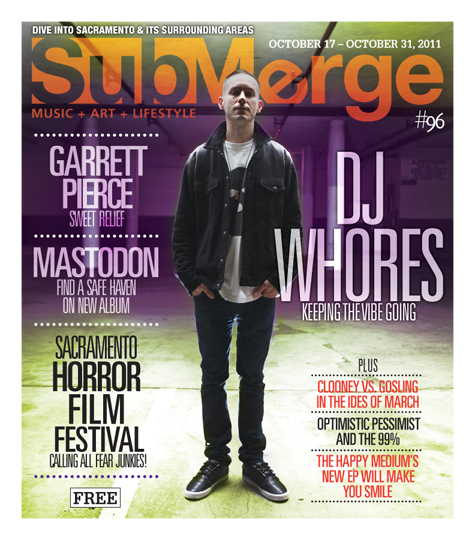
Both clubs are infamous alternatives to the posh world of dress codes and bottle service. At Townhouse, or Toho as some call it, the beer’s cheap, the drinks are stiff, the tagged-up bathrooms are claustrophobic and the entire interior is low-lit to obscure seedy behavior. It’s the only spot in town suitable for a dubstep and bass night called Grimey. Being coined by a local DJ who goes by Whores is just another notch in its anti-glamour esteem.
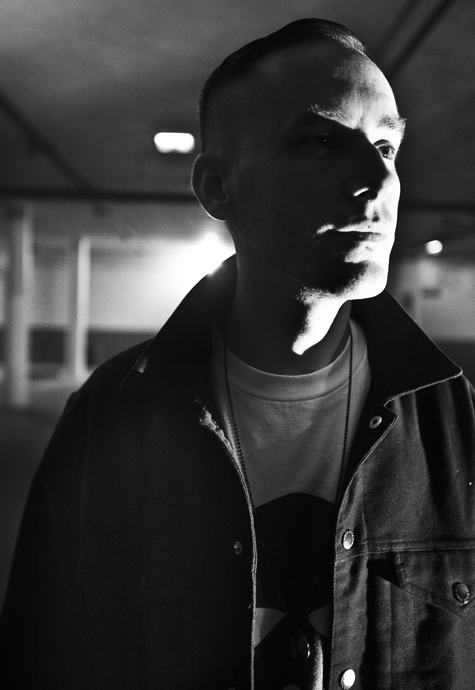
On his birth certificate, Whores is Daniel Osterhoff. He’s Dan to those who knew him before he was Whores. We met at his apartment on the north side of Midtown a few hours prior to Grimey. He does not live in a high-rise loft or a gutted warehouse that doubles as a skate park. He lives like the rest of us, in a modest complex with carpeted floors and enough space to stretch. Two fellow DJs, one of which was Jubilee just flown in from Miami, and Grimey resident photographer Eric Two Percent were hanging out. The walls were like those you’d find at any graf-writer/graphic designer’s abode; dozens of pieces from abstract to lowbrow with the exception being a giant rusted-red W mounted on the wall.
“Russell Solomon of Tower told me the letters were lying around on the roof of Tower Cafe,” Whores said. “So one night I climbed up there and took the W.”
While grabbing me a Red Bull from the fridge he apologized for the hair on the kitchen floor. A stylist friend that was hanging out had sharpened Whores’ close-cut before my arrival.
We stepped outside for a cigarette and chopped it up. It was not long before James Blake’s controversial quotes to the Boston Phoenix that caused a stir in dubstep were discussed. An uber-popular British electro-soul and dubstep artist, Blake railed the genre’s burgeoning “frat-boy market,” which is being labeled “bro-step.” His rant was widely publicized for statements like, “It’s a million miles away from where dubstep started,” and “It’s been influenced so much by electro and rave, into who can make the dirtiest, filthiest bass sound, almost like a pissing competition, and that’s not really necessary. And I just think that largely that is not going to appeal to women.” Periodically throughout the night, Whores and his fellow DJs coolly reminded me that it’s neither their taste nor in step with the identity of Grimey.
The success of the night is owed to the attention to taste, which can be misperceived as snobbery, but should not be construed as such. Even when resident DJ Jay Two approached Whores with the idea of a dubstep night, Whores was interested but hesitant due to a feeling that dubstep had reached its high water mark.
An attendee of Grimey is not given the opportunity to gripe “not this damn song again,” because its resident DJs (Whores, Jay Two and Crescendo) are intent on remaining ahead of the curve by playing records acquired on advance or playing the newest tracks they think need to be heard. It’s a dedication to the cutting edge that is scarce in the local clubs that rely on Top 40 or are just held down by stubborn old dogs disinterested in new tricks.
“I just hold steady with playing what I think people would like,” Whores said. “I’ve attended a lot of different dance nights everywhere from New York to Los Angeles, Seattle, Portland, San Francisco and Oakland. From the most underground to the most mainstream clubs, and I’ve taken little elements from each. But once you get the word out there, the word kind of does it itself.”
Much like fellow local veteran DJ, Shaun Slaughter, Whores is well traveled. He started DJing in 1997 as part of 916 Junglist before moving away in 2000 to Portland. Each move, he connected with different crews in Portland and Seattle before moving back to Sacramento in 2005. “Most people don’t know that about me,” he said. “They just think I came on the scene or think I’m from Portland, but I’m born and raised in Northern California.”
I reconvened with Whores outside of the Townhouse around 9:30 p.m. He was talking with Matt B of Bass Science, who had arrived in a rental from Tahoe. Whores was quick to share his knowledge on Bass Science, practically orating a short bio. “He started the whole glitch hop scene basically,” Whores said. “When Glitch Mob was starting out and Lazer Sword, he was right there. This guy’s got quite a big history in the newer EDM alternative craze.”
All professions have a language and despite my familiarity with Grimey and its music, talking to the actual artists involved meant brief interruptions to ask if they were saying “IDM” (intelligent dance music) funny, only to learn that EDM translates to electronic dance music–the domain in which the sub-genres operate. The confusion then sparked the two DJs into weighing the blurring sciences between EDM and IDM. “Some of it is [IDM] though nowadays,” Whores said. “Some of the juke stuff. Machinedrum’s new album.”
“The Lazer Sword,” Matt B added. “It’s intelligent footwork basically.”
“EDM is basically a very blanketed term,” Whores continued. “Nowadays everybody plays a little bit of everything because people’s attention spans are about this small [makes his index and thumb nearly touch]. So if you play one genre of music, you’re pretty much pigeonholing yourself and boring the shit out of the crowd.”
Whores stepped into the booth at 10 p.m. The bar was filling out and overflowing onto the dance floor with more than just gangly dudes having acid flashbacks from the Jungle club days. Whether it’s the Whores hype, the distancing from “bro-step” and “filthy bass” or just a misnomer, Grimey is never short on female attendees. By 10:30 p.m. the dance floor was gaining steam with a few girls entertaining each other, but come 11 p.m. to 2 a.m. the floor was a grinding, thrusting hot box of sweaty bodies–sweet, sweet uninhibited decadence.
Whores neither bores the crowd nor himself when he DJs. He keeps a folder of over 10,000 tracks on his computer at all times and does not practice a strict set. “It’s a lot more fun freestyling sets,” he said. “Sometimes when I record the sets and go back to listen to them, it’s like, ‘Man, that mix really worked.’ Others it really didn’t work, but what it comes down to is if you’re a professional, you can treat it like a jazz musician and play out of it. It’s all what you do with an error. Some DJs don’t know how to bounce back, they flop or they panic and that shows. That’s the difference between me and some DJ who took it up two years ago.”
Back outside we resumed our interview session in hopes of a quieter haven, but Grimey is the dance night with just as many attendees milling about the roped-off outdoor smoking section and back parking lot as there will be jammed into the dank of The Toho.
Whores clearly enjoys the popularity of Grimey, but he lamented that its success led to the compromise of his HUMP night on Wednesdays opposite Grimey. Originally called Warpaint Wednesdays with Terra Lopez, Whores came on to assist with the DJing and teach her techniques. Once Lopez began Sister Crayon, she forked over the night to Whores who renamed it HUMP.
“It used to be a popular night,” he said. “When Grimey came around it took the spotlight. I’ve been bringing around a lot of relative and instrumental electronic artists and musicians to try to bring it back.”
It was none of my business, but Whores willingly broke down the financial losses he’s incurred in the past two months that’s led to HUMP’s demise. DJs that are not conveniently touring the West Coast are flown into Sacramento and given hotel accommodations on Whores’ dollar. If no one shows, it means he bites the bullet.
San Francisco electronic artist EPROM and Frite Nite’s Salva, two rising beacons in the West Coast, are booked for HUMP at the Press Club this week. After that it’s the anniversary party with locals only in November, including Dusty Brown’s Little Foxes project, which is quite possibly also HUMP’s night of eulogy.
With Fuck Fridays dissolved, the Toho was in need of a new Friday night event, and Shaun Slaughter was back on the market for work. Rather than compete for the local crown, Whores and Slaughter teamed up to create Heater, an exclusive once-a-month party that combines glitter and gutter. “It’s more like HUMP with an open format,” Whores said. “We can play anything from house to electro to Baltimore to indie to dubstep and bass n’ breaks, whatever. It’s just straight party.”
The party debuted last month with the two DJs performing separately, and then trading off tracks for the last hour. “There’s always been an odd tension between us, but we’ve always been super-friendly with each other. I’ve been super-supportive of his nights and he’s been super-supportive of mine. The odd tension was because it’s a small town and he’s held the crown for quite a while. I think we’d really benefit if we did more stuff together, which is why we’re only doing it as a monthly.”
Our vibrations are in good hands with the Grimey residents. It’s a rare event where making requests is the greatest faux pas. “I don’t think it’s common knowledge that people know it’s rude,” he said. “Believe it or not, I have one job and one job only and that’s keep the vibe going. As soon as I stop to talk to someone and they go into detail about what they want to hear and why they want to hear it, all of a sudden they take me out of the groove I’m in, which takes away from the vibe. The next mix I do will be less involved and the crowd will notice, believe it or not. They won’t necessarily think about it like, ‘That mix sucked,’ but just have a moment to consider going out for a smoke.” Put your trust in Whores, kids.
Grimey gets down at the Townhouse every other Tuesday night at 9 p.m. ($10 cover). DJ Whores and Shaun Slaughter’s Heater happens one Friday per month, also at the Townhouse. It’s free to get in before 10 p.m. with an RSVP. You can also catch DJ Whores at the Golden Bear on Saturday nights.
Renown Sacramento Producer Raleigh Moncrief Steps Out from Behind the Boards for His New Solo Album
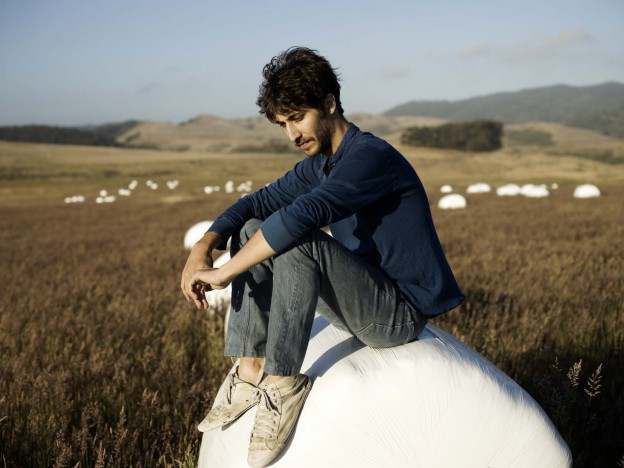
A fine piece of apothegm to live by is, “you’re only as good as the company you keep.” Look at Ringo Starr. He got by with a little help from his friends, who happened to be the greatest musical minds of his time. A relevant and localized example is producer Raleigh Moncrief, who’s collaborated with Zach Hill, toured in Marnie Stern’s band and co-produced/engineered one of the most unanimously lauded albums on a national scale in the past two years.
If he lived in Brooklyn, he would get accosted by hipster vermin at every DIY show he attended. Living in Sacramento means relative anonymity, even indifference to an extent, which allows unlimited hideout time to craft a solo record while producing for the budding local bands. A hermit’s life is how creative-types get things done, and for Moncrief it means recording in his kitchen with an acoustic guitar and laptop at odd hours between sessions with Ganglians and Teddy Briggs of Appetite.
Moncrief is one of the few “behind-the-scenes” guys that has his name shouted out in press releases and in print. Contributing to Dirty Projectors’ Bitte Orca record plays a significant role in that, but this year alone he’s recorded a Ganglians record, the Appetite record and an EP with Cuckoo Chaos–those are just the ones released. Last year he sporadically released free digital beat tape EPs and remixed a few local rap artists. Without hearing Moncrief’s solo debut Watered Lawn, one might assume he’s scatterbrained or has A.D.H.D. when it comes to music, but over the phone he cleared the air with, “I like to work fast and get it out of my face or my mind.”
Listening to the advance of the Anticon debut, the many faces of Moncrief begin to blur. Even my iTunes player struggled with defining Watered Lawn, by anointing it “New Age”–the dishwater of music genres. When I shared this curiosity with Moncrief, he replied through laughter, “How the fuck did that happen?”
Defining Moncrief’s music can be quizzical; a task he sidestepped by casually stating, “That’s not my job,” but the record is not beyond comprehension. The title itself suggests a project well tended and cared for, which is properly delivered in the 38-minute duration. Written in the three-month span of December through March, Watered Lawn is the amalgamation of Moncrief’s flighty interests in mainstream hip-hop production, a bit of leftover 8-bit intrigue and his various indie collaborations whittled down into 11 songs. Last year’s Carpal Tunnels beat tape introduced Moncrief as a hip-hop producer, but as time wore on the sound began leaning toward chillwave and beat music associated with the Los Angeles scene. In our interview, he offered a slightly alternative progression.
“In my mind I owe more to mainstream hip-hop,” he said. “It’s kind of weird because I don’t really listen to that beat music so much. There are elements of it I really like. It’s really about the low end. That’s something I took away from that [scene]. But I think that T.I. was more inspiring than the beat scene.”
By March he leaked “Lament for Morning” to the blogs, which ushered in the first glimpse of a newly discovered identity. The track made sense in fluidity of past work, but the release of “I Just Saw” in late August broke his vocal silence and hinted at a friendly influence. On the track, Moncrief is twitterpated by a female vision, stretched to a joy of singing without concern to his voice’s limitations. It is a singing style often attributed to David Longstreth of Dirty Projectors.
“I can’t help but be influenced by everyone I’ve worked with,” Moncrief said. “The main thing I took away specifically from working with Dave was exploring those outer limits. Being someone who’s not afraid to go to a place that is uncomfortable for yourself. Being brave and having the courage to try something that you’re not going to be confident in is valuable.”
Tracing back to his days in instrumental post-rock bands What’s Up? and Who’s Your Favorite Son, God?, Moncrief was the silent axe man, which continued into his project with Zach Hill and playing alongside Marnie Stern. While recording his debut he described the urge to sing as something growing in his mind, a new challenge to go along with his newly discovered production style. “I’ve written things and had other people sing them,” he said. “It reached a point where it felt like doing it myself was something I needed to prove I was capable of.”
“Lament for Morning” was the first leak, but the track that was his breakthrough was “Cast Out for Days,” which achieves a balance of the organic instruments (guitar and vocals) alongside warping glitches, flickering synths and programmed drums. “To me, [“Lament for Morning”] still sticks out like a sore thumb on the record,” he said. “Originally it was a guitar piece that was instrumental, but I didn’t know if it fit. So I just changed the guitar parts to vocals. That was my vain attempt at making it fit contextually.”
With new discovery can come bothersome uncertainty, but relating back to ol’ Ringo, one gets by with help from their friends. Moncrief had his share of butterflies. He sent his music out to the hodge-podge of contacts and friends he accumulated in the industry, including label heads at Anticon who initially balked at his beats. “I’d send them out to friends and say, ‘How does this make you feel?’
“I was looking for reinforcement because when you’re isolated like that it’s hard to have perspective,” he said. “Which is something good about the isolation as well. I got a lot of good feedback that helped build confidence in pursuing the change, because it’s a pretty big departure from most everything I’ve done previous.”
Oddly enough, it took a blog post instead of a personal e-mail to get Anticon’s attention. The label head contacted Moncrief and offered him a record deal. The label even sent Watered Lawn to Los Angeles to be mastered by Daddy Kev, owner of Alpha Pup Records and founder of Low End Theory, a weekly club night featuring experimental hip-hop–ask any Low End theorist or resident and they’ll say it’s an honor to receive his visionary stamp of approval. Raleigh could only say in approval, “He made it loud. Good work, Daddy Kev.”
The record awaits an Oct. 25 release date, but Moncrief is not taking a breather from issuing personal challenges. He has a few California tour dates, mostly coastal, scheduled sooner than he’d probably prefer. It will be his first opportunity to debut his songs, as well as perform with a four-piece band, which was lacking completion at the time of our interview. “It’s short notice,” he said. “It’s coming together well, but there’s still a lot to be done before I’d feel confident performing, which is funny because I think there’s a show in two weeks? Three weeks?”
As sketchy as he said he felt, it also seemed as though the pieces would fall into place regardless. Moncrief lamented it was tough to find people to play, but perhaps he will call in a few more friendly favors.
Look for Watered Lawns from Anticon Records on Oct. 25, 2011.
Sacramento comedian Keith Lowell Jensen Releases New CD/DVD and Preps His First Solo Tour
A drawing of four naked human female torsos with rabbit heads is not the definition of marketing genius, but it could be. At the bottom of the DVD box it reads, “How great is this DVD? You haven’t even opened the box and you’ve seen a bunny rabbit with boobs.”
Keith Lowell Jensen’s comedy CD/DVD Cats Made of Rabbits was recorded at the Sacramento Comedy Spot two years ago, but its content remains timeless, save for a Jonas Brothers reference. I want to tell you the juvenile humor ends on the box and that Jensen is a thoughtful comedian, pushing the envelope of correctness (which he does) and subversively challenging our values with humor, but then I think about his duck vagina bit and think better of such grandiose statements.
He’s an atheist (and has a wife and child–guffaw), so he is often referred to as the Atheist Comedian, mostly on the Coexist? Comedy Tour, but Jensen’s compulsive interest in all things worthy of critique keeps the nasty “pigeonhole” effect off his back. In discussing his next album, Jensen said he had 45 minutes of material on things he’s been arrested for and jobs he’s been fired from, as well as over an hour of observational comedy. Once in San Francisco he threatened to do an entire set of racist jokes strictly based upon the characters in Lord of the Rings, which is possibly the finest testament to his multi-dimensional talent. “I didn’t intend to be the Atheist Comedian, but that’s what I am on the tour,” he said. “It just sort of happened. It feels very true and feels like I’m talking about very important shit, so that’s cool.”
Jensen knows there are gigs he won’t book due to his atheism, but he casually sidesteps the haters with a “fuck that bigot” attitude. “The gay comics or a black comic, they don’t have the choice of not being that,” he said. “It’s who they are. This is who I am. Even if I wasn’t doing my atheist material, those same people wouldn’t appreciate what a liberal I am or what a geek I am. Those things all kind of go together.”
Did having a daughter shake up your atheism at all?
Not even a little bit. In fact, having a daughter has not impacted my life as much as it has impacted every other parent I’ve ever known. I suspect that part of that is because I’m in my late 30s. My wife and I have been together for 14 years. We’ve settled into our lives a little more than most people who are having babies.
Some comedians have said that happiness is the worst thing that can happen to your career.
I think that’s bullshit. You know, when me and my wife met, my romantic first words to her were, “How can you say something so fucking stupid?” I still remember the debate we had. We argued for two hours straight and were best friends by the time we were done.
Any artist that can express their poverty and sorrow well can express their joy. [Yamantaka] Eye of the Boredoms talked about audiences being disappointed when they come to see him because he’s happy now and they want his old stuff when he was miserable. But he said that stuff was successful and that gave me this family. It gave me the Boredoms and I’m happy.
Political humor can be alienating and risky. Outside of comedy you’re a very opinionated person, particularly in your blog and Facebook posts. Have you come to any conclusions on whether it has a place in your material?
On Cats Made of Rabbits there is politics in there, but it’s hidden. On the actual joke “Cats Made of Rabbits” I tie “shock and awe” and the Trail of Tears to the Holocaust, and people who would be offended by it don’t even catch it, it’s said so matter of fact. I just give a list and those three are on it. It’s not making a big production out of the political statement that’s within that joke. And of course there’s a vegan joke within it, regarding how we base which animals are OK to kill based on cuteness.
Is your writing process thought out, in that you intentionally weave that many political statements into one bit?
It happens subconsciously out of me being insecure. A lot of writing happens on stage where I am surprised something came out of my mouth.
You strike me as an obsessive consumer whether it comes to comedy or music, but that collector side of your personality does not translate to the stage. Have you ever considered letting the nerd flag fly more in your material?
I have a lot of material about Lord of the Rings right now. I don’t know why now. I think maybe excitement about The Hobbit. I just re-read the books. I’m also telling my daughter the Lord of the Rings story, only in our version the Orc “scratched” instead of “stabbed”–she’s 2.
I geeked out on Elf Quest recently, and I’ve been geeking out on porn lately. The creators of Elf Quest contacted me recently and two progressive porn actresses have contacted me wanting to blog about my material, so maybe I should do more pop culture stuff.
Then again, I was talking to the audience about [Doug E. Fresh] at the Comedy Spot a few weeks ago and nobody knew what I was talking about. I said you have to be kidding me. That’s ridiculous you guys don’t know Doug E. Fresh.
It would seem that Sacramento’s comedy scene is stirring with talent right now; much like our music scene has had little pockets of glory. Given that Mike E. Winfield will be on the next season of The Office, does it feel like an opportune time to be a comedian in Sacramento?
Yeah. It could be. There were periods with music when the Deftones and Cake and Papa Roach and all these bands in a short span of time all took off out of Sacramento. It sort of put Sacramento on the map. I feel like that could be happening with comedy mostly from the perspective of, boy, we have an awful lot of really good comics here. We just have a phenomenal bank of talent in this little town.
It’s interesting that Mike E. is staying. He’s on The Office! I was thinking well, there he goes. Bye Mike. But, nope, he’s keeping his place in Sac. He’s in Los Angeles a lot, but he’s keeping his place here. I like that a lot. Ian MacKaye from Minor Threat is one of my heroes, and I like that sense of your own community, and you don’t have to betray it to be famous.
Will the next string of dates in the fall be your first time out on tour alone?
This is the first time I’ve gone out and every day it’s just me and I’m the headliner.
How are you internalizing that?
I have shingles. You don’t normally get that as young as me.
Yeah, my grandma has shingles.
I wonder if I’m more nervous than I realize. I feel all right, but then again I did get shingles.
Have you found the humor in that yet?
Just now [laughs]. I’ve broken my collarbone before and so I know it’s going to stop hurting eventually. It’s not like the first heartbreak you get when you’re a kid, and you don’t know if it’s ever going to end. Now it’s like, “Ah, I’ve got to wait this out. Didn’t want to do this right now, but…”
I don’t get nerves that bad anymore. I got stage fright for the first eight years and didn’t think it would ever go away. If there’s anything I think you should say to comedians before they go on stage that might help it’s, “You know there’s not really that much at risk.” You’re going to get up and do what you’re going to do and then later you’ll get up again.
Keith Lowell Jensen’s Cats Made of Rabbits CD is out now and available to own on Amazon.com. It can also be purchased digitally on iTunes. His DVD of the same name will be available Sept. 27. Jensen will perform a CD/DVD release show at the Sac Comedy Spot on Sept. 23 at 8 p.m. (tickets are $18). You can also catch Jensen do his thing the following Thursday, Sept. 29, as part of the Sacramento Comedy Festival, once again at the Sac Comedy Spot. More info and tickets for both these performances can be found at Saccomedyspot.com.
Task1ne, State Worker by Day, Rapper by Night, Unites Sacramento Hip-Hop Scene with His New Album
Superheroes assume secret identities that symbolize the life of the common man to protect themselves and the lives of those around them. The secret identity keeps the gifted rooted in reality. Following superhero archetypes, Task1ne is a rapper who protects his passion for music by doing accounting work for the state under the name Corey Lake Pruitt.
Pruitt takes the light rail to work and sits in the back. At the state office, he processes documents while quietly rapping to himself, which draws ire from his hard-nosed boss. He’s well known at the comic stores and strictly wears comic book T-shirts. At home, he has two cats that are disinterested in him unless it’s feeding time. He enjoys comics (a lot) and reviewing films. “I’ve seen Captain America 12 times,” he said. “It’s as good as a Captain America movie could have been. Is it the best comic book movie? Hell no. But, they captured Captain America, unlike Green Lantern, which was the worst piece of shit I’ve ever seen in my life.”
But, when the clubs open and the mics are plugged in, he transforms into Task1ne, a loud-mouthed, nerdcore rapper that speaks street Wookie and reps a crew called Skynet. He’s also poised to join the elite local ranks. “I’m extremely slept on,” he said. “I feel like I’m the underdog of Sacramento because I started out when everyone was already established.”
Like most superheroes, he had to polish his special powers in order to shed his colt legs. Remember Spider-Man’s first attempts with his webbing? Bad things happen to heroes not quite accustomed to their powers. Bad things like getting humiliated in a rap battle against Mahtie Bush. “I completely lost my lyrics,” Task1ne said. “It was three years ago, but to this day people call me ‘the guy that lost to Mahtie.’ It’s like what do I have to do to get people off of that?”
Determined to never lose a rhyme again, Task1ne took to mastering the art of freestyling. He freestyled at work. He kept instrumental CDs in his car to rhyme over. If a mic was offered at an onstage cipher, he seized it, until his skills off-the-dome became notorious.
“I stepped my freestyle game up,” he said. “I’m a geek, so my brain is going different places. I try to rhyme crazy things, like one time I rhymed about Pirates of Dark Water, the old cartoon. Or I said, ‘I swing from tree tops like I’m an Ewok.’ It’s in my brain. That’s what I do.”
But freestyles and a mixtape compiling a year’s worth of guest verses titled Task1ne Verses the World were not enough to earn him the Sammie nomination he sought, or a shot at a Submerge cover for that matter. Task1ne had to prove he could join the ranks of Random Abiladeze, C-Plus and Lostribe by dropping an album in 2011. “I did a lot of work last year,” he said. “I went from being in a group to being solo. I changed my style up a little bit and people started really liking it. So I started getting thrown on other people’s songs [including DLRN’s “Trill Cosby” with C-Plus]. Didn’t get nominated. That kind of hit me.”
Task1ne began working on District 916 a year and a half ago at Sound Cap Audio. He took a neutral stance for his solo record in order to work with whoever would send a beat his way. The only criteria was the producers had to be from Sacramento, which earned Task1ne beats from Lee Bannon, Adam Bomb, Nicatyne, Rufio and Jon Reyes, among others. “The whole album I wanted it to represent Sacramento,” he said. “One of my favorite movies is District 9. I feel like we as hip-hop here in Sac are kind of like that. In the movie the aliens are trapped there, and they feel like they have no way out. I kind of feel that way. But at the end one of them finally escapes out. I’m trying to be the one that escapes out.”
Task1ne has unbridled pride for the local scene, which filters into his philosophy on collaboration. He’s dieting, but his natural presence offers a well-sized frame to put the city on his shoulders. District 916 is a melting pot of crews that included working with Nicatyne and Yae of Fly High in Natomas. “Nobody really messes with them,” he said. “They do their own thing. There are a couple of groups they work with, but for the most part no one really does stuff with them. I wanted to. Got a beat from Nicatyne, which became the track ‘Villian’ featuring Yae–another Fly High member. Yae hit me up about doing a song about us being super villains. I said, ‘Here’s the beat. Start!’ That’s probably my favorite song on the album.”
The album is a balance of nerdcore references prepped for the battle circuit and everyman storytelling. The track “Bounce” breaks down the true story of Task1ne’s first groupie experience, in which he reacts like any normal dude with a state job and raps on the side might–mistake fleeting groupie love for the real thing. “I jumped to all these conclusions, thinking about a relationship, but she’s trying to leave. And I was just left like ‘Where are you going?’ So I tell my boys about it and they were like yeah, those are groupies.”
His daily routine of riding light rail inspired him to write “Back of the Bus,” a song pondering why young black men still sit in the back of the bus despite the privileges Rosa Parks made possible. “We’re a new generation. We can’t really relate to that. There’s no real answer to why I sit in the back. It’s just an automatic thing that I do.”
On “Introducing the Greatest,” Task1ne ponders what it takes to get a Sammie. And while the answer is power-bombing social networks with self-promotion, he needn’t wonder any longer–his name was included in the Best Emcee list of 2011. “I got it this year, thank God,” he said.
Implementing a no-days-off policy, he is planning his next project to be a free EP produced entirely by Adam Bomb, who produced three tracks on District 916. Task1ne maintains his secret identity beyond the common traits of superheroes. He holds his state job as a reminder to not give up his quest to be one of Sacramento’s greatest rappers. “I’m glad I work there because I see what I don’t want.”
In District 9 the alien that escapes takes the spaceship with the intentions of returning to those left behind and bettering their situation. Task1ne intends to do the same with a fall tour along the West Coast. In October he’ll play shows in Portland, Seattle, San Diego and Los Angeles. “I’m actually scared; I’m not going to lie,” he said. “Most rappers act cool about it, but naw, I’ve never done this before. I’ve never been to Seattle or Portland. A lot of people feel like it’s hard to find a way out, even though there are ways out. A lot of people feel trapped here and can’t branch out.
“I want to go up there and establish the Sacramento name, so the next time I come I can bring people with me. Like in the movie, the guy left and he’s going to come back to get his people.”
The District 916 CD release party will take place at The Blue Lamp in Sacramento on Sept. 15. Performing will be Digital Martyrs, JRas of SouLifted, Dregs1, Sleeprockers and of course Task1ne. For up to the minute info, follow Task1ne on Twitter @TASK1ne.
Lostribe’s JustLuv on nurturing the rap group’s latest album Sophie
Six years ago is a different lifetime as the body approaches 30 years of age. Marinate that sentiment with hip-hop’s culture in motion and an artist could risk making music on the wrong side of retro. Grass Valley’s Lostribe could have stuck to its 2005 script, but with personal growth comes valued artistic growth and even rebirth.
Lostribe began as a crew consisting of three producers and one MC. Its debut could be considered rapper/producer Agustus ThElefant’s solo Sole Expressions in 2005, which featured production from Lostribe producers JustLuv and MLB. The group went through a series of tribulations after that record, but still managed to bounce back with a video game soundtrack deal in 2007.
Members JustLuv and Agustus were asked to score the Namco Bandai video game Afro Samurai, featuring Samuel L. Jackson and RZA. The duo scored 10 tracks on the game. Meanwhile, JustLuv remained busy by breaking into the Bay Area rap scene to produce tracks for Andre Nikatina, Mac Dre, San Quinn and Mr. FAB. The growth would prove invaluable to Agustus and JustLuv, even if it distracted them from following up on their personal efforts. MLB is on hiatus from Lostribe crew, only making an appearance on one track on Sophie, the band’s latest album, which will be released on Aug. 23. But JustLuv assured me he had good reason for the absence, “He recently had a baby.
“So he’s focused on being a father and building that life,” JustLuv said. “He’s got a lot on his plate right now. I made it a point to include him on at least one track. He has a hard time getting out to the studio, living in Grass Valley and we recorded everything in Sacramento. He’s working, trying to get that money for his family.”
With Lostribe down to two core members, JustLuv manned the boards for Sophie, a record that meshes the lyrical dexterity of underground hip-hop in the early Aughts with the modern warble of dubstep’s woofer-blasting sound. Musicians out for the dollar and the relevancy can’t afford to take a five-year hiatus, but JustLuv talked of the extended process as a necessity that earned Sophie its coveted title.
Why the long hiatus between records?
A lot of life and shit happened. Agustus got married and moved away to Santa Cruz with his wife. They were down there for about a year and a half. He ended up getting a divorce shortly and moved back up [to Grass Valley]. I was going through a breakup at the same time, in between houses, and living situations were not very stable. I was like a gypsy living out of my car for a minute.
Life happened and we had to regroup. Then, in 2007 we started working on the video game, going through negotiations with those dudes. It took up a lot of our creative focus. So around 2009 we got our focus back with Agustus moving here. But again, it took time because we were going over material that was really old and we had some new material, so there was gaps between the sound quality and progression of the sound. We kept evaluating shit to try and refine our style. This last winter was when it finally came together.
The sound is definitely caught up to speed with its dubstep influence, while maintaining an organic feel closely associated with hip-hop.
That’s become my thing. Around 2006 that fool Agustus brought me to Burning Man and introduced me to dubstep. I was kind of into electronic music, and I used to break dance when I was a teenager, so that sound to me felt like the missing element into the synthesis of hip-hop and electronic music.
With the absence of MLB, you produced nearly the entirety of Sophie. How did you approach the opportunity to have full creative control over the sound?
That’s kind of how this project started out. I was making these new beats and my homie in Oakland heard them and said I’d kind of arrived, so it was time to put some shit out with this sound. So originally the focus was a solo project.
When it came down to me making this project and N8 [the Gr8 from The Cuf] started plugging these beats and Agustus heard it and said the shit was dope. We just decided to do a Lostribe album. It was a lot of hard work, but at the same time it was the most fulfilling and creative thing I’ve done. I tried to make a couple anthems. Try to make some shit that gets stuck in your head.
Why did you name the record Sophie? Because the first thing that comes to my mind is the old Jaz record with Jay-Z called “Hawaiian Sophie.”
I’m almost 30 years old. A large percentage of my friends are getting married or having kids or tied down in committed relationships. I don’t really have none of that shit. So, Sophie is the name I’d have given a daughter. So this is my firstborn. That’s why I named it Sophie.
You hear a lot of musicians talk about their records as their babies. That’s cool that you took that concept to a literal sense.
You know, I was kind of laying in bed the other day and realized everything I’ve done from making money, places I’ve lived, friendships to an extent… Everything I’ve done to gain momentum in my life for the last 10 years has been out of this music. So I’ve put my entire grown ass adult life and heart and soul into this album. So really I couldn’t call it anything else.
You went to boarding school as a youth. And recently you had a nephew get into some trouble, which prompted you to write the song “Live Like a Rebel.” I was wondering if he’s heard the record and if it had an impact on him?
No. I’ve not played it for him yet. He is more into rock music. He gives me a teenager response to everything, which is, “That’s cool.” He’s still 16. I can only live by example and try to show him what’s what. At the same time it is hard for me, because I still do young shit like go to the bar and get drunk. It’s kind of a paradox. I had a really deep conversation with the kid three or four months ago and then the next day he told his dad he figured it out and he got it. Then, the next day went out with his friends and did hella crazy shit. I can’t be mad though. The shit I was doing when I was his age was way worse.
Lostribe’s Sophie is available now in stores and through iTunes, Amazon and other online retailers. The album features guest appearances from Gift of Gab, The Grouch, Talib Kweli and others. Lostribe will perform at Sol Collective on Friday, Sept. 9 with Los Rakas, Danked Out and more. Hosting the event will be Mic Jordan. For more info, go to Lostribeproductions.com
KDVS Recordings broke into the modern cassette fetish in May with ALAK’s GRØUPS and while, I feel regrettably late to the campfire, the album’s August digital release will hopefully breathe new life into another fine installment in the local cult of weirdo-folk music.
From Davis to Midtown, stretching on up to Placerville and Nevada City, the greater region is rife with weirdness. Folk, the genre armed with acoustic guitars and banjos, is treated quite differently in our region. Bands like Ellie Fortune, Sea of Bees, (formerly) Chelsea Wolfe and Dead Western are connoisseurs in crafting folk oddities. Is it the legalized marijuana? Is it an unseen Owsley figure with an endless supply of blotter acid? Are the surrounding woods filled with mystical spirits and owls, like in David Lynch’s Twin Peaks? Or is it the Sunday farmer’s market? I could not tell you. It is only known that the weirdo folk genre is as organic to Sacramento as the pungent smell of garlic is to Gilroy.
Place ALAK in the weirdo folk community’s highest regards. GRØUPS asks, “Are you weird enough, man?” for a two-song duration of ambient fuggery, freak-out jazz skronking and crystalline tape machinations, before settling in with a folk track fed through dub selector systems called “My Love Is the Best.” The intro to GRØUPS is deliberate in establishing a weird front. As a digital release the challenge is a non-issue, since skipping is as easy as a pushed button away or the stroke of a delete key; but in the tape format, ALAK is risking its heartstrings in the name of experimentation. With the futzing mess out of its system, ALAK harnesses its chi for an enlightening stretch of acoustic haunts (“White Stones”), instrumental transmissions to the Third Kind (“Doc’s New Super Leo”) and off-kilter sambas (“Pull Old Saint Long Chaine”).
All great albums must come to satisfying conclusions, and GRØUPS rallies for a final shot at greatness with “Child Heart” and a cover of Robert Wyatt’s “Alliance” (I excluded the field recording “Wiiind,” simply because it’s just a slapping barn door and the whistle of Mother Nature). “Child Heart” dodges the folk label entirely, by operating in the tropes of pulsating indie-rock and synth-pop flourishes. As songstress Jocelyn Noir lingers on the lyrics, “Just get it out,” the blossoming synths billow faster for a dramatic crescendo that delicately releases its grip on us, so we’re not too wound up for “Alliance.”
I would much like to hear the GRØUPS cassette, but I am grateful my introduction was the digital release. Hearing “Alliance,” a Wyatt cover that claims “Chomsky got it right,” sung in Noir’s chilling whispered croon is best enjoyed through a pair of expensive headphones. In the comfort of a headphone womb, ALAK’s version of “Alliance” is a lush swan song, willing to let the lyrics be the challenge issued, rather than a test of one’s taste for experimentation.
ALAK’s GRØUPS requires patience, beyond determining your threshold for clatter, but grit through the odder moments and it’s a record with the capacity to nurture. Possibly GRØUPS is your gateway into the weird scene without undergoing altered states? Don’t worry, it’s only folk music with an unorthodox slant.
You can stream ALAK’s GRØUPS at Alak.bandcamp.com, where you can also find links to download the songs and purchase a copy of the cassette.
David Mohr expands his musical horizons with Favors
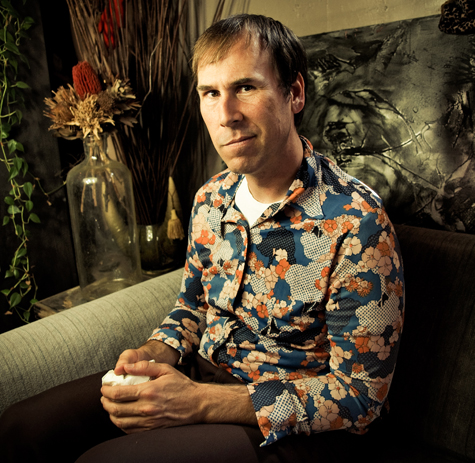
The breakup of Sacramento’s 20,000 was a complicated one. The group had an electro-Sonny and Cher thing going on, until it imploded at a fateful summer night’s show. David Mohr, one half of 20,000, was Cher in this scenario, in that it led to songs in the vein of “Bang Bang (My Baby Shot Me Down).” Assuming the moniker of Favors, Mohr’s series of fractured digital EPs sought comfort in the familiar synthesizer framework, a kinship with Lou Reed’s “Hangin’ Round” chorus and anti-anthems that put weekends and summers in their crosshairs.
With the heart pain now out of his system, Mohr is exploring the futuristic vision his friends have always associated with the bedroom project before he was able to see it. “I started writing these songs when I was living with the rest of the band, so that is over a year’s worth of songs that I picked from to form this album,” Mohr said. “So in that time, I basically started feeling like there were a lot of different subjects I hadn’t approached yet with Favors, and I wanted to open it up so that the future of the band could go in any direction.”
The band he lived with was once called Impotent Ninja, which consisted of Ben Lewis, Chris Metcalf and Crystal McCarthy. The house mates have since gone their separate ways, but their time together allowed Mohr to get in a better place that led to the completion of Five Million Years, a record which is somewhere between sugary synth-pop and music that can help break a healthy sweat. “The songs I write will always have a pop element to them, I think,” he said. “Unless I become so involved in it that I lose focus of what it means to be pop. But I don’t know. I like fun songs. I like dance music and I like electronic music. My friend’s little sister said that Favors sounded like ‘workout music’ when she heard it. That’s perfect.”
When I last talked with you, Favors was a bedroom project of EP releases with a lot of post-breakup songs. Listening to the new record, it seems as though Favors is exploring abstract territory, with songs of starships, cash-machines and caves. What brought this change in songwriting?
A friend of mine said that Favors sounded “futuristic” to him, and I thought that was funny. I had never thought of it like that, so I thought I would push the science fiction element in some of the songs. I was hesitant to do that at first, because I didn’t want the songs to feel too distant or detached from reality, but I kept reminding myself that David Bowie wrote tons of futuristic space age songs, but it took me years of listening to ever realize that. They always just sounded like awesome songs from the ‘70s. Maybe I don’t pay attention to lyrics.
Now that you mention Bowie, I feel like the album title Five Million Years is just an extension of Bowie’s “Five Years.”
The album title Five Million Years comes from my desire to create a larger time frame and a more expansive imaginary space for the listener to step into. I’m interested in the way that time can be distorted by music, like how fast songs can make the listener feel as if time is moving quicker. It’s strange; music is very connected to our concept of time.
Favors is a full band now, but what’s the recording process like? Is it done as a band or do your band mates learn the songs after you’ve created them?
In terms of songwriting and recording, Favors is still a bedroom project. I write and record the songs on a laptop at home. The live band was formed at the very beginning; it was always Chris, Ben and Crystal, but it just took some time to get things going with that part of the project. Usually I’m working on music alone, but I always wanted the live band to exist as well. It’s nice to have a group to share it with, and it makes practicing and playing live way more fun. During practice of course, everybody contributes their own touches, and of course Ben is a wizard on guitar, so we have to incorporate that. Everyone is amazing at their instruments and is way beyond me in musical ability. I’m very lucky to have friends who want to play the songs.
You don’t see many indie bands with a frontman. Was it weird at first to have no instrument responsibilities on stage?
I’m really not a very good musician, so playing keyboard on stage is difficult for me. I thought it would be best if I just focused on the singing, that way I can express something that the music isn’t expressing live. I still feel uncomfortable performing live, though; it definitely feels like the fakest part of the whole thing for me. But that doesn’t mean I’m not trying to do my best.
From what I’ve seen, you’ve taken to the art of being a frontman. Were there any famous lead singers you took cues from?
David Byrne became a huge inspiration early on. He added so much to the music just with his movements and appearance on stage. Of course he was a great guitar player and a great musician, but I was most intrigued by his gestures. It seemed like he was really thinking on stage, and channeling that into the songs.
Have you gone for the cord windmill and catch the mic maneuver yet?
I used to do the windmill cord spin in my first band. I was really good at it, but I had to duct tape the mic to the cord so it wouldn’t fly off. I’m too old for that now. My favorite part about live shows is when things start going wrong, though. It’s fun to try and make the best of it and keep the show going. During our last show, Crystal’s electronic drum set kept falling apart because I had broken it in half while loading gear on stage. Chris had taped it together before we started, but I had to keep lifting it up for Crystal while she played. I love those moments. Things start falling apart so quickly that trying to fix them becomes ridiculous.
The cassette culture is on the rise, but has not quite hit Sacramento yet. Why did you choose this format?
I’ve always wanted Favors music to be available for free. I think that anyone who wants it should be able to have it. Also, I don’t know too many people who pay for music anymore, and I especially don’t know very many people who buy CDs, so I thought I might as well do a cassette.
It’s still nice to hold something in your hands that represents the music. I think the same reasoning goes into vinyl production, but personally I have more of a nostalgic connection to tapes. The first music I owned was They Might Be Giants’ Flood on a cassette that I bought from my brother. I listened to records as a kid, but I had a more personal connection to tapes. I used to make cover art for cassette tapes of made-up bands years before I ever started writing music. Despite all the nostalgia and my love of cassettes, there is also something funny about releasing tapes now in 2011. I like the fact that I recorded the music on a computer but I’m putting it out in a medium that degrades the quality and its near obsoleteness. It’s a wink backwards.
The bonuses are that it is really cheap to do and they look cool. I had fun designing them and putting them all together. It’s also funny to see people’s reactions. At least one member of Favors thinks releasing a cassette is a terrible idea.
Terrible idea or not, Favors’ new album Five Million Years will be available on cassette around Aug. 1. You can order a copy and get a free full digital download at Favors.bandcamp.com. Check out the band live to celebrate the release of the album at The Press Club in Sacramento with Evan Bailey and The Happy Medium on Aug. 4.
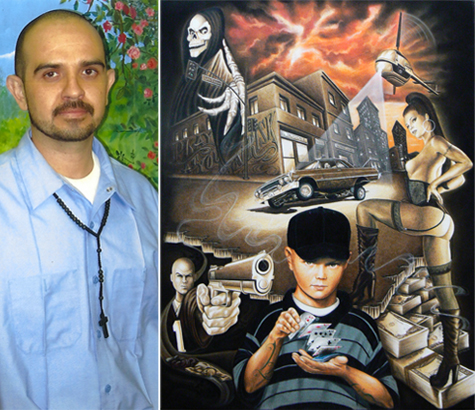
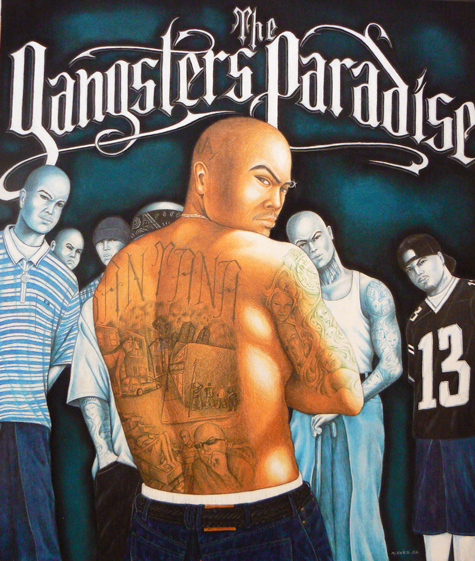
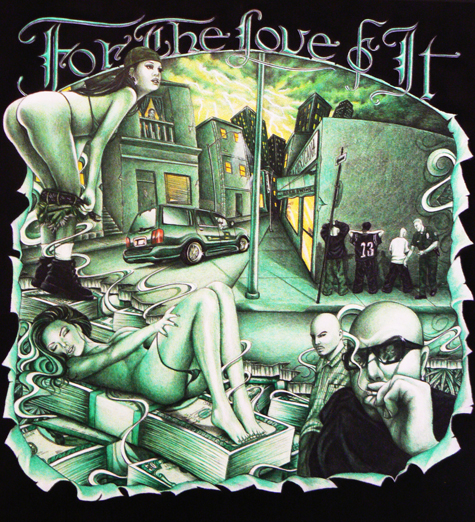
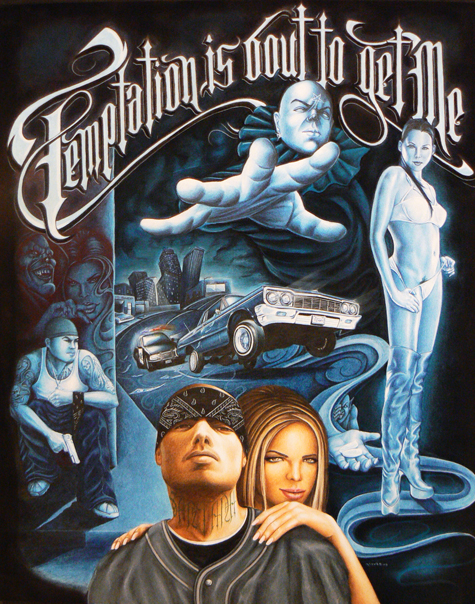
The art of Salvador Aceves displayed in Spanglish Arte gallery on the corner of 23rd and I streets depicts the graphic and unforgiving lifestyle of the prideful Latino gangbangers. At first glance it is a glorification of the lascivious and criminal temptations of a deviant youth. But dismissing Aceves’ collection as such is a crime. Aceves’ “gangster’s paradise” is the work of an exiled man confronting his last chance at redemption.
Aceves was incarcerated at the age of 17 for first-degree murder, after living in the United States for two years. His family moved as illegal aliens from Jalisco, Mexico to Santa Ana, Calif., in 1989. His infatuation with the neighborhood gangs began with fights at school, arrests and short trips to the California Youth Authority juvenile halls. By age 19 he was in a Level 4 maximum security prison serving a 25-to-life sentence.
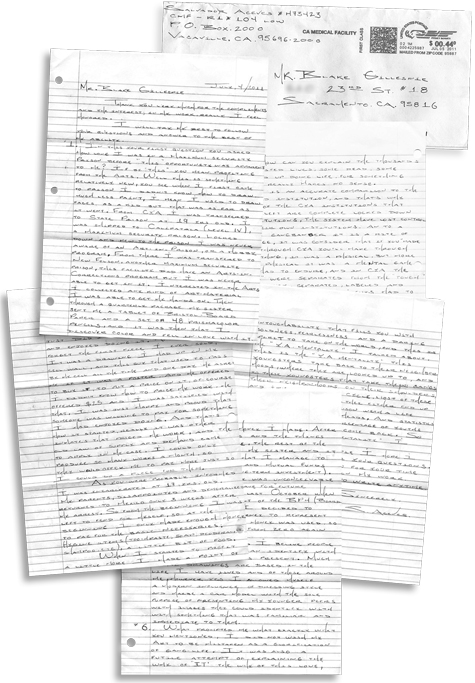
Aceves discovered art in prison, and with not much of a life lived on the outside, he drew from what he knew–gang life. His drawings were not done in admiration, but to escape perdition by facing his memories and exploring the deceptions that lead to a banger’s demise. “When I first came to prison I didn’t know how to draw, much less paint,” Aceves wrote in a letter to Submerge. “Interested in the arts, I collected any kind of art material I was able to get my hands on. Then through a quarterly package, my sister sent me a tablet of Bristol board paper and a set of 48 Prismacolor pencils, and it was then that I discovered color and fell in love with it.”
With three years remaining in his sentence, Aceves’ communication with the outside world is limited. Our correspondence was restricted to a letter sent and a letter received, but it was clear from our brief exchange he is not the delinquent that entered prison. The tough-mindedness instilled in him as a “graduate of C.Y.A.” has matured into wisdom to warn future generations of the perils of the lifestyle. Through the poetry and stories written alongside his artwork, he presents a deeper criticism of gangs often overlooked by outsiders who either glorify or brutalize the culture.
The following is pieced together from our correspondence, in which Aceves explains the discovery of his talent and the failing institution of C.Y.A.
I’m curious as to how long you were in a maximum-security prison before the opportunity to profit from art became apparent to you. Did you discover the venture on your own or did the art bring recognition, which then prompted a figure within the prison to inform you of the profits possible?
It never crossed my mind then, I just did it because I truly loved and enjoyed doing it. And I never forget the first piece I ever sold. It was a drawing I had up in my cell-wall, and this guy that used to pass by my cell all the time… one day he asked me if it was a poster, and he offered to buy it, to put a price on it. Of course I didn’t know how to price my work. He offered $25, and I was satisfied with that. I was just happy and proud that someone was willing to pay for something I had enjoyed doing. And that’s how it started really. It was other inmates that priced my work, and the old law of supply and demand came to apply in my case. I could only produce so many works a month, so they would offer to pay more just so I could do a piece for them.
As you were probably informed I was incarcerated at 17 years old. My parents, disappointed and demoralized, returned to Mexico only three weeks after my arrest. So from the beginning I was left to fend for myself, so at the beginning I only made enough money to pay for the basic necessities. Hygiene items (toothpaste, soap, deodorant, shampoo, etc.), a little bit of food.
When I started to profit a little more I made a point of saving some of the money I made. After paying for supplies and the things I needed in here, the rest of the money I sent to my sister and it was through her that I managed to invest in bonds and mutual funds (the safest for a long-term investment). At the time my release was inconceivable I just decided to save for “future emergencies.” But last October when I appeared in front of the BPH [Board of Parole Hearings] I decided to hire a private attorney to represent me, and much of this money was used, so I’ll have to start from zero again.
The images you create are striking considering the length of time you’ve been imprisoned. I had not considered the image of a young Mexican male embracing a gang life to be unchanging in style or mentality since the late ‘80s. It’s as though your images present the Mexican gangbanger as iconic. Would you agree? Are your drawings purely based upon the life you once lived in Southern California or is there a modern influence at play either from images you’ve obtained in prison or from communicating with newer inmates?
Yes, I agree and I believe people of different ages can identify with the concept of my images present. Much of my drawings are based in the life I have lived and of those around me. However, yes, I allowed myself a modern influence of dressing style and maybe a car model with the sole purpose of presenting my younger peers with images they could identify with–with something that was familiar and immediate to them.
What prompted me was exactly what you mentioned, I did not wish my art to be mistaken as a glorification of gang-life. It was also a futile attempt of explaining the why of “IT.” The why of this love, but how can you explain the thousands of wasted lives, some dead, some locked up doing life, for something that really makes no sense?
It’s interesting that around the time you were convicted, there was a shift in the effectiveness of the once innovative California Youth Authority. It seems as though your experience with the C.Y.A. was more of a rite of passage that accelerates a youth’s understanding of gang life–like it’s a university system for gangs instead of a juvenile corrections program. Is this an accurate comparison to the flawed institution? What is the “Y.A. mentality” you mention in your biography?
It is an accurate comparison to the flawed institution, and that’s why most of the C.Y.A. institutions that are left are complete lockdown institutions. The system has lost control of its own institutions. And to a young gangbanger it was a rite of passage. It was considered that if you “made it” through C.Y.A., you’ll make it through everything. It was a physical, but more than physical it was a mental game you had to endure, and in C.Y.A., the “weak” were separated from the “tough” real quick. Separated, labeled and outcasted, these “weak” guys had to go through hell. So you had no other choice but to fight your way through, fight and fight and endure ‘til you made it and graduated. And whether you graduated to prison or to the streets, you “made it” and we were proud to be called “Y.A. babies” ‘cause you were tough, ‘cause you fought, ‘cause you represented your neighborhood and your set gratefully, ‘cause you weren’t a punk, ‘cause you were “strong minded,” and you felt respected.
And this perception of yourself and the way you think others think of you gives you a sense of confidence and untouchability that fills you with boldness, fearlessness and a daring spirit to take on the world and this is the Y.A. mentality I talked about. This is the Y.A. mentality these youngsters take back to their neighborhoods, where they are looked up to, and it’s these youngsters that take their gangs and their neighborhoods on their shoulders and it’s a vicious cycle. Most of these youngsters don’t last. They either end up dead or back in prison with a life sentence over their heads, and statistics show that a high percentage of youths paroled from C.Y.A come back. So this is the Y.A mentality I wrote about.
Salvador Aceves is in a medium security prison in Vacaville. While serving time and selling artwork from his cell, Aceves earned a G.E.D., a college A.A. degree in Liberal Arts and an A.S. in Business Management. In January 2011 the California Board of Prison Term set his release to approximately three years from now. Perdition, an exhibit of Aceves’ art is now showing at Spanglish Arte. For more info, go to Shopspanglish.com or call (916) 446-1213.